
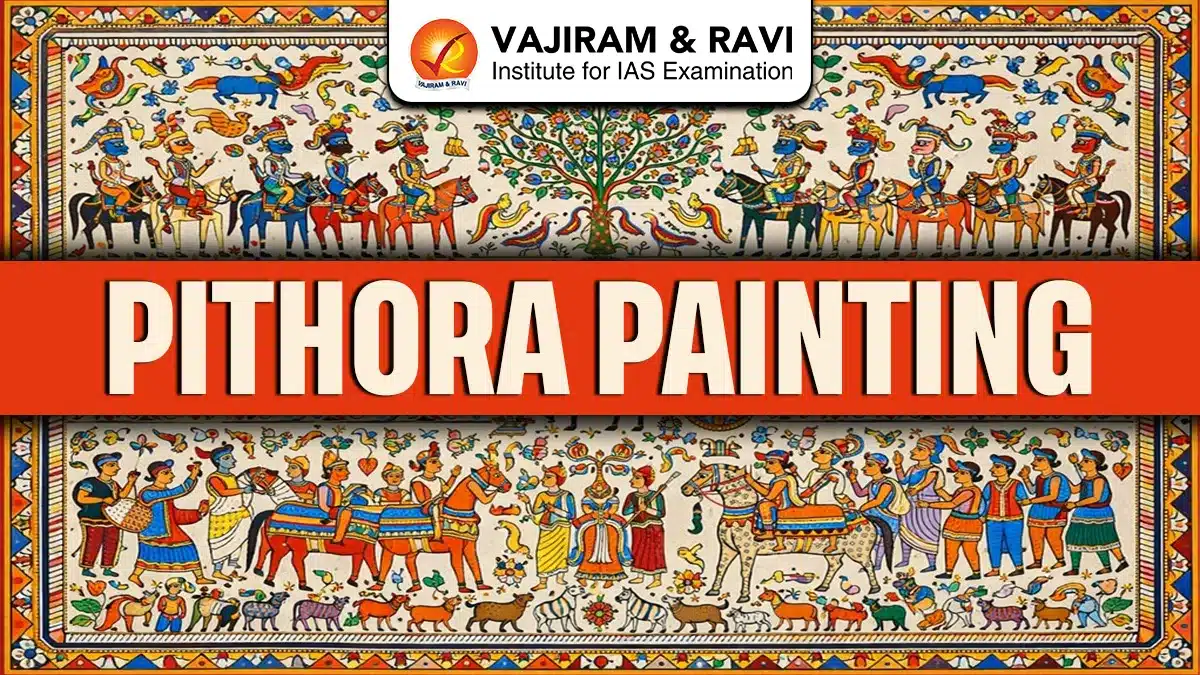
Pithora Paintings are a traditional tribal art form, practiced mainly among the Bhil and the Rathwa tribes. It is usually painted on the walls of the houses to show gratitude to their gods and ask for happiness, prosperity and protection. The pithora paintings usually have motifs inspired from daily lives.
Pithora Painting History and Origin
- Pithora Painting is a traditional tribal wall art that has originated in the tribal regions of Gujarat, mainly in Panchmahal and Chhota Udaipur.
- It is done by tribes such as the Rathwa, Bhil and Bhilala, who holds a strong belief in nature, spirits, and divine powers.
- It is named after Pithora De, who is their tribal god and is associated with marriage, prosperity, and well-being of the tribe.
- These paintings are made as a sacred offering to show gratitude toward the gods or to ask for blessings like good crops, health, and family happiness.
- It holds a long history and its existence dates back to around the 13th century.
- Usually, the paintings are made on the inner walls of houses and temples during special rituals or after a wish was fulfilled.
- Natural materials such as cow dung, lime, mud, and natural colours are used to prepare the walls and paints.
- The pithora paintings show tribal and Hindu deities, horses, animals, and scenes from daily life like farming, hunting, and dancing.
- It plays a crucial role in preserving tribal stories, beliefs, and customs and helps to teach younger generations about their culture.
- In modern times, factors like urbanisation, deforestation and declining traditional practices have threatened the art form.
- However, renewed interest from artists, researchers, and cultural institutions has helped in the revival and recognition of Pithora paintings as a valuable part of India’s tribal heritage.
Read about: Mural Paintings
Pithora Painting Features
- Pithora ainting is a sacred tribal wall art of Gujarat it is named after Pithora Baba, the main tribal god and is painted to seek blessings and prosperity.
- It is traditionally painted by trained tribal artists called Lakharas, usually in the verandah or inner walls of houses during auspicious rituals.
- Before painting, the walls are prepared with mud and cow dung and unmarried girls often take part in this preparation as a ritual practice.
- The painting is done within a rectangular frame using bright natural colours like white, red, yellow, blue, green and orange.
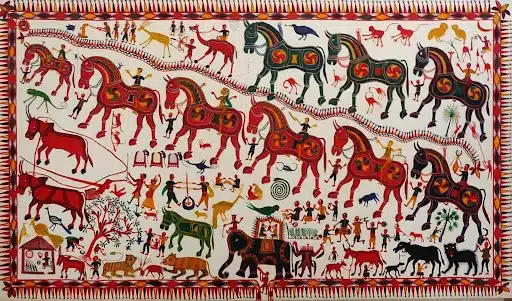
- A key feature is the depiction of seven horses, believed to represent the seven hills of the Gujarat-Madhya Pradesh border region.
- The painting is divided into sections showing the world of gods, human life and nature, including gods, animals, farming, marriage scenes, and village life.
- Each Pithora painting is unique, as artists add personal symbols and finger dots at the end to mark completion and creativity.
Pithora Painting Process of Making
-
Preparation of Background
-
- Pithora painting is made on the central inner wall of the house, which is considered sacred.
- Women prepare the wall by applying a mixture of mud, cow dung, red clay and yellow clay.
- This coating makes the wall smooth, strong and long-lasting.
- The wall is left to dry properly before starting the painting.
- Drawing the Border and Threshold
-
- Before painting, measurements are taken to maintain proper shape and balance.
- A rectangular border is drawn using white or red clay with the help of threads.
- At the bottom, a door or threshold is drawn to represent the Pithora house entrance.
- The threshold is decorated with simple designs like triangles, leaves, flowers, and water patterns.
- Painting of Main Figures
- The painting begins with the invocation of Lord Ganesh, often shown smoking a hookah.
- Important figures like the Kathiya horse and Kathiya Kunwar are painted next.
- These figures are believed to invite gods and goddesses to the Pithora ceremony.
- Use of Colours and Tools
-
- Natural colours made from stones, plants, soil and lime are traditionally used.
- Brushes made from twigs, leaves and fingers are commonly used for painting.
- Bright colours such as white, red, yellow, blue, green and orange are preferred.
- Ritual and Community Process
-
- The painting is done by trained artists called Lakharas.
- It is a ritual activity involving the family and community.
- The painting takes several days or weeks to complete.
- Every Pithora painting is unique, based on beliefs and wishes of the family.
Read about: Warli Painting
Pithora Paintings Motifs
- Pithora painting shows Pithora Baapji, the main tribal god, through two white horses facing each other, which symbolise prosperity and protection.
- Sun, Moon, and stars are drawn near the top of the painting to represent cosmic power and the link between gods and nature.
- Figures like Rani Kajal represent motherhood and fertility, while forest gods reflect the tribal belief in nature as a protector.
- Mythical figures and special horses are used to show rain, fertility and supernatural power, which are important for farming life.
- Animals such as horses, elephants, lions, oxen, monkeys, birds and insects are commonly shown, highlighting harmony between humans and nature.
- Elephants symbolise wealth and prosperity, while lions show strength and courage.
- Scenes of village life like farming, hunting, women carrying water and cattle rearing are included to show daily life of tribal communities.
- Trees and natural elements are painted to show the importance of forests and natural resources.
- Overall, Pithora painting uses symbols and storytelling to express tribal beliefs, nature worship and social life, making it an important part of India’s tribal art tradition.
Pithora Paintings Significance
- Pithora paintings are an important form of tribal art, known for their unique style, natural colours, and symbolic images.
- They have deep cultural and social value, as they reflect the beliefs, traditions and daily life of the Rathwa tribe.
- These paintings act as a bridge between the human and spiritual world, created to honour gods and ancestors.
- They are made during auspicious events like marriages, births, or good harvests to seek health, peace and prosperity.
- The art is ritual-based and community-oriented, accompanied by ceremonies such as Pithora ni Puja, led by priests and family elders.
It help preserve tribal heritage, pass traditions to the next generation, and promote harmony with nature and society.
Pithora Paintings FAQs
Q1: What is Pithora Painting?
Ans: Pithora Painting is a traditional tribal wall art, practiced majorly by Rathwa, Bhil, and Bhilala tribes of Gujarat.
Q2: Where did the Pithora Painting originated?
Ans: Pithora Paintings originated in the tribal regions of Gujarat especially the Panchmahal and Chhota Udaipur districts.
Q3: What motifs and themes are commonly shown in Pithora Painting?
Ans: The Painting mainly shows the tribal gods, Sun, Moon, animals, daily life activities and special occasions like marriage, birth, hunting scenes.
Q4: Who paints the Pithora Painting and where are they painted?
Ans: Pithora paintings are apinted by trained tribal artists called Lakharas and they are usually painted on the inner wall or Verandah of the houses.
Q5: On which occasion are the Pithora Paintings are painted?
Ans: Pithora paintings are painted on special occasions like marriage, child births, good harvest or fulfillment of a wish.
