New Marine Worm Species

New Marine Worm Species

New Marine Worm Species Latest News

Recently, researchers from the Zoological Survey of India (ZSI) have uncovered two new marine worm species (polychaetes) namely Namalycastis solenotognatha and Nereis dhritiae from the Nereidid family coasts of West Bengal.

About New Marine Worm Species

  • Namalycastis solenotognatha
    • It derives its name from the Greek words “solenotos” (channeled) and “gnatha” (jaw).
    • The “channeled jaw” refers to its unusual jaw structure with a large number of canals that emerge from the pulp cavity.
    • Habitat: Ideal conditions for its survival are extreme environments, sulfide-rich, foul-smelling mudflats, and they are mostly found on decomposing mangrove wood and hardened clay.

About Nereis Dhritiae

  • It is named after the first woman director of ZSI, Dhriti Banerjee.
  • Habitat: This species was found living inside wooden dock piles on sandy beaches, which are submerged during times of high tide.

Significance of Nereidid worms

  • They help maintain coastal health, and they play a major role in nutrient cycling and sediment aeration.
  • These species of marine worms were found in areas that were heavily impacted by human activities and subject to pollution.
  • These worms can serve as vital bioindicators and help in monitoring coastal health.

Source: IE

New Marine Worm Species FAQs

Q1: Where were the new marine worm species discovered?

Ans: Bay of Bengal

Q2: What are the names of the new marine worm species?

Ans: Namalycastis solenotognatha and Nereis dhritiae

Model Context Protocol

Model Context Protocol

Model Context Protocol Latest News

Recently, the National Statistics Office under the Ministry of Statistics and Programme Implementation (MoSPI) launched the beta version of its Model Context Protocol (MCP) server for eSankhyiki portal.

About Model Context Protocol

  • It is a technology that allows users to connect directly with datasets through their own AI tools and applications.
  • It is a standard way to make information available to large language models (LLMs).
  • Using MCP, AI applications can connect to data sources (e.g. local files, databases), tools (e.g. search engines, calculators) and workflows (e.g. specialized prompts)—enabling them to access key information and perform tasks.

Key Facts about eSankhyiki portal

  • It provides real-time inputs for planners, policy-makers, researchers and the public at large.
  • The objective of this portal is to establish a comprehensive data management and sharing system for ease of dissemination of official statistics in the country.
  • It has two modules namely:
    • Data Catalogue Module: This module catalogues the major data assets of the Ministry at one place for ease of access.
      • It allows users to search within datasets, including within tables, and download data of interest to increase its value and re-usability.
      • The module has seven data products, namely National Accounts Statistics, Consumer Price Index, Index of Industrial Production, Annual Survey of Industries, Periodic Labour Force Survey, Household Consumption Expenditure Survey and Multiple Indicator Survey.
    • Macro Indicators Module: This module offers time series data of key macro indicators with features for filtering and visualizing data enabling ease of access for the users.
      • It allows users to download custom datasets, visualizations and share them through APIs, thereby increasing the re-usability of data.

Source: PIB

Model Context Protocol FAQs

Q1: What is Model Context Protocol (MCP)?

Ans: An open standard for AI model interoperability

Q2: What is the goal of MCP?

Ans: To enable seamless switching between AI models

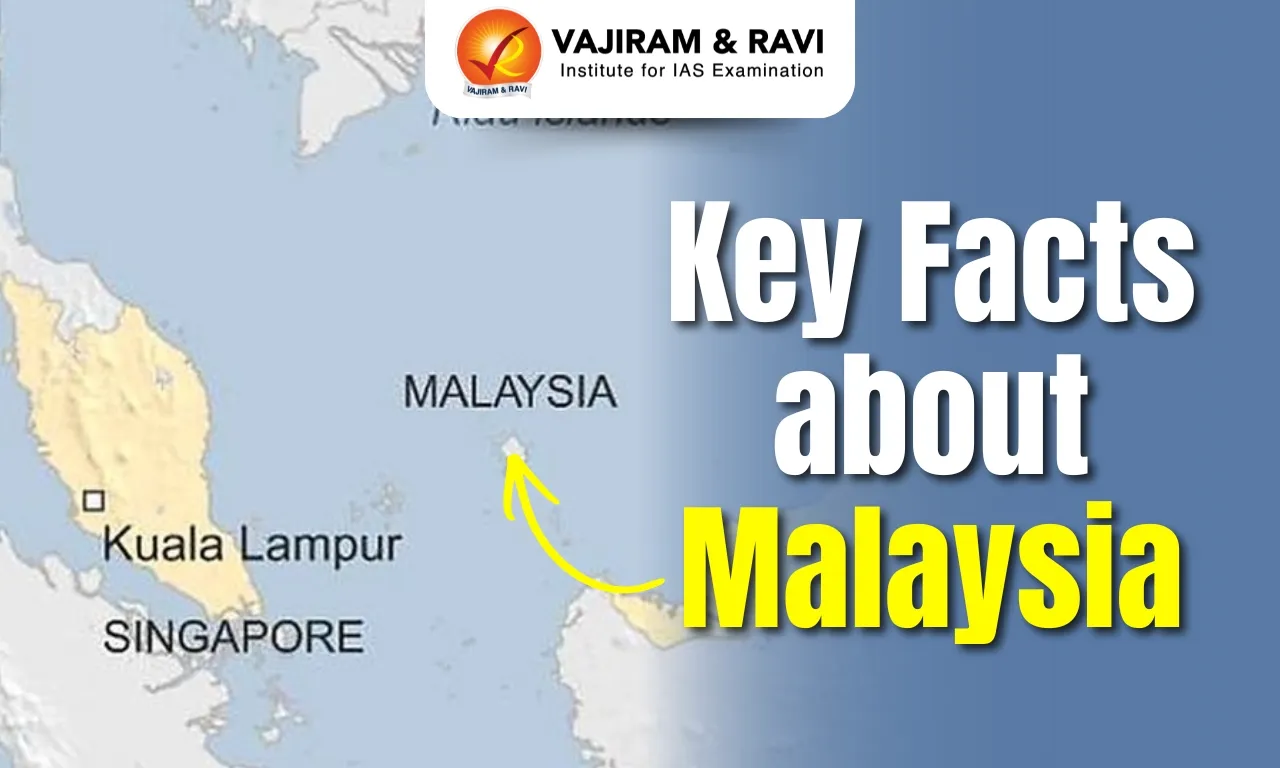
Key Facts about Malaysia

Key Facts about Malaysia

Malaysia Latest News

Recently, the Prime Minister of India began a two-day official visit to Malaysia.

About Malaysia

  • Location: It is a country in Southeast Asia, lying just north of the Equator.
    • The South China Sea separates Malaysia into two regions: Peninsular Malaysia (West Malaysia) and East Malaysia.
  • Bordering Countries: Land (Thailand, Brunei and Indonesia) Maritime (Philippines, Singapore, Vietnam)
  • Bordering Seas and straits: Strait of Malacca, South China Sea, Celebes Sea and the Sulu Sea border Sabah in East Malaysia.
  • Capital:  Kuala Lumpur

Geographical Features of Malaysia

  • Terrain and Climate: The country’s terrain is characterized by coastal plains and jungle-covered mountains in the interior, and its climate is tropical. 
  • Major Mountain: Main Range 
  • Highest Peak: Mount Kinabalu (4,095 metres)
  • Major Rivers: It is drained by Pahang, Rajang, and Kinabatangan rivers.
  • Natural Lakes: Bera Lake and Tasik Chini
  • Natural Resources: It has abundant natural resources including forests, minerals, oil, natural gas and agricultural commodities.

Source: PIB

Malaysia FAQs

Q1: What is the capital of Malaysia?

Ans: Kuala Lumpur

Q2: What is the official language of Malaysia?

Ans: Malay

Bharat GenAI

Bharat GenAI

Bharat GenAI Latest News

Recently, the Ministry of Science & Technology informed that Bharat GenAI Large Language Model will complete text models in all 22 scheduled languages this month.

About Bharat GenAI

  • BharatGen is the first government supported national initiative to develop a range of sovereign foundational AI models tailored to Indian languages and societal contexts.
  • Aim: BharatGen aims to revolutionize AI development across India’s linguistic and cultural spectrum.
  • It spans multiple modalities, including text (via Large Language Models), speech (Text-to-Speech and Automatic Speech Recognition), and vision-language systems.
    • Currently, it supports 15 Indian languages which include Hindi, Assamese, Bengali, Gujarati, Kannada, Maithili, Malayalam, Marathi, Nepali, Oriya, Punjabi, Sanskrit, Sindhi, Tamil and Telugu.
  • It is developed under the National Mission on Interdisciplinary Cyber-Physical Systems (NM-ICPS) and implemented through TIH Foundation for IoT and IoE at IIT Bombay.
  • It is being executed through a network of 25 Technology Innovation Hubs (TIHs), four of which have been upgraded to Technology Translational Research Parks (TTRPs).
  • Pillars of Bharat GenAI: The Mission’s four pillars include technology development, entrepreneurship, human resource development, and international collaboration.
  • It has four key Features
    • Multilingual and multimodal models
    • Bhartiya dataset-based training
    • Open-source platform
    • Generative AI research ecosystem in India

Source: PIB

Bharat GenAI FAQs

Q1: What is BharatGen?

Ans: India's first sovereign AI initiative

Q2: What is the goal of BharatGen?

Ans: To create AI models tailored to India's languages and culture

Titanidiops Kolhapurensis

Titanidiops Kolhapurensis

Titanidiops Kolhapurensis Latest News

A new species of trapdoor spider named Titanidiops kolhapurensis has been recently discovered in the grasslands of Kolhapur district by a joint team of researchers from the Thackeray Wildlife Foundation and Shivaji University, Kolhapur (SUK).

About Titanidiops Kolhapurensis

  • It is a new species of trapdoor spider.
  • It has been discovered in the grasslands of the Kolhapur district, Maharashtra.
  • This spider builds vertical or slanted burrows in flat or sloping grassy meadows.
  • These entrances are masterfully camouflaged to blend with the soil, making them nearly invisible to the naked eye.
  • While researchers found a healthy presence of the species in natural forests and native grasslands, they were notably absent in areas overtaken by exotic tree plantations, such as Gliricidia sepium (commonly known as Undirmari).
  • It is on the verge of local extinction due to rapid habitat degradation.

What are Trapdoor Spiders?

  • They are a unique group of large-bodied, burrowing spiders found across several taxonomic families. 
  • They construct burrows in the ground, the entrance of which features a silken-hinged door
  • They burrow up to 6 inches (15 centimeters) deep in the soil.
  • The reclusive spider feeds by quickly opening the trapdoor and grabbing an insect or other arthropod that is passing close by. 
  • They are generally timid and quickly retreat into the burrow if frightened.
  • Their bite is not considered medically significant to humans.
  • They are found in climates with tropical, subtropical, and warm temperatures.
  • These spiders typically grow to about one inch (2.5 centimeters) long, with some larger species reaching up to 1.5 inches (4 centimeters). 
  • Despite their protective burrows, trapdoor spiders are often threatened by spider-hunting wasps. 
  • They typically do not disperse far from their mother’s burrow, making populations vulnerable to human development or other land-use changes.

Source: TOI

Titanidiops Kolhapurensis FAQs

Q1: What is Titanidiops kolhapurensis?

Ans: It is a newly discovered species of trapdoor spider.

Q2: Where was Titanidiops kolhapurensis discovered?

Ans: In the grasslands of Kolhapur district, Maharashtra.

Q3: What are trapdoor spiders?

Ans: They are large-bodied, burrowing spiders belonging to several taxonomic families.

Q4: How do trapdoor spiders capture their prey?

Ans: By quickly opening the trapdoor and grabbing passing insects or arthropods.

INS Arnala

INS Arnala

INS Arnala Latest News

INS Arnala, the Indian Navy’s first indigenously designed and built Anti-Submarine Warfare Shallow Water Craft (ASW-SWC), marks a significant milestone in India’s transition from a “Buyer’s Navy” to a “Builder’s Navy”.

About INS Arnala

  • It is the first of the eight ASW SWCs (Anti-Submarine Warfare Shallow Water Craft) built for the Indian Navy.
  • It is the Indian Navy’s first indigenously designed and built ASW SWC.
  • It was designed and built by Garden Reach Shipbuilders and Engineers (GRSE), Kolkata.
  • It was commissioned into the Eastern Naval Command of the Indian Navy on 18 Jun 2025.
  • It is named after the historic fort ‘Arnala’ located off Vasai, Maharashtra.
  • This 77-meter-long warship, with a gross tonnage of over 1490 tonnes, is the largest Indian Naval warship to be propelled by a Diesel Engine-Waterjet combination.
  • The ship has been designed for underwater surveillance, search & rescue operations, and Low Intensity Maritime Operations (LIMO). 
  • The ship is capable of undertaking Anti-Submarine Warfare (ASW) in coastal waters, along with advanced mine-laying capabilities. 
  • The vessel features homegrown systems, including stealth technology, electronic warfare capabilities, and advanced sensors, which improve combat readiness.

Source: TOI

INS Arnala FAQs

Q1: What is INS Arnala?

Ans: INS Arnala is an Anti-Submarine Warfare Shallow Water Craft (ASW-SWC) of the Indian Navy.

Q2: Why is INS Arnala significant for the Indian Navy?

Ans: It is the first indigenously designed and built ASW-SWC of the Indian Navy.

Q3: When was INS Arnala commissioned into the Indian Navy?

Ans: INS Arnala was commissioned on 18 June 2025.

Q4: What are the primary operational roles of INS Arnala?

Ans: Underwater surveillance, search and rescue, and Low Intensity Maritime Operations (LIMO).

Bailey Bridge

Bailey Bridge

Bailey Bridge Latest News

Recently, India has sent Bailey bridge materials to Sri Lanka for post-Cyclone reconstruction.

About Bailey Bridge

  • It is a type of modular bridge whose parts are pre-built, so they can be put together quickly as needed. 
  • An English civil engineer named Donald Coleman Bailey is credited with inventing it in 1941.
  • The key characteristics include their modularity, portability, strength, and versatility. 
  • It is preferred because these bridges are designed for rapid construction in difficult conditions without the need for heavy equipment or sophisticated construction methods. 
  • Design and Constructions of Bailey bridge
    • The bridges are made of modular steel panels, which can be easily transported and assembled using manpower alone.
    • The construction of a Bailey bridge involves assembling prefabricated panels into sections, which are then connected to form the bridge’s span.
    • The panels are connected using pins and bolts, creating a truss structure that distributes the load evenly. 
  • Uses: The design supports heavy loads, including tanks and other military vehicles.
  • Advantages: Bailey bridge assembly covers a small area, which can avoid the situation that large hoisting equipment cannot enter the construction site. 
  • Ideal for: It is generally used in terrains that span rivers, valleys, and spans that are not very large.

Source: News On AIR

Bailey Bridge FAQs

Q1: Who invented the Bailey Bridge?

Ans: Donald Coleman Bailey

Q2: What is a key feature of Bailey Bridges?

Ans: Modular and portable design

Agni-3 Missile

Agni-3 Missile

Agni-3 Missile Latest News

Recently the Intermediate Range Ballistic Missile ‘Agni-3’ was successfully test-fired from the Integrated Test Range, Chandipur, Odisha.

About Agni-3 Missile

  • It is an indigenously developed intermediate-range ballistic missile (IRBM).
  • It is a surface-to-surface ballistic missile.
  • It is one of the sophisticated and accurate missiles of its class and has already been inducted into the armed forces.

Features of Agni-3 Missile

  • The missile is two-stage and solid-fuelled, capable of carrying a 1,500 kg payload.
  • Range: 3,000–3,500 km
  • It is designed primarily as a nuclear delivery system, with an estimated warhead yield of 200–300 kilotons.
  • The missile measures 16.7 metres in length, 2 metres in diameter and has a launch weight of 48,300 kg.
  • It uses a strapdown inertial navigation system (INS) supported by GPS, giving it an accuracy of around 40 metres circular error probable (CEP). 
  • Its first stage uses a maraging steel motor case, while the second stage employs a carbon-fibre motor case, both featuring thrust vector control systems for improved accuracy and stability.
  • Due to its high range of circular error probable (CEP), the Agni-3 missile is known as one of the world's most accurate strategic ballistic missiles of its range class.

Source: PIB

Agni-3 Missile FAQs

Q1: What is the range of Agni-3 Missile?

Ans: 3,000-3,500 km

Q2: What type of propulsion does Agni-3 Missile use?

Ans: Solid-fuel propulsion

Reticulated Python

Reticulated Python

Reticulated Python Latest News

A giant female reticulated python discovered deep in the forests of the Indonesian island of Sulawesi late last year is now believed to be the longest measured snake in the world at 7.22 metres (23 feet 8 inches), the Guinness Book of World Records has confirmed.

About Reticulated Python

  • It is a giant constricting snake belonging to the python family, Pythonidae. 
  • Scientific Name: Malayopython reticulatus
  • It is the longest snake in the world and the third heaviest after the green anaconda and the Burmese python
  • Like all pythons, it is a non-venomous constrictor. 
  • It is an ambush predator, usually waiting until prey comes within striking range before trapping it in its rings and killing it by constriction. 

Reticulated Python Distribution

    • It is native to South and Southeast Asia. 
    • It inhabits tropical forest regions in India, Indonesia, the Philippines, and other parts of Southeast Asia.

Reticulated Python Features

  • Specimens have been recorded reaching a length of more than 7 metres and weighing more than 160 kg.
  • They have grayish-tan bodies with X- or diamond-shaped blotches containing black, white, yellow, and red scales.
  • The name ‘reticulated’ comes from the intricate and beautiful pattern of its skin, which resembles a net (or ‘lattice’). 
  • The snake’s head has smooth brown scales. 
  • The head is elongated with a dark line down the middle, and the eyes are orange with vertical pupils.
  • Embedded in the lip scales are heat-sensing pits that can detect any object or prey whose temperature exceeds that of the surrounding environment.

Reticulated Python Conservation Status

It is classified as 'Least Concern' under the IUCN Red List.

Source: DTE

Reticulated Python FAQs

Q1: What is a Reticulated Python?

Ans: It is a giant constricting snake belonging to the python family, Pythonidae.

Q2: What is the scientific name of the Reticulated Python?

Ans: Malayopython reticulatus.

Q3: What is the distinguishing global record of the Reticulated Python?

Ans: It is the longest snake in the world.

Q4: Is the Reticulated Python venomous?

Ans: No, it is a non-venomous constrictor.

Rat-Hole Mining Tragedy in Meghalaya – A Governance and Regulatory Failure

Rat-Hole Mining

Rat-Hole Mining Latest News

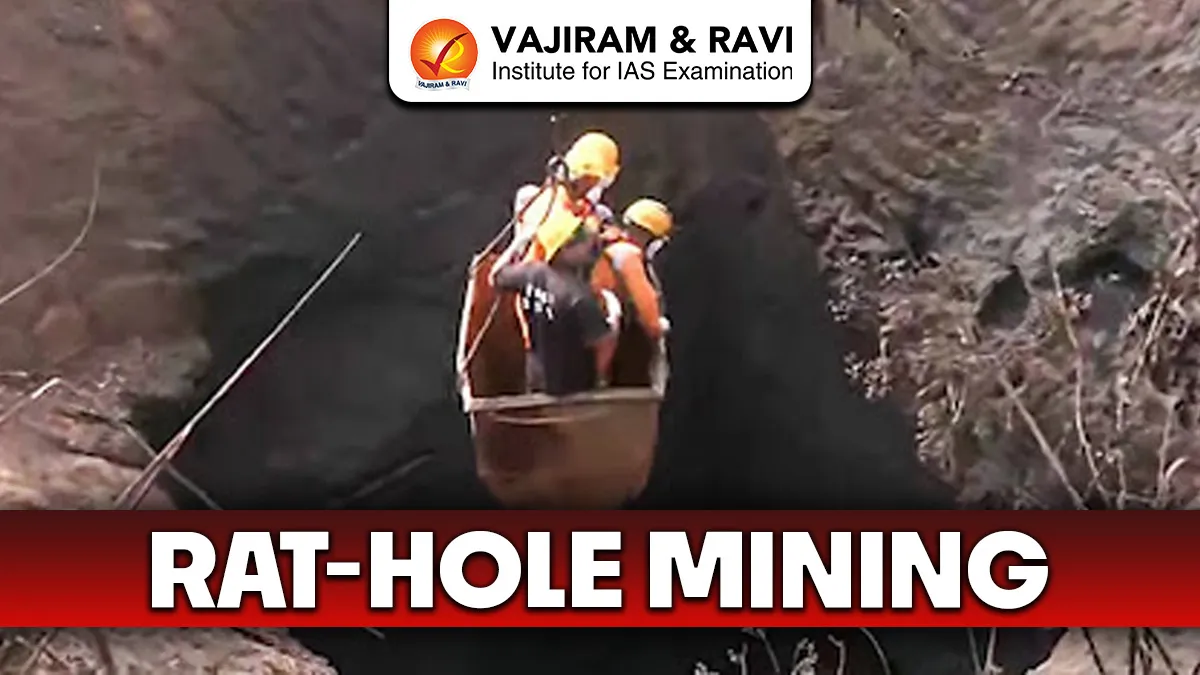
  • A deadly explosion in an illegally operating rat-hole coal mine in East Jaintia Hills district, Meghalaya, has resulted in the death of 25 miners. 
  • The incident has once again highlighted the persistence of illegal mining in the state despite a ban by the National Green Tribunal (NGT) and the Supreme Court.
  • It raises serious concerns about regulatory enforcement, governance failure, labour safety, and disaster management preparedness.

Nature of the Incident

  • A dynamite explosion occurred in a rat-hole mine in the Thangkso area, a remote region with poor connectivity.
  • Rescue teams comprising the NDRF, SDRF, and Special Rescue Teams retrieved multiple bodies from narrow underground tunnels.
  • The mine structure included - 
    • Five vertical shafts (almost 100 feet deep)
    • Each shaft branching into 2–3 narrow horizontal tunnels
    • Tunnels measuring only 2 feet high and 3 feet wide, requiring miners to crawl
  • Three bodies were found 350 feet horizontally inside a rat-hole tunnel.
  • Rescue operations were hampered by -
  • Water accumulation
    • Mudslides due to dripping water
    • Rockfall hazards
    • Extremely confined working spaces

Rat-Hole Mining - Structural and Environmental Concerns

  • What is rat-hole mining?
    • A primitive and hazardous coal extraction method, which involves digging narrow pits and horizontal tunnels to manually extract coal.
    • It is widely prevalent in Meghalaya due to unique land ownership patterns (community/private ownership).
  • Why is it problematic?
    • Because it violates the Mines and Minerals (Development and Regulation) Act, 1957 (MMDR Act).
    • It was banned by the NGT (2014) and the ban was upheld by the Supreme Court.
    • These violations leads to -
      • Severe environmental degradation
      • Acid mine drainage
      • Water contamination
      • Land instability
      • Loss of biodiversity
    • There is a complete absence of worker safety mechanisms.

Legal and Administrative Dimensions

  • Criminal action: Following the incident, a case FIR registered under charges that include culpable homicide, violation of the MMDR Act and the Explosive Substances Act. Two mine owners were arrested.
  • Judicial oversight:
    • Justice (Retd) BP Katakey committee: Appointed by the Meghalaya High Court to monitor illegal coal-mining in the state since 2022 following a suo-motu PIL taken up by the court on the issue.
    • Findings: Flagged Widespread illegal mining in Meghalaya, particularly the East Jaintia Hills.
    • Meghalaya HC: “No one in the state, except the high court, is taking the issue very seriously”.

Scale of the Illegal Mining Problem

  • As per Justice Katakey Committee findings, over 22,000 illegal mine openings in East Jaintia Hills alone, and over 25,000 across Meghalaya.
  • East Jaintia Hills was identified as the worst-affected district.
  • Past tragedies: 2018 Ksan incident – 15 miners killed in flooding, Umpleng incident – 5 miners died.
  • This indicates a pattern of systemic regulatory collapse rather than isolated accidents.

Challenges Highlighted

  • Governance deficit: Weak enforcement of NGT and Supreme Court orders. Lack of political and administrative will. Local complicity and informal protection networks.
  • Terrain and accessibility: Remote location (25 km takes around 3 hours by road). Difficult terrain requiring 4WD vehicles. Slows both regulation and rescue.
  • Informal labour exploitation: Migrant and economically vulnerable workers. Absence of safety nets or formal contracts. Occupational hazards without social security.
  • Disaster management constraints: Hazardous confined spaces. Waterlogging and collapse risk. Inadequate early detection and monitoring systems.
  • Constitutional and federal complexity: Meghalaya’s Sixth Schedule status. Community land ownership under Autonomous District Councils. Regulatory ambiguity exploited for illegal mining.
  • Broader issues:
    • Sustainable Development vs livelihood concerns
    • Environmental governance and rule of law
    • Judicial activism vs executive inaction
    • Cooperative federalism in resource regulation
    • Disaster risk reduction in informal sectors
    • Internal security linkages (illegal mining networks and criminal economy)

Way Forward

  • Strict enforcement and monitoring: Real-time satellite surveillance of illegal mining. Independent regulatory authority for mining oversight. Strengthened coordination between State Government, Autonomous Councils, and Centre.
  • Institutional accountability: Fix responsibility of district officials. Time-bound compliance reporting to High Court. Strengthen implementation of MMDR Act provisions.
  • Formalisation of the mining sector: Introduce regulated, scientific, and environmentally compliant mining models. Alternative livelihood programs for affected communities. Skill development and employment diversification.
  • Environmental restoration: Mine closure plans. Rehabilitation of degraded land and water bodies. Polluter Pays Principle implementation.
  • Worker safety framework: Strict compliance with labour laws. Insurance and compensation mechanisms. Community awareness regarding occupational risks.

Conclusion

  • The Meghalaya rat-hole mining tragedy is not merely a mining accident—it is a stark reminder of the consequences of institutional apathy, regulatory failure, and socio-economic vulnerability. 
  • Despite judicial bans and repeated warnings, illegal mining continues unabated, turning preventable disasters into recurring tragedies.
  • Ensuring environmental sustainability, worker safety, and accountable administration is not just a policy necessity but a constitutional obligation under Articles 21 and 48A of the Indian Constitution.
  • Unless systemic reforms replace episodic reactions, such “incidents waiting to happen” will continue to claim lives.

Source: IE

Rat-Hole Mining FAQs

Q1: What are the structural and environmental challenges associated with rat-hole mining in Meghalaya?

Ans: It is a hazardous, unscientific method causing severe environmental degradation, land instability, and loss of life.

Q2: Despite the NGT and SC ban, why illegal mining continues in Meghalaya?

Ans: Due to weak enforcement, administrative complicity, regulatory ambiguity under the Sixth Schedule, and lack of political will.

Q3: How does the Meghalaya mining tragedy highlight gaps in India’s disaster management framework?

Ans: The incident exposes challenges in rescue operations in informal sectors, poor terrain accessibility, etc.

Q4: What is the role of judicial intervention in addressing illegal coal mining in Meghalaya?

Ans: Judicial oversight (NGT orders, SC rulings, and HC monitoring) reflects active judicial intervention amid executive inaction.

Q5: What measures are required to balance livelihood concerns with environmental sustainability?

Ans: Formalising mining practices, enforcing environmental compliance, promoting alternative livelihoods, etc.

India’s Russian Oil Imports Likely to Dip, Not Disappear: Energy Security Explained

India’s Russian Oil Imports

India’s Russian Oil Imports Latest News

  • US President Donald Trump announced a sharp reduction in tariffs on Indian goods from 50% to 18%, claiming that India has agreed to stop buying Russian crude oil and instead increase purchases from the US and Venezuela. 
  • While India welcomed the trade deal, it has not confirmed any commitment to halt Russian oil imports.

India’s Official Position: Energy Security First

  • India has not publicly endorsed Trump’s claim on Russian oil.
  • The MEA reiterated that energy security for 1.4 billion people remains India’s overriding priority. According to the government, India’s strategy is based on:
    • Diversification of energy sources
    • Market conditions
    • Evolving international dynamics
  • No formal directive has yet been issued to Indian refiners to stop importing Russian crude.

Why a Complete Halt Is Unlikely

  • Completely stopping Russian oil imports is not feasible in the current context due to:
    • Technical challenges in quickly switching crude grades
    • Commercial constraints, including pricing and long-term contracts
    • Logistical limitations in ramping up supplies from the US and Venezuela
    • Strategic autonomy concerns in energy trade decisions
  • Experts note that increasing imports from alternative suppliers is easier said than done, and cannot happen overnight.

Strategic Autonomy and Market Realities

  • India’s energy policy has consistently aimed to balance:
    • Geopolitical pressures
    • Cost competitiveness
    • Supply reliability
  • A sudden halt to Russian oil would undermine India’s strategic autonomy and expose it to price volatility and supply risks.
  • Industry analysts expect:
    • A gradual reduction in Russian oil imports.
    • A measured increase in crude purchases from the US and other suppliers.
    • Continued emphasis on flexibility and diversification, rather than rigid alignment.

Economic Logic: Discounts and Refining Compatibility

  • Analysts note that Russian crude remains economically critical:
    • Volumes are locked in for the next 8–10 weeks because the orders are already placed.
    • Deep discounts on Urals (Russia’s flagship crude grade)) crude relative to ICE Brent (benchmark) support margins.
    • India’s complex refining system is well-suited to Russian grades.

Russian Oil to Remain a Major Part of India’s Import Basket in the Near Term

  • Indian refiners have already booked Russian crude cargoes through March and parts of April, making any abrupt cancellation impractical. 
  • Even if the government advises a reduction, refiners will need several months to gradually scale down purchases, given existing contracts and supply-chain constraints.
  • A complete halt is especially unfeasible due to Nayara Energy, which processes about 400,000 barrels per day (bpd) and is almost entirely dependent on Russian oil.
    • Rosneft, Russia’s national oil company, is a major shareholder in Nayara Energy.
    • Nayara has been sanctioned by the European Union, while Rosneft faces US and EU sanctions.
    • These sanctions have severely limited access to alternative crude sources.

Likely Scale of Reduction: Gradual, Not Zero

  • Energy experts broadly agree that:
    • India is unlikely to reduce Russian oil imports to zero
    • Imports could fall from an average of ~1.6 million bpd in 2025 to around 500,000 bpd in the medium term
  • Even at 500,000 bpd, Russian crude would still account for ~10% of India’s total oil imports.

Recent Trends: Decline Already Underway

  • India’s Russian oil imports have steadily declined to a three-year low, following US sanctions on major Russian producers, including Rosneft and Lukoil.
  • According to a data:
    • Imports peaked at 2.09 million bpd in June 2025
    • Fell to 1.16 million bpd in January 2026
  • Despite the decline:
    • Russian oil accounted for 22% of India’s total imports in January 2026
    • This is lower than the 35–40%+ share seen earlier, but still significant
  • This dominance is expected to continue for several months.

Replacing Russian crude with US, Venezuelan oil is difficult

  • Replacing Russian crude is theoretically possible, since before the Ukraine war, Russia accounted for less than 2% of India’s oil imports. 
  • However, the real challenge lies in how much and how fast supplies from the United States and Venezuela can substitute Russian volumes.

US Oil: Cost and Compatibility Constraints

  • India has been increasing oil imports from the US, and this trend can continue if prices remain competitive. However, two key constraints exist:
    • Higher transportation costs: Shipping crude from the US to India costs more than double compared to supplies from West Asia.
    • Crude quality mismatch: Indian refineries are optimised for medium-sour crude from Russia and West Asia. US crude is lighter and sweeter, making it less suitable for some refinery configurations.
    • While Indian refineries can technically process most crude types, efficiency and output vary by grade

Venezuelan Oil: Opportunity with Limits

  • Venezuelan crude is closer in quality to Russian oil and could be a partial substitute. 
  • However, limitations remain:
    • Low production: Venezuela currently produces only about 1 million bpd
    • High competition: Much of this crude is also in demand in the US
    • Long-term constraints: Meaningfully increasing output would require years and billions of dollars in investment
  • As a result, Venezuelan oil can only partially and intermittently replace Russian volumes.

India’s Strategic and Trade Autonomy in Oil Imports

  • India maintained a strong stance on strategic autonomy through most of last year, despite sustained pressure from the United States under President Donald Trump to curb Russian oil purchases.
  • New Delhi was unwilling to be directed on trade partners, particularly Russia—an old and key strategic partner
  • Notably, reductions in recent months occurred only after US sanctions on Rosneft and Lukoil, not due to bilateral pressure.
  • A recent statement by the MEA suggests India is unlikely to change its stance on trade autonomy. Maintaining some Russian oil volumes aligns with this position and preserves flexibility in energy sourcing.

Source: IE | WSJ

India’s Russian Oil Imports FAQs

Q1: Why are India’s Russian oil imports unlikely to stop completely?

Ans: India’s Russian oil imports cannot stop abruptly due to refinery dependence, existing contracts, discounted pricing, and energy security needs of a large, import-dependent economy.

Q2: How do sanctions affect India’s Russian oil imports?

Ans: Sanctions on Russian firms restrict payment and logistics but do not eliminate India’s Russian oil imports, as refiners adapt through alternative shipping, insurance, and pricing mechanisms.

Q3: What role does Nayara Energy play in India’s Russian oil imports?

Ans: Nayara Energy depends almost entirely on Russian crude due to sanctions, making India’s Russian oil imports essential to keep its 400,000 bpd refinery operational.

Q4: Can US or Venezuelan oil replace India’s Russian oil imports quickly?

Ans: Replacing India’s Russian oil imports with US or Venezuelan crude is difficult due to higher freight costs, crude quality mismatch, limited production, and long-term investment requirements.

Q5: How does strategic autonomy shape India’s Russian oil imports?

Ans: India’s Russian oil imports reflect strategic autonomy, balancing geopolitical pressure with economic interests, ensuring diversification without surrendering energy policy decisions to external actors.


RBI Policy Rate Pause Explained: Why the RBI Kept Interest Rates Unchanged

RBI Policy Rate Pause

RBI Policy Rate Pause Latest News

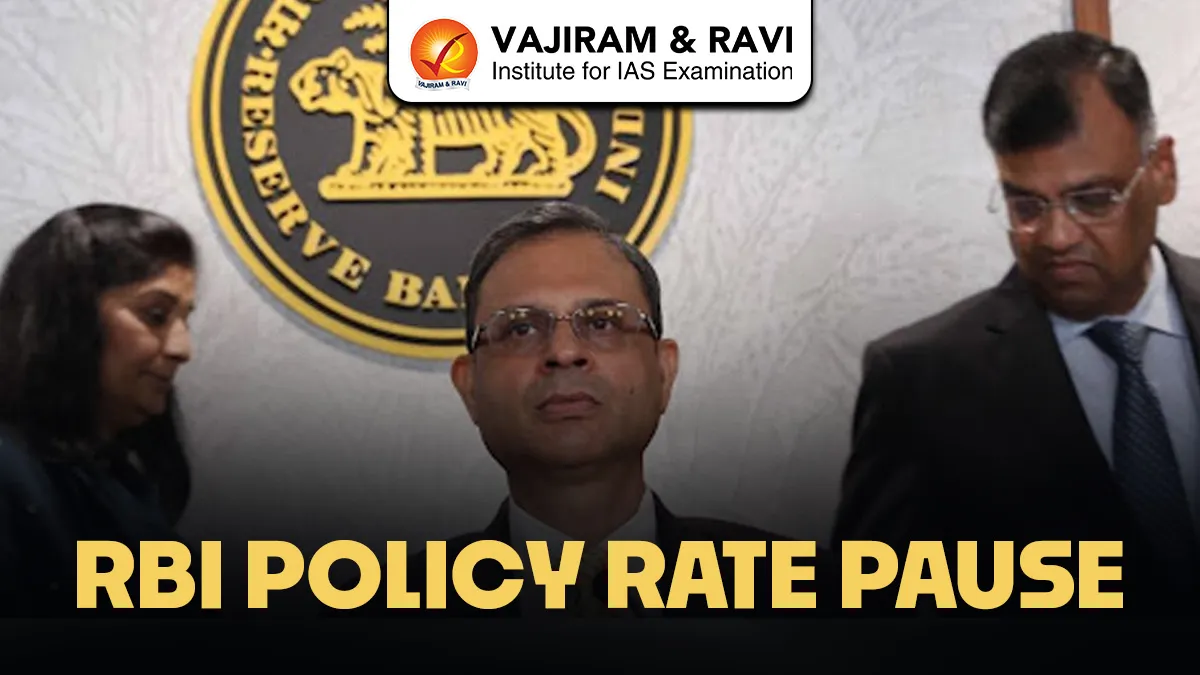
  • The Reserve Bank of India’s Monetary Policy Committee (MPC) decided to keep the repo rate unchanged at 5.25%, maintaining the status quo on interest rates. 
  • As a result, bank lending and deposit rates — and EMIs on home and personal loans — are expected to remain stable.
  • The MPC revised India’s GDP growth projection upward to 7.4% for FY 2026 (from 7.3%) and retail inflation to 2.1% (from 2%), reflecting confidence in growth momentum alongside benign price pressures.
  • The committee also retained a neutral policy stance, signalling flexibility to respond to evolving domestic and global conditions. 
  • This comes shortly after India announced trade agreements with the US and the European Union, and follows the Union Budget, which shaped the broader macroeconomic context.
  • The pause follows a 25 basis point rate cut in December, which reduced the repo rate to its current level. 
  • With cumulative rate cuts of 125 basis points in 2025, the decision marks a breather after a phase of sustained monetary easing, as the RBI balances growth support with future policy optionality.

Why the RBI Chose to Hold Interest Rates Steady

  • The decision by the Reserve Bank of India to pause on rates reflects a benign inflation outlook alongside strong growth momentum. 
  • Domestic economic conditions remain broadly resilient, giving the MPC space to wait and watch rather than act immediately.

Budget Measures Supporting Growth

  • RBI Governor Sanjay Malhotra noted that several measures announced in the FY26 Union Budget are expected to boost economic activity. 
  • These include:
    • Income tax cuts, improving household disposable income
    • GST rate rationalisation, easing cost pressures
    • Benefits of earlier RBI rate cuts, supporting credit and consumption
  • Together, these factors have strengthened the near-term growth outlook.

External Sector: Cushion from Trade Agreements

  • Since the December policy review, India has signed four trade agreements with:
    • The United States
    • The European Union
    • Oman
    • New Zealand
  • These agreements are expected to:
    • Boost exports and investments
    • Reduce vulnerability to global uncertainties
    • Support medium- to long-term growth
  • However, the RBI flagged that global geopolitical developments and external headwinds continue to warrant close monitoring, even as the US trade deal augurs well for the economy.

Consumption as the Main Growth Driver

  • Economic growth is being underpinned by robust consumption, projected to grow at around 7% in FY26. 
  • The consumption outlook has been reinforced by:
    • Subdued inflation
    • Fiscal support measures
    • Monetary easing already delivered
  • Additionally, statistical factors, such as a low GDP deflator due to low inflation, contributed to stronger growth in the first half of the fiscal year.

Inflation Outlook: Benign but Watched Closely

  • Headline inflation in November and December remained below the tolerance band.
  • CPI inflation projections for:
    • Q1 FY27: 4.0%
    • Q2 FY27: 4.2% (slightly revised upwards)
  • The RBI clarified that the upward revision is mainly due to higher prices of precious metals, contributing 60–70 basis points, while underlying inflation pressures remain low.

Impact of RBI’s Rate Pause on Lending and Deposit Rates

  • With the repo rate unchanged, lending rates linked to external benchmarks, particularly the repo rate, are expected to remain stable in the near term.
  • As a result:
    • No immediate change in EMIs for home and personal loans linked to the repo rate
    • Borrowers gain certainty over repayment obligations

Possible Movement in MCLR-Linked Loans

  • Loans linked to the Marginal Cost of Funds-Based Lending Rate (MCLR) may still see adjustments.
  • This is because banks can revise MCLR-based rates based on:
    • Changes in funding costs
    • Liquidity conditions
    • Deposit mobilisation trends
  • Thus, MCLR-linked borrowers may experience rate changes even without a repo rate move.

Deposit Rates to Remain Broadly Steady

  • On the deposit side:
    • Interest rates are expected to stay stable in the near term.
    • Any change would depend on sustained liquidity pressures or shifts in banks’ funding requirements.

The Road Ahead: RBI’s Cautious Pause Amid Global Uncertainty

  • The Reserve Bank of India appears comfortable with a cautious, wait-and-watch stance. 
  • With economic growth holding firm, inflation under control, and fiscal spending providing support, there is no immediate need to alter policy rates. 
  • The February decision thus represents a deliberate pause rather than a shift in policy direction.

Growth Boost from Trade Agreements

  • RBI Governor highlighted that recent and forthcoming trade agreements with the European Union and the United States are likely to sustain growth momentum over the medium term.
  • He also noted that global growth could be marginally stronger than earlier projections, supported by:
    • Rising technology investments
    • Accommodative financial conditions
    • Large-scale fiscal stimulus across major economies

Persistent External Risks

  • Despite the positive outlook, risks remain significant:
    • Geopolitical tensions and rising trade frictions
    • Volatile crude oil prices
    • Diverging global monetary policies, as inflation remains above target in many advanced economies and central banks approach the end of easing cycles

Fiscal–Monetary Alignment

  • With the government committed to fiscal consolidation, monetary policy is unlikely to face additional pressure. 

Source: IE | IE

RBI Policy Rate Pause FAQs

Q1: Why did the RBI announce a policy rate pause?

Ans: The rbi policy rate pause reflects confidence in strong growth and benign inflation, allowing the RBI to wait after cumulative 125 bps cuts while retaining flexibility amid global uncertainty.

Q2: What does the RBI policy rate pause mean for borrowers?

Ans: The rbi policy rate pause means repo-linked loan EMIs will remain stable, offering repayment certainty, though MCLR-linked loans may still change depending on banks’ funding costs.

Q3: How does inflation influence the RBI policy rate pause?

Ans: Low and stable inflation enabled the rbi policy rate pause, as price pressures remain within tolerance, with recent CPI revisions driven mainly by precious metals, not core inflation.

Q4: How is economic growth linked to the RBI policy rate pause?

Ans: Strong consumption-led growth and supportive Budget measures justified the rbi policy rate pause, as the RBI sees no immediate need for further easing to stimulate demand.

Q5: What does the RBI policy rate pause signal for future monetary policy?

Ans: The rbi policy rate pause signals a cautious, data-dependent approach, balancing growth support with risks from geopolitics, global interest rates, and volatile commodity prices.

RBI’s Proposed Framework for Compensation in Digital Fraud Cases

Digital Fraud

Digital Fraud Latest News

  • In February 2026, the Reserve Bank of India announced a draft framework to compensate customers up to Rs. 25,000 for losses arising from small-value digital frauds, even in certain cases of user error. 

Background: Growth of Digital Payments and Fraud Risks in India

  • India has witnessed an unprecedented expansion in digital payments over the past decade, driven by initiatives such as UPI, Aadhaar-based authentication, and financial inclusion programmes. 
  • While this shift has enhanced convenience and transparency, it has also led to a rise in digital fraud cases, including phishing, OTP-based scams, unauthorised electronic transactions, and social engineering attacks.
  • According to regulatory assessments, fraudsters increasingly exploit gaps in user awareness, delayed reporting, and weak authentication mechanisms. 
  • Senior citizens and first-time digital users are particularly vulnerable. 
  • This evolving risk landscape has necessitated stronger regulatory safeguards to protect customers while maintaining trust in digital payment systems.

Existing RBI Framework on Customer Liability

  • The RBI first issued detailed instructions in 2017 to limit customer liability in unauthorised electronic banking transactions. These guidelines classified liability based on factors such as:
    • Delay in reporting unauthorised transactions
    • Negligence on the part of banks or customers
    • Nature of the fraud (system failure vs. customer compromise)
  • Under this regime, customers could enjoy zero or limited liability if they reported fraud promptly. However, the framework did not mandate direct compensation for small-value losses, especially in cases involving partial customer fault, such as OTP sharing under deception.
  • With rapid technological changes and growing fraud sophistication, RBI reviewed the adequacy of these rules, leading to the proposed revisions. 

Key Features of the Proposed RBI Compensation Framework

  • The newly proposed framework seeks to introduce a structured compensation mechanism for victims of small-value digital fraud. Its major features include:
    • Compensation Cap: Customers may be compensated for losses up to Rs. 25,000 per fraudulent transaction.
    • Scope: The framework applies primarily to small-value digital frauds, where recovery through existing mechanisms is difficult.
    • User Error Consideration: Compensation may be available even in cases where customers shared OTPs or credentials under coercion or deception, subject to conditions.
    • Public Consultation: Draft instructions will be placed in the public domain to invite stakeholder feedback before finalisation.
  • This approach marks a shift from a purely liability-based framework to a consumer-protection-oriented compensation model. 

Additional Safety Measures for Digital Payments

  • Alongside compensation, the RBI has proposed several preventive measures to reduce fraud incidence:
    • Lagged Credits: Introducing time delays before crediting funds in high-risk transactions.
    • Enhanced Authentication: Additional verification layers for vulnerable groups, such as senior citizens.
    • Targeted Risk Profiling: Differentiated safeguards based on user behaviour and transaction patterns.
  • These measures aim to balance user convenience with systemic security, especially in high-volume digital ecosystems.

Related Consumer Protection Reforms by RBI

  • The compensation proposal is part of a broader regulatory push to strengthen consumer rights in financial services. The RBI has announced draft guidelines in three key areas:
    • Mis-selling of Financial Products: Ensuring the suitability of third-party products sold by banks.
    • Loan Recovery Practices: Harmonising rules governing recovery agents and borrower treatment.
    • Customer Liability Norms: Updating rules on unauthorised electronic transactions to reflect current risks.
  • Together, these reforms indicate a shift towards outcome-based consumer protection rather than procedural compliance. 

Significance for India’s Digital Economy

  • The proposed compensation framework is significant for several reasons:
    • Trust Building: Reassures users that financial losses from fraud will not always be borne individually.
    • Financial Inclusion: Encourages continued digital adoption among vulnerable populations.
    • Regulatory Accountability: Places greater responsibility on banks and payment service providers to strengthen security systems.
    • Global Alignment: Reflects international best practices in consumer protection for digital finance.
  • For India, which aims to become a global leader in digital public infrastructure, safeguarding user confidence is critical.

Challenges and Implementation Concerns

  • Despite its benefits, the framework raises certain challenges:
    • Moral Hazard: Risk of reduced user caution if compensation is perceived as guaranteed.
    • Operational Burden: Banks must establish clear, fast, and fair grievance redressal mechanisms.
    • Fraud Classification: Differentiating genuine victims from negligent behaviour will require robust assessment protocols.
  • Effective implementation will depend on clear guidelines, technological support, and coordination between banks, regulators, and law enforcement agencies.

Source: TH | IE

Digital Fraud FAQs

Q1: What is the RBI’s proposed digital fraud compensation limit?

Ans: The RBI has proposed compensation up to ₹25,000 for losses from small-value digital frauds.

Q2: Does the framework apply even if customers share OTPs?

Ans: Yes, in certain cases involving deception or coercion, compensation may still be provided.

Q3: When were the earlier customer liability rules issued?

Ans: The existing RBI instructions on unauthorised electronic transactions were issued in 2017.

Q4: Who will finalise the compensation rules?

Ans: The RBI will finalise the framework after public consultation on the draft guidelines.

Q5: Why is the new framework important for digital payments?

Ans: It enhances consumer confidence, financial inclusion, and systemic trust in India’s digital payment systems.

Enquire Now