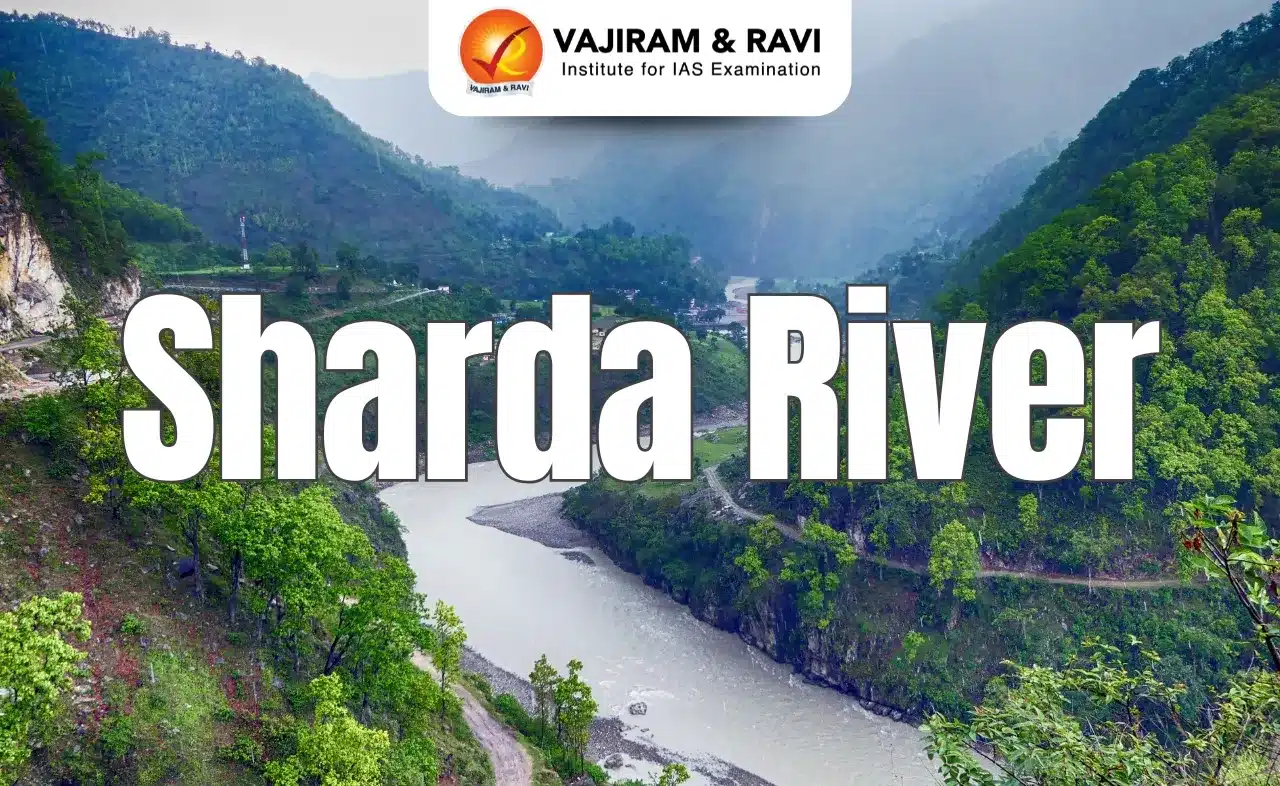
Sharda River

Sharda River

Sharda River Latest News

The Uttarakhand chief minister recently laid the foundation stone of the Sharda river corridor at Tanakpur in Champawat district.

About Sharda River

  • It is a transboundary river of northern India and western Nepal. 
  • Course
    • It rises as the Kali River in far northern Uttarakhand in the Great Himalayas on the eastern slopes of the Nanda Devi massif. 
    • The river then flows generally south-southwest, where it constitutes the border between Uttarakhand and Nepal. 
    • Descending from the mountains, it enters the Indo-Gangetic Plain at Barmdeo Mandi (Nepal), widening there above the Sharda Barrage. Below that point it is known as the Sharda River. 
    • The Sharda then continues southeastward into India through northern Uttar Pradesh state before joining the Ghaghara River (a tributary of the Ganges) southwest of Bahraich, after a course of about 300 miles (480 km).
  • Its major tributaries are the Dhauliganga, Goriganga, and Sarju. 
  • The Sharda Barrage (dam), near Banbasa (Uttarakhand), is the source of the Sharda Canal (completed 1930), one of the longest irrigation canals in northern India.

Source: TOI


Sharda River FAQs

Q1: In which two countries does the Sharda River flow?

Ans: India and Nepal.

Q2: By which name is the Sharda River known in its upper course?

Ans: Kali River.

Q3: On the slopes of which massif does the Sharda River rise?

Ans: The Nanda Devi massif.

Q4: Which river does the Sharda River ultimately join?

Ans: The Ghaghara River.
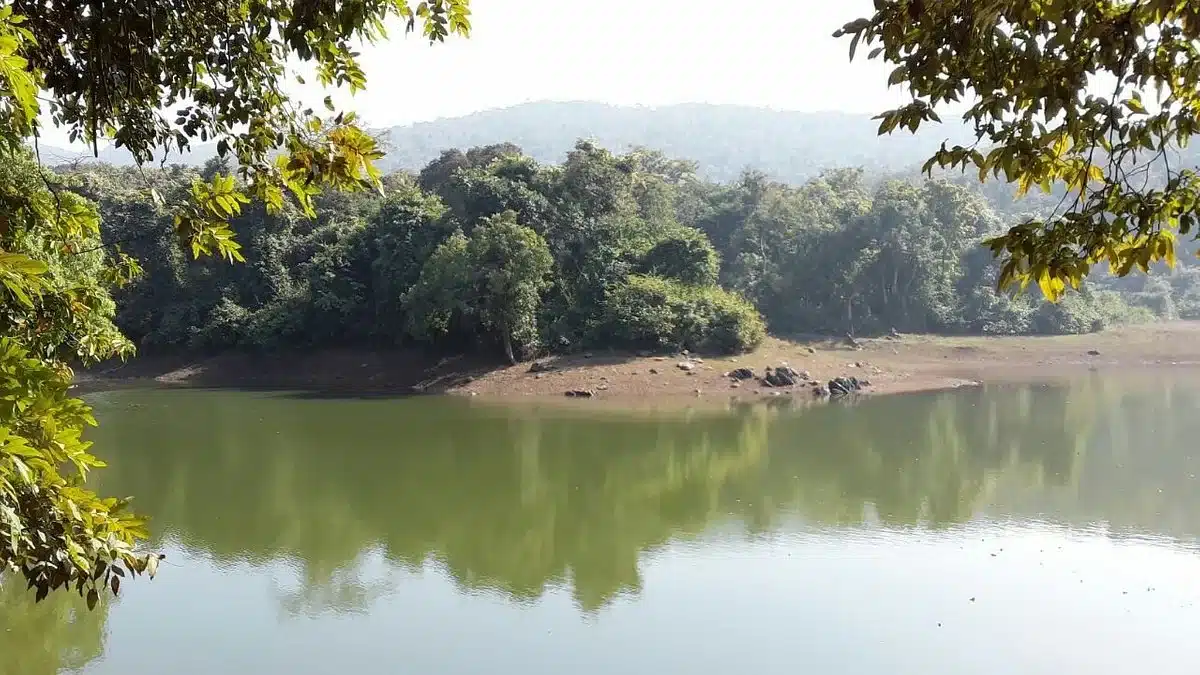
Dalma Wildlife Sanctuary

Dalma Wildlife Sanctuary

Dalma Wildlife Sanctuary Latest News

The Jharkhand tourism minister recently launched a jungle safari and laid the foundation for 30 eco-cottages at Dalma Wildlife Sanctuary in East Singhbhum.

About Dalma Wildlife Sanctuary

  • It is located near Jamshedpur, in the East Singhbhum district of Jharkhand.
  • It is situated around the Dalma Hills on the Chottanagpur Plateau.
  • The Sanctuary gets its name from the “Dalma mai” a local goddess who is revered and worshipped by the local people and the people of adjoining villages of Dalma. 
  • Inaugurated in 1975, it contains a significant population of Indian Elephants.
  • The terrain here is hilly and rocky, with dense forests and grasslands. 
  • The entire forest of Dalma Sanctuary falls in the catchment of the Subarnarekha River and Dimna Lake of Jamshedpur.
  • It features two prominent waterfalls, Sitaguldi and Dassam.
  • A temple dedicated to Lord Shiva, known as the Dalma Temple, is inside the cover.
  • Vegetation
    • The forests of Dalma come under the category “Dry peninsular Sal” and “Northern dry mixed deciduous Forest“.
    •  Most of the Dalma forests shed leaves in the summer and attain their full bloom at the onset of monsoon.
  • Flora
    • Medicinal plants like Ananatmula, Satawari, Sarpgandha, etc. are abundant in the sanctuary. 
    • Various types of trees, climbers, herbs, shrubs, and orchids are found here. 
  • Fauna:  
    • Besides elephants, the sanctuary has a considerable population of other wildlife like barking deer, wild boar, giant squirrel, porcupine, pangolin, sloth bear, etc. 
    • Commonly seen birds in the sanctuary are falcons, golden orioles, Indian tree pies, paradise fly catchers, grey hornbills, Indian peafowl, etc.

Source: TOI


Dalma Wildlife Sanctuary FAQs

Q1: Where is Dalma Wildlife Sanctuary located?

Ans: Near Jamshedpur in the East Singhbhum district of Jharkhand.

Q2: Which river basin does the entire Dalma forest fall under?

Ans: The Subarnarekha River basin.

Q3: On which plateau is Dalma Wildlife Sanctuary situated?

Ans: The Chottanagpur Plateau.

Q4: Which flagship animal is Dalma Wildlife Sanctuary known for?

Ans: Indian Elephant.

Eurasian Otter

Eurasian otter

Eurasian otter Latest News

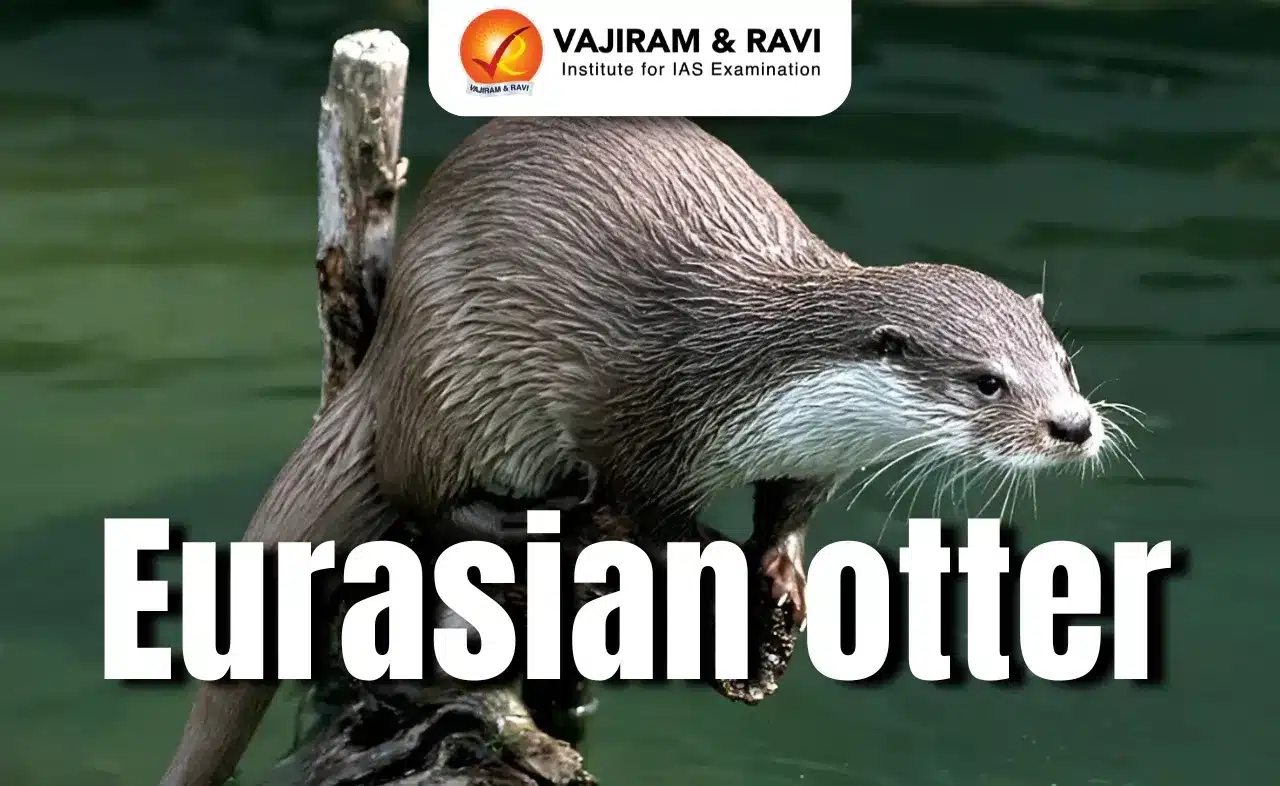
The Eurasian otter, once believed to have disappeared from Jammu and Kashmir, has been recorded recently in the Sindh River in Ganderbal district.

About Eurasian otter

  • It is also known as the European otter, common otter, and Old-World otter.
  • It is a semiaquatic carnivorous mammal native to Eurasia.
  • Distribution: It is mainly found in the Middle-East, Europe, Northern Africa, across to Eastern Russia, China, and other Asian countries.
  • In India, it occurs in northern, northeast and southern India.
  • Habitat: It lives in highland and lowland lakes, rivers, streams, marshes, swamp forests, and coastal areas, independent of their size, origin, or latitude.
  • In the Indian subcontinent, it is found in cold hills and mountain streams.

Features of Eurasian Otter

  • It is an elusive, solitary otter.
  • Adaptation: Adaptations for an aquatic lifestyle include webbed feet, the ability to close the small ears and the nose when under water, and very dense, short fur that traps a layer of air to insulate the animal.
  • It has an acute sense of sight, smell, and hearing.
  • Threats: Water pollution and hunting of the mammal for its fur.

Conservation Status of Eurasian Otter

  • IUCN: Near threatened
  • CITES:  Appendix I
  • Wildlife Protection Act, 1972: Schedule II

Source: HT

Eurasian otter FAQs

Q1: Where is the Eurasian Otter primarily found?

Ans: Europe and Asia

Q2: What is the scientific name of the Eurasian Otter?

Ans: Lutra lutra

Veerangana Durgavati Tiger Reserve

Veerangana Durgavati Tiger Reserve

Veerangana Durgavati Tiger Reserve Latest News

Recently, the standing committee of the National Board for Wildlife has recommended approval for the diversion of about 272 hectares of forest for the Kopra medium irrigation project in the core area of the Veerangana Durgavati Tiger Reserve in Madhya Pradesh.

About Veerangana Durgavati Tiger Reserve

  • Location: It is located in the state of Madhya Pradesh.
  • It encompasses areas within the Nauradehi Wildlife Sanctuary and Durgavati Wildlife Sanctuary.
  • It is the seventh tiger reserve in Madhya Pradesh.
  • It is named for Rani Durgavati, the queen of the Gondi people.
  • The reserve also boasts a diverse landscape, with hills, valleys, rivers, streams, waterfalls, and grasslands. 
  • Rivers: It straddles parts of the Narmada and Yamuna River basins. 
  • The Singorgarh Fort is located within the reserve.
  • Vegetation:  It mainly consists of Dry deciduous type vegetation.
  • Flora: The chief floral elements include Teak, Saja, Dhaora, Ber, Amla, etc.
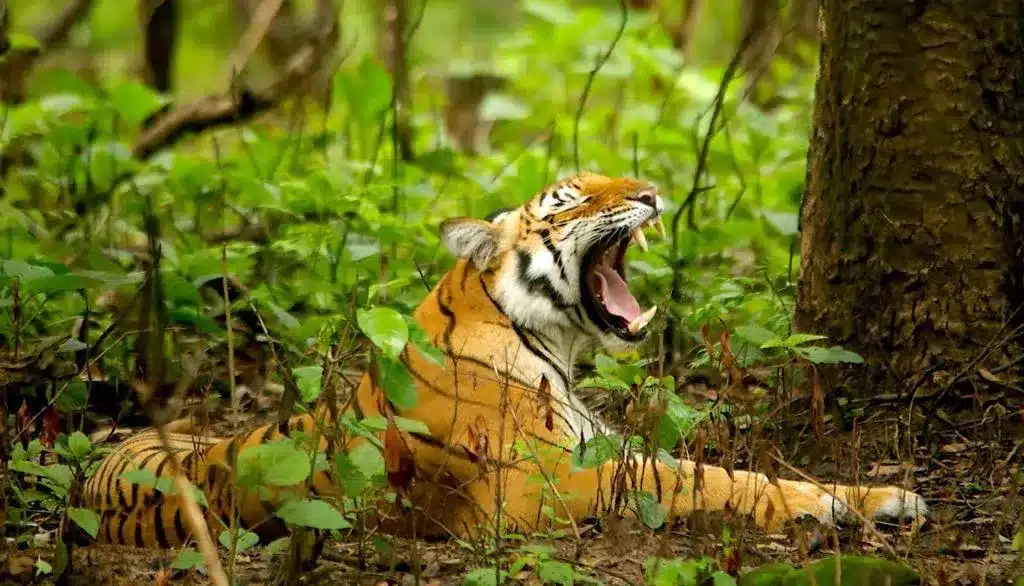
  • Fauna: Tiger, leopard, wolf, jackal, Indian fox, striped hyena, Nilgai, Chinkara, Chital, Sambhar, Black Buck, Barking deer, Commom Langur, Rhesus Macaque, etc.
    • It is one of the few remaining strongholds for the White-Rumped and the Indian Vultures, critically endangered raptors of India. 

Source: IE

Veerangana Durgavati Tiger Reserve FAQs

Q1: What is the significance of Veerangana Durgavati Tiger Reserve?

Ans: It is a major habitat for the Bengal tiger

Q2: Where is Veerangana Durgavati Tiger Reserve located?

Ans: Madhya Pradesh

Graphics Processing Units (GPU)

Graphics Processing Units

Graphics Processing Units (GPU) Latest News

India and the United States have announced that they will “significantly increase trade in technology products, including Graphics Processing Units (GPUs) and other goods used in data centers.

About Graphics Processing Units (GPU)

  • A GPU is an electronic circuit board that can quickly perform many mathematical calculations. 
  • Like a central processing unit (CPU), a GPU is also a chip component in computing devices.
  • The technology was originally designed to speed up 3-D graphics rendering. 
  • Traditional GPUs come in two main flavours.
    • First, there are standalone chips, which often come in add-on cards for large desktop computers.
    • Second are GPUs combined with a CPU in the same chip package, which are often found in laptops and game consoles such as the PlayStation 5.
  • In both cases, the CPU controls what the GPU does.
  • Working of GPU
    • GPUs work by using parallel processing, where multiple processors handle separate parts of a single task.
    • A GPU will also have its own RAM to store the data it is processing. This RAM is designed specifically to hold the large amounts of information coming into the GPU for highly intensive graphics use cases.
  • Applications: It is used in areas including high-performance computing, machine learning, artificial intelligence (AI), weather forecasting, and crypto currency mining.

Source: IE

Graphics Processing Units (GPU) FAQs

Q1: What is a GPU primarily used for?

Ans: Graphics rendering

Q2: What is a key application of GPUs?

Ans: AI and machine learning

Kondaveedu Fort

Kondaveedu Fort

Kondaveedu Fort Latest News

The Union minister of state recently announced plans for the comprehensive development of the historic Kondaveedu Fort.

About Kondaveedu Fort

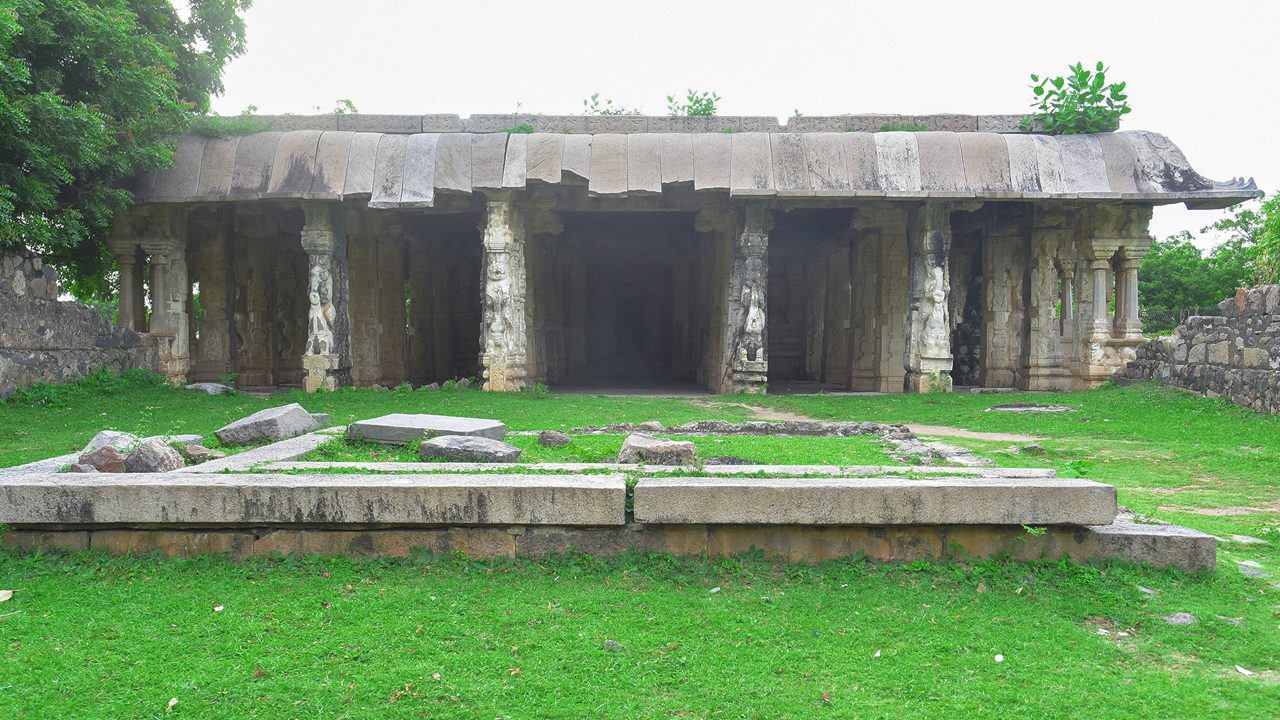
  • Kondaveedu Fort, also known as Kondavid Fort, is a historical fortification located at Kondaveedu village in the Guntur district of Andhra Pradesh. 
  • It is spread across a range of hills at around 1,050 feet elevation.
  • It is the largest hill fort in present Andhra Pradesh.
  • History:
    • It was constructed during the time of the Telugu Chodas, strengthened by the Kakatiyas and occupied by Prolaya Vema Reddy, who shifted his capital from Addanki to Kondaveedu in 1323 AD. 
    • Later it was taken over by the Gajpathis of Orissa and ravaged by the Bahmani Sultans in 1458. 
    • The fort later came under the control of the Vijayanagara Empire, the Golconda Sultanate, the Mughals, the French, and the British. 
  • The architecture displays a blend of Hindu and Islamic styles. 
    • It was mainly constructed with granite stones and lime mortar.
    • It features massive granite fortifications, 23 bastions connected by defensive walls, and two main entrances called Kolepalli Darwaza and Nadella Darwaza.
    • Inside the fort are ruins of temples, pillared halls, granaries, water tanks, and a mosque.
    • The fort is also known for its ancient water conservation system with several ponds supplying water to inhabitants.
    • Recent archaeological findings include Buddhist stupa remains dating back to the 1st or 2nd century CE.

Source: DC


Kondaveedu Fort FAQs

Q1: What is Kondaveedu Fort?

Ans: Kondaveedu Fort is a historic hill fort located in Andhra Pradesh.

Q2: During whose rule was Kondaveedu Fort originally constructed?

Ans: During the rule of the Telugu Chodas.

Q3: Who shifted his capital to Kondaveedu Fort in 1323 AD?

Ans: Prolaya Vema Reddy.

Q4: What architectural styles are seen in Kondaveedu Fort?

Ans: A blend of Hindu and Islamic styles.

Polyrhachis garbhangaensis

What is Polyrhachis garbhangaensis

Polyrhachis garbhangaensis Latest News

Garbhanga Reserve Forest on the outskirts of Guwahati has yielded a newly identified ant species named Polyrhachis garbhangaensis.

About Polyrhachis garbhangaensis

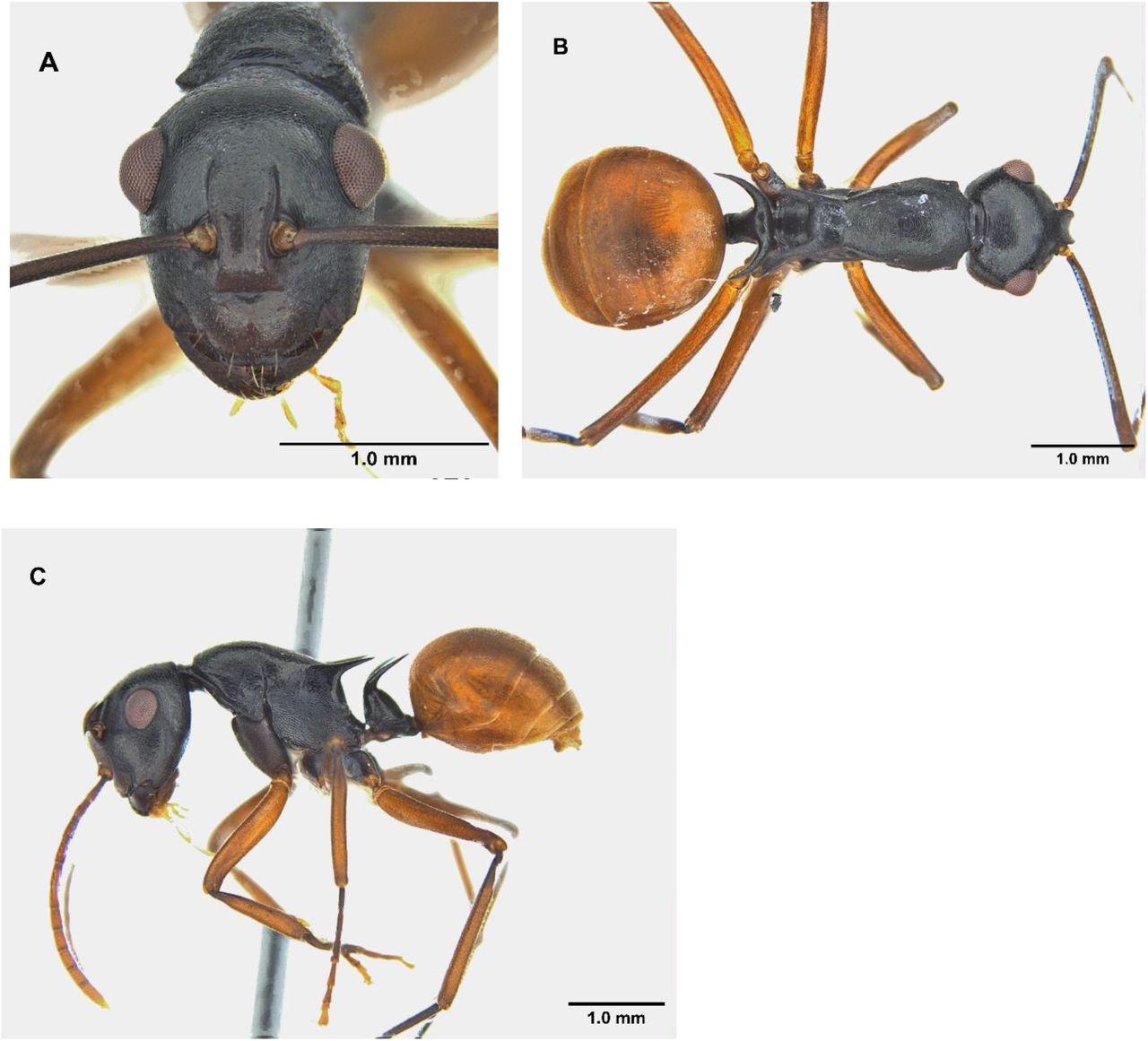
  • It is a new species of ant.
  • It was discovered in Garbhanga Reserve Forest on the outskirts of Guwahati, Assam.
  • It has been named after its place of discovery and is proposed to be known as the “Assamese Spiny Ant.”
  • It belongs to a rare and specialised group of spiny ants called the mucronata group.
  • It is only the third species of this group ever recorded in India.
  • At about 5.6 millimetres long, the Assamese Spiny Ant is visually striking.
  • Unlike its close relatives, which are usually black, this species has a bright yellow-orange abdomen.
  • It also has curved spines on its body that likely help protect it from predators.

Source: TOI


Polyrhachis garbhangaensis FAQs

Q1: What is Polyrhachis garbhangaensis?

Ans: It is a newly discovered species of ant.

Q2: Where was Polyrhachis garbhangaensis discovered

Ans: In the Garbhanga Reserve Forest near Guwahati, Assam.

Q3: To which specialised group does Polyrhachis garbhangaensis belong?

Ans: The mucronata group of spiny ants.

Q4: What makes Polyrhachis garbhangaensis visually distinct from related species?

Ans: Its bright yellow-orange abdomen.

Global Teacher Prize

Global Teacher Prize

Global Teacher Prize Latest News

Recently, Indian teacher Rouble Nagi received the Global Teacher Prize 2026 during the World Government Summit.

About Global Teacher Prize

  • It is an annual award presented to an exceptional teacher who has made a significant impact on their students and community.
  • It was established in 2014.
  • The prize aims to highlight the importance of educators and recognize the outstanding contributions they make to society.
  • Eligibility and Criteria
    • It is open to teachers from all countries, working in various educational settings including public, private, and alternative schools.
    • Candidates are evaluated based on their innovative teaching practices, achievements in the classroom, and efforts to improve the quality of education in their community.
    • The selection process also considers the teacher’s impact on their students’ learning and their ability to overcome challenging environments.
  • Nomination: Teachers can be nominated by others or can apply themselves.
  • Award: The award comes with a cash prize of $1 million, making it one of the most prestigious recognitions in the field of education.
  • It is presented by GEMS Education and organised by the Varkey Foundation in collaboration with UNESCO.

Source: DD News

Global Teacher Prize FAQs

Q1: Who won the Global Teacher Prize 2026?

Ans: Rouble Nagi

Q2: What is the prize money for the Global Teacher Prize?

Ans: $1 million

Enquire Now