
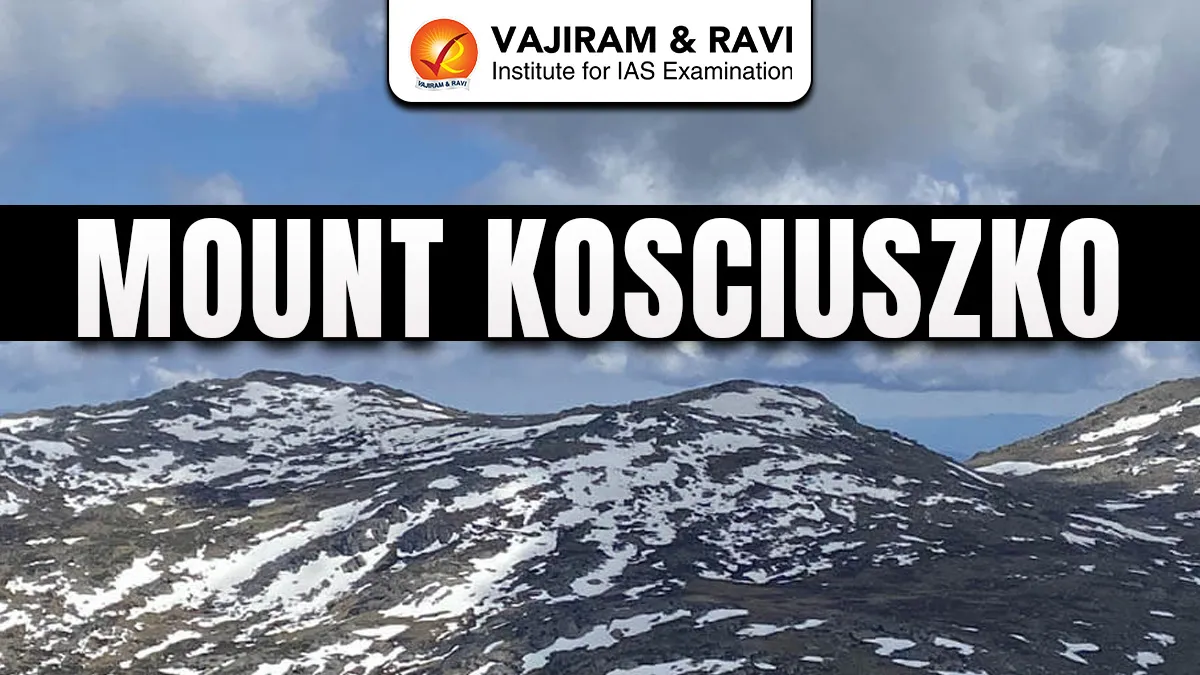
Mount Kosciuszko is the highest mountain in Australia. Its height rises to 2,228 metres (7,310 feet) above the sea level. It is located in the Main Range of the Snowy Mountains in New South Wales, near Jindabyne and close to the Victoria border. The mountain forms part of the Australian Alps National Parks and Reserves. It ranks 35th globally in topographic isolation. Its gentle slopes, alpine climate and historical significance make it a unique highland landscape.
Mount Kosciuszko
Mount Kosciuszko was named in 1840 by Polish explorer Paweł Edmund Strzelecki in honour of Tadeusz Kościuszko who was a Polish National hero and American Revolutionary War General. The mountain lies west of Crackenback and is part of the Great Dividing Range. Though the tallest on mainland Australia, it is considered the easiest among the Seven Summits due to its gradual terrain.
Also Read: Altai Mountains
Mount Kosciuszko Features
A brief overview highlighting the mountain’s physical structure, geological origin, climate conditions, access routes and historical mapping significance in Australia’s alpine region.
- Location: It is situated in the Snowy Mountains within Kosciuszko National Park, New South Wales.
- Height: Mount Kosciuszko stands at 2,228 metres, making it the highest mainland Australian peak.
- Geological Formation: The mountain formed through geological uplift and long term erosion, consisting mainly of granite intrusions and older sedimentary rocks, with no evidence of recent volcanic activity.
- Glacial Influence: Past glacial activity shaped nearby landforms, including Lake Cootapatamba, the highest lake on mainland Australia, created by cirque glaciation below the southern slopes.
- Weather and Climate: The peak experiences seasonal snow from June to October, supporting alpine conditions and making it suitable for skiing, snowshoeing and cross country skiing.
- Cultural Significance: The mountain appears in Australian literature, paintings by Eugene von Guerard, music by Midnight Oil and poetry such as Banjo Paterson’s The Man from Snowy River.
Also Read: Pamir Mountains
Mount Kosciuszko Biodiversity
Mount Kosciuszko consists of a large scale of flora and fauna that adapt to the cold temperatures, strong winds and life possibilities at higher elevations. The major flora and fauna found at this mountain are:
Flora
- Snow Gum Woodlands: Snow gum trees dominate lower alpine zones, adapted to frost and snow, forming Australia’s highest elevation woodland ecosystems.
- Kosciuszko Buttercup: Ranunculus anemoneus is a rare alpine plant endemic to the region, thriving in short summer periods near the summit.
- Alpine Grasses: Vickery’s grass (Rytidosperma vickeryae) survives harsh winds and shallow soils, stabilising slopes and preventing erosion.
- Flowering Species: Billy buttons (Craspedia species) and Nematalolepis ovatifolia add seasonal colour and support alpine pollinators.
Fauna
- Mountain Pygmy Possum: This endangered marsupial depends on alpine boulder fields and feeds heavily on bogong moths during summer.
- Corroboree Frog: A critically endangered amphibian found in alpine bogs, highly sensitive to climate change and habitat disturbance.
- Bogong Moth: These moths migrate annually and aestivate in rock crevices, historically forming a vital food source for Indigenous communities.
- Eulamprus kosciuskoi: A lizard species named after the mountain and is specially adapted to cold alpine environments.
- Wild Horses: Feral horse populations causes ecological damage and populations was estimated at under 6,000 in 2024, a reduction from about 17,000 in 2023 after intensive control efforts.
Mount Kosciuszko FAQs
Q1: Where is Mount Kosciuszko located?
Ans: Mount Kosciuszko is located in the Snowy Mountains of New South Wales, within Kosciuszko National Park, near Jindabyne and close to the Victoria border.
Q2: What is the height of Mount Kosciuszko?
Ans: Mount Kosciuszko rises to 2,228 metres or 7,310 feet above sea level, making it the highest mountain on mainland Australia.
Q3: What is Lake Cootapatamba and why is it important?
Ans: Lake Cootapatamba is a glacial cirque lake formed by ice erosion below Mount Kosciuszko’s southern slopes and is the highest lake on mainland Australia..
Q4: Why is Mount Kosciuszko considered the easiest Seven Summit?
Ans: It has gentle slopes and well marked walking tracks, allowing most visitors to reach the summit without technical climbing skills.
Q5: Which rare species are found near Mount Kosciuszko?
Ans: Notable species include the Mountain Pygmy Possum, Corroboree Frog, Kosciuszko buttercup and the alpine lizard Eulamprus kosciuskoi.

