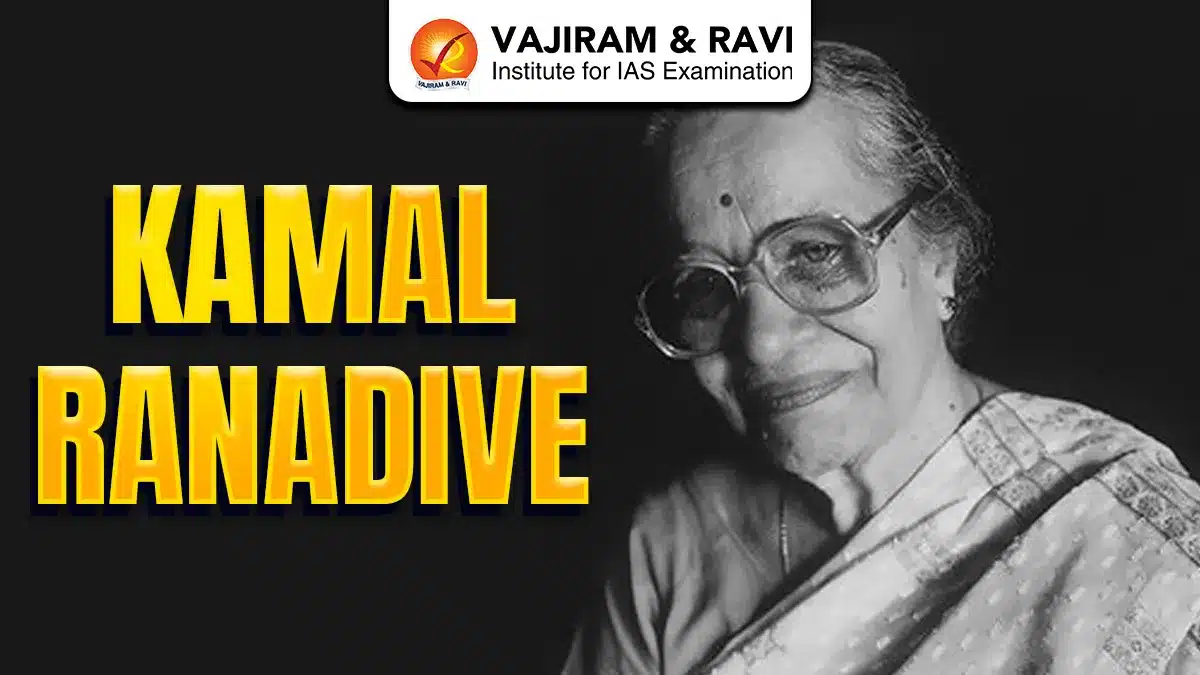
Kamal Jayasing Ranadive was a pioneering Indian biomedical researcher whose work transformed cancer biology in India. She is best known for establishing India’s first Tissue Culture Research Laboratory in the 1960s at the Indian Cancer Research Centre, Mumbai. Her scientific focus on cancer, tumour viruses, hormones and immunology laid a strong experimental foundation for modern oncology research. She also co-founded the Indian Women Scientists’ Association, encouraging women’s participation in science. Her career combined laboratory excellence, public health research and national scientific leadership.
Kamal Ranadive Biography
Kamal Ranadive was born on 8 November 1917 in Pune to Dinkar Dattatreya Samarath and Shantabai Samarath. His father was a biologist at Fergusson College, She completed her BSc with distinction in Botany and Zoology in 1934 and earned an MSc in cytogenetics in 1943 from the Agriculture College, Pune. After marrying mathematician J. T. Ranadive in 1939, she moved to Bombay. She pursued doctoral research at the University of Bombay under pathologist V. R. Khanolkar, receiving her PhD in 1949. She later trained in tissue culture techniques at Johns Hopkins University with George Gey. She passed away on 11 April 2001 at the age of 83.
Kamal Ranadive Contributions
Kamal Ranadive has contributed greatly for the experimental cancer research in India through laboratory development, scientific studies and several initiatives. Major contributions are highlighted below:
- Tissue Culture and Laboratory Development: She established India’s first tissue culture laboratory at ICRC in the early 1960s, developing indigenous culture media, reagents and experimental biology facilities essential for advanced cancer research.
- Cancer Biology and Virology Research: Her studies clarified links between hormones, tumour viruses and cancers such as leukaemia, breast cancer and oesophageal cancer using animal models and cellular analysis.
- Leprosy and Immunological Studies: Her foundational work on leprosy related bacteria contributed to the scientific basis for leprosy vaccine development and strengthened understanding of immune responses.
- Public Health and Field Research: She led nutrition and health studies among tribal children in Maharashtra, notably the 1989 Akola taluk survey, connecting laboratory science with grassroots health outcomes.
Kamal Ranadive Achievements
For her life saving achievements, Kamal Ranadive has been awarded and honoured several times as highlighted here:
- She received the Padma Bhushan for Medicine in 1982.
- The Medical Council of India Silver Jubilee Research Award in 1964 with a gold medal and ₹15,000.
- She served as Acting Director of the Indian Cancer Research Centre from 1966 to 1970 and was named Emeritus Medical Scientist by ICMR.
- She authored over 200 scientific papers on cancer and leprosy.
- Her contributions were globally recognized with a Google Doodle in 2021 marking her 104th birth anniversary.
Kamal Ranadive FAQs
Q1: Who was Kamal Ranadive?
Ans: Kamal Ranadive was an Indian biomedical researcher known for pioneering cancer research and other scientific contributions.
Q2: What was Kamal Ranadive’s main research area?
Ans: Her research focused on cancer biology, tumour viruses, hormones, immunology and leprosy related bacterial studies.
Q3: Where did Kamal Ranadive receive her doctoral training?
Ans: She earned her PhD from the University of Bombay under V. R. Khanolkar, founder of the Indian Cancer Research Centre.
Q4: What awards did Kamal Ranadive receive?
Ans: She received the Padma Bhushan in 1982 and the Medical Council of India Silver Jubilee Research Award in 1964.
Q5: Who established the first Tissue Culture Research Laboratory of India?
Ans: Kamal Ranadive established India’s first Tissue Culture Research Laboratory in the early 1960s at the Indian Cancer Research Centre, Mumbai.

