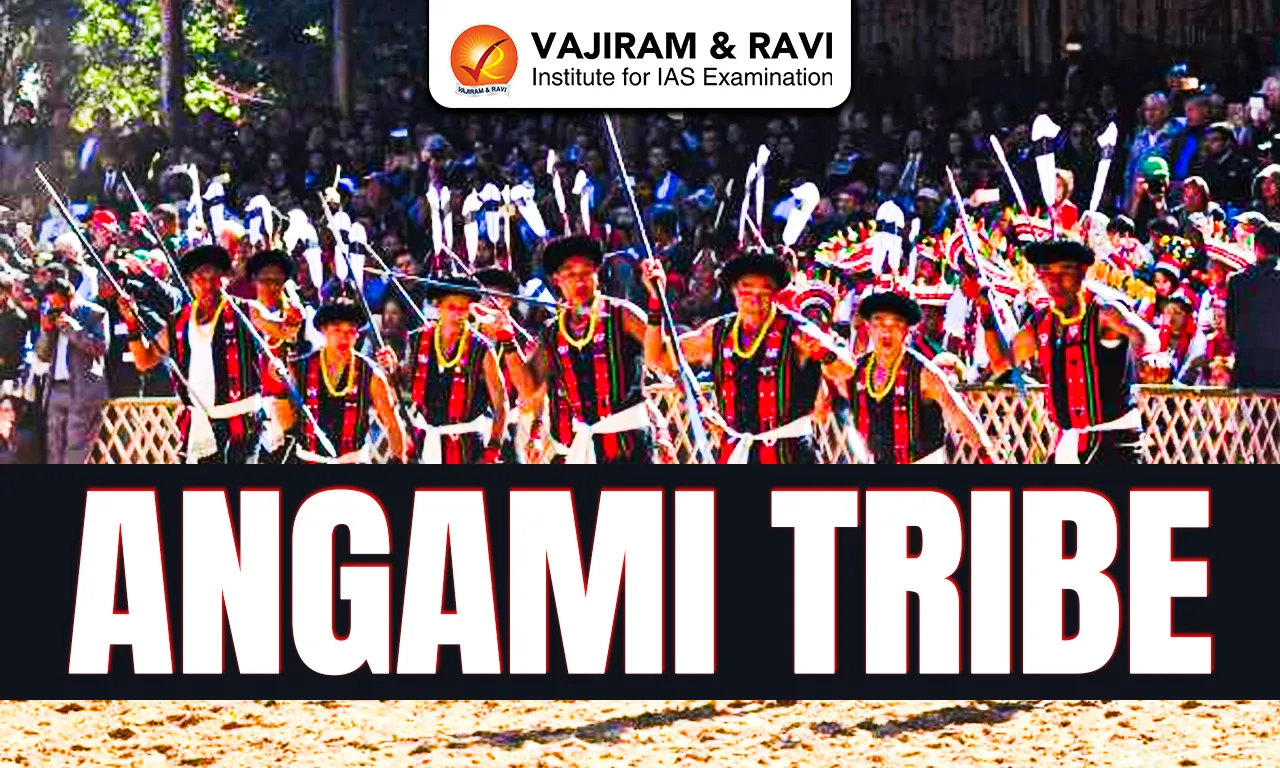
The Angami tribe is a major Naga tribe of Nagaland, mainly found in the Kohima region. They are known for their distinct culture, traditional practices and contribution to the social and cultural life of Northeast India.
Angami Tribe
- Angami Tribe has a distinct cultural identity and was among the first Naga tribes to come under British rule.
- Traditionally, each Angami village functioned as a self-sufficient “village state,” showing strong community organization and autonomy.
- They are known for terrace wet rice cultivation, the Sekrenyi festival and the tradition of Feasts of Merit. Angami society is mainly patriarchal but gives social importance to women.
- They are recognized as a Scheduled Tribe under the Fifth Schedule of the Indian Constitution. They speak the Angami language, also known as Tenyidie and do not have a traditional script of their own.
- Majority of them are Christian (98%) and a small number still follow Animism (around 0.71%)
- In terms of food, a popular Angami dish is Galho, which is made from rice mixed with Himalayan knotweed, vegetables and meat such as pork or beef.
- The tribe is divided into four main groups-Khonoma, Kohima, Viswema, and Chakroma, mainly identified by their geographical areas.
Angami Tribe Culture
- The Angami tribe of Nagaland is especially known for its strong culture of honesty, which is considered their most important social value and a key part of their identity.
- Though spread across many villages with slight cultural differences, all Angami villages are united by this common value of honesty.
- In daily life, honesty is clearly seen, houses are often kept unlocked and people can leave their goods on the roadside without fear of theft.
- Their moral code called “kenyü” (taboo) guides behavior. Anything considered wrong or sinful is avoided, as it is believed to displease God.
- This strong moral system promotes unity, discipline and social harmony within Angami society.
Angami Tribe Festival
- Sekrenyi is a ten-day festival of the Angami tribe, celebrated in February after the harvest. The name means “festival of purification or sanctification.”
- It begins with rituals related to cleansing and purity. People bathe at the village well and special ceremonies are performed to remove misfortune and seek blessings.
- A rooster is sacrificed as part of traditional rituals and elders observe signs considered good omens.
- The festival includes singing, feasting, rice beer and community gatherings. A special event called Thekra Hie involves youth singing traditional songs together.
- Important activities like hunting and gate-pulling ceremonies are also performed and all regular work stops during the festival, showing its cultural importance.
Angami Tribe FAQs
Q1: Who are the Angami tribe?
Ans: The Angami are a major Naga tribe of Nagaland, mainly living in the Kohima region, with a distinct cultural identity.
Q2: What is their constitutional status?
Ans: They are recognized as a Scheduled Tribe under the Fifth Schedule of the Indian Constitution.
Q3: What language and religion do they follow?
Ans: They speak Angami (Tenyidie) and do not have their own script. Around 98% are Christians, while a small number follow Animism.
Q4: What are their main economic activities?
Ans: They are known for terrace wet rice cultivation and traditional farming practices.
Q5: What is the Sekrenyi festival?
Ans: Sekrenyi is a ten-day harvest festival celebrated in February, marked by purification rituals, singing, feasting and community ceremonies like Thekra Hie.

