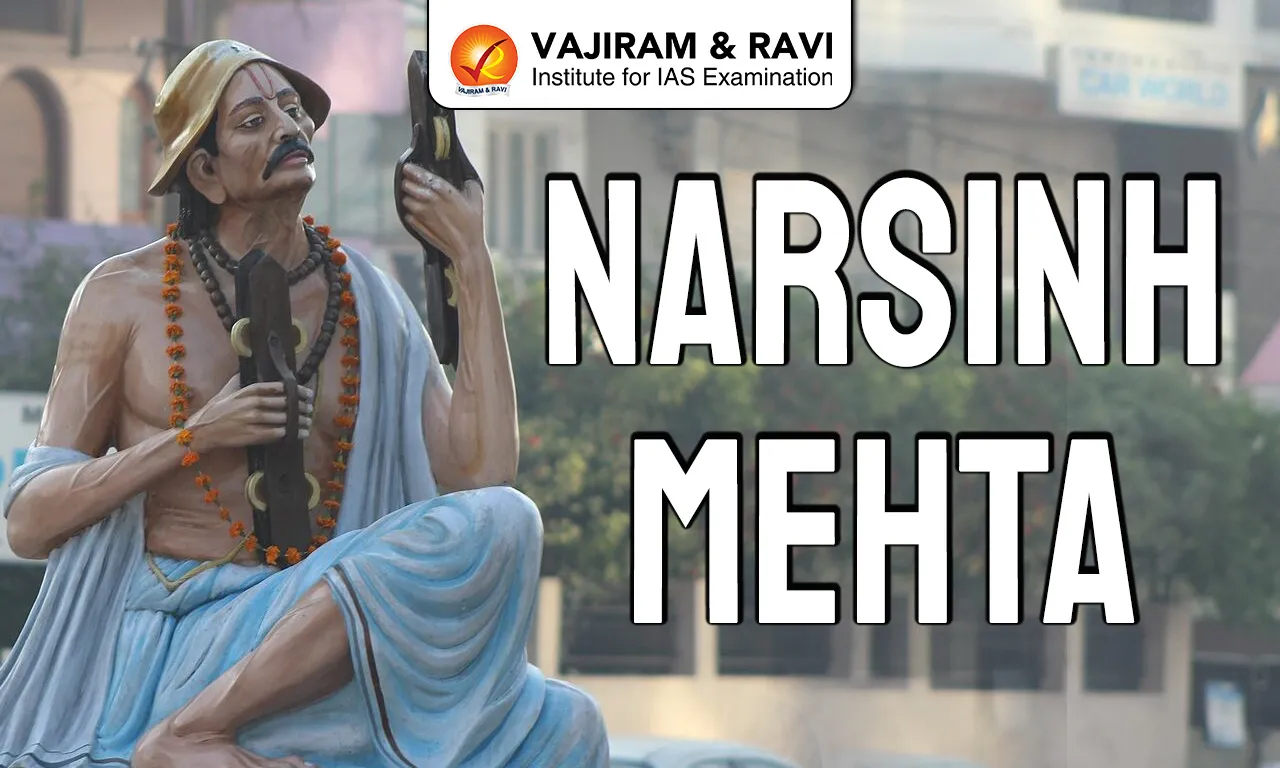
Narsinh Mehta was also known as Narsinh Bhagat or Narsi Mehta. He was a major saint-poet of Gujarat and is honoured as the Adi Kavi, the first poet of Gujarati literature. He was a leading figure of the Vaishnava Bhakti tradition and dedicated his life to devotion towards Krishna through poetic compositions. His hymns have shaped Gujarat’s cultural identity for over five centuries. His famous bhajan “Vaishnava Jana To” later became deeply associated with Mahatma Gandhi and India’s Freedom Movement.
Narsinh Mehta Biography
Narsinh Mehta was born in 1414 at Talaja in present day Bhavnagar district of Gujarat. Narsinh belonged to a Nagar Brahmin family originally linked to Vadnagar. The title “Mehta” referred to officials who maintained royal accounts. He was orphaned at five and reportedly mute until eight. He began speaking after uttering “Radhe Shyam” on a saint’s advice. He was raised by his elder brother Bansidhar, later married Manekbai and settled in Junagadh. Despite poverty and social opposition, he pursued Krishna bhakti. He is believed to have died around age 79 at Mangrol in the late fifteenth century in about 1488.
Also Read: Sardar Vallabhbhai Patel
Narsinh Mehta Contributions
Narsinh Mehta transformed Gujarati devotional literature through poetry, music and social reformist ideas rooted in Bhakti philosophy. His major contributions are:
- Literary Contributions: He composed more than 750 padas in Gujarati, establishing early narrative and devotional poetry traditions. His works include autobiographical pieces such as “Shamaldas no Vivah,” “Kunvarbai nu Mameru,” “Hundi,” and “Har Mala,” which connect personal experiences with divine intervention themes.
- Vaishnava Jana To: His 15th century bhajan “Vaishnava Jana To” described the qualities of an ideal devotee who empathizes with others’ suffering. Mahatma Gandhi adopted it in daily prayers at Sabarmati Ashram, giving the hymn national moral significance.
- Musical Tradition: His compositions belong to “pad” or “deshi” style and were sung in genres such as garbi, dhol and prabhatiya. He is credited with composing bhajans in specific ragas suited to seasons and times of day, especially morning devotional melodies.
- Social Equality: Narsinh openly associated with communities considered “lower caste,” challenging rigid social hierarchies of the Nagar Brahmins. His acceptance of all devotees regardless of birth reflected a socially inclusive Bhakti movement in fifteenth century western India.
Also Read: Freedom Fighters of India
Narsinh Mehta Honours
Narsinh Mehta is commemorated through the “Narsinh Mehta Award” for excellence in Gujarati literature. Junagadh University even named a newly discovered spider species “Narsinhmehtai” in his honour, reflecting continued academic recognition. His life inspired early Gujarati cinema, including the 1932 film “Narsinh Mehta” and later adaptations.
Narsinh Mehta FAQs
Q1: Who was Narsinh Mehta?
Ans: Narsinh Mehta was a 15th century Gujarati poet-saint (1414-1488), known as Adi Kavi of Gujarati literature and a major Vaishnava Bhakti figure devoted to Lord Krishna.
Q2: Why is Narsinh Mehta called Adi Kavi?
Ans: He is regarded as the first major poet of Gujarati language because he composed over 750 padas and laid the foundation of devotional and narrative poetry in Gujarat.
Q3: Which famous bhajan did Narsinh Mehta compose?
Ans: He wrote “Vaishnava Jana To,” a devotional hymn describing the qualities of an ideal human being, later popularised by Mahatma Gandhi.
Q4: Where was Narsinh Mehta born?
Ans: He was born in Talaja in present day Bhavnagar district of Gujarat and later lived in Junagadh, where he composed most of his devotional works.
Q5: What themes dominate Narsinh Mehta’s poetry?
Ans: His compositions mainly focus on Krishna bhakti, spiritual wisdom, detachment from worldly life, moral values and equality beyond caste distinctions.

