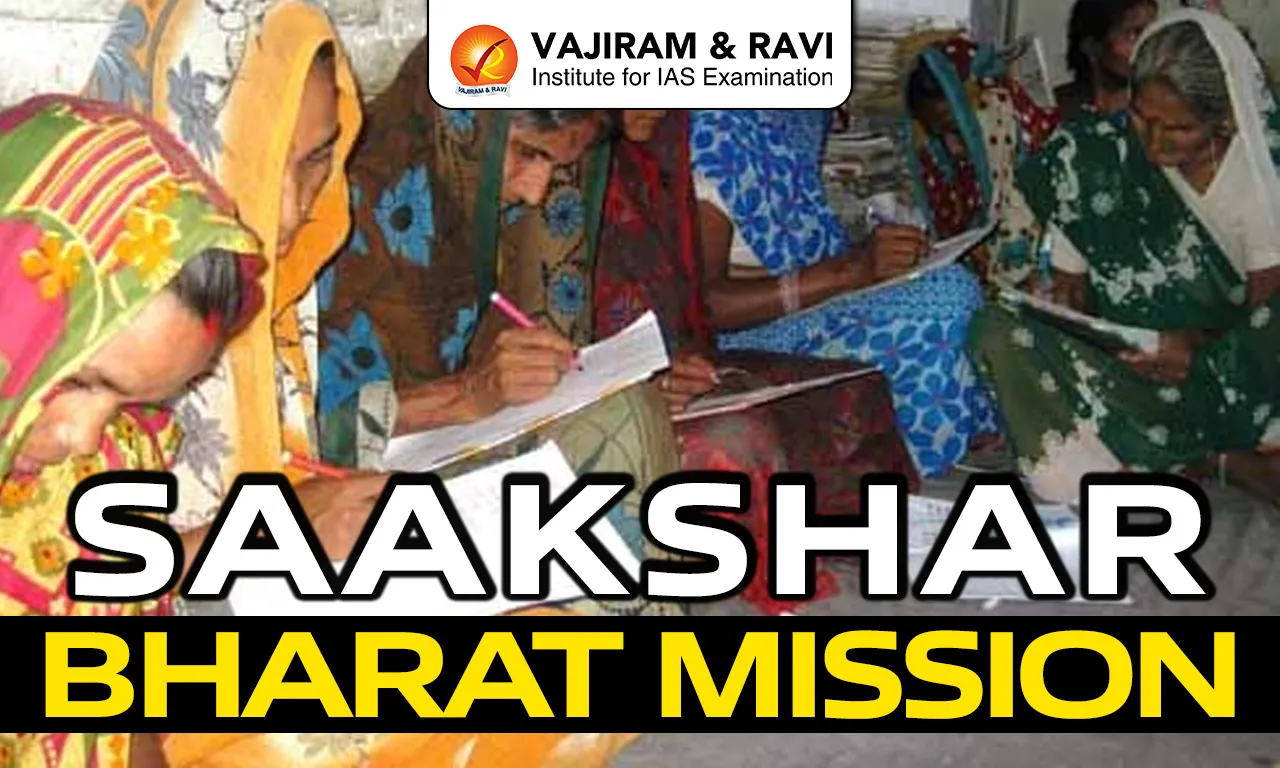
The Saakshar Bharat Mission was one of the most important literacy programmes launched by the Government of India to reduce adult illiteracy, especially among women. In a country where millions of adults missed formal education due to poverty and social barriers, this mission aimed to provide a second chance to learn reading, writing, and basic skills.
Saakshar Bharat Mission
The Saakshar Bharat Mission (also known as Saakshar Bharat Programme) was launched on 8 September 2009 by the Government of India on International Literacy Day. It was implemented under the Ministry of Human Resource Development (now Ministry of Education).
The mission mainly focused on adult education, especially targeting women in rural areas who were left out of the formal schooling system.
It replaced the earlier National Literacy Mission and aimed to further reduce illiteracy across India.
Saakshar Bharat Mission Objectives
The main objective of the Saakshar Bharat Mission was to increase the literacy rate among adults aged 15 years and above, especially women. The mission aimed to achieve an overall literacy rate of 80% and reduce gender disparity in literacy to 10%.
- Promote functional literacy (reading, writing, and arithmetic skills).
- Reduce the gender gap in literacy.
- Provide opportunities for basic education and skill development.
- Encourage lifelong learning.
- Strengthen community participation in education.
- Empower women socially and economically.
Saakshar Bharat Mission Features
The Saakshar Bharat Mission was designed to reduce adult illiteracy in India, especially among rural women, through community-based learning and functional education. It focused on providing basic reading, writing, numeracy skills, and lifelong learning opportunities to disadvantaged groups.
- Special focus on women literacy, with nearly 70% of beneficiaries being women to reduce the gender gap in education.
- Targeted adults aged 15 years and above who missed formal schooling opportunities.
- Covered around 410 districts with female literacy rate below 50% (as per 2001 data).
- Implemented through Gram Panchayats to ensure strong local participation and community ownership.
- Appointed local volunteers called “Preraks” to motivate and teach adult learners.
- Included four major components: basic literacy, basic education (up to Class 8), vocational skills, and continuing education.
- Encouraged skill development programmes to improve employment opportunities and self-reliance.
- Provided continuing education centres for lifelong learning and awareness programmes.
- Adopted a Centre-State funding pattern of 75:25 (90:10 for North-Eastern states).
- Promoted awareness about health, sanitation, financial literacy, and government welfare schemes.
- Focused on socially disadvantaged groups such as SC, ST, minorities, and rural poor populations.
Saakshar Bharat Mission Institutional Framework
- Multi-tier Structure: The Saakshar Bharat Mission was implemented through a four-level structure: national, state, district, and village, to ensure proper coordination and monitoring at every stage.
- National Literacy Mission Authority (NLMA): Acted as the apex body responsible for policy direction, planning, funding support, and overall supervision of the mission at the national level.
- State Literacy Missions: Managed implementation at the state level, adapted strategies according to regional needs, and monitored district performance.
- District Lok Shiksha Samitis: Supervised literacy activities at the district level, conducted enrolment drives, reviewed progress, and ensured quality control.
- Adult Education Centres (AECs): Established mainly in Gram Panchayat buildings to provide easy local access to literacy classes for rural adults.
- Volunteer Teachers (Preraks): Locally selected and trained volunteers conducted classes, motivated learners, and carried out continuous asssessment.
- Community Participation: Panchayats, NGOs, self-help groups, and local leaders actively supported enrolment and awareness campaigns, ensuring local ownership and relevance.
Saakshar Bharat Mission Achievements and Contributions
- Rise in Adult Literacy: Significant improvement in literacy rates in targeted districts, especially among rural populations.
- Increased Female Participation: Strong growth in women enrolment, helping reduce gender gaps in education.
- Community Learning Environment: Development of vibrant village-level learning centres promoting continuous education.
- Empowerment Through Skills: Integration of livelihood-linked learning helped neo-literates improve employment opportunities.
- Strengthened Institutional System: Built stronger frameworks for future adult education programmes in India.
- Functional and Relevant Content: Literacy content included topics like health awareness, financial literacy, sanitation, and civic participation.
- Social and Economic Empowerment: Helped adults become more confident, informed, and actively involved in community decision-making.
Saakshar Bharat Mission FAQs
Q1: What is Saakshar Bharat Mission?
Ans: Saakshar Bharat Mission was a government programme launched to promote adult literacy in India, especially among rural women and disadvantaged groups.
Q2: When was Saakshar Bharat Mission launched?
Ans: It was launched on 8 September 2009 on the occasion of International Literacy Day.
Q3: Which ministry implemented the mission?
Ans: The mission was implemented by the Ministry of Human Resource Development (now Ministry of Education) through the National Literacy Mission Authority.
Q4: Who were the main beneficiaries of the mission?
Ans: Adults aged 15 years and above who were non-literate, with special focus on rural women, SC/ST communities, minorities, and economically weaker sections.
Q5: What was the main objective of Saakshar Bharat Mission?
Ans: The main objective was to increase adult literacy to 80% and reduce the gender gap in literacy.

