Sikkim Becomes India’s First Paperless Judiciary, Background, Features

Sikkim Becomes India’s First Paperless Judiciary

On May 1, 2026, the Chief Justice of India, Justice Surya Kant, declared Sikkim as the first fully paperless state judiciary in India. The announcement was made during the National Conclave on Technology and Judicial Education held at Gangtok, coinciding with Sikkim’s 50th Statehood Anniversary.

What is a Paperless Judiciary?

A paperless judiciary is a system where all court processes are conducted digitally. This includes:

  • E-filing of cases and documents
  • Virtual hearings through video conferencing
  • Digital case records instead of physical files
  • Online case tracking with real-time updates
  • Automated workflows for faster case management

Key Features of Sikkim’s Paperless Judiciary

Sikkim’s model demonstrates a comprehensive integration of technology:

  • End-to-End Digitisation: From filing petitions to delivering judgments, all processes are conducted electronically.
  • Virtual Connectivity: Litigants can access courts without physical presence, reducing geographical barriers.
  • Real-Time Case Tracking: Judicial data systems enable transparency and monitoring of case progress.
  • Integration of AI Tools: Use of tools like SUPACE and SUVAS for research, translation, and case management.
  • Expansion of e-Seva Kendras: Facilitating access for citizens with limited digital literacy.

India’s First Paperless Judiciary Background 

Sikkim’s transition to a paperless judiciary is not an isolated reform; it is part of a nationwide digital transformation under the e-Courts Mission Mode Project, implemented by the judiciary with support from the Government of India.

What is the e-Courts Project?

The e-Courts Mission Mode Project aims to modernise the Indian judiciary using Information and Communication Technology (ICT). Its core objective is to make courts more:

  • Accessible (easy for citizens to reach)
  • Efficient (faster case disposal)
  • Transparent (open and trackable processes)

It is implemented under the guidance of the Supreme Court’s e-Committee.

Evolution of the e-Courts Project: The project has been rolled out in three phases. 

Phase I (2007–2015)

  • Basic computerisation of district and subordinate courts
  • Installation of hardware and internet connectivity
  • Creation of a foundational digital infrastructure

Phase II (2015–2023)

  • Introduction of e-filing, e-payment, and National Judicial Data Grid (NJDG)
  • Development of virtual courts and video conferencing facilities
  • Online access to case status, orders, and judgments

Phase III (2023 onwards): Approved in 2023 with an outlay of ₹7,210 crore, Phase III focuses on creating a completely digital, paperless, and integrated judicial system. Key features of Phase III are: 

  1. Digitisation of Legacy Records
  • Around thousands of crores of pages of old case records are being digitised
  • Converts physical files into searchable digital documents
  • Ensures long-term preservation and easy retrieval
  1. Universal e-Filing System
  • Enables lawyers and litigants to file cases online from anywhere
  • Reduces dependency on physical presence in courts
  • Promotes ease of doing litigation
  1. Cloud-Based Infrastructure
  • Courts will shift from local servers to secure cloud systems
  • Allows real-time data access across courts
  • Improves scalability, storage, and disaster recovery
  1. e-Seva Kendras
  • Physical help centres set up in court complexes
  • Assist citizens who lack digital literacy or internet access
  • Act as a bridge between technology and common people
  1. Integration of AI and Machine Learning
  • Use of AI tools like SUPACE (legal research assistance)
  • Use of SUVAS (translation of judgments into regional languages)
  • Helps in faster research, reducing judicial workload and improving consistency in decisions. 

Sikkim represents a practical implementation of the objectives of Phase III of the e-Courts Mission Mode Project. The state has adopted digital filing, electronic records, and virtual court access, thereby reducing reliance on physical processes. 

Significance of Sikkim’s Paperless Judiciary

Significance of Sikkim’s Paperless Judiciary

The transition of Sikkim to a paperless judiciary marks an important step in modernising India’s justice delivery system.

  • It significantly improves access to justice, especially in a hilly state where physical travel to courts was time-consuming and difficult. By enabling digital filing and virtual hearings, it brings courts closer to citizens.
  • The initiative also enhances efficiency and reduces delays by streamlining procedures and minimising paperwork, thereby helping in faster case disposal.
  • Further, it promotes transparency and accountability, as litigants can track case progress online in real time.
  • From a policy perspective, Sikkim serves as a model for replication, demonstrating that complete judicial digitalisation is achievable within the existing framework of reforms.
  • Additionally, it has environmental benefits by reducing paper usage and supports sustainable governance

Challenges and Concerns

Despite its transformative potential, certain structural challenges remain:

  • Digital Divide: Limited digital literacy and infrastructure may exclude vulnerable sections.
  • Cybersecurity Risks: Protection of sensitive judicial data is critical.
  • Standardisation Issues: Need for uniform implementation across states through systems like the National Court Case Information System (NCCIS).
  • Ethical Concerns in AI Use: Risk of algorithmic bias affecting judicial fairness.

Sikkim: India’s First Paperless Judiciary FAQs

Q1: What is meant by a paperless judiciary?

Ans: A paperless judiciary refers to a system where all court processes such as filing, documentation, hearings, and case management are conducted digitally through e-filing, virtual hearings, and online platforms, eliminating the need for physical records.

Q2: Which state has been declared India’s first paperless judiciary?

Ans: Sikkim has been declared the first fully paperless judiciary in India.

Q3: Why is Sikkim significant in India’s judicial reforms?

Ans: Sikkim is significant as it has become the first state in India to implement a fully paperless judiciary, demonstrating the practical success of digital transformation in the justice delivery system.

Q4: How does a paperless judiciary improve access to justice?

Ans: It removes geographical barriers by enabling litigants to file cases and attend hearings online, which is especially beneficial in remote and hilly regions where physical access to courts is difficult.

Q5: What is the e-Courts Mission Mode Project?

Ans: It is a national initiative aimed at modernising the judiciary through information and communication technology to make courts more accessible, efficient, and transparent.

HRIDAY Scheme, Objectives, Components, Cities, Benefits

HRIDAY Scheme

The HRIDAY Scheme (National Heritage City Development and Augmentation Yojana) is a central sector scheme of the Government of India launched in January 2015 to promote the holistic development of heritage cities. Unlike traditional urban schemes that focus only on infrastructure, HRIDAY emphasizes preserving cultural identity while improving urban living standards.

HRIDAY Scheme Objectives

The HRIDAY Scheme focuses on integrated development of heritage cities by preserving their cultural identity while improving infrastructure and quality of life.

  • Ensure heritage-sensitive urban planning and infrastructure development
  • Improve service delivery in core heritage areas
  • Preserve and revitalize cultural and historical assets
  • Create a comprehensive heritage asset inventory (natural, cultural, built, and living heritage)
  • Enhance basic civic amenities like sanitation, water supply, and street lighting
  • Promote tourist-friendly infrastructure and facilities using modern technology
  • Strengthen local capacity and community participation
  • Support inclusive growth through heritage-based livelihoods and industries

HRIDAY Scheme Components

To revive and rejuvenate the essence of heritage cities, the HRIDAY Scheme is built around four key pillars: physical, economic, social, and institutional infrastructure. These components work together to ensure sustainable urban development while preserving cultural identity.

  • Heritage Documentation and GIS Mapping: Comprehensive documentation of both tangible (monuments, buildings) and intangible heritage (traditions, culture) is carried out. These assets are mapped using Geographical Information System (GIS) to support effective heritage management and urban planning.
  • Heritage Revitalization Linked with Services: Conservation efforts are integrated with service delivery and community engagement. Activities such as cultural festivals, fairs, exhibitions, and development of museums are promoted to connect people with heritage and boost local tourism.
  • Tourism and City-Level Integration: Heritage sites are linked with city infrastructure and public services, ensuring better accessibility, visitor experience, and economic opportunities at both community and urban levels.
  • Knowledge Management and Digital Promotion: Development of websites, digital platforms, city maps, brochures, catalogs, signage systems, and digital display boards to enhance awareness and visibility of heritage assets.
  • Skill Development and Capacity Building: Focus on training local guides, artisans, craftsmen, and tour operators to strengthen heritage-based livelihoods and improve service quality for tourists.

Cities Selected Under HRIDAY Scheme

Under the HRIDAY Scheme, 12 heritage cities were selected across India to promote balanced cultural and urban development. These cities represent diverse religious, historical, and architectural traditions of the country. The selected cities include Ajmer, Amritsar, Amravati, Badami, Dwarka, Gaya, Warangal, Puri, Kanchipuram, Mathura, Varanasi, and Velankanni. Each city was chosen for its unique heritage value and tourism potential, making them ideal for focused development under the scheme. 

HRIDAY Scheme Benefits

The HRIDAY Scheme enhances heritage cities by combining cultural preservation with modern infrastructure development, improving both livability and tourism potential.

  • Promotes conservation of cultural and historical heritage
  • Improves basic urban infrastructure and civic amenities
  • Boosts tourism and local economy
  • Generates employment and livelihood opportunities
  • Enhances quality of life for residents
  • Encourages community participation and inclusive growth
  • Strengthens heritage-based industries and crafts
  • Ensures sustainable and planned urban development

HRIDAY Scheme FAQs

Q1: What is the HRIDAY Scheme?

Ans: The HRIDAY Scheme (National Heritage City Development and Augmentation Yojana) is a central government initiative launched in 2015 to preserve and develop heritage cities in India.

Q2: What is the main objective of the HRIDAY Scheme?

Ans: Its main objective is to conserve cultural heritage while improving urban infrastructure and quality of life in selected heritage cities.

Q3: How many cities are covered under the HRIDAY Scheme?

Ans: A total of 12 heritage cities across India are covered under the scheme.

Q4: Is HRIDAY a centrally funded scheme?

Ans: Yes, HRIDAY is a Central Sector Scheme, meaning it is 100% funded by the Government of India.

Q5: What types of projects are undertaken under HRIDAY?

Ans: Projects include heritage conservation, infrastructure development, sanitation improvement, tourist amenities, and urban planning.

Sino-Indian War 1962, Background, Causes, Aftermath, Implications

Sino-Indian War

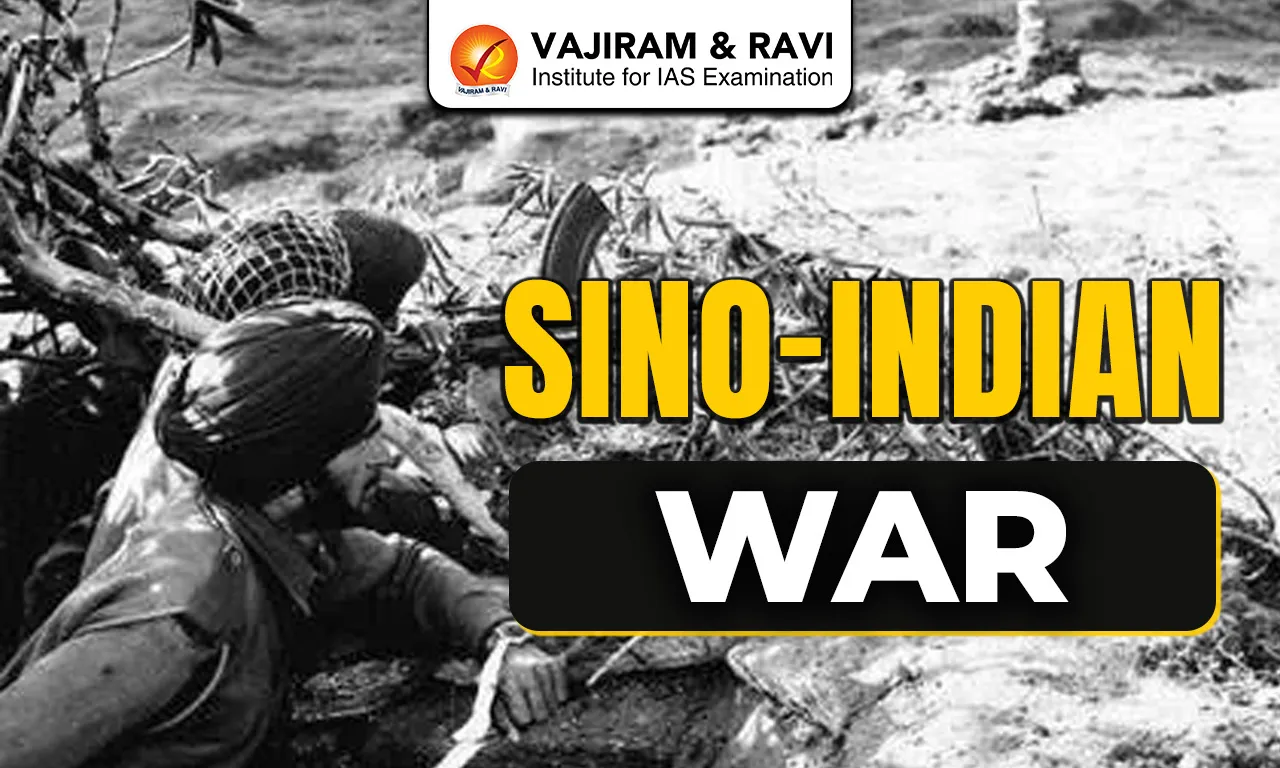
The Sino-Indian War was a short military conflict fought between India and China in 1962. The main reason was a border dispute along the Himalayan region, especially in Aksai Chin and Arunachal Pradesh. The war lasted for about a month and ended with China declaring a unilateral ceasefire. It had a major impact on India’s defence policy and foreign relations.

Sino-India War Background

  • India accepted the McMahon Line (1914) in the eastern sector as its boundary, but China did not recognize it. In the western sector, both the countries claimed Aksai Chin.
  • China captured Tibet in 1950. Following this India’s border with Tibet became a direct border with China further escalating tensions.
  • India gave asylum to the Dalai Lama, who fled Tibet due to Chinese actions. This worsened relations between the two countries.
  • The construction of roads by China passing through Aksai Chin since 1956 was considered by India as Chinese aggression over India territory.
  • India set up military posts in disputed areas to stop Chinese advances. China viewed this as aggressive.
  • Meetings between Indian and Chinese leaders failed to solve the border dispute, leading to war in October 1962.

Sino-Indian Course of War

  • The Sino-Indian War began on 20 October 1962 when Chinese forces launched a sudden attack across the Thagla Ridge in the eastern sector (then part of Assam, now Arunachal Pradesh).
  • The war was fought in two main sectors:
    • Western Sector – Ladakh (Aksai Chin)
    • Eastern Sector – Arunachal Pradesh
  • In the Western Sector, China attacked areas like Daulat Beg Oldi, Chushul and Demchok. India faced shortages of troops, weapons, winter clothing and road connectivity.
  • The Battle of Rezang La (18 November 1962) was a major event where soldiers of 13 Kumaon Regiment fought bravely against heavy Chinese attack. Major Shaitan Singh, who led the battle was awarded the Param Vir Chakra (posthumously).
  • In the Eastern Sector, Chinese forces captured important areas like Thagla and Walong. Indian forces were not fully prepared for high-altitude warfare.
  • By mid-November 1962, Chinese troops had advanced close to Tezpur in Assam.
  • India sought emergency military assistance from countries like the United States, Britain and Canada.
  • On 21 November 1962, China declared a unilateral ceasefire and withdrew in the eastern sector, while retaining control over Aksai Chin in the western sector.
  • After the war, the boundary came to be known as the Line of Actual Control (LAC).
  • India accepted the ceasefire, which officially brought the war to an end.
  • Although fighting stopped, tensions between the two countries did not end.
  • The war had a long-term impact on India’s defence policy, foreign relations and national security planning.

Causes of India’s Defeat in the 1962 Sino-Indian War

  • The war is regarded as a major military setback for India, despite acts of bravery by Indian soldiers.
  • China had clear numerical and tactical superiority, deploying far more troops than India.
  • The Chinese Army had better weapons, equipment, infrastructure and strong supply lines through Tibet, while India was poorly prepared logistically.
  • India deployed around 20,000 troops, whereas China deployed more than 80,000 troops.
  • Indian casualties were significant (over 1,300 killed and nearly 4,000 captured), showing the seriousness of the defeat.
  • India did not effectively use air power to support its ground forces.
  • Indian troops lacked proper winter clothing and modern weapons for high-altitude warfare.
  • The war exposed serious weaknesses in India’s defence system and led to later military modernization and reforms.

Aftermath and Impact of the Sino-Indian War

  • The 1962 war acted as a major wake-up call for India.
  • Defence Minister V.K. Krishna Menon resigned after the defeat.
  • The Indian Army was reorganized and steps were taken to modernize weapons and improve training.
  • The government focused on building better roads and infrastructure in border areas.
  • India changed its defence policy and gave more importance to military preparedness and national security.
  • After the war, India increased strategic and military cooperation with Western countries and the Soviet Union.
  • The war also led India to review its non-alignment policy and overall military planning.

Sino-Indian War Geopolitical Implications

  • The India-China War took place during the Cold War period, shortly after the Cuban Missile Crisis, when the world was mainly focused on tensions between the USA and the Soviet Union.
  • At that time, global attention was elsewhere, and China used the situation to strengthen its position along the Indian border.
  • After the war, India’s view of China changed completely.
  • The earlier feeling of friendship was replaced by caution, suspicion and a more realistic approach in foreign policy.

Strategic Lessons from the Sino-Indian War

  • The war showed that diplomacy and peaceful relations must be supported by strong military power and preparedness.
  • It highlighted the urgent need to improve border infrastructure, intelligence systems and coordination between the armed forces and the government.
  • The conflict made it clear that high-altitude warfare requires special training, proper equipment and modern weapons.
  • Overall, the war led India to strengthen its defence system and remain alert along sensitive areas like the Line of Actual Control (LAC), lessons that remain important even today.

Line of Actual Control

  • The Line of Actual Control (LAC) is the present boundary that separates areas controlled by India and China. It is not a clearly defined international border but a line based on ground positions after the 1962 war.
  • India considers the LAC to be about 3,488 km long, while China believes it is around 2,000 km long. This difference in understanding often leads to tensions.
  • The LAC is divided into three sectors:
    • Eastern Sector – covers Arunachal Pradesh and Sikkim.
    • Middle Sector – includes Uttarakhand and Himachal Pradesh.
    • Western Sector – mainly in Ladakh.
  • In the eastern sector, the LAC broadly follows the McMahon Line, which was drawn in 1914 and is about 1,140 km long. India accepts it as the boundary, but China does not fully recognize it.
  • Because the LAC is not clearly marked on the ground, both sides have different perceptions of the line, which sometimes leads to standoffs and military tensions.

Sino-Indian 1962 War Relevance

  • The impact of the 1962 India-China War can still be seen today, as the border dispute between the two countries has not been fully resolved.
  • Tensions continue mainly in Ladakh and Arunachal Pradesh due to different views about the Line of Actual Control (LAC).
  • A recent example is the 2020 clash in the Galwan Valley, where soldiers of both countries were involved in a serious confrontation.
  • These incidents show that the issues which began in 1962 still affect India–China relations and require constant military alertness and strong diplomatic efforts.

Sino-Indian War FAQs

Q1: What was the Sino-Indian War of 1962?

Ans: It was a military conflict fought between India and China in October-November 1962 over border disputes in the Himalayan region.

Q2: In which areas was the war mainly fought?

Ans: The war was fought in two sectors: Western Sector-Ladakh (Aksai Chin) and the Eastern Sector-Arunachal Pradesh (then part of Assam).

Q3: When did the war begin and end?

Ans: The war began on 20 October 1962 and ended on 21 November 1962 when China declared a unilateral ceasefire.

Q4: What were the main causes of the war?

Ans: Main reasons were the border dispute over Aksai Chin and Arunachal Pradesh (McMahon Line), China’s takeover of Tibet, India giving asylum to the Dalai Lama and tensions due to the Forward Policy.

Q5: What is the Line of Actual Control (LAC)?

Ans: The LAC is the present line that separates Indian-controlled and Chinese-controlled areas after the 1962 war. It is not a clearly defined international boundary.

Drishti Satellite Opto-SAR Technology: How Drishti Satellite Opto-SAR Technology is Transforming Space Imaging

Default Image

Drishti Satellite Latest News

  • Indian space start-up GalaxEye launched its first satellite 'Drishti' aboard a SpaceX Falcon 9 rocket from Vandenberg Space Force Base, California, as one of 45 payloads on the CAS500-2 mission. 
  • Founded by IIT Madras alumni, GalaxEye has created the world's first satellite capable of capturing optical and radar images simultaneously of the same location — a technological first in space imaging.

Space Imaging

  • Space imaging refers to the collection of visual and electromagnetic data from space, used to map celestial bodies, track cosmic phenomena, and monitor Earth's environment. 
  • This technology translates data from across the electromagnetic spectrum into high-resolution imagery.

Key Technologies

  • Optical Sensors: Capture visible light to produce detailed, high-resolution photographs of Earth and deep-space objects. 
  • Synthetic Aperture Radar (SAR): Emits microwave pulses to map terrain. Because it doesn't rely on sunlight, it can image through clouds, smoke, and total darkness. 
  • Infrared and Thermal Imaging: Detects heat signatures, which is essential for studying star formation in deep space and monitoring wildfires or climate patterns on Earth.
  • Hyperspectral Imaging: Breaks down light into hundreds of narrow bands, allowing scientists to identify the exact chemical composition of minerals, vegetation, and gases.
  • AI and Cloud Computing: Modern space systems utilize artificial intelligence directly on orbit to process petabytes of imagery instantly, enabling real-time change detection and analysis. 

Limitations of Existing Imaging Technologies

  • Space imaging satellites currently use one of two technologies:
    • Optical/Multi-spectral Imaging — Works like a normal camera, producing clear, intuitive, and easy-to-understand images. 
      • However, it is ineffective during cloudy weather or night time — a significant limitation for tropical countries like India where cloud cover is frequent and unpredictable.
    • Synthetic Aperture Radar (SAR) — Uses radar signals that can penetrate clouds and capture images continuously regardless of weather or lighting conditions. 
      • However, SAR images are not intuitive — like X-ray images, they require trained experts to interpret the data, limiting their usability for general users.

The Gap — Why Fusion is Needed but Difficult

  • Users currently need data from multiple satellites — optical data for clarity and SAR data for continuity and all-weather availability. 
  • While superimposing these two datasets often works, it has serious limitations. 
  • The two satellites are not watching the same place at the same time, and the angles at which they observe Earth can be very different — making accurate data fusion a persistent challenge.

What Makes Drishti Unique — The Opto-SAR Technology

  • Drishti is the world's first satellite equipped with both optical and SAR sensors operating simultaneously to capture images of the same location at the same time. 
  • GalaxEye calls this proprietary innovation "Opto-SAR technology."

The Core Technological Challenge — and How It Was Solved

  • SAR and optical sensors are designed differently and look at Earth at different angles. 
  • If placed side by side without synchronisation, the optical sensor might be capturing Bengaluru while the SAR sensor is simultaneously capturing Dubai. 
  • GalaxEye developed a proprietary technology stack that synchronises the functionalities of both sensors, enabling them to look at the exact same location at the same time.
  • Hence, it eliminates the need for users to manually align datasets from two different satellites.

The AI Dimension

  • When optical sensors are unable to capture images due to clouds, Drishti uses Artificial Intelligence to regenerate optical-like images from SAR data — further bridging the gap between clarity and all-weather reliability.

Why This Problem is Particularly Indian

  • Most traditional satellite companies are based in Western countries where weather is relatively more predictable and skies are cleaner. 
  • They do not face the same intensity of cloud cover challenges that countries like India — located in the tropics — routinely experience. 
  • GalaxEye is therefore solving a problem specific to India and the developing world — making space imagery available all the time and understandable to all kinds of users.

Applications of Drishti

  • The data produced by Drishti has both civilian and military applications including:
    • agriculture monitoring, 
    • disaster management, 
    • urban planning, 
    • infrastructure monitoring, 
    • border surveillance, and 
    • defence intelligence.

India's Growing Space Start-up Ecosystem

  • GalaxEye is part of a rapidly emerging wave of Indian private space companies making significant technological contributions. 
  • Other notable start-ups include: 
    • Agnikul Cosmos (IIT Madras) — which built the world's first 3D-printed rocket engine, Skyroot — which tested India's first privately built rocket, and 
    • Pixxel, Dhruva Space, and Bellatrix — demonstrating impressive innovations in satellite technologies. 
  • This ecosystem has been significantly enabled by India's Space Policy 2023, which opened end-to-end space activities to private players.

Source: IE

Drishti Satellite FAQs

Q1: What is Drishti satellite opto-SAR technology?

Ans: Drishti satellite opto-SAR technology combines optical and radar imaging to capture simultaneous data of the same location, improving accuracy, clarity, and all-weather monitoring capabilities.

Q2: Why is Drishti satellite opto-SAR technology important?

Ans: Drishti satellite opto-SAR technology solves limitations of traditional imaging by enabling continuous observation even during clouds or night, crucial for countries like India.

Q3: How does Drishti satellite opto-SAR technology work?

Ans: Drishti satellite opto-SAR technology synchronizes optical and SAR sensors to capture real-time images of the same location, enhanced by AI for better interpretation.

Q4: What are the applications of Drishti satellite opto-SAR technology?

Ans: Drishti satellite opto-SAR technology is used in agriculture monitoring, disaster management, defence surveillance, urban planning, and infrastructure tracking.

Q5: How does Drishti satellite opto-SAR technology boost India’s space sector?

Ans: Drishti satellite opto-SAR technology highlights India’s growing private space ecosystem, supported by policy reforms and innovation from start-ups like GalaxEye.

NASM-SR Missile Salvo Test: How NASM-SR Missile Salvo Test Strengthens India’s Naval Power

Default Image

NASM-SR Missile Salvo Test Latest News

  • India recently advanced its naval strike capabilities as the DRDO and the Indian Navy successfully conducted a salvo test of the indigenously developed Naval Anti-Ship Missile Short Range (NASM-SR) from a helicopter off the Odisha coast. 
  • Two missiles were fired in quick succession from the same platform, marking the first successful salvo launch from a chopper.
  • The NASM-SR is designed for deployment from ship-borne helicopters and represents an upgrade over existing systems. 
  • It incorporates advanced features such as “man-in-loop” guidance, allowing real-time control during flight, and “waterline hit” capability, which enhances its effectiveness in disabling enemy ships. 
  • The test highlights the growing importance of helicopter-launched missiles in enhancing naval flexibility, precision strike capability, and maritime dominance.

Role of Helicopter-Launched Missiles in Naval Warfare

  • Helicopter-launched missile systems like the NASM-SR enhance naval combat capability by allowing forces to strike enemy ships from a safe distance without exposing their own vessels to direct threats. 
  • This is crucial for anti-surface warfare and maintaining sea control in contested maritime zones. 
  • The Indian Navy already uses systems like the British-origin Sea Eagle missile deployed on Sea King 42B helicopters, enabling ship-based helicopters to launch precision strikes. 
  • This flexibility makes such systems highly effective in modern naval operations.

Need for NASM-SR: Modernising India’s Naval Missile Capability

  • The older Sea Eagle missiles, introduced in the 1980s, have become outdated and lack modern technological capabilities. A major drawback is their heavy weight (around 580 kg), limiting the number of missiles a helicopter can carry.
  • To address these limitations, the DRDO initiated the development of a lighter, more advanced, and indigenous missile in the early 2010s, aimed at enhancing operational flexibility.
  • The project involved multiple premier DRDO laboratories, including:
    • Research Centre Imarat (Hyderabad) 
    • Defence Research and Development Laboratory
    • High Energy Materials Research Laboratory (Pune)
    • Terminal Ballistics Research Laboratory (Chandigarh)
  • The NASM-SR is being produced with the participation of private sector partners, MSMEs, and start-ups, strengthening India’s indigenous defence manufacturing ecosystem.

NASM-SR Missile: Design and Key Features

  • The NASM-SR missile is designed with a two-stage propulsion system, comprising a solid booster rocket for initial thrust and a long-burn sustainer engine for extended flight. 
  • It is equipped with advanced subsystems, including a seeker for target detection and tracking, a radio altimeter to measure altitude above sea level, and a high-bandwidth two-way data link that enables real-time communication between the missile and the operator in the helicopter.
  • Weighing around 380 kg, it is significantly lighter than older systems, allowing helicopters to carry more missiles. 
  • Although its range (55 km) is lower than that of earlier missiles, it compensates with improved technology and operational flexibility. 
  • The missile uses a radio proximity fuse to detonate its warhead when it reaches close proximity to the target, ensuring effective impact.

Advanced Capabilities of NASM-SR: ‘Man-in-Loop’ and ‘Waterline Hit’

  • Many modern navies have helicopter-launched missiles that have these two features: ‘man-in-loop’ and ‘waterline hit’.

‘Man-in-Loop’ Guidance

  • The NASM-SR incorporates a “man-in-loop” feature, allowing a human operator to modify the missile’s trajectory during flight
  • Enabled by a two-way data link, this system provides real-time feedback and control, making the missile more precise and adaptable. 
  • It is particularly useful in crowded maritime environments, reducing the risk of accidental targeting and improving effectiveness against moving or evasive threats.
  • Unlike older “fire-and-forget” missiles such as the Sea Eagle, which cannot be redirected after launch, the NASM-SR’s guided control ensures greater operational flexibility and accuracy, especially in dynamic combat scenarios.

‘Waterline Hit’ Capability

  • Another key feature is the “waterline hit” capability, where the missile targets the area just above or at the waterline of a ship. 
  • This is a structurally vulnerable point, and a strike here can cause severe damage, rapid flooding, and potentially sink the vessel. 
  • This precision targeting significantly enhances the missile’s lethality compared to earlier systems lacking this capability.

NASM-SR Salvo Test: Demonstrating Enhanced Strike Capability

  • The recent test involved firing two NASM-SR missiles in quick succession from a single helicopter, showcasing the system’s ability to execute a salvo launch.
  • The test has operational significance:
    • Demonstrates capability to overwhelm enemy ship defence systems
    • Enhances effectiveness in real combat scenarios
    • Increases chances of successful target neutralization
  • The salvo test highlights a major leap in India’s naval strike capability, combining precision, survivability, and multi-target engagement to strengthen maritime warfare readiness.

Source: IE | ToI

NASM-SR Missile Salvo Test FAQs

Q1: What is the NASM-SR missile salvo test?

Ans: The NASM-SR missile salvo test involves firing multiple missiles in quick succession from a helicopter, demonstrating India’s advanced naval strike capability and defence readiness.

Q2: Why is the NASM-SR missile salvo test important?

Ans: The NASM-SR missile salvo test shows the ability to overwhelm enemy defences, improving effectiveness in real combat and strengthening India’s maritime security capabilities.

Q3: What features make NASM-SR missile salvo test significant?

Ans: The NASM-SR missile salvo test highlights features like man-in-loop guidance and waterline targeting, enabling precision strikes and adaptability against moving or evasive targets.

Q4: How does NASM-SR missile salvo test improve naval warfare?

Ans: The NASM-SR missile salvo test enhances flexibility, survivability, and multi-target engagement, allowing helicopters to strike from safe distances in contested maritime environments.

Q5: Who developed the NASM-SR missile used in the salvo test?

Ans: The NASM-SR missile salvo test was conducted using an indigenous missile developed by DRDO with support from private sector partners, MSMEs, and start-ups.

Indian Musical Instruments, History, Classification, Example

Indian Musical Instruments

Indian Musical Instruments represent one of the oldest and richest musical traditions in the world, deeply connected with India’s cultural and spiritual heritage. The concept of ‘Sangeet’ combines vocal, instrumental and dance forms, making music a holistic art. From Vedic chants of Samaveda to modern classical and folk traditions, Indian Musical Instruments have evolved across regions, religions and dynasties, reflecting diversity, continuity and deep scientific understanding of sound and rhythm.

Indian Musical Instruments Historical Evolution

Indian Musical Instruments evolved from Vedic chants, temple traditions, Mughal influences and regional cultures, reflecting continuous musical development across ancient, medieval and modern periods.

  • Vedic Origins: Early music began with Samaveda chants sung by Udgatar priests. These chants used structured notes, marking the origin of swaras (sa, re, ga, ma, pa, da, ni) and establishing music as a medium of prayer and ritual.
  • Natya Shastra Contribution: Bharata’s Natya Shastra (200 BCE-200 CE) systematically classified instruments and explained sound production, performance and musical theory, forming the scientific foundation of Indian musical traditions.
  • Indus and Prehistoric Evidence: Archaeological findings from Bhimbetka caves and Harappan sites show early use of drums, flutes and dance, indicating musical activity dating back nearly 10,000 years.
  • Medieval Influence: Mughal rulers introduced Persian and Central Asian elements, influencing instruments like sitar and tabla and expanding melodic and rhythmic complexity in North Indian music traditions.
  • Bhakti Movement Role: Devotional saints promoted music through simple instruments like ektara and tambura, making music accessible and integrating it with spiritual practices across regions.
  • Modern Developments: Systematic classification by Vishnu Narayan Bhatkhande and integration of Western instruments like violin strengthened Indian music, preserving tradition while adapting to modern contexts.

Indian Musical Instruments Classification

Indian Musical Instruments are classified into four categories based on sound production, as described in Natya Shastra, forming a universal scientific system.

  • Tata Vadya: These are string instruments where sound is produced by vibrating strings, such as sitar, veena, sarod and violin.
  • Sushira Vadya: These are wind instruments producing sound through vibrating air columns, including flute, shehnai and harmonium.
  • Avanaddha Vadya: These are percussion instruments producing sound by striking stretched membranes, such as tabla, dholak and mridangam.
  • Ghana Vadya: These are solid instruments producing sound by self vibration, like manjira, ghatam and khartal, often used in rhythm accompaniment.

Tata Vadya 

Tata Vadya includes string instruments where sound is produced by vibrating stretched strings, controlled by tension, length and playing techniques.

  • String Vibration Principle: Sound is generated by plucking or bowing stretched metal or gut strings, where tension and length determine pitch, duration and tonal quality.
  • Structural Components: Instruments include resonator (toomba), fingerboard (danda), bridge and tuning pegs, which together amplify and regulate sound vibrations effectively.
  • Pitch Control Mechanism: Changes in string length and tightness allow precise variation in musical notes, enabling complex ragas and melodic improvisations.
  • Historical Origin: Early forms evolved from hunter’s bow like harps, later developing into sophisticated instruments like veena and sitar used in classical traditions.
  • Resonance Enhancement: Sympathetic strings (tarab) vibrate along with main strings, enriching sound depth and creating a distinctive echo effect in instruments like sitar.

Tata Vadya Musical Instruments 

Tata Vadya instruments are widely used in classical, folk and modern music, forming the melodic foundation of Indian Musical Instruments tradition.

  • Saraswati Veena: One of the oldest instruments, dating to around 1700 BCE, used in Carnatic music, featuring 4 main strings and 3 drone strings with 24 fixed frets.
  • Sitar: Introduced around the 13th century, influenced by Persian ‘setar’, widely used in Hindustani music and popularized globally by artists like Ravi Shankar.
  • Sarod: Derived from rebab and veena, made of teak wood, known for its deep tone and associated with musicians like Tansen and Amjad Ali Khan.
  • Violin: Adapted into Indian music in the 18th century, played differently from Western style, becoming essential in Carnatic performances as both solo and accompaniment instrument.
  • Santoor: A dulcimer type instrument with around 100 strings, played by striking with mallets, mainly associated with Jammu and Kashmir’s Sufiana music tradition.

Sushira Vadya 

Sushira Vadya includes wind instruments where sound is produced by vibrating air columns, controlled through blowing techniques and finger movements.

  • Air Column Vibration: Sound originates from air blown into hollow tubes, with pitch controlled by opening and closing finger holes.
  • Flute Structure: Usually made of bamboo or wood, simple design with finger holes allows production of melodious and soft tonal variations.
  • Reed Mechanism: Reed instruments use one or two vibrating reeds, producing sharper and louder sounds suitable for ceremonial and classical performances.
  • Conical Design: Many reed instruments have conical tubes widening at one end, enhancing sound projection and tonal richness.
  • Ancient Evidence: Indus Valley excavations reveal clay whistles and wind instruments, proving early existence of aerophones in Indian civilization.

Sushira Vadya Musical Instruments 

Sushira Vadya instruments play a major role in melody and ceremonial music across Indian Musical Instruments traditions.

  • Bansuri: Bamboo flute with six or seven holes, associated with Lord Krishna, widely used in Folk and Classical music for its soft and expressive sound.
  • Shehnai: Double reed instrument with seven holes, traditionally played at weddings and temples, known for its auspicious and powerful tonal quality.
  • Harmonium: Introduced in the 19th century, uses reeds and keyboard system, widely used in classical, devotional and folk music accompaniment.
  • Nadaswaram: A South Indian reed instrument with a loud and resonant sound, commonly played in temples and religious ceremonies.
  • Algoza: Twin flute instrument used in Punjab and Rajasthan, producing continuous melody through simultaneous blowing into two pipes.

Avanaddha Vadya 

Avanaddha Vadya includes percussion instruments where sound is produced by striking stretched animal skin membranes over hollow bodies.

  • Membrane Vibration: Sound is generated when stretched skin vibrates upon striking, producing rhythmic beats essential for musical timing.
  • Material Composition: Instruments are made using wood, metal, or clay bodies covered with animal hide, ensuring durability and tonal variation.
  • Playing Techniques: Played using hands, sticks, or both, depending on instrument type, enabling diverse rhythmic patterns.
  • Vedic References: Early mention of Bhumi Dundhubhi shows use of ground drums covered with animal hide, struck for sound production.
  • Structural Types: Includes vertical drums, horizontal drums, frame drums and hourglass shaped instruments like damaru, each with distinct sound properties.

Avanaddha Vadya Musical Instruments 

Avanaddha Vadya instruments provide rhythm and tempo, forming the backbone of Indian Musical Instruments performance systems.

  • Tabla: Pair of drums consisting of dayan and bayan, widely used in Hindustani music, with complex tuning system and rhythmic versatility.
  • Mridangam: Double headed drum used in Carnatic music, played with hands, producing rich tonal combinations essential for classical performances.
  • Dholak: Barrel shaped drum popular in folk music, used in bhangra and traditional events, played in lap or standing position.
  • Pakhawaj: Ancient drum used in dhrupad style, played horizontally, producing deep and resonant sounds.
  • Damaru: Hourglass shaped drum associated with mythology, producing rhythmic beats through attached cords striking the membrane.

Ghana Vadya 

Ghana Vadya includes solid instruments that produce sound through self vibration without strings or membranes, mainly used for rhythm support.

  • Self Sounding Nature: Sound is produced by striking or shaking the instrument itself, without requiring tuning or external vibration sources.
  • Earliest Instruments: Considered among the earliest musical tools created by humans due to their simple structure and natural sound production.
  • Rhythmic Function: Primarily used for maintaining rhythm and timing in folk, devotional and classical performances.
  • Material Composition: Made from metal, wood, or clay, providing durability and distinct tonal qualities.
  • Ease of Use: Simple design makes them accessible for community participation in music and dance activities.

Ghana Vadya Musical Instruments 

Ghana Vadya instruments are essential for rhythm accompaniment and are widely used in Indian Musical Instruments traditions.

  • Manjira: Small metallic cymbals struck together, commonly used in devotional songs and classical performances to maintain rhythm.
  • Ghatam: Clay pot instrument used in Carnatic music, producing bass sounds by striking different parts with hands and fingers.
  • Khartal: Wooden clappers with metal jingles, widely used in folk music, especially in Rajasthan and devotional performances.
  • Chimta: Metal instrument with jingles, commonly used in Punjabi folk music, producing rhythmic metallic sounds.
  • Jhanj: Large cymbals used in temple rituals and classical performances, creating loud rhythmic beats.

Musical Instruments of Northern India

Northern India follows Hindustani Music, where instruments show strong Mughal influence and focus on improvisation, melody and rhythmic complexity.

  • Melodic Emphasis: Instruments are designed to explore ragas with improvisation, using techniques like meend (gliding notes) and gamak, creating expressive and flexible musical structures.
  • Rhythmic Complexity: Strong tala system supported by percussion instruments, especially tabla, allows intricate rhythmic patterns and accompaniment in vocal and dance forms.
  • Persian Influence: Many instruments reflect Indo Persian fusion, seen in structure and playing styles, especially in string and wind instruments.
  • Performance Style: Instruments are widely used in solo, accompaniment and classical dance forms like Kathak, showing versatility in musical presentation.
  • Examples: Sitar and sarod for melody, tabla for rhythm and shehnai for ceremonial and classical performances.

Musical Instruments of Southern India

Southern India follows Carnatic Music, where instruments are structured, composition based and closely linked to temple and devotional traditions.

  • Composition Based System: Instruments strictly follow fixed compositions (kritis), focusing on precision, discipline and clarity in musical expression.
  • Strong Rhythmic Foundation: Complex tala system supported by percussion instruments like mridangam ensures mathematical precision in rhythm patterns.
  • Temple Tradition Influence: Instruments are deeply connected with religious and temple performances, often used in rituals and classical concerts.
  • Technical Playing Style: Emphasis on speed, accuracy and ornamentation like gamakas, requiring high technical skill and coordination.
  • Examples: Veena and violin for melody, mridangam for rhythm and nadaswaram for temple and festive performances.

Indian Musical Instruments FAQs

Q1: What are Indian Musical Instruments?

Ans: Indian Musical Instruments are traditional tools used to produce music in India, including string, wind, percussion and solid instruments used in classical and folk traditions.

Q2: How are Indian Musical Instruments classified?

Ans: They are classified into four types: Tata Vadya (string), Sushira Vadya (wind), Avanaddha Vadya (percussion) and Ghana Vadya (solid instruments).

Q3: Which is the oldest Indian Musical Instrument?

Ans: The Veena is considered the oldest Indian Musical Instrument, with origins tracing back to ancient Vedic and early classical periods.

Q4: What is the difference between Hindustani and Carnatic instruments?

Ans: Hindustani instruments are used in North India with Mughal influence, while Carnatic instruments are used in South India with strong temple and classical traditions.

Q5: Which Indian Musical Instruments are most commonly used?

Ans: Common instruments include sitar, tabla, veena, bansuri, mridangam and harmonium, widely used in classical, folk and devotional music.

Water in the Atmosphere, Forms, Humidity, Clouds & Precipitation

Water in the Atmosphere

Water in the atmosphere plays a vital role in shaping weather, climate, and life on Earth. It exists in different forms: vapour, liquid, and solid, and constantly moves through natural processes like evaporation, condensation, and precipitation. Understanding atmospheric water is essential for topics like the water cycle, rainfall, humidity, and cloud formation.

Water in the Atmosphere

Water in the atmosphere refers to the presence of water in various forms such as water vapour (gas), cloud droplets (liquid), and ice crystals (solid). Although it makes up only a small fraction of the atmosphere (about 0-4% by volume), it has a huge impact on weather patterns, temperature regulation, and precipitation.

Forms of Water in the Atmosphere

Water in the atmosphere exists in three main forms, gaseous, liquid, and solid, depending on temperature and altitude. These forms continuously change from one state to another through processes like evaporation, condensation, and freezing.

  • Water Vapour (Gaseous Form): Invisible form of water present in the air, mainly produced through evaporation and transpiration; essential for cloud formation and acts as a greenhouse gas.
  • Liquid Water (Cloud Droplets): Tiny water droplets formed by condensation of water vapour; found in clouds, fog, and mist, and responsible for rainfall.
  • Solid Water (Ice Crystals): Frozen form of water found in high-altitude clouds; leads to snowfall, hail, and frost under low-temperature conditions.

Humidity Measure of Water Vapour

Humidity refers to the amount of water vapour present in the air, which directly influences weather conditions and human comfort. It varies with temperature and determines the air’s capacity to hold moisture and the likelihood of precipitation.

  • Absolute Humidity: The total amount of water vapour present in a given volume of air (measured in g/m³).
  • Relative Humidity: The percentage of moisture in the air compared to the maximum it can hold at a given temperature; 100% indicates saturation.
  • Specific Humidity: The mass of water vapour per unit mass of air, expressed in g/kg; remains constant unless moisture is added or removed.
  • High Humidity: Leads to sweating discomfort, cloudy weather, and higher chances of rainfall.
  • Low Humidity: Results in dry air, clear skies, and increased evaporation rates.

Clouds

Clouds are visible masses of tiny water droplets or ice crystals suspended in the atmosphere, formed when water vapour cools and condenses. They play a crucial role in regulating weather, temperature, and precipitation on Earth.

  • Formation: Occur due to condensation of water vapour when air cools to its dew point in the presence of dust or smoke particles (condensation nuclei).
  • Composition: Made up of water droplets, ice crystals, or a mixture of both, depending on temperature and altitude.
  • Altitude-Based Types:
    • High Clouds (Cirrus): Thin, wispy clouds made of ice crystals; usually indicate fair weather.
    • Middle Clouds (Altostratus, Altocumulus): Found at medium heights; often signal changing weather conditions.
    • Low Clouds (Stratus, Nimbostratus): Thick and layered; associated with overcast skies and steady rainfall.
  • Vertical Development Clouds:
    • Cumulus: Puffy, cotton-like clouds indicating fair weather.
    • Cumulonimbus: Tall, dense clouds causing heavy rain, thunderstorms, lightning, and hail.
  • Importance of Clouds:
    • Control weather patterns and rainfall
    • Reflect and absorb solar radiation, regulating temperature
    • Essential for the water cycle
  • Colour of Clouds:
    • White clouds reflect sunlight
    • Dark clouds indicate dense moisture and possible rain

Precipitation

Precipitation is the process by which water in the atmosphere falls to the Earth’s surface in liquid or solid form. It occurs when cloud droplets or ice crystals grow large and heavy enough to overcome air resistance and gravity pulls them down.

Types of Precipitation

  • Rain: Most common form; water falls as liquid droplets when temperatures are above freezing.
  • Snow: Forms when water vapour turns directly into ice crystals in cold conditions.
  • Sleet: Frozen raindrops or a mix of rain and snow, usually during temperature transitions.
  • Hail: Balls or lumps of ice formed in strong thunderstorms due to repeated upward movement of droplets.

Types of Rainfall (Based on Formation)

  • Convectional Rainfall: Caused by heating of the Earth’s surface leading to rising warm air; common in equatorial regions.
  • Orographic Rainfall: Occurs when moist air rises over mountains, cools, and condenses; windward side receives heavy rain.
  • Cyclonic Rainfall: Caused by convergence of air masses in low-pressure systems; common in temperate regions.

Importance of Precipitation

  • Provides freshwater for drinking, agriculture, and industry
  • Maintains rivers, lakes, and groundwater
  • Supports ecosystems and biodiversity
  • Essential for the water cycle

Distribution of Water Vapour in the Atmosphere

Water vapour is unevenly distributed in the atmosphere due to variations in temperature, pressure, and availability of water sources. It is highest near the Earth’s surface and decreases rapidly with altitude, showing clear differences across regions and latitudes.

  • Vertical Distribution: About 90% of water vapour is concentrated within the lower atmosphere (troposphere), and it decreases sharply with height.
  • Latitudinal Distribution: Maximum in equatorial regions due to high temperature and evaporation; decreases towards the poles.
  • Over Oceans vs Land: Higher over oceans because they are the primary source of evaporation; comparatively lower over land areas.
  • Seasonal Variation: Higher in summer due to increased evaporation; lower in winter, especially in colder regions.
  • Desert Regions: Very low water vapour due to lack of surface water and high evaporation rates.
  • Polar Regions: Extremely low due to cold temperatures limiting evaporation.
  • Coastal vs Inland Areas: Coastal regions have higher humidity, while interior continental areas have lower moisture content.

Factors Affecting Water Vapour in Atmosphere

The amount of water vapour in the atmosphere is controlled by physical and geographical conditions that influence evaporation, condensation, and moisture retention.

  • Temperature: Higher temperature increases evaporation and the air’s capacity to hold moisture, leading to more water vapour.
  • Availability of Water Bodies: Oceans, seas, rivers, and lakes provide a continuous source of moisture, increasing atmospheric water vapour.
  • Wind and Air Movement: Winds transport moisture from one region to another, influencing humidity distribution.
  • Altitude: Water vapour decreases with height as temperature drops and air becomes thinner.
  • Pressure Conditions: Low-pressure areas encourage rising air and condensation, while high-pressure areas reduce moisture content.
  • Vegetation (Transpiration): Plants release water vapour into the atmosphere through transpiration, increasing humidity.
  • Seasonal Changes: Summer seasons generally have higher water vapour due to increased evaporation, while winter has lower levels.
  • Distance from Sea (Continentality): Coastal areas have more moisture, whereas inland regions tend to be drier.

Importance of Water in the Atmosphere

Water in the atmosphere is essential for maintaining Earth’s climate system and supporting life. It influences temperature, weather patterns, and the continuous circulation of water through natural processes.

  • Regulates Earth’s Temperature: Water vapour absorbs and releases heat, helping to maintain a balanced climate.
  • Cloud Formation: Essential for the formation of clouds, which control weather and precipitation.
  • Precipitation Source: Provides rain, snow, and other forms of precipitation that sustain freshwater resources.
  • Supports Life on Earth: Ensures availability of water for plants, animals, and humans through the water cycle.
  • Drives Weather Systems: Plays a key role in storms, cyclones, and atmospheric circulation.
  • Acts as a Greenhouse Gas: Traps heat in the atmosphere, preventing extreme temperature variations.
  • Maintains Water Cycle: Facilitates continuous movement of water between land, oceans, and atmosphere.
  • Agricultural Importance: Rainfall from atmospheric water supports crop growth and food production.
  • Balances Ecosystems: Maintains environmental stability by supporting forests, rivers, and biodiversity.

Water in the Atmosphere FAQs

Q1: What is meant by water in the atmosphere?

Ans: It refers to the presence of water in the air in the form of water vapour, liquid droplets (clouds), and ice crystals, which influence weather and climate.

Q2: What is the most important form of atmospheric water?

Ans: Water vapour is the most important form because it plays a key role in cloud formation, humidity, and precipitation.

Q3: How does water vapour enter the atmosphere?

Ans: It mainly enters through evaporation from water bodies and transpiration from plants, along with minor processes like sublimation.

Q4: What is humidity?

Ans: Humidity is the amount of water vapour present in the air, which affects weather conditions and human comfort.

Q5: How are clouds formed?

Ans: Clouds form when water vapour cools and condenses around tiny particles like dust, forming small droplets or ice crystals.

Exercise CINBAX-II

Exercise CINBAX-II

Exercise CINBAX-II Latest News

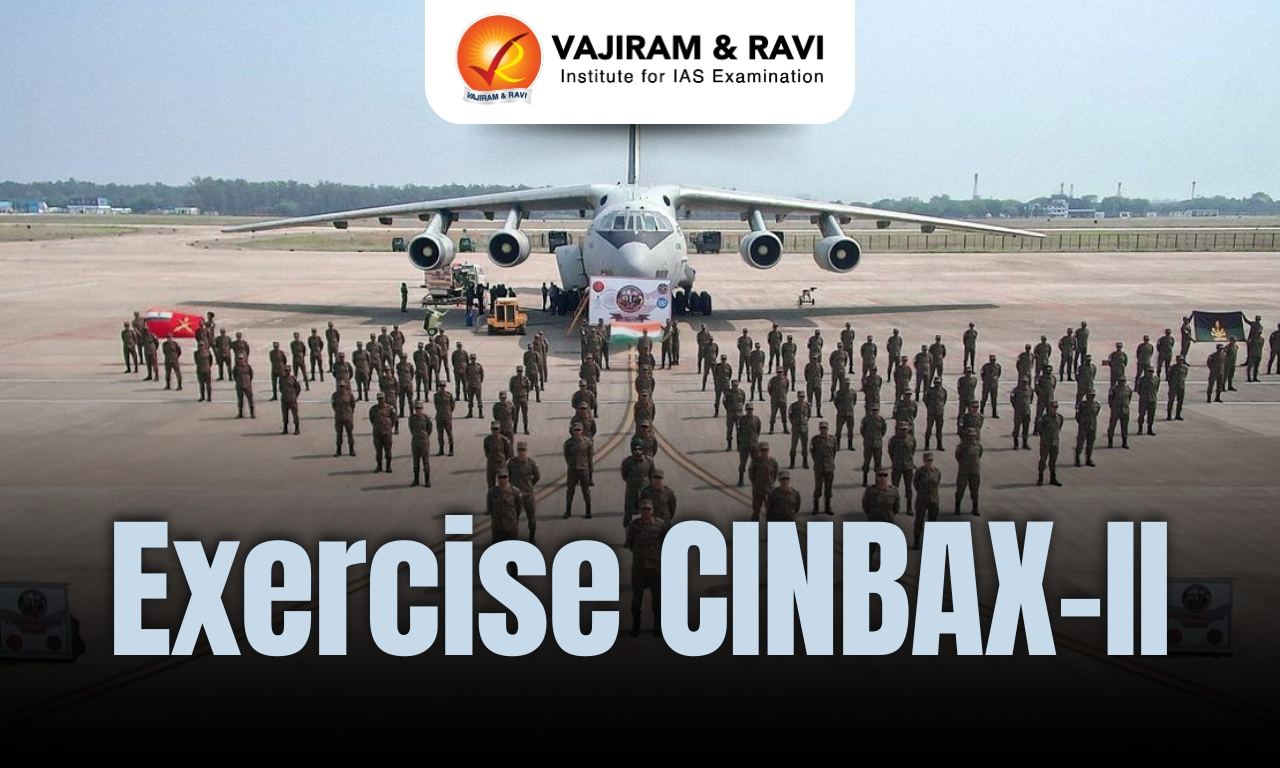
Recently, the Indian Army contingent has departed to Cambodia for the second edition of India-Cambodia Bilateral Military Exercise CINBAX-II. 

About Exercise CINBAX-II

  • It is the bilateral military exercise conducted between the Indian Army and the Cambodian Army.
  • It is conducted in Kampong Speu Province, Cambodia.
  • Participating Contingent: The Indian Army contingent comprises 120 personnel, majorly from a Battalion of the Maratha Light Infantry Regiment.
  • The exercise will be conducted under the framework of Chapter VII of UN Mandate, showcasing Company level joint training for conduct of operations in sub-conventional environments.
  • CINBAX-II aims to boost interoperability, coordination, and operational synergy between the two forces.
  • It will also serve as a platform to exchange best practices and share operational experiences, particularly in semi-urban combat environments.
  • It will centre on counter-terrorism operations aligned with real-world UN peacekeeping scenarios. 
  • Significance: The exercise underscores the growing defence ties between India and Cambodia and is expected to deepen bilateral relations.

Source: News On Air

Exercise CINBAX-II FAQs

Q1: Exercise CINBAX-II is a military exercise between which two countries?

Ans: India and Cambodia

Q2: What is the main objective of Exercise CINBAX-II?

Ans: Enhance interoperability in Counter-Terrorism and UN Peacekeeping Operations

Rashtriya Bal Swasthya Karyakram

Rashtriya Bal Swasthya Karyakram

Rashtriya Bal Swasthya Karyakram Latest News

Recently, the Ministry of Health and Family Welfare released the Rashtriya Bal Swasthya Karyakram (RBSK) 2.0 Guidelines.  

About Rashtriya Bal Swasthya Karyakram

  • It was launched in February, 2013 under the National Rural Health Mission. 
  • It is a program to improve the overall quality of life of children and provide comprehensive care to all the children in the community.
  • Target Group: This program involves screening of children from birth to 18 years of age for four Ds- Defects at birth, Diseases, Deficiencies and Development delays.
  • Under this programme, its screening spans 32 common health conditions for early detection and free treatment and management, including surgeries at tertiary level.
  • Major strategies followed are
    • Comprehensive newborn screening – at delivery points to screen birth defects of the newborn
    • Community screening at the Anganwadi and Government schools for children in the age group 0 -18 years in convergence with Ministry of Women and Child Development and Ministry of Education
    • Screening of the newborns/infants by ASHA through the HBNC/HBYC program as a part of Early Childhood Development
    • Therapeutic management of the identified children at the District Early Intervention Centres (DEIC)

Key Feature of RBSK 2.0

  • It has expanded screening scope, covering a wider range of conditions including,
    • Developmental disorders, mental health issues, behavioural concerns, lifestyle risks, risk factors for non-communicable diseases such as diabetes and hypertension, and additional conditions like kidney disorders, 
  • It has introduced digital health cards, real-time data systems, and integrated platforms for tracking, monitoring and service delivery.

Source: PIB

Rashtriya Bal Swasthya Karyakram FAQs

Q1: Rashtriya Bal Swasthya Karyakram was launched under which scheme?

Ans: National Health Mission

Q2: RBSK provides child health screening for which age group?

Ans: 0-18 years

Mission Drishti

Mission Drishti

Mission Drishti Latest News

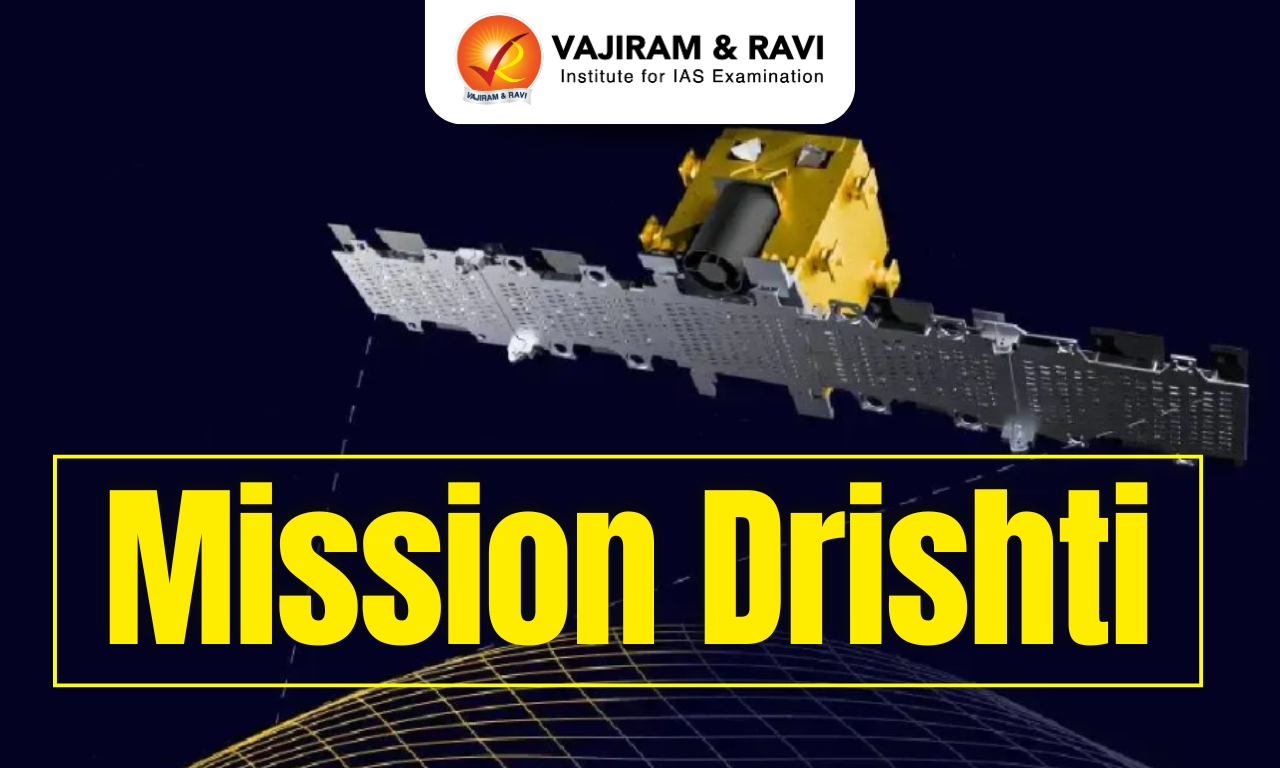
Recently, Bengaluru-based space start-up GalaxEye successfully launched its Mission Drishti satellite aboard Falcon 9 from California.

About Mission Drishti

  • It is the world’s first multi-sensor Earth observation (EO) satellite.
  • It is India’s largest privately built satellite and also the highest-resolution satellite developed in the country.
  • It is planned by Bengaluru based space startup – GalaxEye.

Key Features Mission Drishti

  • It is the world’s first OptoSAR satellite, combining electro-optical (EO) and synthetic aperture radar (SAR) sensors into a single platform.
  • While EO sensors capture high-resolution images in daylight and clear skies, SAR enables imaging in all weather conditions and at any time using radar pulses.
  • It is engineered as a remote-sensing Earth observation system, optimised for spatial, spectral and temporal resolutions to capture high-precision imagery.
  • The satellite weighs 190 kg and offers 1.5 metre resolution.
  • Range of applications: It will enable governments, defence agencies and industries to perform advanced geospatial analysis across a wide range of applications, including;
    • Border surveillance, disaster management, defence, infrastructure monitoring, agriculture financial and insurance assessment etc.

Source: TH

Mission Drishti FAQs

Q1: What is Mission Drishti?

Ans: World’s first OptoSAR satellite by Indian startup GalaxEye

Q2: Mission Drishti was launched aboard which rocket?

Ans: SpaceX Falcon 9 from California

Bureau of Indian Standards

Bureau of Indian Standards

Bureau of Indian Standards Latest News

Recently, the Bureau of Indian Standards (BIS) has published a number of standards for medical assistive technologies as a part of the NLEAP (National List of Essential Assistive Products) initiative.

About Bureau of Indian Standards

  • It is the national standard body of India established under the Bureau of Indian Standards Act 2016.
  • Objective: It was established for the harmonious development of the activities of standardization, marking, and quality certification of goods and for matters connected therewith or incidental thereto.
    • It is the successor of the Indian Standards Institution (ISI), which was created in 1947.
  • BIS represents India in International Organization for Standardization (ISO) and International Electrotechnical Commission (IEC).
  • Nodal Ministry: It is functioning under the administrative control of the Ministry of Consumer Affairs, Food and Public Distribution.
  • Headquarter: It is headquartered in New Delhi and maintains regional and branch offices throughout the country.

Functions of Bureau of Indian Standards

  • BIS has been providing traceability and tangibility benefits to the national economy in a number of ways by
    • Providing safe, reliable quality goods; 
    • Minimizing health hazards to consumers; 
    • Promoting exports and imports substitute; control over proliferation of varieties etc. through standardization, certification, and testing.
  • It operates product certification schemes through which it grants licenses to manufacturers covering practically every industrial discipline, from agriculture and textiles to electronics.

Source: PIB

Bureau of Indian Standards FAQs

Q1: Where is the headquarters of Bureau of Indian Standards located?

Ans: New Delhi

Q2: Under which ministry does BIS function?

Ans: Ministry of Consumer Affairs, Food and Public Distribution

Hantavirus

Hantavirus

Hantavirus Latest News

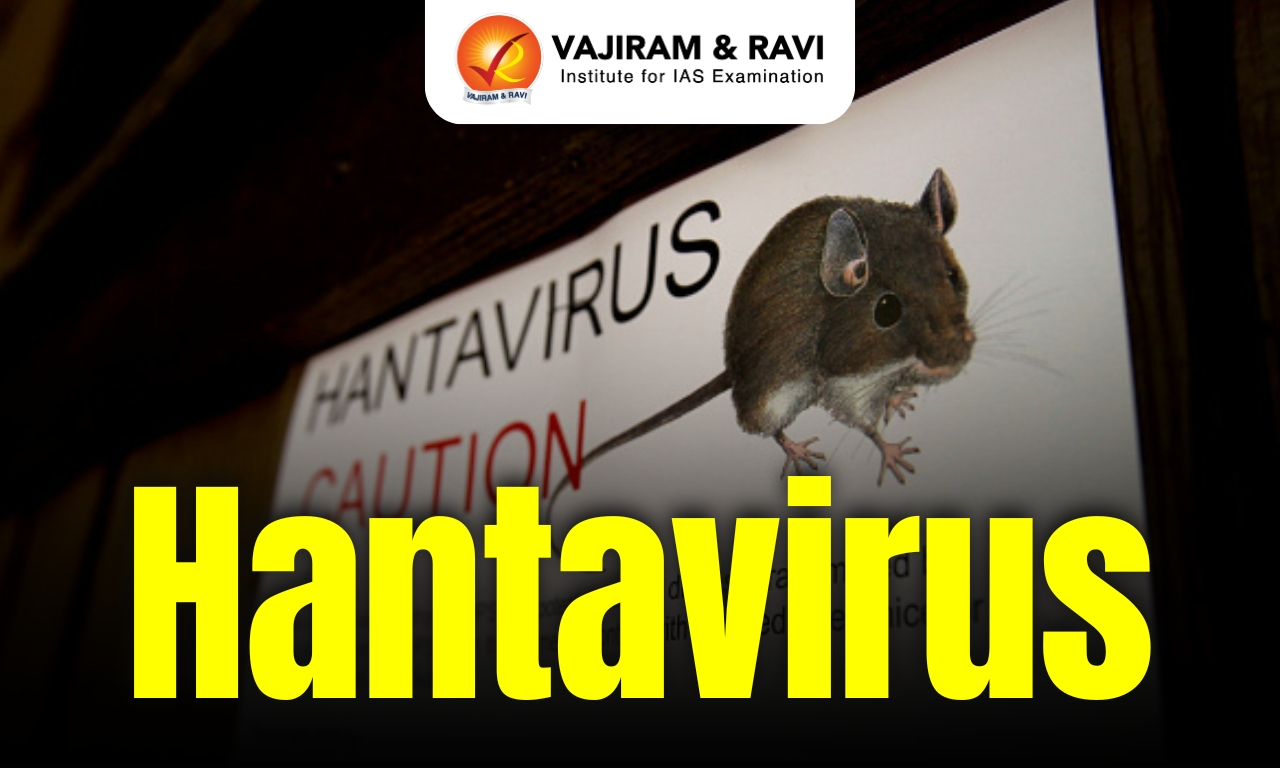
Recently, three people have died and three are ill after a Netherlands-based cruise ship was hit by a suspected outbreak of hantavirus

About Hantavirus

  • Hantavirus is a strain of virus carried by rodents.
  • Transmission: It is transmitted to humans through inhalation of particles from dried rodent droppings.
  • People most typically become infected when a virus in rodent droppings, saliva and urine becomes airborne.
  • The virus is known to cause two severe illnesses one that primarily affects the lungs and the other that attacks the kidneys. 
    • Hantavirus Pulmonary Syndrome (HPS): It is a respiratory illness and has a high fatality rate of about 40%.
    • Haemorrhagic Fever with Renal Syndrome (HFRS), which is a more severe infection and impacts the kidneys. Symptoms can include low blood pressure, internal bleeding, and acute kidney failure.
  • Symptoms
    • Hantavirus usually begins with flu-like symptoms, such as fatigue and fever, one to eight weeks after exposure, according to the CDC.
    • Four to 10 days later, coughing, shortness of breath and fluid in the lungs appear.
  • Treatment: There is no specific therapy for hantavirus infection, so treatment focuses on supportive care including rest and fluids.

Source: DD News

Hantavirus FAQs

Q1: How does Hantavirus spread to humans?

Ans: Inhaling rodent droppings dust

Q2: What is Hantavirus?

Ans: A virus transmitted by rodents

Cultural and Educational Rights in India, Articles 29 & 30 Explained

Cultural and Educational Rights

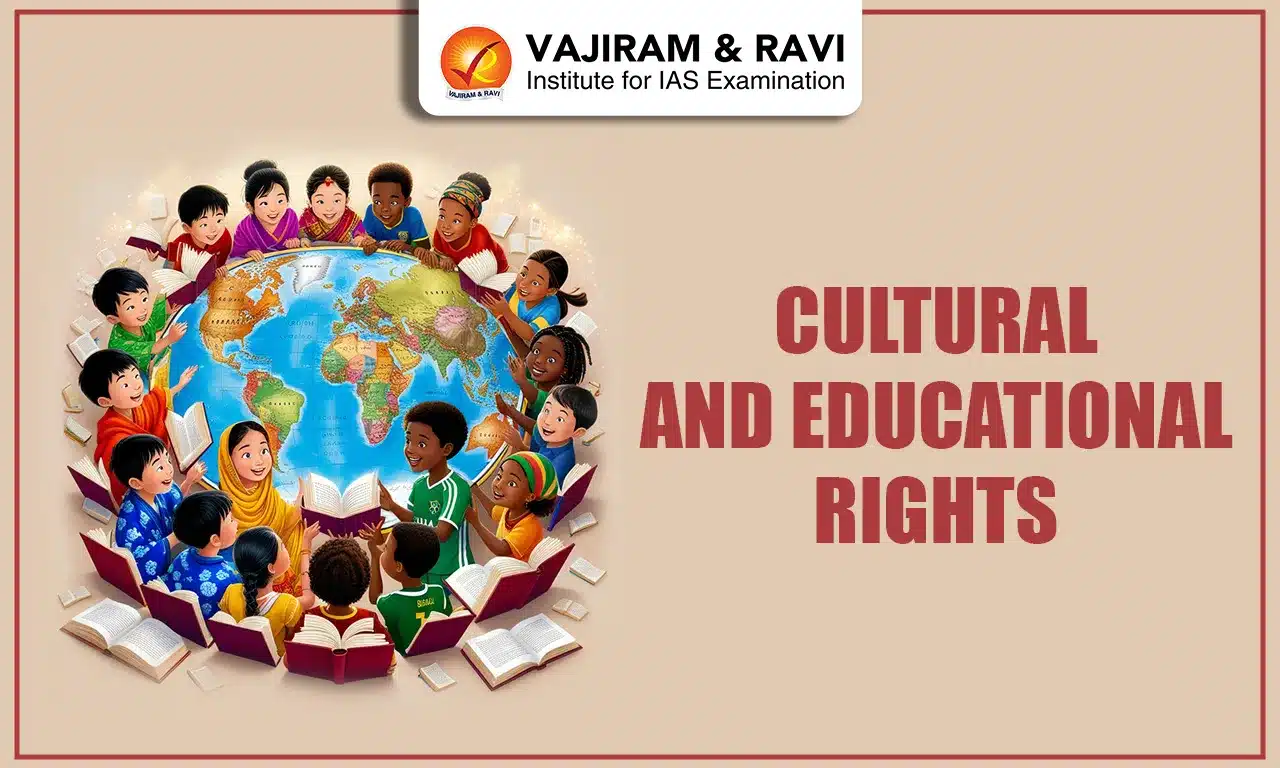
Cultural and Educational Rights under Articles 29 and 30 of the Constitution of India are designed to protect the identity, language, and educational interests of diverse communities, especially minorities. These provisions ensure that India’s pluralistic character is preserved while maintaining equality in access to education.

Article 29: Protection of Cultural and Educational Interests

Article 29(1) provides that any section of citizens residing in India, having a distinct language, script, or culture, has the right to conserve the same. 

  • This provision protects the collective rights of a group, enabling communities to preserve their cultural identity.
  • The use of the term “any section of citizens” extends its scope to both minority and majority groups. Thus, any group with a distinct cultural identity can claim protection under this article

Article 29(2) guarantees that no citizen shall be denied admission into any educational institution maintained by the State or receiving State aid on grounds only of religion, race, caste, or language. 

  • This provision guarantees an individual right, ensuring equality in access to education irrespective of community identity.

Judicial Interpretation of Article 29

The scope of Article 29 has been clarified through important judicial decisions:

  • In D.A.V. College v. State of Punjab, the Supreme Court held that the establishment of a university and the promotion of Punjabi language do not violate Article 29(1), thereby recognising the State’s role in promoting regional languages.
  • In St. Stephen’s College v. University of Delhi, the Court held that minority institutions can admit students from their own community, provided the admission process remains fair and transparent, thereby balancing minority rights with equality principles.
  • In Animal Welfare Board of India v. Union of India, the Supreme Court examined whether cultural practices like Jallikattu fall under Article 29. The Court upheld the practice within a regulated legal framework, recognising the importance of cultural rights while ensuring compliance with law.

The Court has also clarified that the right to conserve language includes the right to take steps for its protection, including advocacy.

Article 30: Right of Minorities to Establish and Administer Educational Institutions

Article 30 specifically grants rights to religious and linguistic minorities, focusing on their educational empowerment.

  • Article 30(1) grants minorities the right to establish and administer educational institutions of their choice. This includes the freedom to manage internal affairs, appoint staff, and admit students.
  • Article 30(1A) ensures that if the State compulsorily acquires property of a minority educational institution, the compensation must be such that it does not restrict or weaken their rights. This protection was strengthened through the 44th Constitutional Amendment Act, 1978, especially after the removal of the right to property as a Fundamental Right.
  • Article 30(2) prohibits the State from discriminating against minority institutions while granting aid.

Unlike Article 29, the protection under Article 30 is exclusively available to minorities, although the Constitution does not define the term “minority.” In the T.M.A. Pai Foundation case, the Supreme Court ruled that since States were reorganized on a linguistic basis, religious and linguistic minorities must be identified in relation to the population of the State, not the whole of India. s

Minority educational institutions are of three types:

  • Institutions that seek recognition as well as aid from the State;
  • Institutions that seek only recognition from the State and not aid; and
  • Institutions that neither seek recognition nor aid from the State.

The institutions of first and second type are subject to the regulatory power of the state with regard to syllabus prescription, academic standards, discipline, sanitation, employment of teaching staff and so on. The institutions of third type are free to administer their affairs but subject to operation of general laws like contract law, labour law, industrial law, tax law, economic regulations, and so on.

Also Read: Article 29 and 30 of Indian Constitution

Scope of Rights under Article 30

The rights under Article 30 extend beyond mere establishment to effective control and management of minority educational institutions, ensuring preservation of their distinct identity.

  • Minority communities have the freedom to choose their governing body, allowing administration in line with their cultural and educational objectives.
  • They have the right to appoint teaching and non-teaching staff, subject to qualifications and standards prescribed by the State to maintain academic quality.
  • The right includes admission of students, with the ability to give preference to their own community, provided the process remains fair, transparent, and merit-based.
  • Minority institutions enjoy autonomy to manage internal affairs, including fee structure and utilisation of resources, as long as there is no profiteering or exploitation.
  • The rights under Article 30 are not absolute and do not include the right to maladministration.
  • The State can impose reasonable regulations related to curriculum, academic standards, staff qualifications, service conditions, discipline, and welfare of students and employees.
  • In Secretary, Malankara Syrian Catholic College v. T. Jose, the Court held that regulations aimed at maintaining educational standards do not violate minority rights.

Judicial Interpretation of Article 30

The judiciary has elaborated the scope of Article 30 through landmark cases:

  • In St. Xavier’s College v. State of Gujarat, the Supreme Court upheld the autonomy of minority institutions in administration and admissions.
  • In T.M.A. Pai Foundation v. State of Karnataka, the Court clarified that minority institutions have the right to establish and administer institutions, including admission and staffing decisions, but must operate within reasonable regulatory frameworks.
  • In D.A.V. College v. State of Punjab, the Court recognised the right of minority institutions to appoint teachers of their choice, subject to qualifications, thereby preserving institutional character.
  • In S.P. Mittal v. Union of India, the Court held that protection under Article 30 is available only to genuine religious or linguistic minorities and only when the institution is established by them. It also clarified that State action does not violate Articles 29 or 30 unless it restricts cultural or educational rights.

Difference between Article 29 and Article 30

  • Nature of Right: Article 29 protects cultural and educational rights, while Article 30 specifically grants educational rights to minorities.
  • Beneficiaries: Article 29 applies to any section of citizens (both majority and minority), whereas Article 30 applies only to religious and linguistic minorities.
  • Objective: Article 29 aims at preserving language, script, and culture and ensuring non-discrimination in education; Article 30 focuses on empowering minorities through institutional autonomy.
  • Type of Rights: Article 29 includes both group rights (29(1)) and individual rights (29(2)); Article 30 primarily deals with group rights of minorities.
  • Scope in Education: Article 29(2) ensures equal access to educational institutions; Article 30 ensures the right to establish and administer educational institutions.
  • Applicability: Article 29 is broader in scope, while Article 30 is narrower but more specific to minorities.
  • Regulation: Rights under Article 30 are subject to reasonable State regulation, whereas Article 29 mainly operates as a protective and anti-discriminatory provision.

Significance of Cultural and Educational Rights (Articles 29–30)

Cultural and Educational Rights are essential for preserving diversity while ensuring equality in India’s constitutional framework.

  • Cultural Preservation: Safeguard language, script, and traditions of diverse communities.
  • Equality in Education: Prevent discrimination in admission to State-funded institutions under Article 29(2).
  • Minority Empowerment: Enable minorities to establish and manage institutions under Article 30.
  • Institutional Autonomy: Ensure minorities can preserve their identity through control over educational institutions.
  • National Integration: Build trust among communities by protecting their identity within the State.
  • Balance of Rights: Maintain harmony between individual equality and group rights.
  • Regulated Freedom: Allow autonomy with reasonable State regulation as clarified in T.M.A. Pai Foundation v. State of Karnataka.
  • Inclusive Development: Promote participation of all communities in education and nation-building.

Cultural and Educational Rights FAQs

Q1: Which Articles of the Constitution deal with Cultural and Educational Rights?

Ans: Articles 29 and 30 of the Constitution of India deal with Cultural and Educational Rights.

Q2: Examine the scope of Article 29 and explain whether it is limited to minorities.

Ans: Article 29 is not limited to minorities as it applies to any section of citizens with a distinct culture, language, or script, while also ensuring non-discrimination in access to educational institutions.

Q3: Analyse the scope of Article 30 in light of judicial interpretations.

Ans: Article 30 provides minorities the right to establish and administer educational institutions, including control over admissions and staff, but subject to reasonable regulations as clarified in T.M.A. Pai Foundation v. State of Karnataka.

Q4: How do Articles 29 and 30 differ?

Ans: Article 29 protects cultural rights of any section of citizens, while Article 30 grants educational rights specifically to minorities.

Q5: Explain the concept of “reasonable restrictions” under Article 30.

Ans: Reasonable restrictions allow the State to regulate minority institutions in the interest of quality education, public order, and welfare without diluting their fundamental rights.

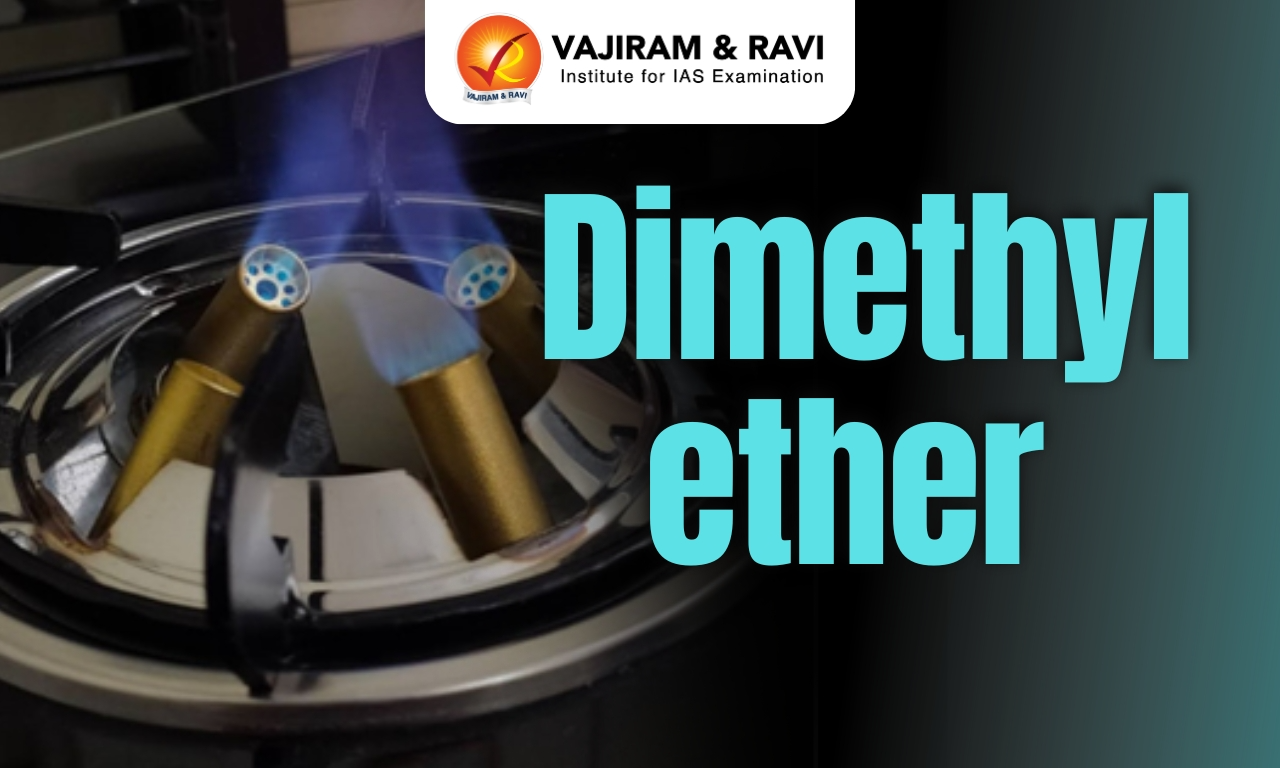
Dimethyl Ether

Dimethyl Ether

Dimethyl Ether Latest News

Oil and Natural Gas Corporation (ONGC), along with CSIR–National Chemical Laboratory (CSIR-NCL), is set to launch an industrial pilot project to produce dimethyl ether (DME) in Pune. 

About Dimethyl Ether

  • It is a synthetically produced alternative to diesel for use in specially designed compression ignition diesel engines.

Properties of Dimethyl Ether 

  • High Cetane Number: It has a very high cetane number, which is a measure of the fuel’s ignitibility in compression ignition engines.
  • Under normal atmospheric conditions, DME is a colorless gas.
  • Clean Burning: It burns cleaner, emitting minimal amounts of soot, nitrogen oxides (NOx), sulfur oxides (SOx), and particulate matter.
  • Thermal efficiency: It exhibits thermal efficiency that is comparable to traditional fuels, making it a viable substitute
  • Alternate Fuel: It can be a viable alternative fuel and engine technology to adapt to conventional diesel engines used in India’s economy’s agricultural and transport sectors.

Application of Dimethyl Ether

  • It is used extensively in the chemical industry and as an aerosol propellant.
  • It is used in chemical industries and also to produce dyes and plastics.

Source: NIE

Dimethyl Ether FAQs

Q1: What is Dimethyl Ether?

Ans: A synthetically produced alternative to diesel for compression ignition engines

Q2: Which standard measure of DME makes it suitable for compression ignition diesel engines?

Ans: Very high cetane number

Debt Recovery Tribunals

Debt Recovery Tribunals

Debt Recovery Tribunals Latest News

The Department of Financial Services (DFS) convened a colloquium of Chairpersons of Debt Recovery Appellate Tribunals and Presiding Officers of Debt Recovery Tribunals (DRTs) in New Delhi.

About Debt Recovery Tribunals

  • DRTs are quasi-judicial bodies established under the Recovery of Debts Due to Banks and Financial Institutions Act, 1993.
  • Role: Their primary role is adjudicating debt recovery disputes related to banks and financial institutions.
  • DRTs handle loan default cases above ₹20 lakh, focusing on secured debts.
  • DRTs also hear Securitisation Applications (SAs) filed under the SARFAESI Act, 2002 by borrowers or aggrieved parties.
  • There are currently 39 DRTs functioning across India, each headed by a Presiding Officer.
  • Composition
    • A DRT is presided over by a judicial officer qualified to be a District Judge.
    • It can also have administrative and technical members appointed by the Central Government.

Powers of DRTs

  • Summon and examine witnesses,
  • Compel the production of documents,
  • Receive evidence on affidavits,
  • Review or dismiss applications,
  • Conduct ex parte proceedings,
  • Issue commissions for document and witness examination.
  • Jurisdiction of DRTs: Each DRT has a territorial jurisdiction defined by the Central Government.
  • Jurisdiction is limited to cases involving debt recovery by banks and financial institutions.

Source: News On Air

Debt Recovery Tribunals FAQs

Q1: Under which ministry do DRTs function?

Ans: Ministry of Finance

Q2: DRTs deal with recovery of debts due to which entities?

Ans: Banks and financial institutions

Sanjay Gandhi National Park (SGNP)

Sanjay Gandhi National Park (SGNP)

Sanjay Gandhi National Park Latest News

The Maharashtra forest department has held over a proposal to increase the annual ticket rates for the Sanjay Gandhi National Park (SGNP).

About Sanjay Gandhi National Park 

  • It is located near Borivali in the northern part of Mumbai.
  • It is situated partly in the Thane District and in the Mumbai Suburban District of Maharashtra.
  • In the early days, the park was known as Krishnagiri National Park. However, in 1974 the name of this park was changed to ‘Borivali National Park’ and in 1981 to ‘Sanjay Gandhi National Park’.
  • It covers an expansive area of 103 sq.km., making it one of the largest parks in the world located within city limits. It forms roughly 20% of Mumbai city's geographical area. 
  • The Kanheri Caves in the center of the park were an important Buddhist learning center and pilgrimage site sculpted by Buddhist monks between the 9th and the 1st centuries BCE. 
    • They were chiseled out of a massive basaltic rock outcropping. 
    • Caves feature viharas, stupas, prayer halls, and other structures of old-style Buddhist architecture.  
    • There is a Jain Temple with three huge carved idols situated on the way to the caves. 
  • Besides, the park also has two lakes, namely Tulsi Lake and Vihar Lake, the deer park, the lion safari, and the Samadhi of Mahatma Gandhi
  • Flora
    • Kadamba, Teak, Karanj, Shisham, and species of acacia, Ziziphus, euphorbias, etc. are found in this National Park.
    • The most famous of these is the karvi plant, which blooms just once every eight years.
  • Fauna:
    • Leopard, sambar, chital, barking deer, rusty spotted cat, hyena, common palm civet, small Indian civet, Indian crested porcupine, Indian hare, Indian flying fox, common langur, and bonnet macaque.
    • The park also boasts 251 species of birds and a large variety of butterflies.

Source: IE

Sanjay Gandhi National Park FAQs

Q1: Where is Sanjay Gandhi National Park located?

Ans: Near Borivali in the northern part of Mumbai

Q2: Why is the Sanjay Gandhi National Park unique in terms of location?

Ans: It is one of the largest parks in the world within city limits.

Q3: What are the Kanheri Caves known for?

Ans: Being an ancient Buddhist learning center and pilgrimage site.

Mayon Volcano

Mayon Volcano

Mayon Volcano Latest News

Thousands of people have been evacuated from areas south of Manila after the Mayon Volcano erupted recently.

About Mayon Volcano

  • It is an active stratovolcano located in Albay province on Luzon Island in the Philippines.
  • It is part of the Pacific Ring of Fire.
  • It is located on the eastern side of Luzon, beside the Philippine Trench, which is the convergent boundary where the Philippine Sea Plate is driven under the Philippine Mobile Belt. 
  • Rising to 2462 m above the Albay Gulf, it is the Philippines’ most active volcano. 
  • Called the world’s most perfect volcanic cone because of the symmetry of its shape, it has a base 130 km in circumference and rises to 2,462 metres from the shores of Albay Gulf.
  • It has steep upper slopes capped by a small summit crater. 
  • Popular with climbers and campers, the volcano is the centre of Mayon Volcano National Park.
  • There are large abaca plantations on its lower slopes. 
  • Historical eruptions date back to 1616 CE that have been characterized by Strombolian eruptions, lava flows, pyroclastic flows, and mudflows. 
    • There have been more than 30 eruptions recorded since 1616.  
    • Mayon’s most violent eruption, in 1814, killed more than 1200 people and devastated several towns. 
    • An eruption in 1993 caused 79 deaths. 
    • Eruptions occur predominately from the central conduit and have also produced lava flows that travel far down the flanks.  

What is a Stratovolcano?

  • It is a tall, steep, and cone-shaped type of volcano.
  • Unlike flat shield volcanoes, they have higher peaks.
  • They are typically found above subduction zones, and they are often part of large volcanically active regions, such as the Ring of Fire that frames much of the Pacific Ocean.
  • Stratovolcanoes comprise the largest percentage (~60%) of the Earth’s individual volcanoes, and most are characterized by eruptions of andesite and dacite, lavas that are cooler and more viscous than basalt.
  • These more viscous lavas allow gas pressures to build up to high levels. Therefore, these volcanoes often suffer explosive eruptions. 
  • They are usually about half-half lava and pyroclastic material, and the layering of these products gives them their other common name of composite volcanoes.
  • At the peak, stratovolcanoes usually have a small crater.

Source: TOI

Mayon Volcano FAQs

Q1: Where is Mayon Volcano located?

Ans: Albay province on Luzon Island in the Philippines.

Q2: What type of volcano is Mayon Volcano?

Ans: Stratovolcano

Q3: Which was the most violent eruption of Mayon Volcano?

Ans: The 1814 eruption.

CARICOM

CARICOM

CARICOM Latest News

The External Affairs Minister recently arrived in Kingston, Jamaica, at the start of his own nine-day visit to the Caribbean ‘CARICOM’ grouping of countries.

About CARICOM

  • CARICOM, which stands for Caribbean Community, is the oldest surviving integration movement in the developing world.
  • It is an organization of Caribbean countries and dependencies originally established as the Caribbean Community and Commons Market in 1973 by the Treaty of Chaguaramas.
  • Main Purposes:
    • Promote economic integration and cooperation among its members;
    • To ensure that the benefits of integration are equitably shared;
    • To coordinate foreign policy;
  • It replaced the former Caribbean Free Trade Association (CARIFTA), which had become effective in 1968.  
  • The treaty spurred the development of associate institutions, including the Caribbean Development Bank and the Organization of East Caribbean States, both of which promote economic growth and cooperation.
  • In July 2001 the heads of government revised the Treaty of Chaguaramas, establishing the Caribbean Community and the CARICOM Single Market and Economy (CSME), which would harmonize economic policy and create a single currency. 
  • In 2007, CARICOM officially inaugurated the Caribbean Court of Justice (CCJ), which serves as the final court of appeal for CARICOM members and also handles regional trade disputes.
  • Members:
    • It has 15 members; Antigua and Barbuda, The Bahamas, Barbados, Belize, Dominica, Grenada, Guyana, Haiti, Jamaica, Montserrat, Saint Kitts and Nevis, Saint Lucia, Saint Vincent and the Grenadines, Suriname, and Trinidad and Tobago.
    • Of the 15, all except Montserrat are nation-states. 
    • Anguilla, Bermuda, British Virgin Islands, Cayman Islands, and Turks & Caicos Islands are associate members of the community.
  • The chairmanship of the community is rotated every six months among the member countries’ heads.
  • The permanent secretariat has its headquarters in Georgetown, Guyana.  

Source: TH

CARICOM FAQs

Q1: What does CARICOM stand for?

Ans: Caribbean Community

Q2: What type of organization is CARICOM?

Ans: A regional organization of Caribbean countries and dependencies.

Q3: Which treaty established CARICOM?

Ans: Treaty of Chaguaramas.

Q4: Which bank is associated with CARICOM for economic development?

Ans: Caribbean Development Bank

Q5: How many member states are part of CARICOM? Answer: 15 members

Ans: 15 members

Daily Editorial Analysis 4 May 2026

Daily-Editorial-Analysis

AI and a Gathering Storm of Unchecked Power 

Context

  • The influence of Artificial Intelligence (AI) now extends across economic systems, governance, warfare, and everyday human interaction, however, alongside its transformative potential lies a growing sense of unease.
  • Developments involving companies such as Palantir Technologies and OpenAI reveal that AI is not merely a technological tool but a mechanism of power, one that raises urgent ethical, political, and social concerns.
  • Therefore, it is important to examine the implications of AI’s expansion, focusing on militarisation, regulatory failures, corporate accountability, and the urgent need for global governance.

AI and the Shift Toward Hard Power

  • The Ideological Transformation

    • A significant shift in thinking about AI is reflected in the ideas of Alexander C. Karp, who argues that democratic societies can no longer rely solely on moral authority.
    • Instead, hard power driven by software will determine global dominance.
    • This perspective signals a departure from traditional democratic ideals, placing technological superiority at the centre of geopolitical strategy.
  • AI in Warfare

    • The use of AI in military operations illustrates this shift vividly. Systems like Palantir’s defence platforms are increasingly involved in identifying and selecting targets.
    • Such developments raise serious ethical concerns, particularly when civilian casualties are involved.
    • The delegation of life-and-death decisions to algorithms introduces ambiguity in accountability and challenges established norms of international law.

The Alarming Absence of Regulation

  • Warnings from Within the Industry

    • Even leaders within the AI industry, such as Sam Altman, have expressed concern over the pace of technological advancement.
    • OpenAI’s policy document highlights that AI is evolving faster than society’s ability to adapt, calling for proactive and forward-looking governance.
  • Limitations of Current Policy Approaches

    • Governments have largely failed to implement comprehensive policies, relying instead on vague or voluntary guidelines.
    • This gap between innovation and regulation creates a dangerous environment where powerful technologies operate without sufficient oversight.

Corporate Self-Regulation and Its Limits

  • Ethical Frameworks by Tech Companies

    • In response to regulatory gaps, companies like Anthropic have developed internal ethical guidelines, such as Claude’s Constitution.
    • These frameworks aim to ensure that AI systems behave safely and ethically by restricting harmful outputs.
  • Why Self-Regulation Falls Short

    • While these efforts may appear responsible, they ultimately lack transparency and accountability.
    • Private corporations are not democratically accountable, and their priorities may conflict with public interest.
    • Moreover, such guidelines can be altered, ignored, or overridden, raising doubts about their effectiveness.

From Warfare to Surveillance

  • Expansion of Surveillance Technologies

    • Technologies developed by companies like Palantir have reportedly been used for profiling and tracking individuals, particularly in immigration enforcement and predictive policing.
  • Risks to Civil Liberties

    • Their widespread use raises serious concerns about privacy violations, racial profiling, and the erosion of civil liberties.
    • While some applications, such as pandemic contact tracing, have demonstrated public benefit, the broader trend points toward increasing state surveillance.

The Myth of Technological Inevitability

  • The No Alternative Narrative

    • A growing acceptance of AI’s unchecked expansion reflects a broader belief that technological progress is inevitable.
    • This idea echoes the famous assertion by Margaret Thatcher that “there is no alternative.”
  • Critique of Deterministic Thinking

    • As noted by Cory Doctorow, such narratives obscure the fact that technological developments are shaped by human choices.
    • Accepting them as inevitable discourages critical debate and limits the possibility of alternative futures.

The Need for Global Regulation and Collective Action

  • Emerging International Efforts

    • Regulatory initiatives such as the European Union’s AI Act and policy proposals from countries like Brazil demonstrate that governance is both possible and necessary.
    • Leaders such as Luiz Inácio Lula da Silva have emphasised the importance of protecting human rights, data privacy, and national interests.
  • India and the Global South’s Role

    • Countries like India, which currently follow a relatively soft regulatory approach, have an opportunity to take a more proactive stance.
    • By strengthening legal frameworks and participating in global cooperation, they can help shape a more equitable AI ecosystem.

Conclusion

  • While AI offers unprecedented opportunities, its unchecked expansion threatens to undermine democratic accountability, civil liberties, and global equality.
  • The growing reliance on corporate self-regulation and the persistence of weak governance frameworks highlight the urgency of collective action.
  • Societies must reject the illusion of inevitability and actively shape the trajectory of technological development.
  • Through robust regulation, international cooperation, and public engagement, it is possible to ensure that AI serves humanity rather than dominates it.

AI and a Gathering Storm of Unchecked Power FAQs

Q1. How is AI changing modern warfare?
Ans. AI is increasingly being used to assist in military decisions, including identifying and selecting targets.

Q2. Why is corporate self-regulation of AI considered insufficient?
Ans. Corporate self-regulation is insufficient because companies lack transparency and are not democratically accountable.

Q3. What risks does AI pose to civil liberties?
Ans. AI poses risks such as mass surveillance, privacy violations, and biased decision-making.

Q4. What is the solution for managing AI?
Ans. Stronger government regulation and international cooperation to ensure ethical use of AI.

Q5. Why is the idea that “there is no alternative” to AI development problematic?
Ans. It is problematic because it discourages critical thinking and prevents societies from exploring more ethical and regulated approaches to AI.

Source: The Hindu


Keeping India’s Carbon Money at Home 

Context

  • The European Union’s Carbon Border Adjustment Mechanism (CBAM), implemented on January 1, 2026, represents a significant shift in the intersection of global trade and climate policy.
  • Marketed as a tool of fairness, CBAM seeks to equalise carbon costs between European producers and foreign exporters.
  • While this principle appears equitable in theory, its practical application reveals structural imbalances, particularly for developing economies such as India.
  • The policy raises broader concerns about fairness, climate justice, and economic sovereignty in the global green transition.

CBAM and the Question of Fair Competition

  • Unequal Carbon Cost Burdens

    • CBAM requires importers to pay a carbon price equivalent to that faced by EU producers under the Emissions Trading System (ETS).
    • However, European industries continue to benefit from extensive state support, including subsidies for decarbonisation, concessional financing, and the gradual phase-out of free emission allowances between 2026 and 2034.
    • These measures significantly reduce their effective carbon costs.
    • In contrast, Indian exporters face the full burden of CBAM charges without comparable domestic support.
  • Concerns Under Global Trade Norms

    • This imbalance appears inconsistent with the spirit of GATT Article III, which discourages internal measures that indirectly protect domestic industries.
    • By maintaining support for its own producers while imposing full carbon costs on imports, the EU risks undermining the principle of non-discriminatory trade.

India–EU FTA: Limited Openings

  • No Exemption from CBAM

    • The India–EU Free Trade Agreement (FTA), concluded on January 27, 2026, does not provide India with any exemption or special treatment under CBAM.
    • The EU has maintained a uniform approach, refusing country-specific flexibility.
  • Significance of Annex 14-A

    • Despite this, Annex 14-A of the FTA establishes a formal technical dialogue on CBAM implementation. It allows for:
      • Recognition of carbon pricing in the country of origin
      • A most-favoured-nation clause ensuring equal treatment if flexibility is granted to others
    • Though limited, this provision offers India a critical institutional mechanism to negotiate the recognition of its domestic carbon policies.

The Deeper Issue: Climate Justice and Sovereignty

  • By shifting part of its decarbonisation burden onto developing countries while retaining the associated revenues, the EU creates a structural imbalance.
  • For India, this translates into a loss of policy autonomy.
  • Without control over carbon pricing or revenue utilisation, countries risk becoming passive participants, rule-takers rather than rule-makers, in the global climate regime.

India’s Domestic Preparedness: The CCTS

  • Establishing a Carbon Market

    • India’s Carbon Credit Trading Scheme (CCTS), introduced in 2023, provides a foundation for domestic carbon pricing.
    • It requires industrial installations to hold tradable carbon credits against verified emissions, creating a measurable carbon cost.
  • Leveraging CBAM Article 9

    • CBAM’s Article 9 allows importers to deduct carbon costs already paid in the country of origin.
    • This creates a legal pathway for India to ensure that its domestic carbon price is recognised at the EU border.
  • Avoiding Double Pricing

    • Crediting CCTS under Article 9 would:
      • Prevent double carbon pricing
      • Maintain environmental integrity
      • Ensure fairness in trade
    • However, this requires strong monitoring systems, transparent pricing mechanisms, and safeguards against policy distortions.

The Case for an India Border Adjustment Mechanism (IBAM)

  • A Strategic Countermeasure

    • India can respond proactively by introducing an India Border Adjustment Mechanism (IBAM), which would impose a carbon-based charge on exports destined for CBAM-regulated markets.
  • Need for Coordinated Implementation

    • IBAM should not be implemented unilaterally. Instead, it must be developed through the institutional framework of Annex 14-A to ensure:
      • Recognition under CBAM Article 9
      • Seamless offsetting of CBAM liabilities
      • Policy credibility and international acceptance
  • Capping the Carbon Burden
    • If properly aligned with CBAM, IBAM can ensure that Indian exporters do not face any higher net carbon cost than what CBAM would impose alone.

Retaining Carbon Revenues for Domestic Transition

  • Shifting the Revenue Base

    • A key advantage of IBAM is that it allows India to retain carbon revenues domestically rather than transferring them to the EU.
  • Investing in Green Development

    • These revenues should be channelled into a dedicated, transparent fund supporting:
      • Industrial decarbonisation (e.g., cleaner steel production)
      • Renewable energy expansion
      • Hydrogen and low-carbon technologies
      • Worker transition and social protection
    • Such investments would strengthen India’s long-term climate and economic resilience.

Conclusion

  • While CBAM presents challenges for developing economies, it also offers opportunities for strategic adaptation.
  • By leveraging the provisions of the India–EU FTA and CBAM’s legal framework, India can transform a potential disadvantage into a policy advantage.
  • The combined use of CCTS and IBAM enables India to maintain control over carbon revenues, protect its exporters, and actively participate in the global green transition.
  • Ultimately, IBAM-ing the CBAM reflects a broader vision: engaging with a carbon-constrained world on equitable terms while preserving national sovereignty and developmental priorities.

Keeping India’s Carbon Money at Home FAQs

Q1. What is the main objective of CBAM?
Ans. CBAM aims to equalise carbon costs between European producers and foreign exporters to prevent carbon leakage.

Q2. Why is CBAM seen as unfair to India?
Ans. CBAM is seen as unfair because Indian exporters face full carbon costs without receiving subsidies like European producers.

Q3. What role does Annex 14-A in the India–EU FTA play?
Ans. Annex 14-A provides a framework for technical dialogue and allows recognition of India’s carbon pricing mechanisms.

Q4. How can India use its Carbon Credit Trading Scheme (CCTS)?
Ans. India can use CCTS to establish a domestic carbon price that may be credited against CBAM charges under Article 9.

Q5. What is the purpose of an India Border Adjustment Mechanism (IBAM)?
Ans. IBAM would allow India to collect carbon-related charges domestically and retain the revenue for its green transition.

Source: The Hindu

Daily Editorial Analysis 4 May 2026 FAQs

Q1: What is editorial analysis?

Ans: Editorial analysis is the critical examination and interpretation of newspaper editorials to extract key insights, arguments, and perspectives relevant to UPSC preparation.

Q2: What is an editorial analyst?

Ans: An editorial analyst is someone who studies and breaks down editorials to highlight their relevance, structure, and usefulness for competitive exams like the UPSC.

Q3: What is an editorial for UPSC?

Ans: For UPSC, an editorial refers to opinion-based articles in reputed newspapers that provide analysis on current affairs, governance, policy, and socio-economic issues.

Q4: What are the sources of UPSC Editorial Analysis?

Ans: Key sources include editorials from The Hindu and Indian Express.

Q5: Can Editorial Analysis help in Mains Answer Writing?

Ans: Yes, editorial analysis enhances content quality, analytical depth, and structure in Mains answer writing.

Enquire Now