Stubble Burning, Meaning, Reasons, Impacts, Government Initiatives

Stubble Burning

Stubble Burning is a recurring agricultural practice that significantly influences air quality, soil health and climate conditions in northern India. It occurs mainly after the harvest of rice and wheat, when farmers burn leftover crop residue to clear fields quickly for the next sowing cycle. This seasonal activity coincides with winter atmospheric conditions that trap pollutants, intensifying smog formation across the Indo-Gangetic plains. Scientific studies, satellite observations and policy reviews consistently identify Stubble Burning as a structural environmental and economic challenge rather than merely a behavioural issue.

Stubble Burning

Stubble Burning refers to the intentional burning of crop residue such as straw and stalks left after harvesting cereals like paddy and wheat using combine harvesters. These machines leave tall, silica-rich stalks that are difficult to remove manually or plough back into the soil. The practice is most visible between late September and November in Punjab, Haryana and western Uttar Pradesh, aligning with the short 15-20 day gap between paddy harvesting and wheat sowing, making rapid residue removal critical for farmers.

Read about: Biomass Energy

Stubble Burning in India

India produces nearly 600-700 million tonnes of crop residue annually, with around 35 million tonnes burned in northern states during October-November. Punjab records the highest rice Stubble Burning incidents, followed by Haryana, while Uttar Pradesh leads in wheat residue burning. A 2023 IIT-TERI study estimated that Stubble Burning contributes 22% - 35% of seasonal air pollution, rising to 40% - 70% on specific days under stagnant meteorological conditions.

Satellite data shows mixed trends. Punjab reported a 70% decline in fire incidents in 2024, yet the total burnt area remained nearly unchanged at around 19.17 lakh hectares. This discrepancy arises because satellites like MODIS and VIIRS miss short duration evening fires, now increasingly lit between 4 pm and 6 pm. Optical sensors such as Sentinel-2 reveal burn scars even when thermal sensors fail, highlighting under reporting challenges.

Stubble Burning Reasons

Stubble Burning persists due to intertwined agronomic, economic and policy constraints that limit farmers’ practical alternatives despite legal bans and environmental costs.

  • Short Cropping Window: The 15-20 day gap between paddy harvest and wheat sowing leaves insufficient time for manual or mechanical residue management, directly affecting wheat yield schedules.
  • Cost Constraints: Hiring machines like Happy Seeders costs ₹4,500-5,000 per acre, unaffordable for most small farmers who constitute nearly 85% of landholders.
  • Mechanisation Pattern: Combine harvesters leave 25-30 cm tall stubble, making ploughing difficult and increasing dependence on burning for rapid field clearance.
  • Policy Induced Mono Cropping: MSP driven rice-wheat cycles discourage crop diversification, leading to repetitive accumulation of paddy straw with limited reuse options.
  • Low Market Value of Straw: Paddy straw has high silica content, making it unsuitable for fodder and reducing incentives for collection or commercial sale.
  • Infrastructure Gaps: Biomass plants are often 20-50 km away, making straw transport economically unviable due to storage and logistics costs.

Stubble Burning Impacts

The impacts of Stubble Burning extend beyond local farms, affecting air quality, soil productivity, climate systems and public health across regions.

  • Air Pollution Load: Burning one tonne of crop residue releases about 1,400 kg CO₂, 58 kg CO, 11 kg particulate matter and 4.9 kg nitrogen oxides.
  • PM2.5 Concentration Rise: Each detected farm fire is associated with an average 112.44 unit rise in PM2.5 levels in Delhi NCR during peak season.
  • Smog Formation: Emissions interact with winter fog and industrial pollutants, forming dense smog that reduces visibility and solar radiation.
  • Soil Nutrient Loss: Burning destroys nitrogen, phosphorus, potassium and beneficial microbes, reducing soil organic carbon and long term fertility.
  • Microbial Damage: High soil temperatures kill bacteria and fungi essential for nutrient cycling, affecting moisture retention and crop resilience.
  • Public Health Risks: Exposure increases respiratory infections, aggravates COPD, raises eye disorders and intensifies vulnerability among children and elderly populations.

Stubble Burning Prevention Initiatives by Government

The government has adopted regulatory, technological and financial measures to curb Stubble Burning while attempting to reduce farmer distress.

  • Legal Framework: The Air Act 1981 and Environment Protection Act 1986 empower penalties, while National Green Tribunal enforces compliance measures.
  • CAQM Coordination: The Commission for Air Quality Management coordinates actions across Delhi NCR states using satellite monitoring and district level enforcement.
  • CRM Scheme: Crop Residue Management scheme supplies Happy Seeders, Super SMS, mulchers and balers for in-situ residue management.
  • Pusa Decomposer: A microbial solution developed by IARI converts stubble into compost within 20-25 days, improving soil organic carbon.
  • Financial Incentives: Haryana provides ₹1,200 per acre to farmers who avoid burning and adopt sustainable residue practices.
  • Mechanisation Support: SMAM offers subsidies to small and marginal farmers through Custom Hiring Centres for affordable machine access.

Stubble Burning Alternatives

Sustainable alternatives focus on converting crop residue into economic resources while improving soil health and reducing emissions.

  • In-Situ Decomposition: Bio-decomposers break down stubble into organic manure, reducing fertiliser dependence and improving soil moisture retention.
  • Biomass Power Generation: Straw is pelletised and used in power plants, supporting renewable energy while reducing open field burning.
  • Ethanol and Bio-CNG: Paddy straw is processed into second generation ethanol and biogas, contributing to clean energy targets.
  • Cattle Feed Processing: Straw is treated and pelletised for fodder use in regions facing feed shortages, despite silica limitations.
  • Paper and Packaging: Crop residue replaces wood pulp in paper, disposable plates and packaging, reducing deforestation pressure.
  • Gauthans Model: Chhattisgarh’s community collection system converts residue into organic fertiliser using cow dung and natural enzymes.

Stubble Burning FAQs

Q1: What is Stubble Burning?

Ans: Stubble Burning is the practice of burning leftover crop residue like paddy or wheat straw after harvesting to quickly clear fields.

Q2: Why do farmers burn crop stubble?

Ans: Farmers burn stubble due to a short sowing window, high residue management costs, labour shortages and limited affordable alternatives.

Q3: How does Stubble Burning affect air quality?

Ans: It releases particulate matter and harmful gases, significantly increasing smog, PM2.5 levels and respiratory health risks.

Q4: Is Stubble Burning illegal in India?

Ans: Yes, Stubble Burning is banned under environmental laws and monitored by the National Green Tribunal and CAQM.

Q5: What are the alternatives to Stubble Burning?

Ans: Alternatives include in-situ decomposition, use of Happy Seeders, biomass energy production and converting residue into compost or biofuel.

Natural Gas, Formation, Sources, Distribution, Uses, Economy

Natural Gas

Natural Gas is one of the most important fossil fuels used in the modern energy system. It plays a crucial role in electricity generation, industrial production, domestic energy use, and fertilizer manufacturing. Compared to coal and oil, Natural Gas burns more cleanly and emits lower levels of air pollutants, making it a preferred transition fuel for many economies. Globally, Natural Gas contributes about one-fourth of total energy consumption, while India is gradually increasing its reliance on gas to reduce dependence on coal and imported crude oil. Its growing importance is closely linked with energy security, economic growth, and environmental concerns.

Natural Gas

Natural Gas is a naturally occurring hydrocarbon fuel found in underground geological formations, often alongside petroleum. It mainly consists of methane, usually around 95%, along with small quantities of propane, butane, pentane, hexane, carbon dioxide, nitrogen, hydrogen sulfide, and helium. It is colorless and odorless in its natural form, and for safety purposes, odorants like mercaptans are added before distribution. In the market, Natural Gas is traded based on its calorific value rather than volume, commonly measured in MMBTU, where one MMBTU is approximately equal to 1,000 cubic feet of Natural Gas.

Read about: Biomass Energy

Natural Gas Formation Process

Natural Gas forms through the slow transformation of buried organic matter under heat and pressure over millions of years deep underground.

  • Burial of Organic Matter: Tiny marine plants and animals, along with terrestrial vegetation, got buried under layers of sand, silt, and rock millions of years ago, preventing oxygen exposure and slowing decomposition.
  • Heat and Pressure Action: Continuous accumulation of sediments increased temperature and pressure, breaking complex organic compounds into simpler hydrocarbons, storing solar energy originally captured through photosynthesis.
  • Thermogenic Gas Formation: At greater depths and higher temperatures, organic matter converted into methane rich Natural Gas, often alongside crude oil, making gas an important fossil fuel resource.
  • Biogenic Gas Formation: In shallow sediments, microorganisms called methanogens produced methane by decomposing organic matter, contributing to gas deposits like coalbed methane.
  • Migration and Trapping: Natural Gas migrated through porous rocks and accumulated under impermeable layers, forming reservoirs that could be associated with oil or exist independently.

Natural Gas Sources

Natural Gas is obtained from different geological settings, depending on whether it occurs with oil or independently.

  • Associated Gas: This gas occurs along with crude oil, either dissolved in oil or as a gas cap above oil reservoirs, and is also known as wet gas due to heavier hydrocarbons.
  • Non Associated Gas: Found in reservoirs containing only gas and no oil, this dry gas mainly consists of methane and is easier to process for direct consumption.
  • Sour Gas: Natural Gas containing significant hydrogen sulfide or sulfur compounds is termed sour gas and requires extensive processing before use.
  • Sweet Gas: Coalbed methane is known as sweet gas because it lacks hydrogen sulfide, making it less corrosive and easier to handle.
  • Unconventional Sources: Shale gas, tight gas, and coalbed methane have become important sources, especially in countries like the United States and China.

Natural Gas Global Distribution

Natural Gas reserves are unevenly distributed across the world, concentrated in specific geological basins.

  • Russia: Russia has the world’s largest Natural Gas reserves, estimated at about 1,680 trillion cubic feet, with major fields in West Siberia and near the Arctic Circle.
  • Middle East: Iran and Qatar hold the second and third largest reserves globally, with the South Pars-North Dome field being the world’s largest gas field.
  • North America: The United States has proven reserves of about 273 trillion cubic feet, with major fields like Hugoton spanning Oklahoma, Texas, and Kansas.
  • Europe: The North Sea, especially off Norway and the Dutch coast, contains significant gas reserves that support European energy needs.
  • Africa and Asia: Algeria’s central basin, Nigeria’s Niger Delta, and Indonesia’s North Sumatra basin are major gas producing regions in Africa and Asia.

Read about: Nuclear Power Plants in India

Natural Gas Distribution in India

India’s Natural Gas reserves are spread across onshore and offshore basins, with increasing exploration in recent decades.

  • Western Offshore Fields: Bombay High and Bassein fields near Mumbai are major contributors, supplying gas for power generation and industrial use.
  • Eastern Offshore Basins: The Krishna-Godavari basin holds deep water gas discoveries, including a major 2002 find estimated at 14 trillion cubic feet.
  • Onshore Basins: Assam, Tripura, and Gujarat have long standing gas fields that supported India’s early gas industry since the 1960s.
  • Southern and Eastern Regions: Cuddalore district in Tamil Nadu and offshore Odisha have notable gas reserves contributing to regional energy supply.
  • Future Potential Areas: Andaman and Nicobar Islands are estimated to hold up to 1,700 billion cubic meters of gas based on remote sensing, though commercial viability is yet to be established.

Natural Gas Organizations

International and national organizations play a major role in shaping Natural Gas production, pricing, and policy.

  • Organization of Petroleum Exporting Countries (OPEC):
    • OPEC Role: The Organization of Petroleum Exporting Countries is a 12 member cartel that coordinates oil production policies, indirectly influencing gas markets linked to oil pricing.
    • OPEC Members: Countries like Saudi Arabia, Iran, Iraq, Venezuela, and Qatar use coordinated supply control to maintain higher profit margins in global energy markets.
  • Oil and Natural Gas Corporation India (ONGC):
    • ONGC Background: Oil and Natural Gas Corporation is a Maharatna PSU under India’s Ministry of Petroleum and Natural Gas, established in 1995.
    • ONGC Contribution: ONGC accounts for around 70% of India’s domestic crude oil and Natural Gas production and is among India’s highest profit making corporations.
    • ONGC Videsh: The international arm of ONGC operates in 16 countries, with major exploration projects in Vietnam, Iran, Africa, and Latin America.

Natural Gas Uses

Natural Gas is a versatile fuel used across multiple sectors due to its efficiency and cleaner combustion.

  • Power Generation: Gas fired power plants generate over 20% of global electricity, providing reliable and flexible energy to balance renewable sources.
  • Domestic Use: Natural Gas is widely used for cooking, heating, and water heating, producing high temperatures and efficient energy for households.
  • Transportation Fuel: Compressed Natural Gas is used in buses, cars, and commercial fleets, offering a cheaper and cleaner alternative to petrol and diesel.
  • Fertilizer Industry: Methane derived hydrogen is used to manufacture ammonia, which is essential for producing urea and nitrogen based fertilizers.
  • Industrial Applications: Natural Gas is used in making glass, steel, plastics, dyes, inks, rubber products, and as fuel for industrial heating processes.

Natural Gas Economy

Natural Gas significantly influences national economies, energy security, and long term development strategies.

  • Energy Basket Role: Natural Gas contributes about 25% of global energy consumption, while India currently uses only about 6%, aiming for 15% by 2030.
  • Indian Consumption Pattern: Nearly 40% of India’s gas is used in fertilizers, around 30% in power generation, and the rest in LPG and industries.
  • Import Dependence: About 55% of India’s Natural Gas demand is met through imported LNG, which is costlier and exposes the economy to global price shocks.
  • Infrastructure Development: India is expanding pipelines through a National Gas Grid of 15,000 kilometers to improve regional access and reduce supply imbalance.
  • Economic and Environmental Impact: Increasing gas use supports cleaner energy transition, reduces emissions, creates employment, and strengthens India’s move toward a gas based economy.

Natural Gas FAQs

Q1: What is Natural Gas mainly composed of?

Ans: Natural Gas mainly consists of methane, about 90–95 percent, with small amounts of ethane, propane, and other gases.

Q2: Why is Natural Gas considered a cleaner fossil fuel?

Ans: Natural Gas emits less carbon dioxide, sulfur dioxide, and particulate matter compared to coal and petroleum fuels.

Q3: How is Natural Gas transported over long distances?

Ans: Natural Gas is transported through pipelines or as liquefied Natural Gas after cooling to minus 162 degrees Celsius.

Q4: What are the major uses of Natural Gas in India?

Ans: Natural Gas is used in power generation, fertilizer production, household cooking, transportation, and industrial heating.

Q5: Which countries have the largest Natural Gas reserves?

Ans: Russia, Iran, and Qatar possess the largest proven Natural Gas reserves globally.

UPSC Daily Quiz 10 January 2026

UPSC Daily Quiz

[WpProQuiz 64]

UPSC Daily Quiz FAQs

Q1: What is the Daily UPSC Quiz?

Ans: The Daily UPSC Quiz is a set of practice questions based on current affairs, static subjects, and PYQs that help aspirants enhance retention and test conceptual clarity regularly.

Q2: How is the Daily Quiz useful for UPSC preparation?

Ans: Daily quizzes support learning, help in revision, improve time management, and boost accuracy for both UPSC Prelims and Mains through consistent practice.

Q3: Are the quiz questions based on the UPSC syllabus?

Ans: Yes, all questions are aligned with the UPSC Syllabus 2025, covering key areas like Polity, Economy, Environment, History, Geography, and Current Affairs.

Q4: Are solutions and explanations provided with the quiz?

Ans: Yes, each quiz includes detailed explanations and source references to enhance conceptual understanding and enable self-assessment.

Q5: Is the Daily UPSC Quiz suitable for both Prelims and Mains?

Ans: Primarily focused on Prelims (MCQ format), but it also indirectly helps in Mains by strengthening subject knowledge and factual clarity.

Madden Julian Oscillation, Formation, Phases, Impact, Climate Change

Madden Julian Oscillation

The Madden Julian Oscillation is a major driver of short term climate variability in the tropics, influencing rainfall, winds, cyclones and monsoon behaviour across continents. Unlike stationary climate patterns, it moves continuously, shaping weather on weekly to monthly scales. Its role has gained importance due to its strong influence on monsoon breaks, extreme rainfall events, tropical cyclogenesis and extended range weather prediction, especially over the Indian Ocean region.

Madden Julian Oscillation

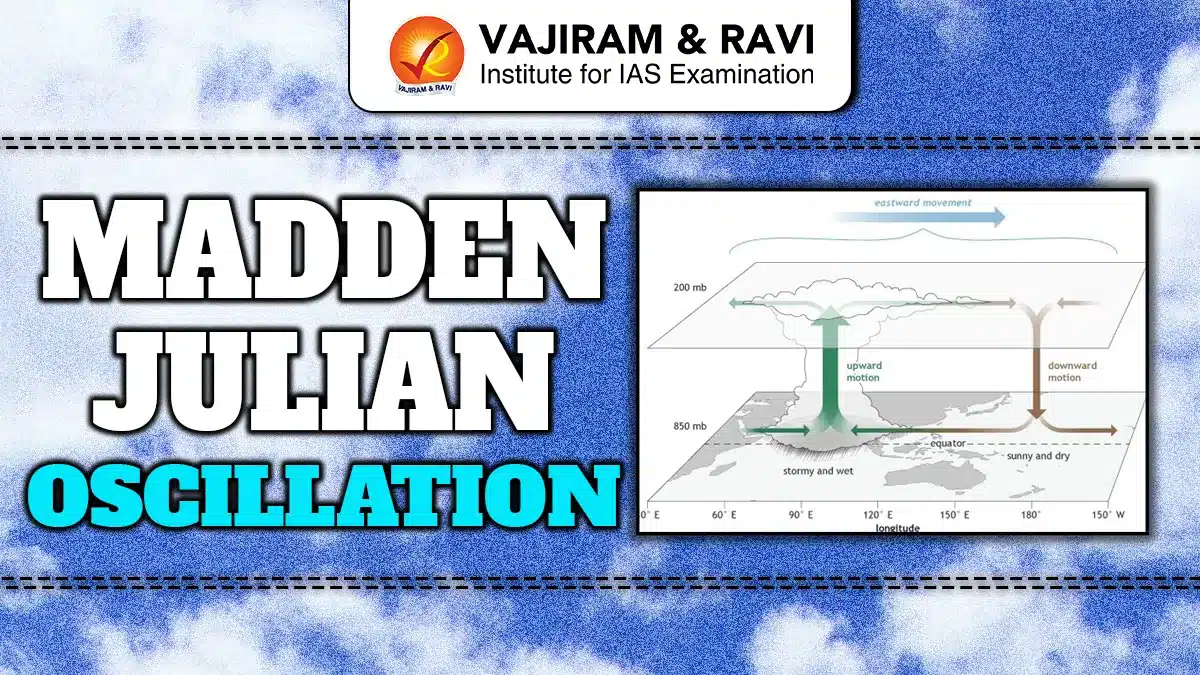
The Madden Julian Oscillation is an eastward moving atmospheric disturbance consisting of clouds, rainfall, winds and pressure anomalies near the equator, recurring every 30 to 60 days. It was discovered in the early 1970s by Roland Madden and Paul Julian while studying tropical wind and pressure variations. Unlike ENSO, which remains fixed over the Pacific, the MJO travels across the globe, making it the dominant form of intra seasonal climate variability.

Madden Julian Oscillation Formation Process

The formation of the Madden Julian Oscillation begins with large scale atmospheric and oceanic interactions in warm tropical waters and evolves into a moving convective system.

  • Surface Wind Convergence: Low level winds converge near the equator over warm oceans above 28°C, forcing air to rise and initiating deep convection and cloud formation.
  • Upper Level Divergence: Rising air spreads outward at upper atmospheric levels, strengthening convection and maintaining the vertical circulation necessary for sustained rainfall anomalies.
  • Coupled Ocean Atmosphere Feedback: Westerly wind bursts modify sea surface temperatures, reinforcing convection and allowing the oscillation to sustain itself across thousands of kilometres.
  • Eastward Propagation: The system travels eastward at 4-8 m/s, completing a global circuit in 30-60 days across the Indian and Pacific Oceans.
  • Outgoing Longwave Radiation Signal: Satellite measured reductions in outgoing longwave radiation indicate intense thunderstorm activity within the active phase of the MJO.

Madden Julian Oscillation Phases

The Madden Julian Oscillation operates through two contrasting atmospheric phases that together form a moving dipole across the tropics. During strong MJO events, the Earth is effectively divided into two longitudinal halves, with one half experiencing enhanced rainfall and the other suppressed conditions, both shifting eastward over time. 

Together, this eastward moving dipole structure governs alternating wet and dry spells across tropical regions on 30-60 day time scales.

1. Enhanced Convective Phase:

In this phase, low level surface winds converge near the equator, forcing warm, moist air to rise through the troposphere. At upper atmospheric levels, winds diverge outward, supporting sustained upward motion. This vertical circulation promotes cloud formation, condensation, deep convection, heavy rainfall and increased thunderstorm and cyclone activity.

2. Suppressed Convective Phase:

Here, winds converge in the upper atmosphere, pushing air downward toward the surface. As the descending air compresses, it becomes warmer and drier, inhibiting cloud development. Near the surface, air diverges outward, leading to clearer skies, reduced humidity, minimal rainfall and relatively stable weather conditions.

Madden Julian Oscillation Impact on Indian Monsoon

The Madden Julian Oscillation plays a critical role in determining active and break phases of the Indian monsoon.

  • Monsoon Activation Over Indian Ocean: When the active phase lies over the Indian Ocean, it enhances moisture transport and strengthens monsoon rainfall over India.
  • Monsoon Breaks: A shift of the active phase toward the Pacific leads to suppressed rainfall and monsoon breaks, commonly observed during July.
  • Cycle Duration Effect: A 30 day cycle supports frequent rainfall spells, while cycles exceeding 40 days are associated with weaker monsoons.
  • Interaction with ENSO: Presence of MJO over the Pacific combined with El Niño conditions significantly reduces Indian monsoon rainfall.
  • Forecasting Utility: The India Meteorological Department uses MJO based models to provide 10-15 day advance forecasts of monsoon activity transitions.

Madden Julian Oscillation Significance

The Madden Julian Oscillation is crucial for understanding and predicting short term climate variability across tropical and extra tropical regions.

  • Intra Seasonal Climate Control: It explains week-to-week variability in tropical rainfall that seasonal averages cannot capture.
  • Cyclone Formation Influence: Ascending motion during active phases increases tropical cyclone formation across ocean basins.
  • Jet Stream Modulation: MJO induced circulation changes alter jet streams, triggering heatwaves, cold spells and flooding events.
  • Global Weather Linkages: Its effects extend up to 30° latitude, influencing weather patterns in North America, Africa and East Asia.
  • ENSO Interaction: Strong MJO events can accelerate El Niño or La Niña development by triggering oceanic Kelvin waves.

Impact of Climate Change on Madden Julian Oscillation

Climate change is altering the strength, speed and rainfall influence of the Madden Julian Oscillation.

  • Warming Indo Pacific Pool: Rising sea surface temperatures above 28°C have intensified MJO related convection.
  • Shift in Residence Time: The MJO now spends 3-4 fewer days over the Indian Ocean and 5-6 more days over the western Pacific.
  • Stronger Rainfall Extremes: Enhanced convection increases the likelihood of intense rainfall, flooding and cyclone formation.
  • Altered Global Rainfall Patterns: Changes in MJO behaviour have contributed to drying trends in regions like the Congo Basin.
  • Forecasting Challenges: Increased variability makes simulating and predicting MJO behaviour more complex for climate models.

Madden Julian Oscillation FAQs

Q1: What is the Madden Julian Oscillation?

Ans: The Madden Julian Oscillation is a large scale atmospheric disturbance that moves eastward across the tropics, influencing clouds, rainfall and wind patterns.

Q2: How long does one Madden Julian Oscillation cycle last?

Ans: One complete MJO cycle usually lasts between 30 and 60 days as it travels around the globe near the equator.

Q3: Why is the Madden Julian Oscillation important for weather prediction?

Ans: The MJO affects monsoons, tropical cyclones and extreme rainfall, helping improve short term and seasonal weather forecasts.

Q4: Which regions are most affected by the Madden Julian Oscillation?

Ans: Tropical regions including the Indian Ocean, Pacific Ocean, Southeast Asia, Australia and parts of Africa are most influenced by the MJO.

Q5: Does the Madden Julian Oscillation impact India’s monsoon?

Ans: Yes, active MJO phases can strengthen monsoon rainfall over India, while suppressed phases can weaken rainfall and cause dry spells.

Radioactive Pollution, Meaning, Types, Sources, Agents, Impacts

Radioactive Pollution

Radioactive Pollution has emerged as a serious environmental challenge with the expansion of nuclear technology, industrialisation and medical use of radiation. It involves the release of radioactive substances into air, water, or soil, where they emit ionising radiation over long periods. Unlike many pollutants, radioactive contaminants persist for years or even centuries due to long half lives, making their effects cumulative and often irreversible. Major nuclear accidents, radioactive waste mismanagement and natural radioactive emissions have demonstrated that Radioactive Pollution poses long term risks to human health, ecosystems, food security and environmental stability across the world.

Radioactive Pollution

Radioactive Pollution refers to the presence and accumulation of radioactive substances in the environment that emit harmful ionising radiation beyond natural background levels. It occurs when unstable atomic nuclei release energy in the form of alpha, beta, or gamma radiation, contaminating air, water, soil and living organisms. This pollution can originate from both natural processes, such as cosmic radiation and radon release and human activities like nuclear power generation, weapons testing, medical isotope use and uranium mining. Once released, radioactive materials can enter food chains, remain biologically active for decades and cause long term genetic, ecological and health consequences.

Read About: Air Pollution

Radioactive Pollution Types

Radioactive Pollution can be classified based on radiation behaviour, energy level and interaction with matter, determining exposure risk, penetration capacity and biological damage.

  • Ionising Radiation Pollution: This type includes radiation with enough energy to remove electrons from atoms, causing cellular damage, DNA breaks, mutations and cancer, mainly from gamma rays, X rays, alpha and beta particles.
  • Non Ionising Radiation Pollution: These radiations have lower energy and include radio waves and microwaves, which cause molecular excitation rather than ionisation, posing comparatively lower but prolonged exposure risks.
  • Alpha Radiation Pollution: Alpha particles are heavy, positively charged particles that have low penetration but cause severe internal damage when inhaled or ingested, interacting strongly with body tissues.
  • Beta Radiation Pollution: Beta particles are high energy electrons that penetrate skin layers and damage living cells, posing moderate external and internal health risks depending on exposure duration.
  • Gamma Radiation Pollution: Gamma rays are highly penetrating electromagnetic waves that pass through the human body and dense materials, causing deep tissue damage and requiring heavy shielding like lead or concrete.

Radioactive Pollution Sources

Radioactive Pollution originates from both natural background emissions and human controlled technological activities that release radionuclides into the environment.

  • Natural Radioactive Sources: Cosmic rays, radon gas from Earth’s crust, potassium 40, uranium, thorium and radium naturally present in rocks and soil contribute to unavoidable background radiation.
  • Nuclear Power Plants: Accidents, leakage and improper waste handling at reactors release radionuclides such as cesium 137 and iodine 131, contaminating land, water and air for decades.
  • Nuclear Weapons Testing: Atmospheric nuclear tests conducted between the 1950s and 1980s released massive radioactive fallout, increasing global carbon 14 levels and contaminating ecosystems worldwide.
  • Uranium Mining and Processing: Extraction and refining of uranium and thorium generate radioactive tailings that emit radiation and contaminate groundwater if not properly managed.
  • Medical and Research Activities: Improper disposal of radioactive isotopes used in cancer therapy, diagnostics and laboratories contributes to localised radioactive contamination.

Read About: Environmental Pollution

Radioactive Pollution Agents

Radioactive Pollution agents are unstable isotopes and radioactive materials that emit radiation during decay, posing biological and environmental hazards.

  • Uranium Isotopes: Uranium 238 and uranium 235 are naturally occurring radionuclides used in nuclear fuel, producing long lasting radioactive waste with half lives spanning billions of years.
  • Cesium 137: A major fission product released during nuclear accidents, cesium 137 has a half life of about 30 years and contaminates soil, crops and food chains.
  • Iodine 131: This short lived radionuclide accumulates in the thyroid gland, causing thyroid cancer and disorders, especially among children exposed after nuclear accidents.
  • Plutonium 239: Used in nuclear weapons and reactors, plutonium 239 has a half life of 24,000 years and poses extreme toxicity if inhaled or ingested.
  • Radon 222: A naturally occurring radioactive gas from uranium decay, radon is the second leading cause of lung cancer globally after smoking.

Radioactive Pollution Impacts

Radioactive Pollution causes long term biological, ecological, environmental and psychological damage, with effects often appearing years after exposure.

  • Human Health Effects: Ionising radiation damages DNA, increases cancer risk, causes radiation sickness, thyroid disorders, infertility and developmental abnormalities depending on dose and exposure duration.
  • Genetic and Hereditary Damage: Radiation induces mutations in germ cells, leading to birth defects, inherited diseases and genetic instability across generations.
  • Environmental Degradation: Radioactive contamination renders soil infertile, disrupts microbial activity and reduces agricultural productivity for decades, as observed near Chernobyl.
  • Ecosystem Disruption: Bioaccumulation of radionuclides in plants and animals alters food chains, reduces biodiversity and affects predator prey balance in contaminated regions.
  • Long Term Land Inaccessibility: High radiation zones remain uninhabitable for decades, such as areas exceeding 50 mSv/year near Fukushima and Chernobyl exclusion zones.
  • Psychological and Social Impact: Studies show anxiety, depression, social isolation and fear of genetic damage often exceed direct physical radiation effects among displaced populations.
  • Economic Consequences: Decontamination, relocation, healthcare and agricultural losses impose massive economic burdens, with Fukushima cleanup costs running into hundreds of billions of dollars.
  • Internal Contamination Risks: Inhalation or ingestion of radioactive particles leads to committed radiation doses affecting organs over years, especially the thyroid, lungs and bones.
  • Global Fallout Spread: Atmospheric dispersion carries radioactive particles across continents, contaminating distant regions, oceans and polar ice through long range transport.
  • Long Waste Management Challenges: Spent nuclear fuel remains radioactive for thousands of years, requiring secure containment, monitoring and advanced reprocessing technologies.

Radioactive Pollution FAQs

Q1: What is Radioactive Pollution?

Ans: Radioactive pollution is the presence of harmful radioactive substances in the environment that emit ionising radiation beyond safe natural levels.

Q2: What are the main sources of Radioactive Pollution?

Ans: Major sources include nuclear power plants, nuclear weapon tests, uranium mining, medical radioactive waste, and natural radon gas.

Q3: Why is Radioactive Pollution dangerous?

Ans: It damages DNA and cells, increases cancer risk, causes genetic mutations, and remains active in the environment for very long periods.

Q4: Which Radioactive element is most harmful to humans?

Ans: Iodine 131 is highly harmful due to its accumulation in the thyroid, while plutonium 239 is extremely toxic with a very long half life.

Q5: How can Radioactive Pollution be controlled?

Ans: Control measures include safe nuclear waste disposal, strict reactor safety norms, radiation monitoring, and international nuclear safety agreements.

Coalition Government, Features, Significance, Challenges

Coalition Government

A coalition government is formed when no single political party secures a clear majority in the legislature, and two or more parties come together to form the government. These parties agree on a Common Minimum Programme (CMP) to run the administration collectively. Coalition governments are common in multi-party democracies like India, reflecting political diversity and regional representation.

Coalition Government

A coalition government is formed when two or more political parties come together to secure the majority required to form a government, usually when no single party wins an absolute majority. Such coalitions may be pre-poll or post-election alliances, where partners agree on a common programme to ensure stable governance and implement shared policies. At the Union level, coalition governments have existed since 1977, with regionalism and the rise of regional parties playing a major role in their emergence in India.

Coalition Government Features

The features of the Coalition Government are:

  • Multi-party composition: Formed by two or more political parties when no single party gets a majority.
  • Common Minimum Programme (CMP): Partners agree on a shared policy agenda to run the government.
  • Power sharing: Cabinet posts and responsibilities are distributed among coalition partners.
  • Consensus-based decision making: Major policies require consultation and agreement among allies.
  • Role of regional parties: Regional and smaller parties gain influence in governance.
  • Flexible political arrangements: Alliances may change based on political support and interests.
  • Limited stability: Government survival depends on the continued support of coalition partners.
  • Checks on dominance: Prevents concentration of power in a single party, strengthening democracy.

Formation of Coalition Governments in India

Coalition governments in India are formed when no single political party secures an absolute majority in the Lok Sabha or a State Assembly.

Morarji Desai (March 1977 - July 1979): Morarji Desai became the Prime Minister in March 1977, heading India’s first major coalition government. The Janata Party, a coalition of several opposition groups, came to power after defeating the Congress in the post-Emergency elections. His tenure marked a historic shift from one-party dominance to coalition politics at the national level.

Charan Singh (July 1979 - January 1980): Charan Singh assumed office as Prime Minister on 28 July 1979 after Morarji Desai’s resignation. He was the founder of the Bharatiya Kranti Dal and had earlier served as the Union Home Minister. His government was short-lived as it collapsed before a confidence vote, making him the only Indian Prime Minister who never faced Parliament.

P. Singh (December 1989 - November 1990): Vishwanath Pratap Singh led the National Front coalition government after the 1989 general elections. His government was supported from outside by the BJP and Left parties, reflecting a complex coalition arrangement. His tenure is especially remembered for the implementation of the Mandal Commission recommendations, which had a lasting impact on Indian politics.

Chandra Shekhar (November 1990 - June 1991): Chandra Shekhar became Prime Minister on 10 November 1990, leading a minority government with external support from the Congress. Although his administration aimed to provide political stability, it faced continuous challenges. The government eventually fell after Congress withdrew its support, leading to fresh elections.

D. Deve Gowda (June 1996 - April 1997): H. D. Deve Gowda took oath as Prime Minister on 2 June 1996, heading the United Front coalition government. The Congress extended external support to this coalition, allowing it to form the government at the Centre. However, disagreements with Congress led to the withdrawal of support, bringing his tenure to an end.

Inder Kumar Gujral (April 1997 - March 1998): Inder Kumar Gujral succeeded Deve Gowda as Prime Minister after Congress temporarily restored support to the United Front. A former External Affairs Minister, he is well known for the Gujral Doctrine in India’s foreign policy. His government collapsed when Congress withdrew its support again in November 1997, ending his short tenure.

Atal Bihari Vajpayee (March 1998 - May 2004): Atal Bihari Vajpayee led the BJP-led National Democratic Alliance (NDA) government from 1998 to 2004. After an initial brief term, he successfully completed a full five-year tenure (1999-2004), bringing stability to coalition politics. His leadership demonstrated that coalition governments could provide effective and durable governance.

Manmohan Singh (May 2004 - May 2014): Manmohan Singh served as Prime Minister for two consecutive terms, heading the Congress-led United Progressive Alliance (UPA) from 2004 to 2014. His coalition government focused on economic growth, social welfare schemes, and inclusive development. Completing ten years in office, his tenure remains one of the most stable coalition governments in India.

Coalition Government Significance

  • Coalition governments represent India’s diversity by including national and regional parties, ensuring wider social and regional representation in governance.
  • They strengthen federalism by giving states and regional parties a greater role in decision-making at the Centre.
  • Coalition governments reflect the true mandate of voters when no single party secures a clear majority.
  • They prevent concentration of power by promoting power-sharing and reducing the risk of authoritarian rule.
  • Coalition politics encourage consensus and dialogue, leading to more consultative and democratic policy-making.
  • By involving multiple parties, coalition governments increase accountability and checks within the political system.

Coalition Government Challenges

  • Coalition governments often suffer from political instability due to frequent withdrawal of support by allies. The fall of the V. P. Singh government (1990) after support was withdrawn.
  • Ideological differences among partners make consensus difficult and delay decision-making. Conflicting views within the National Front coalition on economic and social policies.
  • Policy paralysis occurs when major reforms are diluted or postponed to keep coalition partners satisfied. Slow reforms during the United Front governments (1996–98).
  • The authority of the Prime Minister may weaken due to dependence on coalition partners. Leadership constraints faced during H. D. Deve Gowda’s tenure.
  • Regional interests may dominate national priorities as regional parties press for local demands. Influence of regional parties in UPA coalition decision-making.
  • Coalition instability can lead to frequent elections and administrative disruption. Multiple governments between 1989 and 1991.

Recommendations on Coalition Government in India

  • The Second Administrative Reforms Commission (ARC) recommended the need for stable and principled coalitions, supported by a clear Common Minimum Programme to ensure policy continuity and effective governance.
  • The ARC emphasized ethical coalition management, suggesting transparency in power-sharing and decision-making to avoid opportunistic politics.
  • The National Commission to Review the Working of the Constitution (NCRWC) highlighted the importance of pre-poll alliances to reduce post-election instability and frequent government collapse.
  • The NCRWC suggested strengthening the Anti-Defection Law to prevent misuse of defections that destabilize coalition governments.
  • The Sarkaria Commission indirectly supported coalition stability by stressing cooperative federalism, which helps manage Centre-State relations in coalition eras.

Way Forward

  • Strengthen pre-poll alliances with clear ideological understanding and long-term policy goals to reduce post-election instability.
  • Formulate a clear and binding Common Minimum Programme (CMP) to ensure policy clarity and coordination among coalition partners.
  • Enforce the Anti-Defection Law strictly to prevent opportunistic withdrawals and political instability.
  • Establish institutional coordination mechanisms for regular consultation and dispute resolution within the coalition.
  • Balance regional aspirations with national interest through cooperative and competitive federalism.
  • Promote electoral and political reforms, such as simultaneous elections, to ensure continuity and stability in governance.

Coalition Government FAQs

Q1: What is a coalition government?

Ans: A coalition government is formed when multiple political parties jointly form a government due to the absence of a clear majority.

Q2: When did coalition politics begin in India?

Ans: Coalition politics became prominent at the national level after 1989, following the decline of single-party dominance.

Q3: Is a coalition government good for democracy?

Ans: Yes, it promotes inclusiveness, consensus-building, and representation of diverse interests.

Q4: What is a Common Minimum Programme (CMP)?

Ans: CMP is a shared policy agenda agreed upon by coalition partners to guide governance.

Q5: Name two major coalition governments in India.

Ans: The United Progressive Alliance (UPA) and National Democratic Alliance (NDA).

Natural Farming in India, Benefits, Challenges, Way Forward

Natural Farming

Natural Farming in India is an eco-friendly method of agriculture that avoids chemical fertilisers and pesticides, relying on natural processes and farm-made inputs. It helps improve soil health, reduces farming costs, and produces safe, chemical-free food. Farmers benefit from lower financial risk and sustainable crop yields, but challenges like limited awareness, initial yield fluctuations, and market development remain.

Natural Farming

Natural Farming is a way of growing crops without using chemical fertilizers, pesticides, or herbicides. It relies on natural processes, local resources, and farm-made inputs like cow dung, cow urine, and plant-based preparations. This method focuses on improving soil health, conserving water, and producing safe, chemical-free food.

Read About: Agriculture in India

What is Zero Budget Natural Farming?

Zero Budget Natural Farming (ZBNF) is a method of chemical-free farming that aims to reduce the cost of cultivation to almost zero by using locally available, on-farm inputs instead of purchased fertilisers and pesticides. It was popularised by Subhash Palekar and is based on the idea that healthy soil and crops can be maintained through natural biological processes, especially using indigenous cow-based formulations like Jeevamrit and Beejamrit.

Components of Zero-Budget Natural Farming (ZBNF)

Zero-Budget Natural Farming (ZBNF) is built on four core pillars that restore soil fertility and plant health naturally:

  1. Jeevamrit: A fermented microbial culture prepared using cow dung, cow urine, jaggery, pulse flour, soil, and water. It enhances soil microbial activity and nutrient availability.
  2. Beejamrit: A natural seed treatment solution that protects seeds from soil-borne and seed-borne diseases, improving germination and early plant growth.
  3. Mulching (Acchadana): Covering soil with organic matter such as crop residue or dry leaves to conserve moisture, regulate soil temperature, and prevent weed growth.
  4. Waaphasa (Soil Aeration): Maintaining a balance of air and moisture in the soil to support root respiration and microbial activity, avoiding excessive irrigation.

Natural Farming Benefits

Natural farming is a simple and eco-friendly way of farming that reduces the use of chemicals and supports healthy soil and crops. It helps farmers lower costs while protecting nature and human health.

  • Low Cost of Cultivation: Eliminates the need for expensive chemical fertilizers, pesticides, and hybrid seeds, significantly reducing farmers’ input costs.
  • Improved Soil Health: Enhances soil organic carbon, microbial activity, and natural nutrient cycling, leading to long-term fertility.
  • Chemical-Free Food: Produces safe, residue-free, and nutritious food, improving public health outcomes.
  • Water Conservation: Improves soil moisture retention and reduces irrigation needs, making it suitable for water-scarce regions.
  • Climate Resilience: Reduces greenhouse gas emissions and helps crops withstand droughts, floods, and temperature stress.
  • Biodiversity Conservation: Encourages beneficial insects, earthworms, and soil microorganisms, restoring ecological balance.
  • Sustainable Yields: Ensures stable crop productivity over time without degrading natural resources.
  • Farmer Empowerment: Reduces dependence on credit and external inputs, lowering the risk of debt and crop failure.

Government Initiatives to Promote Natural Farming

The Government of India has taken several steps to mainstream natural farming in India. They are:

1. National Mission on Natural Farming (NMNF)

  • Budget of ₹2,481 crore to promote natural farming in 15,000 clusters covering 7.5 lakh hectares and benefit about 1 crore farmers.
  • Establishes 10,000 Bio‑Input Resource Centres to provide easy access to natural farming inputs like Jeevamrit and Beejamrit.
  • Includes 2,000 model demonstration farms and deployment of trained Krishi Sakhis for farmer training and awareness.

2. Bharatiya Prakritik Krishi Paddhati (BPKP)

  • Focuses on indigenous farming methods using on-farm inputs and excludes all chemical fertilisers and pesticides.
  • Provides financial assistance of ₹12,200 per hectare for three years for cluster formation, training, and certification.
  • Targets 12 lakh hectares in 600 major blocks across multiple states for large-scale adoption.

3. State-Level Natural Farming Initiatives

  • Andhra Pradesh Community-Managed Natural Farming (APCNF) has expanded to over 1 million farmers and 500,000 hectares since 2016.
  • Other states like Himachal Pradesh, Gujarat, Karnataka, and Kerala provide subsidies, training, and input support to promote natural farming.
  • Emphasis on community participation, farmer collectives, and farmer-to-farmer knowledge sharing for large-scale adoption.

Natural Farming vs Organic Farming

Natural farming and organic farming both promote chemical-free agriculture, but they differ in their approach and input use. The difference between natural farming and organic farming has been tabulated below.

Natural Farming vs Organic Farming
Organic Farming Natural Farming

Allows the use of off-farm organic and biological inputs such as bio-fertilisers and bio-pesticides

Does not allow any external inputs; only on-farm inputs like Desi cow–based preparations (Jeevamrit, Beejamrit, Ghanajeevamrit) and biomass mulching are used

Permits correction of micronutrient deficiencies through approved minerals and organic supplements

Does not allow compost, vermicompost, or mineral supplements; soil fertility is maintained naturally through microbial activity

Well-established and widely accepted in the global market, with a market size of about US$132 billion

Still in the developing stage, with dedicated markets and pricing systems yet to be fully established

An input-based approach focusing on organic substitutes for chemicals

Process-based approach focusing on natural soil and ecological processes

Certification is mandatory for domestic and export marketing

Certification is generally not required

Higher cost of production due to purchased inputs and certification expenses

Very low cost of production as all inputs are farm-made

Read About: Farming System

Natural Farming Challenges

  • Initial Yield Reduction: During the transition from chemical farming to natural farming, crop yields may fall in the first few seasons, which can discourage farmers.
  • Knowledge and Skill Intensive: Natural farming requires proper understanding of soil health, crop cycles, and preparation of natural inputs, which many farmers may lack initially.
  • Limited Awareness: A large number of farmers are still unaware of natural farming methods and their long-term benefits.
  • Lack of Scientific Validation: In some regions, there is limited region-specific research data to convince farmers and policymakers.
  • Market Limitations: There are no well-developed markets or premium pricing systems for natural farming produce.
  • Transition Period Risk: Farmers do not receive sufficient support or compensation during the early transition years.
  • Labour Requirement: Practices like mulching and preparation of bio-inputs require more manual labour.
  • Availability of Desi Cows: ZBNF depends on indigenous cows, which are not easily available to all farmers.
  • Policy and Implementation Gaps: Different states follow different models, leading to uneven adoption and outcomes.

Sustainable Practices for Natural Farming

Mixed Cropping or Diverse Cropping

  • In mixed cropping, two or more crops are grown simultaneously in the same field. If one crop fails, the other crops reduce the risk of total loss.
  • Usually, a long-duration crop is grown with a short-duration crop to optimize nutrient use and soil resources.
  • Often, a leguminous crop is intercropped with the main crop to naturally fix nitrogen in the soil.

Strip Farming

  • Crops are planted in rows with alternate spaces filled by another crop, ensuring full ground cover.
  • Slows down water flow, allowing it to soak into the soil and reduce erosion.

Crop Rotation (Multiple or Multi-Cropping)

  • Involves growing different crops in succession on the same field within a year.
  • Helps control pests and diseases, improve soil fertility, and reduce soil erosion.
  • Continuous monocropping exhausts certain nutrients and encourages pests; rotating crops prevents nutrient imbalance.
  • Including a leguminous crop like green gram improves nitrogen levels and reduces chemical fertilizer use.

Soil Management

  • Healthy soil reduces crop susceptibility to pests and diseases.
  • Practices include cover crops, composting, reduced tillage, and mulching to conserve moisture and nutrients.

Vermicomposting

  • Uses earthworms to recycle crop residues, animal waste, and agro-industrial waste into nutrient-rich compost.
  • Suitable materials include animal waste, poultry/dairy waste, sugarcane bagasse, sericulture waste, and weeds.

Nutrient Management

Plants generally need 16 essential nutrients:

    • From air: Carbon and Oxygen
    • From water: Hydrogen and Oxygen
  • From soil:
    • Macronutrients (large quantity): Nitrogen, Phosphorus, Potassium, Calcium, Magnesium, Sulphur
    • Micronutrients (small quantity): Iron, Manganese, Boron, Zinc, Copper, Molybdenum, Chlorine

Way Forward

  • Strengthen farmer training through regular awareness programs, field demonstrations, and continuous guidance at the village level.
  • Provide financial and risk support to farmers during the transition period when yields may fluctuate.
  • Promote scientific research and region-specific studies to build confidence in natural farming practices.
  • Develop dedicated markets, branding, and fair pricing systems for natural farming produce.
  • Encourage community-based models such as farmer groups and FPOs for collective learning and marketing.
  • Ensure better coordination between central and state policies for smooth and uniform implementation.

Natural Farming FAQs

Q1: What is natural farming?

Ans: Natural farming is a method of agriculture that grows crops without using chemical fertilizers, pesticides, or herbicides, relying instead on natural processes.

Q2: Is natural farming the same as organic farming?

Ans: No, natural farming avoids all external inputs, while organic farming allows certified organic inputs and requires certification.

Q3: Does natural farming reduce crop yield?

Ans: There may be a slight drop in yield initially, but production becomes stable and improves in the long run.

Q4: Is natural farming suitable for small farmers?

Ans: Yes, it is especially suitable for small and marginal farmers due to its low cost of cultivation.

Q5: Are natural farming products safe to eat?

Ans: Yes, crops grown through natural farming are chemical-free and safe for human health.

Interlinking of Rivers in India, Objectives, History, Challenges

Interlinking of Rivers in India

India faces extreme water stress due to its large population, uneven rainfall distribution, and seasonal variation in river flows. The Interlinking of Rivers (ILR) is an ambitious initiative aimed at transferring water from water-surplus regions to water-deficient areas to solve problems like droughts, floods, irrigation shortage, and energy scarcity.

This article provides an in-depth analysis of the interlinking of Rivers, its objectives, historical background, major projects, challenges, and the future way forward.

Interlinking of Rivers in India

The Interlinking of Rivers in India is an ambitious project to transfer water from rivers with surplus flow to drought-prone and water-scarce regions. It aims to improve irrigation, provide drinking water, generate hydropower, and control floods. Projects like the Ken-Betwa link demonstrate the plan’s potential to boost agriculture, support livelihoods, and promote regional development.

Interlinking of Rivers in India Objectives

The main objectives of Interlinking of Rivers in Indiainclude:

  • Equitable Water Distribution - Ensuring year-round availability of water in deficit regions.
  • Flood Control - Minimizing flood damage in rivers prone to seasonal flooding.
  • Drought Mitigation - Supplying water to drought-prone areas for irrigation and domestic use.
  • Irrigation Expansion - Bringing millions of hectares of additional agricultural land under reliable irrigation; ILR could benefit up to 35 million hectares.
  • Hydropower Generation - Creating up to 34,000 MW of renewable energy potential through reservoirs and canals.
  • Inland Navigation - Developing canals for transportation to reduce dependency on road and rail transport.
  • Socio-Economic Development - Reducing rural migration, improving livelihoods, and enhancing industrial development.

Read about: Indian River Systems

Interlinking of Rivers in India Historical Background

The idea of interlinking rivers in India has evolved over more than a century, shaped by visionary engineers, planners, and policymakers. Key milestones are:

  • The concept of river interlinking in India was first proposed by Sir Arthur Cotton around 130 years ago, who designed irrigation dams and canals in the Godavari and Krishna river valleys to improve water management and agricultural productivity in southern India.
  • In 1972, Dr. K.L. Rao suggested the idea of a National Water Grid to connect major rivers, linking the Ganga in the north with the Cauvery in the south. The proposal aimed to transfer surplus water to drought-prone areas but was criticized for its high cost and technical complexity.
  • Captain Dastur, in 1977, proposed the Garland Canal scheme, which sought to connect Himalayan rivers with Peninsular rivers to control floods, provide irrigation, and generate hydropower. However, it faced technical and logistical challenges that delayed its implementation.
  • The National Perspective Plan (NPP) was launched in 1980, identifying 30 river links for inter-basin water transfer, including 14 Himalayan links and 16 Peninsular links. The plan aimed at irrigation expansion, drought mitigation, flood control, and hydropower generation.
  • In 1982, the National Water Development Agency (NWDA) was established to conduct detailed feasibility studies, surveys, and technical evaluations for river linking projects, while also assessing environmental impacts and coordinating with states.
  • In 2002, the Supreme Court of India, through a Public Interest Litigation (PIL), directed the government to expedite river interlinking projects to address recurring floods and droughts, giving legal and administrative momentum to initiatives like the Ken-Betwa Project.

Ken-Betwa River Linking Project

The Ken-Betwa River Linking Project (KBLP) is the first national river interlinking initiative under India’s National Perspective Plan (NPP). It aims to transfer surplus water from the Ken River, a tributary of the Yamuna in Madhya Pradesh, to the Betwa River, which flows through both Madhya Pradesh and Uttar Pradesh, addressing water scarcity in the drought-prone Bundelkhand region.

  • The Union Cabinet approved Rs 44,605 crore for the Ken-Betwa Link Project (KBLP) in December 2021, making it the first major national river linking project to receive full government sanction.
  • A Special Purpose Vehicle (SPV), the Ken-Betwa Link Project Authority (KBLPA), has been established to oversee the planning, implementation, and management of the project.
  • The link canal of the project is 221 km long, which includes a 2-km tunnel, connecting the Ken and Betwa rivers for effective water transfer.
  • The project is divided into two phases.
    • Phase I includes the construction of the Daudhan Dam complex and its subsidiary units, such as the Low-Level Tunnel, High-Level Tunnel, the Ken-Betwa Link Canal, and associated powerhouses.
    • Phase II involves the development of Lower Orr Dam, Bina Complex Project, and the Kotha Barrage, completing the full river linking infrastructure.
  • In terms of irrigation benefits, the project is expected to provide annual irrigation to 10.62 lakh hectares of land, with 8.11 lakh hectares in Madhya Pradesh and 2.51 lakh hectares in Uttar Pradesh.
  • The project will also provide drinking water to approximately 62 lakh people, ensuring better water security for urban and rural communities across the region.
  • For power generation, the Ken-Betwa Project is designed to produce over 103 MW of hydropower along with 27 MW of solar energy, integrating renewable energy generation with water management.

About National Perspective Plan (NPP)

  • The National Perspective Plan (NPP) was formulated in 1980 by the Ministry of Irrigation (now Ministry of Jal Shakti) to provide a comprehensive roadmap for interlinking rivers across India and addressing regional water imbalances.
  • The plan identified 30 potential river links for inter-basin water transfer, including 14 Himalayan links (such as rivers from the Ganga and Brahmaputra basins) and 16 Peninsular links (including Godavari, Krishna, Mahanadi, and their tributaries).
  • The NPP aimed to maximise the use of India’s freshwater resources by transferring surplus water from water-rich basins to water-deficient areas, mitigating floods and droughts simultaneously.
  • One of the primary objectives of the NPP was to expand irrigation, targeting an additional 35 million hectares of farmland, particularly in drought-prone regions of western and southern India.
  • The plan also emphasised hydropower generation, with an estimated potential of 34,000 MW, along with improvements in drinking water supply, inland navigation, and industrial water availability.
  • To implement and study the NPP, the National Water Development Agency (NWDA) was established in 1982 to conduct feasibility studies, technical surveys, and environmental assessments for proposed river links.

Challenges Associated with Interlinking of Rivers in India

  • Large dams and canals can submerge forests and wildlife areas, including the Panna Tiger Reserve, affecting biodiversity.
  • Thousands of people may lose homes, farmland, and livelihoods, especially in rural and tribal areas.
  • The cost of national river linking projects can exceed ₹5 lakh crore, with long construction and maintenance periods.
  • Water sharing disputes can occur between states like Madhya Pradesh, Uttar Pradesh, Maharashtra, and Karnataka.
  • Difficult terrains require tunnels, long canals, and complex engineering, making construction challenging.
  • Transferring water can disturb ecosystems, sediment flow, and introduce invasive species.
  • Unpredictable rainfall, droughts, and glacier melt due to climate change may reduce water availability.
  • Legal and environmental approvals under forest, wildlife, and water laws can delay projects.

Way Forward

  • Pilot Projects First - Begin with smaller and manageable projects like the Ken-Betwa link, which covers 221 km of canals and tunnels and provides irrigation to 10.62 lakh hectares, to test technical, social, and environmental feasibility before scaling up nationally.
  • Use Advanced Technology - Employ hydrological modelling, GIS mapping, and satellite data to plan water transfers, monitor river flows, predict floods and droughts, and reduce project risks caused by climate variability.
  • Environmental Protection - Implement strict safeguards to protect forests, wildlife, and river ecosystems, such as compensatory afforestation, measures to safeguard the Panna Tiger Reserve, and monitoring of aquatic biodiversity during and after project construction.
  • Community Involvement - Include local communities, farmers, and tribal populations in project planning, rehabilitation, and monitoring to reduce displacement impacts and improve social acceptance.
  • Inter-State Coordination - Strengthen governance mechanisms to resolve water-sharing disputes between states like Madhya Pradesh, Uttar Pradesh, Maharashtra, Karnataka, and Andhra Pradesh, ensuring fair allocation and timely decision-making.
  • Cost and Resource Management - Optimise project costs through phased implementation, public-private partnerships, and efficient engineering, as national interlinking projects may cost over ₹5 lakh crore, making cost management essential for long-term sustainability.

Interlinking of Rivers in India FAQs

Q1: What is river interlinking?

Ans: Connecting rivers via canals and reservoirs to transfer water from surplus to deficit regions.

Q2: How will it help agriculture?

Ans: By providing reliable irrigation, it reduces dependence on monsoon rains and increases crop yields.

Q3: Which is the first operational river linking project?

Ans: Ken-Betwa Project, benefiting drought-prone Bundelkhand region.

Q4: What are the major concerns associated with interlinking of rivers in India?

Ans: Environmental damage, social displacement, high costs, and inter-state water conflicts.

Q5: Can it prevent floods and droughts?

Ans: Yes, it can significantly reduce extremes if properly planned with ecological safeguards.

National IED Data Management System (NIDMS)

National IED Data Management System (NIDMS)

National IED Data Management System (NIDMS) Latest News

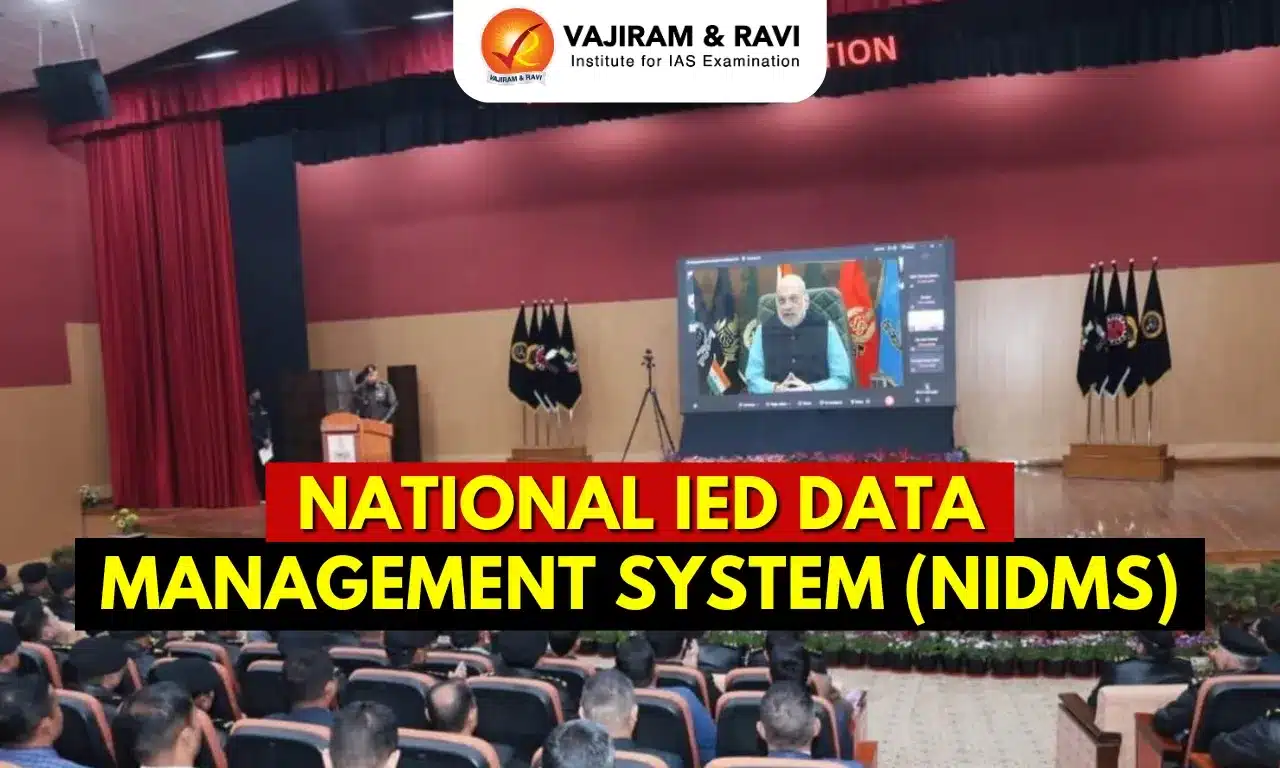
The Home and Cooperation Minister recently launched the National IED Data Management System (NIDMS), marking a significant step towards strengthening the country’s counter-IED and internal security architecture.

About National IED Data Management System (NIDMS)

  • It is a national-level digital platform developed by the National Security Guard’s (NSG) National Bomb Data Centre.
  • It will enable systematic data collection and analysis related to Improvised Explosive Devices (IEDs), enhancing the investigation process of terrorist incidents in the country. 
  • It will function as a two-way, integrated online platform accessible to the National Investigation Agency (NIA), Anti-Terrorism Squads, state police forces and all Central Armed Police Forces. 
  • Data related to any explosion or IED incident across the country can be uploaded and analysed to support investigations.
  • The platform will play a crucial role in "supporting post-blast investigations and enhancing coordination among various security and law enforcement agencies across the country.
  • NSG has maintained a comprehensive database of bomb explosions since 1999, which will now be made available to law enforcement agencies nationwide through NIDMS. 
  • The system will help analyse patterns of attacks, modus operandi and types of explosives used, and assist in establishing linkages between incidents.
  • This platform will strengthen the process of collecting, standardizing, integrating, and securely sharing IED-related data.

Source: NOA

National IED Data Management System (NIDMS) FAQs

Q1: What is the National IED Data Management System (NIDMS)?

Ans: It is a national-level digital platform for managing data related to Improvised Explosive Devices (IEDs).

Q2: Which organization developed the National IED Data Management System (NIDMS)?

Ans: It was developed by the National Security Guard’s (NSG) National Bomb Data Centre.

Q3: What is the main purpose of National IED Data Management System (NIDMS)?

Ans: To enable systematic collection and analysis of IED-related data to enhance investigation of terrorist incidents.

Q4: What kind of analysis can National IED Data Management System (NIDMS) perform on IED incidents?

Ans: Analysis of attack patterns, modus operandi, and types of explosives used.

Two New Frog Species

Two New Frog Species

Two New Frog Species Latest News

A team of scientists led by ‘Frogman of India’ S. D. Biju recently discovered two new frog species named Soman’s Slender Arm Frog (Leptobrachium somani) and Mechuka Slender Arm Frog (Leptobrachium mechuka) from the remote mountain habitats of Arunachal Pradesh.

About Soman’s Slender Arm Frog (Leptobrachium somani)

  • It is a new slender-armed frog species.
  • It was discovered at Tiwarigaon in Arunachal Pradesh.
  • It has been named in honour of the late journalist E. Somanath, recognising his lifelong commitment to environmental journalism.
  • This small frog measures about 55 mm in length. 
  • It has a greyish-brown body with irregular light-grey markings and distinctive silver-grey to light-blue eyes. 
  • An evergreen forest species, males are typically found calling from the banks of fast- or slow-flowing streams. 

About Mechuka Slender Arm Frog (Leptobrachium mechuka)

  • It is a new slender-armed frog species.
  • It is named after Mechuka, the town in Arunachal Pradesh where it was first collected. 
  • Measuring about 60 mm, this species occurs in evergreen forests and adjoining grasslands.
  • It has a uniformly brown body with a reddish tinge and striking silvery-white eyes.

Source: NIE

Two New Frog Species FAQs

Q1: Where was Soman’s Slender Arm Frog discovered?

Ans: It was discovered at Tiwarigaon in Arunachal Pradesh.

Q2: What is the body coloration of Soman’s Slender Arm Frog?

Ans: It has a greyish-brown body with irregular light-grey markings.

Q3: What is Mechuka Slender Arm Frog (Leptobrachium mechuka)?

Ans: What is the body coloration of Mechuka Slender Arm Frog?

United Nations Department of Economic and Social Affairs (UN DESA)

United Nations Department of Economic and Social Affairs (UN DESA)

United Nations Department of Economic and Social Affairs (UN DESA) Latest News

India is expected to grow by 7.4 per cent in the current financial year, driven by consumption and public investment, the United Nations Department of Economic and Social Affairs (UNDESA) said in a report recently.

About United Nations Department of Economic and Social Affairs (UN DESA)

  • Rooted in the United Nations Charter and guided by the transformative 2030 Agenda for Sustainable Development, the UN DESA upholds the development pillar of the United Nations.
  • It is based at UN Headquarters in New York, United States.
  • Its Divisions and Offices work together towards a common goal to promote the social, economic, and environmental dimensions of sustainable development.
  • Its work addresses a range of cross-cutting issues that affect peoples’ lives and livelihoods. 
  • From poverty reduction to governance to finance to the environment, UN DESA’s work is about human progress for all, especially the most vulnerable.
  • UN DESA’s work programme can be categorized into three areas: norm-setting, analysis, and capacity-building.
  • What is UN DESA doing?
    • Facilitates the negotiations of Members States in many intergovernmental bodies to address ongoing or emerging global challenges;
    • Provides substantive support to intergovernmental processes on development issues in the General Assembly and the Economic and Social Council;
    • Advises interested Governments on the ways and means of translating policy frameworks developed in the UN conferences and summits into programmes at the country level;
    • Collaborate closely with its partners at regional and country levels in helping countries to formulate and implement development strategies;
    • Compiles, generates, and analyses a wide range of economic, social, and environmental data and information on which member states of the United Nations draw.
  • Reports Published by UN DESA:
    • World Economic Situation and Prospects Report
    • World Social Report
    • Sustainable Development Goals Report

Source: NOA

United Nations Department of Economic and Social Affairs (UN DESA) FAQs

Q1: What does UN DESA stand for?

Ans: United Nations Department of Economic and Social Affairs.

Q2: Where is the United Nations Department of Economic and Social Affairs (UN DESA) based at?

Ans: At the United Nations Headquarters in New York, United States.

Q3: What is the common goal of United Nations Department of Economic and Social Affairs (UN DESA) divisions and offices?

Ans: To promote the social, economic, and environmental dimensions of sustainable development.

Grey Slender Loris

Grey Slender Loris

Grey Slender Loris Latest News

Recently, Kerala and Tamil Nadu have begun efforts to restore habitats and strengthen monitoring of the grey slender loris.

About Grey Slender Loris

  • The gray slender loris (Loris lydekkerianus ) is a species of primate in the family Loridae.
  • They are prosimians—which means they are part of the oldest and most primitive group of primates
  • Habitat: It is found in tropical primary and secondary rainforests, dry semi-deciduous forests, scrub, swamp, acacia, bamboo, edge, and montane cloud forest.
  • Distribution: It is mainly found in southern India (mainly in Karnataka, Kerala and Tamil Nadu) and Sri Lanka.

Characteristics of Grey Slender Loris

  • It is a nocturnal hunter.
  • It has no tail, its flexible spine and long limbs help it cross the canopy with agility.
  • It has opposable thumbs which allow it to cling motionless for long periods.
  • It has large, forward-facing eyes with extraordinary night vision.
  • Communication: Gray slender lorises communicate using vocalizations and scent marking.
  • Diet: It is almost entirely insectivorous, and more than half of its diet is composed of ants and termites. 
  • Threats: Illegal pet trade, hunting for body parts and roadside captures.

Conservation Status of Grey Slender Loris

  • IUCN Red List: Near threatened
  • CITES: Appendix II
  • Wildlife Protection Act, 1972: Schedule I

Source: DTE

Grey Slender Loris FAQs

Q1: What is the primary habitat of the Grey Slender Loris?

Ans: Tropical forests and scrublands

Q2: What is the conservation status of the Grey Slender Loris?

Ans: Near threatened

Ratapani Tiger Reserve

Ratapani Tiger Reserve

Ratapani Tiger Reserve Latest News

Madhya Pradesh Chief Minister recently announced that the newly designated Ratapani Tiger Reserve will be named after the renowned archaeologist and Padma Shri awardee Dr Vishnu Shridhar Wakankar.

About Ratapani Tiger Reserve

  • It is situated in the Raisen and Sehore districts of Madhya Pradesh.
  • This forest is spread over hills of the Vindhya ranges.
  • It is spread over an area of 1,271 sq.km.
  • It runs parallel on the northern side of the Narmada River. The Kolar River forms the western boundary of the reserve. 
  • Two large reservoirs, namely Barna Reservoir and Ratapani Dam (Barrusot Lake) are among the major water bodies adjacent to or inside the reserve.
  • The landscape is undulating, with hills, plateaus, valleys, and plains. 
  • The reserve has Bhimbetka, a group of rock shelters and rock paintings, which is one of the ” World Heritage Sites ” declared by UNESCO.
  • It also encompasses many other historical and religious destinations like Ginnourgarh Fort, POW camp, Keri Mahadeo, Ratapani Dam, Jholiyapur Dam, etc.
  • Flora: The forest of Ratapani is a dry deciduous and moist deciduous type, with teak (Tectona grandis) as the main tree species. About 55% of the area is covered by teak.
  • Fauna
    • The regal striped cat is the apex predator, and estimates suggest that 40 tigers roam these forests. 
    • Chinkara, an endangered species, is also found in the reserve.
    • It is also home to animals like the Panther, Hyena, Jackal, Indian Fox, Wild Dog, Jungle Cat, Small Indian Civet, Blue Bull, Chinkara, Black Buck, Chausingha, Spotted Deer, Barking Deer, etc.

Source: HANS

Ratapani Tiger Reserve FAQs

Q1: Where is Ratapani Tiger Reserve located?

Ans: It is located in the Raisen and Sehore districts of Madhya Pradesh.

Q2: Which mountain range does Ratapani Tiger Reserve lie in?

Ans: It lies in the hills of the Vindhya ranges.

Q3: Along which major river does Ratapani Tiger Reserve run parallel?

Ans: It runs parallel to the northern side of the Narmada River.

Q4: Which river forms the western boundary of Ratapani Tiger Reserve?

Ans: The Kolar River forms the western boundary.

Q5: Which UNESCO World Heritage Site is located within Ratapani Tiger Reserve?

Ans: Bhimbetka rock shelters and rock paintings.

Creator’s Corner Platform

Creator's Corner Platform

Creator's Corner Platform Latest News

Recently, Prasar Bharati launched ‘Creator’s Corner’ on DD News to empower digital creators nationwide.

About Creator's Corner Platform

  • It was launched by the Prasar Bharati.
  • It is a dedicated platform for showcasing content created by digital creators from across the country on DD News.
  • Aim: To promote the digital economy by encouraging the creation of quality content and expanding its reach through a partnership between Prasar Bharati and individual content creators.
  • It will feature content on a wide range of themes including;
    • News and Current Affairs, Culture, Travel, Cuisine, Art and Literature, Music and Dance, Health and Wellness, Education, Science and Technology, inspiring stories, Environment and Sustainable Development, and Entertainment
  • The programme will be telecasted from Monday to Friday on DD News.
  • This initiative would operate on a revenue-sharing model with 90 per cent of the revenue generated from the programming to be given to content creators, with Prasar Bharti retaining 10 per cent.
  • Significance: This initiative represents a mutually beneficial partnership, providing digital creators a credible platform and the extensive reach of Prasar Bharati/DD News to showcase their work.

Key Facts about Prasar Bharati

  • It is the Public Service Broadcaster of the country.
  • It is a statutory autonomous body established in 1997 under the Prasar Bharati Act.
  • Objective: To conduct public broadcasting services intended to inform and entertain the public.
  • It comprises the Doordarshan Television Network and All India Radio, which were earlier media units of the Ministry of Information and Broadcasting.
  • Headquarter: New Delhi

 Source: PIB

Creator's Corner Platform FAQs

Q1: What is the main objective of Creator's Corner Platform?

Ans: To boost the creator's economy and provide a platform for digital creators

Q2: Who launched the Creator's Corner Platform?

Ans: Prasar Bharati

PANKHUDI Portal

PANKHUDI Portal

PANKHUDI Portal Latest News

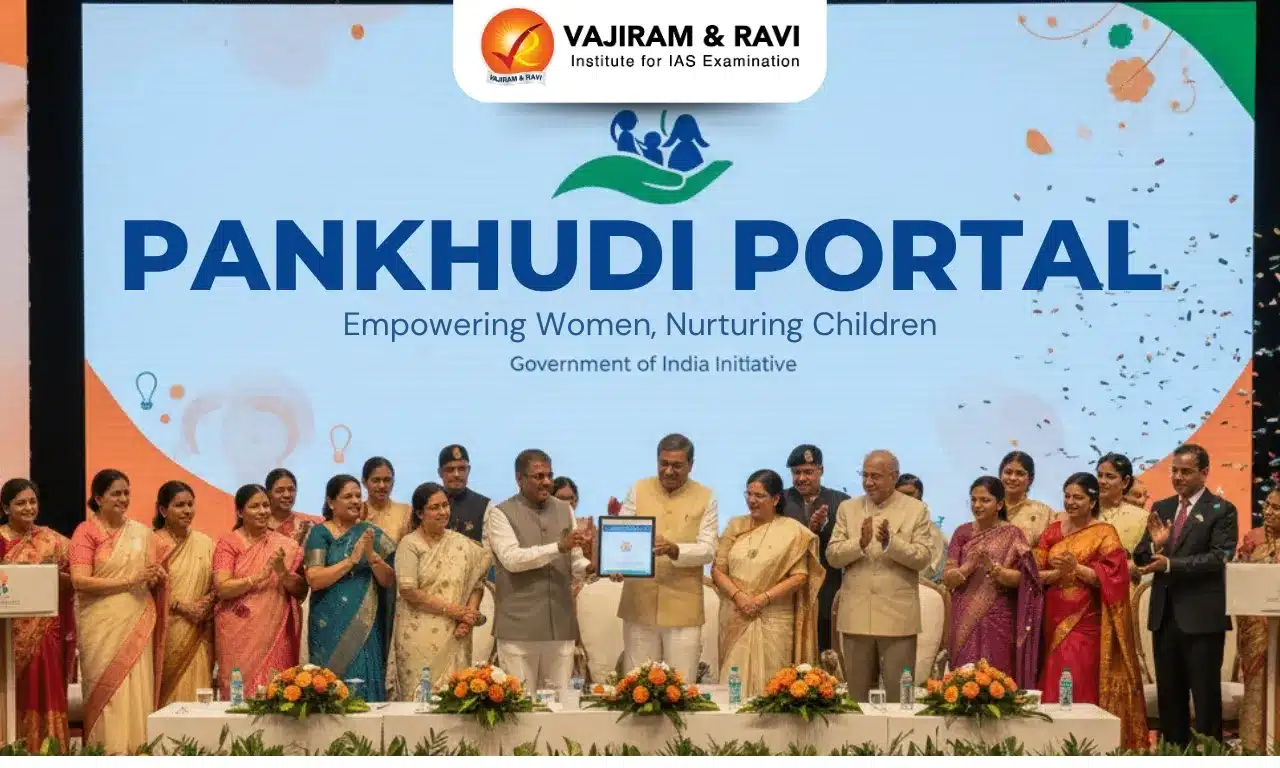
Recently, the Ministry of Women and Child Development launched the PANKHUDI portal.

About PANKHUDI Portal

  • It is launched by the Ministry of Women and Child Development.
  • It is an integrated Corporate Social Responsibility (CSR) and partnership facilitation digital portal.
  • Aim: It is aimed at strengthening coordination, transparency, and structured stakeholder participation in initiatives for women and child development.

Key Features of PANKHUDI Portal

  • Single-window digital platform: It works as a single-window digital platform, Non-Resident Indians (NRIs), Non-Governmental Organisations (NGOs), Corporate Social Responsibility (CSR) contributors, corporate entities, and government agencies.
  • Key Thematic Areas: Nutrition, health, Early Childhood Care and Education (ECCE), child welfare, protection and rehabilitation, and women’s safety and empowerment.
  • Supports Flagship Missions: It supports and strengthens the implementation of flagship missions—Mission Saksham Anganwadi & Poshan 2.0, Mission Vatsalya, and Mission Shakti.
  • Transparency: Contributors register on the portal, identify initiatives, submit proposals, and track the status of their contributions through clearly defined approval workflows.
  • Non- Cash Financial Transactions: All contributions through the portal are accepted only through non-cash modes.
  • Significance: It marks a significant step towards leveraging digital solutions for inclusive, collaborative, and outcome-oriented development of women and children across India.

Source: PIB

PANKHUDI Portal FAQs

Q1: What is PANKHUDI Portal primarily related to?

Ans: Women and Child Development

Q2: Who launched the PANKHUDI Portal?

Ans: Ministry of Women and Child Development

Dal Lake

Dal Lake

Dal Lake Latest News

Parts of the Dal Lake in Srinagar froze recently as the city recorded its coldest night of the winter, with temperatures plunging well below the freezing point across the Kashmir Valley.

About Dal Lake

  • It is a mid-altitude urban freshwater lake located in Srinagar, Jammu and Kashmir.
  • It is surrounded by the Pir Panjal mountains.
  • It is integral to tourism and recreation in Kashmir and is named the “Jewel in the crown of Kashmir” or “Srinagar’s Jewel”.
  • It covers an area of about 18 to 22 sq.km.
  • It is one of the world’s largest natural lakes and also known as the Lake of Flowers.
  • The lake gets its water mainly from the Telbal stream. This stream flows from the Jhelum River. 
  • During the winter season, the temperature sometimes reaches −11°C (12°F), freezing the lake.
  • The wetland is divided by causeways into four basins: Gagribal, Lokut Dal, Bod Dal, and Nagin (although Nagin is also considered an independent lake).
  • Lokut-dal and Bod-dal each have an island in the centre, known as Rup Lank (or Char Chinari) and Sona Lank, respectively.
  • The floating gardens, locally known as "Rad," are a spectacular highlight of the lake.
    • These are patches of land that float on the water. Farmers grow vegetables and flowers on them.
  • Dal Lake is also popular for the floating market, where vendors have their own Shikaras/wooden boats and approach tourists.
  • The shoreline of the lake is encompassed by a boulevard lined with Mughal-era gardens, parks, houseboats, and hotels. 
  • Mughal Gardens:
    • Nishat Bagh: This is known as the "Garden of Joy." It is a terraced garden with fountains.
    • Shalimar Bagh: This garden is called the "Abode of Love." It was built by Emperor Jahangir.
    • Chashma Shahi: This garden is famous for its natural spring.

Source: TELE

Dal Lake FAQs

Q1: Where is Dal Lake located?

Ans: Dal Lake is located in Srinagar, Jammu and Kashmir.

Q2: What type of lake is Dal Lake?

Ans: It is a mid-altitude urban freshwater lake.

Q3: What popular titles are given to Dal Lake?

Ans: It is called the “Jewel in the crown of Kashmir” and “Srinagar’s Jewel.”

Q4: What are the floating gardens of Dal Lake locally called?

Ans: They are locally known as “Rad.”

Q5: What is the floating market of Dal Lake known for?

Ans: Vendors sell goods from their own Shikaras (wooden boats).

Scramjet Engine

Scramjet Engine

Scramjet Engine Latest News

Recently, the Defence Research and Development Organisation (DRDO) conducted successful ground testing of full scale actively cooled long duration Scramjet Engine for Hypersonic Missile Programme.

About Scramjet Engine

  • A Scramjet (Supersonic Combustion Ramjet) is an air-breathing engine designed to operate efficiently at hypersonic speeds (Mach 5 and above).
  • It does not use rotating compressors, relying instead on the vehicle’s high speed to compress air.
  • Scramjets enable supersonic combustion, making them suitable for Hypersonic Cruise Missiles (HCMs).
  • It carries liquid Hydrogen as fuel and liquid Oxygen for combustion (oxidiser) to generate thrust.
  • India is the fourth country to demonstrate the flight testing of a Scramjet Engine.

Working Principle of Scramjet Engine

  • Air intake: Vehicle must already be flying at supersonic speeds (Mach 3+).
  • Compression: High-speed movement compresses the incoming air.
  • Combustion: Hydrogen fuel is injected and ignited while air remains supersonic.
  • Thrust Generation: Expanding gases create thrust (based on Newton’s Third Law).
  • Scramjets need rocket-assisted takeoff as they can’t generate thrust at zero speed.
  • The fuel efficiency of the scramjets tends to be significantly better than that of traditional turbojets and ramjets.

What are Hypersonic Missiles?

  • It refers to one which travels faster than Mach 5, or five times the speed of sound (330 m/s).
  • There are two types: 
    • Hypersonic Glide vehicles (HGV):These are launched from a rocket, similar to regular ballistic missiles, before gliding to a target.
    • Hypersonic Cruise Missiles: They are powered throughout their flight via air-breathing engines called Scramjets, after acquiring their target.

Source: PIB

Scramjet Engine FAQs

Q1: At what speed range do Scramjet engines typically operate?

Ans: Hypersonic (Mach 5+)

Q2: What is a unique feaure of Scramjet engines?

Ans: They have no moving parts in Scramjet.

Trump’s Russia Sanctions Bill Could Cripple India–US Trade

Trump’s Russia Sanctions Bill

Trump’s Russia Sanctions Bill Latest News

  • President Donald Trump has approved a sweeping Russia sanctions Bill that proposes 500% tariffs on all goods and services imported from countries that knowingly trade in Russian-origin uranium and petroleum products. 
  • The Bill also includes fresh restrictions on Vladimir Putin and certain Russian military commanders, along with 500% tariffs on direct Russian imports into the US.
  • For India, the impact could be severe. New Delhi has not yet concluded a trade deal with the US, leaving it exposed to escalating tariff actions. 
  • India already faces steep duties that threaten exports from labour-intensive sectors such as textiles, footwear, and marine products. 
  • If the Russia sanctions Bill passes, India’s continued purchases of discounted Russian energy could trigger punitive tariffs that effectively choke Indian exports to the US, compounding existing trade disruptions.

Sanctions Bill Sidesteps Courts, Strengthens Trump’s Tariff Powers

  • This announcement comes as the Donald Trump administration faces legal setbacks over its use of the International Emergency Economic Powers Act (IEEPA). 
  • Three lower courts — the US District Court for the Northern District of Illinois, the US Court of International Trade, and the US Court of Appeals for the Federal Circuit — have ruled against the administration’s reliance on IEEPA for imposing tariffs.
  • The proposed Russia Sanctions Bill would bypass these legal vulnerabilities, giving Trump a firmer statutory basis to penalise trade linked to Russian oil and uranium, while sustaining tariff pressure as part of efforts to end the Russia–Ukraine war. 
  • In parallel, the US has already initiated multiple Section 232 of the Trade Expansion Act investigations, enabling the imposition of 50% tariffs on steel, aluminium, and copper, further strengthening the administration’s trade arsenal.

500% Tariff Threat Could Halt India–US Trade

  • A key provision of the Russia Sanctions Bill mandates that the US President raise duties to at least 500% on all goods and services imported from countries that knowingly trade in Russian-origin uranium and petroleum products. 
  • Trade experts warn that such a levy would effectively shut down India’s exports to the United States, currently valued at over $85 billion annually.
  • The bill’s scope remains unclear and potentially expansive, raising concerns that it could extend beyond existing reciprocal tariffs. 
  • Products so far excluded—such as electronics, pharmaceuticals, coffee, and tea—could also be covered. 
  • This is critical for India, which has continued exporting fast-growing items like mobile phones despite earlier tariff actions.

China’s Export Diversification Blunts Tariff Shock, India More Exposed

  • While proposed US tariffs on countries buying Russian oil could disrupt global trade, India is likely to be hit harder than China due to weaker export diversification. 
  • Despite US tariffs, China recorded a $1 trillion trade surplus in 2025, driven by dominance in sunrise sectors and control over critical minerals.
  • India, though pushing manufacturing reforms and investment, remains vulnerable as many exports are less technology-intensive, making them easier to replace. 
  • By contrast, China—the largest buyer of Russian oil—has multiple levers to counter tariff pressure, as it has done before.

Russia Sanctions Bill Could Undercut India’s Trade Bargaining Power

  • If passed, the Russia sanctions Bill would weaken India’s negotiating leverage by pushing New Delhi to diversify exports away from the United States under pressure. 
  • This comes as India is in active trade talks with the European Union, ASEAN, and partners including Chile, Peru, Australia, Bahrain, the Gulf Cooperation Council, Eurasian Economic Union, Canada, and the Southern African Customs Union.
  • A weaker bargaining position typically invites steeper demands from partners. 
  • India has consistently held firm red lines on agriculture and dairy, even when counterparts insist on access. 
  • Notably, Australia and New Zealand did not receive deep access in these sectors during negotiations—an approach that could become harder to sustain if external pressures intensify.

US Tariff Threat Deepens Investment Uncertainty for India

  • Beyond goods trade, escalating US tariff risks are hurting investment sentiment in India. 
  • Investors are holding back amid the unresolved United States–India trade rift, and a potential 500% tariff linked to Russian oil purchases could further deter capital inflows.
  • A 2025 note by Bank of America highlights stalled capital flows across FDI, FPI, and debt. 
  • The Reserve Bank of India has sold $65 billion in the spot market and holds a large $63.6 billion short forward position, reflecting pressure on the rupee.
  • The rupee has weakened nearly 7% over the past year, underperforming peers and leading to a real effective exchange rate depreciation of over 9%. 
  • Persisting uncertainty around the US–India trade deal could amplify macroeconomic risks if capital pressures continue.

Source: IE

Trump’s Russia Sanctions Bill FAQs

Q1: What is Trump’s Russia sanctions bill and why is it significant for India?

Ans: Trump’s Russia sanctions bill proposes 500% tariffs on countries trading Russian oil or uranium, which could effectively end India’s exports to the United States.

Q2: How would Trump’s Russia sanctions bill impact Indian exports to the US?

Ans: Trump’s Russia sanctions bill could impose 500% duties on Indian goods, making exports commercially unviable and threatening over $85 billion in annual India–US trade.

Q3: Why does Trump’s Russia sanctions bill bypass legal challenges in the US?

Ans: Trump’s Russia sanctions bill avoids reliance on IEEPA, giving the administration a stronger legal basis after US courts questioned emergency tariff powers.

Q4: Why is India more vulnerable to Trump’s Russia sanctions bill than China?

Ans: India’s exports are less diversified and less technology-intensive, while China’s diversified exports and control over critical minerals reduce its exposure to Trump’s Russia sanctions bill.

Q5: How does Trump’s Russia sanctions bill affect India’s investment climate?

Ans: Trump’s Russia sanctions bill raises trade uncertainty, weakens capital flows, pressures the rupee, and discourages foreign investors amid unresolved India–US trade tensions.

US Climate Body Exit Brings Mixed Relief and Risks for India

US Climate Body Exit

US Climate Body Exit Latest News

  • The United States has announced its withdrawal from the UN Framework Convention on Climate Change (UNFCCC) and over 60 international treaties and organisations it says no longer serve American interests. 
  • The exit includes key climate bodies such as the Intergovernmental Panel on Climate Change (IPCC), the International Solar Alliance (ISA), and the International Renewable Energy Agency (IRENA).
  • This follows the earlier decision by President Donald Trump to withdraw from the Paris Agreement, a move that will take effect on January 20 after the mandatory one-year notice period. 
  • Over the past year, the Trump administration has also cut funding and staffing for US climate research agencies.
  • Together, these steps mark a near-total US disengagement from the global climate governance system, casting serious doubt on the effectiveness and future of multilateral efforts to address climate change.

The United States’ Emissions Profile

  • The United States ranks among the top countries for annual and per-capita carbon emissions. 
  • Data from the Global Carbon Project show that US territorial CO₂ emissions in 2024 were about 4.9 billion tonnes, accounting for roughly 12.7% of global emissions.
  • In 2024, US per-capita CO₂ emissions stood at around 14.6 tonnes per person, far exceeding the global average, underlining the country’s carbon-intensive consumption patterns.
  • The US is also the largest cumulative emitter of CO₂ from fossil fuels and industry. Its share of historical global emissions is about 24%.
  • According to the US Environmental Protection Agency, total US greenhouse gas emissions were 6.3 billion metric tonnes of CO₂-equivalent in 2022. 
  • Land use and forests offset roughly 13% of these emissions as a net carbon sink.

US and Climate Action: A Longstanding Love–Hate Relationship

  • The United States played a key role in shaping the UN Framework Convention on Climate Change (UNFCCC), recognising climate change and setting global principles. 
  • However, it never joined the Kyoto Protocol, which imposed binding emission targets.

Architect of Paris, Weak on Delivery

  • The US actively pushed for an alternative to Kyoto, culminating in the Paris Agreement. 
  • Yet, its performance under Paris has been poor, with limited emissions cuts and inadequate delivery on finance and technology commitments.

Engagement Without Denial (Pre-Trump Era)

  • Despite shortcomings, the US did not deny climate change. 
  • It remained engaged in global climate talks, invested heavily in climate science and clean technologies, and promoted green investments domestically and internationally.

Trump Era: From Ambivalence to Undermining

  • Under President Donald Trump, the US shifted sharply. 
  • A declared climate sceptic, Trump openly mocked climate action, withdrew from agreements, and slashed funding for climate research—moves that risk long-term global setbacks given the US’s scientific leadership.

Fallout of the US Exit from Global Climate Institutions

  • The US withdrawal from the UN Framework Convention on Climate Change and related bodies was not entirely unexpected, given its earlier exit from the Paris Agreement and cuts to climate research funding. 
  • Since the world was already off track to meet 2030 targets—and the US itself was not contributing meaningfully—the short-term global impact may be marginal.
  • The deeper fallout will hinge on whether future administrations reverse course. A prolonged US absence could weaken multilateral climate cooperation and delay collective action over the long run.
  • By disengaging, the United States risks surrendering leadership to China, which is aggressively expanding renewable energy manufacturing, deployment, and supply chains.

Renewables’ Irreversible Momentum

  • Most countries are already committed to renewables for energy security and affordability. 
  • Solar and wind are now economically and strategically attractive, making a full reversal of the energy transition unlikely.
  • Efforts to boost fossil fuel output—such as expanding oil supply—may slow the transition but won’t stop it. 
  • By vacating the clean energy space, the US risks undermining its own long-term economic interests and geopolitical leverage.

Impact on India’s Climate and Energy Transition

  • The United States exit from global climate bodies may ease short-term pressure on India to decarbonise rapidly. 
  • However, it also introduces uncertainty for India’s plans to attract investments in clean technologies.

Setback to India–US Climate Cooperation

  • Before President Donald Trump’s second term, India and the US shared a strong strategic partnership on climate and clean energy, with US support across multiple energy sectors. 
  • This collaboration is now expected to stall, potentially forcing India to recalibrate its energy transition pathways.

International Solar Alliance and Funding Gaps

  • The US has withdrawn from the International Solar Alliance (ISA), which India co-founded with France on the sidelines of COP21 Paris. 
  • Although the US joined the ISA in 2021 as its 101st member, it provided no financial support. 
  • A 2025 decision to levy annual membership fees is yet to be implemented, leaving questions over future funding and momentum.

Source: IE | TH

US Climate Body Exit FAQs

Q1: What does the US climate body exit include?

Ans: The US climate body exit covers withdrawal from UNFCCC, IPCC, ISA, IRENA, and the Paris Agreement, marking near-total disengagement from global climate governance.

Q2: Why has the US climate body exit raised global concern?

Ans: The US climate body exit weakens multilateral climate action, reduces funding, and undermines collective efforts to meet global emission reduction targets.

Q3: How does the US climate body exit affect India’s climate strategy?

Ans: The US climate body exit lowers pressure on India to decarbonise rapidly but creates uncertainty for clean energy investments and technology partnerships.

Q4: What is the impact of the US climate body exit on the International Solar Alliance?

Ans: The US climate body exit removes a major member from the ISA, though the US never provided funding, raising concerns about momentum and leadership.

Q5: Why could the US climate body exit benefit China strategically?

Ans: The US climate body exit cedes leadership in renewables to China, which dominates clean energy manufacturing and supply chains critical for global energy transition.

Samagra Shiksha 3.0 – Reimagining School Education Framework

Samagra Shiksha

Samagra Shiksha Latest News

  • The Union government has initiated nationwide consultations with States and stakeholders to chart a roadmap for Samagra Shiksha 3.0 for the 2026-27 academic cycle.

Samagra Shiksha 3.0

  • Background and Evolution
    • Samagra Shiksha is an integrated, centrally sponsored scheme for school education covering the entire continuum from pre-primary to senior secondary level. 
    • Launched in 2018 by subsuming Sarva Shiksha Abhiyan, Rashtriya Madhyamik Shiksha Abhiyan, and Teacher Education schemes, it marked a shift toward a holistic and unified approach to school education.
    • Samagra Shiksha 3.0 represents the next phase of this reform journey, aligned with five years of National Education Policy (NEP) 2020 implementation and India’s long-term vision of Viksit Bharat by 2047.
  • Core Objectives
    • Universal enrolment up to Class XII
    • Reduction in dropout rates
    • Improvement in foundational and grade-level learning outcomes
    • Strengthening teacher capacity and school leadership
    • Ensuring equity for socio-economically disadvantaged groups
  • Key Focus Areas
    • Access and Infrastructure: Bridging regional and social gaps in schooling facilities
    • Quality of Learning: Age-appropriate learning benchmarks, curriculum equivalence across boards, and competency-based assessments
    • Teacher Capacity Building: Continuous professional development, pedagogical reforms, and leadership training
    • Digital Education: Integration of technology, digital platforms, and Artificial Intelligence in classrooms
    • Equity and Inclusion: Support for girls, children with disabilities, SC/ST students, and aspirational districts
  • Governance and Planning Approach
    • A major shift under Samagra Shiksha 3.0 is the emphasis on consultative, bottom-up planning. 
    • States and Union Territories are encouraged to prepare robust annual plans grounded in local school realities while aligning with national priorities. 
    • The scheme promotes convergence among Ministries, States, and civil society to improve implementation efficiency.

News Summary

  • A high-level consultation was held in New Delhi to deliberate on the future direction of Samagra Shiksha 3.0, bringing together State Education Secretaries, State Project Directors, central ministries, and education experts. 
  • The meeting aimed to develop a clear, implementable national roadmap for the next phase of school education reforms.
  • Key Themes of Deliberation
    • Bridging learning gaps exacerbated by pandemic disruptions
    • Improving nutrition and learning outcomes simultaneously
    • Integrating vocational education and skilling pathways within schools
    • Leveraging digital tools and Artificial Intelligence for personalised learning
    • Making schools active agents of social and economic transformation
  • Alignment with National Development Goals
    • The consultations highlighted that human capital development is central to achieving India’s long-term growth ambitions. 
    • Strengthening school education was identified as the foundation for a skilled workforce, social mobility, and inclusive development.
  • Outcome-Oriented Vision
    • Globally competitive, while remaining rooted in Indian values
    • Responsive to diverse student needs across regions
    • Outcome-driven, with measurable improvements in learning indicators
    • Society-centric, encouraging community participation in school governance

Road Ahead

  • States have been urged to treat the 2026-27 planning cycle as a national movement rather than a routine administrative exercise. 
  • The convergence of best practices, technological innovation, and cooperative federalism is expected to strengthen India’s school education ecosystem in the coming decade.

Source: TH | PIB

Samagra Shiksha FAQs

Q1: What is Samagra Shiksha 3.0?

Ans: It is the next phase of India’s integrated school education scheme focused on outcome-based reforms aligned with NEP 2020.

Q2: Which levels of education does Samagra Shiksha cover?

Ans: It covers the entire continuum from pre-primary to senior secondary education.

Q3: What is the key shift under Samagra Shiksha 3.0?

Ans: The focus has shifted from infrastructure expansion to improving learning outcomes and governance quality.

Q4: How does Samagra Shiksha 3.0 support equity?

Ans: It provides targeted interventions for disadvantaged groups, including girls, SC/ST students, and children with disabilities.

Q5: Why is Samagra Shiksha 3.0 significant for India’s future?

Ans: It strengthens human capital development, which is essential for achieving the vision of Viksit Bharat by 2047.

Daily Editorial Analysis 10 January 2026

Daily Editorial Analysis

The Phaltan Case is Also About a Victim’s Dignity

Context

  • Recent reforms in India’s criminal justice system have been hailed as progressive and pro-women, yet the suicide of a young doctor in Phaltan, Maharashtra in October 2025 offers a stark reminder that law alone cannot safeguard dignity.
  • The doctor, who died by suicide after alleging rape and harassment by a police official and another man, left behind a message written on her palm.
  • The tragedy reveals not only the harm inflicted by the original alleged crime but also a deeper systemic failure: institutions and society waging a second crime against victims through character assassination, public shaming, and administrative apathy.

The Two Crimes: Harm and Betrayal

  • The first crime emerges from the failure of state mechanisms, the police, administrators, and protective institutions, that disregarded the doctor’s pleas for help.
  • The second crime unfolds in the public sphere, where the victim’s family, in their pursuit of justice, must endure insinuations, moral judgment, and media scrutiny.
  • This pattern unfolded visibly when the Chairperson of the Maharashtra State Commission for Women publicised private details about the victim’s personal communication and relationships.
  • While framed as contextual information, such disclosures fuel society’s deeply rooted culture of victim-blaming.
  • This episode exposes a disturbing contradiction: even institutions designed to protect women often reproduce patriarchal narratives that define a woman’s dignity in terms of sexual purity, moral behaviour, and conformity.

The Legal Mandate: Protecting Dignity as Justice

  • Ban on character evidence

    • Section 53A of the Indian Evidence Act (now Section 50 of the Bharatiya Sakshya Adhiniyam, 2023) prohibits using a woman’s personal history, friendships, or sexual life to argue consent or suggest she deserved the crime.
  • Restrictions on cross-examination

    • Amendments to Section 146 (now Section 48 of the BSA) prevent questioning a victim on her general immoral character or previous sexual experience.
  • Protection of identity

    • The ban on disclosing the identity of sexual assault victims (formerly Section 228A IPC, now Section 72 of the Bharatiya Nyaya Sanhita) exists specifically to prevent stigma, protect dignity, and avoid the public humiliation that often silences victims.
    • Together, these provisions attempt to shift the burden of scrutiny from the victim’s moral credibility to the facts of the crime.

Judicial Interpretation: Dignity as a Constitutional Principle

  • The Supreme Court of India has repeatedly reinforced this shift.
  • In State of Punjab v. Gurmit Singh (1996), the Court warned against discounting a woman’s testimony on the basis of perceived loose morals, asserting that prior sexual history is irrelevant to consent.
  • The Court has also condemned practices that subject victims to hyper-scrutiny, noting that such interrogation adds insult to injury.
  • The dissemination of the Phaltan victim’s dying declaration to the media violated not just the identity-protection regime but also the spirit of judicial doctrine.
  • It created a social verdict in which the victim’s character, rather than the accused’s actions, became the focal point of public discourse.
  • The complainant’s lawyers being denied access to investigation reports further exemplifies the asymmetry of power victims face.

Institutional Betrayal and the Limits of Reform

  • The Phaltan case exposes the gulf between law on paper and law in practice.
  • The Bharatiya Nyaya Sanhita, 2023, signals the State’s intent to build a more women-centric criminal justice system, yet the social mindset remains anchored in patriarchy.
  • When a constitutional or political authority, especially a woman, engages in character assassination, it represents not only moral failure but also a betrayal of the solidarity necessary for gender justice.
  • The consequences are profound: victims stop reporting, families retreat from legal battles, and public discourse shifts blame from perpetrators to victims. Legal systems cannot function in a social vacuum.

Bridging the Gap: Implementation as Transformation

  • Training & Sensitization

    • Police, prosecutors, and judges must be educated in trauma-informed approaches to sexual violence. The current culture of suspicion and disbelief deepens victims’ suffering.
  • Ending Victim-Blaming

    • Public discourse must evolve to reject character-based judgments. Investigations should be victim-friendly rather than adversarial.
  • Resource Expansion

    • Forensic and digital infrastructure, legal aid, women's desks, audio-visual statement systems, and psychological services are essential to enforce new legal standards rather than merely declare them.

Conclusion

  • The Phaltan tragedy forces India to confront a fundamental question: can criminal law protect women when society, media, and institutions continue to police their morality?
  • The answer remains uncertain; Laws may evolve, but justice requires alignment between statute, institutional practice, and social consciousness.
  • The moment demands that women in authority not only occupy positions of power but embody constitutional morality, recognizing dignity, equality, and empathy as non-negotiable values.

The Phaltan Case is Also About a Victim’s Dignity FAQs

Q1. What is meant by the second crime against victims in the Phaltan case?
Ans. The second crime refers to the public character assassination and victim-blaming that victims and their families face after reporting sexual offences.

Q2. Why were the 2013 criminal law amendments significant?
Ans. The 2013 amendments were significant because they aimed to protect a victim’s dignity by prohibiting character evidence and preventing intrusive questioning about sexual history.

Q3. How did institutions fail in the Phaltan suicide case?
Ans. Institutions failed by ignoring the victim’s pleas for help and by publicly discussing her personal life, which contributed to social stigma.

Q4. What role did the Supreme Court play in protecting victims' dignity?
Ans. The Supreme Court reinforced that a victim’s prior sexual history is irrelevant and condemned practices that add “insult to injury” through public or legal scrutiny.

Q5. Why is legal reform alone insufficient to ensure justice for women?
Ans. Legal reform is insufficient because societal attitudes and institutional behaviour must also change to eliminate victim-blaming and uphold constitutional morality.

Source: The Hindu


Somaliland is No Longer a Diplomatic Endnote

Context

  • Israel’s December 2025 decision to recognise Somaliland as a sovereign state marks a major diplomatic break in the Horn of Africa.
  • The move risks escalating proxy rivalries, triggering political and economic pressure, and deepening militarisation in the strategically sensitive Red Sea region.
  • This article highlights how Israel’s recognition of Somaliland has transformed a long-marginalised territory into a focal point of great-power rivalry, exposing China’s strategic dilemma between sovereignty principles, regional security interests, and intensifying geopolitical competition in the Horn of Africa.

China’s Strategic Dilemma over Somaliland

  • Beijing’s Core Interests at Stake

    • For China, Somaliland lies at the crossroads of three vital concerns:
      • upholding the “One China” principle,
      • securing the Red Sea trade corridor, and
      • managing intensifying great-power competition in Africa.
    • Official Opposition Rooted in Sovereignty
      • China has condemned Israel’s recognition of Somaliland as support for separatism, reiterating that Somaliland is an inseparable part of Somalia.
      • This stance reflects Beijing’s long-standing sensitivity over sovereignty and territorial integrity.
    • Limits of a Rigid Doctrine
      • Unlike many contested regions, Somaliland has sustained peace, built institutions, and held competitive elections for over three decades.
      • Its stability, compared to Somalia’s chronic insecurity, exposes tensions within China’s strict sovereignty-based approach to statehood.
    • The Taiwan Factor Intensifies Pressure
      • China’s dilemma is sharpened by Somaliland’s 2020 decision to establish official ties with Taiwan.
      • Taiwan’s representative office in Hargeisa and expanding cooperation have made Somaliland a rare African outlier aligned with Taipei, directly challenging Beijing’s “One China” principle.

Strategic Importance of the Horn of Africa for China

  • A Vital Maritime Choke Point

    • China’s concerns go beyond ideology. The Bab el-Mandeb Strait—linking the Red Sea and the Gulf of Aden—is crucial for Chinese trade and energy flows under the Maritime Silk Road.
    • Beijing has called it a “jugular vein” of global commerce.
  • Security Presence near Djibouti

    • To safeguard these interests, China established its first overseas military base in Djibouti in 2017, ensuring a sustained security footprint near the choke point.
  • Challenge from Somaliland’s Recognition

    • Israel’s recognition of Somaliland could upset the regional balance.
    • If Somaliland gains wider legitimacy, it may emerge as an alternative logistics and security hub along the Gulf of Aden, potentially backed by the United Arab Emirates and the United States—diluting China’s leverage near Djibouti.
  • An Uncomfortable Strategic Trade-off

    • Beijing must oppose Somaliland’s recognition and limit diplomatic space for Taiwan, yet excessive pressure risks pushing Hargeisa closer to China’s rivals.
    • Heavy-handed coercion could also undermine China’s image as a non-interfering partner.
  • Likely Chinese Response

    • China may adopt a hybrid approach: economic pressure, elite lobbying, and information campaigns—using platforms like StarTimes—to shape narratives on territorial integrity.
    • Diplomatically, Beijing can leverage its role in the United Nations Security Council to block momentum toward broader international recognition of Somaliland.

China’s Pro-Palestinian Stance Adds Diplomatic Complexity

  • China’s increasingly vocal support for Palestinian rights and criticism of Israel’s actions in Gaza reinforce Beijing’s moral opposition to Israel’s recognition of Somaliland.
  • While this resonates with Arab and Global South audiences, it risks drawing China deeper into Middle Eastern political rivalries, complicating its traditionally pragmatic neutrality.
  • A Shifting Regional Chessboard

    • The broader geopolitical context sharpens China’s dilemma.
    • Ethiopia’s 2024 memorandum to recognise Somaliland in exchange for port access, growing interest in the United States Congress, and tacit backing from the United Arab Emirates suggest Israel’s move could catalyse wider diplomatic recognition.
  • Rising Costs for China’s Status Quo Strategy

    • Each additional recognition weakens China’s ability to diplomatically isolate Somaliland and raises the strategic costs of maintaining the status quo.
    • Beijing’s core concern is not only sovereignty, but also preventing greater Taiwanese visibility, deeper Israeli and Western access to the Red Sea, and the emergence of a rival security architecture near Djibouti.
  • From Peripheral Issue to Great-Power Flashpoint

    • Israel’s decision has forced China into a difficult balance between principle and pragmatism.
    • Somaliland is no longer a diplomatic footnote; it now sits at the centre of great-power competition in the Horn of Africa, exposing the limits of China’s approach to sovereignty, security, and influence in a region critical to global trade and geopolitics.

Somaliland is No Longer a Diplomatic Endnote FAQs

Q1. Why is Israel’s recognition of Somaliland geopolitically significant?

Ans. It breaks a long-standing diplomatic consensus, risks militarising the Red Sea region, and could trigger proxy rivalries involving regional powers and global actors.

Q2. Why does Somaliland pose a dilemma for China?

Ans. Somaliland challenges China’s One China principle, threatens its Red Sea security interests, and complicates Beijing’s strategy amid rising great-power competition in Africa.

Q3. How does Taiwan factor into China’s concerns over Somaliland?

Ans. Somaliland’s official ties with Taiwan undermine Beijing’s One China policy and risk expanding Taiwanese diplomatic visibility in Africa, heightening China’s strategic anxiety.

Q4. Why is the Horn of Africa crucial for China’s global strategy?

Ans. The Bab el-Mandeb Strait is vital for Chinese trade and energy flows, prompting China to maintain military and economic influence near Djibouti.

Q5. How might China respond to Somaliland’s growing recognition?

Ans. China is likely to combine diplomatic blocking, economic pressure, elite lobbying, and information campaigns while avoiding overt coercion that could push Somaliland toward rival powers.

Source: TH


Reimagining Indian Higher Education under National Education Policy (NEP)

Context

  • India’s National Education Policy (NEP) is driving transformational change in higher education by reforming regulation, expanding flexibility in degree pathways, strengthening research, and promoting multidisciplinary and holistic learning.
  • With the world’s largest youth population, the quality of India’s higher education will critically shape its economic growth, social mobility, and global standing.

Key Policy Backdrop

  • NEP 2020: It emphasises on multidisciplinary education, flexibility, research, innovation, and global engagement.
  • Comparative insight: China’s sustained state focus on higher education highlights the importance of consistent policy direction and institutional trust—a lesson relevant for India.

Major Shifts in Indian Higher Education

  • Institutionalisation of the research ecosystem

    • Anusandhan National Research Foundation (ANRF): It focuses on long-term scientific research and industry–academia collaboration.
    • ₹1-lakh-crore Research, Development and Innovation (RDI) Scheme: It promotes private-sector participation and market-ready innovation.
    • Significance: Together, they creates a dual-track research model—basic research and applied innovation.
  • Institutional innovation and academic reforms:

    • Curricular changes: New undergraduate programmes (e.g., IIMs). Inclusion of well-being, life skills, apprenticeships.
    • Degree flexibility: Introduction of four-year undergraduate programmes with exit options. Bachelor’s with Honours in Research for global competitiveness.
    • Institutional capacity building: For example, new interdisciplinary schools at Ashoka University.
    • Global recognition: (QS World University Rankings 2026)
      • 54 Indian universities featured (up from 11 in 2015 and 46 in 2025).
      • India is the 4th most represented country and fastest-rising G20 nation.
    • Changing global mobility landscape:
      • Over 1.25 million Indian students study abroad (MEA data).
      • Challenges: Visa restrictions, geopolitics.
      • Emerging trend: Foreign universities entering India. Indian institutions expanding overseas.
      • Implication: Need for high-quality domestic alternatives and globalised higher education.

Emerging Priorities for the Next Phase

  • Regulatory reform - Viksit Bharat Shiksha Adhishthan Bill, 2025

    • It proposes a single apex regulatory structure with independent councils for regulation, standards, and accreditation.
    • It addresses fragmentation and overlapping mandates. This is crucial as private institutions cater to almost two third of students.
    • Significance: Enables holistic, multidisciplinary education. Ensures transparency, benchmarking, and public disclosure of quality.
  • Integration of Artificial Intelligence (AI)

    • AI transforming learning processes, teaching methods, and institutional administration.
    • India’s diversity offers scope for context-sensitive AI leadership.
    • Ministry of Education’s 4 AI Centres of Excellence: Education, Health, Agriculture, and Sustainable Cities.
  • Renewed focus on science education

    • Challenges: Limited exposure and lack of hands-on learning.
    • Required interventions: Makerspaces, industry–startup engagement, and experiential and practice-oriented science education.
    • Goal: Build a deep-tech and innovation-ready talent pool.

Challenges and Way Ahead

  • Fragmented regulatory architecture: Ensure regulatory consolidation.
  • Uneven quality across institutions: Achieve 50% Gross Enrolment Ratio (GER) by 2035.
  • Limited physical capacity of campuses: Treat higher education as national infrastructure.
  • Gaps in science exposure and practical training: Leverage digital and internet expansion for scalable learning.
  • Trust deficit between state and private institutions: Technology-enabled delivery, high academic standards, and state–institution collaboration (public and private).

Conclusion

  • India stands at a pivotal moment in its higher education journey. With NEP-led reforms, the direction is clear and momentum is building.
  • Achieving a Viksit Bharat will depend on sustained implementation, mutual trust, and an unwavering commitment to educational excellence—positioning India not just as a mass educator, but as a global knowledge leader.

 National Education Policy (NEP) FAQs

Q1. How does the NEP aim to transform India’s higher education ecosystem?

Ans. NEP promotes multidisciplinary education, flexible degree pathways, strengthened research, regulatory consolidation, etc.

Q2. What is the significance of the Anusandhan National Research Foundation (ANRF) and RDI Scheme?

Ans. They institutionalise India’s research ecosystem by supporting long-term scientific inquiry while enabling industry-led innovation.

Q3.  What is the significance of the Viksit Bharat Shiksha Adhishthan Bill, 2025?

Ans. The Bill proposes a unified apex regulatory structure to reduce fragmentation and enable holistic, multidisciplinary education.

Q4. How is AI reshaping India’s higher education landscape under the NEP framework?

Ans. AI is transforming pedagogy, assessment, and administration, with India positioned to lead in context-sensitive applications.

Q5. Why is strengthening science education critical for India’s long-term development goals?

Ans. Hands-on and experiential science education is essential to build high-quality talent for innovation.

Source: IE

Daily Editorial Analysis 10 January 2026 FAQs

Q1: What is editorial analysis?

Ans: Editorial analysis is the critical examination and interpretation of newspaper editorials to extract key insights, arguments, and perspectives relevant to UPSC preparation.

Q2: What is an editorial analyst?

Ans: An editorial analyst is someone who studies and breaks down editorials to highlight their relevance, structure, and usefulness for competitive exams like the UPSC.

Q3: What is an editorial for UPSC?

Ans: For UPSC, an editorial refers to opinion-based articles in reputed newspapers that provide analysis on current affairs, governance, policy, and socio-economic issues.

Q4: What are the sources of UPSC Editorial Analysis?

Ans: Key sources include editorials from The Hindu and Indian Express.

Q5: Can Editorial Analysis help in Mains Answer Writing?

Ans: Yes, editorial analysis enhances content quality, analytical depth, and structure in Mains answer writing.

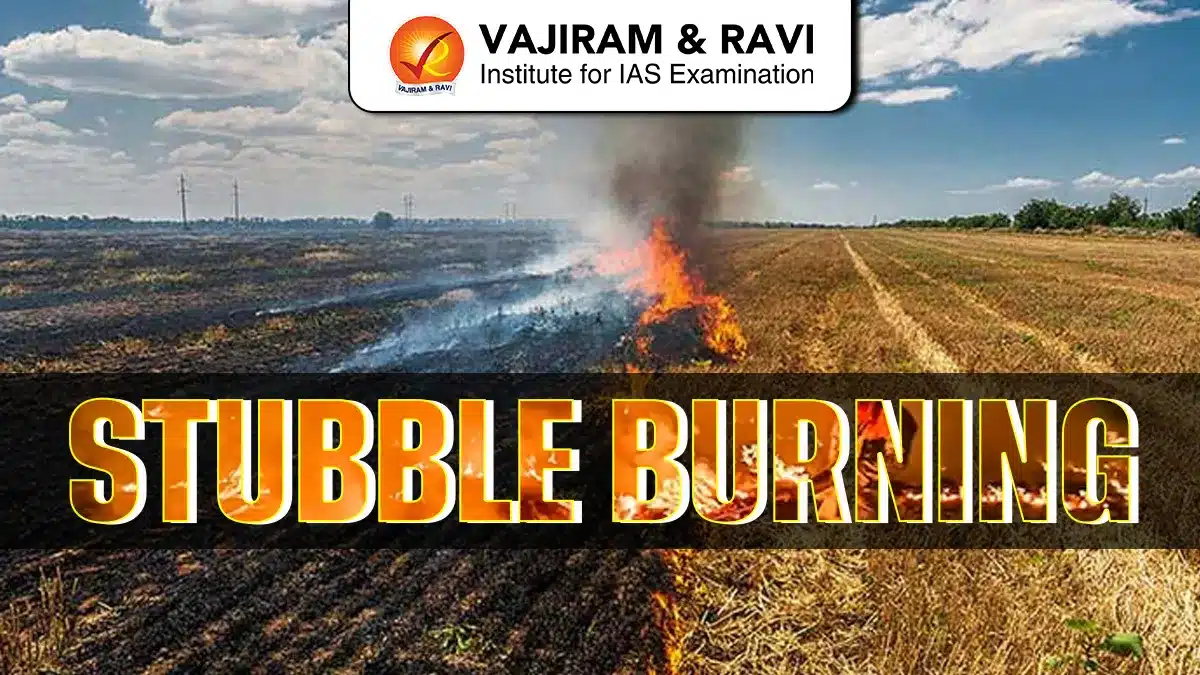
World Hindi Day 2026, History, Theme, Significance

World Hindi Day 2025

World Hindi Day celebrated every year on 10 January highlights the importance of Hindi Language all over the world. The day was first commemorated in 2006 as the anniversary of the first world Hindi Conference held in 1975 in Nagpur, India. The goal is to promote Hindi as a global language and encourage its use all over the world among various spheres. In this article, we are going to look into the theme, history and significance of World Hindi Day. 

World Hindi Day 2026 Overview

Celebrated every year on 10 January, World Hindi Day promotes Hindi language as an international language and recognises its linguistic and cultural importance all over the globe. The day has been chosen as the first World Hindi Conference was held on 10 January, 1975 in Nagpur, India. The celebrations are conducted with an aim to spread awareness about Hindi language, its uses on international platform and strengthen the ties among Hindi-speaking communities worldwide. 

World Hindi Day 2026
Feature Details
Date January 10
First Observed 2006
Historical Significance Marks the first World Hindi Conference in Nagpur (1975).
Theme for 2026 Yet to be announced
Associated Events Cultural programs, seminars, essay competitions, and recognition of Hindi scholars worldwide.

World Hindi Day Celebrations

World Hindi Day is celebrated on a global level all over the world with an aim to interconnect the Hindi speaking community and spread more awareness about the language. The day is celebrated for the following reasons: 

  • Advocate for the promotion of Hindi on international platforms.
  • Celebrate the language's rich literary and cultural legacy.
  • Encourage global academic institutions to include Hindi as a language of study.
  • Recognize and honor efforts to elevate Hindi as a medium for global diplomacy and communication.

World Hindi Day 2026 Theme

The theme for World Hindi Day 2026 has not been announced yet. The aim of World Hindi Day 2026 is to focus on the Hindi Language to foster international and linguistic exchanges. The theme is expected to emphasize the promotion of Hindi in the digital era, showcasing how technology and the internet have expanded its reach to global audiences. 

World Hindi Day 2026 Host Country

Every year a country hosts a conference to celebrate World Hindi Day. The aim of this conference is to bring together scholars and writers to the status of Hindi at a global level. First such conference was held in 1975 in Nagpur. The host country for World Hindi Day 2026 is yet to be announced. 

Difference between World Hindi Day and National Hindi Day 

World Hindi Day is observed on 10 January every year, while National Hindi Day is celebrated on 14 September as a day that marked the adoption of Hindi as the official language of India in 1949. Here are major differences in between World Hindi Day and National Hindi Day: 

Aspect World Hindi Day National Hindi Day
Date January 10 September 14
Focus Promotes Hindi globally Celebrates Hindi as India’s official language
First Observed 2006 1953
Significance Highlights international importance Recognizes its role in Indian governance

World Hindi Day 2026 Significance

World Hindi Day 2026 offers a platform to celebrate the global influence of Hindi and its role in promoting cultural and linguistic unity. Through various events and discussions, it underscores the importance of Hindi in today’s interconnected world. World Hindi is important for the following reasons: 

  1. The day highlights Hindi language all over the world with an international appeal.
  2. The day aims to promote strong connections among the Hindi speaking communities all over the world.
  3. Goal is to integrate Hindi Language into technology and all digital platforms. 
  4. The day reminds us of the rich heritage and cultural importance of Hindi Language.

World Hindi Day 2026 FAQs

Q1: Why is World Hindi Day celebrated?

Ans: To promote the global use of Hindi and celebrate its cultural and linguistic significance.

Q2: What is the theme of World Hindi Day 2026?

Ans: The theme is "Global promotion of Hindi, fostering linguistic diversity, and strengthening cultural ties."

Q3: When was Hindi introduced in UPSC?

Ans: Hindi was introduced as a medium in UPSC exams in 1977.

Q4: Which country hosted World Hindi Day?

Ans: Various countries have hosted World Hindi Conferences; however, India celebrates World Hindi Day domestically.

Enquire Now