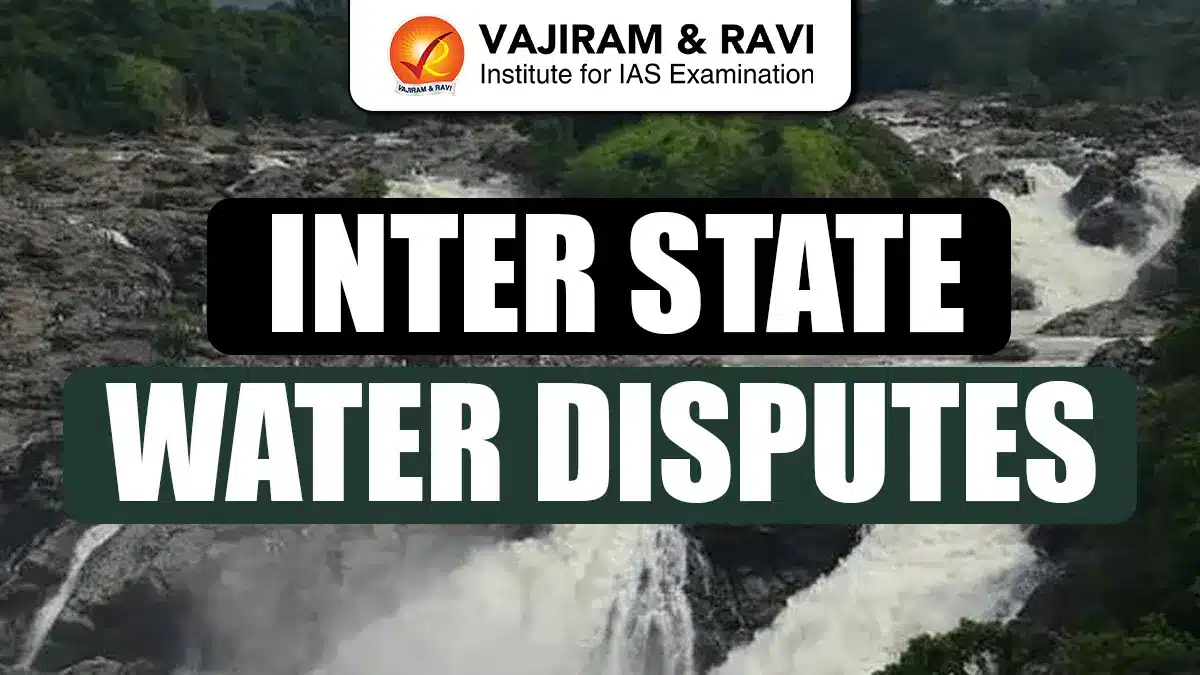
Inter State Water Disputes, Reasons, Legal Framework, Challenges

Inter State Water Disputes

Inter State Water Disputes in India arise when two or more states contest the sharing, control, or use of river waters flowing across political boundaries. India has 25 major river basins, many spanning multiple states, making water a deeply federal and political issue. With agriculture consuming nearly 80% of freshwater, rising population, urbanisation, industrial demand, and climate variability, water stress has intensified disputes. These conflicts affect food security, drinking water availability, interstate relations, and cooperative federalism. Effective resolution is therefore critical for economic stability, social harmony, and ecological sustainability in India.

Inter State Water Disputes Reasons

Inter State Water Disputes emerge from structural, geographical, political, and institutional factors that shape water access, demand, and governance across states.

  • Asymmetric River Access: Upstream states enjoy natural control over river flows, often constructing dams or barrages that reduce water availability for downstream states during lean seasons.
  • Non Basin Based State Boundaries: State reorganisation after independence ignored river basin boundaries, splitting single rivers across multiple states and complicating integrated and scientific water management.
  • Rising Water Demand: Population growth, Green Revolution agriculture, urban expansion, and industrialisation since the 1960s have sharply increased demand for irrigation, drinking, and industrial water.
  • Unilateral Development Projects: States often build dams, reservoirs, or diversion canals without downstream consent, as seen in Cauvery, Krishna, and Mahanadi basins.
  • Fragmented Water Governance: Water is a State List subject, but inter state rivers involve the Union, leading to overlapping authority and lack of coordinated decision making.
  • Poor Hydrological Data Sharing: Absence of uniform, transparent, and mutually accepted river flow data creates mistrust and weakens the basis for fair adjudication.
  • Climate Variability: Erratic monsoons, frequent droughts, and extreme floods due to climate change increase uncertainty and intensify competition over limited water resources.
  • Politicisation of Water: Water disputes are often used as electoral tools, transforming technical issues into emotive regional and identity based conflicts.

Inter State Water Disputes Legal Frameworks

India has a constitutional and statutory framework to resolve inter state river water disputes, balancing state autonomy with national interest.

  • Article 262 of Constitution: Empowers Parliament to legislate adjudication of inter state river disputes and bars court jurisdiction once such laws are enacted.
  • Entry 17 State List: Gives states authority over water supply, irrigation, canals, and hydropower, subject to Union powers over inter state rivers.
  • Entry 56 Union List: Allows Parliament to regulate and develop inter state rivers in public interest, forming the constitutional basis for central intervention.
  • Inter State River Water Disputes Act 1956: Enables states to request the Union government to constitute tribunals for binding adjudication of disputes.
  • River Boards Act 1956: Provides for river basin boards for coordinated management, though no river board has been effectively operationalised.
  • 2002 Amendment to ISRWD Act: Introduced time limits of one year for tribunal formation and three years for award delivery, based on Sarkaria Commission recommendations.
  • Dispute Resolution Committees: Recent reforms mandate pre tribunal negotiation through committees to encourage amicable settlement.
  • Inter State River Water Disputes Amendment Bill 2019: Proposes a permanent tribunal with multiple benches, fixed timelines, and a central data bank.
  • Judicial Interpretation: Supreme Court cannot adjudicate disputes directly but can interpret tribunal awards and ensure their implementation.

Inter State Water Disputes in India List

India has witnessed multiple major Inter State Water Disputes involving key river basins affecting millions of people.

  1. Cauvery River Dispute: Involves Karnataka, Tamil Nadu, Kerala, and Puducherry, with allocation disputes managed through CWMA and CWRC post Supreme Court verdict.
  2. Krishna River Dispute: Concerns Maharashtra, Karnataka, Telangana, and Andhra Pradesh, with tribunal awards and ongoing disagreements over project utilisation.
  3. Ravi Beas Dispute: Between Punjab, Haryana, and Rajasthan, centred on Sutlej Yamuna Link Canal, with tribunal awards facing political resistance.
  4. Mahanadi Dispute: Between Odisha and Chhattisgarh over dam operations and non-monsoon releases, with MWDT formed in 2018 and report due by December 2025.
  5. Godavari River Dispute: Involves Maharashtra, Telangana, Andhra Pradesh, and others, largely resolved through tribunal awards and inter state agreements.
  6. Mahadayi Mandovi Dispute: Between Karnataka, Goa, and Maharashtra over diversion projects, with tribunal award still contested by states.
  7. Narmada Dispute: Between Madhya Pradesh, Gujarat, Maharashtra, and Rajasthan, resolved through Narmada Water Disputes Tribunal after nine years.
  8. Vamsadhara Dispute: Between Andhra Pradesh and Odisha over dam height and water sharing, involving tribunal and judicial intervention.

Inter State Water Disputes Challenges

Resolving inter state water disputes faces persistent challenges, requiring institutional reform, cooperation, and scientific governance.

  • Delay in Tribunal Constitution: States often wait decades for tribunal formation, as seen in the Cauvery tribunal set up in 1990 after long pending demands.
  • Prolonged Award Delivery: Tribunals frequently exceed mandated timelines, with disputes like Godavari taking nearly ten years for final awards.
  • Delay in Award Notification: Even after decisions, publication in the Official Gazette is delayed, weakening enforcement and creating uncertainty among states.
  • Weak Enforcement Mechanism: Tribunal awards lack strong institutional enforcement, allowing states to delay or partially comply without immediate consequences.
  • Politicisation of Water Issues: Water disputes are often driven by electoral politics, regional identity, and vote bank considerations rather than scientific assessment.
  • Fragmented Institutional Framework: Multiple agencies at Union and State levels operate without coordination, preventing integrated river basin management.
  • Absence of Multidisciplinary Expertise: Tribunals mainly consist of judges, with limited involvement of hydrologists, environmentalists, and climate experts.
  • Lack of Reliable Data: Non-uniform river flow measurement and absence of a central data repository generate mistrust among disputing states.
  • Judicial Interventions: Frequent appeals to the Supreme Court delay implementation, despite Article 262 restricting judicial jurisdiction over disputes.
  • Environmental Stress: Over extraction, dam construction, and pollution degrade river ecosystems, reducing total available water for equitable sharing.
  • Climate Change Impact: Erratic monsoon patterns, droughts, and floods make historical water sharing formulas increasingly unreliable.

Way Forward:

  • Strengthening Cooperative Federalism: The Union government should actively mediate disputes, encouraging consensus based solutions rather than adversarial litigation.
  • Permanent Tribunal System: Establishing a single standing tribunal with multiple benches can ensure faster adjudication and institutional continuity.
  • Strict Timelines Enforcement: Tribunal formation, award delivery, and notification must strictly follow legally defined deadlines.
  • River Basin Authorities: Statutory basin level bodies should manage rivers holistically, integrating surface water, groundwater, and ecological needs.
  • Centralised Water Data Bank: A national repository with real time hydrological data can improve transparency and trust among riparian states.
  • Use of Technology and AI: Advanced modelling, satellite monitoring, and AI based forecasting can support objective water allocation decisions.
  • Stakeholder Participation: Farmers, local communities, industries, and civil society should be included in planning and decision making processes.
  • Water Use Efficiency Measures: Promotion of drip irrigation, crop diversification, and wastewater reuse can reduce inter state competition.
  • Climate Resilient Frameworks: Water sharing agreements must incorporate climate variability and future hydrological uncertainties.
  • Strengthening Inter State Council: Bringing disputes under Article 263 forums can facilitate dialogue and non-adversarial resolution mechanisms.
  • Legal Reforms: Amendments to the Inter State River Water Disputes Act should strengthen enforcement and compliance mechanisms.
  • Environmental Safeguards: River health, environmental flows, and biodiversity protection must be integral to dispute resolution frameworks.

Inter State Water Disputes FAQs

Q1: What are Inter State Water Disputes?

Ans: They arise when two or more states disagree over the sharing, control, or use of waters of inter state rivers.

Q2: Which constitutional article deals with Water Disputes?

Ans: Article 262 of the Constitution empowers Parliament to adjudicate inter state river water disputes.

Q3: Why are Water Disputes difficult to resolve?

Ans: Political interference, data gaps, tribunal delays, and climate variability make resolution complex and prolonged.

Q4: Can the Supreme Court decide Inter State Water Disputes?

Ans: The Supreme Court cannot directly adjudicate disputes but can interpret tribunal awards and ensure compliance.

Q5: What is the best long term solution to Inter State Water Disputes?

Ans: Cooperative federalism, river basin management, transparent data sharing, and efficient water use offer sustainable solutions.
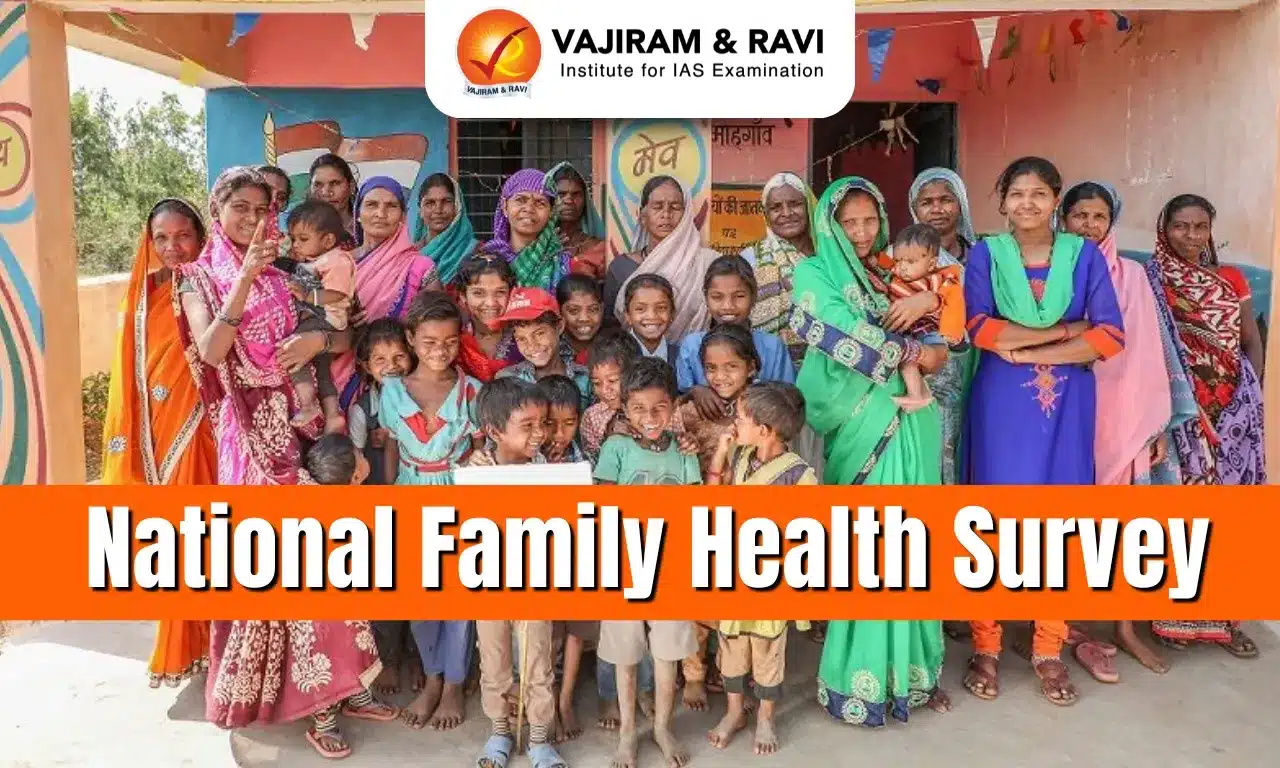
National Family Health Survey, Objectives, History, Survey List

National Family Health Survey

The National Family Health Survey (NFHS) is India’s most comprehensive and regularly conducted household survey that provides reliable, comparable and large scale data on population, health and nutrition indicators. Conducted by the Ministry of Health and Family Welfare with the International Institute for Population Sciences as the nodal agency, NFHS tracks fertility, mortality, family planning, maternal and child health, nutrition and emerging health issues. Since its launch in 1992, NFHS has become a critical evidence base for policy formulation, programme evaluation and monitoring of national and global development goals across states and districts in India.

National Family Health Survey Objectives

The National Family Health Survey aims to generate high quality, comparable health and demographic data to support evidence based policymaking and programme evaluation.

  • Policy Support: NFHS provides updated fertility, mortality and health indicators to guide national and state level health and family welfare policies effectively.
  • Programme Monitoring: The survey measures the reach and impact of government programmes like institutional delivery, immunization and nutrition initiatives over time.
  • Equity Assessment: NFHS data helps identify regional, gender, caste and wealth based disparities in health outcomes across India.
  • Emerging Issues: Each round introduces new topics such as disability, death registration, or nutrition risks to address changing public health priorities.
  • Trend Analysis: Comparable multi round data allows tracking long term changes in population dynamics, fertility decline and child survival indicators.

National Family Health Survey Historical Background

The National Family Health Survey evolved over three decades, expanding scope, methodology and scale to reflect India’s changing health priorities.

  • Launch in 1992-93: NFHS began as India’s first DHS linked survey to generate nationally comparable data on fertility, mortality and family planning.
  • Early Expansion (1998-99): NFHS-2 broadened focus to reproductive health quality, women’s autonomy and domestic violence, reflecting social dimensions of health.
  • Gender Inclusion (2005-06): NFHS-3 introduced men’s questionnaires, recognizing male roles in contraception, maternal care and reproductive decision making.
  • District Level Shift (2015-16): NFHS-4 expanded sample size six-fold, enabling district estimates and transforming NFHS into a planning tool for local governance.
  • Digital Transformation: Tablet based CAPI data collection replaced paper forms, improving speed, accuracy and real time quality checks nationwide.
  • New Health Domains (2019-21): NFHS-5 added disability and death registration indicators, aligning survey outputs with SDGs and MPI requirements.

National Family Health Survey List

Successive NFHS rounds document India’s demographic transition, improved service coverage and persistent regional and social health disparities.

  1. NFHS-1 (1992-93): Established baseline data on fertility, infant mortality and contraception, covering around 88,000 households across major states.
    • Highlighted high fertility and low contraceptive use in several northern and central states.
    • Provided first nationally comparable maternal and child health indicators.
  2. NFHS-2 (1998-99): Captured improvements in family planning uptake and maternal care access since the early 1990s.
    • Identified wide interstate gaps in immunization and antenatal care.
    • Documented early evidence of declining fertility in southern and western India.
  3. NFHS-3 (2005-06): Revealed accelerated fertility decline and improved child survival outcomes nationwide.
    • Reported rising institutional deliveries linked to expanding public health programmes.
    • Introduced data on domestic violence and HIV awareness.
  4. NFHS-4 (2015-16): Provided district level benchmarks for nutrition, sanitation and maternal health indicators.
    • Showed sharp increase in toilet access following sanitation drives.
    • Identified persistent stunting and undernutrition among children in poorer districts.
  5. NFHS-5 (2019-21): Marked achievement of replacement level fertility with TFR at 2.0 children per woman.
    • Recorded institutional births at 88.6 percent and full immunization at 76.6 percent.
    • Showed declines in neonatal, infant and under five mortality across most states.
  6. NFHS-6 (2023-24): Designed to track post pandemic recovery and long term health transitions at district level.
    • Focuses on fertility, mortality and service utilization trends over time.
    • Removes anaemia biomarkers to address measurement concerns and methodological debates

National Family Health Survey-6

NFHS-6, conducted during 2023-24, represents a new phase with full national ownership and refined survey design.

  • Implementation: NFHS-6 is conducted entirely under the Ministry of Health and Family Welfare, funded solely by the Government of India.
  • Nodal Agency: For the first time, the International Institute for Population Sciences, Mumbai, independently coordinated all survey activities.
  • Coverage: Like previous rounds, NFHS-6 provides national and district level estimates on fertility, mortality and family welfare indicators.
  • Questionnaire Changes: Questions on anaemia biomarkers and disability have been removed following measurement controversies and expert recommendations.
  • Data Status: While fieldwork is complete, NFHS-6 results are awaited, though questionnaires have been released publicly.

National Family Health Survey Process

The NFHS follows a rigorous, scientifically designed process to ensure representative, reliable and comparable health data.

  • Sampling Design: NFHS uses multi stage stratified sampling, selecting villages and urban blocks through probability-proportional-to-size methods.
  • Household Selection: From each selected cluster, 22 households are randomly chosen to ensure equal selection probability.
  • Survey Teams: Each team includes female and male interviewers, health investigators for biomarker data and a supervisor for quality checks.
  • Digital Data Collection: Since NFHS-4, data is collected using Computer Assisted Personal Interviewing on tablets, reducing manual errors.
  • Questionnaires: Separate household, women’s, men’s and biomarker questionnaires capture socio-economic, reproductive and health information.
  • Scale: NFHS-5 covered over 600,000 households, 700,000 women aged 15-49 and 100,000 men aged 15-54 across India.

National Family Health Survey Criticism

Despite its scale and importance, NFHS data has faced methodological and interpretation related criticisms from experts.

  • Sample Size Issues: Expansion in NFHS-4 raised concerns about comparability with earlier rounds and potential non sampling errors.
  • Sex Ratio Findings: NFHS-5 reported 1,020 females per 1,000 males, conflicting with census projections and NSS estimates.
  • Immunization Fluctuations: Unexplained variations in vaccination coverage and zero-dose children suggest possible data quality issues.
  • Anaemia Measurement: Use of capillary blood samples may overestimate anaemia prevalence compared to venous sampling methods.
  • Interview Duration: Faster interviews by private agencies have raised concerns, though digital tools and skip patterns may explain reduced time

National Family Health Survey FAQs

Q1: What is the National Family Health Survey (NFHS)?

Ans: The National Family Health Survey is a nationwide household survey that collects data on population, health, nutrition and family welfare indicators in India.

Q2: Which institution conducts the National Family Health Survey?

Ans: The Ministry of Health and Family Welfare conducts NFHS, with the International Institute for Population Sciences, Mumbai, as the nodal technical agency.

Q3: When was the first National Family Health Survey conducted?

Ans: 3. When was the first National Family Health Survey conducted? The first round of the National Family Health Survey, known as NFHS-1, was conducted during the years 1992–93.

Q4: What is the importance of National Family Health Survey data?

Ans: NFHS data supports policy formulation, monitors government health programmes, tracks demographic trends and provides district level evidence for targeted interventions.

Q5: Which is the latest round of the National Family Health Survey?

Ans: The latest completed round is NFHS-6 conducted in 2023-24 and its detailed findings are yet to be officially released.

Digital Education in India, Features, Significance, Initiatives

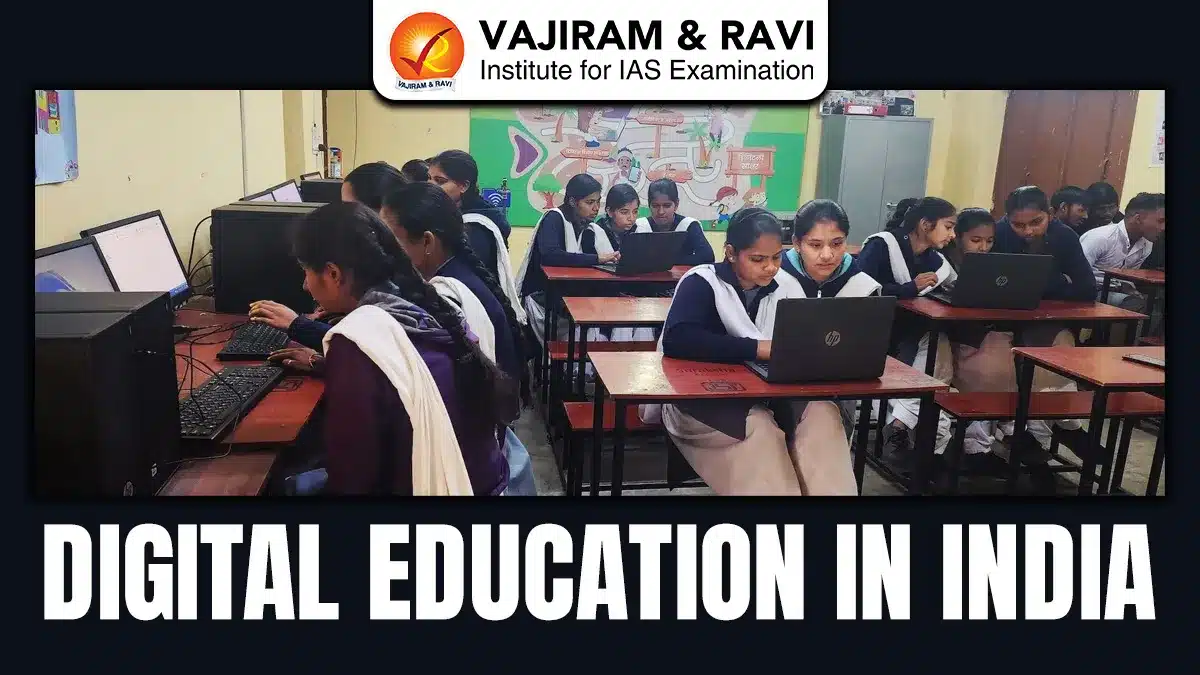
Digital Education in India

Digital Education in India has emerged as a transformative force reshaping how knowledge is delivered, accessed and consumed across the country. Driven by the Digital India campaign and accelerated by the COVID 19 pandemic, education has moved beyond physical classrooms into virtual, technology enabled spaces. With rising mobile penetration, expanding internet infrastructure and government led digital platforms, learning has become more flexible and scalable. However, deep structural challenges like digital divide, infrastructure gaps and lack of standardisation continue to influence outcomes, making reforms and inclusive strategies essential.

Digital Education in India Features

Digital Education in India refers to technology enabled teaching learning systems using internet, ICT tools and digital platforms to deliver education beyond classrooms.

  • Concept and Scope: Digital education includes online classes, virtual labs, e-content, MOOCs and digital repositories using internet enabled devices for teaching and learning at all levels.
  • Growth After Pandemic: School and higher education institutions rapidly adopted online platforms during COVID 19, making digital learning a necessity rather than an option nationwide.
  • Mobile Based Learning: High mobile phone penetration enabled students to access educational content through smartphones, especially via government platforms like DIKSHA and SWAYAM.
  • Role of Digital India: The Digital India programme provided policy backing and infrastructure focus, integrating education with digital governance and service delivery mechanisms.
  • Integration with NEP 2020: The National Education Policy 2020 formally recognised technology as a key enabler for access, equity and quality in education.
  • Urban Rural Divide: While urban learners benefited faster due to better connectivity, rural adoption remains uneven due to infrastructure and affordability constraints.
  • Shift in Pedagogy: Teaching moved from chalk and talk methods to multimedia based learning using videos, simulations, quizzes and interactive digital tools.
  • Platform Based Learning: Government supported platforms reduced dependence on private providers and ensured free access to standardised, curriculum aligned content.

Digital Education in India Significance

Digital Education in India is significant because it expands access, improves flexibility, reduces costs and supports inclusive learning across diverse socio-economic groups.

  • Expanding Accessibility: Digital platforms help overcome geographical barriers, enabling students in remote and rural areas to access quality educational resources.
  • Flexible Learning Models: Students can learn at their own pace and time, benefiting working professionals and learners with non traditional educational pathways.
  • Cost Reduction: Digital resources reduce expenditure on physical infrastructure, travel and printed materials, making education more affordable.
  • Mass Outreach Capacity: Online platforms can reach millions of learners simultaneously, addressing shortages of teachers and institutions.
  • Inclusive Education: Digital tools support learners with disabilities through audio content, screen readers, subtitles and adaptive learning formats.
  • Skill Oriented Learning: Technology supports Education 4.0 by aligning learning with skills required for automation, AI and digital economy.
  • Teacher Capacity Building: Platforms like DIKSHA enable continuous professional development and nationwide teacher training at scale.
  • Knowledge Democratisation: Open access digital libraries and MOOCs ensure equal availability of learning materials irrespective of socio-economic background.

Digital Education in India Initiatives

The government has launched multiple digital initiatives to ensure equitable access, quality content and nationwide reach of Digital Education in India.

  • DIKSHA Platform: A national digital infrastructure providing curriculum aligned content for teachers and students, supporting multilingual and interactive learning.
  • SWAYAM Portal: Offers free MOOCs from school to postgraduate level, developed by premier institutions, allowing certification through proctored examinations.
  • SWAYAM Prabha: Uses 34 DTH television channels to broadcast educational content, supporting learners without internet connectivity.
  • PM eVidya Programme: A multimodal initiative integrating digital platforms, TV, radio and podcasts to ensure uninterrupted learning nationwide.
  • National Digital Library: Hosts millions of books, articles, videos and learning materials accessible to students across disciplines and levels.
  • Virtual Labs: Enables students to perform simulated experiments remotely, especially beneficial for institutions lacking physical laboratory infrastructure.
  • NPTEL: Provides engineering, science and management courses through IITs and IISc, enhancing quality higher education access.
  • NKN Network: A multi gigabit research and education network connecting universities and research institutions for collaborative knowledge creation.

Digital Education in India Challenges

Digital education faces structural, social and infrastructural challenges that limit its reach, quality and inclusiveness.

  • Lack of Proper Study Space: Census 2011 shows 71% households with three or more members have two rooms or less, affecting learning environment.
  • Low Internet Penetration: NSS 2017-18 reports only 42% urban and 15% rural households had internet access, excluding two-thirds children.
  • Usage Gap: Only 34% urban and 11% rural individuals used the internet recently, limiting effective participation in online education.
  • Slow Internet Speed: Online classes require stable high speed internet, absence of which disrupted learning, as seen in Jammu and Kashmir protests.
  • Digital Divide: Marginalised, rural and poor populations remain disproportionately excluded from digital education benefits.
  • Absence of Standard Policy: India lacks a comprehensive policy covering platforms, pedagogy, content curation, multilingual delivery and interactivity.
  • Teacher Training Gaps: Teachers are insufficiently trained in online pedagogy and digital tools, affecting instructional quality.
  • Loss of Social Cohesion: Schools promote social inclusion and equality, which purely online education struggles to replicate effectively.
  • Parenting Challenges: Working parents face difficulties ensuring child safety, discipline and learning continuity at home.
  • Emotional Development Issues: Online education limits emotional, social and behavioural learning traditionally supported by physical schooling.

Digital Education in India Reforms

Strategic investments, inclusive policies and institutional reforms are essential to make Digital Education in India equitable, effective and sustainable.

  • BharatNet Expansion: BharatNet aims to connect 2.5 lakh Gram Panchayats with 100 Mbps bandwidth, enabling rural access to e-learning services.
  • National Knowledge Network Integration: NKN should be mainstreamed under Digital India to deliver education services to economically weaker sections.
  • Increased Public Financing: NEP 2020 proposes increasing education expenditure to 6% of GDP to strengthen digital infrastructure.
  • Teacher and Parent Training: Large scale digital literacy programmes are needed to equip teachers and parents with essential technological skills.
  • Device Accessibility: Government support for smartphones, tablets and laptops is necessary to ensure universal access to online education.
  • Inclusive Design: Digital platforms must address needs of disabled learners, low income groups and regional language users.
  • Blended Learning Models: Combining online tools with face to face teaching can preserve social learning while leveraging technology benefits.
  • Free Public Platforms: Government must ensure free, high quality digital content to prevent commercial exclusion and inequality.
  • Policy Standardisation: A national digital education policy covering curriculum, pedagogy, quality assurance and multilingual delivery is essential.
  • Long Term Transition Strategy: Digital education should supplement classroom teaching gradually through multi pronged, inclusive reforms.

Digital Education in India FAQs

Q1: What is Digital Education in India?

Ans: Digital education in India uses internet, digital platforms and ICT tools to deliver teaching and learning beyond traditional classrooms.

Q2: Why is Digital Education important for India?

Ans: It expands access, reduces costs, supports flexible learning and helps bridge educational gaps across regions and socio-economic groups.

Q3: Which government platforms support Digital Education in India?

Ans: Major platforms include DIKSHA, SWAYAM, SWAYAM Prabha, National Digital Library, Virtual Labs, NPTEL and National Knowledge Network.

Q4: What is the biggest challenge of Digital Education in India?

Ans: Limited internet access and digital divide remain the biggest challenges, especially affecting rural, poor and marginalised students.

Q5: How can Digital Education be improved in India?

Ans: Improvement requires better internet infrastructure, teacher training, affordable devices, inclusive policies and blended learning approaches.

Xaxa Committee on Tribal Communities of India, Objectives, Recommendations

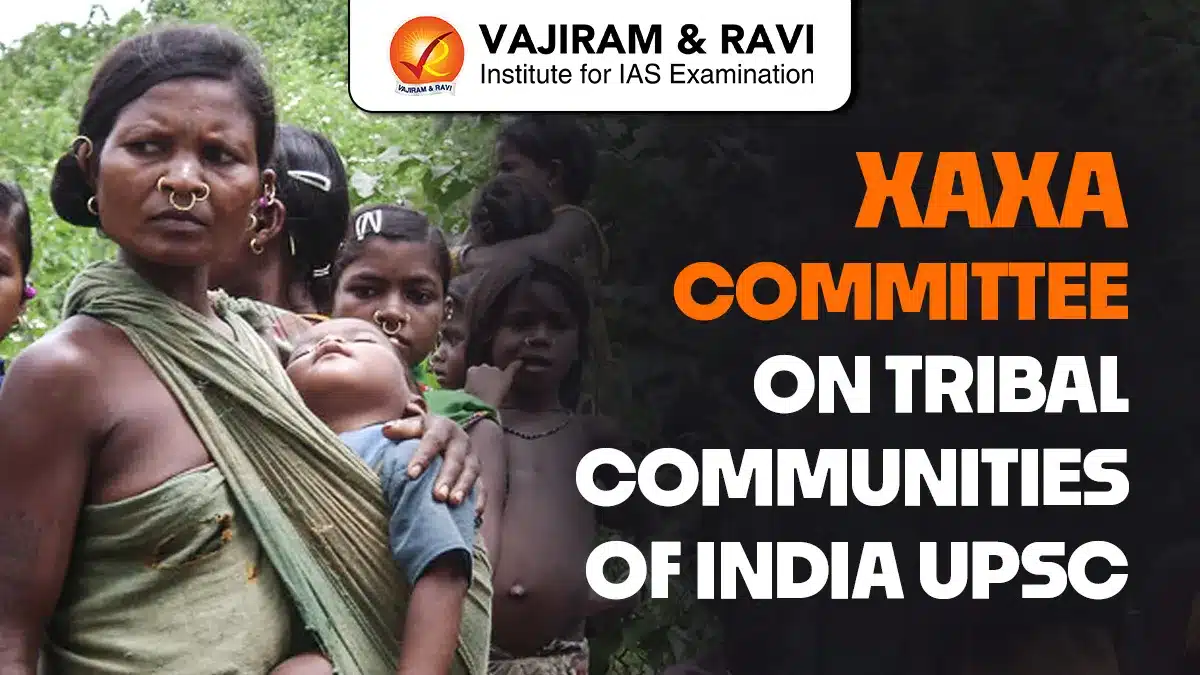
Xaxa Committee on Tribal Communities of India

The Xaxa Committee on Tribal Communities of India was a High Level Committee constituted by the Prime Minister’s Office on 14 August 2013 under the chairmanship of Prof. Virginius Xaxa to comprehensively examine the socio-economic, educational and health status of Scheduled Tribes in India. The Committee was mandated to assess persistent development gaps, analyse constitutional and legal safeguards, study livelihood patterns, displacement, governance failures and public service delivery and to recommend concrete, outcome oriented measures. It submitted its detailed report on 29 May 2014 after extensive consultations, multiple meetings and sector wise analysis, highlighting why tribal communities, constituting 8.6% of India’s population as per Census 2011, remain among the most disadvantaged despite decades of planned development.

Xaxa Committee on Tribal Communities of India Organization Structure

The Xaxa Committee on Tribal Communities of India was structured as a multidisciplinary expert body combining academic, legal, health and administrative expertise to ensure a holistic assessment of tribal issues.

  • Chairmanship by Prof. Virginius Xaxa: Renowned sociologist and tribal studies scholar, he provided academic leadership and ensured sociological depth in analysing tribal marginalisation.
  • Academic and Legal Members: Dr. Usha Ramanathan and Dr. Kamal K. Misra contributed constitutional, legal and anthropological perspectives on tribal rights and governance.
  • Social and Development Experts: Dr. Joseph Bara and Ms. Sunila Basant added insights on development administration, social justice and policy implementation.
  • Public Health Expertise: Dr. Abhay Bang brought ground level understanding of tribal health challenges, malnutrition, mortality and healthcare delivery gaps.
  • Administrative Coordination: Secretary, Ministry of Tribal Affairs acted as Member Secretary, ensuring data access, inter-ministerial coordination and official facilitation.
  • Working Modality: The Committee conducted eleven formal meetings between September 2013 and May 2014, enabling sector wise discussions and consensus building.

Xaxa Committee on Tribal Communities of India Objectives

The objectives of Xaxa Committee on Tribal Communities of India focused on preparing an evidence based position paper and proposing actionable reforms for tribal development.

  • Assessment of Socio-Economic Status: To analyse livelihood patterns, poverty levels and employment conditions of Scheduled Tribes across regions.
  • Evaluation of Education and Health Indicators: To study literacy, dropout rates, fertility, mortality, disease burden and healthcare access among tribal populations.
  • Review of Legal and Constitutional Safeguards: To examine implementation gaps in Fifth Schedule, Sixth Schedule, PESA 1996 and Forest Rights Act 2006.
  • Analysis of Displacement and Migration: To assess the impact of mining, dams, industries and infrastructure on tribal land alienation and forced migration.
  • Strengthening Public Service Delivery: To suggest policy initiatives and institutional reforms for effective, participatory and outcome oriented governance.

Xaxa Committee on Tribal Communities of India Historical Background

The Xaxa Committee on Tribal Communities of India had emerged from a long history of tribal marginalisation rooted in colonial and post independence development trajectories.

  • Colonial Legacy: British policies such as Regulation XIII of 1833 and Inner Line Regulation 1873 isolated tribal areas while facilitating resource extraction.
  • Constitutional Recognition: After independence, tribes were reclassified as Scheduled Tribes under Article 342, with special protections under Fifth and Sixth Schedules.
  • Committee Based Reforms: Earlier bodies like Dhebar, Lokur and Bhuria Committees addressed land alienation, development and governance, with mixed outcomes.
  • Persistent Development Gaps: Despite Tribal Sub-Plan and welfare schemes, poverty, displacement and exclusion continued in tribal dominated regions.
  • Need for Reassessment: By 2013, rising conflicts, Left Wing Extremism and failure of service delivery necessitated a fresh, comprehensive review.

Xaxa Committee on Tribal Communities of India Observations

The Xaxa Committee on Tribal Communities of India made extensive observations across demographic, economic, social, legal and governance dimensions.

  • Demographic Profile: Scheduled Tribes numbered 10.42 crore in Census 2011, forming 8.6% of India’s population and living across 15% of land area.
  • Regional Concentration: Over 55% of tribals reside in central and eastern states like Madhya Pradesh, Maharashtra, Odisha, Jharkhand and Chhattisgarh.
  • Livelihood Dependence: More than 80% of tribal workers are engaged in the primary sector, compared to 53% of the general population.
  • Poverty Levels: In 2011-12, 45.3% of Scheduled Tribes lived below the poverty line, significantly higher than the national average.
  • Resource Rich but Poor Regions: States like Odisha and Jharkhand hold 60-80% of key minerals yet record the highest tribal poverty ratios.
  • Displacement Burden: Around 40% of people displaced by dams belong to Scheduled Tribes, despite forming only eight% of the population.
  • Forest Alienation: Nearly 60% of India’s forest cover lies in tribal areas, yet tribals were treated as encroachers before FRA 2006.
  • Education Deficits: Tribal literacy was just 3.46% in 1951 and dropout rates at secondary levels exceeded 70% by 2010-11.
  • Language Barriers: Less than one% of tribal children receive education in their mother tongue, affecting learning outcomes and retention.
  • Health Inequalities: Despite a favourable sex ratio of 990, tribals suffer higher malnutrition, IMR, malaria, tuberculosis and sickle cell prevalence.
  • PVTG Vulnerability: Seventy five PVTGs, including Sentinelese and Dongria Khond, face declining populations and extreme livelihood insecurity.
  • Governance Failures: Tribes Advisory Councils under Fifth Schedule function as advisory bodies without real decision making power or accountability.
  • Conflict and LWE: Forty two of 83 LWE affected districts fall in Scheduled Areas, reflecting neglect, displacement and trust deficit with the State.
  • Legal Subversion: Laws protecting tribal land and forests are frequently bypassed to facilitate corporate mining and infrastructure projects.
  • Assimilation over Integration: The State’s approach often erodes tribal identity instead of supporting constitutionally promised integration with safeguards.

Xaxa Committee on Tribal Communities of India Recommendations

The Xaxa Committee on Tribal Communities of India proposed detailed, rights based and participatory recommendations across sectors.

  • Livelihood Diversification: Establish agro-based training institutes and labour intensive processing units in tribal regions to reduce distress migration.
  • Forest Based Economy: Promote eco-forestry, organic farming and use of traditional knowledge to generate sustainable incomes for tribal households.
  • Land Protection: Strictly enforce land transfer laws, restore alienated land and ensure Gram Sabha consent under PESA and FRA provisions.
  • Displacement Minimisation: Adopt a rights based rehabilitation approach and return unutilised acquired land to original tribal owners.
  • Education Reform: Implement multilingual education, recruit local teachers and integrate tribal culture, folklore and history into curricula.
  • Residential School Oversight: Expand Ashram Schools and Eklavya Model Schools while enforcing strong safeguards against abuse and neglect.
  • Health Governance: Establish Tribal Health Assemblies and Councils from village to national level for participatory planning and monitoring.
  • Local Health Workforce: Recruit and train tribal youth as healthcare workers committed to serving Scheduled Areas for long durations.
  • PVTG Protection: Grant habitat rights under FRA, clarify procedures and extend Fifth Schedule protections to PVTG dominated regions.
  • Strengthening Gram Sabhas: Empower Gram Sabhas as core institutions for decision making, consent, monitoring and social accountability.
  • Autonomous Governance: Extend Sixth Schedule like autonomous councils to Fifth Schedule areas for genuine self governance.
  • Resource Allocation: Allocate at least 8.6% of health and development budgets proportionate to tribal population share.
  • Conflict Resolution: Address historical injustices, ensure justice delivery and rebuild trust to counter Left Wing Extremism sustainably.
  • Women’s Representation: Ensure effective participation of tribal women in Gram Sabhas, land decisions and forest governance.
  • Institutional Accountability: Strengthen monitoring mechanisms, independent evaluation and transparency in tribal development programmes.

Xaxa Committee on Tribal Communities of India FAQs

Q1: When was the Xaxa Committee on Tribal Communities of India constituted?

Ans: The Xaxa Committee was constituted on 14 August 2013 by the Prime Minister’s Office.

Q2: Who chaired the Xaxa Committee on Tribal Communities of India?

Ans: The Committee was chaired by Prof. Virginius Xaxa, a noted sociologist and tribal studies expert.

Q3: What was the main purpose of the Xaxa Committee on Tribal Communities of India?

Ans: Its main purpose was to assess socio-economic, educational and health conditions of Scheduled Tribes.

Q4: When did the Xaxa Committee on Tribal Communities of India submit its report?

Ans: The Committee submitted its report to the Government of India on 29 May 2014.

Q5: Why is the Xaxa Committee on Tribal Communities of India report important?

Ans: It highlights governance gaps and provides rights based recommendations for inclusive tribal development.

UPSC Daily Quiz 13 January 2026

UPSC Daily Quiz

[WpProQuiz 66]

UPSC Daily Quiz FAQs

Q1: What is the Daily UPSC Quiz?

Ans: The Daily UPSC Quiz is a set of practice questions based on current affairs, static subjects, and PYQs that help aspirants enhance retention and test conceptual clarity regularly.

Q2: How is the Daily Quiz useful for UPSC preparation?

Ans: Daily quizzes support learning, help in revision, improve time management, and boost accuracy for both UPSC Prelims and Mains through consistent practice.

Q3: Are the quiz questions based on the UPSC syllabus?

Ans: Yes, all questions are aligned with the UPSC Syllabus 2025, covering key areas like Polity, Economy, Environment, History, Geography, and Current Affairs.

Q4: Are solutions and explanations provided with the quiz?

Ans: Yes, each quiz includes detailed explanations and source references to enhance conceptual understanding and enable self-assessment.

Q5: Is the Daily UPSC Quiz suitable for both Prelims and Mains?

Ans: Primarily focused on Prelims (MCQ format), but it also indirectly helps in Mains by strengthening subject knowledge and factual clarity.

BRICS 2026, Theme, Objectives, Host Country, India’s Role

BRICS 2026

Why in News?

India has formally launched the official logo and website for its BRICS 2026 Presidency. This marks the start of India’s leadership year, highlighting its role in guiding the agenda and initiatives of the BRICS grouping.

BRICS 2026 Host Country

India will host the BRICS Summit 2026, taking the leadership of the group for the year. This is an important opportunity for India to guide discussions on economic growth, global cooperation, and development priorities for BRICS 2026 member countries. As the host, India will set the agenda, organize meetings, and strengthen ties among the BRICS Nations.

BRICS 2026 Theme

The BRICS 2026 Theme is “Building for Resilience, Innovation, Cooperation, and Sustainability” as countries work together to tackle global challenges. It aims to strengthen shared growth, support green development, and promote new technologies that benefit all members. The theme highlights the importance of unity, mutual respect, and people‑centric progress among BRICS nations. This approach reflects India’s priority to make BRICS a platform that improves global welfare and addresses real‑world issues in an inclusive way.

India’s Role in BRICS 2026

India, as the host of BRICS 2026, will lead the group in promoting inclusive growth, sustainability, and global cooperation. Its role focuses on strengthening partnerships, guiding discussions, and representing the interests of developing countries.

  • Chairing the BRICS Summit and setting the agenda for 2026.
  • Promoting inclusive economic growth and sustainable development.
  • Strengthening trade, investment, and technological cooperation among members.
  • Representing the interests of developing nations in global decision-making.
  • Encouraging practical solutions for shared global challenges.

Challenges and Criticisms of BRICS

  • BRICS lacks a permanent secretariat or strong institutional structure, making decision‑making slower and implementation of initiatives weak.
  • Different political and economic interests among members slow cooperation, especially with expanded membership bringing diverse priorities.
  • Economic imbalances within the group, especially China’s dominant share of GDP, create influence gaps and perceptions of unequal power.
  • The New Development Bank and other BRICS financial mechanisms are still small compared to major global institutions, limiting impact.
  • Intra‑BRICS trade remains low despite overall global trade share, showing limited economic integration.
  • BRICS has faced external political and economic pressure, including warnings related to de‑dollarization and tariffs, affecting cohesion.
  • Some critics call BRICS a “talk shop” with many discussions but fewer concrete global outcomes.

Way Forward

  • Establish a permanent secretariat to strengthen institutional structure and coordination.
  • Enhance trade, investment, and economic cooperation among member countries.
  • Focus on sustainable development, including clean energy, climate action, and green initiatives.
  • Promote digital innovation, technology exchange, and health cooperation.
  • Engage with other countries and international organizations to increase global influence.
  • Encourage practical solutions for shared global challenges and inclusive growth.

BRICS 2026 FAQs

Q1: What is BRICS?

Ans: BRICS is a group of eleven emerging economies Brazil, Russia, India, China, South Africa, Egypt, Ethiopia, Iran, Indonesia, Saudi Arabia, and the UAE that work together on economic, political, and developmental issues.

Q2: Who is hosting BRICS in 2026?

Ans: India is hosting the BRICS Summit in 2026 and will lead the group’s activities throughout the year.

Q3: What is the theme of BRICS 2026?

Ans: The BRICS 2026 Theme is “Building for Resilience, Innovation, Cooperation, and Sustainability”.

Q4: Why is BRICS important?

Ans: BRICS represents a large part of the world’s population and economy, giving developing countries a stronger voice in global cooperation and decision‑making.

Q5: What are the main goals of BRICS 2026?

Ans: The main goals include strengthening economic cooperation, supporting sustainable development, encouraging innovation, and promoting fair global governance.

Bhadrakali Inscription

Bhadrakali Inscription

Bhadrakali Inscription Latest News

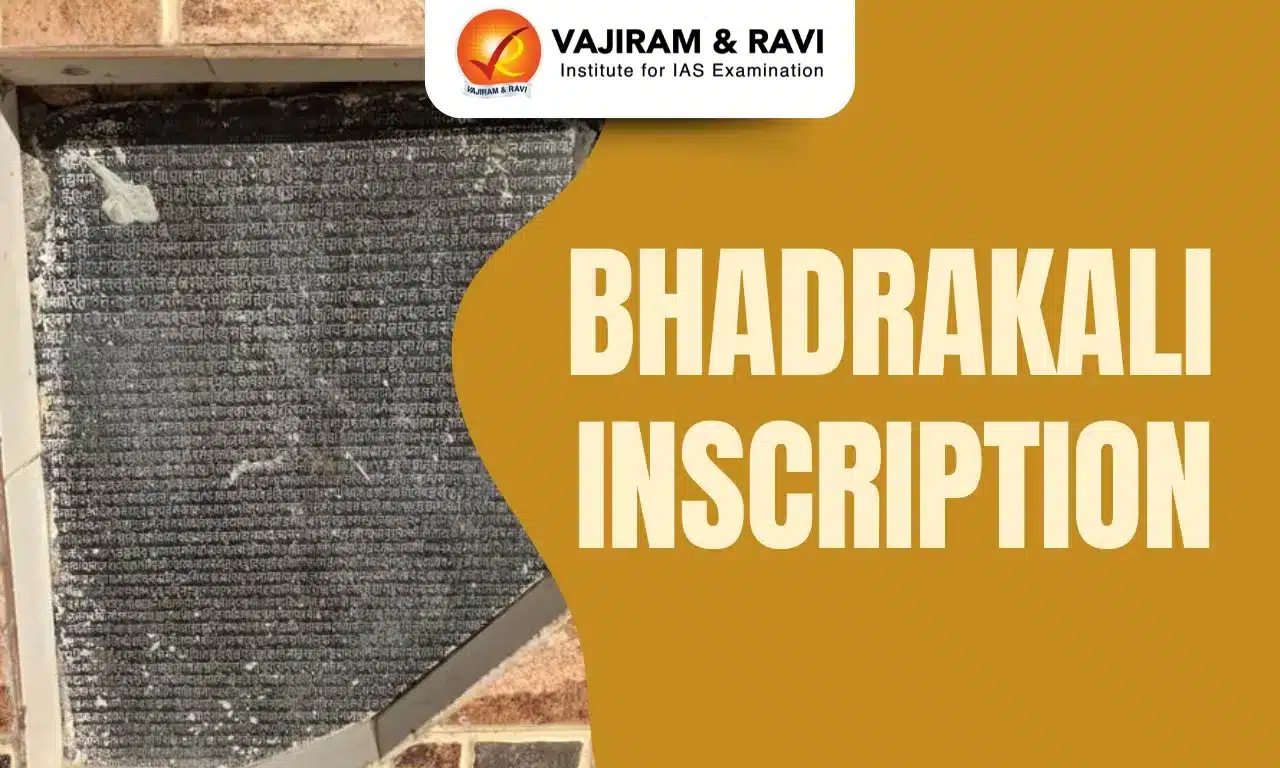
The Bhadrakali inscription is a key 12th-century record that confirms the history and development of Somnath Temple and patronage given by the Solanki dynasty.

About Bhadrakali Inscription

  • Location: It is situated in Prabhas Patan, Gujarat specifically on the wall of the Bhadrakali Temple.
  • It was carved in 1169 CE (Valabhi Samvat 850 and Vikram Samvat 1255) and currently protected by the State Department of Archaeology,
  • It is a eulogistic inscription of Param Pashupata Acharya Shriman Bhavabrihaspati, the (spiritual preceptor of Maharajadhiraj Kumarapala of Anhilwad Patan).

Historical Details in Bhadrakali Inscription

  • This inscription records the ancient and medieval history of the Somnath Temple.
  • It mentions the construction of Somnath Temple in all four yugas.
  • Accordingly, in the Satya Yuga, Chandra (Soma) built it of gold; in the Treta Yuga, Ravana built it of silver; in the Dvapara Yuga, Shri Krishna built it of wood; and in the Kali Yuga, King Bhimdev Solanki constructed a beautifully artistic stone temple.
  • The historic Bhadrakali inscription reflects the devotion of the Solanki rulers and scholars like Bhavabrihaspati. 
  • Protection: State Department of Archaeology, Gujarat

Source: PIB

Bhadrakali Inscription FAQs

Q1: When was the Bhadrakali Inscription carved?

Ans: 1169 CE

Q2: Where is the Bhadrakali Inscription located?

Ans: Bhadrakali Temple, Prabhas Patan, Gujarat

National Federation of Cooperative Sugar Factories Limited

BhadraNational Federation of Cooperative Sugar Factories Limitedkali Inscription

National Federation of Cooperative Sugar Factories Limited Latest News

Recently, the National Cooperative Sugar Federation sought government intervention amid falling sugar prices.

About National Federation of Cooperative Sugar Factories Limited

  • It was established in 1960 to build a strong and vibrant co-operative sugar sector in India. 

Genesis of National Federation of Cooperative Sugar Factories Limited

  • It was registered as a Multi-Unit Cooperative Society on December 2, 1960 under the provisions of Bombay Cooperative Societies Act 1925.
  • In 1972, it was deemed to be under The Delhi Cooperative Societies Act 1972 and later under the Multi State Cooperative Societies Act 1984.
  • Since 2002, NFCSF has been deemed to be under the Multi State Cooperative Societies Act, 2002.

Functions of National Federation of Cooperative Sugar Factories Limited

  • It participates in sugar policy formulation at national and state level and helps set an agenda for the development and growth of the sector in India.
  • It advocates, promotes and safeguards the collective interests of its members in accordance with the cooperative principles.
  • The NFCSF also offers Techno-commercial services to establish, expand and modernize sugar factories, within India and Overseas.
  • Governance: It functions under the overall guidance of an elected Board of Directors, composed of representatives of Cooperative Sugar Factories and State Sugar Federations across India. 

Source: News On Air

National Federation of Cooperative Sugar Factories Limited FAQs

Q1: What is the primary objective of NFCSF?

Ans: To support cooperative sugar factories

Q2: What is the role of NFCSF in the sugar industry?

Ans: To promote cooperative sugar factories

Q3: When was NFCSF established?

Ans: 1965

Man Portable Anti-tank Guided Missile Weapon System

Man Portable Anti-tank Guided Missile Weapon System

Man Portable Anti-tank Guided Missile Weapon System Latest News

Recently, the Defence Research and Development Organisation & Indian Army conducted successful trials of indigenous Man Portable Anti-tank Guided Missile Weapon System.

About Man Portable Anti-tank Guided Missile Weapon System

  • It is indigenously designed and developed by Defence Research & Development Organisation (DRDO).
  • The system consisted of the MPATGM, Launcher, Target Acquisition System, and the Fire Control Unit.
  • It is the third-generation “fire and forget” missile.

Features of Man Portable Anti-tank Guided Missile Weapon System

  • It incorporates cutting-edge indigenous technologies, including ;
  • an Imaging Infrared (IIR) homing seeker, all-electric control actuation system, advanced fire control system, tandem warhead, propulsion system and a high-performance sighting system.
  • The IIR seeker provides robust day-and-night operational capability.
  • The tandem warhead is designed to defeat modern main battle tanks equipped with advanced armour protection.
  • The missile can be launched from a tripod-mounted system as well as from a military vehicle-based launcher, enhancing its operational flexibility.
  • Bharat Dynamics Limited (BDL) and Bharat Electronics Limited (BEL) are the development-cum-production partners (DcPP) for the MPATGM.

Source: PIB

Man Portable Anti-tank Guided Missile Weapon System FAQs

Q1: What is the primary purpose of the MPATGM?

Ans: To engage and destroy enemy tanks and armored vehicles

Q2: What type of guidance system does the MPATGM use?

Ans: Imaging Infrared (IIR) homing seeker

Q3: What is the range of the MPATGM?

Ans: Up to 4 km

Bargi Dam

Bargi Dam

Bargi Dam Latest News

Recently, the National Dam Safety Authority has issued a show-cause notice to the Narmada Valley Development Authority over safety concerns at Bargi Dam. 

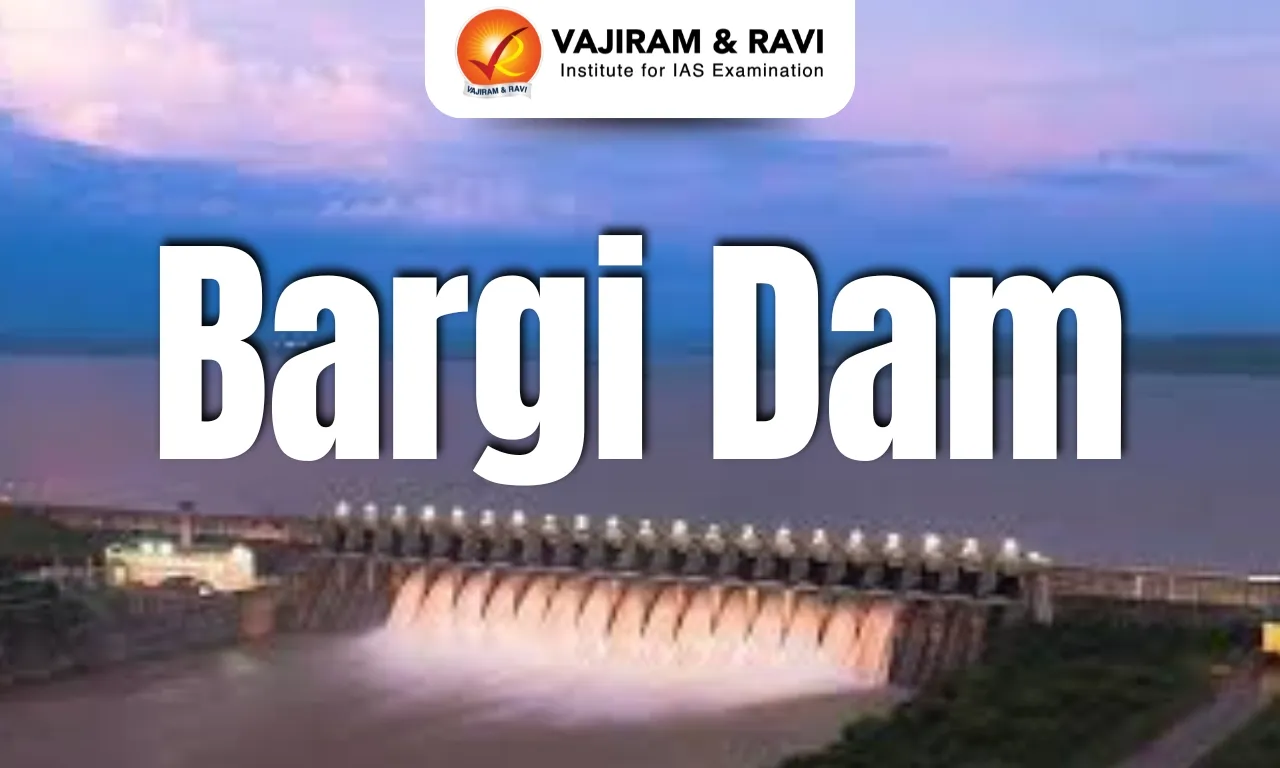
About Bargi Dam

  • It is a major multi-purpose dam, serving irrigation, water supply, and power generation. 
  • It is on the Narmada river.
  • Location: It is located in the state of Madhya Pradesh.
  • Out of 30 major dam projects on Narmada river, it is one of the first completed dams on the river.
  • Bargi dam construction started in 1974 and completed in 1990.
  • It was constructed as part of the Narmada Valley Development Project.
  • It was classified as Safety Category III, meaning “minor deficiencies,” during pre-monsoon and post-monsoon inspections.

What is the National Dam Safety Authority?

  • It is a statutory body set up by the Central Government under the Dam Safety Act, 2021.
  • It operates with a clear mandate to regulate, oversee, and inspect dams.
  • It is headed by a chairman and assisted by five members to lead its five wings – policy and research, technical, regulation, disaster and resilience, and administration and finance.
  • Headquarter: New Delhi.
  • Functions of the Authority include 
    • implementing the policies formulated by the National Committee on Dam Safety;
    • resolving issues between State Dam Safety Organisations (SDSOs), or between a SDSO and any dam owner in that state;
    • specifying regulations for inspection and investigation of dams;
    • providing accreditation to agencies working on construction, design, and alteration of dams.

Source: DTE

Bargi Dam FAQs

Q1: Where is Bargi Dam located?

Ans: Madhya Pradesh

Q2: On which river is Bargi Dam built?

Ans: Narmada

Catastrophe Bonds

Catastrophe Bonds

Catastrophe Bonds Latest News

Recently, the Kerala government has asked the Union government to consider instituting ‘catastrophe bonds’ as protection against disaster-linked losses.

About Catastrophe Bonds

  • These are insurance-linked securities that transfer the financial risks from natural disasters from the bond issuer to the capital market.
  • These are a unique hybrid insurance-cum-debt financial product that transforms insurance cover into a tradable security.
  • At present, the financial risk is fully borne by the State or Central governments.

Key Stakeholders and Mechanism of Catastrophe Bonds

  • These bonds are sponsored by sovereign governments, who pay premiums.
  • These are issued through intermediaries, such as the World Bank or Asian Development Bank, to reduce issuance risks.
  • These are purchased by global investors, including pension funds, hedge funds, and family offices, who are attracted by high returns and the diversification benefits of non-market correlated risks.
  • The risk level and frequency of disaster occurrence directly influence coupon rates.
    • For instance, earthquake-related bonds often offer lower premiums (1-2%) compared to those covering cyclones or hurricanes.
  • Global scene: Mexico and the Philippines have been using CAT bonds to protect themselves against disaster-linked losses.

Source: TH

Catastrophe Bonds FAQs

Q1: What are Catastrophe Bonds?

Ans: Insurance-linked securities that transfer risk to investors

Q2: What is the primary purpose of Cat Bonds?

Ans: To transfer risk from insurers to investors

National Environmental Standard Laboratory

National Environmental Standard Laboratory

National Environmental Standard Laboratory Latest News

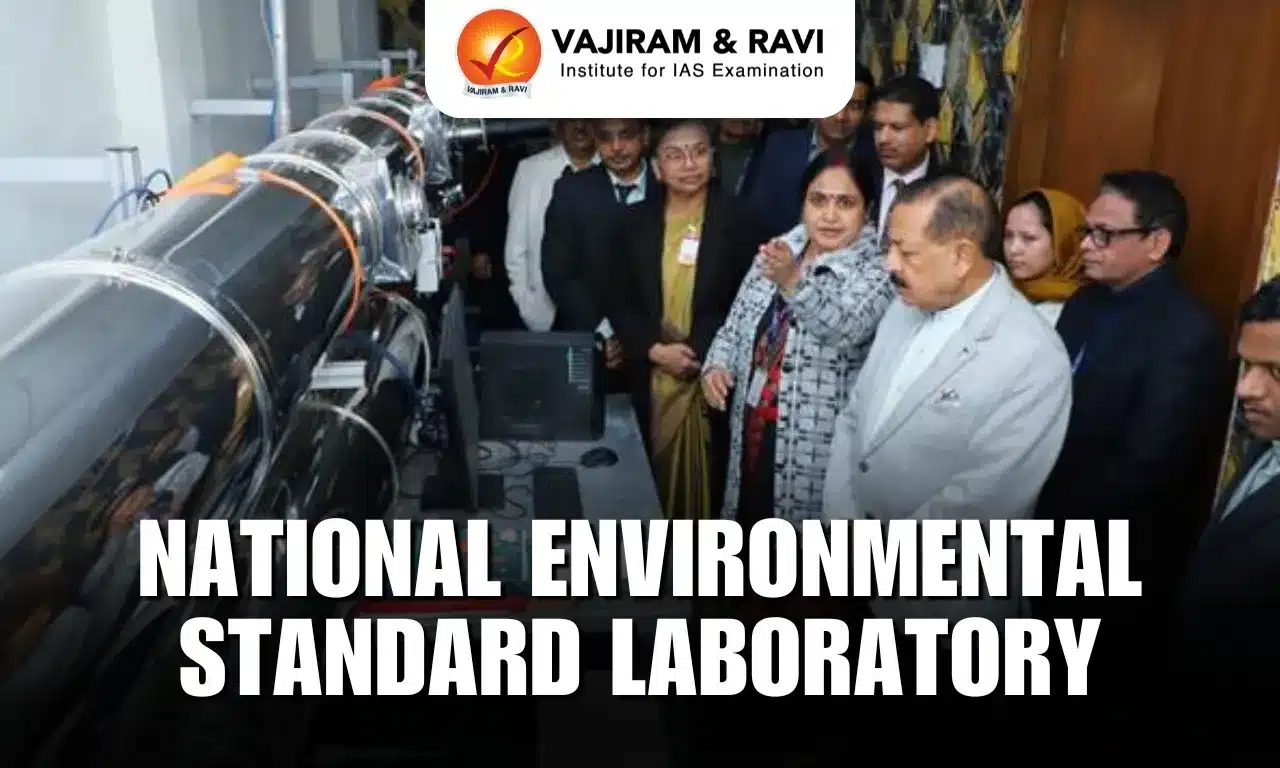
Recently, the CSIR-National Physical Laboratory established the National Environmental Standard Laboratory (NESL).

About National Environmental Standard Laboratory

  • It was established to test and recalibrate instruments used for air pollution monitoring systems and environmental sensors under Indian environmental conditions.
  • It provides credible data for the National Clean Air Programme.
  • Location: CSIR–National Physical Laboratory, New Delhi

Features of National Environmental Standard Laboratory

  • NESL allowed manufacturers, industries, and municipal agencies to validate performance within the country,
  • It provides Industrial emission audits, and smart-city monitoring networks, and provided reference gases, protocols.
  • Significance: It is expected to help MSMEs, start-ups, and indigenous manufacturers to demonstrate product quality at lower cost, meet tightening regulatory guidelines on quality and transparency.

Key Facts about Council of Scientific and Industrial Research (CSIR)

  • CSIR is a cutting edge R&D organisation dealing in diverse fields of science and technology.
  • It undertakes research, design & development of scientific & industrial instruments, components and systems.
  • It facilitates service, maintenance, testing & calibration of instruments.
  • It promotes Human Resource Development in the area of instrumentation.
  • It offers technical assistance to industry and provides ecosystem support.
  • Headquarter: New Delhi

Source: PIB

National Environmental Standard Laboratory FAQs

Q1: Where was the world's second national environmental standards laboratory inaugurated?

Ans: CSIR-National Physical Laboratory (CSIR-NPL)

Q2: What is the primary function of NPL?

Ans: To maintain and update national standards of measurements

Shaksgam Valley

Shaksgam Valley

Why Shaksgam Valley in News?

China has rejected India’s territorial claim over the Shaksgam Valley in the Jammu & Kashmir region, insisting the area is part of Chinese territory. 

About Shaksgam Valley

  • The Shaksgam Valley, or Trans Karakoram Tract, is part of the Hunza-Gilgit region of Pakistan-Occupied Kashmir (POK) and is a disputed territory claimed by India but controlled by Pakistan.
  • It borders Xinjiang Province of the People’s Republic of China (PRC) to the north, the Northern Areas of POK to the south and west, and the Siachen Glacier region to the east.
  • It was ceded to China by Pakistan in 1963, when both countries signed a boundary agreement to settle their border differences.
  • However, Article 6 of the agreement clearly stated that “the two parties have agreed that after the settlement of the Kashmir dispute between Pakistan and India, the sovereign authority concerned will reopen negotiations with the Government of the People's Republic of China, on the boundary as described in Article Two of the present agreement, so as to sign a formal Boundary Treaty to replace the present agreement.”
  • The agreement laid the foundation of Karakoram highway, which was built jointly by Chinese and Pakistani engineers in the 1970s.

Source: IE

Shaksgam Valley FAQs

Q1: Why is the issue in the news now?

Ans: China recently rejected India’s claim and defended its infrastructure work in the valley, including projects linked to the China-Pakistan Economic Corridor (CPEC).

Q2: Where is the Shaksgam Valley located which recently became the site of dispute between India and China?

Ans: The Shaksgam Valley also known as Trans Karakoram Tract is located in the northernmost part of the Jammu & Kashmir region, north of the Siachen Glacier

Q3: Why is Shaksgam Valley strategically important?

Ans: The valley lies north of the Siachen Glacier and near China’s Xinjiang region, making it critical for military logistics, regional security, and connectivity, despite being sparsely populated.

Mustard Crop

Mustard Crop

Mustard Crop Latest News

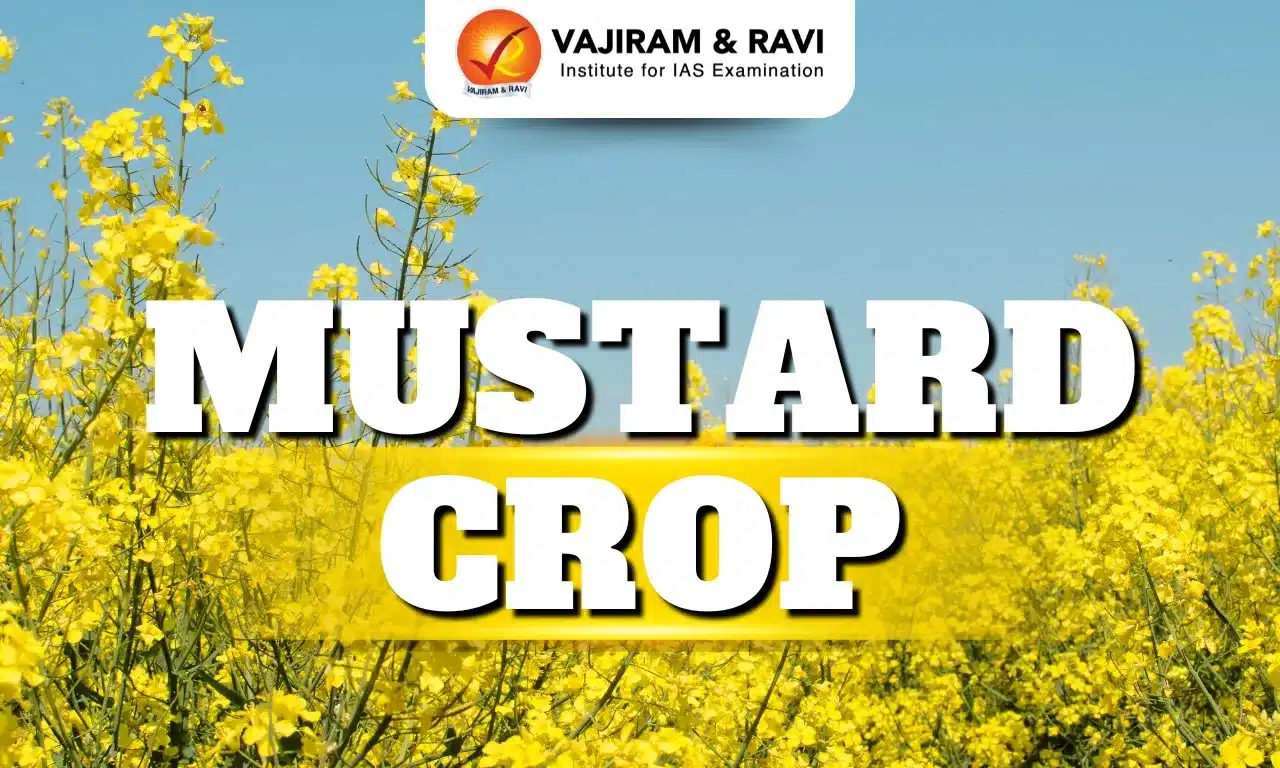
Recently, Mustard Crop has been increasingly susceptible to infestation by Orobanche aegyptiaca.

About Mustard Crop

  • It is a predominantly self-pollinating crop.
  • Common Name: Sarason (Hindi), Rai (Punjabi), Katuku (Tamil), Kaduk (Malayalam), Avalu (Telugu). 
  • Crop Season:  Rabi season 

Climatic Requirements for Mustard crop

  • Soil Requirements: Sandy loam soil is the most ideal textural classification for the cultivation of mustard crop. 
  • Mustard thrives well in dry and chilled environmental conditions.
  • Temperature: It requires temperatures ranging between 10°C to 25°C
  • Rainfall: An annual rainfall between 625 to 1000 mm is suitable for cultivation of mustard crop.
  • It is highly sensitive to frost damage. 
  • Mustard seeds and its oil is used for culinary purpose. Young leaves are used for vegetable purpose. Its oil cake is used for feeding cattle.
  • Major Mustard Production States: Rajasthan (largest producing state), Gujarat, Uttar Pradesh, West Bengal, Haryana, Punjab, Madhya Pradesh.

Key Facts about Orobanche aegyptiaca

  • It is a parasitic weed that attaches to mustard roots and siphons off water and nutrients, leading to poor plant growth and reduced seed yields.
  • This leads to wilting, yellowing, stunted plant growth and ultimately sharp declines in seed yields. 
  • This parasite remains hidden below the soil initially, damage is already extensive by the time it becomes visible.

 Source: IE

Mustard Crop FAQs

Q1: Which variety of mustard is known for its high oil content?

Ans: Pusa Bold

Q2: What is the approximate oil content of mustard seeds?

Ans: 40-45%

1979 Islamic Revolution: Fall of the Pahlavi Dynasty in Iran

1979 Islamic Revolution

1979 Islamic Revolution Latest News

  • Protests that erupted in Iran in late December over rising inflation and economic distress have turned deadly, with at least 42 deaths reported by January 9. 
  • While authorities acknowledge economic hardships, they have responded with a strong crackdown on dissent.
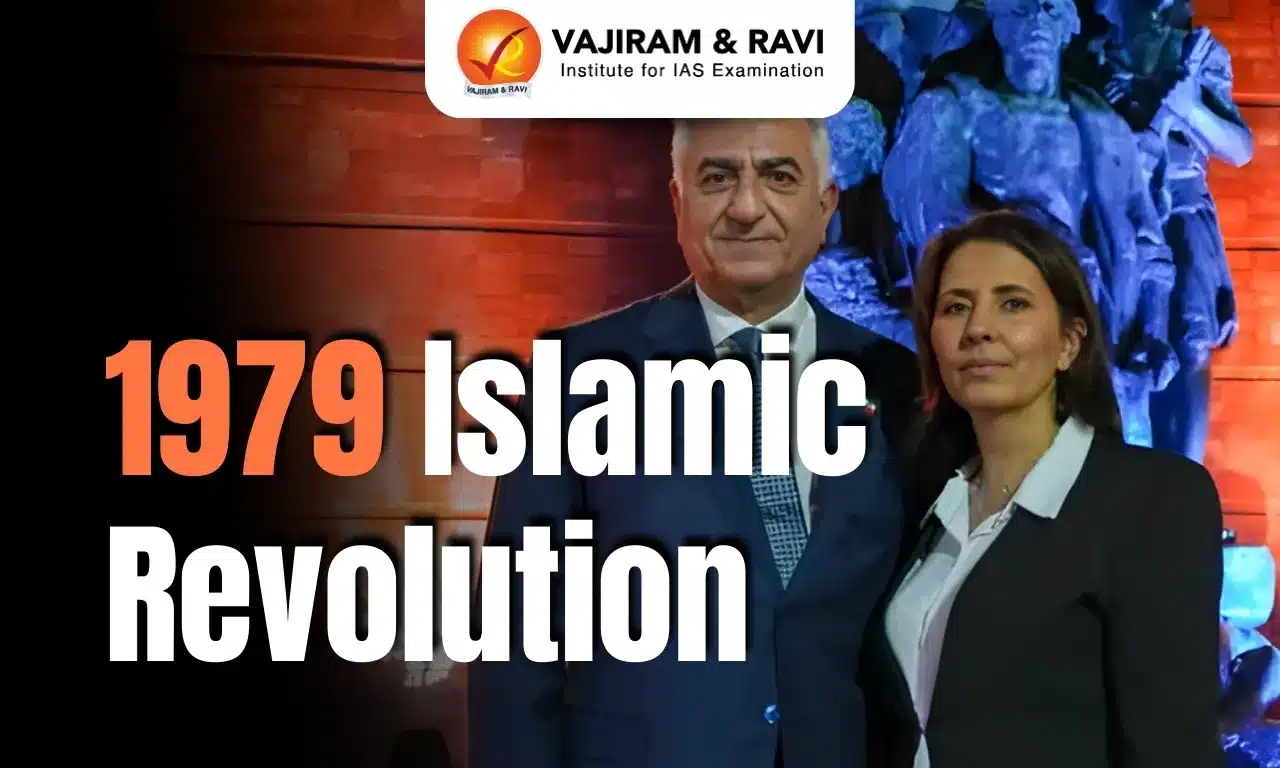
  • The unrest has created political space for Reza Pahlavi, son of the last Shah of Iran, Mohammad Reza Pahlavi, who was overthrown in the 1979 Islamic Revolution
  • Living in exile, Pahlavi has sought to position himself as a rallying figure amid the turmoil.

Origins of the Pahlavi Dynasty

  • Reza Shah Pahlavi, grandfather of Reza Pahlavi, rose from a military background and seized power in 1925 after a coup against Ahmad Shah Qajar
  • His takeover occurred amid imperial pressures, with Britain and Russia vying for influence in Iran.

Foreign Influence and Economic Concessions

  • Iran’s vulnerability was underscored by sweeping concessions to foreign powers. 
  • In 1872, a British company secured extensive industrial and mineral rights from the Qajar dynasty—later criticised by Lord Curzon as an unprecedented surrender of national resources. 
  • Though revoked, the episode highlighted Iran’s subjugation to external interests.

Abdication and Wartime Upheaval

  • Reza Shah abdicated in 1941 after Allied forces invaded Iran, citing its ties with Germany. 
  • This shifted national sentiment toward democratic leadership and sovereignty.

Mossadegh and the Oil Nationalisation Drive

  • Mohammed Mossadegh, a Western-educated jurist, became Prime Minister (1951–1953) and championed nationalising Iran’s oil to benefit its people. 
  • His stance antagonised Western powers, particularly Britain, which had controlled Iranian oil through the Anglo-Iranian Oil Company (later British Petroleum).

The 1953 Coup and Restoration of the Shah

  • Fearing loss of strategic and economic interests, Britain—with US backing—engineered regime change in 1953. 
  • Mossadegh was arrested, and Mohammad Reza Pahlavi was restored to power, entrenching the Pahlavi monarchy under Western support.

Iran under Mohammad Reza Pahlavi

  • Mohammad Reza Pahlavi pursued social and economic modernisation, but his rule remained authoritarian. 
  • A key instrument of repression was SAVAK, the secret police notorious for surveillance, arrests, and torture of dissidents.
  • Independent political and civic institutions were not allowed to function. 
    • As noted by historians, political parties, unions, student groups, and civic organisations were suppressed, forcing dissent into mosques and giving the opposition a growing religious character.

Rise of Mass Protests and Collapse of Monarchy 

  • By the 1970s, widespread dissatisfaction culminated in protests involving diverse groups, from communists to Islamists. 
  • Despite harsh crackdowns, sustained agitation weakened the regime’s hold on power.
  • In 1979, the Shah and his family fled Iran. 
  • A referendum soon after established an Islamic Republic with Ayatollah Khomeini as Supreme Leader
  • While the new regime promised change, it soon mirrored many authoritarian practices of the past, compounded by religious fundamentalism.

1979 Islamic Revolution

  • The 1979 Islamic Revolution overthrew the monarchy of Mohammad Reza Pahlavi, ending over five decades of Pahlavi rule in Iran.

Context and Causes

  • The revolution was not a single event but a culmination of decade-long grievances against Shah Mohammad Reza Pahlavi.
    • Political Autocracy: The Shah ruled as a secular dictator, suppressing dissent through his brutal secret police, SAVAK.
    • The "White Revolution": Launched in 1963, these were aggressive modernization and land reforms. While intended to modernize Iran, they alienated the traditional Ulema (clergy) and the rural peasantry.
    • Westernization & Cultural Identity: Rapid Western-style modernization was perceived as "Westoxification" (Gharbzadegi), undermining Iran's Islamic and cultural fabric.
    • Economic Disparities: Despite high oil revenues, the gap between the rich (elite) and the poor (urban working class/migrant peasants) widened, fueled by corruption and inflation.
    • Foreign Influence: The Shah was seen as a "puppet" of the US, especially after the 1953 CIA-backed coup that ousted the democratically elected PM Mohammad Mossadegh.

Key Events of the Revolution (1978–1979)

  • Jan 1978: Protests ignited in Qom after a state-sponsored article insulted Ayatollah Ruhollah Khomeini, who was in exile.
  • Black Friday (Sept 1978): Security forces fired on protesters in Tehran’s Jaleh Square, leading to massive casualties and making the revolution irreversible.
  • Shah’s Departure: On January 16, 1979, the Shah fled Iran for Egypt.
  • Khomeini’s Return: On February 1, 1979, Khomeini returned from exile to a rapturous welcome.
  • Proclamation of the Republic: On April 1, 1979, following a national referendum, Iran was declared an Islamic Republic.

Post-Revolutionary Governance: Velayat-e Faqih

  • The new political system was based on Khomeini’s doctrine of "Guardianship of the Islamic Jurist":
    • Theocracy + Democracy: It blended republican elements (Parliament/Majlis, President) with theocratic ones (Supreme Leader, Guardian Council).
    • Sovereignty: Unlike Western democracies where sovereignty lies with the people, here it is derived from Divine Will, interpreted by the Supreme Leader.

Source: IE | AJ

1979 Islamic Revolution FAQs

Q1: What was the 1979 Islamic Revolution?

Ans: The 1979 Islamic Revolution overthrew Iran’s monarchy, ended Pahlavi rule, and established an Islamic Republic under Ayatollah Khomeini, fundamentally transforming Iran’s political system.

Q2: What role did the Pahlavi dynasty play before the 1979 Islamic Revolution?

Ans: Before the 1979 Islamic Revolution, the Pahlavi dynasty ruled Iran with Western backing, pursuing modernisation but suppressing dissent through authoritarian governance and the SAVAK.

Q3: Why did oil nationalisation contribute to the 1979 Islamic Revolution?

Ans: Oil nationalisation symbolised resistance to foreign control and Western dominance, deepening resentment that later fuelled mass support for the 1979 Islamic Revolution.

Q4: How did religion shape the 1979 Islamic Revolution?

Ans: Religion unified opposition forces, with clerical leadership mobilising masses, making Islam the ideological core of the 1979 Islamic Revolution against secular authoritarianism.

Q5: What political system emerged after the 1979 Islamic Revolution?

Ans: After the 1979 Islamic Revolution, Iran adopted a theocratic system based on velayat-e faqih, combining republican institutions with supreme clerical authority.

India–Germany Strategic Partnership Enters a New Phase

India-Germany Strategic Partnership

India-Germany Strategic Partnership Latest News

  • German Chancellor Friedrich Merz’s first visit to India and Asia coincides with 25 years of India–Germany Strategic Partnership and 75 years of diplomatic relations.
  • The visit precedes the EU leaders’ visit for India’s Republic Day and the India–EU Summit.
  • Outcome-driven diplomacy with the signing of 19 agreements/MoUs, signalling deepening strategic, economic and geopolitical convergence.

Key Outcomes of the Visit

  • 19 bilateral pacts signed, covering:
    • Defence industrial cooperation
    • Higher education and global skills
    • Critical minerals and semiconductors
    • Indo-Pacific dialogue
    • Renewable energy and green hydrogen
  • Visa-free transit regime for Indian passport holders transiting through German airports.
  • Announcement of a new bilateral Indo-Pacific consultation mechanism.

Major Areas of Cooperation

  • Strategic and defence cooperation:
    • Key developments: 
      • Joint Declaration of Intent (JDoI) on a Defence Industrial Cooperation Roadmap.
      • Focus on: Co-development and co-production, technology partnerships, and faster defence export clearances from Germany.
    • Ongoing defence collaboration: Submarines, obstacle avoidance systems for helicopters, Counter-Unmanned Aerial Systems (C-UAS), joint Air Force and Naval exercises, port visits and new security consultation formats.
    • Strategic significance:
      • Defence indigenisation, Atmanirbhar Bharat, strategic autonomy, and co-production.
      • Reduces India’s defence dependence on Russia, and leverages -
        • India’s skilled workforce and cost advantage 
        • Germany’s advanced technology and capital
  • Higher education and global skills partnership: It focuses on human capital, skill mobility, aligning with NEP 2020, and demographic dividend, with following initiatives -
    • Comprehensive roadmap on higher education: India invited German universities to open campuses in India.
    • Global skills partnership (JDoI): Facilitates mobility of healthcare professionals.
    • Proposal to expand German language teaching in: Schools, Universities, and Vocational institutions.
    • New initiative: Indo-German Centre of Excellence for Skilling in Renewable Energy - curriculum development, industry collaboration, job-market-oriented training.
  • Economic and trade relations:
    • It focuses on supply chain resilience, Trade diversification, and FTA diplomacy. Bilateral trade between India and Germany crossed USD 50 billion in 2024 (over 25% of India–EU trade).
    • Strong two-way investments supporting supply chain diversification, SMEs, startups, digitalisation, AI, and innovation.
    • Institutional mechanism - Strengthening cooperation via the German–Indian CEO Forum.
    • FTA push: Strong support for concluding the India–EU Free Trade Agreement, seen as a key deliverable of the upcoming EU–India Summit.
  • Critical and emerging technologies:
    • Focus areas: Semiconductors, critical minerals, telecommunications, digitalisation and AI, health and bioeconomy.
    • Key institutional steps: JDoI on Semiconductor Ecosystem Partnership, JDoI on Critical Minerals Cooperation, Indo-German Digital Dialogue Work Plan (2026–27), and JDoI on Telecommunications.
    • Strategic importance:
      • Trusted supply chains, critical technologies, and digital sovereignty - reducing dependence on China-dominated supply chains.
      • Supporting India’s ambitions in electronics manufacturing and Industry 4.0.
  • Climate, energy and sustainability:
    • Establishment of India–Germany Centre of Excellence in Renewable Energy.
    • Joint projects in climate action, urban development and mobility, and green hydrogen (mega project).
    • Strategic alignment - Clean energy transition, climate diplomacy (climate finance and technology transfer), and long-term energy security.
  • Indo-Pacific and global geopolitics: 
    • Reaffirmed commitment to Free and Open Indo-Pacific, UNCLOS and international law. 
    • Germany’s growing engagement under the Indo-Pacific Oceans Initiative (IPOI) (co-led by India & Germany).
    • Global Issues discussed:
      • Ukraine war: Support for a just and lasting peace under the UN Charter.
      • Gaza conflict: Support for a negotiated two-state solution.
      • Strong condemnation of terrorist attacks in Pahalgam and Delhi.
  • Multilateral cooperation (Global governance reforms, Multilateralism, G4): Renewed commitment to UN Security Council (UNSC) reforms. Continued coordination through the G4 group (India, Germany, Japan, Brazil).

Current State of India-Germany Relations

  • Institutional architecture: The Inter-Governmental Consultations (IGC) mechanism—used by Germany with only a few select partners—anchors policy coordination and makes India–Germany ties among the most institutionalised in Europe–India relations.
  • Trade and investment depth: While over 2,000 German companies operate in India, supporting around 4 lakh jobs; Indian investments in Germany have crossed €6.5 billion, reflecting two-way economic interdependence.
  • Project 75I Submarine Programme: The project involves AIP-enabled submarines, over 60% indigenisation, major technology transfer, and is central to India’s Indian Ocean deterrence strategy amid China’s naval expansion.
  • Science & technology legacy: India and Germany marked 50 years of formal S&T cooperation in 2024, which is now being scaled up to strategic domains such as quantum tech, cybersecurity, biotech and AI.
  • Green financing commitment: Under the Green and Sustainable Development Partnership (2022), Germany has committed up to €10 billion till 2030 for India’s green transition.
  • Mobility and migration framework: The Comprehensive Migration and Mobility Partnership (2022) and Germany’s Skilled Immigration Act have made Germany a major destination for Indian talent, with -
    • Around 2.8 lakh Indians residing in Germany (2025)
    • India as the largest source of international students in Germany (over 42,000 students)
    • Special focus on healthcare, STEM and technical professionals
  • Essence of India–Germany relations today: It rests on a deeply institutionalised, multi-layered partnership, positioning Germany as India’s most consequential partner within the European Union.

Challenges and Way Ahead

  • No concrete breakthrough yet on submarine deal: Operationalise defence industrial roadmap with flagship co-production projects.
  • Divergences on some geopolitical issues persist: Deepen Indo-Pacific coordination amid rising great power competition.
  • Translating MoUs into time-bound implementation: Institutionalise semiconductor and critical minerals cooperation.
  • Aligning EU regulatory standards with Indian market realities: Fast-track India–EU FTA conclusion.
  • Slow education and skills partnership: Expand German educational presence under NEP 2020. Ensure skill mobility agreements are mutually beneficial and ethical.

Conclusion

  • The Merz–Modi summit marks a qualitative upgrade of the India–Germany Strategic Partnership, moving beyond trade to encompass strategic sectors like defence manufacturing.
  • As global geopolitics undergoes rapid realignment, India and Germany emerge as natural partners anchored in shared democratic values, economic complementarities and a commitment to a rules-based international order—making this partnership a key pillar of India’s Europe and Indo-Pacific strategy.

Source: TH | IE | news18

India–Germany Strategic Partnership

Q1: How does the India–Germany defence industrial cooperation roadmap support India’s strategic autonomy?

Ans: It promotes co-development and co-production of defence platforms, reduces dependence on traditional suppliers like Russia.

Q2: What is the significance of the India–Germany Global Skills Partnership?

Ans: It enables structured mobility of skilled professionals, especially in healthcare and renewable energy.

Q3: Why is cooperation on critical minerals and semiconductors strategically important for India–Germany relations?

Ans: It helps build resilient and trusted supply chains, reduces dependence on China-dominated ecosystems, etc.

Q4: In what ways does India–Germany cooperation contribute to a free and open Indo-Pacific?

Ans: Through a new Indo-Pacific consultation mechanism, joint naval exercises, and collaboration under the IPOI in line with UNCLOS.

Q5: How does the deepening India–Germany partnership strengthen India–EU economic relations?

Ans: By boosting trade beyond USD 50 billion, reinforcing momentum towards the India–EU Free Trade Agreement.

Daily Editorial Analysis 13 January 2026

Daily Editorial Analysis

Why Article 6 is a Powerful Tool for India

Context

  • The operationalisation of carbon markets under Article 6 of the Paris Agreement marks a defining moment in global climate governance.
  • The decisions at COP29 made the mechanisms under Article 6 fully functional, enabling countries to cooperate through market-based climate actions that mobilize finance, technology, and capacity at scale.

The Global Shift: Operationalising Article 6

  • At COP29, Parties finalized the two core mechanisms of Article 6:
    • Article 6.2, which allows bilateral and plurilateral trading of Internationally Transferred Mitigation Outcomes (ITMOs), and
    • Article 6.4, which established the Paris Agreement Crediting Mechanism, replacing the Clean Development Mechanism.
  • Momentum behind these mechanisms is increasing rapidly. Eighty-nine cooperation arrangements across 58 Parties illustrate a shift toward collaborative pathways for emissions reduction and climate innovation.
  • The adoption of the Article 6.4 mechanism introduced a more transparent, accountable, and globally harmonized framework, strengthening environmental integrity and enhancing confidence among market participants.

India’s Entry into Article 6: Strategic Significance

  • India formally entered the global carbon market landscape in August 2025 by signing the Joint Crediting Mechanism (JCM) with Japan, effectively operationalizing Article 6.2.
  • This development signalled a new phase in India’s international climate diplomacy and broadened the channels through which it can pursue low-carbon
  • India’s participation offers access to advanced technology transfer, climate-aligned investment, research collaboration, and stronger bilateral partnerships.
  • Beyond financial gains from credit trading, the deeper value lies in leveraging Article 6 to accelerate industrial modernization and secure competitive advantages in a world increasingly shaped by carbon-constrained trade regimes.
  • For an economy balancing rapid growth with sustainability goals, these mechanisms can act as catalysts for structural transformation.

Aligning Article 6 with Domestic Priorities

  • Article 6 establishes a framework for cooperation while ensuring rigorous accounting to avoid double counting of emissions reductions.
  • India’s initial activities under the JCM demonstrate how such cooperation can align with national development priorities.
  • To operationalise Article 6.2 and 6.4, India has identified 13 eligible technologies spanning critical sectors such as renewable energy with storage, offshore wind, solar thermal power, green hydrogen, compressed bio-gas, sustainable aviation fuel, high-efficiency industrial systems, and emerging fuel-cell mobility solutions.
  • These technologies are central to reducing emissions in hard-to-abate sectors and to supporting the country’s broader industrial competitiveness.
  • As India continues to rely on coal for power generation, diversification through offshore wind, marine energy, and large-scale storage enhances resilience and future-proofs the energy system.
  • In carbon-intensive industries such as steelmaking and cement, green hydrogen and carbon capture provide viable pathways for deep decarbonisation.
  • Each of these interventions contributes to long-term economic growth while aligning with national climate objectives and global expectations.

From Intent to Implementation: Challenges Ahead

  • Strengthening Domestic Governance

    • India has appointed a Designated National Authority for Article 6, but further clarity is needed on authorisation procedures, corresponding adjustments, and the legal and regulatory framework governing carbon crediting and trading.
  • Accelerating Project Clearances

    • Current market experience shows that project validation and approval procedures remain lengthy and fragmented, especially for land-based sectors.
    • A single-window clearance system supported by a Cabinet-level steering committee would significantly reduce transaction costs and enhance investor certainty.
  • Building a Removals Market

    • Global demand for carbon removals is rising as governments and corporations pursue net-zero
    • Article 6 offers India a platform to scale removal-based credits through activities like biochar and enhanced rock weathering, positioning the country as a competitive supplier of high-quality removals in the medium term.
  • Strengthening South–South Collaboration

    • India is well-placed to support developing countries in establishing shared MRV systems, digital infrastructure, and financing models, thereby expanding participation in global carbon markets and enhancing equity.

Conclusion

  • India’s engagement under Article 6 represents a strategic move toward accessing advanced technologies, attracting climate-aligned capital, and deepening international partnerships.
  • With robust domestic frameworks and accelerated implementation, Article 6 can serve as a lever for industrial upgrading and long-term decarbonisation.
  • The true potential of Article 6 lies not merely in transactions of credits, but in reshaping global climate cooperation to enable shared prosperity and resilient development in a rapidly changing world.

Why Article 6 is a Powerful Tool for India FAQs

 Q1. What major development at COP29 affected Article 6 of the Paris Agreement?
Ans. COP29 made Article 6 fully operational, allowing countries to trade emissions reductions through formal carbon market mechanisms.

Q2. Why is India’s participation in Article 6 considered strategically important?
Ans. India’s participation is important because it can access advanced technologies, climate finance, and strengthened international partnerships while accelerating its low-carbon transition.

Q3. What mechanism did India activate by signing the JCM with Japan in 2025?
Ans. India activated Article 6.2 of the Paris Agreement by signing the Joint Crediting Mechanism with Japan in 2025.

Q4. Which sectors has India prioritized for early Article 6 projects?
Ans. India has prioritized sectors such as renewable energy with storage, offshore wind, green hydrogen, fuel-cell mobility, and sustainable aviation fuel.

Q5. What key challenge must India address to fully leverage Article 6?
Ans. India must strengthen its domestic regulatory framework and streamline project clearances to efficiently implement Article 6 activities.


A Bill That Reimagines Higher Education Regulation

Context

Education imparted is useless, unless one learns how to live with the society.” - Poet Tiruvalluvar in his 140th Thirukkural.

  • Reflecting the above idea of Tiruvalluvar, the National Education Policy 2020 seeks to impart holistic and socially relevant education.
  • To realise the vision of Viksit Bharat 2047, India requires citizens capable of leadership.
  • The Viksit Bharat Shiksha Adhishthan Bill, 2025, introduced in the Lok Sabha in December 2025, aims to reimagine higher education institutions to develop such citizens.
  • This article highlights how the Viksit Bharat Shiksha Adhishthan Bill, 2025 seeks to reform India’s higher education regulation by aligning it with Tiruvalluvar’s vision of socially relevant education, the National Education Policy 2020, and the national goal of Viksit Bharat 2047, through streamlined regulation, transparency, and outcome-oriented governance.

Need for Change in Higher Education Regulation

  • India’s higher education system has expanded rapidly in scale, but its regulatory framework has not kept pace.
  • Multiple statutory bodies with overlapping mandates have resulted in excessive approvals, inspections, and compliance requirements.
  • This over-regulation diverts institutions from their core functions of teaching, research, and innovation, forcing them to focus more on processes than outcomes and limiting flexibility, collaboration, and curriculum updates.
  • NEP 2020 and the Rationale for Reform
    • The National Education Policy 2020 acknowledged these challenges and proposed a “light but tight” regulatory framework.
      • A framework that ensures transparency and quality while reducing procedural burdens and granting greater autonomy to well-performing institutions.
    • The emphasis is on accountability through outcomes rather than paperwork-driven oversight.

Key Reforms Proposed in the Bill

  • Structural Reforms

    • The Bill advances this vision by replacing fragmented oversight with coordinated standards, streamlined regulation, and credible quality assurance.
    • Anchored in Entry 66 of the Union List, it establishes an apex umbrella body—the Viksit Bharat Shiksha Adhishthan—with three distinct councils for regulation, accreditation, and standard-setting.
    • This clear separation of roles is intended to enhance credibility and avoid conflicts of interest.
  • Unifying the Regulatory Architecture

    • To modernise governance, the Bill proposes repealing the University Grants Commission Act, 1956, the All India Council for Technical Education Act, 1987, and the National Council for Teacher Education Act, 1993.
    • This would bring relevant higher education institutions under a single, unified framework for coordinated standard-setting and oversight.
  • Transparency Through Technology

    • The Bill also envisages a technology-enabled single-window system based on public self-disclosure.
    • Institutions would publish key information on governance, finances, infrastructure, faculty, programmes, and outcomes, ensuring continuous transparency and forming the basis for accreditation and public accountability.

Key Impact

  • Youth Empowerment and Learning Outcomes

    • The Bill can enable youth empowerment at scale by streamlining regulation, expanding access to quality institutions, and helping raise the Gross Enrolment Ratio through faster capacity-building and programme expansion.
    • It redirects institutional focus toward meaningful teaching, interdisciplinary learning, and lifelong reskilling and upskilling.
  • Students as Active Stakeholders

    • By institutionalising student feedback on academic quality and the learning experience, along with robust grievance redress mechanisms, the Bill empowers students to become active stakeholders.
    • This enables them to demand quality, reward good governance, and contribute to institutional improvement through structured feedback.
  • Global Standards with Indian Priorities

    • The Bill can accelerate the adoption of global best practices while remaining rooted in Indian priorities.
    • A coherent standards framework supports learner and faculty mobility, collaborative research, and international credibility based on outcomes, ethics, research culture, and student experience—helping attract global talent while retaining Indian students and faculty.
  • Transparent and Smart Governance

    • The Bill modernises governance through a faceless, technology-enabled single-window system that reduces discretion and delays, promotes integrity, and improves predictability.
    • Meaningful, audited public disclosure builds trust, while differentiated autonomy for well-performing institutions enables excellence and diversity without compromising quality.
  • Outcome-Oriented Regulation

    • Overall, the Bill advances smarter regulation—focused on outcomes, learner welfare, and national priorities—by combining common standards with responsive oversight and autonomy as a tool for institutional excellence.

Atmanirbharta through Accountable and Innovative Higher Education

  • Atmanirbharta in higher education lies in empowering institutions to pursue ambitious goals, innovate responsibly, and remain accountable to society.
  • By aligning standards, regulation, and accreditation into a coherent and transparent framework, the Bill can help nurture the socially responsible and capable citizens envisioned by Tiruvalluvar.

A Bill That Reimagines Higher Education Regulation FAQs

Q1. Why was regulatory reform in higher education considered necessary?

Ans. India’s higher education expanded rapidly, but fragmented and overlapping regulators created excessive compliance, diverting institutions from teaching, research, innovation, and timely curriculum reforms.

Q2. How does the Bill reflect the vision of NEP 2020?

Ans. The Bill operationalises NEP 2020’s “light but tight” approach by reducing procedural burdens, ensuring transparency, strengthening standards, and granting greater autonomy to well-performing institutions.

Q3. What structural changes does the Bill propose?

Ans. It establishes an apex Viksit Bharat Shiksha Adhishthan with separate councils for regulation, accreditation, and standards, ensuring clarity of roles and reducing conflicts of interest.

Q4. How does the Bill promote transparency and accountability?

Ans. Through a technology-enabled single-window system based on public self-disclosure, audited information, and reduced discretion, fostering trust, predictability, and informed public accountability.

Q5. How can the Bill contribute to Atmanirbharta in higher education?

Ans. By empowering institutions to innovate responsibly, meet global benchmarks, remain accountable to society, and nurture capable, socially conscious citizens aligned with national development goals.

Source: TH

Daily Editorial Analysis 13 January 2026 FAQs

Q1: What is editorial analysis?

Ans: Editorial analysis is the critical examination and interpretation of newspaper editorials to extract key insights, arguments, and perspectives relevant to UPSC preparation.

Q2: What is an editorial analyst?

Ans: An editorial analyst is someone who studies and breaks down editorials to highlight their relevance, structure, and usefulness for competitive exams like the UPSC.

Q3: What is an editorial for UPSC?

Ans: For UPSC, an editorial refers to opinion-based articles in reputed newspapers that provide analysis on current affairs, governance, policy, and socio-economic issues.

Q4: What are the sources of UPSC Editorial Analysis?

Ans: Key sources include editorials from The Hindu and Indian Express.

Q5: Can Editorial Analysis help in Mains Answer Writing?

Ans: Yes, editorial analysis enhances content quality, analytical depth, and structure in Mains answer writing.

PSLV Mission Failures: What Consecutive Setbacks Mean for ISRO

PSLV Mission Failures

PSLV Mission Failures Latest News

  • The Indian Space Research Organisation’s first launch of the year ended in failure when the PSLV-C62 mission carrying 16 satellites failed to reach its intended orbit. 
  • This marks the second consecutive failure of the PSLV, ISRO’s workhorse launch vehicle for over three decades.
  • In both the January 2026 failure and the earlier setback (PSLV-C61 in May 2025), the rocket performed normally through the first two stages but developed problems during the third stage, which is critical for achieving orbital velocity. 
  • The previous failure was attributed to an unexpected drop in combustion chamber pressure, though the Failure Analysis Committee report was not made public. While the cause of the latest failure is yet to be confirmed, it is suspected to be similar. 
  • A pressure drop during the third stage reduces thrust, preventing the rocket from attaining the acceleration required to sustain orbit around the Earth.

PSLV: How India’s Workhorse Rocket Reaches Orbit

  • Polar Satellite Launch Vehicle (PSLV) is a four-stage launch vehicle, with each stage using its own engine and fuel to sequentially propel the mission before detaching once its role is complete.

First Stage: Lift-off and Atmospheric Ascent

  • The first stage handles lift-off and a near-vertical climb to about 50–60 km. 
  • Using solid propellant, it overcomes gravity and atmospheric drag, consuming massive fuel in under two minutes before being jettisoned.

Second Stage: Vertical-to-Horizontal Transition

  • Powered by the indigenously developed Vikas engine and a liquid fuel, the second stage continues ascent while building horizontal velocity. 
  • It takes the rocket to roughly 220–250 km altitude and accelerates it to about 14,000 km/h, significantly reducing overall mass.

Third Stage: Rapid Acceleration

  • In this phase, the vehicle moves almost entirely horizontally on a sub-orbital path. 
  • Burning solid fuel, the third stage rapidly accelerates the rocket to orbital speeds of around 26,000–28,000 km/h—crucial for preventing it from falling back to Earth.
  • The third stage is, therefore, about rapid acceleration. The PSLV rocket burns solid fuel to achieve this.

Fourth Stage: Precise Orbital Insertion

  • The final stage uses liquid propulsion to precisely place satellites into their designated low-Earth orbits, typically between 250 and 2,000 km. 
  • Once payload deployment is complete, all stages have separated, having fulfilled their roles.

The Critical Role of PSLV’s Third Stage

  • The third stage is one of the most delicate phases of a launch. 
  • If the rocket fails to achieve the required velocity, it cannot sustain orbit and is pulled back by Earth’s gravity, as seen in the PSLV-C61 failure last year.
  • In this stage, solid fuel burns and turns into gas, increasing pressure inside the combustion chamber. 
  • The high-pressure gas exits through a nozzle, producing thrust that rapidly accelerates the rocket to near-orbital speeds.
  • Higher chamber pressure results in greater thrust and acceleration. Any pressure drop—due to leakage or other faults—reduces thrust, preventing the rocket from attaining the speed needed to maintain orbit.

What Went Wrong Earlier

  • Last year’s failure was attributed to a manufacturing defect that caused leakage and reduced pressure in the combustion chamber. 
  • If the latest failure is due to a similar issue, it could pose a reputational challenge for Indian Space Research Organisation.

Fallout of Repeated PSLV Failures for ISRO

  • Space missions allow little margin for error, and while failures are not uncommon globally, back-to-back setbacks involving the trusted PSLV are a serious concern for ISRO. 
  • With three of its last six missions failing, ISRO faces an unusually high failure rate. 
  • As the PSLV is a key revenue generator through commercial and foreign launches, questions over its reliability could hurt both credibility and finances. 
  • However, ISRO’s strong history of recovery from crises offers hope that it can restore confidence after the latest mission.

The Bigger Picture

  • Regardless of the precise technical causes, the central concern is institutional. 
  • By keeping the PSLV-C61 FAC (Failure Analysis Committee) report internal, ISRO avoided external scrutiny of its corrective measures and return-to-flight criteria. 
  • Launching PSLV-C62 just eight months after a major failure, without public disclosure of investigation findings, has intensified questions about transparency, quality control, and risk management—now placing ISRO under sharper technical and reputational scrutiny.

Source: IE| TH | IE

PSLV Mission Failures FAQs

Q1: What are the recent PSLV mission failures?

Ans: PSLV mission failures occurred in May 2025 and January 2026 when rockets failed during the third stage, preventing satellites from reaching intended orbits.

Q2: Why is the third stage critical in PSLV mission failures?

Ans: PSLV mission failures highlight third-stage importance, as pressure drops reduce thrust, preventing the rocket from achieving orbital velocity needed to sustain Earth orbit.

Q3: How do PSLV mission failures affect ISRO’s reputation?

Ans: Repeated PSLV mission failures damage ISRO’s reliability image, especially as PSLV is its main commercial launch vehicle for foreign and private satellite customers.

Q4: What institutional issues are exposed by PSLV mission failures?

Ans: PSLV mission failures expose concerns over quality control, supply chain oversight, transparency, and the decision to withhold Failure Analysis Committee reports.

Q5: Can ISRO recover from PSLV mission failures?

Ans: Despite PSLV mission failures, ISRO’s strong track record of technical recovery suggests it can restore confidence through rigorous fixes and transparent return-to-flight protocols.

Unilateral Use of Force and International Law – Explained

International Law

International Law Latest News

  • Recent unilateral military actions by the United States have reignited global debate on violations of international law and the weakening of the UN-led multilateral order.

International Law and the Use of Force

  • International law is founded on the principle of sovereign equality of states and the prohibition of force in inter-state relations. 
  • These principles were codified after the Second World War through the United Nations Charter, with the objective of preventing unilateral military aggression and preserving global peace. 
  • Article 2(4) of the Charter explicitly prohibits the threat or use of force against the territorial integrity or political independence of any state.
  • The only two exceptions recognised under international law are:
    • Use of force authorised by the UN Security Council, and
    • The inherent right of self-defence under Article 51 is applicable only in response to an armed attack.
  • Despite this legal framework, powerful states have increasingly justified military interventions outside these exceptions, raising concerns about the erosion of the international legal order.

Violation of the UN Charter Framework

  • The recent U.S. military action against Venezuela represents a significant departure from established international legal norms. 
  • The operation was undertaken without authorisation from the UN Security Council and did not meet the legal threshold of self-defence. 
  • As such, it constitutes a direct violation of Article 2(4) of the UN Charter.
  • The action also undermines the principle of non-intervention in domestic affairs, a cornerstone of international law. 
  • By forcibly intervening in the political leadership of a sovereign state, the operation challenges the legitimacy of multilateral institutions designed to regulate global security.

Breakdown of the Balance of Power

  • The current international system reflects a weakening of the traditional balance-of-power mechanism. 
  • During the Cold War, the bipolar structure ensured that no single power could act without restraint. 
  • The presence of two competing superpowers acted as a deterrent against unilateral military action.
  • Historical examples illustrate this dynamic clearly. During the 1971 Bangladesh Liberation War, external intervention threats were neutralised through counter-deployments by rival powers. 
  • Similarly, during the 1973 Yom Kippur War, superpower intervention prevented escalation and forced diplomatic restraint.
  • Following the collapse of the Soviet Union in 1991, the global system transitioned into a largely unipolar order. 
  • This shift has enabled the United States to exercise military power with minimal external constraints, contributing to repeated interventions in West Asia and Latin America.

Expansion of Pre-emptive Military Doctrine

  • A notable feature of contemporary U.S. foreign policy has been the increasing reliance on pre-emptive and preventive military action. 
  • The justification for such actions often rests on broad claims related to terrorism, weapons proliferation, or transnational crime.
  • In the Venezuelan case, the stated objective of countering narco-terrorism appears legally tenuous. 
  • Available data suggest that Venezuela is not a major source of narcotics affecting the U.S., raising questions about the proportionality and necessity of military action. 
  • Instead, strategic and economic considerations, particularly access to natural resources, appear to play a significant role.

Implications for the Global Order

  • The repeated bypassing of international legal norms has serious implications for global governance. 
  • It weakens the authority of the United Nations, normalises unilateralism, and sets dangerous precedents for other powerful states to follow.
  • In the emerging geopolitical context, China is increasingly viewed as the only potential counterweight capable of restoring a degree of balance. 
  • While Russia and China may form tactical alignments, structural differences limit the prospects of a stable multipolar order in the near term.

Implications for India’s Foreign Policy

  • For India, these developments highlight the risks inherent in a weakened rules-based international order. 
  • India has traditionally relied on international law and multilateralism to safeguard its sovereignty and security interests.
  • The current global environment underscores the need for India to strengthen its strategic autonomy, invest in its defence-industrial base, and pursue diversified partnerships. 
  • A credible military and economic capacity remains essential for safeguarding national interests in an increasingly unilateral world order.

Source: TH

Intenrational Law FAQs

Q1: Which UN Charter provision prohibits the use of force by states?

Ans: Article 2(4) of the UN Charter prohibits the threat or use of force against sovereign states.

Q2: When is the use of force legally permitted under international law?

Ans: Only with UN Security Council authorisation or in self-defence after an armed attack.

Q3: Why is unilateral military action problematic for global order?

Ans: It undermines international law, weakens multilateral institutions, and sets dangerous precedents.

Q4: How did the Cold War balance of power restrain military aggression?

Ans: Rival superpowers counter-balanced each other, preventing unchecked use of force.

Q5: What lesson does this situation hold for India?

Ans: India must strengthen strategic autonomy and defence capacity to protect its interests in a unipolar world.

Yemen

Yemen

Yemen Latest News

Recently, the Southern Transitional Council (STC) in Yemen announced a new Constitution for the “State of South Arabia”.

About Yemen

  • Location: It is situated at the south-western corner of the Arabian Peninsula in Western Asia. 
  • Borders: It shares Saudi Arabia (North) and Oman (East).
  • Coastline & Strategic Importance:
    • Red Sea (West), Gulf of Aden, Arabian Sea, and Guardafui Channel (South).
    • Yemen is strategically located at the entrance of the Bab-el-Mandeb Strait. The strait links the Indian Ocean to the Red Sea via the Gulf of Aden. 
  • Capital City: Sanaa

Geographical Features of Yemen

  • Climate: It lies in the border zone between two main weather patterns: the regular northerly winds (from the Mediterranean basin) and the southwest monsoon winds.
  • Highest Point: Yemen's highest point is Jabal an Nabi Shu'ayb at 3,760 m. 
  • Desert: Rub' Al Khali Desert.
  • There are no perennial lakes and rivers. 

Source: TH

Yemen FAQs

Q1: Where is Yemen located?

Ans: West Asia

Q2: What is the capital of Yemen?

Ans: Sana'a

Q3: Yemen is bordered by which two countries?

Ans: Saudi Arabia and Oman

Indian Customs Electronic Gateway

Indian Customs Electronic Gateway

Indian Customs Electronic Gateway Latest News

Recently, the Special Secretary Central Board of Indirect Taxes & Customs (CBIC) inaugurated Indian Customs Electronic Gateway–Land Port Management System (ICEGATE–LPMS) at the Integrated Check Post (ICP), at Agartala, Tripura.

About Indian Customs Electronic Gateway

  • It is known as ICEGATE which was established in 2007.
  • It is the national portal of Indian Customs of Central Board of Indirect Taxes and Customs (CBIC).
  • It provides e-filing services to the Trade, Cargo Carriers and other Trading Partners electronically.
  • It serves as a centralized hub for all electronic interactions between Indian customs and the trading community.
  • It is the main infrastructure for connecting trade users with the Indian government’s customs department, and acts as a hub for exchanging information between external trading partners involved in international trading.
  • It is internally linked with multiple partner agencies including RBI, Banks, DGFT, DGCIS, Ministry of Steel, Directorate of Valuation and other various Partner Government Agencies involved in EXIM.
  • Functions: It collectively contributes to streamlining customs procedures, enhancing trade facilitation, and promoting transparency and efficiency in cross – border trade activities in India by providing multiple features for its users

 Integration of ICEGATE -Land Port Management System

  • The integration focuses on critical customs data elements, including Bill of Entry, Shipping Bill, Out of Charge (OOC), and Let Export Order (LEO).
  • It enables real-time, bidirectional exchange of data between ICEGATE and the Land Port Management System, creating a seamless digital ecosystem at land ports. 
  • It also helps in early risk assessment, identification of anomalies, and selective application of controls.

Source: PIB

Indian Customs Electronic Gateway FAQs

Q1: What is ICEGATE?

Ans: A national portal for electronic filing of customs documents

Q2: What is the primary objective of ICEGATE?

Ans: To facilitate international trade

Bannerghatta National Park

Bannerghatta National Park

Bannerghatta National Park Latest News

Recently, the Central Empowered Committee recommended that the Ecologically Sensitive Zone (ESZ) around Bengaluru’s Bannerghatta National Park (BNP) should be restored to its original 2016 extent.

About Bannerghatta National Park

  • Location: It is in the hills of the Anekal range, near Bangalore, Karnataka,
  • It was declared a National Park in 1974. 
  • In 2006, India’s first butterfly enclosure was inaugurated at the park.
  • River: The Suvarnamukhi stream, the main source of water for the animals in the park, runs through the centre of the park.
  • Vegetation: There are three types of vegetation that can be found: Dry Deciduous Scrub Forests, Southern Tropical Dry Deciduous Forests and Southern Tropical Moist Mixed Forests.
  • Flora: Include Narcissus latifolia, Schleichera oleosa, Sandalwood, Neem, Tamarind, Bamboo, Eucalyptus, etc.
  • Fauna: Prime habitat for several species, including the endangered Asian Elephant, Indian gaur, Tiger, Sambar deer, Spotted deer,Leopard, Wild dog, Wild pig, Sloth bear etc.

What is an Ecologically Sensitive Zone?

  • Eco-Sensitive Zones are created as “shock absorbers” for the protected areas, to minimize the negative impact on the “fragile ecosystems”.
  • These zones are notified by the Ministry of Environment, Forests and Climate Change under the Environment (Protection) Act, 1986.

Source: IE

Bannerghatta National Park FAQs

Q1: Where is Bannerghatta National Park located?

Ans: Karnataka

Q2: Bannerghatta National Park is part of which hill range?

Ans: Anekal range

Enquire Now