Manufactured Sand, Meaning, Need, Project, Significance, Applications

Manufactured Sand

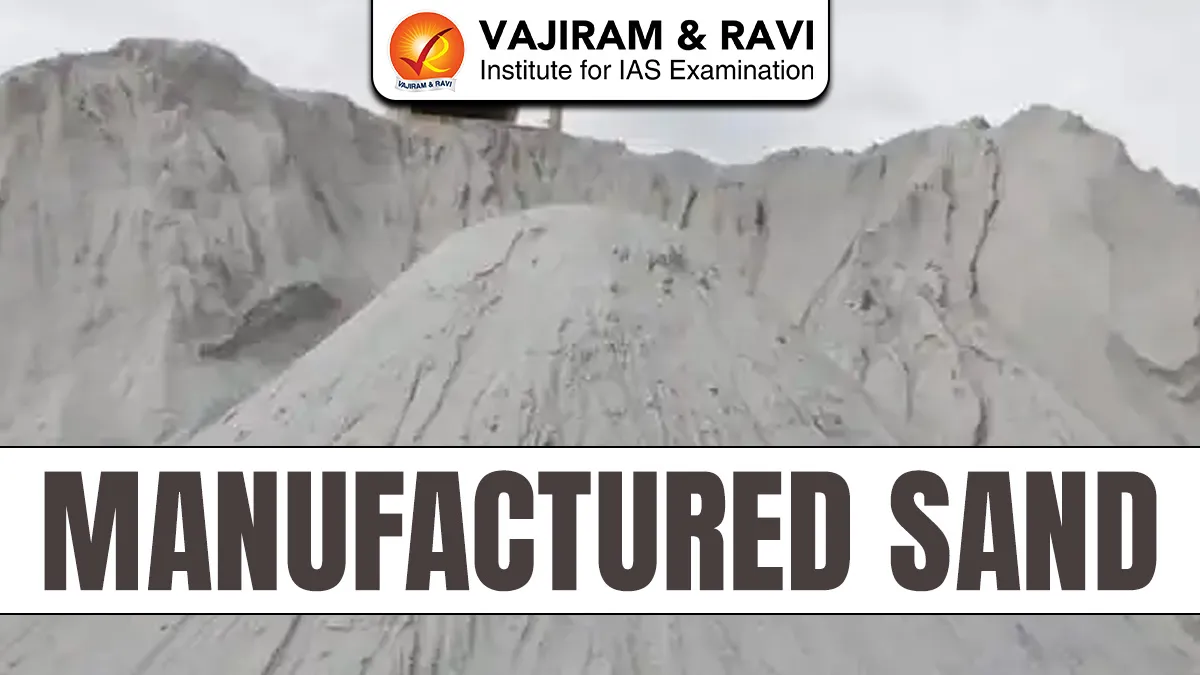
Sand is a naturally occurring granular material formed from the weathering and erosion of rocks over thousands of years and is a critical input for construction, infrastructure, glass and industrial processes. With rapid urbanisation and infrastructure growth, natural river sand availability has declined sharply. Manufactured Sand, commonly known as M-Sand, is an engineered alternative produced by crushing hard rocks, quarry stones, or mining overburden into sand sized particles. It is designed to match construction requirements while reducing pressure on rivers, ecosystems and groundwater resources.

Manufactured Sand

Manufactured Sand is an artificially produced fine aggregate obtained by crushing rocks, crusher dust, or mining waste such as coal mine overburden and processing it to achieve controlled particle size, shape and grading. Unlike river sand, M-Sand is produced in a regulated industrial environment, ensuring uniform quality and zero silt content. In India, Coal India Limited has emerged as a key producer by converting overburden rocks from opencast coal mines, particularly where sandstone content reaches nearly 60%, into usable construction grade sand.

Manufactured Sand Need

The need for Manufactured Sand arises due to rapidly declining river sand availability, environmental damage from illegal mining, and rising construction demand driven by urbanisation and infrastructure growth.

  • Severe River Sand Shortage: Construction demand has increased sharply, while natural sand sources are limited, seasonal, and insufficient to meet housing, road and infrastructure requirements.
  • Environmental Degradation: Excessive river sand mining causes riverbed erosion, bank collapse, habitat destruction, groundwater depletion, and increased flood risks in river systems like Kosi and Yamuna.
  • Regulatory Restrictions: Monsoon bans on sand mining and stricter enforcement under environmental laws often disrupt supply, making manufactured alternatives essential for continuity in construction activities.
  • Mining Waste Utilisation: Manufactured Sand enables productive use of crusher dust and coal mine overburden, converting waste materials into valuable construction inputs.
  • Quality and Strength Requirements: Modern construction needs uniform particle size and low silt content for higher concrete strength, which Manufactured Sand provides through controlled production.
  • Water Conservation Needs: Unlike river sand, Manufactured Sand does not require extensive washing, helping reduce freshwater consumption in water stressed regions.

Manufactured Sand Project

Manufactured Sand projects focus on converting mining waste and crushed rock into construction grade sand through mechanised processing and quality control systems.

  • Coal India Limited Initiative: CIL has conceptualised overburden-to-M-Sand projects in opencast mines where sandstone constitutes about 60% of overburden volume, enabling large scale sand recovery.
  • Overburden Processing Plants: These projects install crushers, screens and grading units at mine sites, transforming waste rock into fine aggregates suitable for concrete and masonry use.
  • Revenue Generation Model: Commercial sale of M-Sand provides an additional revenue stream for coal companies while reducing costs associated with overburden storage and land reclamation.
  • Sand Stowing in Underground Mines: A portion of manufactured sand is used for sand stowing in underground coal mines, improving roof stability, enhancing worker safety and conserving surface land.
  • Alignment with Sand Mining Framework 2018: The Ministry of Mines promotes M-Sand from crushed rock fines and coal mine overburden as a strategic alternative to river sand under national mineral planning.
  • Reduced Environmental Footprint: On site processing minimises transportation emissions and prevents further land degradation caused by external sand quarrying activities.
  • Scalable Production Potential: With India’s annual sand and gravel consumption estimated at tens of billions of tonnes globally, coal mine overburden offers a scalable domestic alternative source.

Manufactured Sand Applications

Manufactured Sand is widely used across construction, mining and infrastructure sectors due to its strength, availability and environmental advantages.

  • Concrete Production: M-Sand provides higher concrete strength due to angular particles and controlled grading, improving load bearing capacity in buildings, bridges and flyovers.
  • Masonry and Plastering: Zero silt content enhances bonding with cement, resulting in smoother finishes and reduced cracking in walls and plaster surfaces.
  • Road and Highway Construction: Manufactured Sand is used in bituminous mixes, embankments and pavement layers, supporting national highway and expressway expansion projects.
  • Infrastructure Projects: Metro rail, airports, ports and industrial corridors rely on consistent sand supply, which M-Sand provides without seasonal disruptions.
  • Mining Safety Operations: Sand stowing using M-Sand in underground mines improves structural stability and reduces subsidence risks in coal bearing regions.
  • Environmental Restoration Works: Reduced river sand extraction helps protect river ecosystems, fisheries and groundwater recharge zones essential for rural livelihoods.
  • Urban Housing Demand: Affordable housing schemes benefit from cost effective and locally available M-Sand, reducing construction delays and price volatility.

Manufactured Sand Significance

Manufactured Sand addresses sand scarcity while supporting environmental protection, mining waste utilisation and infrastructure demand through scientifically controlled production systems.

  • Environmental Protection: M-Sand reduces excessive river sand extraction, which otherwise causes riverbed erosion, bank collapse, aquatic habitat destruction and groundwater depletion across major river systems like Ganga, Yamuna and Kosi.
  • Waste Utilisation: Coal India Limited uses crusher dust, sandstone rich overburden and soil removed during opencast mining, converting mining waste into productive material instead of dumping it in overburden dumps.
  • Legal and Regulatory Support: Sand is classified as a minor mineral under the Mines and Minerals Development and Regulation Act, 1957, allowing states to promote alternatives like M-Sand under Sustainable Sand Mining Management Guidelines 2016.
  • Cost Efficiency: Large scale production of M-Sand reduces dependence on seasonal river sand supply, particularly during monsoon bans, lowering transportation costs and stabilising market prices.
  • Quality Consistency: Manufactured Sand offers uniform grain size, cubic particle shape and zero silt content, improving concrete bonding strength compared to natural sand with variable silt levels ranging from 3 to 20%.
  • Water Conservation: M-Sand does not require extensive washing before use, reducing freshwater consumption in construction activities, especially important in water stressed states like Rajasthan and Gujarat.
  • Infrastructure Growth Support: India’s rapid highway, housing, metro and industrial corridor expansion requires reliable sand supply, which M-Sand ensures without ecological damage.

Manufactured Sand Challenges

Despite its benefits, Manufactured Sand faces technical, regulatory and perception based challenges that affect its widespread adoption.

  • Initial Capital Investment: Setting up crushing, screening and grading plants requires significant upfront investment, which can discourage small scale producers.
  • Market Acceptance Issues: Many contractors still prefer river sand due to familiarity, despite evidence showing superior strength and consistency of manufactured sand.
  • Quality Control Gaps: Poorly processed M-Sand without proper grading can affect workability, highlighting the need for strict production standards.
  • Transportation Constraints: M-Sand plants located far from consumption centres may face higher logistics costs, reducing price competitiveness in certain regions.
  • Regulatory Variations: Different state level minor mineral rules create inconsistencies in approval processes, pricing controls and market access for M-Sand producers.
  • Awareness Deficit: Limited awareness among small builders and rural construction sectors slows adoption of M-Sand despite environmental and economic benefits.

Way forward

  • Policy Promotion: State governments should actively promote M-Sand through procurement policies, infrastructure tenders and incentives aligned with Sustainable Sand Mining Management Guidelines 2016.
  • Strict Enforcement Against Illegal Mining: Strong penalties and monitoring mechanisms can reduce illegal river sand mining, increasing demand for manufactured alternatives.
  • Technological Monitoring: Use of drones, satellite imagery and digital tracking can improve oversight of sand mining and encourage legal M-Sand adoption.
  • Community Participation: Involving local communities in decision making ensures livelihoods are protected while transitioning from river sand extraction to M-Sand production.
  • Standardisation and Certification: Uniform national quality standards for M-Sand will build confidence among builders, engineers and infrastructure agencies.
  • Integration with Circular Economy: Converting mining overburden and crusher dust into M-Sand aligns with circular economy principles by transforming waste into valuable resources.
  • Capacity Expansion by CIL: Scaling up Coal India Limited’s overburden-to-M-Sand projects can significantly reduce India’s dependence on river sand while generating sustainable revenue and protecting ecosystems.

Manufactured Sand FAQs

Q1: What is Manufactured Sand (M-Sand)?

Ans: Manufactured Sand is an artificial sand produced by crushing rocks or mining overburden into fine, uniformly graded particles for construction use.

Q2: Why is Manufactured Sand important for India?

Ans: M-Sand reduces river sand mining, protects ecosystems, manages mining waste and supports growing construction demand sustainably.

Q3: How is Coal India Limited producing M-Sand?

Ans: Coal India Limited processes sandstone rich overburden and crusher dust from opencast coal mines to manufacture construction grade sand.

Q4: Is Manufactured Sand better than natural river sand?

Ans: Yes, M-Sand has controlled quality, zero silt content, better concrete strength and requires less water than river sand.

Q5: Does Manufactured Sand help the environment?

Ans: Manufactured Sand reduces river erosion, groundwater depletion, habitat loss and promotes reuse of mining waste materials.

Commodity Boards in India, Objectives, Government Policies

Commodity Boards in India

Commodity Boards in India are specialised institutions set up to promote and regulate agricultural and plantation commodities. Their main objectives are to support farmers, improve quality, and enhance exports of Indian products.

These boards work closely with farmers, processors, traders, and exporters. They provide technical guidance, financial assistance, and market intelligence so that Indian commodities can compete effectively in global markets.

What are Commodity Boards in India?

Commodity Boards in India are autonomous organizations set up to look after the overall growth of specific agricultural and plantation crops. They operate mainly under the Ministry of Commerce and Industry and are responsible for promoting production, regulating quality, supporting marketing, and expanding exports.

Commodity Boards in India Objectives

Commodity Boards in India aim to promote the balanced growth, quality improvement, and global competitiveness of India’s key agricultural and plantation commodities.

  • To increase the production and productivity of specific crops through modern farming practices
  • To promote exports and enhance India’s share in global agricultural markets
  • To maintain and improve quality standards for domestic and international trade
  • To support research, development, and innovation in crop cultivation and processing
  • To provide technical and financial assistance to farmers and growers
  • To create better market linkages between producers, processors, and exporters
  • To ensure fair and remunerative prices for farmers
  • To encourage value addition and branding of Indian agricultural products

Major Commodity Boards in India

India has several Commodity Boards that focus on the development, promotion, and export of important agricultural and plantation crops. These boards support farmers, improve quality, and help Indian products compete in global markets. Major Commodity Boards in India have been discussed below in detail.

1. Tea Board of India

  • The Tea Board of India was established in 1954 under the provisions of the Tea Act, 1953.
  • It is governed by a Chairman and a 30-member board, representing various stakeholders of the tea industry.
  • The headquarters of the Tea Board is located in Kolkata, West Bengal.
  • It has two zonal offices to manage regional operations:
    • One in Jorhat, Assam for the North-Eastern tea-growing region
    • One in Coonoor, Tamil Nadu for the Southern tea belt
  • The Tea Board promotes Indian tea in domestic and international markets through branding and marketing initiatives.
  • It provides financial and technical assistance to tea growers and tea factories.
  • The Board supports research and development to improve tea varieties and productivity.
  • It helps protect the interests of small tea growers by offering guidance and market support.

2. Coffee Board of India

  • The Coffee Board of India is a statutory body established under the Coffee Act, 1942.
  • It functions under the Ministry of Commerce and Industry, Government of India.
  • The Board is responsible for the development, promotion, and export of Indian coffee.
  • Its headquarters is located in Bengaluru, Karnataka.
  • It supports coffee growers through research, extension services, and technical guidance.
  • The Board promotes quality improvement and value addition in coffee production and processing.
  • It plays a key role in marketing Indian coffee in international markets through branding and trade promotion.
  • The Coffee Board also works to improve the livelihood of coffee farmers, especially small and marginal growers.

3. Rubber Board

  • The Rubber Board is a statutory body established under the Rubber Act, 1947.
  • It functions under the Ministry of Commerce and Industry, Government of India.
  • The Board is responsible for the development, promotion, and regulation of the natural rubber industry in India.
  • Its headquarters is located in Kottayam, Kerala.
  • It supports rubber growers through training, financial assistance, and technical guidance.
  • The Board promotes research and development to improve rubber quality and productivity.
  • It helps in market development and export promotion of rubber and rubber-based products.
  • The Rubber Board works to protect the interests of small and marginal rubber farmers.

4. Spices Board of India

  • The Spices Board of India is a statutory body established under the Spices Board Act, 1986.
  • It functions under the Ministry of Commerce and Industry, Government of India.
  • The Board is responsible for the development, promotion, and export of Indian spices.
  • Its headquarters is located in Kochi, Kerala.
  • It covers a wide range of spices such as pepper, cardamom, ginger, turmeric, chilli, and cloves.
  • The Board ensures quality control, grading, and certification of spices meant for export.
  • It supports farmers through training, research, and modern cultivation practices.
  • The Spices Board plays a major role in marketing Indian spices in global markets.

5. Tobacco Board

  • The Tobacco Board is a statutory body established under the Tobacco Board Act, 1975.
  • It functions under the Ministry of Commerce and Industry, Government of India.
  • The Board is responsible for the development, regulation, and promotion of the tobacco industry in India.
  • Its headquarters is located in Guntur, Andhra Pradesh.
  • The Board ensures quality control and standardisation of tobacco for domestic use and export.
  • It supports tobacco farmers through marketing assistance, extension services, and technical guidance.
  • The Tobacco Board facilitates export promotion and trade development for Indian tobacco products.
  • It works to protect the interests of tobacco growers and ensure fair prices.

6. National Turmeric Board

  • The National Turmeric Board was established in 2024 to promote the cultivation, processing, and export of turmeric in India.
  • Functions under the Ministry of Commerce and Industry, Government of India.
  • Responsible for the development and regulation of the turmeric sector across the country.
  • Supports turmeric farmers with technical guidance, improved farming practices, and market access.
  • Promotes value addition, branding, and export of Indian turmeric.
  • Encourages research and innovation to improve yield, quality, and pest resistance.
  • Aims to enhance farmer income and strengthen India’s global position in the turmeric market.
  • Headquarters located in Nizamabad, Telangana, a major turmeric-producing region, often called the “Turmeric Capital of India.”

7. National Makhana Board

  • The National Makhana Board is a proposed commodity board in 2025 which aimed at promoting the cultivation, processing, and marketing of makhana (fox nut) in India.
  • It will function under the Ministry of Commerce and Industry, Government of India.
  • The Board aims to support makhana farmers, particularly in eastern India, including Bihar, which produces the majority of India’s makhana.
  • It will focus on scientific cultivation practices to improve yield and quality.
  • The Board will encourage value addition and development of processed makhana products.
  • It seeks to expand domestic and international market access for makhana.
  • The National Makhana Board is designed to enhance farmer income and strengthen India’s export potential for this niche crop.

Government Policies and Regulatory Framework

Commodity Boards in India operate within a well-defined policy and regulatory framework set by the Government of India to ensure orderly growth and global competitiveness of key agricultural commodities.

  • Administrative Control: All major Commodity Boards function under the Ministry of Commerce and Industry, which provides guidance, oversight, and budgetary support.
  • Statutory Establishment: Each board is established through an Act of Parliament or government notification, defining its powers, structure, and responsibilities.
  • Export Promotion Policies: The government formulates policies to support exports, including financial assistance, market development, and participation in international trade fairs.
  • Quality Standards and Certification: Commodity Boards implement grading, certification, and quality control measures to meet domestic and international standards.
  • Farmer Support Programs: Policies are designed to ensure technical guidance, price support, training, and market access for farmers.
  • Institutional Reforms: The government periodically undertakes reforms, including merging boards or creating new commodity-specific boards, to improve efficiency and coordination.
  • Regional and State Initiatives: Some states are setting up crop-specific boards to supplement national-level boards and promote regional commodities effectively.

Impact of Commodity Boards in India

Commodity Boards in India have played a significant role in shaping India’s agricultural and export sectors. Their interventions have had a multifaceted impact on farmers, industries, and the national economy.

  • Enhanced Export Competitiveness: By promoting quality standards, branding, and international marketing, Commodity Boards have strengthened India’s position in the global market for tea, coffee, spices, and other commodities.
  • Support to Farmers: Boards provide technical guidance, training, and financial assistance, helping farmers improve productivity, adopt modern practices, and secure better incomes.
  • Quality Improvement: Implementation of grading, certification, and quality control systems ensures that Indian commodities meet international standards, increasing global demand.
  • Market Development: Commodity Boards create linkages between producers, processors, and exporters, facilitating domestic and international trade efficiently.
  • Income Enhancement for Small Farmers: By reducing dependence on middlemen and ensuring fair prices, boards support small and marginal farmers.
  • Promotion of Research and Innovation: Boards invest in research, development, and value addition, which improves yield, pest resistance, and product diversification.

Commodity Boards in India FAQs

Q1: What are Commodity Boards in India?

Ans: Commodity Boards are government-supported organizations created to promote, regulate, and develop specific agricultural and plantation commodities, ensuring quality standards and export growth.

Q2: Which ministry oversees Commodity Boards?

Ans: Most Commodity Boards function under the Ministry of Commerce and Industry, Government of India.

Q3: Why are Commodity Boards important?

Ans: They help farmers increase productivity, ensure fair prices, improve quality, and strengthen India’s position in global agricultural markets.

Q4: Name some major Commodity Boards in India.

Ans: Major boards include the Tea Board, Coffee Board, Rubber Board, Spices Board, Tobacco Board, National Turmeric Board, and the proposed Makhana Board.

Q5: How do Commodity Boards support farmers?

Ans: Boards provide technical guidance, training, research support, market access, and financial assistance to improve yield, quality, and income.

PRAGATI Platform

PRAGATI Platform

PRAGATI Platform Latest News

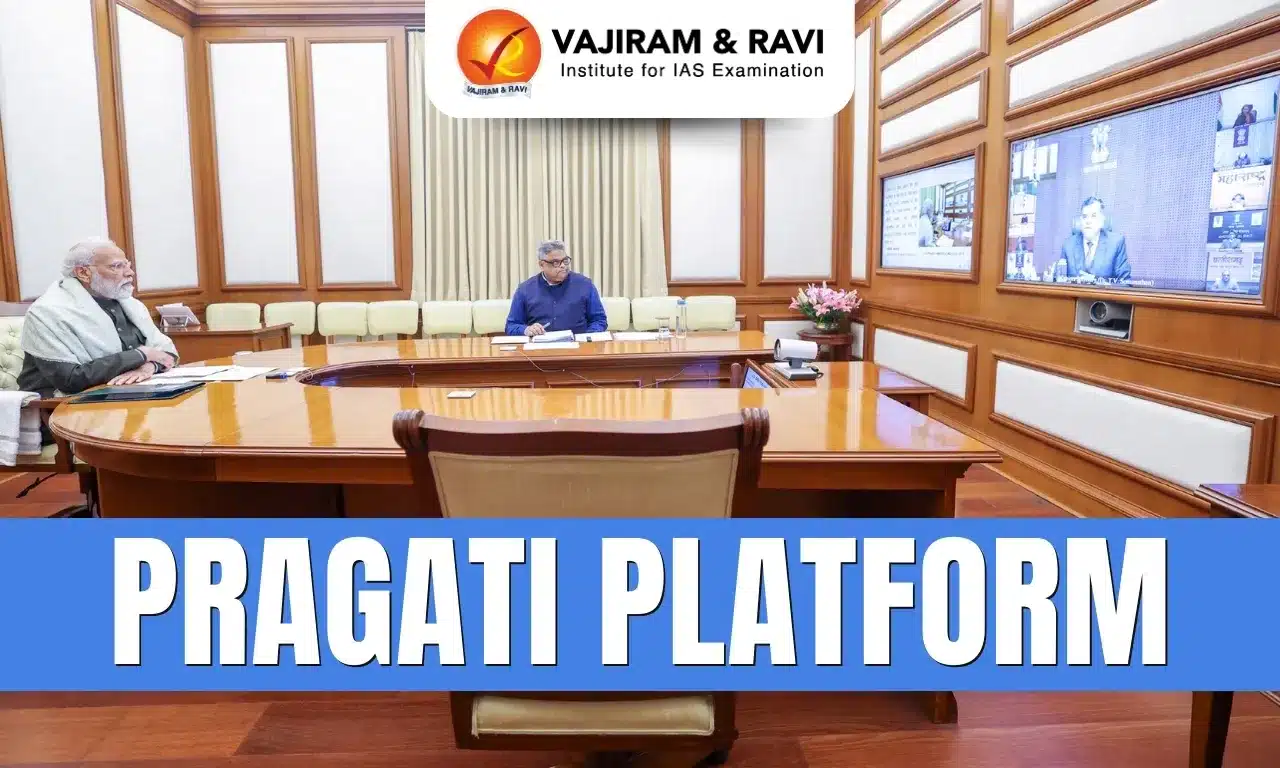
Prime Minister’s flagship platform for Pro-Active Governance and Timely Implementation, PRAGATI, recently marked a significant milestone with the successful conduct of its 50th meeting.

About PRAGATI Platform

  • PRAGATI (Pro-Active Governance and Timely Implementation) is a distinctive, integrated, and interactive platform designed to both resolve grievances of and to monitor and review key programmes and projects of the Government of India, along with projects highlighted by State Governments. 
  • It is a robust system for bringing e-transparency and e-accountability with real-time presence and exchange among the key stakeholders.
  • It was launched on March 25, 2015.
  • The system has been designed in-house by the PMO team with the help of the National Informatics Center (NIC). 
  • Through this system, the Prime Minister can directly engage with concerned Central and State officials, supported by complete information and up-to-date visual evidence from project sites.
  • The PRAGATI platform uniquely brings together three modern technologies—digital data management, video conferencing, and geospatial technology. 

PRAGATI Platform Key Features

  • It is a three-tier system (PMO, Union Government Secretaries, and Chief Secretaries of the States).
  • At the apex level, the Prime Minister chairs PRAGATI review meetings with Chief Secretaries of States and Secretaries of Central Ministries/Departments to resolve issues related to identified projects and schemes.
  • The design is such that when PM reviews the issue, he should have on his screen the issue as well as the latest updates and visuals regarding the same.
  • Following the meetings, a multi-tier follow-up mechanism ensures timely implementation of decisions. 
  • Projects are monitored by the Cabinet Secretariat, while schemes and grievances are reviewed at the Ministry level under continuous oversight of the Prime Minister’s Office (PMO).
  • Issues to be flagged before the PM are picked up from the available database regarding public grievances, ongoing programmes, and pending projects.
  • The system will ride on, strengthen, and re-engineer the databases of the CPGRAMS for grievances, Project Monitoring Group (PMG), and the Ministry of Statistics and Programme Implementation. PRAGATI provides an interface and platform for all these three aspects.
  • It will take into consideration various correspondences to the PM’s office by the common people or from high dignitaries of states and/or developers of public projects.
  • While PRAGATI initially focused on large infrastructure projects, its scope has expanded to social sector schemes and public grievances, making it a people-centric governance instrument.

Source: NOA

PRAGATI Platform FAQs

Q1: What does PRAGATI stand for?

Ans: Pro-Active Governance and Timely Implementation.

Q2: What is the primary purpose of the PRAGATI platform?

Ans: Resolving public grievances and monitoring and reviewing key government programmes and projects.

Q3: When was the PRAGATI platform launched?

Ans: March 25, 2015.

Q4: Who can directly engage with Central and State officials through PRAGATI?

Ans: The Prime Minister of India.

Q5: Which officials participate in PRAGATI meetings along with the Prime Minister?

Ans: Chief Secretaries of States and Secretaries of Central Ministries/Departments.

Menkes Disease

Menkes Disease

Menkes Disease Latest News

The U.S. Food and Drug Administration recently approved the Zycubo (copper histidinate) as the first treatment for Menkes disease in pediatric patients.

About Menkes Disease

  • It is a genetic disorder that affects your body’s ability to process copper.  
  • It is caused by a mutation of the ATP7A gene located on the X chromosome. This ATP7A gene affects how the body transports copper and maintains copper levels.
    • While the body only uses a small amount of copper, even this tiny amount is required for many functions. 
    • Copper helps with metabolism, brain functioning, blood vessel and blood cell formation, wound healing, and the immune system. 
    • Copper also helps to convert iron into a usable form in the body.
    • It is naturally available in many foods and dietary supplements.
  • Menkes Disease usually causes low copper levels in blood plasma, the liver, and the brain. 
  • The condition also reduces the activities of copper-dependent enzymes in the body.
  • Copper may accumulate in other tissues, such as the kidney. 
  • Because the condition prevents the body from using copper correctly, Menkes disease can lead to serious damage to the brain and nervous system and can harm a child’s development.
  • It occurs mostly in male infants and is characterized by coarse, kinky hair (leading to its nickname of “kinky hair disease”), as well as failure to grow and thrive. 
  • It is believed to occur in about 1 in 35,000 live male births.
  • Symptoms: Symptoms include seizures, slow growth, floppy muscles, and kinky (crinkly) hair. 
  • Treatment
    • There isn’t a cure for Menkes disease, but early treatment with copper can help reduce symptoms and prolong life.
    • Treatment includes copper replacement injections (also known as a copper histidine compound) to increase the development of copper in your child’s body.
    • Without treatment, most Menkes disease patients do not survive past age 3.

Source: TH

Menkes Disease FAQs

Q1: What type of disorder is Menkes disease?

Ans: A genetic disorder affecting the body’s ability to process copper.

Q2: Which gene mutation causes Menkes disease?

Ans: It is caused by a mutation of the ATP7A gene located on the X chromosome.

Q3: What is the main function of the ATP7A gene?

Ans: Transporting copper and maintaining copper levels in the body.

Q4: What distinctive hair characteristic is associated with Menkes disease?

Ans: Coarse, kinky (crinkly) hair.

Q5: Is there a cure for Menkes disease?

Ans: No, there is no cure.

Key Facts about Argentina

Key Facts about Argentina

Argentina Latest News

Recently, raging wildfires in the Argentine Patagonia have blazed through nearly 12,000 hectares of scrubland and planted and native forests.

About Argentina

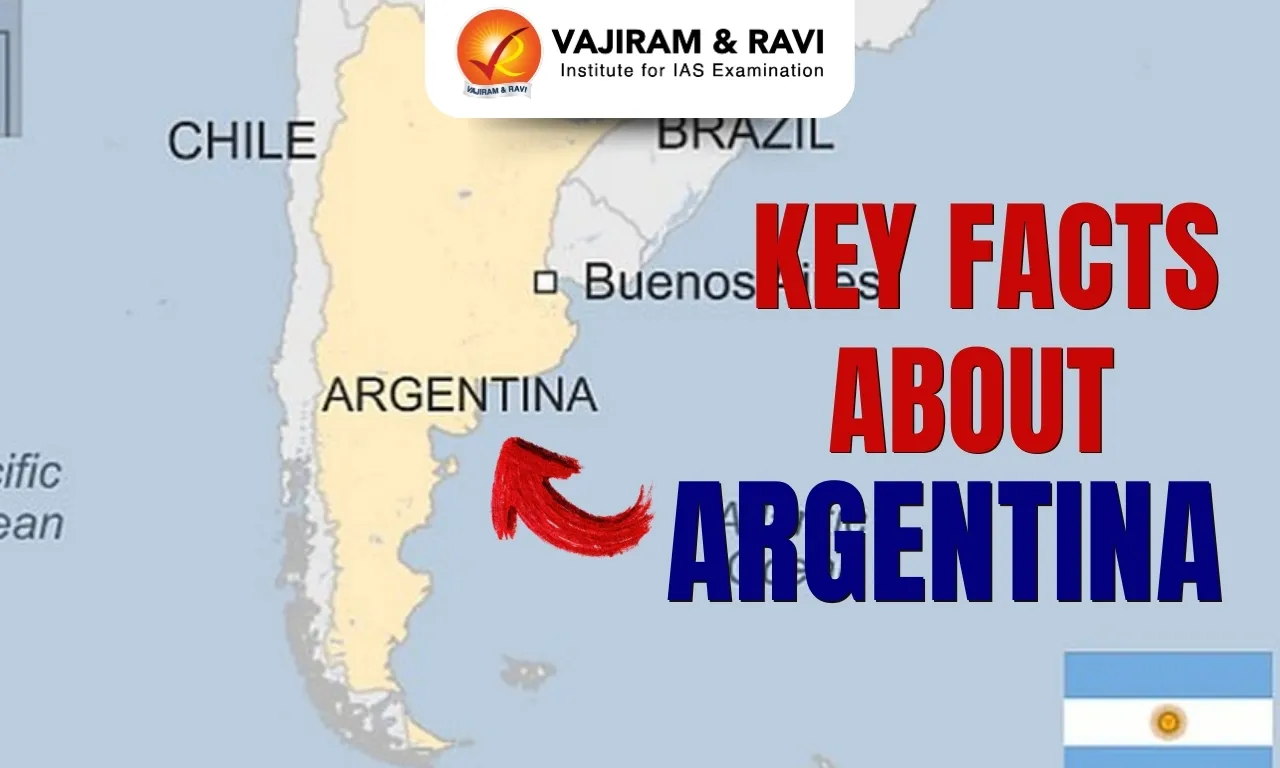
  • It is a large country occupying the southern part of South America.
  • Bordering Countries: It shares its borders with 5 countries: Chile (south and west), Bolivia and Paraguay (north), and Brazil, Uruguay (east)
  • Maritime boundaries: It is also bounded by the South Atlantic Ocean to the east and the Drake Passage to the south.
  • Capital City: Buenos Aires

Geographical Features of Argentina

  • Terrain: Argentina's landmass can be divided into four general topographical regions: the Andean region, the Pampas, the Patagonian plateau, and the Gran Chaco.
  • Climate: Mostly temperate; arid in southeast; subantarctic in southwest
  • Major rivers: Parana, Paraguay, Uruguay, etc.
  • Highest Point: Cerro Aconcagua
  • Natural Resources: Fertile plains of the pampas, lead, zinc, tin, copper, iron ore, manganese, petroleum, uranium and Lithium.
  • Northeast Argentina features rain forests and Iguazù Falls. 

Source: TH

Key Facts about Argentina FAQs

Q1: What is Argentina's primary agricultural product?

Ans: Soybeans

Q2: Which mountain range runs along Argentina's western edge?

Ans: Andes

Advisory Board on Disarmament Matters

Advisory Board on Disarmament Matters

Advisory Board on Disarmament Matters Latest News

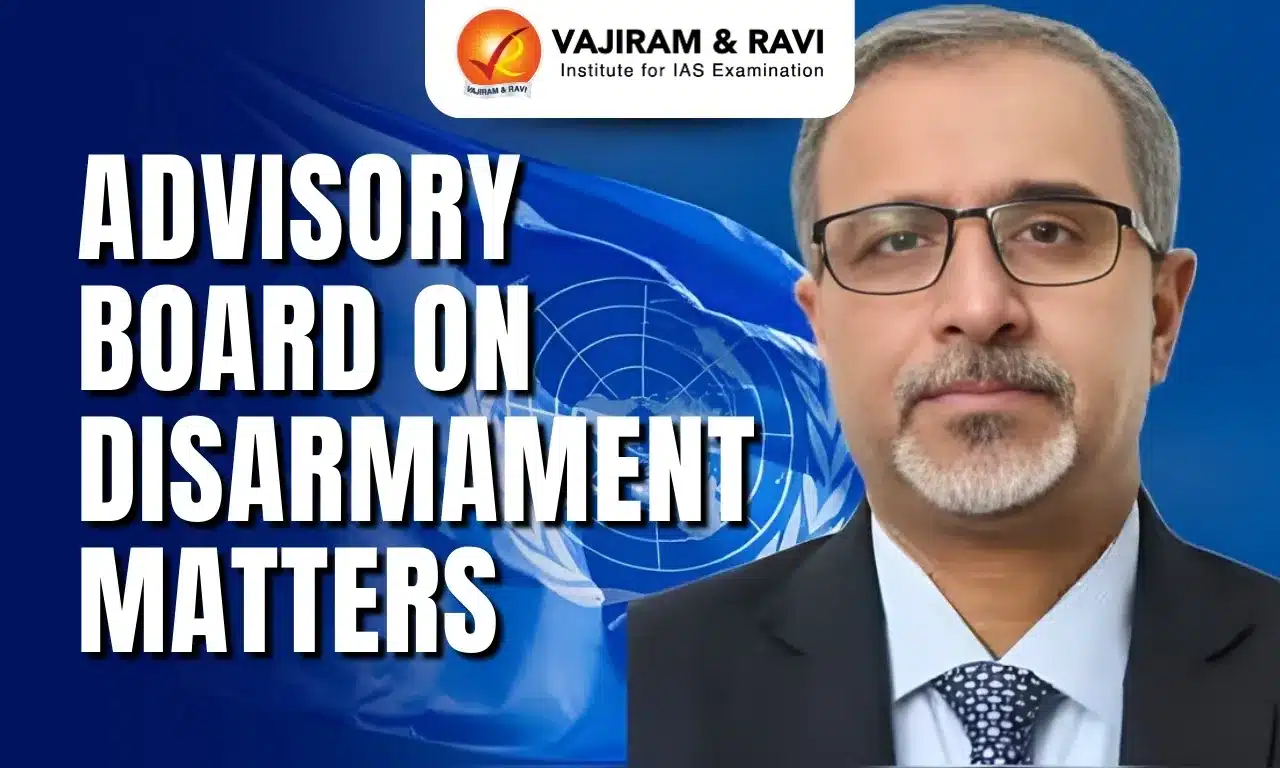
Recently, an Indian diplomat has been nominated by the UN Secretary General as chair of Advisory Board on Disarmament Matters for 2026-27.

About Advisory Board on Disarmament Matters

  • It was established in 1978.
  • Membership: The Secretary-General chooses the members of the Board from all regions of the world for their knowledge and experience in the field of disarmament and international security.
    • There are fifteen members of the Board. The Director of UNIDIR is an ex officio member.
    • The Advisory Board holds two sessions a year, alternating between New York and Geneva. The
    • Board adopts its agenda based on requests from the Secretary-General for advice on specific disarmament issues and upon its own recommendations of items to be considered. 
    • The chairman of the Board rotates by region on a yearly basis.
    • Headquarter: New York

Functions of Advisory Board on Disarmament Matters

  • To advise the Secretary-General on matters within the area of arms limitation and disarmament
  • To serve as the Board of Trustees of the United Nations Institute for Disarmament Research (UNIDIR)
  • To advise the Secretary-General on the implementation of the United Nations Disarmament Information Programme

Source: ET

Advisory Board on Disarmament Matters FAQs

Q1: Who chairs the Advisory Board on Disarmament Matters for 2026-27?

Ans: DB Venkatesh Varma

Q2: What is the primary role of the Advisory Board on Disarmament Matters?

Ans: To advise the UN Secretary-General on disarmament issues

Valley of Flowers National Park

Valley of Flowers National park

Valley of Flowers National Park Latest News

With forest fire raging in the Valley of Flowers, a UNESCO heritage site, for the last five days, the Uttarakhand Disaster Management Department has sought the Indian Air Force’s (IAF) help to douse the inferno.

About Valley of Flowers National Park

  • It is located in the Chamoli district of Uttarakhand.
  • It is spread over an area of 87 sq.km.
  • The valley is believed to have been discovered in 1931, when three British mountaineers – led by Frank S. Smythe – lost their way and chanced upon this spectacular valley. 
  • It is a UNESCO World Heritage Site and forms one of the two core zones (the other being the Nanda Devi National Park) of the Nanda Devi Biosphere Reserve.
  • The gentle landscape of the Valley of Flowers National Park complements the rugged mountain wilderness of Nanda Devi National Park. 
  • Together they encompass a unique transition zone between the Zanskar and Great Himalayan ranges.
  • It is famed for its vibrant alpine meadows, rich biodiversity, and breathtaking scenic beauty. 
  • It has snow-capped peaks of the Himalayas as a backdrop
  • It remains covered with a thick blanket of snow during the winter season.
  • Flora
    • Exotic flowers (over 600 species) like orchids, poppies, primulas, marigolds, daisies, and anemones are an eye-catching spectacle. 
    • The valley also abounds in medicinal plants and herbs. 
    • Sub-alpine forests birch and rhododendron cover parts of the park’s area.
    • Fauna: It is home to such rare and amazing wildlife species like the gray langur, the flying squirrel, the Himalayan weasel, black bear, the red fox, the lime butterfly, and the snow leopard.

Source:TH


Valley of Flowers National Park FAQs

Q1: Where is the Valley of Flowers National Park located?

Ans: It is located in the Chamoli district of Uttarakhand.

Q2: Is Valley of Flowers National Park, a UNESCO World Heritage Site?

Ans: Yes, Valley of Flowers National, is a UNESCO World Heritage Site.

Q3: Which biosphere reserve does the Valley of Flowers National Park form a part of?

Ans: The Nanda Devi Biosphere Reserve.

Q4: For what natural features is the Valley of Flowers National Park famous?

Ans: Vibrant alpine meadows, rich biodiversity, and scenic beauty.

Q5: Which types of exotic flowers are commonly found in the Valley of Flowers?

Ans: Orchids, poppies, primulas, marigolds, daisies, and anemones.

Drosophila Melanogaster

Drosophila Melanogaster

Drosophila Melanogaster Latest News

Researchers studied the ovaries of the fruit fly Drosophila melanogaster to investigate the mechanisms that maintain the function of reproductive stem cells over time.

About Drosophila Melanogaster

  • It is colloquially known as the fruit fly.
  • Habitat: It lives in a wide range of habitats.
  • Native habitats include those in the tropical regions of the Old World, but the common fruit fly has been introduced to almost all temperate regions of the world.
  • Food Habit: The fruit flies lives primarily on plant material. The adults thrive on rotting plants
  • Reproduction: Reproduction in Drosophila is rapid. A single pair of flies can produce hundreds of offspring within a couple of weeks, and the offspring become sexually mature within one week.

Physical Description of Drosophila Melanogaster

  • Drosophila matures through complete metamorphosis.
  • It is covered in a chitinous exoskeleton; has three main body segments; and has three pairs of segmented legs.
  • They are easily drawn towards the smell of any food source
  • Their eyes are sensitive to slight differences in light intensity.
  • They are sexually dimorphic (males and females are different), making it is quite easy to differentiate the sexes.
  • It remains one of the most commonly used model organisms for biomedical science. 

Source: PIB

Drosophila melanogaster FAQs

Q1: What is Drosophila melanogaster commonly known as?

Ans: Fruit fly

Q2: Why is Drosophila melanogaster used in genetic research?

Ans: Rapid reproduction and simple genetics

Zanskar River

Zanskar River

Zanskar River Latest News

The much-awaited Chadar trek on the frozen Zanskar River in Ladakh has been deferred due to inadequate ice formation, disappointing trekkers eager to participate in the adventure sport.

About Zanskar River

  • It is a major left-bank tributary of the Indus River, flowing entirely within the union territory of Ladakh in northern India.
  • It drains the remote Zanskar Valley in the northwestern Himalayas.
  • Course: 
    • The Zanskar River starts high in the Himalayas. 
    • The Zanskar River has two main branches; one is Doda, with main source near Pansi-La Pass, and the other branch is formed by the Kargyag River (source near Shingo La) and the Tsarap River (source near Baralacha La). 
    • The river meanders northwestwards and finally meets the Indus River near Nimmu of the Ladakh region at an elevation of about 3,100 meters.
  • It is famous for its incredible Zanskar Gorge, which is a super deep canyon it has carved over many years. 
  • The entire catchment area of the Zanskar River has been formed by the action of glaciers. 
  • Its valley is U-shaped, and a number of hanging valleys open into it.
  • The Zanskar River offers immense opportunities for expeditions to adventure lovers.
    • In the summer season, tourists can embark on river rafting trips, especially in the stretches between Chilling and Nimmu. 
    • Winter brings a unique and thrilling experience of walking along the frozen river of Zanskar, which is often called ‘Chadar Trek’.

Source: TRI

Zanskar River FAQs

Q1: The Zanskar River is a tributary of which major river?

Ans: It is a major left-bank tributary of the Indus River.

Q2: Does the Zanskar River flow entirely within the Union Territory of Ladakh?

Ans: Yes, it flows entirely within Ladakh.

Q3: Near which place does the Zanskar River meet the Indus River?

Ans: Near Nimmu in Ladakh.

Q4: Which deep canyon has been carved by the Zanskar River?

Ans: The Zanskar Gorge.

Q5: What is the winter trek along the frozen Zanskar River popularly called?

Ans: The Chadar Trek.

BRICS 2026, Theme, Objectives, Host Country, India’s Role

BRICS 2026

Why in News?

India has formally launched the official logo and website for its BRICS 2026 Presidency. This marks the start of India’s leadership year, highlighting its role in guiding the agenda and initiatives of the BRICS grouping.

BRICS 2026 Host Country

India will host the BRICS Summit 2026, taking the leadership of the group for the year. This is an important opportunity for India to guide discussions on economic growth, global cooperation, and development priorities for BRICS 2026 member countries. As the host, India will set the agenda, organize meetings, and strengthen ties among the BRICS Nations.

BRICS 2026 Theme

The BRICS 2026 Theme is “Building for Resilience, Innovation, Cooperation, and Sustainability” as countries work together to tackle global challenges. It aims to strengthen shared growth, support green development, and promote new technologies that benefit all members. The theme highlights the importance of unity, mutual respect, and people‑centric progress among BRICS nations. This approach reflects India’s priority to make BRICS a platform that improves global welfare and addresses real‑world issues in an inclusive way.

BRICS Countries 2026

BRICS Countries 2026 is a group of major emerging economies that work together for economic cooperation, development, and global governance reforms. In 2026, BRICS consists of 11 member countries, including its founding nations and newly inducted members. The expanded BRICS aims to strengthen South-South cooperation and increase the voice of developing countries at the global level. The group plays an important role in shaping a multipolar world order. BRICS Member Countries 2026 include Brazil, Russia, India, China, South Africa, Saudi Arabia, United Arab Emirates, Iran, Egypt, Ethiopia, and Indonesia.

India’s Role in BRICS 2026

India, as the host of BRICS 2026, will lead the group in promoting inclusive growth, sustainability, and global cooperation. Its role focuses on strengthening partnerships, guiding discussions, and representing the interests of developing countries.

  • Chairing the BRICS Summit and setting the agenda for 2026.
  • Promoting inclusive economic growth and sustainable development.
  • Strengthening trade, investment, and technological cooperation among members.
  • Representing the interests of developing nations in global decision-making.
  • Encouraging practical solutions for shared global challenges.

Challenges and Criticisms of BRICS

  • BRICS lacks a permanent secretariat or strong institutional structure, making decision‑making slower and implementation of initiatives weak.
  • Different political and economic interests among members slow cooperation, especially with expanded membership bringing diverse priorities.
  • Economic imbalances within the group, especially China’s dominant share of GDP, create influence gaps and perceptions of unequal power.
  • The New Development Bank and other BRICS financial mechanisms are still small compared to major global institutions, limiting impact.
  • Intra‑BRICS trade remains low despite overall global trade share, showing limited economic integration.
  • BRICS has faced external political and economic pressure, including warnings related to de‑dollarization and tariffs, affecting cohesion.
  • Some critics call BRICS a “talk shop” with many discussions but fewer concrete global outcomes.

Way Forward

  • Establish a permanent secretariat to strengthen institutional structure and coordination.
  • Enhance trade, investment, and economic cooperation among member countries.
  • Focus on sustainable development, including clean energy, climate action, and green initiatives.
  • Promote digital innovation, technology exchange, and health cooperation.
  • Engage with other countries and international organizations to increase global influence.
  • Encourage practical solutions for shared global challenges and inclusive growth.

BRICS 2026 FAQs

Q1: What is BRICS?

Ans: BRICS is a group of eleven emerging economies Brazil, Russia, India, China, South Africa, Egypt, Ethiopia, Iran, Indonesia, Saudi Arabia, and the UAE that work together on economic, political, and developmental issues.

Q2: Who is hosting BRICS in 2026?

Ans: India is hosting the BRICS Summit in 2026 and will lead the group’s activities throughout the year.

Q3: What is the theme of BRICS 2026?

Ans: The BRICS 2026 Theme is “Building for Resilience, Innovation, Cooperation, and Sustainability”.

Q4: Why is BRICS important?

Ans: BRICS represents a large part of the world’s population and economy, giving developing countries a stronger voice in global cooperation and decision‑making.

Q5: What are the main goals of BRICS 2026?

Ans: The main goals include strengthening economic cooperation, supporting sustainable development, encouraging innovation, and promoting fair global governance.

Artemis II Mission

Artemis II Mission

Artemis II Mission Latest News

NASA is on track to send humans around the moon as early as the first week of February as it makes final preparations for the imminent rollout of its Artemis 2 mega moon rocket.

About Artemis II Mission

  • It will be the first mission to carry humans to the moon’s vicinity since 1972.
  • It is the second scheduled flight of the Artemis program and the first crewed Artemis mission. 
  • It is the first to fly astronauts aboard the Space Launch System (SLS) rocket and Orion spacecraft. 
  • While Artemis 1 successfully flew Orion around the moon without astronauts in 2022, Artemis 2 will be the first time humans travel aboard the spacecraft and venture beyond low Earth orbit in more than 50 years.
  • Four astronauts will take a 10-day flight around the moon and back to Earth, testing systems ahead of the Artemis 3 mission, which aims to deliver astronauts to the lunar surface by 2028.
  • The mission will include three NASA astronauts and one astronaut from the Canadian Space Agency (CSA).
  • Several payloads will fly aboard Artemis II to expand our knowledge of space radiation, human health and behavior, and space communications.
  • The astronauts and mission controllers will collect data on Orion and the crew’s performance to assess how ready the Artemis program is to send people to the moon’s surface.
  • Orion will undergo high-speed reentry through Earth's atmosphere before safely splashing down in the Pacific Ocean off the coast of San Diego.

Key Facts of Artemis Program

  • It is NASA’s program to return astronauts to the Moon, preparing the way for human missions to Mars.
  • It aims to “land the first woman and first person of colour on the Moon“, explore the lunar surface.
  • The Artemis program includes the construction of the Lunar Gateway space station in orbit around the Moon.
  • The next missions are currently in preparation:
    • Artemis 3 will be the first crewed Moon landing mission since Apollo 17 in 1972. 
      • NASA aims to land the first female astronaut and first astronaut of colour on the lunar surface. 
      • They will spend a week on the Moon performing scientific studies, before returning to Earth.
    • Artemis 4 will deliver a core part of a new lunar space station (named 'Gateway') into orbit around the Moon, and land another two astronauts on the Moon's surface.
    • Artemis 5 will add another important module to Gateway and involve a third crewed lunar landing to undertake further surface science.

Source: LS

Artemis II Mission FAQs

Q1: Which mission will be the first to carry humans to the Moon’s vicinity since 1972

Ans: Artemis II Mission.

Q2: How many astronauts will fly on the Artemis II mission?

Ans: Four astronauts.

Q3: Which spacecraft will carry the crew on the Artemis II mission?

Ans: Orion spacecraft.

Q4: What is the primary purpose of the Artemis II mission?

Ans: To test systems and crew performance before Artemis III.

Q5: What types of scientific data will Artemis II payloads collect?

Ans: Data on space radiation, human health and behavior, and space communications.

White Dwarf

White Dwarf

White Dwarf Latest News

Recently, astronomers have observed a white dwarf that is creating a colorful shockwave as it moves through space.

About White Dwarf

  • It is the stellar core left behind after a dying star has exhausted its nuclear fuel and expelled its outer layers to form a planetary nebula.
  • It is what stars like the Sun become after they have exhausted their nuclear fuel.

Characteristics of White dwarfs 

  • It no longer supports nuclear fusion reactions that generate energy, but they are still extremely hot.
  • Size: A typical white dwarf is half as massive as the Sun, yet only slightly bigger than Earth. 
  • This makes white dwarfs one of the densest collections of matter, surpassed only by neutron stars.
  • Composition: A newly born white dwarf consists of helium, carbon, and oxygen nuclei, swimming in a sea of highly energetic electrons.
  • Unlike most other stars that are supported against their own gravitation by normal gas pressure, white dwarf stars are supported by the degeneracy pressure of the electron gas in their interior.
  • Degeneracy pressure is the increased resistance exerted by electrons composing the gas, as a result of stellar contraction.
  • Unless it is accreting matter from a nearby star, the white dwarf cools down over the next billion years or so.
  • It is predicted that they would ultimately form ‘black dwarfs’, although the Universe is likely not old enough for any black dwarfs to exist yet.
  • The luminosity of white dwarfs can therefore be used by astronomers to measure how long-ago star formation began in a particular region.

Source: DD News

White Dwarf FAQs

Q1: What is a white dwarf?

Ans: A stellar core left after a star exhausts nuclear fuel

Q2: What supports a white dwarf against gravity?

Ans: Electron degeneracy pressure

Daily Editorial Analysis 14 January 2026

Daily Editorial Analysis

Decisive New Factors in the Iranian Conundrum

Context

  • The civic unrest that unfolded in Iran in late 2025 has played out amid intense media polarisation and competing geopolitical narratives.
  • While the crisis is often filtered through simplified binaries of regime repression versus foreign-instigated dissent, a more granular analysis reveals that the underlying drivers are deeply structural, socio-economic and political.
  • Given Iran’s strategic weight in West Asia, its proximity to India’s extended neighbourhood, and the cascading effects on global markets and regional security, the episode warrants careful examination.

Economic Origins of the Unrest

  • The immediate catalyst for the protests was the collapse of the Iranian rial and deteriorating economic conditions.
  • The unrest began on December 28, 2025, when Tehran’s merchant class, the Bazaaris, launched a shutdown protesting a currency regime that made basic imports unviable.
  • Although the official exchange rate stood at 42,000 rials per U.S. dollar, the market rate had plunged to 1.45 million, a 35-fold gap and a staggering 20,000-fold decline since 1979.
  • The rial’s 45% depreciation in 2025 alone eroded profit margins on staples such as rice and oil, sparking broader socio-economic anger.
  • What began as an economic grievance rapidly escalated into a cross-class protest movement involving unemployed youth and low-wage workers.

The Regime’s Four-Stage Playbook

  • Since the Islamic Revolution, Iran’s leadership has developed a distinctive playbook for containing mass unrest, honed during crises in 2009, 2019 and 2022. The pattern consists of:
    • Initial repression via stern police action and information control.
    • Dual messaging, combining conspiracy rhetoric with conciliatory gestures.
    • Attrition tactics, including social media shutdowns, pro-government rallies, and organisational fragmentation of protesters.
    • Post-crisis retaliation, including arrests, show trials and executions.
  • By early 2026, the unrest appeared to have entered the third stage.
  • The government announced token economic relief, a monthly cash transfer of 10 million rials (approximately $7), and deployed symbolism through funerals of security personnel and mass rallies denouncing foreign interference.
  • Crucially, the Pasdaran (IRGC) and conventional military remained loyal, the oil sector was uninterrupted, and no coherent alternative leadership emerged among the protesters.

Structural Vulnerabilities Exposed

  • Breakdown of the Bazaar-Clergy Nexus

    • Historically, the Bazaaris were a decisive political force, their withdrawal of support contributed directly to the fall of the Shah in 1979.
    • Their erstwhile symbiosis with the clerical elite was built on preferential access to imports and arbitrage between fixed and market exchange rates.
    • However, U.S. sanctions, internal corruption and competition from IRGC-linked businesses have eroded this alliance.
    • Whether the IRGC, now central to regime survival, will cede lucrative economic space to appease merchants remains uncertain.
  • Socio-Political Disconnect Between State and Society

    • Two-thirds of Iranians are post-Revolution citizens with aspirations shaped more by the consumerist Gulf than by revolutionary austerity.
    • They witness systemic corruption among elites, lack of economic opportunity, and social restrictions affecting women, minorities and the secular middle class.
    • The election of a technocratic moderate in 2024 briefly raised hopes, yet regional instability and entrenched clerical power blunted reform.
  • Foreign Pressures and the Externalisation of Conflict

    • S. President Donald Trump and Israeli Prime Minister Benjamin Netanyahu openly encouraged protesters and threatened punitive action.
    • Yet direct intervention remains fraught. Iran’s political culture valorises resistance and martyrdom, enabling national consolidation against foreign aggression, as seen during Iraq’s 1980 invasion.
    • Moreover, despite losses in the June 2025 clash with Israel and the U.S., Iran retains capacities for asymmetric retaliation, particularly across the Persian Gulf and Strait of Hormuz.

Consequences for India

  • Gulf Stability

    • Any escalation in Iran could destabilise the Gulf, jeopardising Indian energy security, remittances from its 9-million-strong diaspora, and bilateral trade.
  • Strategic Geography

    • Iran provides India with access to Afghanistan and Central Asia via the Chabahar port, an alternative to Pakistan’s geostrategic chokehold.
  • Domestic Social Linkages

    • India hosts the world’s second-largest Shia population after Iran; developments in Tehran resonate among Indian Shias and influence regional sectarian dynamics.
  • Economic Opportunity

    • Post-sanctions reconstruction of Iran could offer major commercial openings for India in infrastructure, energy, manufacturing and healthcare, particularly given Tehran’s indigenous industrial ambitions.

Conclusion

  • The 2025–26 unrest in Iran reflects not merely episodic dissent but accumulated structural contradictions within a sanction-strained petro-religious state facing generational transformation.
  • The regime has shown resilience through coercion, elite cohesion and the absence of viable opposition leadership.
  • Yet its inability to address underlying economic and socio-political fissures ensures that instability will recur.
  • For external actors, including India, the crisis underscores the interplay between domestic fragility and regional geopolitics in West Asia.

Decisive New Factors in the Iranian Conundrum FAQs

 Q1. What triggered the unrest in Iran in late 2025?
Ans. The unrest was triggered by the collapse of the rial and worsening economic conditions, beginning with a merchants’ shutdown in Tehran.

Q2. How did the Iranian government attempt to contain the protests?
Ans. The government used a four-stage playbook involving repression, dual messaging, attrition tactics and post-crisis punishment of protest leaders.

Q3. Why was the Bazaaris’ involvement significant?
Ans. The Bazaaris’ participation was significant because they have historically been influential political actors and had not previously opposed the clerical regime so openly.

Q4. What broader socio-political tensions were exposed by the crisis?
Ans. The crisis exposed tensions between a young population seeking economic opportunity and a gerontocratic religious leadership prioritising strategic and ideological goals.

Q5. Why does the Iran unrest matter for India?
Ans. The unrest matters for India because it affects Gulf stability, regional access routes, domestic Shia linkages and potential future economic opportunities in Iran.

Source: The Hindu


India Must Focus on AI and Its Environmental Impact

Context

  • While Artificial Intelligence is widely discussed for its applications across sectors, its environmental impact has received limited attention.
  • An Organisation for Economic Co-operation and Development working paper highlights that developing and deploying AI algorithms entails environmental costs, notably an increased carbon footprint that worsens climate change challenges.
  • The report estimates that the global ICT industry contributes about 8%–2.8% of global greenhouse gas emissions, with some estimates placing this figure even higher.
  • At the same time, reliable data on AI’s carbon footprint remains contested.
  • A 2025 report by Google claims that a single AI text prompt consumes minimal electricity, but this has been criticised for offering incomplete and potentially misleading conclusions about AI’s true environmental impact.
  • This article highlights the growing but under-recognised environmental impact of Artificial Intelligence, examining its carbon, energy, and water costs, global regulatory responses, and the urgent need for India to integrate sustainability into AI governance.

Environmental Impact of AI Across Its Life Cycle

  • An issue note by the United Nations Environment Programme (UNEP) warns that the full AI life cycle could significantly strain natural resources.
  • It estimates that AI servers may consume 2–6.6 billion cubic metres of water by 2027, intensifying water scarcity.
  • Studies cited by UNEP indicate that training a single large language model can generate nearly 300,000 kg of carbon emissions.
  • Similarly, earlier research found that training one large AI model can emit over 626,000 pounds of carbon dioxide—comparable to the lifetime emissions of five cars.
  • Further, AI usage also raises energy demands: a UNEP study notes that a single ChatGPT query consumes about ten times more energy than a standard Google search, underscoring AI’s growing contribution to climate change.

Global Efforts to Address AI’s Environmental Costs

  • In 2021, UNESCO released its Recommendation on the Ethics of Artificial Intelligence, urging recognition of AI’s negative impacts on society and the environment.
  • Though non-binding, it was adopted by around 190 countries.
  • Among major jurisdictions, the United States and the European Union have taken the lead by proposing legislation specifically addressing AI’s environmental footprint, including the Artificial Intelligence Environmental Impacts Act, 2024, and the EU’s harmonised AI rules.

The Indian Gap in AI–Environment Discourse

  • While global debates increasingly focus on AI’s carbon costs, discussions in India largely emphasise how AI can help address climate change, overlooking the environmental downsides of developing large AI models.
  • There is a growing need for India to formally recognise and address these hidden environmental costs.
  • Measuring Environmental Impact of AI

    • A crucial first step is to systematically measure the environmental impact of AI development and deployment.
    • In India, the Environmental Impact Assessment Notification, 2006 mandates EIAs for major infrastructure and development projects.
    • Its scope could be expanded to include AI systems and algorithms, given their increasing resource intensity.
  • Standards, Stakeholders, and Data Collection

    • The government could also establish common standards to assess AI’s environmental impact by involving technology companies, think tanks, and environmental NGOs.
    • This would help build consensus on definitions, indicators, and reporting requirements.
    • Alongside this, systematic data collection using sustainability metrics—such as greenhouse gas emissions, energy use, water consumption, and land and resource impacts—would enable evidence-based and environmentally informed AI policy-making.

Integrating AI into ESG Disclosure and Sustainability Frameworks

  • The government can consider including the environmental impact of developing and deploying AI models within environmental, social and governance (ESG) disclosure standards overseen by the Ministry of Corporate Affairs and the Securities and Exchange Board of India.
  • India could draw lessons from the European Union, where the Corporate Sustainability Reporting Directive mandates disclosure of emissions from data centres and high-compute activities, including the training of large language models.
  • At the same time, the emphasis should move toward positioning AI as part of the solution for global sustainability goals.
  • This includes adopting sustainable AI practices such as using pre-trained models to reduce compute intensity, powering data centres with renewable energy, and reporting AI-specific environmental impact estimates to minimise AI’s ecological footprint.

India Must Focus on AI and Its Environmental Impact FAQs

Q1. Why is the environmental impact of AI a growing concern?

Ans. AI development and deployment consume significant energy, water, and resources, increasing carbon emissions and intensifying climate change, yet these impacts remain poorly measured and regulated.

Q2. What do global studies reveal about AI’s carbon and water footprint?

Ans. Studies by OECD and UNEP show AI training emits hundreds of thousands of kilograms of carbon dioxide and AI data centres may consume billions of cubic metres of water.

Q3. How does AI usage compare with conventional digital services in energy consumption?

Ans. UNEP estimates that a single ChatGPT query consumes about ten times more energy than a standard Google search, highlighting AI’s higher operational energy demands.

Q4. What steps have global institutions taken to address AI’s environmental costs?

Ans. UNESCO issued ethical AI recommendations, while the US and EU proposed laws mandating disclosure and regulation of AI’s environmental footprint, including high-compute activities.

Q5. What policy measures should India adopt to manage AI’s environmental impact?

Ans. India should expand EIA frameworks to AI, set measurement standards, mandate ESG disclosures, and promote sustainable AI practices like renewable-powered data centres and efficient model use.

Source: TH

Daily Editorial Analysis 14 January 2026 FAQs

Q1: What is editorial analysis?

Ans: Editorial analysis is the critical examination and interpretation of newspaper editorials to extract key insights, arguments, and perspectives relevant to UPSC preparation.

Q2: What is an editorial analyst?

Ans: An editorial analyst is someone who studies and breaks down editorials to highlight their relevance, structure, and usefulness for competitive exams like the UPSC.

Q3: What is an editorial for UPSC?

Ans: For UPSC, an editorial refers to opinion-based articles in reputed newspapers that provide analysis on current affairs, governance, policy, and socio-economic issues.

Q4: What are the sources of UPSC Editorial Analysis?

Ans: Key sources include editorials from The Hindu and Indian Express.

Q5: Can Editorial Analysis help in Mains Answer Writing?

Ans: Yes, editorial analysis enhances content quality, analytical depth, and structure in Mains answer writing.


India’s Small Towns and the Changing Urbanisation Pattern

Urbanisation Pattern

Urbanisation Pattern Latest News

  • Recent analysis highlights that India’s urban growth is increasingly driven by small towns rather than large metropolitan cities.

India’s Urbanisation Pattern Beyond Megacities

  • India’s urban discourse has traditionally focused on megacities such as Delhi, Mumbai, Bengaluru, and Chennai. 
  • However, a significant but quieter transformation is unfolding across the country’s small towns. 
  • Of nearly 9,000 census and statutory towns in India, only around 500 qualify as large cities, while the majority have populations below one lakh. 
  • These small towns are becoming key nodes of economic activity, employment, and migration, marking a structural shift in India’s urbanisation process.
  • This shift reflects broader changes in India’s economic geography, where urban growth is no longer confined to large metropolitan centres.

Structural Drivers of Small Town Growth

  • The expansion of small towns is closely linked to changes in India’s model of capitalist development. 
  • From the 1970s to the 1990s, large cities acted as centres of industrial production, infrastructure investment, and labour absorption. 
  • Over time, however, these metros began facing problems of over-accumulation, marked by soaring land prices, infrastructure stress, congestion, and rising living costs.
  • As a result, economic activities have increasingly dispersed into smaller urban centres. 
  • Towns across different States are emerging as logistics hubs, agro-processing centres, warehouse locations, construction markets, and service-sector nodes. 
  • These towns absorb migrant workers pushed out of metros and rural youth with declining agricultural opportunities, integrating them into the urban economy under new conditions.

Nature of Urbanisation in Small Towns

  • The urbanisation of small towns is not a continuation of rural life but a deepening of urban processes. 
  • These towns function under conditions of cheaper land, flexible labour markets, weaker regulation, and limited political oversight. 
  • Informal employment dominates, with construction labourers, home-based workers, and platform economy workers forming the backbone of local economies.
  • Rather than inclusive growth, this pattern often leads to the urbanisation of rural poverty. 
  • New local elites, such as real estate intermediaries, contractors, micro-financiers, and political brokers, gain control over land and labour. 
  • This reinforces socio-economic hierarchies while leaving workers vulnerable to insecurity and poor living conditions.

Policy and Governance Challenges

  • A major concern highlighted by the growth of small towns is the mismatch between urban policy design and ground realities. 
  • India’s flagship urban programmes remain largely metro-centric. Even expanded urban missions tend to prioritise large cities, leaving most small towns dependent on fragmented schemes and short-term infrastructure solutions.
  • Basic services such as water supply, sanitation, housing, and public transport remain inadequate. Groundwater over-extraction, tanker-based water supply, and ecological stress are common. 
  • Local governance structures are weak, with underfunded municipalities, limited technical capacity, and planning processes outsourced to consultants with minimal local engagement.

Implications for India’s Urban Future

  • Small towns now represent the primary frontier of India’s urban expansion. 
  • Their trajectory will significantly influence employment generation, migration patterns, environmental sustainability, and social equity. 
  • If current trends continue without policy correction, these towns risk replicating the inequalities and ecological stresses seen in larger cities, but without the institutional capacity to manage them.
  • At the same time, small towns offer an opportunity to rethink urban development. Integrated town-level planning that links housing, livelihoods, transport, and ecology can help create more balanced urban systems. 
  • Strengthening municipal finances, participatory governance, and regulatory oversight of platform-based economies will be critical to ensuring fair and sustainable growth.

Way Forward

  • India’s urban strategy must move beyond a megacity-centric approach. 
  • Political recognition of small towns as central to India’s urban future is essential. 
  • Empowered local governments, context-specific planning, and inclusive economic regulation can help transform small towns into engines of equitable development rather than sites of deepening inequality.

Source : TH

Urbanisation Pattern FAQs

Q1: What proportion of India’s towns are small towns?

Ans: The majority of India’s nearly 9,000 towns have populations below one lakh.

Q2: Why are small towns growing faster than large cities?

Ans: Rising costs, congestion, and over-accumulation in metros are pushing economic activity toward smaller towns.

Q3: What kind of employment dominates small towns?

Ans: Informal jobs in construction, services, logistics, and platform-based work dominate small-town economies.

Q4: What are the key governance challenges in small towns?

Ans: Weak municipal capacity, inadequate funding, and metro-centric urban policies limit effective governance.

Q5: Why are small towns important for India’s urban future?

Ans: They are emerging as the main sites of urban expansion and will shape migration, employment, and sustainability outcomes.

Urban Cooperative Banks

Urban Cooperative Banks

Urban Cooperative Banks Latest News

The Reserve Bank of India (RBI) proposed resuming the issuance of licenses for Urban Cooperative Banks (UCBs) after nearly two decades. 

About Urban Cooperative Banks

  • Urban Cooperative Banks are not formally defined but refers to primary cooperative banks located in urban and semi-urban areas
  • History: The first formal co-operative legislation in India came with the Co-operative Credit Societies Act of 1904 (During Lord Curzon’s tenure) and also enacted the more comprehensive Co-operative Societies Act of 1912.
    • The first urban cooperative credit society,(Anyonya Sahakari Mandali) was established in 1889 in Baroda.
  • Functions: Provide services like housing finance, personal loans, MSME credit, and deposits to small borrowers, traders, and small-scale industries.
  • They are registered as cooperative societies under the provisions of, either the State Cooperative Societies Act of the State concerned or the Multi State Cooperative Societies Act, 2002.
  • Regulation: The Reserve Bank regulates and supervises the banking functions of UCBs under the provisions of Banking regulation Act, 1949.
    • Banking related functions (viz. licensing, area of operations, interest rates etc.) are to be governed by RBI.
    • Registration, management, audit and liquidation, etc. are governed by State Governments as per the provisions of respective State Acts.
    • The Reserve Bank has vested powers to issue licenses to UCBs under Section 22 and 23 Banking Regulation Act, 1949 to carry on banking business and to open new places of business(branches, extension counters, etc.) respectively.

Source: ET

Urban Cooperative Banks FAQs

Q1: Who regulates Urban Cooperative Banks in India?

Ans: RBI

Q2: What is the primary purpose of Urban Cooperative Banks?

Ans: Providing credit to small borrowers and urban communities

Smartphone Source Code: Government Debate and Security Concerns

Smartphone Source Code

Smartphone Source Code Latest News

  • A Reuters report claimed that the Indian government was considering requiring smartphone manufacturers to share their source code with third-party testing agencies and inform authorities before major software updates. 
  • However, the Union government has downplayed these discussions and denied any proposal to demand disclosure of source code.

About Source Code

  • Source code is the foundational set of instructions and digital assets that power a software system. 
  • In simpler terms, the source code is highly confidential data that controls the device's memory, processor, sensors, and hardware features. 
  • While parts of platforms like Android are open-source, manufacturers make extensive proprietary modifications that they closely guard. 
  • Source code is protected not only for commercial reasons but also for security, as exposing a system’s inner workings could allow malicious actors to identify vulnerabilities, leading to data breaches and cyberattacks.

Why Source Code Disclosure Is Highly Unusual

  • Disclosing source code outside a company is extremely rare and usually limited to sensitive sectors like defence, and even then only in select countries. 
  • For instance, Apple Inc. has not shared its source code with the Chinese government, despite adopting country-specific policies to comply with local data access laws. 
  • This underscores how exceptional and sensitive such a demand would be.

Recent Context Heightening the Controversy

  • The reports surfaced soon after the DoT faced widespread political and public backlash over its directive to smartphone makers to preinstall the Sanchar Saathi app. 
  • Critics feared the app could enable surveillance or pose security risks, and global smartphone manufacturers typically resist such preinstallation demands.

Security and Commercial Risks of Source Code Exposure

  • Requiring source code disclosure would be far more intrusive than preinstalling an app, as it would expose a company’s entire proprietary codebase to third parties. 
  • Cyber attackers usually exploit vulnerabilities visible from the outside; internal visibility would significantly amplify risks, especially if documentation reveals system architecture. 
  • Even phones running Android do not expose all implementation details, precisely to safeguard security and intellectual property.

Government Position on Public Disclosure of Source Code

  • The Indian government has not officially stated that smartphone source code must be made public. 
  • However, discussions stem from a 2023 document finalised by the National Centre for Communication Security under the DoT, which issued an Indian Telecom Security Assurance Requirement (ITSAR) for consumer equipment.

Regulatory Background and Shifting Oversight

  • ITSARs form part of the Mandatory Testing and Certification of Telecommunication Equipment (MTCTE) framework, rooted in the Indian Telegraph (Amendment) Rules, 2017. 
  • However, after the Telecommunications Act, 2023, the government decided to drop MTCTE requirements for smartphones, since they already undergo certification by the Bureau of Indian Standards. 
  • Oversight subsequently shifted to the Ministry of Electronics and Information Technology, which stated it is keeping an “open mind” on the issue.

Industry and Government Responses

  • Industry body India Cellular and Electronics Association has downplayed the seriousness of the discussions. 
  • Government representatives have also maintained that no final regulations have been framed, suggesting that deliberations are still exploratory.
  • The Internet Freedom Foundation (IFF) has challenged these assurances, arguing that ITSAR documents remain publicly available and that stakeholder meetings lack transparency. 
  • IFF has demanded disclosure of meeting minutes and called for open public consultation, asserting that meaningful policy-making cannot be confined to closed-door discussions with major technology firms.
  • The group has reiterated the need for transparency and inclusive consultation in matters that could significantly affect digital rights, security, and consumer trust.

Source: TH | ITV

Smartphone Source Code FAQs

Q1: What is smartphone source code?

Ans: Smartphone source code refers to the core software instructions controlling device hardware and functions, making smartphone source code highly sensitive for security and commercial reasons.

Q2: Why is smartphone source code disclosure controversial?

Ans: Smartphone source code disclosure is controversial because exposing internal software can increase cyber risks, reveal vulnerabilities, and compromise intellectual property of global smartphone manufacturers.

Q3: What triggered the smartphone source code debate in India?

Ans: The smartphone source code debate arose after reports of testing requirements under telecom security standards, though the government later denied demanding smartphone source code disclosure.

Q4: How has the government responded on smartphone source code?

Ans: The government has stated that no final decision on smartphone source code disclosure exists, describing discussions as exploratory and aimed at consumer and national security interests.

Q5: Why do digital rights groups oppose smartphone source code demands?

Ans: Digital rights groups argue smartphone source code demands lack transparency, increase surveillance risks, and require open public consultation instead of closed-door discussions with large tech firms.

Supreme Court on Section 17A of Prevention of Corruption Act

Prevention of Corruption Act

Prevention of Corruption Act Latest News

  • The Supreme Court of India delivered a split verdict on the constitutional validity of Section 17A of the Prevention of Corruption Act, 1988 (PC Act).
  • The provision, introduced through the 2018 Amendment, mandates prior approval/sanction before initiating enquiry or investigation against public servants for decisions taken in the discharge of official duties.
  • The challenge was filed by Centre for Public Interest Litigation (CPIL), arguing that the provision shields corruption and undermines accountability.
  • Given the divergence of views, the matter has been referred to the Chief Justice of India (CJI) for the constitution of a larger Bench.

What is Section 17A of the PC Act

  • It requires prior approval from the competent authority before conducting any inquiry or investigation against a public servant for actions taken in official capacity.
  • Objective (as per government):
    • Protect honest officers
    • Prevent frivolous, vexatious complaints
    • Avoid policy paralysis

Divergent Judicial Opinions

  • Justice B.V. Nagarathna: (Section 17A is illegal, unequal, arbitrary, and unconstitutional)
    • Violates Article 14 (Right to Equality): Protection effectively extends only to higher civil servants involved in decision-making. Classification based on “nature of duties” has no rational nexus with the object of the Act.
    • Arbitrary and against Rule of Law: Forecloses even a preliminary enquiry without prior approval. Prevents discovery of truth and shields wrongdoing.
    • Contrary to the object of the PC Act: Anti-corruption law aims to detect and punish corruption, not delay or prevent investigation. Provision “protects the corrupt rather than the honest”.
    • Policy paralysis argument rejected: Instead of protecting honest officers, Section 17A may embolden mala fide decision-making. Honest officials do not require such statutory protection.
  • Justice K.V. Viswanathan: (Section 17A is constitutionally valid [with safeguards])
    • Possibility of misuse cannot be equated to unconstitutionality: Striking down the provision would be like “throwing the baby out with the bathwater”.
    • Need to prevent policy paralysis: Fear of instant FIRs and coercive investigations may lead to “Play-it-safe syndrome”, administrative inertia.
    • Fine balance required: Between protecting officials from mala fide prosecution, and ensuring probity in public life.
    • Danger of immediate investigations: Without prior screening, even frivolous complaints could trigger FIRs and arrests. Such a regime would be regressive.
  • Independent screening mechanism suggested: 
    • Approval should depend on recommendations of an independent authority such as Lokpal (at Centre), Lokayukta (in States).
    • Lokpal has authority to inquire even against the Prime Minister.
    • Independent inquiry into facts should precede sanction.

Key Constitutional and Governance Issues Involved

  • Article 14 – Equality Before Law: Whether selective protection to higher officials amounts to hostile discrimination.
  • Rule of Law: Does requiring prior approval subordinate investigation to executive discretion?
  • Separation of Powers: Extent of executive control over criminal investigation.
  • Accountability vs administrative autonomy: Tension between effective governance, and anti-corruption enforcement.

Challenges Highlighted and Way Ahead

  • Shielding corruption: Delay or denial of approval may stall investigations indefinitely. Prevent indefinite delays in granting or refusing sanction.
  • Executive interference: Sanctioning authority may be influenced by political or bureaucratic considerations. Statutory role for Lokpal/Lokayukta in sanction decisions. Preliminary scrutiny to assess genuineness of complaint.
  • Unequal protection: Lower-level officials face immediate scrutiny, higher officials enjoy insulation. Authoritative ruling to resolve constitutional conflict.
  • Erosion of public trust: Perception that anti-corruption law favours the powerful. Parliament may revisit Section 17A to align it with constitutional principles, anti-corruption objectives.

Conclusion

  • The split verdict on Section 17A of the Prevention of Corruption Act reflects a deeper constitutional dilemma—how to protect honest decision-making without weakening the fight against corruption.
  • While one view sees the provision as a shield for the corrupt, the other considers it a necessary safeguard against governance paralysis, subject to independent oversight.
  • The final word now rests with a larger Bench of the Supreme Court, whose decision will significantly shape the future of anti-corruption jurisprudence, administrative accountability, and rule of law in India.

Source: TH | IE

Prevention of Corruption Act FAQs

Q1: What are the constitutional concerns regarding the Section 17A of the Prevention of Corruption Act, 1988?

Ans: It seeks to prevent frivolous prosecution but may violate Article 14 by selectively shielding higher public servants.

Q2: How does the requirement of prior sanction under Section 17A impact the principle of rule of law?

Ans: It can undermine rule of law by subordinating criminal investigation to executive discretion.

Q3: How was ‘policy paralysis’ invoked in the SC’s reasoning on Section 17A of the PC Act?

Ans: The SC cited ‘policy paralysis’ to justify safeguards for bona fide official decisions under Section 17A.

Q4: What is the role of independent institutions like Lokpal and Lokayukta in balancing probity in public life?

Ans: They can provide impartial screening of corruption complaints, ensuring both administrative autonomy and accountability.

Q5: How Article 14 of the Constitution applies to differential protection granted under anti-corruption laws?

Ans: The classification of higher officials lacks a rational nexus with the objective of combating corruption.

India–China Dispute Over Shaksgam Valley and Strategic Concerns

Shaksgam Valley

Shaksgam Valley Latest News

  • A fresh diplomatic and strategic tussle has emerged between India and China over the Shaksgam Valley in Jammu and Kashmir, reviving concerns despite the recent disengagement after the eastern Ladakh standoff.
  • The Shaksgam Valley lies close to the Siachen Glacier, borders China’s Xinjiang in the north, and Pakistan-occupied Kashmir in the south and west, making it highly sensitive for India’s security.

Shaksgam Valley: Location and Strategic Context

  • Shaksgam Valley, also known as the Trans Karakoram Tract, lies in the Hunza-Gilgit region under Pakistan’s occupation, north of the Siachen Glacier. 
  • Covering over 5,000 sq km, its harsh terrain limits habitation. 
  • Although claimed by India, Pakistan controlled the area until 1963, while China earlier asserted influence by building a highway through Aksai Chin linking Tibet and Xinjiang.

unnamed - 2026-01-14T112713.719

Why Shaksgam Valley Is Strategically Important for India

  • Shaksgam Valley holds critical importance for India due to its proximity to the Siachen Glacier, the world’s highest battlefield, and its access to the Karakoram Pass
  • From Siachen, India can closely monitor Pakistan’s military movements, while the Karakoram Pass allows observation of Chinese manoeuvres. 
  • As a result, developments in Shaksgam Valley have direct implications for India’s security along both the Line of Actual Control (LAC) with China and the Line of Control (LoC) with Pakistan.

China’s Expanding Infrastructure Footprint

  • Geostrategists have warned that China’s “salami slicing” strategy in Shaksgam is nearing a tipping point. 
    • China's "salami slicing" strategy is a tactic of achieving territorial expansion or greater influence through a series of small, incremental actions.
    • These actions individually seem minor but cumulatively create significant shifts in control, often in disputed areas.
  • By mid-2024, China reportedly completed a road across the 4,805-metre Aghil Pass into Lower Shaksgam Valley, bringing Chinese construction teams—and potentially military patrols—within 50 km of India-controlled Siachen at Indira Col.

Emerging Two-Front Security Challenge

  • Historically, India’s defence focus in Siachen was oriented mainly toward Pakistan from the south. 
  • China’s new access from the north alters this equation, raising the possibility of a two-front contingency on the world’s highest battlefield and reinforcing India’s concerns about China and Pakistan jointly pressuring Indian positions.

Pakistan’s Cession of Shaksgam Valley to China

  • Historical Background - Shaksgam Valley, part of the Hunza–Gilgit region, came under China’s control in 1963 following a so-called boundary agreement with Pakistan.  Although India objected, it never attempted physical occupation of the valley.
  • Colonial-Era Developments - In 1936, under British influence, the Mir of Hunza surrendered rights over the Taghdumbash Pamir and Raskam Valley. However, Shaksgam Valley and the Aghil range remained under his control.
  • Post-Independence Legal Status - After the accession of Jammu and Kashmir to India in October 1947, Shaksgam Valley legally became Indian territory. India, however, could not exercise control due to Pakistan’s forcible occupation of adjoining areas.
  • China’s Entry and Pakistan’s Calculus - During the 1950s, China began moving into eastern Hunza, worsening India–China relations. Sensing an opportunity, Pakistan under President Ayub Khan sought closer ties with China, disregarding Indian concerns.
  • The 1963 Boundary Agreement - In 1963, Pakistan formally ceded the Yarkand River region and Shaksgam Valley to China, despite lacking legal authority to transfer Indian territory.
  • Present-Day Security Implications - Since the Doklam standoff, China has intensified military infrastructure development in Shaksgam Valley. As a result, a region that legally belongs to India has emerged as a significant security challenge for New Delhi.

China’s Infrastructure Push and Indian Concerns

  • China has reportedly completed nearly 75 km of an all-weather road, around 10 metres wide, in the valley. 
  • The infrastructure development—linked to the China-Pakistan Economic Corridor—has raised Indian concerns about China and Pakistan jointly pressuring Indian positions in the region.

India’s Response

  • India maintains that Pakistan illegally ceded 5,180 sq km of the Shaksgam Valley to China under a 1963 agreement, which New Delhi has never recognised. 
  • The territory was part of Jammu and Kashmir under Pakistan’s illegal occupation.
  • The Ministry of External Affairs asserted that Shaksgam Valley is Indian territory and stated that India reserves the right to take “necessary measures” to safeguard its interests.

China’s Position and Contradictions

  • China has rejected India’s objections, claiming its construction activities are legitimate. 
  • However, this stance exposes a contradiction: while China calls Kashmir a bilateral issue between India and Pakistan, it continues strategic development in areas of Kashmir under Pakistan’s illegal occupation.
  • The episode underscores continuing geopolitical tensions in the western sector of the India–China boundary and highlights growing concerns over China’s strategic footprint in disputed regions, even as disengagement efforts continue elsewhere.

Source: IT | FE | IE

Shaksgam Valley FAQs

Q1: Where is Shaksgam Valley located?

Ans: Shaksgam Valley lies north of the Siachen Glacier, bordering Xinjiang and Pakistan-occupied Kashmir, making Shaksgam Valley highly sensitive for India’s security.

Q2: Why is Shaksgam Valley important for India?

Ans: Shaksgam Valley is crucial due to its proximity to Siachen Glacier and Karakoram Pass, affecting India’s military posture along both the LAC and LoC.

Q3: How did China gain control over Shaksgam Valley?

Ans: China gained control over Shaksgam Valley through a 1963 boundary agreement with Pakistan, which India considers illegal and has never recognised.

Q4: What concerns India about developments in Shaksgam Valley?

Ans: India is concerned about roads and military infrastructure in Shaksgam Valley, raising fears of China and Pakistan jointly pressuring Indian positions.

Q5: How does Shaksgam Valley affect India’s regional security?

Ans: Shaksgam Valley creates a potential two-front challenge by enabling Chinese access near Siachen, complicating India’s defence against both China and Pakistan.

Enquire Now