Vajiram and Ravi provide Current Affairs of 4 October 2026 for UPSC aspirants. We cover all relevant news and important events crucial for the exam, helping you stay updated and well prepared.
Andhra Pradesh government is set to use 3D Concrete Printing (3DCP) technology to construct houses for beneficiaries under the Pradhan Mantri Awas Yojana-Gramin (PMAY-G) scheme.
About 3D Concrete Printing Technology
It is an innovative construction technique that enables the creation of complex and customized structures.
It is a construction-scale additive manufacturing—commonly called 3D Concrete Printing—replaces traditional masonry and sequential manual labour with a computer-controlled system.
Working
A robotic printer directly translates a digital Building Information Modelling (BIM) design into a physical structure by extruding specially formulated cementitious materials through a nozzle in successive horizontal layers.
It heavily relies on material science and automation to ensure that the wet mix maintains precise extrudability, buildability, and rapid setting times without collapsing under its own weight.
Advantage
The primary advantages of 3D printing lie in its unprecedented speed, reduced material waste, and elimination of traditional timber or steel formwork.
Low-carbon inks and materials reuse are being developed to mitigate the environmental impact associated with increased cement usage.
Applications: In India, the technology is tailored for affordable housing missions, disaster-relief shelters, remote-area deployments, defense fortifications, and rapidly erected public facilities.
The Jawahar Dweep Marine Oil Terminal has been declared plastic-free by the Mumbai Port Authority , becoming the first in India to eliminate single-use plastics.
About Jawahar Dweep
Jawahar Dweep, or the Butcher Island, is an island off the coast of Mumbai in the Indian state of Maharashtra.
It is located 8.25 kilometers from the Gateway of India.
It is a restricted area, and most of the island is covered with thick vegetation.
A hillock rises from the center of the Butcher Island.
It is one of Mumbai Port’s key marine oil terminals and handles crude oil and petroleum products. The terminal currently has five jetties.
The terminal is also supported by automated systems for liquid bulk handling.
The crude oil is stored in oil containers on the island. From there they are piped to Wadala, in Mumbai, where they are refined.
It is the first oil terminal in India to eliminate single-use plastics.
A rare colour variant of the coppersmith barbet, a commonly seen green bird, has been recently photographed on the outskirts of Hyderabad.
About Coppersmith barbet
The coppersmith barbet, also called the crimson-breasted barbet, is a small, brightly coloured Asian bird belonging to the barbet family (Megalaimidae).
It is known for its metronomic call that sounds similar to a coppersmith striking metal with a hammer.
Scientific Name: Psilopogon haemacephalus
Coppersmith barbet Habitat and Distribution
It is a resident bird in the Indian subcontinent and parts of Southeast Asia.
They inhabit gardens, groves, and sparse woodland.
In northern India, they occur in the valleys of the outer Himalayas and are rare in northwestern Indian states and in wet forests in Assam.
It carves out holes inside a tree to build its nest.
Coppersmith barbet Features
Somewhat larger than a sparrow, it is a relatively small barbet at 17 cm.
It is a plump bird, with a short neck and large head.
It is brightly coloured, with a black-bordered yellow face, red forecrown, and throat patch.
Upper parts are grass green and underparts are yellowish-green, diffusely streaked with darker green.
The heavy bill is black, bordered at base with conspicuous bristles.
Eyes are brown, with a red eye-ring. Legs and feet are pinkish-red.
The short, truncated tail is distinctively triangular in flight.
Coppersmith barbet Conservation Status
It is classified as 'Least Concern' under the IUCN Red List.
Recently, the Union Ministry of Social Justice and Empowerment distributed 662 aids and assistive devices, costing over ₹10 lakh to senior citizens under the Rashtriya Vayoshri Yojana (RVY).
About Rashtriya Vayoshri Yojana
It is a Central Sector Scheme, fully funded by the Central Government launched in 2017.
It provides free assisted-living devices to senior citizens belonging to BPL categories.
Assisted living devices are provided to the senior citizens belonging to the BPL category and with monthly income not more than Rs. 15000/-.
Under this scheme, senior citizens aged 80 years or older are eligible to receive free assisted-living devices directly at their doorstep.
Assistive Devices: Eligible elders receive items like walking sticks, wheelchairs, hearing aids, spectacles, artificial dentures, and crutches based on their specific physical needs.
Funding: The expenditure for implementation of the scheme is being met from the "Senior Citizens' Welfare Fund".
Selection: Beneficiaries in each district will be identified by the State Governments/UT Administrations through a Committee chaired by the Deputy Commissioner/District Collector.
Implementation: The Scheme is being implemented by the Artificial Limbs Manufacturing Corporation (ALIMCO), a PSU under the Ministry of Social Justice and Empowerment.
Nodal Ministry: Ministry of Social Justice and Empowerment
Navy Marine Expeditionary Ship Interdiction System Latest News
The U.S. military will deploy its NMESIS anti-ship missile launcher to Yonaguni, Japan’s westernmost inhabited island and about 107 km from Taiwan, during a major U.S.-Japanese exercise this month.
About Navy Marine Expeditionary Ship Interdiction System
It is a ground-based anti-ship missile system developed for the US Marine Corps (USMC) to support land-to-sea attacks performed by the US Navy.
Country of Origin: United States.
It entered service in 2021, providing the Marine Corps with a critical tool for anti-ship warfare in remote and distributed operational environments.
It features the US Navy’s latest anti-ship missile, the Naval Strike Missile (NSM), mounted atop the chassis of an unmanned variant of the Oshkosh Joint Light Tactical Vehicle (JLTV).
The ground vehicle platform, known as the Remotely Operated Ground Unit for Expeditionary (ROGUE) Fires vehicle, is supplied by Oshkosh Defense, United States, while the NSM is jointly manufactured by Raytheon Missiles & Defense (Raytheon), United States, and Norwegian company Kongsberg Defence & Aerospace.
NMESIS is not considered an autonomous launcher, as its fire control system is not controlled by the self-driving system and autonomy technology.
The system is operated by a marine who is responsible for mission planning and firing of the missile.
Features of ROGUE Fires:
It incorporates advanced autonomous vehicle technologies, off-road mobility, and high payload carrying capacity.
The vehicle is remotely operated using the teleoperator or leader-follower modes.
The vehicle lacks a crew cab/body. It is integrated with sensors and cameras, with a launcher mounted atop the vehicle.
The vehicle has a range of 480-640 km depending on terrain and operational conditions, allowing it to cover large areas in a single mission.
The flexible design of the platform allows it to be configured to meet different mission requirements.
Features of NSM:
It is a multi-mission cruise missile that can ably neutralise highly secure maritime and land targets.
It has a firing range of approximately 185 km (100 nautical miles), and flies at a subsonic speed of around 0.9 Mach.
Its multi-mode guidance system incorporates inertial navigation, GPS, and active radar homing.
The missile’s low radar cross-section makes it difficult to detect, and its sea-skimming flight profile allows it to avoid detection by enemy radar systems.
It carries a 226.79 kg-class warhead and programmable fuse.
Researchers have announced the discovery of a new earthworm species, Drawida incomparabilis.
About Drawida Incomparabilis
It is a new earthworm species.
It was found deep within the evergreen and deciduous forests of the Western Ghats mountain chain across the southern states of Keralam and Tamil Nadu.
Features: It is a relatively large worm, measuring between 217 and 392 millimetres in length, and possesses distinctive glandular prostates coupled with an unusually posterior location for its gizzards.
The species belongs to the family Moniligastridae.
Moniligastridae is a diverse group of terrestrial megadrile earthworms that currently contains 194 valid species distributed across five genera.
Among them, the genus Drawida is the most species-rich and a prominent component of Asian subterranean ecosystems.
What are Earthworms?
Earthworms are harmless, often beneficial residents of the soil.
They occur in virtually all soils of the world in which the moisture and organic content are sufficient to sustain them.
Features
The earthworm body is divided into ringlike segments. Some internal organs, including the excretory organs, are duplicated in each segment.
They don’t have lungs; they breathe through their skin.
Earthworms lack eyes and instead use specialized receptor cells in their skin to detect light, touch, vibrations, and chemicals
Earthworms have five “hearts” that pump blood through their bodies.
Their food consists of decaying plants and other organisms; as they eat.
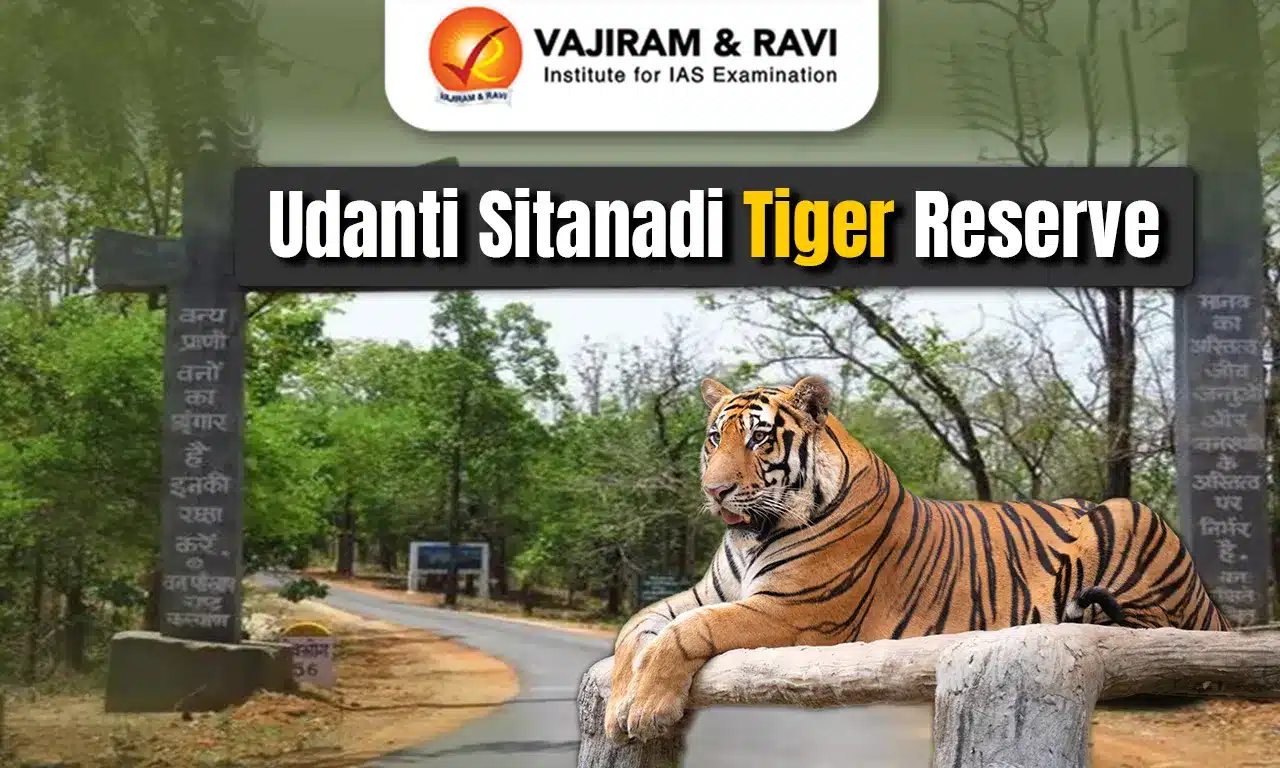
Recently, during an inspection deep inside the Udanti Sitanadi Tiger Reserve (USTR) it was found that a number of trees, a majority of them Sal, Bija and Tendu, were found girdled in the Karka area.
About Udanti Sitanadi Tiger Reserve
Location: It is located in the state of Chhattisgarh.
It was established by joining the regions represented by Sitanadi and Udanti wildlife sanctuaries.
Geographically, the reserve forms a significant part of the Eastern Highlands of Central India.
Rivers: The drainage system of the reserve consists of the Mahanadi as the main river, along with the Udanti, Sitanadi, Indravan, and Pairi Rivers as tributaries.
There are 19 named mountains in the reserve. Deo Dongri is the highest point. The most prominent mountain is Atānga Dongar.
Vegetation: The forest type here is predominantly tropical dry and moist deciduous.
Flora: The forest is dominated by Sal (Shorea robusta), which forms dense patches across the landscape. It also consists of Teak (Tectona grandis), Bamboo, Tendu, Mahua, Bija, and Harra contribute to the green diversity of the region.
Fauna: It is home to Wild Buffalo, tiger, Indian Wolf, Leopard, Sloth Bear, and Mouse Deer etc.
The Indian Parliamentary Delegation, led by the Hon’ble Deputy Chairman, Rajya Sabha has departed for Arusha, United Republic of Tanzania, to participate in the 153rd Assembly of the Inter-Parliamentary Union (IPU).
About Inter-Parliamentary Union
It is the international organization of Parliaments which was established in 1889 in Paris to promote representative democracy and world peace.
The IPU promotes democratic governance, institutions and values, working with parliaments and parliamentarians to articulate and respond to the needs and aspirations of the people.
It works for peace, democracy, human rights, gender equality, youth empowerment, climate action and sustainable development through political dialogue, cooperation and parliamentary action.
Members: It comprises 183 member parliaments and 15 associate members.
It also defends the human rights of parliamentarians through a dedicated committee made up of MPs from around the world.
The IPU moved its headquarters to Geneva in 1921.
Funding: It is financed primarily by its members out of public funds.
Governance Structure of Inter-Parliamentary Union
IPU Assembly: It is the principal statutory body that expresses the views of the IPU on political issues. It brings together parliamentarians to study international problems and make recommendations for action.
Governing Council: It is the plenary policymaking body of the IPU. It is composed of three representatives from each member parliament. The President of the IPU is ex-officio President of the Governing Council.
The Council establishes the annual programme and budget of the IPU.
Executive Committees
It is made up of the President, 15 elected members from different geopolitical groups, the President of the Bureau of Women Parliamentarians and the President of the Board of the Forum of Young Parliamentarians.
The 15 members of the Executive Committee are elected by the Council for a four-year term.
The President of the IPU is an ex officio member and President of the Committee.
Standing Committees: There are three Standing Committees set up by the IPU Governing Council to assist the Assembly in its work.
Four CISF personnel, posted at the Sewa-II Hydroelectric Project unit in J&K’s Kathua district, were allegedly shot dead by a colleague in an apparent case of fratricidal violence recently.
About Sewa-II Hydroelectric Project
It is a 120 MW run-of-the-river hydro power project located in the Kathua district of Jammu and Kashmir.
It is located on the Sewa River, a tributary of the Ravi River.
It is a concrete gravity-type dam. The height and length of the dam are 53 m and 114 m, respectively.
The Headrace tunnel is horseshoe-shaped with a diameter of 3.3 m and a length of 10.084 km.
The surface powerhouse, with an installed capacity of 120 MW, houses three units of 40 MW capacity each.
The project construction commenced in 2003 and subsequently entered into commercial operation in 2010.
Kerala doctors recently removed a One-kg hair mass from a nine-year-old girl's stomach and small intestine in a rare Rapunzel syndrome surgery.
About Rapunzel Syndrome
Rapunzel syndrome is a very rare condition in which a large hair ball (trichobezoar) gets lodged in your stomach and extends into your small intestine.
The condition was first described in 1968. It’s named after a fairy-tale character, Rapunzel, who was known for her long hair.
This condition is much more common among women than men. And in about 8 out of 10 cases, it’s seen among children, adolescent girls, and young women under 30.
What Causes Rapunzel Syndrome?
The condition is strongly linked to trichotillomania and trichophagia.
Trichotillomania is a disorder wherein a person repeatedly feelsthe urge to pull out their own hair, and trichophagia is a condition wherein the pulled or loose hair is swallowed.
These behaviours can occur alongside psychological or emotional difficulties, although not every person with hair-eating behaviour has an underlying psychiatric disorder.
Over time,repeatedly swallowed hair can collect in the stomach because it cannot be broken down or digested.
More hair gradually gets trapped in the existing mass, making it larger and harder.
In some cases, the mass eventually extends into the small intestine, resulting in Rapunzel syndrome.
Symptoms are usually caused by the blockage or related health problems. This can include:
Stomach pain
Bloating
Feeling full
Weight loss
Nausea
Low weight and intense fear of weight gain (anorexia nervosa)
Vomiting after meals
Pain or discomfort under your ribcage (acute epigastric pain)
Patchy hair loss on your scalp (alopecia)
Bad breath (halitosis)
Treatment:
Endoscopy can sometimes be used to remove smaller hairballs, but very large masses or those causing obstruction generally require surgery.
Surgery involves removing the hair mass from the stomach and, when necessary, the intestine.
More than nine years after the rollout of the Goods and Services Tax (GST) in July 2017, the GST regime, now dubbed as GST 2.0, is considering a significant change - removal of arrest powers under GST laws.
The proposal is expected to be discussed at the 57th GST Council meeting on October 7, 2026. The move follows consultations between the Centre and States over the past eight-nine months.
Businesses have raised concerns that arrest provisions have sometimes resulted in overreach, harassment and uncertainty, affecting the ease of doing business.
If approved, the proposal would require legislative amendments to the GST laws, potentially during the Winter Session of Parliament.
Need to Decriminalise GST Offences
Industry representatives have raised concerns that arrest powers can be used as a bargaining tool, particularly in sectors such as banking and insurance, compelling businesses to settle tax disputes or penalties to avoid prolonged litigation.
The proposed reform seeks to -
Improve taxpayer confidence and investor sentiment.
Reduce perceptions of fear and harassment by tax authorities.
Strengthen the ease of doing business (EoDB).
Separate genuine tax administration from criminal enforcement.
However, intentional fraud and deceit would continue to attract prosecution. In such cases, arrests could be undertaken under the Bharatiya Nyaya Sanhita (BNS) rather than through GST-specific arrest provisions.
Existing GST Arrest Framework
Under the Central Goods and Services Tax (CGST) Act, tax violations can attract -
Penalty under Section 122;
Interest under Section 50;
Recovery of tax dues; and
In serious cases involving deliberate tax evasion, arrest and prosecution.
Section 69 of the CGST Act empowers the Commissioner to authorise an arrest where there are “reasons to believe” that a person has committed specified offences.
These include cases involving -
Fake invoices;
Fraudulent availment of Input Tax Credit (ITC);
Invoices without actual supply;
Collection of GST without depositing it with the government; and
Availing ITC without receiving goods or services.
The law requires the reasons for arrest to be supported by credible evidence, recorded in writing, and authorised by the Commissioner.
Scale of Enforcement
Between 2021-22 and 2024-25, Central GST formations made 887 arrests in 72,393 GST-offence cases. Arrests undertaken by State authorities are additional.
Common fraud mechanisms include -
Creation of fake identities and mule accounts;
Generation of fake invoices without actual supply;
Fraudulent claims of input tax credit;
Undervaluation of goods; and
Supplying taxable goods or services without paying GST.
These practices can undermine tax compliance and cause significant revenue leakage.
Throwback to the VAT Regime
The proposed removal of arrest powers would bring GST enforcement closer to the pre-GST Value Added Tax (VAT) framework, which generally did not provide tax authorities with direct arrest powers.
Interestingly, concerns over GST arrest provisions existed even before GST was launched.
During the fifth GST Council meeting in December 2016, representatives of Maharashtra and West Bengal questioned whether granting arrest powers to tax authorities was consistent with EoDB and existing VAT practice.
It highlighted safeguards such as Commissioner-level authorisation and specified/severe offences and monetary thresholds (combined evasion of duty was Rs 2 crore or more).
Towards Wider Tax Decriminalisation
The proposed GST reform is part of a broader movement towards decriminalisation of tax-related defaults.
On the direct-tax side, the Central Board of Direct Taxes (CBDT) removed arrest and detention provisions from tax-recovery rules through the Income-Tax (Fourth Amendment) Rules, 2026, with retrospective effect from April 1, 2026.
Conclusion
The issue highlights the need to balance revenue mobilisation and tax compliance with taxpayer rights, due process, EoDB and administrative accountability.
It also raises important questions about cooperative federalism, as GST administration requires coordination between the Centre and States through the GST Council.
Thus, GST 2.0 should aim to create a tax system that is both enforcement-oriented and taxpayer-friendly.
The RBI Governor Sanjay Malhotra has called for continued vigilance to protect financial stability, warning that prolonged stability can encourage risk-taking and let vulnerabilities accumulate.
Financial Stability
Financial stability refers to the ability of the financial system, including banks, non-banking financial companies (NBFCs), financial markets, payment systems and supporting infrastructure, to continue functioning effectively despite economic or financial shocks.
Recently, RBI Governor Sanjay Malhotra said that India’s financial system currently shows no imminent signs of stress, but cautioned against complacency.
His central concern is that financial vulnerabilities can accumulate during periods of prolonged stability. As memories of earlier crises fade, financial institutions, businesses and investors may increase risk-taking and leverage.
India's experience with the legacy of excessive lending and non-performing assets (NPAs) from the early 2000s illustrates that financial stress can take years to resolve once vulnerabilities become systemic.
Five Priorities for Financial Stability
Strengthening Systemic Resilience
The first priority is to build a financial system capable of absorbing and containing shocks.
Shocks may be endogenous, originating within the financial system, or exogenous, arising from external events.
Regulators therefore need to ensure that financial institutions can continue providing essential services even during severe disruptions.
This requires resilient institutions, credible safety nets, effective resolution mechanisms and proportionate but forward-looking regulation and supervision.
Identifying New Systemic Risks
The nature of financial risks is changing. A future financial crisis may not necessarily originate from conventional banking weaknesses. Potential triggers include:
Geopolitical conflicts
Cyberattacks
Technological failures
Supply-chain disruptions
Financial-market shocks
Climate-related disruptions
These risks can interact through multiple channels. Understanding dependencies and contagion channels is therefore essential, with scenario analysis becoming an important component of risk management.
Better and More Granular Data
Financial systems are becoming increasingly interconnected and complex, making effective risk monitoring dependent on high-quality data.
The RBI Governor highlighted gaps in data relating to NBFIs, interconnected exposures, technology dependencies and cross-border financial positions.
Better and more granular data can help regulators identify vulnerabilities earlier, conduct stress testing and understand how shocks can transmit across institutions and markets.
System-Wide Resilience
A strong banking system alone is insufficient to guarantee financial stability.
Resilience needs to extend across:
NBFIs
Financial markets
Payment systems
Technology infrastructure
Critical third-party service providers
Cross-border financial networks
This reflects the growing importance of financial interconnectedness. A disruption in one part of the financial system can potentially spread to other institutions through lending relationships, payment systems, technology providers or common exposures.
Innovation Without Eroding Trust
Financial innovation can improve efficiency and expand access to financial services. Technologies such as Artificial Intelligence (AI), tokenisation and new forms of financial intermediation can transform financial markets.
However, innovation must preserve the foundations of trust in the financial system, including Sound institutions, Settlement finality, Singleness of money & Financial integrity.
The objective is therefore not to prevent innovation but to ensure that technological development does not create new vulnerabilities faster than regulatory and institutional safeguards can adapt.
Emerging Global Risks
The RBI Governor also highlighted a combination of geopolitical and geoeconomic fragmentation, strategic realignment, trade restrictions, repeated supply shocks, technological disruption and climate change.
These risks are particularly challenging because their interactions are difficult to predict and may not follow historical relationships.
The West Asia conflict, for instance, created supply-side pressures, but India's financial system was able to absorb the shock relatively well. Nevertheless, such developments can simultaneously influence inflation, exchange rates, capital flows and financial-market stability.
This demonstrates why price stability and financial stability cannot be examined in isolation.
AI Investment Cycle and Financial Markets
Another emerging concern is the possibility of a slowdown in the global AI investment cycle.
A correction in AI-related valuations could lead to sharp repricing of financial assets, particularly where high risk appetite and leverage have pushed valuations upward.
If the earnings and cash flows of major AI companies weaken while leverage remains elevated, financial-market corrections could become more pronounced.
At the same time, a correction in AI valuations in advanced economies could potentially benefit India by redirecting international capital towards Indian markets.
Capital Flows and External Vulnerabilities
Foreign investors have continued to withdraw from Indian financial markets despite an improvement in recent net FDI flows.
Net FDI during the first four months of 2026-27 stood at $13.43 billion, 38% higher than the corresponding period of the previous year. However, net FDI for 2024-25 and 2025-26 together had amounted to only $7.7 billion.
Foreign investors sold Indian stocks and bonds worth $10.35 billion in 2026-27, in addition to $16.59 billion of sales during 2025-26.
These movements illustrate the importance of maintaining resilience against volatile international capital flows.
Ans: Financial stability is the ability of the financial system to absorb shocks while continuing to provide essential financial services.
Q2: Why can prolonged financial stability become a risk?
Ans: Extended stability can encourage greater risk-taking and leverage while reducing institutional and investor awareness of previous crises.
Q3: What are the RBI Governor’s five priorities for financial stability?
Ans: They are systemic resilience, identification of emerging risks, better data, system-wide resilience and innovation that preserves financial-system trust.
Q4: Why is granular financial data important?
Ans: Granular data helps regulators identify interconnected exposures and vulnerabilities and conduct more effective risk assessment and stress testing.
Q5: How can AI create financial stability risks?
Ans: A sharp correction in AI-related valuations, particularly alongside high leverage and weakening corporate cash flows, could amplify financial-market volatility.
P K Mishra, Principal Secretary to the Prime Minister, said that tariffs, export controls and other trade restrictions are increasingly used not just for commercial objectives but for strategic purposes — and that these "instruments of economic policy are sometimes even weaponised.
He was speaking at a session titled 'A World Priced for Risk' at the 5th Kautilya Economic Conclave.
He framed India's goal in a memorable formulation: the future will belong to those who can be steady without being closed, careful without being fearful, and ambitious without being naïve.
Risk vs Uncertainty: The New Global Condition
The Secretary drew a key distinction: the world today faces not merely risk, but uncertainty — and this decade has sharpened that distinction.
Examples he cited:
A pandemic disrupting production and mobility worldwide.
Wars disrupting energy and food markets.
Shipping routes and geographical chokepoints becoming sources of economic vulnerability.
Export restrictions, sanctions and tariffs turning into instruments of economic policy — sometimes weaponised outright.
Critical minerals, technologies, and financial infrastructure acquiring new strategic significance.
Energy: From "What's the Price?" to "Will It Arrive?"
He highlighted a fundamental shift in how energy-importing economies must think.
For decades, the principal question for energy importers was simply the price of energy.
Today, a second question has emerged: will the energy be available, or can it even reach us?
He noted that a disruption in a major shipping route can affect crude oil prices thousands of kilometres away — meaning geography has become an economic variable in itself.
Rethinking Globalisation's Core Logic
The speaker reflected on how the traditional logic of globalisation is being supplemented, not replaced.
The old logic: produce where costs are lowest, move goods efficiently across borders.
This logic "remains relevant and even powerful," he stressed.
But recent experience — the pandemic, geopolitical conflict, and other disruptions — has added a new consideration: the cost of interruption.
A supply chain efficient in normal times can become fragile if a single-node supplier or geography becomes unavailable.
Critical Minerals: A New Concentration Risk
Mishra pointed to a parallel pattern in critical minerals essential to the clean energy transition.
Lithium, cobalt, rare earths and other minerals are essential for batteries, electronics, renewable energy, and advanced manufacturing.
Their extraction, processing, and refining are highly geographically concentrated.
For nearly all of them, a single country does most of the refining.
His key warning: "the clean energy future, which was meant to free us from oil dependence, risks creating new ones."
In other words, moving away from oil dependency may simply replace it with mineral-refining dependency on a different single country.
The Policy Question Going Forward
Mishra framed the central challenge for policymakers precisely:
The question before policymakers is therefore not whether globalisation has ended. It has not.
The question is how we preserve the gains from openness, while making economies less vulnerable to concentrated and unpredicted shocks.
This reframes the debate — not openness versus protectionism, but openness with resilience against concentration risk.
India's Response to Supply Chain Shocks
Discussing disruptions around the Strait of Hormuz, Mishra noted India is a major energy importer, vulnerable to prolonged disruption of important maritime routes.
India's response has combined several layers of protection:
Maintaining substantial stocks.
Increasing domestic production.
Ensuring alternative supply routes and suppliers are available.
Concrete Evidence of Diversification: The number of countries from which India imports crude oil has increased from 27 to 43 — a significant expansion.
Diversifying Trade Relationships
Mishra emphasised that an open economy will always depend on other economies — but the goal is avoiding excessive concentration, not eliminating dependence altogether.
India's expanding trade agreement network now includes: UAE; Australia; AIFTA (ASEAN–India Free Trade Area); United Kingdom; Oman; New Zealand; European Union.
He also flagged a less visible form of resilience: macroeconomic resilience — strength in the broader fundamentals of the economy, beyond trade diversification alone.
Conclusion
P K Mishra's remarks capture a broader shift: trade tools once reserved for commerce are now instruments of geopolitical leverage, and geography itself has re-entered economic calculus.
India's answer isn't retreat from globalisation but deliberate diversification — more oil suppliers, more trade agreements, deeper domestic buffers.
Whether this strategy holds will depend on how well India converts diversification into genuine resilience, not just a longer list of partners.
Q1: Why has economic resilience become important for India?
Ans: Economic resilience has become important as tariffs, sanctions, export restrictions, conflicts and supply-chain disruptions increasingly create strategic vulnerabilities for open economies.
Q2: How does energy security contribute to economic resilience?
Ans: Energy security strengthens economic resilience by ensuring supplies remain available despite disruptions to shipping routes, geopolitical conflicts or other external shocks affecting energy markets.
Q3: Why do critical minerals pose challenges to economic resilience?
Ans: Critical minerals create economic resilience challenges because their extraction, processing and refining are geographically concentrated, creating dependence on limited suppliers.
Q4: How is India strengthening economic resilience against supply-chain shocks?
Ans: India is strengthening economic resilience through strategic stocks, greater domestic production, alternative suppliers and routes, while diversifying crude-oil sources.
Q5: Does economic resilience require India to reduce globalisation?
Ans: Economic resilience does not require abandoning globalisation; instead, India seeks openness combined with diversification to reduce excessive dependence on concentrated suppliers.
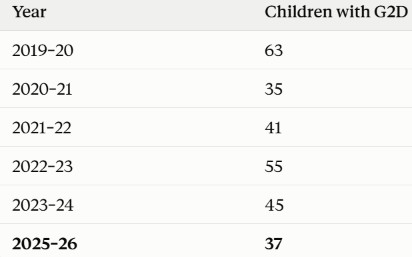
India recorded 3,832 new leprosy cases among children in 2025–26, including 37 cases with Grade-2 Disability (G2D) at diagnosis — a marker of delayed detection. This child caseload is 91.6% higher than the National Leprosy Eradication Programme's (NLEP) target of 2,000 cases for the year.
These figures, drawn from the latest NLEP annual report, emerge even as India pursues its National Strategic Plan for Leprosy 2023–27, which aims to interrupt transmission at the district level by 2027.
Understanding the Target Framework
Under the national roadmap:
A district is considered to have "interrupted transmission" after reporting zero new indigenous child cases for five consecutive years.
NLEP's programme objectives include:
Zero disability among new child cases.
A national G2D rate of less than one case per million population.
The roadmap had projected just 1,000 child cases and a G2D rate of 0.5 per million for 2026–27 — targets the current data suggest are now far out of reach.
Why Child Cases and Disability Matter: The Epidemiological Logic
The World Health Organisation (WHO) treats two specific indicators as critical markers of disease control progress:
New cases among children below 15 years indicate recent transmission — since children typically wouldn't have been infected long ago, their diagnosis signals the disease is still actively spreading.
G2D among newly detected patients indicates delayed diagnosis — visible disability only develops after the infection has progressed significantly, meaning the patient wasn't caught early.
Together, WHO notes, disabilities among newly detected child cases signal both delayed detection and ongoing transmission simultaneously — making this one of the most sensitive indicators for tracking whether a leprosy programme is truly working.
While the latest figure (37) is lower than several earlier years, the persistent detection of children with disability — year after year — directly contradicts NLEP's stated objective of "zero disability among new child cases."
This raises a fundamental question: if India is working to interrupt transmission by 2027, why are children still developing leprosy, and why are some only being diagnosed after visible disability has appeared?
The National Picture
According to the Union Health Ministry, India detected 91,783 new leprosy cases overall in 2025–26.
Prevalence rate: 0.56 per 10,000 population.
1,945 patients had Grade-2 Disability at diagnosis — 2.12% of all newly detected cases.
National G2D rate: 1.34 per million — above the NLEP's target of less than one case per million.
India's Position Globally
According to the WHO's latest global update, India reported the world's largest number of newly detected leprosy cases in 2025:
India - 91,783
Brazil - 22,901
Indonesia - 16,292
Together, these three countries accounted for 78.3% of all new cases reported globally.
India also reported the world's largest number of new child leprosy cases globally — the same 3,832 cases, with 37 children having G2D, as recorded in WHO's table.
Where the Burden Is Concentrated
The Health Ministry has identified specific high-priority states and districts where leprosy prevalence remains concentrated — defined as districts with a prevalence rate above one case per 10,000 population:
Chhattisgarh: 23 districts
Jharkhand: 21 districts
Maharashtra: 18 districts
Odisha: 18 districts
Madhya Pradesh: 10 districts
These high-endemic and hard-to-reach areas are being prioritised for intensified case detection.
The Programme's Response Strategy
NLEP's current approach emphasises:
Active case detection
Household contact surveys
Focused campaigns in high-burden areas
Special plans for hard-to-reach areas
The programme also explicitly identifies stigma and discrimination as continuing concerns that likely contribute to delayed self-reporting and diagnosis.
About the Disease
Leprosy, also known as Hansen's disease, is a chronic bacterial infection caused mainly by Mycobacterium leprae.
It primarily affects the skin and peripheral nerves. Transmission occurs mainly through prolonged, close contact with an untreated person.
Importantly, the disease is curable with multidrug therapy (MDT).
Conclusion
The numbers tell two stories at once — overall case detection may be improving, but children are still being infected and some are still reaching diagnosis only after visible disability sets in.
That combination points squarely at gaps in early detection and persistent transmission, not a disease in retreat.
With 2027 just a year away, closing this gap in high-burden districts like Chhattisgarh and Jharkhand will determine whether India's elimination goal is met or merely postponed.
Q1: Why are child leprosy cases important for assessing disease transmission?
Ans: Child leprosy cases indicate recent transmission because children are unlikely to have been infected long ago, making them important indicators of ongoing disease spread.
Q2: How many new child leprosy cases did India report in 2025–26?
Ans: India reported 3,832 new child leprosy cases in 2025–26, including 37 cases with Grade-2 Disability at diagnosis.
Q3: What does Grade-2 Disability indicate among child leprosy patients?
Ans: Grade-2 Disability among child leprosy patients indicates delayed diagnosis, showing that infection progressed significantly before detection and treatment.
Q4: Which states have concentrated child leprosy and overall leprosy burdens?
Ans: Chhattisgarh, Jharkhand, Maharashtra, Odisha and Madhya Pradesh contain high-priority districts where intensified detection efforts target concentrated leprosy burdens.
Q5: What measures are being used to address child leprosy in India?
Ans: India's programme emphasises active case detection, household contact surveys, focused campaigns and special strategies for hard-to-reach areas to identify leprosy earlier.
Want to Enroll for UPSC CSE Courses ?
Get all your questions answered with our expert counselling!