Economic Resilience Latest News
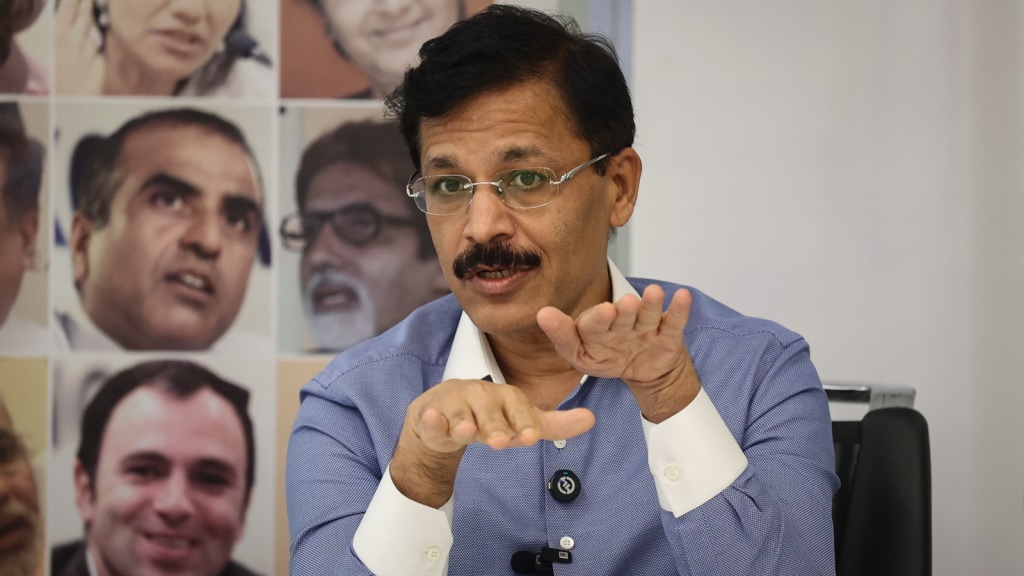
- P K Mishra, Principal Secretary to the Prime Minister, said that tariffs, export controls and other trade restrictions are increasingly used not just for commercial objectives but for strategic purposes — and that these “instruments of economic policy are sometimes even weaponised.
- He was speaking at a session titled ‘A World Priced for Risk’ at the 5th Kautilya Economic Conclave.
- He framed India’s goal in a memorable formulation: the future will belong to those who can be steady without being closed, careful without being fearful, and ambitious without being naïve.
Risk vs Uncertainty: The New Global Condition
- The Secretary drew a key distinction: the world today faces not merely risk, but uncertainty — and this decade has sharpened that distinction.
- Examples he cited:
- A pandemic disrupting production and mobility worldwide.
- Wars disrupting energy and food markets.
- Shipping routes and geographical chokepoints becoming sources of economic vulnerability.
- Export restrictions, sanctions and tariffs turning into instruments of economic policy — sometimes weaponised outright.
- Critical minerals, technologies, and financial infrastructure acquiring new strategic significance.


Energy: From “What’s the Price?” to “Will It Arrive?”
- He highlighted a fundamental shift in how energy-importing economies must think.
- For decades, the principal question for energy importers was simply the price of energy.
- Today, a second question has emerged: will the energy be available, or can it even reach us?
- He noted that a disruption in a major shipping route can affect crude oil prices thousands of kilometres away — meaning geography has become an economic variable in itself.
Rethinking Globalisation’s Core Logic
- The speaker reflected on how the traditional logic of globalisation is being supplemented, not replaced.
- The old logic: produce where costs are lowest, move goods efficiently across borders.
- This logic “remains relevant and even powerful,” he stressed.
- But recent experience — the pandemic, geopolitical conflict, and other disruptions — has added a new consideration: the cost of interruption.
- A supply chain efficient in normal times can become fragile if a single-node supplier or geography becomes unavailable.
Critical Minerals: A New Concentration Risk
- Mishra pointed to a parallel pattern in critical minerals essential to the clean energy transition.
- Lithium, cobalt, rare earths and other minerals are essential for batteries, electronics, renewable energy, and advanced manufacturing.
- Their extraction, processing, and refining are highly geographically concentrated.
- For nearly all of them, a single country does most of the refining.
- His key warning: “the clean energy future, which was meant to free us from oil dependence, risks creating new ones.”
- In other words, moving away from oil dependency may simply replace it with mineral-refining dependency on a different single country.
The Policy Question Going Forward
- Mishra framed the central challenge for policymakers precisely:
- The question before policymakers is therefore not whether globalisation has ended. It has not.
- The question is how we preserve the gains from openness, while making economies less vulnerable to concentrated and unpredicted shocks.
- This reframes the debate — not openness versus protectionism, but openness with resilience against concentration risk.
India’s Response to Supply Chain Shocks
- Discussing disruptions around the Strait of Hormuz, Mishra noted India is a major energy importer, vulnerable to prolonged disruption of important maritime routes.
- India’s response has combined several layers of protection:
- Maintaining substantial stocks.
- Increasing domestic production.
- Ensuring alternative supply routes and suppliers are available.
- Concrete Evidence of Diversification: The number of countries from which India imports crude oil has increased from 27 to 43 — a significant expansion.
Diversifying Trade Relationships
- Mishra emphasised that an open economy will always depend on other economies — but the goal is avoiding excessive concentration, not eliminating dependence altogether.
- India’s expanding trade agreement network now includes: UAE; Australia; AIFTA (ASEAN–India Free Trade Area); United Kingdom; Oman; New Zealand; European Union.
- He also flagged a less visible form of resilience: macroeconomic resilience — strength in the broader fundamentals of the economy, beyond trade diversification alone.
Conclusion
- P K Mishra’s remarks capture a broader shift: trade tools once reserved for commerce are now instruments of geopolitical leverage, and geography itself has re-entered economic calculus.
- India’s answer isn’t retreat from globalisation but deliberate diversification — more oil suppliers, more trade agreements, deeper domestic buffers.
- Whether this strategy holds will depend on how well India converts diversification into genuine resilience, not just a longer list of partners.

 Last updated on Oct, 2026
→ UPSC 2027 Notification will be released on 13 January 2027 at upsconline.nic.in.
→ Check Nobel Prize 2026 Winners List here.
→ Download PIB PRiSM Monthly Magazine 2026 here.
→ Check UPSC Monthly Current Affairs Magazine The Recitals here.
→ Check out the latest UPSC Syllabus here.
→ Download UPSC Model Answers for Mains 2026
→ UPSC Mains Question Paper 2026 is out now for Essay & GS Paper 1, 2, 3 & 4.
→ UPSC Calendar 2027 has been released.
→ Enroll in Vajiram & Ravi’s UPSC Mains Test Series 2027 for structured answer writing practice, expert evaluation, and exam-oriented feedback.
→ Join Vajiram & Ravi’s UPSC Mentorship Program 2027 for personalized guidance, strategy planning, and one-to-one support from experienced mentors.
→ Go through the UPSC Mains Previous Year Papers to enhance your preparation.
→ UPSC has released UPSC Toppers List 2025 with the Civil Services final result on its official website.
→ Also check Best UPSC Coaching in India
Economic Resilience FAQs
Q1. Why has economic resilience become important for India? +
Q2. How does energy security contribute to economic resilience? +
Q3. Why do critical minerals pose challenges to economic resilience? +
Q4. How is India strengthening economic resilience against supply-chain shocks? +
Q5. Does economic resilience require India to reduce globalisation? +
Tags: Economic resilience mains articles upsc current affairs upsc mains current affairs