Nellie Sengupta Death Anniversary 2026, Biography, Role in Freedom Struggle

Nellie Sengupta Death Anniversary 2026

Nellie Sengupta Death Anniversary 2026 will be observed on 23 October 2026, marking 53 years since the death of the Indian freedom fighter and former President of the Indian National Congress. Born in England as Edith Ellen Gray, she actively participated in India’s freedom struggle, supported Mahatma Gandhi’s movements and became Congress President in 1933. Her contribution highlights the role of women in India’s national movement.

Who Was Nellie Sengupta?

Nellie Sengupta was a freedom fighter who played an active role in India’s struggle against British rule. She supported the Swadeshi movement, participated in nationalist protests and became the President of the Indian National Congress in 1933.

  • She was born as Edith Ellen Gray on 12 January 1886 in Cambridge, England.
  • She married Jatindra Mohan Sengupta, a prominent Indian nationalist and Congress leader.
  • She participated in the Non-Cooperation and Civil Disobedience movements and encouraged the use of khadi.
  • She was elected President of the Indian National Congress in 1933, becoming one of the women to lead the organisation during the freedom struggle.
  • She received the Padma Vibhushan in 1973 and died on 23 October that year.

Nellie Sengupta’s Role in the Indian Freedom Struggle

Nellie Sengupta emerged as an active participant in India’s national movement during the Gandhian phase of the freedom struggle.

1. Participation in the Non-Cooperation Movement

Nellie Sengupta participated in the Non-Cooperation Movement of 1921, which was led by Mahatma Gandhi against British colonial rule.

  • She supported the use of khadi, or hand-spun cloth, as part of the Swadeshi approach.
  • She sold khadi door to door, encouraging people to reject foreign cloth.
  • She supported nationalist activities alongside her husband, Jatindra Mohan Sengupta.
  • She also helped raise concerns about the treatment and rights of workers.

2. Role in the Civil Disobedience Movement

During the Civil Disobedience Movement, Nellie Sengupta continued her political activities despite British restrictions.

  • She addressed public meetings in defiance of official prohibitions.
  • In 1931, she was imprisoned in Delhi for four months for addressing an unlawful assembly.
  • Her participation demonstrated the willingness of women to face imprisonment and repression for the national cause.

Her activities reflected the Gandhian methods of non-violent resistance and civil disobedience.

Nellie Sengupta as President of the Indian National Congress

In 1933, Nellie Sengupta was elected President of the Indian National Congress at its annual session in Calcutta. Several senior Congress leaders were imprisoned during the Civil Disobedience Movement, and her election reflected the party’s efforts to sustain its political activities under colonial repression.

  • She became the third woman to serve as President of the Indian National Congress.
  • Her election demonstrated the growing participation of women in the national movement.
  • Her leadership helped sustain the Congress’s nationalist activities during a period of restrictions and arrests.

Her presidency remains an important milestone in the history of women’s political participation in India.

Nellie Sengupta After Independence

Nellie Sengupta continued her public and social activities after India gained independence in 1947.

  • Following Partition, she lived in Chittagong, which became part of East Pakistan.
  • In 1954, she was elected unopposed to the East Pakistan Legislature.
  • She remained involved in social work and efforts to support minority communities.
  • In recognition of her contribution to the freedom struggle and public life, she received the Padma Vibhushan in 1973.

She died on 23 October 1973. Her life remains an example of commitment to India’s independence and social service.

Significance of Nellie Sengupta’s Contribution

Nellie Sengupta’s contribution to India’s freedom struggle is significant for several reasons.

  • Women’s participation: Her political activism illustrates the role women played in mass movements against British rule.
  • Gandhian methods: Her involvement in khadi promotion and civil disobedience reflects the use of non-violent resistance.
  • Congress leadership: Her election as Congress President in 1933 demonstrates women’s participation in national political leadership.
  • Inclusive nationalism: Her life shows that India’s freedom struggle drew support from people born outside the country who identified with its cause.
  • Social service: Her post-independence activities extended her public contribution beyond the freedom movement.

Nellie Sengupta Death Anniversary 2026 FAQs

Q1: When is Nellie Sengupta Death Anniversary 2026?

Ans: Nellie Sengupta’s death anniversary will be observed on 23 October 2026. It marks the 53rd anniversary of her death in 1973.

Q2: Who was Nellie Sengupta?

Ans: Nellie Sengupta was an English-born Indian freedom fighter who participated in the Non-Cooperation and Civil Disobedience movements and served as President of the Indian National Congress in 1933.

Q3: What was Nellie Sengupta’s original name?

Ans: Her original name was Edith Ellen Gray. She was born in Cambridge, England, on 12 January 1886.

Q4: When did Nellie Sengupta become President of the Indian National Congress?

Ans: She was elected President of the Indian National Congress in 1933 at its Calcutta session.

Q5: Which award did Nellie Sengupta receive?

Ans: She received the Padma Vibhushan in 1973 in recognition of her contribution to public life and the freedom struggle.

14th India Chem 2026, Venue, Participants, Theme, Highlights

India Chem 2026

India Chem 2026 represents the primary flagship biennial event for the domestic chemicals and petrochemicals sector. Jointly organized by government bodies and industry federations, it showcases manufacturing capabilities, technological growth and investment opportunities to establish an integrated global sourcing destination.

India Chem 2026 Latest News

Union Minister J.P. Nadda inaugurated the 14th edition of India Chem 2026 in Mumbai, emphasizing competitive manufacturing hubs. Chief Ministers from several states invited industrial investments, while a specialized knowledge paper by FICCI and EY was officially released during the initial gathering session.

What is India Chem 2026?

India Chem 2026 serves as a comprehensive international conference and exhibition that connects global stakeholders with the domestic chemical manufacturing ecosystem.

  • Edition and Dates: The 14th edition was organized from October 22-24, 2026, as a major flagship biennial industrial event.
  • Venue: The event took place at the Bombay Exhibition Centre (NESCO), located in the city of Mumbai, Maharashtra.
  • Organizers: Jointly hosted by the Department of Chemicals and Petrochemicals (Ministry of Chemicals and Fertilizers) alongside the Federation of Indian Chambers of Commerce and Industry (FICCI).
  • Partner Country: Japan joined as the official Partner Country to actively deepen bilateral trade and strengthen long term economic cooperation.
  • Partner States: Key participating states included Maharashtra, Gujarat, Odisha, Madhya Pradesh, Bihar, Andhra Pradesh and Uttar Pradesh showcasing local industrial hubs.
  • Participations: Over 200 domestic and international exhibitors, 50 leading global CEOs and more than 8,000 international business visitors attended the event.
  • Global Representations: Representatives from over 100 countries attended, including delegates from the United States, Canada, United Kingdom, European Union nations and ASEAN.

India Chem 2026 Theme

The official Theme for the 14th edition India Chem 2026 is “Advantage Bharat: An Emerging Global Chemicals Hub.” This overarching vision highlights domestic manufacturing capabilities, ease of doing business, robust regulatory support and competitive skilled labor needed to establish the nation as a primary global supply chain partner.

India Chem 2026 Features and Events

The India Chem 2026 event incorporates multiple platforms for technical discussions, business partnerships and structural technological showcases across various subsectors.

  • Youth Innovation Challenge: A dedicated new initiative created to engage young researchers, students and emerging entrepreneurs in designing practical solutions.
  • Global CEOs Forum: Interactive leadership sessions bringing together over 50 leading domestic and international chief executives to explore global trade avenues.
  • Chemicals Segment Showcase: Displays covering fine and specialty chemicals, agrochemicals, fertilizers, basic chemicals, dyes, pigments and water treatment industrial solutions.
  • Petrochemicals Segment Showcase: Exhibits featuring polymers, engineering plastics, synthetic fibers, aromatics, bio based chemicals and performance plastics for industrial manufacturing.
  • Machinery and Equipment Displays: Demonstrations of process plant machinery, smart automation, robotics, environmental control systems and AI driven chemical plant operational tools.
  • Knowledge Paper Release: Formal launch of a joint analytical report developed by FICCI and EY during the initial conference proceedings.
  • Structured B2B Platforms: Multi day business to business interaction avenues designed to facilitate international trade agreements, technology transfer and direct joint venture projects.

India Chem 2026 Significance

The India Chem 2026 platform acts as a major catalyst for structural industrial growth and integration into global value chains.

  • Atmanirbhar Bharat: Strengthens national self reliance by building domestic manufacturing capabilities and significantly reducing import dependence across basic and specialty chemical segments.
  • Viksit Bharat 2047: Drives long term economic growth targets by positioning chemical and petrochemical manufacturing as an indispensable engine for sustainable future development.
  • Industry Projection: Supports sector growth targets aimed at reaching USD 300 billion by 2030 and progressing toward USD 1 trillion by 2040.
  • Scheme Highlight: The event spotlighted the BHAVYA Rasayan Scheme (Bharat Audyogik Vikas Yojna) to build globally competitive manufacturing hubs linked to dedicated chemical parks.
  • Global Trade Avenues: Leverages expanding Free Trade Agreements (FTAs) to gain strategic access to international markets and integrate into primary global supply networks.
  • Specialty Materials Sourcing: Unlocks opportunities in custom synthesis, contract manufacturing, semiconductors, composites, nanomaterials and biodegradable polymers to expand high value chemical processing.
  • PCPIR Regional Development: Showcases investment opportunities across established Petroleum, Chemicals and Petrochemicals Investment Regions (PCPIRs) in leading coastal and industrial states.

India Chem 2026 Challenges

Despite positive growth potential, several structural and operational hurdles must be addressed to ensure long term competitiveness of India Chem 2026.

  • Logistics and Infrastructure Gap: Industrial hubs require seamless connectivity to ports, railways, airports and roads to optimize integrated value chain logistics and lower overall freight costs.
  • Environmental and ESG Compliance: Transitioning toward circular economy practices, green chemistry and strict compliance with global environmental standards presents operational challenges for smaller manufacturers.
  • Global Competition: Facing severe price and volume competition from established international manufacturing nations while attempting to scale domestic output and expand export markets.
  • Technology Transfer Barriers: High capital requirements and complex processes involved in acquiring advanced technological machinery, smart automation tools and specialized process plant equipment.
  • R&D and Innovation Needs: Insufficient domestic research infrastructure required to develop high performance materials, bio based chemicals and eco friendly packaging alternatives at a rapid pace.
  • Per Capita Consumption Gaps: Relatively low current domestic per capita consumption demands continuous industrial scaling and market penetration to absorb expanding manufacturing capacities.

India Chem 2026 FAQs

Q1: What is India Chem 2026?

Ans: India Chem 2026 is the 14th edition of India’s premier flagship biennial international exhibition and conference dedicated to the chemicals and petrochemicals sector.   

Q2: When and where is India Chem 2026 held?

Ans: The event takes place from October 22 to 24, 2026, at the Bombay Exhibition Centre (NESCO) in Mumbai, Maharashtra.   

Q3: Who organizes India Chem 2026?

Ans: It is jointly organized by the Department of Chemicals and Petrochemicals (Ministry of Chemicals and Fertilizers, Government of India) and the Federation of Indian Chambers of Commerce and Industry (FICCI).

Q4: What is the official theme of India Chem 2026?

Ans: The official theme for the 14th edition is "Advantage Bharat: An Emerging Global Chemicals Hub."

Q5: What is the market projection for the Indian chemical industry?

Ans: The Indian chemical industry is projected to reach USD 300 billion by 2030 and target USD 1 trillion by 2040.

Medog Dam and Paizhen Fault, Location, Features and Significance

Medog Dam and Paizhen Fault

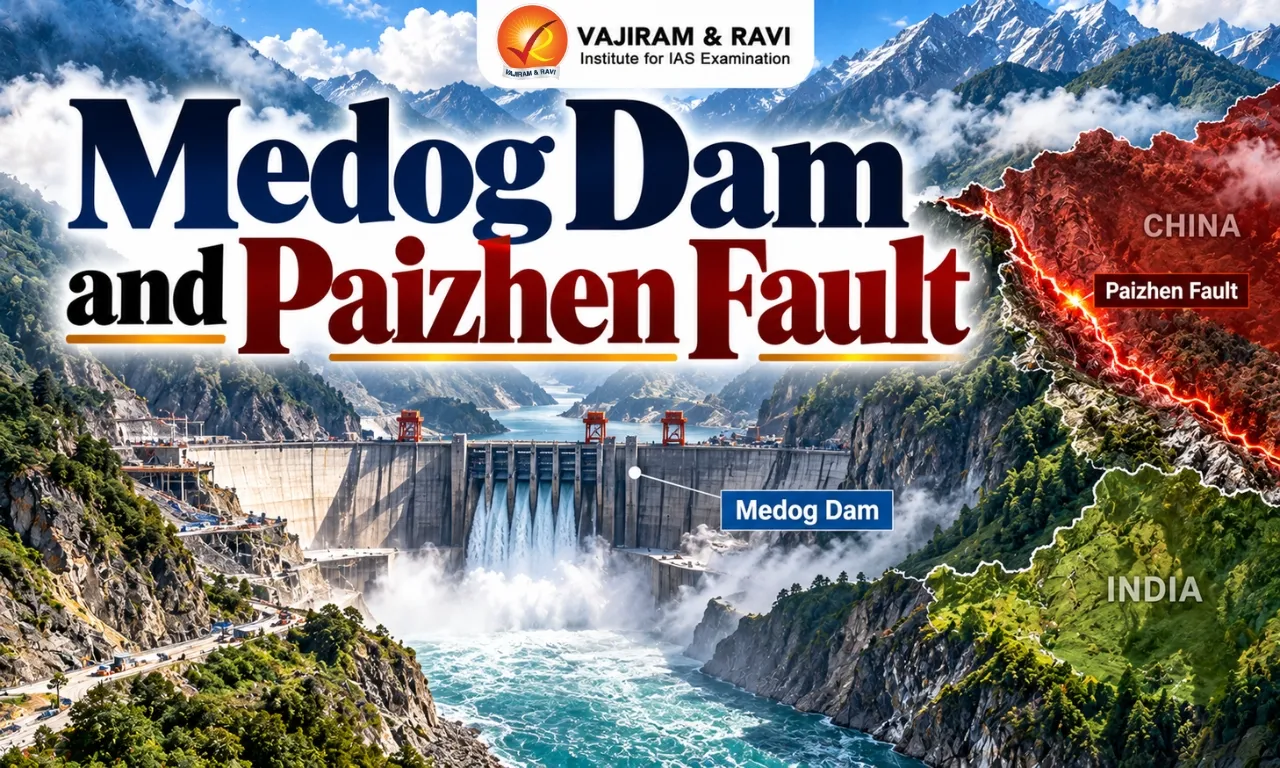
The Medog Hydropower Project is a mega hydropower project under construction on the Yarlung Tsangpo River in Tibet, China. With a planned capacity of approximately 60,000 megawatts (MW), it is expected to become the world's largest hydropower project by installed capacity.

The project has attracted attention following geological research highlighting risks associated with the Paizhen Fault, an active fault in the project area. Its location upstream of India also raises concerns about dam safety, downstream water security and India–China relations.

Medog Hydropower Project Location and Key Features

The project aims to harness the steep descent of the Yarlung Tsangpo River near its Great Bend in the eastern Himalayas.

  • Location: Medog County, Tibet Autonomous Region, China, near the Great Bend of the Yarlung Tsangpo River.
  • Proximity to India: The project area is reported to be approximately 50 km from the Indian border.
  • Planned capacity: Approximately 60,000 MW (60 GW).
  • Projected annual electricity generation: Around 300 billion kilowatt-hours (kWh).
  • Approval: December 2024.
  • Construction commencement: July 2025.
  • Expected completion: The project is reported to have a target timeline extending into the 2030s, with 2033 cited in reports.

The river's steep gradient offers enormous hydropower potential, but the mountainous terrain also creates substantial engineering challenges.

What is the Paizhen Fault?

The Paizhen Fault is an active geological fault identified in the area of the Medog hydropower project. A 2026 study by Chinese researchers raised concerns about its implications for nearby infrastructure and the stability of slopes around the proposed reservoir.

A geological fault is a fracture in the Earth's crust along which rocks have moved relative to one another.

Geological Features of the Paizhen Fault

The Paizhen Fault lies in the tectonically active eastern Himalayan region, where the Indian Plate continues to converge with the Eurasian Plate. Geological studies indicate that the fault has a long history of activity.

  • The fault has reportedly been active since the Pleistocene Epoch, with geological evidence indicating continued activity during the Holocene Epoch.
  • Geological dating suggests that movement occurred approximately 9,500 years ago, indicating relatively recent activity in geological terms.
  • A magnitude 6.9 earthquake struck the Milin area of Tibet in 2017, highlighting the region's seismic hazard. However, this earthquake should not be directly attributed to the Paizhen Fault without conclusive evidence.

Why does the Paizhen fault raise concerns?

The fault may increase geological risks to the project, particularly where fractured rocks, steep slopes and prolonged water exposure interact. However, the presence of an active fault does not by itself establish that a dam will fail.

  • Foundation stability: Fractured rocks may have lower strength and reduced capacity to support structures.
  • Earthquake hazard: Strong ground shaking could damage dams, tunnels, roads and power-generation infrastructure.
  • Landslides and slope collapse: Earthquakes, weakened rocks and water saturation may destabilise steep slopes.
  • River blockage: A major landslide could obstruct the river; the subsequent failure of a natural blockage could cause sudden downstream flooding.
  • Reservoir-related hazards: Changes in water levels may affect slope stability, while reservoir-induced seismicity is a possible site-dependent concern.

The 2026 geological study recommended measures such as slope reinforcement and retaining structures to reduce the risks of landslides and collapses.

Significance of the Medog Dam for India

The project is strategically important because the Yarlung Tsangpo flows from Tibet into Arunachal Pradesh as the Siang River and subsequently forms part of the Brahmaputra river system in Assam.

  • Water security: Changes in the timing or volume of upstream water releases could affect downstream flows, depending on the project's design and operation.
  • Flood management: Timely information about upstream river conditions is important for flood forecasting in Arunachal Pradesh and Assam.
  • Ecological impacts: Changes in river flows and sediment transport could affect aquatic ecosystems, river channels and downstream livelihoods.
  • Strategic concerns: The project raises questions about transparency, hydrological data sharing and the management of a transboundary river.
  • Bilateral relations: India and China need reliable communication to address concerns about downstream impacts and disaster preparedness.

These are potential risks rather than established outcomes. The actual downstream effects will depend on the project's design, operating arrangements and the river basin's hydrological conditions.

Challenges Associated with the Medog Dam

The project presents geological, environmental and transboundary challenges, particularly for downstream India.

  • Seismic risk: The Paizhen Fault raises concerns about earthquake hazards and the stability of dam infrastructure.
  • Downstream water security: Uncertainty over upstream dam operations could complicate India's assessment of potential changes in Brahmaputra flows.
  • Ecological impacts: Changes in river flow and sediment transport could affect downstream ecosystems and livelihoods.
  • Limited data sharing: Inadequate access to timely hydrological information could complicate flood forecasting and disaster preparedness in Arunachal Pradesh and Assam.

Way Forward

For India, the Medog project highlights the need to safeguard downstream water security while strengthening disaster preparedness and regional cooperation.

  • Transboundary cooperation: Strengthen India-China dialogue on Brahmaputra water-data sharing, upstream dam operations and timely flood warnings.
  • Disaster preparedness: Improve flood forecasting and early-warning systems in Arunachal Pradesh and Assam to mitigate potential downstream risks.
  • Geological risk monitoring: Track seismic activity and landslide hazards in the eastern Himalayas to assess potential threats to river infrastructure and downstream communities.
  • Environmental security: Assess potential changes in river flows and sediment transport to protect the Brahmaputra basin's ecosystems and livelihoods.

Medog Dam and Paizhen Fault FAQs

Q1: Where is the Medog Hydropower Project located?

Ans: It is located in Medog County, Tibet, China, on the Yarlung Tsangpo River near its Great Bend.

Q2: What is the planned capacity of the Medog Dam?

Ans: The project has a planned installed capacity of approximately 60,000 MW and projected annual electricity generation of around 300 billion kWh.

Q3: What is the Paizhen Fault?

Ans: Paizhen Fault is an active geological fault identified in the Medog project area, raising concerns about seismic hazards, rock stability and landslides.

Q4: Why is the Paizhen Fault geologically significant?

Ans: It lies in a tectonically active part of the eastern Himalayas, where the Indian and Eurasian Plates converge. Geological evidence indicates activity during the Quaternary Period.

Q5: Why is the Medog Dam important for India?

Ans: The project is upstream of India on the Yarlung Tsangpo-Siang-Brahmaputra river system. Its potential implications include downstream water flows, flood management, river ecology and India-China relations.

Shamonda Virus

Shamonda Virus

Shamonda Virus Latest News

Recently, France has reported the first known human case of Shamonda virus in a patient who died.

About Shamonda Virus

  • It is an insect-borne virus from the Orthobunyavirus group.
  • It belongs to the same group as Schmallenberg virus, which causes reproductive disorders ​in livestock.
  • It was first detected in cattle in Nigeria in 1965, it has since been found in parts of Africa and Asia.
  • Transmission: It is transmitted by biting midges and mainly affects cattle, though infections have also been identified in sheep, goats, horses and alpacas.
  • Symptoms: Symptoms include fever, diarrhoea and reduced milk production.
    Reproductive disorder such as abortions and foetal malformations
    Neurologic disorders (reported less commonly and demonstrated in some horses)  
  • Treatment: There are currently no commercially available vaccines against Shamonda virus.  
  • First Human Infection: Shamonda virus has historically not been recognised as a cause of disease in humans. However, the first ever reported human infection with Shamonda virus was reported in October 2026 in France. 

Source: TH

Shamonda Virus FAQs

Q1: What is Shamonda Virus?

Ans: It is an insect-borne virus from the Orthobunyavirus group.

Q2: When was Shamonda Virus detected?

Ans: It was first detected in cattle in Nigeria in 1965.

Emissions Gap Report 2026

Emissions Gap Report 2026

Emissions Gap Report 2026 Latest News

The Emissions Gap Report 2026 warns that the 1.5°C warming threshold is now unattainable, intensifying climate risks.

About Emissions Gap Report 2026

  • Emissions Gap Report is an annual report published by the United Nations Environment Programme (UNEP).
  • The EGR series tracks our progress in limiting global warming well below 2°Cand pursuing 1.5°C in line with the Paris Agreement.
  • It is launched every year ahead of the UN Climate Change Conference of the Parties (COP).
  • The EGR is co-produced by UNEP, the UNEP Copenhagen Climate Centre (UNEP-CCC) and partners.

Key Highlights of Emissions Gap Report 2026    

  • Global greenhouse gas emissions totaled 58.4 billion tonnes of carbon dioxide equivalent (GtCO₂e) in 2025, around 0.16 GtCO₂e lower than in 2024. 
  • More than two-thirds of all GHGs emissions are from fossil sources; rest being CO₂ from the land use, land-use change and forestry (LULUCF), methane, nitrous oxide and fluorinated gas emissions (F-gases).
  • The world has lost the opportunity to keep warming to 1.5°C above pre-industrial levels without, or with only limited, overshoot.
  • To reach the lowest-overshoot pathway, global greenhouse gas emissions would need to fall by: 18% by 2030, 45% by 2035 and 69% by 2040.
  • The full implementation of countries’ Nationally Determined Contributions (NDCs) would reduce emissions by only 5% to 8% by 2030 and 11% to 15% by 2035, relative to 2025.

Source: DTE

Emissions Gap Report 2026 FAQs

Q1: Which organisation publishes Emissions Gap Report?

Ans: United Nations Environment Programme (UNEP)

Q2: When is Emissions Gap Report is released?

Ans: It is launched every year ahead of the UN Climate Change Conference of the Parties (COP).

PM-DAKSH Scheme

PM-DAKSH Scheme

PM-DAKSH Scheme Latest News

Recently, the Department of Social Justice and Empowerment said that a total of 1,87,305 candidates were trained and 96,162 placed under the Pradhan Mantri Dakshata Aur Kushalta Sampann Hitgrahi (PM-DAKSH) scheme between 2020–21 and 2023–24,

About PM-DAKSH Scheme

  • The Pradhan Mantri Dakshata Aur Kushalata Sampanna Hitgrahi (PM-DAKSH) Yojana, is a Central Sector Scheme that was launched during 2020-21.
  • Aim: To provide skills through good quality institutions so that candidates from its target group can find employment.
  • Target Group:  Scheduled Castes, Other Backward Castes, Economically Weaker Sections, and the De-notified Tribes in India (DNTs), ‘Safai Karamcharis’ or waste pickers.
  • Eligibility
    • Age: 18-45 years
    • Family Income: OBC and EWS candidates must have a family income below Rs. 3 lakh, while there is no income limit for SC, DNT, or Safai Mitras/Waste Pickers.
  • It has been merged with the Pradhan Mantri Kaushal Vikas Yojana of the Ministry of Skill Development and Entrepreneurship.
  • There are four types of skill development training programmes under this namely, Up-skilling/Re-skilling, Short Term Training Programmes, Long Term Training Programmes, and Entrepreneurship Development Programme.
  • Implementation: It is implemented through the National Scheduled Castes Finance and Development Corporation (NSFDC), National Backward Classes Finance & Development Corporation (NBCFDC) and National Safai Karamcharis Finance and Development Corporation (NSKFDC).
  • Nodal Ministry: Ministry of Social Justice and Empowerment

Source: DD News

PM-DAKSH Scheme FAQs

Q1: Which is the nodal ministry of PM-DAKSH Scheme?

Ans: Ministry of Social Justice and Empowerment

Q2: What is the target group PM-DAKSH Scheme?

Ans: Scheduled Castes, Other Backward Castes, Economically Weaker Sections, and the De-notified Tribes in India (DNTs), ‘Safai Karamcharis’ or waste pickers.

Iodine

Iodine

Iodine Latest News

Recently, on the occasion of World Iodine Deficiency Day the Ministry of Health and Family Welfare, has advised citizens to choose iodised salt and use it in moderation for better health.

About Iodine

  • It is a chemical element and a member of the halogen elements, belonging to Group 17 (Group VIIa) of the periodic table.

Properties of Iodine

  • It is a nonmetallic, nearly black solid at room temperature with a glittering, crystalline appearance.
  • The molecular lattice of iodine contains discrete diatomic molecules, which are also present when iodine is molten or in a gaseous state.
  • Iodine is a bluish-black, lustrous solid. It volatilises at ambient temperatures into a pretty blue-violet gas.
  • It has ability to form stable compounds with both metals and nonmetals.
    • Example: For instance, iodine reacts with alkali metals to produce iodides.

Occurrence of Iodine

  • Iodine is a naturally occurring element that is essential for the good health of people and animals.
  • It is found in small amounts in sea water and in certain rocks and sediments.

Uses of Iodine

  • Iodine is an essential component of the thyroid hormones thyroxine (T4) and triiodothyronine (T3).
    • Thyroid hormones regulate many important biochemical reactions, including protein synthesis and enzymatic activity, and are critical determinants of metabolic activity.
  • It is widely used in medical antiseptics, iodized salt for nutritional supplementation, photographic chemicals, and as a catalyst in various industrial processes.
  • It is used in nuclear medicine for diagnostic imaging and treatment procedures, particularly due to its natural affinity for the thyroid gland.

Source: News On Air

Iodine FAQs

Q1: What is Iodine?

Ans: It is a chemical element and a member of the halogen elements, belonging to Group 17 (Group VIIa) of the periodic table.

Q2: What are the properties of Iodine?

Ans: It is a nonmetallic, nearly black solid at room temperature with a glittering, crystalline appearance.

Exercise SIMBEX 2026

Exercise SIMBEX 2026

Exercise SIMBAX 2026 Latest News

Recently, the 33rd edition of exercise SIMBAX was commenced at Visakhapatnam.

About Exercise SIMBEX 2026

  • The Singapore India Maritime Bilateral Exercise (SIMBEX) is conducted annually by the Indian Navy and the Republic of Singapore Navy (RSN). 
  • Background: SIMBEX, which began as ‘Exercise Lion King’ in 1994, has since evolved into one of the most significant bilateral maritime collaborations between the Indian Navy and the Republic of Singapore Navy (RSN).
  • Phases: The exercise will be conducted in two phases.
    • The Harbour Phase: It will include professional interactions, Subject Matter Expert Exchanges (SMEEs), cross-deck visits, sporting engagements, and planning conferences.
    • The Sea Phase: It will be conducted in the Bay of Bengal, will feature maritime operations and tactical exercises, including Anti-Submarine Warfare (ASW), anti-surface and anti-air warfare drills, seamanship evolutions, and tactical manoeuvres.
  • Significance: SIMBEX-2026 reaffirms the longstanding maritime partnership between India and Singapore and their shared commitment to enhancing interoperability, addressing common maritime security challenges, and promoting peace and stability in the Indo-Pacific.
  • Other Exercises with Singapore: Exercise AGNI WARRIOR (Military Exercise), Air Force Exercise  Joint Military Training (JMT).

Source: PIB

Exercise SIMBEX 2026 FAQs

Q1: What is Exercise SIMBEX 2026?

Ans: It is Maritime Bilateral Exercise (SIMBEX).

Q2: Exercise SIMBEX conducted between which two countries?

Ans: It is conducted annually by the Indian Navy and the Republic of Singapore Navy (RSN). 

Yamuna Rejuvenation Projects in Delhi, ₹8,941 Crore Plan

Yamuna Rejuvenation Projects in Delhi

Why in News?

In October 2026, Union Home Minister Amit Shah inaugurated and laid the foundation stones for 43 Delhi Jal Board (DJB) water and sewerage projects worth ₹8,941 crore. The projects aim to improve Delhi's water infrastructure, reduce sewage pollution and accelerate the rejuvenation of the Yamuna River. The government has set a target of cleaning the Yamuna by May 2029.

What Are the Yamuna Rejuvenation Projects in Delhi?

The Yamuna Rejuvenation Projects in Delhi are a series of infrastructure and pollution-control measures designed to improve the quality of the Yamuna River by treating sewage, expanding sewer networks, upgrading wastewater treatment facilities and controlling the discharge of untreated waste.

The initiative focuses on addressing one of the major causes of Yamuna pollution: the discharge of untreated or inadequately treated sewage from Delhi's residential, commercial and industrial areas.

Major Components of the Yamuna Rejuvenation Projects

The Yamuna Rejuvenation Projects in Delhi focus on improving wastewater management, reducing pollution and strengthening water infrastructure through the following measures:

  • Expansion of Sewage Treatment Plants (STPs): Increasing sewage treatment capacity and upgrading existing facilities to reduce untreated wastewater entering the Yamuna.
  • Sewer Network Expansion: Improving sewer connections and expanding networks to ensure wastewater reaches treatment plants.
  • Drain Cleaning: Using drone surveys and aquatic trash harvesters to monitor drains and remove floating waste.
  • Industrial Waste Management: Controlling industrial effluents and ensuring compliance with wastewater discharge standards.
  • Dairy Waste Management: Improving the collection and treatment of dairy waste to prevent pollution of drains and rivers.
  • Drinking Water Infrastructure: Upgrading water supply systems to improve water management and distribution.
  • Interstate Coordination: Working with Haryana and Uttar Pradesh to strengthen pollution control and improve Yamuna water quality.

Also Read:- Water Pollution

Role of Interstate Cooperation in Yamuna Cleaning

The Yamuna flows through multiple states before reaching Delhi and continuing downstream. Therefore, pollution control cannot be achieved through Delhi's efforts alone.

Coordination between Delhi, Haryana and Uttar Pradesh is important for managing water quality, wastewater discharge and river pollution across state boundaries.

Interstate cooperation can support:

  • Monitoring pollution entering the river from different locations.
  • Improving wastewater treatment and discharge management.
  • Sharing relevant water-quality information.
  • Coordinating pollution-control measures across state boundaries.

What Is the Target for Yamuna Rejuvenation?

The Delhi government has set a target of cleaning the Yamuna by May 2029. The ₹8,941 crore investment in 43 water and sewerage projects is intended to accelerate progress towards this goal.

Meeting the target will depend on the timely completion of infrastructure projects, proper operation of sewage treatment plants, effective enforcement of pollution-control rules and regular monitoring of water quality.

Why Is Yamuna Rejuvenation Important?

The rejuvenation of the Yamuna is important for environmental protection, public health and sustainable urban development.

  • Public health: Reducing sewage contamination can lower exposure to harmful microorganisms and polluted water.
  • Aquatic biodiversity: Better water quality can support aquatic organisms and improve river ecology.
  • Water quality: Controlling untreated sewage and industrial effluents can reduce the pollution load entering the river.
  • Urban sanitation: Improved sewerage infrastructure can reduce the discharge of wastewater into open drains.
  • Sustainable development: Better water and wastewater management can help Delhi address the environmental challenges associated with urbanisation.
  • River conservation: Effective pollution control can contribute to the long-term restoration of the Yamuna's ecological condition.

Challenges in Cleaning the Yamuna River

Despite large investments in infrastructure, several challenges may affect the success of the rejuvenation programme.

  • Untreated sewage: Inadequate sewer connections and treatment gaps can allow wastewater to enter the river.
  • Treatment plant performance: Sewage treatment plants need regular maintenance, reliable power supply and efficient operation.
  • Industrial pollution: Poorly treated industrial effluents can introduce harmful chemicals into water bodies.
  • Solid waste dumping: Plastic, garbage and other waste can enter drains and obstruct water flow.
  • Low river flow: Limited freshwater flow in some stretches can reduce the river's ability to dilute pollutants.
  • Interstate coordination: Differences in implementation and enforcement across states can make pollution control more difficult.
  • Long-term maintenance: Infrastructure must continue functioning effectively after construction is completed.

How Can the Success of Yamuna Rejuvenation Be Measured?

The success of the projects should be assessed through measurable environmental and infrastructure outcomes rather than investment figures alone.

Important indicators include:

  • The volume of sewage collected and treated daily.
  • The proportion of sewage receiving adequate treatment.
  • The performance and compliance of sewage treatment plants.
  • The reduction in untreated wastewater entering the Yamuna.
  • Changes in Biochemical Oxygen Demand (BOD) and dissolved oxygen levels.
  • Compliance with applicable water-quality standards.
  • Reduction in industrial and commercial waste entering drains.
  • Improvement in water quality at monitored locations along the river.

Biochemical Oxygen Demand (BOD) measures the amount of oxygen required by microorganisms to break down organic matter in water. High BOD generally indicates greater organic pollution, while dissolved oxygen is important for aquatic life.

Yamuna Rejuvenation Projects in Delhi FAQs

Q1: What are the Yamuna Rejuvenation Projects in Delhi?

Ans: The Yamuna Rejuvenation Projects are water and sewerage infrastructure initiatives designed to reduce pollution in the Yamuna River through sewage treatment, sewer network improvements, drain cleaning and waste management.

Q2: What is the total cost of the Yamuna rejuvenation projects?

Ans: The 43 Delhi Jal Board water and sewerage projects announced in October 2026 involve an investment of ₹8,941 crore.

Q3: Who inaugurated the Yamuna rejuvenation projects?

Ans: Union Home Minister Amit Shah inaugurated and laid the foundation stones for the projects in October 2026.

Q4: What is the target date for cleaning the Yamuna in Delhi?

Ans: The target announced for cleaning the Yamuna is May 2029.

Q5: What is the role of sewage treatment plants in Yamuna cleaning?

Ans: Sewage treatment plants remove pollutants from wastewater before it is discharged. Their effective operation helps reduce the amount of untreated sewage entering the Yamuna River.

Antimatter, Origin, Artificial Generation, Latest News 2026

Antimatter

Antimatter represents one of the most fascinating subjects in modern physical sciences. Composed of antiparticles that mirror ordinary matter, it holds key answers to fundamental questions regarding the origin, evolution and basic structural symmetries governing our physical universe today.

Antimatter Latest News

In October 2026, physicists at Northwestern University achieved a major breakthrough by holding a single positron inside a quantum cyclotron trap for months at a time. Using a sodium 22 radioactive source chilled near absolute zero, researchers precisely manipulated its quantum states, advancing research into cosmic symmetries and matter-Antimatter imbalances.

What is Antimatter?

Antimatter is a unique substance composed of antiparticles that correspond directly to standard matter particles while carrying opposite physical and electrical properties.

  • Subatomic antiparticles: Antiparticles form the building blocks of this material, featuring positrons as positively charged electrons, antiprotons as negatively charged protons and electrically neutral antineutrons possessing an opposite magnetic moment sign.
  • Artificial generation: Humans create these rare particles using ultra high speed collisions inside massive particle accelerators, such as CERN's Large Hadron Collider..
  • Cosmic origin: Antimatter was created alongside regular matter following the Big Bang, yet it remains extremely scarce across the observable cosmos due to complex evolutionary processes in early space.
  • Mirror Configuration: Every ordinary matter particle possesses a corresponding antiparticle twin that shares its exact physical mass and spin parameters but carries an opposite electric charge and magnetic moment.

Antimatter Significance

Studying the key properties, primary Uses and fundamental behaviors of Antimatter provides deep insights into energy generation, physics and advanced medical tools.

  • Energy Generation Properties: When matter and antiparticles collide, they undergo complete annihilation, instantly converting their entire physical mass into pure energy in the form of high energy gamma radiation governed by Einstein's famous equation: E= mc2.
  • Medical Diagnostics Uses: Positrons serve essential practical practical roles within modern healthcare diagnostics, specifically enabling high precision body scans through Positron Emission Tomography (PET) imaging systems utilized widely inside hospitals worldwide.
  • Particle physics research: Specialized international research centers like CERN produce antihydrogen and antiprotons to continuously test the limits and fundamental principles of standard physics models.
  • Solving Baryon Asymmetry: Investigating antiparticles helps address the major cosmological mystery of why today's observable universe consists almost entirely of matter instead of equal parts matter and antimatter created during the Big Bang.
  • Testing Standard Model: Measuring precise magnetic moments of trapped positrons allows scientists to strictly verify CPT symmetry invariance, determining whether current foundational physics models accurately describe cosmic balance or require fundamental revision.

Antimatter FAQs

Q1: What is the main difference between matter and antimatter?

Ans: Antimatter has the opposite electric charge compared to matter.

Q2: What is the antimatter equivalent of an electron called?

Ans: Positron

Q3: What is Antimatter?

Ans: Antimatter is a substance composed of subatomic antiparticles that possess the exact same mass and spin as ordinary matter particles, but carry opposite electrical charges and magnetic properties.

Q4: What happens when matter and Antimatter collide?

Ans: When matter and Antimatter come into physical contact, they undergo a process called annihilation. Both particles destroy each other almost instantly, converting their total physical mass into pure energy in the form of high energy gamma rays.

Q5: Where can Antimatter be found naturally?

Ans: In nature, small traces of Antimatter exist in cosmic rays interacting with Earth's upper atmosphere. It is also briefly produced during high energy natural phenomena on Earth, such as extreme lightning strikes, though it annihilates almost instantly upon contact with regular matter.

Tibet Earthquake 2026, Epicentre, Magnitude, Death Toll, Impacts

Tibet Earthquake 2026

The recent China Tibet Earthquake highlights the profound seismic vulnerability of high altitude regions driven by active continental collisions. Earthquakes in these zones occur due to immense tectonic stresses built up by moving plates. The ongoing northward movement of the Indian plate colliding with the Eurasian plate continuously accumulates massive elastic energy along major geological fault lines.

Tibet Earthquake 2026 Latest News

A powerful 7.0 magnitude Earthquake Struck the Tibet Region late Thursday at 10:33 p.m. at a shallow depth of ten kilometers which caused widespread disruptions. The disaster resulted in a tragic death toll of 16 people, while reported injuries rose to 65. Emergency rescue teams, police personnel and prefabricated housing units were swiftly deployed to assist affected residents.

Tibet Earthquake 2026

Essential details regarding the recent Tibet Earthquake 2026 including its location, magnitude, depth and immediate physical characteristics has been listed below.

  • Magnitude and Intensity: A powerful 7.0 magnitude tremor struck the region, representing the biggest seismic event in the area over the last five years.
  • Epicentre Location: The epicentre of this major China Earthquake was located precisely in Maru township within Baqen county, situated in a rugged mountainous area about 190 kilometres east-northeast of Nagqu and 390 kilometres northeast of regional capital Lhasa.
  • Focal Depth: The destructive tremor struck at a very shallow depth of 10 kilometres beneath the surface, which significantly intensified local ground motions and magnified structural vulnerability across the entire high altitude mountainous terrain of the affected area.
  • Casualties and Death Count: Official reports confirmed that sixteen people suffered a tragic death, while the total number of recorded injuries climbed to 65, including eleven individuals who sustained severe medical conditions requiring immediate and urgent emergency hospital medical treatment.
  • Emergency Response: Local government authorities swiftly activated a level II earthquake disaster emergency response protocol to coordinate rapid deployment of trained emergency personnel, police units and essential relief supplies to assist affected victims across all remote local communities.
  • Rescue Personnel: More than 1,600 local county personnel along with over 300 police officers, including traffic and community units, were deployed directly to the central epicentre for carrying out intensive field search and rapid emergency rescue operations.
  • Infrastructure Disruption: The sudden violent tremor triggered extensive rockfalls, forced the temporary closure of major sections of National Highway 317 and severely disrupted critical electrical power and telecommunications services throughout the entire remote mountainous county seat area.
  • Relief Supplies: Essential emergency supplies, including prefabricated housing units, tents, folding beds, flashlights and warm winter clothing, arrived rapidly in the affected region to support thousands of vulnerable displaced local residents who were safely and successfully relocated.

Tibet Earthquake Impacts

Severe seismic impacts of the Tibet Earthquake 2026 included structural collapses, civilian casualties, infrastructural paralysis, highway blockages and extensive displacement across high altitude mountain communities.

  • Housing Destruction: At least 339 residential houses suffered complete structural collapse across the affected mountain townships, leaving numerous local families entirely homeless and necessitating immediate emergency shelter provisions in freezing harsh high altitude severe winter weather conditions.
  • Casualties and Fatalities: The natural disaster resulted in a tragic death, keeping the death toll at sixteen people, alongside sixty five recorded injuries requiring urgent medical attention and professional hospital care for critical conditions across local regional medical facilities.
  • Transportation Disruptions: Dangerous rockfalls and heavy falling debris blocked essential regional roadways, forcing local government authorities to close sections of National Highway 317 to regular traffic while allowing only safely authorized official emergency rescue vehicles through.
  • Mass Displacement: Over 12,000 local residents were safely evacuated and relocated from vulnerable residential buildings to secure temporary outdoor shelters, thereby avoiding further tragic casualties from potential dangerous seismic aftershocks or secondary structural building failures.
  • Economic and Livelihood Losses: The widespread physical destruction of rural livestock sheds and agricultural infrastructure directly threatened traditional pastoral livelihoods.

Tibet Earthquake Causes

Underlying geological mechanisms driving these seismic events involve immense tectonic plate collisions, crustal buckling and active fault slip energy releases. Learn the major causes of Tibet Earthquake described below:

  • Tectonic Plate Collision: The rigid Indian Plate moves northward at a rapid rate, pushing forcefully into and subducting beneath the Eurasian Plate, which creates continuous crustal folding, high mountain building and massive elastic stress accumulation over many centuries.
  • Active Fault Systems: The rugged mountainous region features major active fault systems where locked geological patches suddenly slip, releasing centuries of accumulated tectonic energy in the form of sudden violent and destructive surface major seismic ground shaking events.
  • Geological Strain: Convergence between massive tectonic plates occurs at a relative rate of 40 to 50 millimetres per year, generating immense geological stress that eventually exceeds internal rock strength limits and triggers sudden major deep rock fracturing.
  • Young Terrain Instability: The structurally unstable geological terrain consists of mixed soft and hard rock formations that fracture easily and greatly amplify surface ground shaking during any major catastrophic seismic event across the wider affected zone.
  • Secondary Environmental Stressors: Heavy river basin sedimentation, active glacial melting and large scale human infrastructure projects add extra surface weight and continuous tectonic stress to the underlying vulnerable Earth crust of the high alpine mountain region today.

Why are Himalayas Prone to Earthquakes?

The Himalayas represent one of the most active tectonic regions globally, driven by continuous continental plate convergence and mountain building. The major reasons behind frequent earthquakes in Himalayas are:

  • India-Eurasia Collision Zone: The majestic Himalayas were formed and are continually uplifted by the continuous convergence of the Indian and Eurasian plates, creating one of the most active tectonic and seismic mountain belts worldwide across the Asian continent.
  • High Seismic Hazard Classification: Due to these intense tectonic forces, the entire Himalayan mountain arc falls predominantly under the highest risk categories, designated as Seismic Zones IV and V within standard regional governmental seismic zonation frameworks established for safety.
  • Continuous Crustal Uplift: The northward movement of the Indian plate causes continuous crustal buckling and folding, ensuring that active mountain building processes remain concurrent alongside ongoing geological seismic adjustments and frequent tremor occurrences happening continuously across the region today.
  • Proximity to Fault Boundaries: The mountainous region features complex fault systems like the Main Himalayan Thrust where historical energy storage indicates that massive future earthquakes remain an imminent and dangerous future geological possibility across all vulnerable mountain borders today.
  • Historical Seismicity Records: Numerous recorded past earthquakes, including the devastating Nepal earthquake events, confirm that continuous energy release and tectonic adjustments characterize the entire arc stretching from the Hindu Kush down to remote northeastern Indian Arunachal Pradesh region.
  • Future Imminent Risks: Scientific geological studies indicate that future great earthquakes remain imminent along vast unruptured segments of the mountain range due to continuous, uninterrupted tectonic plate convergence and ongoing subsurface seismic energy buildup over a very long time.

Risk of Earthquake on India

India faces substantial seismic vulnerability, with over half its landmass exposed to earthquake hazards requiring robust mitigation and preparedness strategies. Nearly 58% of the entire Indian landmass faces varying degrees of seismic hazard due to complex tectonic boundary settings.

  • High Vulnerability Landmass: More than half of India's geographical area is vulnerable to earthquakes, requiring rigorous adherence to building codes and proactive disaster management planning across vulnerable rapidly growing densely populated major urban municipal city center locations today.
  • Active Fault Systems in Capital Region: The sensitive Delhi NCR region sits near multiple active fault lines such as Sohna, Mathura and Delhi-Moradabad, while neighboring urban areas face heightened risks from regional seismic zone hazard risk safety zone hazard classification standards today.
  • Construction and Compliance Challenges: Rapid urbanization, informal settlements and non engineered structures pose major safety challenges, as older buildings constructed before modern building codes often lack proper earthquake resistant civil engineering and modern structural design frameworks implemented across the country today.
  • Government Mitigation Measures: Government authorities have established monitoring networks through the IMD, formulated NDMA disaster management plans and introduced BIS guidelines to improve structural safety and public awareness nationwide across all diverse Indian geographic regions starting right now.
  • Comprehensive Disaster Preparedness: Effectively addressing resource limitations, improving emergency search and rescue infrastructure and upgrading building enforcement mechanisms remain crucial steps for minimizing potential casualties during future catastrophic seismic events across all vulnerable parts of the country of India today.

Tibet Earthquake 2026 FAQs

Q1: What was the magnitude and depth of the Tibet Earthquake 2026?

Ans: The earthquake had a 7.0 magnitude and occurred at a shallow depth of 10 kilometres, which magnified surface shaking across the affected areas.   

Q2: Where was the epicentre of the recent Tibet earthquake?

Ans: The epicentre was located in Maru township, within Baqen county of Nagqu City, situated about 190 kilometres east-northeast of Nagqu.

Q3: What causes earthquakes in the Himalayan region?

Ans: Earthquakes occur due to the continuous collision of the Indian and Eurasian tectonic plates, which generates high underground stress along active fault lines.

Q4: What is the epicentre of an earthquake?

Ans: The epicentre is the point on the Earth’s surface directly above the underground origin, or focus, where an earthquake begins.

Q5: Why do shallow depth earthquakes cause more damage?

Ans: Shallow earthquakes release seismic energy closer to the surface, causing stronger ground shaking and greater structural damage to nearby buildings and infrastructure.

Centre for Research on Energy and Clean Air (CREA)

Centre for Research on Energy and Clean Air

Centre for Research on Energy and Clean Air Latest News

Delhi’s winter air quality has shown no consistent improvement in the four years since the revision of the Graded Response Action Plan (GRAP) in 2022, according to an analysis by the Centre for Research on Energy and Clean Air (CREA).

About Centre for Research on Energy and Clean Air 

  • It is an independent, non-profit research organisation focused on revealing the trends, causes, and health impacts, as well as the solutions, to air pollution.
  • It is based in Helsinki, Finland. 
  • CREA uses scientific data, research, and evidence to support the efforts of governments, companies, and campaigning organisations worldwide in their efforts to move towards clean energy and clean air. 
  • CREA investigates the sources and trends of health-harming pollutants, particularly those resulting from fossil fuel combustion, which cause millions of premature deaths annually. 
  • The NGO produces regular publications and data products addressing topics such as coal phase-out, industrial emissions, and the environmental impacts of energy production. 
  • CREA’s research also covers geopolitical issues, such as the financing of fossil fuel imports during conflicts. 
  • Its works are funded through philanthropic grants and revenue from commissioned research.

News: DP

Centre for Research on Energy and Clean Air FAQs

Q1: What is the Centre for Research on Energy and Clean Air (CREA)?

Ans: CREA is an independent, non-profit research organisation focused on air pollution, its causes, health impacts and possible solutions.

Q2: Where is the Centre for Research on Energy and Clean Air (CREA) based?

Ans: It is based in Helsinki, Finland.

Q3: What types of publications and data products does Centre for Research on Energy and Clean Air (CREA) produce?

Ans: It produces regular research publications and data products on air pollution, fossil fuels, industrial emissions and energy-related environmental impacts.

Q4: How is the work of Centre for Research on Energy and Clean Air (CREA) funded?

Ans: Its work is funded through philanthropic grants and revenue from commissioned research.

Charles Correa Gold Medal

Charles Correa Gold Medal

Charles Correa Gold Medal Latest News

A Kochi-based student of architecture recently won the 28th Charles Correa Gold Medal in architecture in Mumbai.

About Charles Correa Gold Medal

  • It is an annual award initiated in 1998 by the Indian architect and urbanist Charles Correa. 
  • The medal recognises quality and talent among young students of architecture for their undergraduate thesis project in a first professional degree course.  
  • The Charles Correa Foundation (CCF) administers the Gold Medal annually. 
  • Eligibility: Final-year students pursuing undergraduate professional degree at eligible Indian architecture colleges. 
  • Selection: 
    • Participating colleges nominate one student’s individual thesis project.
    • The student must be the sole author of the project. Group work is not permitted. 
    • A jury of eminent architects review the submissions and identify an outstanding student who will be awarded the Medal. 
    • The applicant college of architecture must be located in India and approved by the Council of Architecture (COA).
    • Initially the award was open only to Mumbai and Goa architecture colleges, but from 2022 forward, CCF invites all colleges across India. 
  • From 2025 to 2027, the medal focuses on thesis projects that address ‘Equitability through Design’.  

Who was Charles Correa?

  • He was a renowned Indian architect and urban planner.
  • Born in Secunderabad, India, in 1930, he studied architecture at the University of Michigan and MIT. He died in Mumbai on June 16, 2015 at age 84. 
  • He was credited with the creation of modern architecture in post-Independence India.
  • Understanding the needs of the urban poor, Correa used traditional methods and materials to plan the urban designs.
  • In the majority of his designs, he applied for the 'open-to-sky' concept.
  • His major projects include the Mahatma Gandhi Memorial at the Sabarmati Ashram,  National Crafts Museum in New Delhi, Bharat Bhavan in Bhopal, Jawahar Kala Kendra in Jaipur, and the British Council in Delhi.
  • He was one of the chief architects of Navi Mumbai.
  • His work also includes projects in townships and public housing projects in Delhi, Mumbai, Ahmedabad, Bengaluru (Bangalore), and other cities in India.  
  • In 1984 he founded the Urban Design Research Institute in Mumbai, and a year later he became Chairman of the National Commission for Urbanisation. 
  • Awards and Recognitions:
    • He was awarded the second highest civilian honour, the Padma Shri in 1972 and the Padma Vibhushan in 2006.
    • He was also honoured with the 1984 Royal Gold Medal by the Royal Institute of British Architects (RIBA).
    • He was acclaimed as “India’s greatest architect” by RIBA when it mounted an exhibition on him in 2013.

News: TH

Charles Correa Gold Medal FAQs

Q1: Who initiated the Charles Correa Gold Medal?

Ans: Indian architect and urbanist Charles Correa.

Q2: Which organisation administers the Charles Correa Gold Medal annually?

Ans: The Charles Correa Foundation (CCF).

Q3: What is the primary objective of the Charles Correa Gold Medal?

Ans: To recognise talent and excellence among architecture students through their undergraduate thesis projects.

Q4: Who was Charles Correa?

Ans: He was a renowned Indian architect and urban planner who played a significant role in shaping modern architecture in post-Independence India.

Akash Missile System

Akash Missile System

Akash Missile System Latest News

India's reported sale of its indigenous Akash surface-to-air missile system to Tajikistan and Turkmenistan could mark an important step in the country's ambition to become a major global arms exporter.

About Akash Missile System

  • It is a short-range surface-to-air missile (SAM) system.
  • It is designed to protect vulnerable areas, points, and assets from a range of aerial threats, including fighter aircraft, cruise missiles, drones, and helicopters.
  • It was indigenously designed and developed by India’s Defence Research and Development Organisation (DRDO) and is produced by Hyderabad-based Bharat Dynamics Ltd. (BDL).
  • It was developed under India’s Integrated Guided Missile Development Programme (IGMDP). 
    • The programme also involved the development of the Nag, Agni, and Trishul missiles, as well as the Prithvi ballistic missile. 
  • It is currently in service with the Indian Air Force (IAF) and the Indian Army.
  • Akash should be distinguished from adjacent systems within India's tiered air-defence grid. 
    • It occupies the medium-range layer, below the long-range S-400 Triumf acquired from Russia and the indigenous-Israeli Barak-8/MR-SAM, and above short-range systems such as the quick-reaction surface-to-air missiles (QRSAM) and the man-portable point-defence weapons.

Also Read: Missiles in India

Akash Missile System Features

  • The system features a launcher, a missile, a control centre, an integral mission guidance system, a multifunctional fire control radar, a system arming and explosion mechanism, a digital autopilot, C4I (command, control, communication, and intelligence) centres, and supporting ground equipment.
  • The missile is 5.87 meters long, 350 millimeters in diameter, and weighs 710 kilograms.
  • It features a solid-fuel, ramjet propulsion system, capable of reaching speeds of Mach 2.5 to 3.5 (up to 4,200 km/h).
  • It covers a range of 4.5 km to 25 km and can engage aerial threats flying between 100 meters and 20 kilometers in altitude.
  • It can simultaneously engage multiple targets in Group Mode or Autonomous Mode. It has a kill probability of up to 99% with a salvo of two missiles. 
  • The missile has a 60 kg pre-fragmented warhead with proximity fusing.  
  • Its sophisticated Rajendra radar can track numerous targets and guide multiple missiles concurrently.
  • It is fully automatic, features built-in electronic counter measures, and is mobile across different terrains.

Akash Missile System Variants

  • Akash-1S: Incorporates an indigenous radio-frequency (RF) seeker for improved terminal accuracy, moving away from pure command guidance. 
  • Akash Prime: Upgraded RF seeker and optimised for high-altitude, low-temperature operation, addressing performance gaps observed in mountainous theatres. 
  • Akash-NG (New Generation): Introduces an active electronically scanned array (AESA) multifunction radar, an active RF seeker, a canisterised launcher, and extended range.

News: NDTV

Akash Missile System FAQs

Q1: What is the Akash Missile System?

Ans: It is a short-range surface-to-air missile (SAM) system designed to defend against aerial threats.

Q2: Which organisation designed and developed the Akash Missile System?

Ans: India’s Defence Research and Development Organisation (DRDO).

Q3: Under which programme was the Akash Missile System developed?

Ans: India’s Integrated Guided Missile Development Programme (IGMDP).

Q4: What is the operational range of the Akash Missile System?

Ans: Approximately 4.5 km to 25 km.

Q5: Can the Akash Missile System engage multiple targets simultaneously?

Ans: Yes. It can engage multiple targets in Group Mode or Autonomous Mode.

Kamala Hydroelectric Project

Kamala Hydroelectric Project

Kamala Hydroelectric Project Latest News

National Hydroelectric Power Corporation (NHPC) has sought clearance from the Union Environment Ministry to divert 3,278 hectares of high-conservation-value forest in the lower Himalayas region of Arunachal Pradesh for its Kamala hydroelectric project.

About Kamala Hydroelectric Project

  • Kamala Hydroelectric Project (formerly Subansiri Middle Hydroelectric Project) is a 1,720 MW hydroelectric project planned on the Kamala River (a major tributary of the Subansiri River) in Arunachal Pradesh‘s Kamle district.
  • It is a storage-based scheme with a flood moderation component.
  • The project involves construction of a 216-metre-high concrete gravity dam and an underground powerhouse.
  • The project will generate 6,869.92 MU of green energy annually on completion.
  • In addition to power generation, the project also envisaged to provide flood relief in the Brahmaputra valley.
  • The project will be implemented on a Build-Own-Operate-Transfer (BOOT) basis through a joint venture company with 74% equity by NHPC and 26% by the Govt of Arunachal Pradesh (GoAP).
  • The completion cost of the project is estimated at Rs 26,069.50 crore.
  • The project is proposed to be financed with a debt-equity ratio of 70:30, supported by Government of India grants for enabling infrastructure (Rs 1,340 crore) and flood moderation component (Rs 4,743.98 crore), along with 100% SGST reimbursement by GoAP. 
  • The State will receive 12% free power and an additional 1% earmarked for the Local Area Development Fund (LADF).

News: IE

Kamala Hydroelectric Project FAQs

Q1: What is the Kamala Hydroelectric Project?

Ans: The Kamala Hydroelectric Project is a 1,720 MW hydroelectric project planned on the Kamala River in Arunachal Pradesh.

Q2: What type of scheme is the Kamala Hydroelectric Project?

Ans: It is a storage-based hydroelectric scheme with a flood moderation component.

Q3: What type of dam is proposed under the Kamala Hydroelectric Project?

Ans: A 216-metre-high concrete gravity dam is proposed.

Q4: On what basis will the Kamala Hydroelectric Project be implemented?

Ans: It will be implemented on a Build-Own-Operate-Transfer (BOOT) basis.

Q5: What are the two major objectives of the Kamala Hydroelectric Project?

Ans: Its major objectives are renewable electricity generation and flood moderation in the Brahmaputra Valley.

Colorado River

Colorado River

Colorado River Latest News

During an intense drought from 2020 to 2022, the Upper Colorado River Basin lost far more groundwater than the Lower Basin did, despite having much higher natural recharge, a recent study has found.

About Colorado River

  • It is a major river of North America.
  • The name "Colorado" comes from Spanish and means "colored reddish." This is because the river used to carry a lot of silt, which made its water look red. 
  • Origin: 
    • It rises in the Rocky Mountains of Colorado, United States.
    • It flows generally west and south for 2,330 kilometres into the Gulf of California in northwestern Mexico.
    • It flows through seven U.S. states and two Mexican states.
    • Colorado forms an international boundary between Arizona (US) and Mexico for about 29 kilometers and drains North America’s vast semi-arid and arid area.  
  • The intensive development along the river has earned it the name “Lifeline of the Southwest.” 
  • Lakes: It forms several major reservoirs, including Lake Mead and Lake Powell.
  • Tributaries: 
    • It has several tributaries, including Green, Gunnison, San Juan, Dolores, Little Colorado, Gila, and Virgin Rivers.
    • The Green River is the longest river feeding into the Colorado River.
  • One of the Colorado River’s most famous features is the Grand Canyon, which it carved over millions of years.
  • The river also flows through Canyonlands National Park and Horseshoe Bend in Arizona.
  • Major Dams: 
    • Hoover Dam is an arched dam.
      • It is one of the world’s highest dams and one of the largest concrete dams in volume. 
      • It holds back Lake Mead, one of the world’s greatest reservoirs. 
    • Parker Dam: It is the deepest dam on earth. 
    • Glen Canyon Dam: It created one of the biggest reservoirs in the United States, known as Lake Powell.

News: LS

Colorado River FAQs

Q1: Through which two countries does the Colorado River flow?

Ans: The Colorado River flows through the United States and Mexico.

Q2: What is the approximate length of the Colorado River?

Ans: Approximately 2,330 kilometres.

Q3: Where does the Colorado River originate?

Ans: It originates in the Rocky Mountains of Colorado, United States.

Q4: Into which water body does the Colorado River flow?

Ans: It flows towards the Gulf of California in northwestern Mexico.

Q5: Which river is the longest tributary feeding into the Colorado River?

Ans: The Green River.

Kekaidong River, Location, Origin, Ecological Significance

Kekaidong River

The Kekaidong River is associated with West Karbi Anglong district in Assam. It gained attention in June 2026 following the reported sighting of a juvenile gharial, highlighting the importance of freshwater habitat conservation in the region.

Kekaidong River

The Kekaidong River is a river of Assam, associated with the Brahmaputra drainage system. Its geographical features and reported wildlife sighting are relevant to the study of Assam's river systems and freshwater biodiversity.

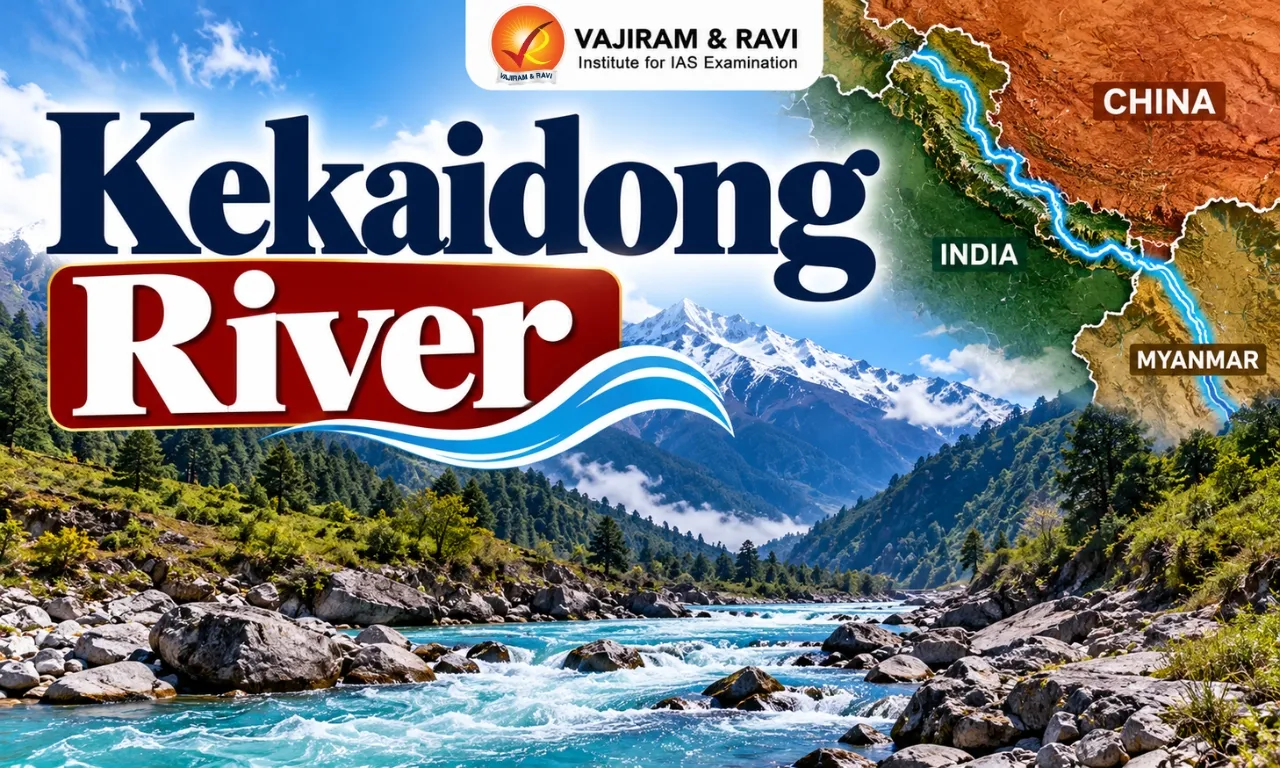
  • Location: The river flows through Assam and is associated with the Golaghat–Jorhat region.
  • Origin: It originates in the Naga Hills of Nagaland and enters the plains of Assam near Kulajan.
  • Course and drainage: It flows through hilly and plain terrain and joins the Gelabil River, which ultimately drains into the Brahmaputra River.
  • Length: Approximately 70 km.
  • Drainage basin: Approximately 1,112.86 sq. km, with extensive agricultural land, including tea gardens and paddy fields.
  • Tributaries: Bojalkata, Chereli, Soraipani, Kasojan, Dholi, Doijan, Chelcheli, Ghiladhari and Khar Jan.
  • Ecological significance: A juvenile gharial was reportedly sighted in the river in June 2026, drawing attention to freshwater habitat conservation in Assam

Also Read:- Brahmaputra River System

Kekaidong River FAQs

Q1: Where is the Kekaidong River located?

Ans: The Kekaidong River flows through West Karbi Anglong district in Assam, northeastern India.

Q2: Where does the Kekaidong River originate?

Ans: It is reported to originate in the Naga Hills of Nagaland and enter the plains of Assam near Kulajan.

Q3: Why was the Kekaidong River in the news recently?

Ans: The Kekaidong River was in the news in June 2026 after a juvenile gharial was sighted in the river in West Karbi Anglong district of Assam.

Q4: What is the scientific name of the gharial?

Ans: The scientific name is Gavialis gangeticus.

Q5: What is the conservation status of the gharial?

Ans: The gharial is classified as Critically Endangered on the International Union for Conservation of Nature (IUCN) Red List.

Shamonda Virus, First Human Case in France, Symptoms, Preventions

Shamonda Virus

Shamonda virus has come into focus after France reported the first documented human Shamonda virus infection in October 2026. The patient, who had a severely weakened immune system and was receiving treatment for a serious illness, died in early October. Health authorities are investigating how the infection occurred and whether the virus contributed to the death. However, no risk to the general population has been identified so far, according to French health authorities.

What is Shamonda Virus?

Shamonda virus (SHAV) is a virus that primarily affects livestock, including cattle, sheep, goats and horses. It belongs to the Orthobunyavirus group and is mainly transmitted among animals through the bites of infected Culicoides midges, which are small, biting insects.

The virus was first detected in cattle in Nigeria in the mid-1960s and was subsequently reported in parts of Africa and Japan. Before the French case in 2026, no human infection had been documented.

Shamonda virus is related to other animal-associated viruses, including the Schmallenberg virus, which is known for causing reproductive problems and developmental abnormalities in livestock.

How Does Shamonda Virus Spread?

The Shamonda virus spreads mainly through the bites of infected Culicoides midges. These tiny insects can transmit the virus between susceptible animals.

The main points about its transmission are:

  • Infected midges: Biting midges are considered the primary route of transmission among animals.
  • Animal hosts: Cattle are the main hosts, although infections have also been detected in sheep, goats, horses and alpacas.
  • Possible human infection: The first documented human case in France is suspected to have involved a midge bite, but investigations into the exact transmission route are continuing.
  • Human-to-human transmission: There is currently no established evidence that Shamonda virus spreads between people.
  • Food safety: Current evidence does not establish transmission through meat, milk or dairy products. Advice from relevant health and veterinary authorities should be followed.

Also Read:- COVID-19

What Are the Symptoms of Shamonda Virus?

The symptoms of Shamonda virus are better documented in animals than in humans. Since only one human case has been documented, the typical symptoms and severity of human Shamonda virus infection remain unclear.

  • Fever: Increased body temperature in infected animals.
  • Diarrhoea: Digestive problems that may cause weakness.
  • Loss of appetite: Reduced food intake and activity.
  • Reduced milk production: A decline in milk yield among dairy cattle.
  • Weakness and lethargy: Reduced energy and movement.
  • Reproductive complications: Abortions and fetal abnormalities may occur in infected livestock.
  • Neurological complications: Neurological symptoms were reported in the first documented human case, but more evidence is needed to establish the full range of symptoms in humans.

Also Read:- Virus

Where Has Shamonda Virus Been Detected?

Shamonda virus was first detected in Nigeria in the 1960s. Before 2026, it had been reported sporadically in parts of Africa and Japan, primarily in cattle.

In summer 2026, the virus was detected in European livestock for the first time. By October 2026, animal infections had been reported in more than a dozen European countries and territories, including:

  • France
  • Germany
  • Switzerland
  • Austria
  • Belgium
  • Ireland
  • Italy
  • Luxembourg
  • The Netherlands
  • Portugal
  • Spain
  • Liechtenstein
  • Jersey

How Can Shamonda Virus Be Prevented?

There are no established human-specific prevention guidelines developed specifically for Shamonda virus. However, reducing exposure to biting midges and following veterinary advice can help limit exposure in areas where the virus circulates among animals. Recommended precautions include:

  • Reduce insect exposure: Use suitable insect repellents and protective clothing in areas with biting midges.
  • Control breeding sites: Manage stagnant water and other suitable insect-breeding environments around farms.
  • Protect livestock: Follow veterinary guidance on insect control and animal health monitoring.
  • Monitor animal symptoms: Report unexplained fever, diarrhoea, reduced milk production or reproductive problems to a veterinarian.
  • Follow official guidance: Keep up with updates from public health and veterinary authorities in affected areas.

Shamonda Virus FAQs

Q1: What is Shamonda virus?

Ans: Shamonda virus is an Orthobunyavirus that primarily affects livestock and is mainly transmitted through bites from infected Culicoides midges.

Q2: Why is Shamonda virus in the news?

Ans: Shamonda virus is in the news because France reported the first documented human infection in October 2026. The patient, who was severely immunocompromised, died in early October.

Q3: Has Shamonda virus infected humans?

Ans: Yes. France reported the first documented human infection in 2026. Further research is needed to understand how the virus infects humans and the risks it poses.

Q4: Is Shamonda virus contagious between humans?

Ans: There is currently no established evidence of human-to-human transmission. The virus is primarily known to spread among animals through infected biting midges.

Q5: What are the symptoms of Shamonda virus?

Ans: In animals, symptoms may include fever, diarrhoea, weakness, reduced milk production and reproductive complications. The symptoms and severity of infection in humans remain poorly understood.

Venezuelan Oil Imports – India’s Energy Security and US Pressure

Venezuelan Oil Imports

Venezuelan Oil Imports Latest News

  • US Secretary of State Marco Rubio’s October 2026 visit to Reliance Industries’ Jamnagar refinery highlighted the US’  push for India to increase Venezuelan oil imports.

India’s Energy Security and Import Dependence

  • India is among the world's largest crude oil importers, making energy security a critical component of its economic and foreign policy. 
  • Crude oil imports support transportation, manufacturing, petrochemicals and other essential sectors, but expose the economy to global price fluctuations and geopolitical disruptions.
  • India has pursued energy-source diversification by sourcing crude from more than 40 countries. However, a relatively small group of suppliers accounts for a substantial share of total imports.
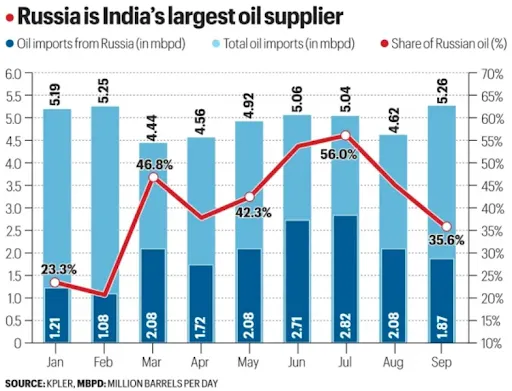
  • Russia emerged as India's largest crude supplier after the Russia-Ukraine war began in February 2022. Western restrictions on Russian oil created opportunities for Indian refiners to purchase discounted crude, reshaping India's import basket.
  • The West Asia crisis has further highlighted the importance of diversifying supplies to reduce vulnerability to disruptions along critical shipping routes and in major oil-producing regions.

Venezuela’s Role in India’s Crude Oil Basket

  • Venezuela possesses vast oil reserves, but its production remains limited relative to its resource base. Its flagship Merey crude is particularly heavy and contains high levels of sulphur, making it suitable mainly for refineries equipped with advanced processing capabilities.
  • India resumed Venezuelan oil imports after the United States eased restrictions. Imports rose from virtually zero before the recent crisis to approximately 350,000 barrels per day (bpd) in August 2026, before declining to around 200,000 bpd in September.
  • During April-August 2026, India imported Venezuelan crude worth approximately US$3.59 billion. Reliance Industries accounted for 74.3% of these imports, reflecting the importance of its Jamnagar refinery complex.

Refining Capacity and Commercial Constraints

  • US efforts to increase Venezuelan oil exports to India face several technical and economic limitations.
  • Refinery compatibility
    • Venezuelan Merey crude is extremely heavy and highly sulphurous. Reliance's Jamnagar complex, with combined crude-processing capacity of approximately 1.4 million bpd, is particularly well equipped to process it.
    • However, only a limited number of Indian refineries can handle substantial volumes of Venezuelan crude. Refining capability therefore places a natural limit on how much India can import without changing its existing crude mix or making additional investments.
  • Freight and landed cost
    • Venezuelan crude may be offered at a discount of approximately US$25 per barrel to Brent, the international benchmark. However, shipping to India's west coast can cost around US$35 per barrel.
    • These transportation costs can eliminate the apparent price advantage and make Venezuelan crude more expensive on a delivered basis. The economics of transporting smaller cargoes can be particularly challenging because very large crude carriers (VLCCs) are generally more cost-efficient for long-distance shipments.
  • Competition from other suppliers
    • Crude supplies from West Asia are gradually returning to the market, including heavier grades from Iraq. These supplies benefit from shorter shipping distances and lower freight costs, making them potentially more competitive than Venezuelan crude.
    • Consequently, Indian refiners must assess crude purchases on the basis of total delivered cost, quality, processing requirements and reliability rather than headline discounts alone.

Venezuelan Crude and Russian Oil: Different Roles

I

  • Venezuelan oil cannot readily replace India's large volumes of Russian crude because the two supplies differ in quality, refinery compatibility and commercial terms.
  • Russia supplied approximately 1.9 million bpd of crude to India in September 2026, accounting for more than 35% of India's total oil imports that month. Imports had reached a reported high of 2.8 million bpd in July.
  • Russian Urals crude is more compatible with a broader range of Indian refining facilities than Venezuela's particularly heavy Merey grade. Replacing Russian supplies with Venezuelan crude on a large scale would therefore require substantial adjustments to refinery operations and procurement strategies.
  • The United States has encouraged India to buy more Venezuelan crude while also seeking a reduction in Russian oil purchases. However, these objectives need not be treated as inseparable. India can diversify its sources without making an automatic commitment to reduce purchases from Russia.
  • For India, the central consideration is whether each transaction supports energy security and provides acceptable commercial returns.

Geopolitical Dimensions of the US Push

  • The US’ interest in Venezuelan crude reflects both energy-market and geopolitical considerations. Increasing exports to buyers such as India could help establish a larger market for Venezuelan oil under US oversight.
  • India's large refining sector makes it an attractive destination, particularly because relatively few countries can process heavy Venezuelan crude at scale.
  • At the same time, energy trade has become closely linked to broader US-India economic relations, including negotiations over a bilateral trade agreement and discussions about sanctions on Russian energy.
  • This creates a policy challenge for India: it must preserve constructive relations with the US while retaining flexibility in sourcing energy according to domestic economic requirements.
  • Any additional commitments should be assessed against clearly defined terms covering pricing, supply reliability, investment obligations, commercial returns and the duration of demand.

Source: IE

Venezuelan Oil Imports FAQs

Q1: Why does the United States want India to import more Venezuelan oil?

Ans: Washington wants to expand the market for Venezuelan crude and views India's advanced refining capacity as an opportunity to absorb larger volumes.

Q2: Why is Venezuelan crude difficult for many Indian refineries to process?

Ans: Its Merey grade is extremely heavy and highly sulphurous, requiring specialised refining capabilities that only a limited number of Indian facilities possess.

Q3: Why may discounted Venezuelan oil still be expensive for India?

Ans: High freight costs can exceed the crude's price discount, making its delivered cost less competitive than supplies from closer regions.

Q4: Can Venezuelan oil replace Russian crude in India's import basket?

Ans: Not on a comparable scale, because the two crude grades differ in quality, commercial terms and compatibility with India's refining infrastructure.

Q5: What should guide India's crude oil procurement decisions?

Ans: Procurement should be based on total cost, quality, refinery compatibility, supply reliability and national energy-security requirements.

Counter-Drone Missiles in India: Jwala and Defence Costs

Counter-drone missiles in India

Counter-Drone Missiles in India Latest News

  • In modern warfare, the cost of a weapon matters as much as its range or precision. 
  • The ongoing West Asia conflict has starkly exposed this “cost asymmetry”: a drone costing roughly $10,000 can force the launch of an interceptor worth hundreds of thousands, even millions, of dollars — meaning a defender may win the engagement but lose the economics of war. 
  • Against this backdrop, India’s private sector is pushing into cost-effective counter-drone interceptors, exemplified by the test of Jwala.

Why Cheap Interceptors Matter Now

  • The rapid proliferation of inexpensive drones has fundamentally changed defence economics.
  • This creates a new requirement: interceptors that are cheap enough to use repeatedly, yet reliable enough to protect military bases, troops, and critical infrastructure.
  • The key question: can Indian industry build affordable precision weapons that deliver the lowest sustainable cost per successful interception against a clearly defined threat class?

What Is Jwala?

  • Jwala-MK1 is a cost-effective short-range surface-to-air missile, developed by Indian defence technology firm IG Defence, an Odisha-based start-up.
  • Purpose: Primarily designed to destroy hostile unmanned aerial vehicles (UAVs) — unlike conventional air-defence missiles aimed at aircraft or high-value targets.
  • First public showcase: North Tech Symposium, Prayagraj, May 2026.
  • Technical Specifications
    • Uses a solid-fuel dual-pulse rocket motor — enabling rapid acceleration at launch and extra speed during final attack.
    • Engagement range: 2–5 km.
    • Altitude envelope: 50 metres to 5,000 metres.
  • Milestone: Recently, the company successfully test-fired two solid rocket motors — a key step toward full propulsion-system integration.
  • Next steps: Complete-system flight trials, guidance and control validation, testing against representative targets, reliability assessment, and integration with command-and-control architecture.
  • IG Defence plans to integrate Jwala with its GRID battle-management architecture — linking sensors, threat assessment, and defensive systems for a broader solution, not just a standalone interceptor.
  • It remains premature to assess Jwala’s actual cost-per-interception, since commercial viability — interception rates, procurement costs, performance against real threats — is not yet independently validated.

India’s Defence-Industrial Growth Context

  • Defence production hit a record ₹1.78 lakh crore in FY2025-26, with private firms contributing ~₹42,000 crore (24%).
  • Defence exports reached ₹38,424 crore during the same year.
  • In March 2026, the Defence Ministry highlighted the growing role of startups and MSMEs in indigenous defence technology development.
  • Market potential: As per various reports, India’s counter-UAS market — valued at $315 million in 2025 — is projected to reach $1.09 billion by 2030, implying 28.2% annual growth. 

Other Private Players in the Missile/Counter-Drone Space

  • Solar Industries India — rockets, ammunition, loitering munitions.
  • Adani Defence & Aerospace — building missile manufacturing infrastructure.
  • NIBE Group — new manufacturing complex for missile and rocket systems.
  • L&T — precision engineering, launch systems, defence electronics, weapon-platform integration.
  • Paras Defence and Space Technologies — signed a pact with US-based Powerus to manufacture and sell the Guardian-1 counter-drone interceptor in India.

What Determines Success

  • Jwala’s — and by extension India’s private counter-drone industry’s — success hinges on three outcomes:
    • Reliable interception — consistently neutralising threats.
    • Competitive lifecycle cost — staying affordable across production and deployment.
    • Scalable production — ability to manufacture in meaningful numbers.
  • Achieving all three could secure India a valuable position in both its own defence ecosystem and global counter-drone markets.

Conclusion

  • The Jwala test underscores a critical shift in India’s defence strategy — recognising that future conflicts will be won or lost not just on battlefield performance, but on economic sustainability. 
  • As cheap drones proliferate globally, India’s growing ecosystem of private defence startups and established manufacturers signals a serious attempt to close the cost-asymmetry gap. 
  • However, Jwala’s true test lies ahead — in rigorous trials proving it can deliver reliable, affordable, and scalable interception, transforming early promise into a credible indigenous counter-drone capability.

Source: TH

Counter-drone missiles in India FAQ

Q1: Why are counter-drone missiles in India becoming increasingly important?

Ans: Counter-drone missiles in India are gaining importance because inexpensive hostile drones can force defenders to use costly interceptors, creating an unfavourable economic imbalance in warfare.

Q2: What is the Jwala-MK1 counter-drone missile?

Ans: Jwala-MK1 is a short-range surface-to-air missile developed by Odisha-based IG Defence to destroy hostile unmanned aerial vehicles and improve affordable interception capabilities.

Q3: What are the technical specifications of the Jwala-MK1 missile?

Ans: Jwala-MK1 has a reported engagement range of 2–5 kilometres, an altitude envelope of 50–5,000 metres, and a solid-fuel dual-pulse rocket motor.

Q4: How can counter-drone missiles in India reduce defence expenditure?

Ans: Counter-drone missiles in India could reduce defence expenditure by lowering the sustainable cost per successful interception while protecting military bases, troops and critical infrastructure.

Q5: What will determine the success of India’s counter-drone industry?

Ans: India’s counter-drone industry will depend on reliable interception, competitive lifecycle costs and scalable production, supported by rigorous testing and integration with command-and-control systems.

PHP2Shell Vulnerabilities, Risks to Global Cybersecurity

PHP2Shell Vulnerabilities

PHP2Shell Vulnerabilities Latest News

  • Recently, websites worldwide went offline as a precaution, after two critical vulnerabilities in PHP, one of the internet’s most widely used programming languages, were discovered.
    • The websites included services run by Japan’s Finance Ministry, US HR platform BambooHR, the Port of Rotterdam, and the Wikimedia Foundation (operator of Wikipedia).
  • The flaws, collectively dubbed PHP2Shell, triggered emergency security updates and prompted governments and cybersecurity agencies worldwide to urge immediate action.

What Is PHP, and Why Does It Matter So Much?

  • PHP (Hypertext Preprocessor) is a free, open-source, volunteer-maintained programming language that runs behind the scenes of websites — handling logins, form submissions, and online purchases.
  • It powers ~70% of websites whose server-side language is identifiable.
  • WordPress — which runs over 40% of all websites globally (blogs, government portals, news sites, online shops) — is itself built on PHP.
  • This pervasiveness is exactly why a flaw in PHP has such outsized global impact.

What Exactly Is PHP2Shell?

  • PHP2Shell refers to two critical vulnerabilities that could let attackers remotely execute malicious code on web servers — without logging in — or access sensitive information stored in server memory.
  • Flaw 1 — Interrupted Mid-Task: When PHP runs out of memory while processing a request (e.g., a CV upload), it can be cut off midway and later mistakenly treat incomplete data as valid — creating an exploitable gap.
  • Flaw 2 — Leftovers: PHP can sometimes retain leftover information from an earlier user’s request even after that memory should have been cleared. When handling a new request, it may mistakenly reuse this outdated data instead of starting fresh — which an attacker could exploit to interfere with server operations.

Why It’s Dangerous

  • Attackers need no account or physical access — a single malicious request sent over the internet could, under certain conditions, make a server execute attacker-chosen instructions.
  • This could expose personal information, uploaded documents, or login credentials.
  • AI tools could accelerate exploitation, even though the flaws are dangerous on their own.

Why Websites Went Offline

  • Cybersecurity agencies urged immediate patching; where that wasn’t feasible, temporary shutdown was the safer precaution.
  • Key challenge: Updating PHP isn’t always simple. 
    • Many small websites run on shared hosting, where owners don’t control the server or even know who maintains PHP.
    • The immediate challenge is not simply installing a patch, but finding and managing every instance where PHP is running.
    • PHP can be embedded invisibly within content-management systems, hosting platforms, and third-party products.
    • Older appliances/devices are especially hard to patch, often being a black box with limited visibility, dependent on vendors for updates.
  • CERT-EU advised organisations unable to patch immediately to take vulnerable systems offline.
  • India’s CERT-In issued a critical advisory the same day, warning of potential full system takeover and urging immediate updates.

Conclusion

  • The PHP2Shell episode is a stark reminder that the internet’s foundational infrastructure often rests on decades-old, volunteer-maintained code — vulnerable not because of neglect, but because of sheer scale and invisibility across millions of interconnected systems. 
  • While AI tools helped researchers find and understand the flaws faster than ever before, the same technology could equally empower attackers, compressing the window organisations have to respond. 
  • As PHP2Shell shows, cybersecurity resilience today depends as much on visibility into sprawling, often-hidden software dependencies as on the speed of releasing a patch.

Source: IE | ToI

PHP2Shell Vulnerabilities FAQs

Q1: What are PHP2Shell vulnerabilities?

Ans: PHP2Shell vulnerabilities are two critical flaws in PHP that could allow attackers to execute malicious code remotely on web servers or access sensitive information in server memory.

Q2: Why are PHP2Shell vulnerabilities dangerous for websites?

Ans: PHP2Shell vulnerabilities are dangerous because attackers may exploit them through malicious internet requests without an account, potentially exposing personal information, uploaded documents and login credentials.

Q3: Why did websites go offline following the discovery of PHP2Shell vulnerabilities?

Ans: Websites temporarily went offline because cybersecurity agencies urged immediate security updates, while shutdowns offered a precautionary measure when vulnerable systems could not be patched promptly.

Q4: How do PHP2Shell vulnerabilities affect WordPress websites?

Ans: PHP2Shell vulnerabilities matter to WordPress because the platform relies on PHP, which powers a substantial share of websites and supports essential server-side operations.

Q5: How can organisations respond to PHP2Shell vulnerabilities?

Ans: Organisations should identify affected PHP installations, apply security updates promptly, assess third-party dependencies, and temporarily isolate vulnerable systems when immediate patching is not feasible.

Daily Editorial Analysis 23 October 2026

Daily-Editorial-Analysis

Prasar Bharati is Not a Public Service Broadcaster 

Context

  • When the Modi government assumed office in May 2014, Information and Broadcasting Minister promised to transform Prasar Bharati along the lines of the British Broadcasting Corporation (BBC), ensuring administrative autonomy, editorial independence and accountability to Parliament.
  • However, twelve years later, public broadcasting continues to face government interference.
  • The broadcast of Mann Ki Baat on September 27, 2026, illustrates the continuing use of public airwaves as a platform for the government of the day.

The Unfulfilled BBC Model

  • Nehru’s vision of broadcasting autonomy

    • The Emergency of 1975 exposed the dangers of political control when All India Radio (AIR) and Doordarshan became instruments of the ruling regime.
    • In 1948, Jawaharlal Nehru advocated a semi-autonomous broadcasting corporation inspired by the BBC, arguing that broadcasting should not operate as a government department.
    • Former BBC bureau chief Mark Tully emphasised that public service broadcasting is different from government broadcasting.
    • It must remain free from government interference and prioritise public interest over commercial profitability.
  • The Prasar Bharati Act and its objectives

    • Following the Emergency, the Janata government commissioned B.G. Verghese to recommend reforms.
    • His proposals informed the Prasar Bharati Bill of 1979, which lapsed.
    • A revised Bill received presidential assent in 1990 as the Prasar Bharati (Broadcasting Corporation of India) Act, 1990, but was implemented only in 1997.
    • Section 12 requires Prasar Bharati to inform, educate and entertain while safeguarding citizens’ right to receive information freely, truthfully and objectively.
    • It also mandates balanced reporting and contrasting viewpoints without ideological advocacy.
  • The gap between promise and practice

    • Despite this legislative vision, Prasar Bharati has failed to achieve genuine autonomy.
    • The political establishment’s inconsistent approach is evident in its initial praise of the BBC model and subsequent criticism of the broadcaster following its 2023 documentary, India: The Modi Question.

At the Ministry’s mercy

  • Weak parliamentary oversight

    • Section 13 provides for a 22-member parliamentary committee to oversee the corporation, but successive governments have failed to constitute it.
    • Former chief executive has argued that ministers prefer retaining direct control over broadcasting officials.
  • Absence of an Independent Complaints’ Mechanism

    • Sections 14 and 15 envisage a Broadcasting Council to address complaints and safeguard political impartiality.
    • Its absence has deprived citizens of an effective mechanism for editorial accountability.
  • Administrative and financial dependence

    • The Board has been weakened by bureaucratic appointments, while assets and staff have not been fully transferred.
    • Financial dependence on the government restricts independent decision-making.
    • Section 23 also allows the Centre to issue binding broadcasting directions, undermining editorial independence.
    • Section 10 envisaged an independent recruitment board, but implementation was delayed until 2020.
    • The appointment of Jagadish Upasane, associated with the publisher of Panchajanya and Organiser, raised concerns about political influence.
  • Staffing imbalance and editorial priorities

    • A 2021 manpower audit revealed structural imbalances.
    • Nearly half of Prasar Bharati’s approximately 25,000 employees worked in engineering, compared with slightly over 10% at the BBC.
    • Content staff accounted for less than 20%, against approximately 70% at the BBC.
    • This suggested that Prasar Bharati functioned primarily as a transmission network rather than a content-driven broadcaster.
  • Public broadcasting and judicial principles

    • UNESCO’s 2001 definition establishes that public broadcasting must be neither commercial nor state-controlled.
    • Even Public Service Broadcasting Day, commemorating Mahatma Gandhi’s 1947 broadcast to refugees, has become largely symbolic.
    • In the 1995 Secretary, Ministry of Information and Broadcasting vs Cricket Association of Bengal judgment, Justice P.B. Sawant affirmed that airwaves are public property and called for an independent authority to regulate their use.

Necessary Reform and the Way Forward

  • Institutional and legislative reforms

    • Restoring Prasar Bharati’s autonomy requires constituting the parliamentary committee and Broadcasting Council, transferring assets and staff, and establishing a professionally managed Board.
    • Funding must minimise government interference, while operational control by Indian Information Service officers must be reduced.
    • The 1990 Act must be amended wherever its provisions enable excessive government control.
  • Political commitment and accountability

    • These reforms require sustained political commitment. Parties often advocate autonomy in opposition but seek control after assuming power.
    • In August 2026, the government informed the Lok Sabha that it had received no formal complaints concerning Prasar Bharati’s autonomy during the preceding year.
    • However, the absence of complaints proves little when the statutory council intended to receive them has never been established.
  • Lessons from past reform efforts

    • The Chanda Committee, appointed in 1966, concluded that a psychological transformation in the government’s approach to broadcasting was necessary.
    • Six decades later, this transformation remains incomplete.

Conclusion

  • Prasar Bharati demonstrates the gap between legislative intent and institutional reality.
  • Despite the framework established by the 1990 Act, successive governments have failed to implement essential safeguards.
  • An independent public broadcaster is vital for informed citizenship, pluralistic debate and accountable governance.
  • Its credibility depends on editorial freedom, professional management, financial independence and parliamentary oversight.
  • Ultimately, public broadcasting must serve citizens, not the government of the day.

Prasar Bharati is Not a Public Service Broadcaster FAQs

Q1. What is the primary objective of Prasar Bharati?

Ans. Its primary objective is to provide independent public broadcasting that informs, educates and entertains citizens.

Q2. When was the Prasar Bharati Act passed?

Ans. The Prasar Bharati Act was passed in 1990 and implemented in 1997.

Q3. Why has Prasar Bharati failed to achieve autonomy?

Ans. It has failed to achieve autonomy because of government interference, financial dependence and weak institutional oversight.

Q4. What did the Supreme Court declare about airwaves in 1995?

Ans. The Supreme Court declared that airwaves are public property and require independent regulation.

Q5. What reforms are necessary to ensure Prasar Bharati’s independence?

Ans. Prasar Bharati needs independent oversight, professional management, financial autonomy and editorial freedom.

Source: The Hindu


Unlocking Agri-Potential of FRA Lands

Context

  • For millions of tribal and forest-dwelling communities, land ownership is essential for livelihood security, economic independence and social empowerment.
  • The Forest Rights Act (FRA), 2006, has strengthened their rights over forest land, but legal recognition alone cannot ensure prosperity.
  • Sustainable agriculture, improved soil and water management, institutional support and market access are necessary to make these lands productive.
  • Promoting pulses and oilseeds on FRA-recognised lands can increase tribal incomes, strengthen domestic agricultural production, improve nutrition and reduce India's dependence on imports.

The Potential of Pulses and Oilseeds

  • Pulses and oilseeds are suitable for many tribal regions because they can adapt to rain-fed conditions, marginal soils and diverse agro-climatic environments.
  • Their cultivation can diversify farming, improve incomes and strengthen climate resilience.
  • Pulses contribute to protein security, while oilseeds support domestic edible-oil production.
  • Tribal districts across 33 States and Union Territories exhibit significant ecological and socio-economic diversity.
  • Crop selection must therefore reflect local soil, rainfall, water availability and agricultural practices.
  • Analysis based on the FAO soil map identifies several tribal regions suitable for soybean, groundnut, sunflower, mustard, chickpea and other pulses.
  • Paddy and maize dominate the Kharif season in many areas, while wheat, gram, mustard, lentil and other pulses are important Rabi crops.
  • Regional crops such as millets, cotton, sesame, spices and horticultural produce offer further opportunities for sustainable agricultural diversification based on local conditions.

Scoping the Country

  • An assessment of 244 tribal districts identifies substantial potential for expanding pulse and oilseed cultivation:
    • 60 districts have significant oilseed production potential.
    • 31 districts have strong pulse production potential.
    • 23 districts are suitable for both pulses and oilseeds.

Targeted Interventions Based on Findings

  • Region-Specific Agricultural Planning

    • High-potential districts can be developed into pulse and oilseed production clusters.
    • Crop selection should consider soil characteristics, rainfall, irrigation and existing farming practices.
    • GIS-based crop planning can identify suitable areas, improve resource allocation and promote sustainable land use.
  • Improving Agricultural Productivity

    • Access to certified seeds, improved varieties and scientific farming techniques is essential to raise productivity.
    • Better soil management, moisture conservation, irrigation and watershed development can reduce dependence on uncertain rainfall.
    • Stronger agricultural extension services can provide technical guidance and climate-related information.
  • Strengthening Post-Harvest Infrastructure

    • Insufficient storage and processing facilities cause losses and reduce farmers' earnings.
    • Investment in drying, storage, grading and primary processing can preserve produce quality, reduce post-harvest losses and improve price realisation.
    • Local processing can also generate employment and promote rural enterprise.
  • Expanding Institutional and Market Support

    • Farmer Producer Organisations (FPOs), cooperatives and self-help groups can help farmers aggregate produce, improve bargaining power and access markets.
    • Affordable institutional credit, crop insurance and assured procurement can reduce production and market risks.
    • Stronger connections with processors and traders can improve

Convergence with Government Programmes

  • Coordinating FRA implementation with existing government schemes can strengthen agricultural development. Important initiatives include:
  • Pradhan Mantri Krishi Sinchayee Yojana, supporting irrigation and water-use efficiency.
  • National Food Security and Nutrition Mission, promoting agricultural production and food security.
  • National Mission on Edible Oils, supporting domestic oilseed production.
  • Pradhan Mantri Annadata Aay Sanrakshan Abhiyan, supporting farmers through price-support mechanisms.
  • Van Dhan Yojana, promoting tribal livelihoods and value addition.
  • Such convergence can improve access to technology, infrastructure, finance and markets, particularly in tribal districts overlapping with aspirational districts.

Towards Sustainable Tribal Development

  • Agricultural expansion must prioritise environmental sustainability and community participation.
  • Land development should conserve water, maintain soil fertility and protect ecological balance.
  • Traditional livelihoods and forest-based resources must complement agricultural diversification.
  • Progress should be assessed through improvements in household incomes, nutrition, livelihood resilience and long-term economic security, rather than production increases alone.

Conclusion

  • The journey from forest rights to livelihood security begins with land recognition but requires sustained support to achieve meaningful outcomes.
  • Region-specific crop planning, quality seeds, water management, processing infrastructure, institutional finance and reliable markets can unlock the potential of FRA lands.
  • Integrating these measures with government programmes can advance tribal empowerment, food security, domestic oilseed production and climate-resilient agriculture, transforming legal land rights into sustainable economic opportunities.

Unlocking Agri-Potential of FRA Lands FAQs

Q1. What is the Forest Rights Act (FRA), 2006?

Ans. The FRA, 2006, recognises the rights of tribal and forest-dwelling communities over forest land.

Q2. Why are pulses and oilseeds suitable for FRA lands?

Ans. Pulses and oilseeds can grow in rain-fed and marginal lands while improving incomes and food security.

Q3. How many tribal districts have oilseed production potential?

Ans. Sixty tribal districts have significant oilseed production potential.

Q4. How can tribal farmers improve market access?

Ans. Farmer Producer Organisations, cooperatives and self-help groups can improve market access and bargaining power.

Q5. How can FRA lands strengthen tribal livelihoods?

Ans. Sustainable agriculture, institutional support and reliable markets can transform FRA lands into productive livelihood assets.

Source: The Hindu


War, Weather and Indian Agriculture - The Twin Risks of Fossilisation and Fuelisation

Context

  • Recent geopolitical conflicts and the prospect of a strong El Niño are exposing two emerging vulnerabilities in Indian agriculture.
  • The first is “fossilisation” of farming, where agriculture increasingly depends on fossil fuels and petrochemical inputs, and the second is “fuelisation” of food, where crops are diverted towards biofuel production.

From Bullocks to Fossil-Fuel Intensive Farming

  • At the beginning of the Green Revolution, Indian agriculture relied heavily on animal power and organic manure.
  • In 1950-51, India had only about 8,500 tractors, while fertiliser consumption was merely 69,800 tonnes of N, P and K.
  • Bullocks powered ploughing, threshing, transportation and traditional irrigation systems such as the rahat or Persian wheel. Cattle manure was the principal source of plant nutrients.
  • The situation has changed dramatically. India now has over 1.2 crore tractors, with 11.6 lakh tractors sold in 2025-26 alone.
  • Combines have replaced much manual harvesting and threshing, while electric and diesel pumps have replaced traditional water-lifting systems.
  • Chemical fertiliser consumption has also surged to 33.5 million tonnes of N, P and K in 2025-26, with around 67.5% coming from urea and DAP.

Fossilisation Goes Beyond Tractors and Fertilisers

  • Agricultural dependence on hydrocarbons extends to crop-protection chemicals.
  • Petrochemical feedstocks such as benzene, toluene, xylene, ethylene and propylene are used to manufacture active ingredients of insecticides, herbicides and fungicides.
  • Their formulations also rely heavily on petroleum-based solvents and surfactants.
  • This dependence makes agriculture vulnerable to geopolitical disruptions in energy markets.
  • Conflicts in West Asia and the Black Sea region have sharply increased the prices of LNG, a key feedstock for nitrogen fertilisers, and naphtha, an important petrochemical input.
  • Sulphur is another critical vulnerability. It is essential for producing phosphatic fertilisers (DAP and SSP) and is largely obtained as a by-product of oil refining and natural-gas processing.
  • Its price has risen sharply amid disruptions to Russian and West Asian energy infrastructure.
  • Thus, wars affecting oil, gas and refineries can indirectly raise the cost and availability of agricultural inputs.

Fuelisation of Food - Agriculture as an Energy Source

  • The second trend is “fuelisation of food”—using agricultural commodities as feedstock for biofuels.
  • India produces ethanol from sugarcane, rice, maize and other starch-rich crops, with ethanol blending in petrol targeted at 20%.
  • Vegetable oils can similarly be converted into FAME (fatty acid methyl esters) for blending with diesel.
  • This creates a potential food-versus-fuel trade-off. If crude oil prices remain high, the economic incentive to divert food crops and edible oils towards biofuel production increases.
  • Indonesia’s mandatory blending of palm-oil-derived FAME illustrates the scale of this trend.

The War-El Niño Double Shock

  • A very strong El Niño, if it materialises, could create an additional supply shock through heat, rainfall disruption and reduced agricultural productivity.
  • If this coincides with high energy and input prices, Indian agriculture could face a twin shock of geopolitical instability and climate variability.
  • A historical parallel is 1979-80, when Indian agriculture contracted by 12.8%, while the oil import bill doubled following the Iranian Revolution.
  • However, India is better placed today. Agriculture has become more diversified, with rising contributions from dairying, poultry, aquaculture and horticulture.
  • Irrigation coverage has also expanded substantially—from 17.1% of gross cropped area in 1950-51 and 29% in 1979-80 to about 56% today.

Way Forward - Reduce Input Vulnerability and Inefficient Agriculture

  • Improve fertiliser-use efficiency:

    • Excessive dependence on urea and DAP needs to be reduced because their nutrient-use efficiency is low.
    • Only about one-third of nitrogen applied through urea is absorbed by crops, while much phosphorus from DAP becomes unavailable through soil fixation.
  • Promote balanced fertilisation: Greater use of ammonium sulphate and complex fertilisers with balanced nutrients can reduce nitrogen losses and phosphorus lock-up.
  • Expand biostimulants: These can improve root development, nutrient uptake and plant metabolic efficiency.
  • Reduce chemical pesticide dependence: Plant-based or biological approaches that activate crops’ natural defence and adaptation mechanisms can reduce reliance on petrochemical pesticides.
  • Promote renewable irrigation: Solar-powered pumps combined with drip irrigation can reduce diesel/electricity dependence while improving water-use efficiency.
  • Balance food and fuel security: Biofuel policies must remain sensitive to food availability, especially during climate-induced production shocks.

Conclusion

  • The policy objective should be to build an agriculture system that is less fossil-fuel intensive, more nutrient- and water-efficient, climate-resilient and careful about the food-versus-fuel trade-off.
  • The emerging combination of war and climate shocks makes this transition increasingly urgent

War, Weather and Indian Agriculture FAQs

Q1. What is meant by “fossilisation” of Indian agriculture?

Ans. It refers to agriculture’s growing dependence on fossil fuels and petrochemical inputs.

Q2. What is “fuelisation of food” and why is it a concern?

Ans. It is the diversion of food crops towards biofuel production, potentially creating a food-versus-fuel trade-off.

Q3. How can geopolitical conflicts affect Indian agriculture?

Ans. Wars can disrupt oil, gas, sulphur and petrochemical supplies, raising the cost of fertilisers, pesticides, irrigation, etc.

Q4. How can India reduce its dependence on fossil-fuel-based agricultural inputs?

Ans. By promoting balanced fertilisation, biostimulants, biological pest management, solar-powered pumps, etc.

Q5. How can El Niño and geopolitical conflicts together threaten India’s food security?

Ans. El Niño can reduce agricultural output, while conflicts can raise input and energy costs; together, they can create a twin supply shock.

Source: IE

Daily Editorial Analysis 2026 FAQs

Q1: What is editorial analysis?

Ans: Editorial analysis is the critical examination and interpretation of newspaper editorials to extract key insights, arguments, and perspectives relevant to UPSC preparation.

Q2: What is an editorial analyst?

Ans: An editorial analyst is someone who studies and breaks down editorials to highlight their relevance, structure, and usefulness for competitive exams like the UPSC.

Q3: What is an editorial for UPSC?

Ans: For UPSC, an editorial refers to opinion-based articles in reputed newspapers that provide analysis on current affairs, governance, policy, and socio-economic issues.

Q4: What are the sources of UPSC Editorial Analysis?

Ans: Key sources include editorials from The Hindu and Indian Express.

Q5: Can Editorial Analysis help in Mains Answer Writing?

Ans: Yes, editorial analysis enhances content quality, analytical depth, and structure in Mains answer writing.


Cyclone Arnab 2026, Location, Naming, Tracker, Latest Updates

Cyclone Arnab

Cyclone Arnab 2026 refers to the weather system over the Bay of Bengal that has attracted attention as the next possible cyclone name. However, the system remains a deep depression and is not classified as a cyclonic storm. It is moving towards the north Andhra Pradesh-South Odisha coast, with landfall expected near Kalingapatnam between Visakhapatnam and Gopalpur.

Cyclone Arnab Latest Updates

According to the latest IMD Tropical Weather Outlook issued on September 25, 2026, the system has moved north-northwestwards and weakened from a deep depression into a depression over south interior Odisha and adjoining south Chhattisgarh. At 05:30 AM on September 25, it was located close to Nuapada in Odisha and about 120 km southeast of Raipur in Chhattisgarh.
The system is very likely to continue moving north-northwestwards and maintain depression intensity for the next 12 hours. It is then expected to weaken into a well-marked low-pressure area during the following 12 hours.

Cyclone Arnab 2026

The Cyclone Arnab 2026 system is located over the westcentral and adjoining northwest Bay of Bengal and is being monitored continuously by IMD.

  • Cyclone Classification: The India Meteorological Department has indicated that the system is unlikely to intensify into a cyclone before landfall. Therefore, it is expected to retain deep depression status.
  • Name Arnab: The name Arnab means ocean in Bengali. The name was contributed by Bangladesh for the regional tropical cyclone naming system.
  • Formation Background: The system developed over the Bay of Bengal and intensified from a depression into a deep depression before approaching the north Andhra Pradesh-South Odisha coast.
  • Monitoring System: The system is under continuous observation by the Doppler Weather Radar at Visakhapatnam. Radar monitoring is tracking its movement and structure near the coast.
  • Wind Conditions: Strong winds are expected along the affected coastal areas. The Bay of Bengal Deep Depression 2026 may produce gusty winds along with heavy rainfall during its approach and landfall.

Cyclone Arnab Impacts

The main concern from the Cyclone Arnab system is heavy rainfall, strong winds, rough seas, flooding and localised landslide risks across affected areas.

  • Odisha Impact: Odisha remains among the worst-affected regions. Heavy to very heavy rainfall is expected in several areas, with extremely heavy rainfall possible at isolated places.
  • Red Alert Areas: Koraput, Gajapati and Ganjam faced warnings for heavy to very heavy rainfall and isolated extremely heavy rainfall on September 24.
  • Further Rainfall: Kalahandi, Nabarangpur, Koraput and Malkangiri are expected to receive heavy rainfall during September 24-25.
  • Andhra Pradesh: Coastal Andhra Pradesh is also experiencing the system's effects. Squally weather and strong winds are expected along and off the south Odisha-north Andhra Pradesh coasts.
  • West Bengal: Parts of West Bengal are expected to receive heavy to very heavy rainfall. Darjeeling and Kalimpong were also under landslide warnings.
  • Flood Risk: Heavy rainfall can increase water levels in rivers, water bodies and dams. Low lying areas may face waterlogging and local flooding during intense rainfall.
  • Landslide Risk: Odisha authorities identified 140 landslide prone areas in Gajapati. Rain related risks were also reported from Ganjam, Malkangiri, Koraput, Rayagada and Nabarangpur.
  • Sea Conditions: Very rough seas are expected over the westcentral and northwest Bay of Bengal until the evening of September 24. Coastal waters may gradually improve afterwards.
  • Local Damage: Heavy rain has already resulted in reports of trees being uprooted, houses being damaged, rainwater entering homes and muddy water flowing down hills.

Cyclone Arnab 2026 Management

Preparedness of Cyclone Arnab 2026 focuses on evacuation, shelter management, emergency services, weather monitoring, essential supplies and protection of vulnerable communities.

  • Evacuation: About 8,000 people were moved to safer locations in Odisha. Pregnant women and elderly persons were among those shifted to cyclone centres and temporary relief camps.
  • Emergency Services: Essential supplies, equipment, health services and emergency teams were kept ready. Disaster mitigation teams were placed on high alert for rapid response.
  • Shelter Preparedness: Cyclone and flood shelters were kept ready in vulnerable districts. Temporary relief camps were also arranged for evacuated residents.
  • Vulnerable Areas: Authorities restricted access to identified landslide prone locations. Continuous monitoring was carried out in areas considered vulnerable to landslides and mudslides.
  • Water Monitoring: Officials monitored water levels in rivers, water bodies and dams to identify possible flood risks during periods of intense rainfall.
  • Public Safety: People were advised to stay indoors during strong winds. They should avoid windows, damaged structures, trees, large hoardings, floodwater and exposed electrical equipment.
  • Emergency Kit: Residents should keep drinking water, food, medicines, first aid supplies, torches, batteries, candles, matches and power banks ready for at least two to three days.
  • Evacuation Rules: People in coastal, low lying and flood prone areas should immediately follow evacuation orders. They should move to designated shelters or safer higher ground.

Cyclone Arnab Tracker

The Cyclone Arnab 2026 is being tracked by the latest monitoring systems of the India Meteorological Department Doppler Weather Radar. It’s latest updates are shared to the authorities to improve and monitor preparations to reduce the impacts of the storm.

  • Current Bay of Bengal Deep Depression 2026 Status: According to the IMD update of September 25, 2026, the system has weakened from a deep depression into a depression over south interior Odisha and adjoining Chhattisgarh.
  • Landfall Location: The system crossed between Visakhapatnam and Gopalpur, close to Kalingapatnam, after moving west-northwestwards towards the coast.
  • Post-Landfall Movement: The system is now moving north-northwestwards after landfall. IMD expects it to maintain depression intensity for the next 12 hours and then weaken into a well-marked low-pressure area during the subsequent 12 hours.
  • Wind Forecast: At 05:30 AM on September 25, the depression had maximum sustained surface winds of 45-55 kmph, gusting to 65 kmph. IMD forecasts winds of 35-45 kmph, gusting to 55 kmph, by 05:30 PM on September 25, followed by further weakening.
  • Preparedness: Odisha placed collectors of 11 districts on high alert. Cyclone and flood shelters were kept ready, while at least 5,000 people were moved to safer locations.
  • Post-Landfall Monitoring: Authorities continue to monitor the system as it moves inland across Odisha and adjoining Chhattisgarh. IMD expects associated extreme weather over east, east-central and subsequently adjoining northern plains during the next 3-4 days.
  • Current Location: As of September 25, the depression was located near 20.5°N and 82.5°E, close to Nuapada in Odisha.
  • Expected Weakening: The system is likely to weaken further because of its movement over land. IMD forecasts that it will become a well-marked low-pressure area by September 26, 2026.

Cyclone Arnab 2026 FAQs

Q1: What is Cyclone Arnab 2026?

Ans: Cyclone Arnab 2026 refers to the deep depression over the Bay of Bengal approaching the north Andhra Pradesh-South Odisha coast.

Q2: Where is Cyclone Arnab now?

Ans: As of 25 September 2026, The depression is currently over south interior Odisha and adjoining Chhattisgarh, near 20.5°N and 82.5°E, close to Nuapada in Odisha

Q3: Did Cyclone Arnab make landfall?

Ans: The system crossed the Andhra Pradesh-Odisha coast near Kalingapatnam during the early hours of September 24, 2026, as a deep depression.

Q4: What is the latest status of Cyclone Arnab 2026?

Ans: As of 25 September 2026, The system is moving north-northwestwards and is expected to maintain depression intensity for the next 12 hours before weakening into a well-marked low-pressure area.

Q5: Who named Cyclone Arnab?

Ans: The name Arnab, meaning ocean in Bengali, was contributed by Bangladesh.

Enquire Now