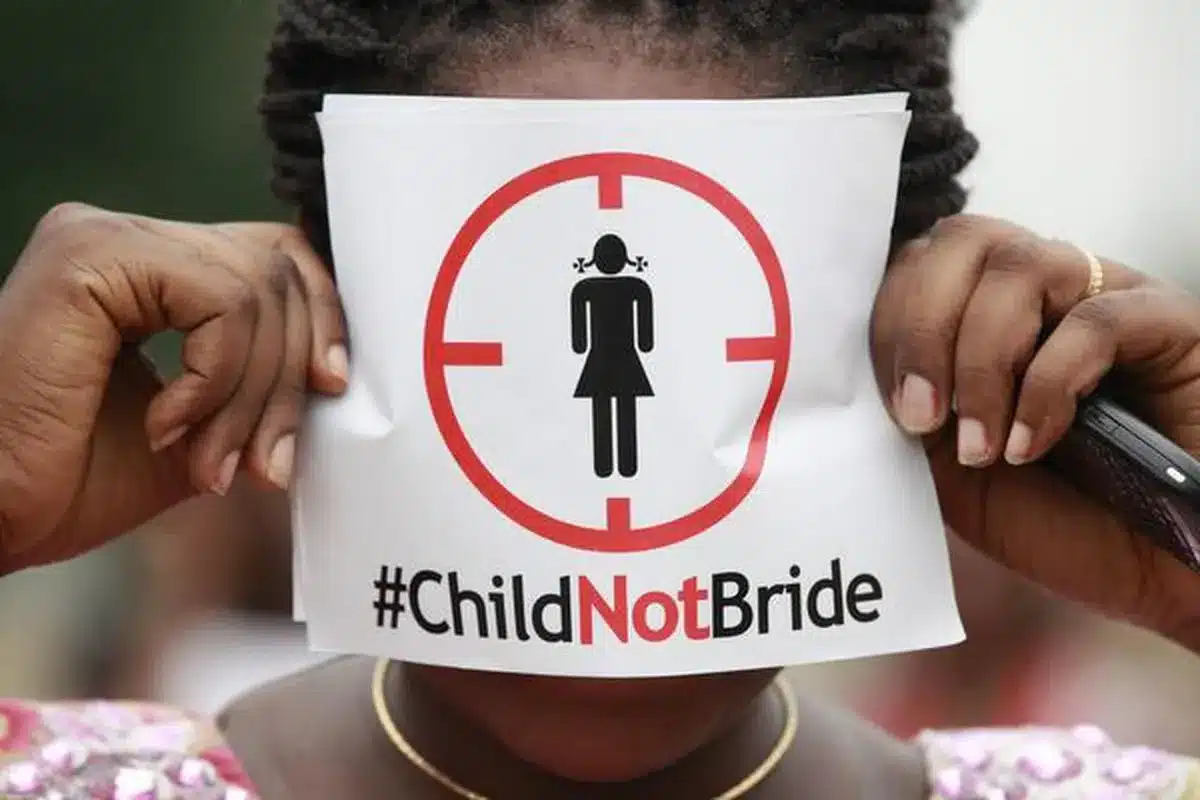
About ‘Bal Vivah Mukt Bharat’ Campaign:
- It was launched by the Ministry of Women and Child Development, Government of India.
- It seeks to engage multiple stakeholders in a collective effort to eliminate child marriage in India.
- It will focus on the seven high-burden states–West Bengal, Bihar, Jharkhand, Rajasthan, Tripura, Assam, and Andhra Pradesh-and nearly 300 high-burden districts where child marriage rates are high as compared to the national average.
- The campaign will call on every State and Union Territory to devise an action plan aimed at reducing the child marriage rates below 5% by 2029.
- Child marriage rates dropped from 47.4% in 2006 to 23.3% in 2019-21, according to government data.
- A key feature of the initiative is the launch of the Child Marriage Free Bharat portal, a platform to raise awareness, report cases, and monitor progress.
- The portal is designed to facilitate effective monitoring of Child Marriage Prohibition Officers (CMPOs) by strengthening supervision and evaluation mechanisms to ensure their active role in preventing child marriages and supporting affected individuals.
- People will be able to register their complaints pertaining to child marriage, and these will be directed straight to the concerned CMPOs anywhere in the country.
- All states have been directed to log on to the portal and register the CMPOs so that there is real-time monitoring of cases.
- Nodal officers will be assigned at the Centre for monitoring the portal.
- It seeks to enhance public access to information, making it easily available to enable better communication and support.
Q1: What is the Prohibition of Child Marriage Act (PCMA), 2006?
PCMA came into force in 2006 to prevent child marriage and ensure the eradication of the practice. It replaced the Child Marriage Restraint Act of 1929. The primary object of the Act is to prohibit solemnization of child marriage. This Act is armed with enabling provisions to prohibit child marriages, provide relief to victims, and enhance punishment for those who abet, promote, or solemnize such marriages. As per the act, the age of marriage for boysis 21, and for girls, it is 18, and any marriage of people below this age will be considered a child marriage which is illegal, an offence, and is punishable under the law.
News: Child marriage free India campaign: Minister Annapurna Devi launches portal


 Last updated on Oct, 2026
→ UPSC 2027 Notification will be released on 13 January 2027 at upsconline.nic.in.
→ Check Nobel Prize 2026 Winners List here.
→ Download PIB PRiSM Monthly Magazine 2026 here.
→ Check UPSC Monthly Current Affairs Magazine The Recitals here.
→ Check out the latest UPSC Syllabus here.
→ Download UPSC Model Answers for Mains 2026
→ UPSC Mains Question Paper 2026 is out now for Essay & GS Paper 1, 2, 3 & 4.
→ UPSC Calendar 2027 has been released.
→ Enroll in Vajiram & Ravi’s UPSC Mains Test Series 2027 for structured answer writing practice, expert evaluation, and exam-oriented feedback.
→ Join Vajiram & Ravi’s UPSC Mentorship Program 2027 for personalized guidance, strategy planning, and one-to-one support from experienced mentors.
→ Go through the UPSC Mains Previous Year Papers to enhance your preparation.
→ UPSC has released UPSC Toppers List 2025 with the Civil Services final result on its official website.
→ Also check Best UPSC Coaching in India