Dalma Wildlife Sanctuary

Dalma Wildlife Sanctuary

Dalma Wildlife Sanctuary Latest News

The Jharkhand tourism minister recently launched a jungle safari and laid the foundation for 30 eco-cottages at Dalma Wildlife Sanctuary in East Singhbhum.

About Dalma Wildlife Sanctuary

  • It is located near Jamshedpur, in the East Singhbhum district of Jharkhand.
  • It is situated around the Dalma Hills on the Chottanagpur Plateau.
  • The Sanctuary gets its name from the “Dalma mai” a local goddess who is revered and worshipped by the local people and the people of adjoining villages of Dalma. 
  • Inaugurated in 1975, it contains a significant population of Indian Elephants.
  • The terrain here is hilly and rocky, with dense forests and grasslands. 
  • The entire forest of Dalma Sanctuary falls in the catchment of the Subarnarekha River and Dimna Lake of Jamshedpur.
  • It features two prominent waterfalls, Sitaguldi and Dassam.
  • A temple dedicated to Lord Shiva, known as the Dalma Temple, is inside the cover.
  • Vegetation
    • The forests of Dalma come under the category “Dry peninsular Sal” and “Northern dry mixed deciduous Forest“.
    •  Most of the Dalma forests shed leaves in the summer and attain their full bloom at the onset of monsoon.
  • Flora
    • Medicinal plants like Ananatmula, Satawari, Sarpgandha, etc. are abundant in the sanctuary. 
    • Various types of trees, climbers, herbs, shrubs, and orchids are found here. 
  • Fauna:  
    • Besides elephants, the sanctuary has a considerable population of other wildlife like barking deer, wild boar, giant squirrel, porcupine, pangolin, sloth bear, etc. 
    • Commonly seen birds in the sanctuary are falcons, golden orioles, Indian tree pies, paradise fly catchers, grey hornbills, Indian peafowl, etc.

Source: TOI


Dalma Wildlife Sanctuary FAQs

Q1: Where is Dalma Wildlife Sanctuary located?

Ans: Near Jamshedpur in the East Singhbhum district of Jharkhand.

Q2: Which river basin does the entire Dalma forest fall under?

Ans: The Subarnarekha River basin.

Q3: On which plateau is Dalma Wildlife Sanctuary situated?

Ans: The Chottanagpur Plateau.

Q4: Which flagship animal is Dalma Wildlife Sanctuary known for?

Ans: Indian Elephant.

Eurasian Otter

Eurasian otter

Eurasian otter Latest News

The Eurasian otter, once believed to have disappeared from Jammu and Kashmir, has been recorded recently in the Sindh River in Ganderbal district.

About Eurasian otter

  • It is also known as the European otter, common otter, and Old-World otter.
  • It is a semiaquatic carnivorous mammal native to Eurasia.
  • Distribution: It is mainly found in the Middle-East, Europe, Northern Africa, across to Eastern Russia, China, and other Asian countries.
  • In India, it occurs in northern, northeast and southern India.
  • Habitat: It lives in highland and lowland lakes, rivers, streams, marshes, swamp forests, and coastal areas, independent of their size, origin, or latitude.
  • In the Indian subcontinent, it is found in cold hills and mountain streams.

Features of Eurasian Otter

  • It is an elusive, solitary otter.
  • Adaptation: Adaptations for an aquatic lifestyle include webbed feet, the ability to close the small ears and the nose when under water, and very dense, short fur that traps a layer of air to insulate the animal.
  • It has an acute sense of sight, smell, and hearing.
  • Threats: Water pollution and hunting of the mammal for its fur.

Conservation Status of Eurasian Otter

  • IUCN: Near threatened
  • CITES:  Appendix I
  • Wildlife Protection Act, 1972: Schedule II

Source: HT

Eurasian otter FAQs

Q1: Where is the Eurasian Otter primarily found?

Ans: Europe and Asia

Q2: What is the scientific name of the Eurasian Otter?

Ans: Lutra lutra

Veerangana Durgavati Tiger Reserve

Veerangana Durgavati Tiger Reserve

Veerangana Durgavati Tiger Reserve Latest News

Recently, the standing committee of the National Board for Wildlife has recommended approval for the diversion of about 272 hectares of forest for the Kopra medium irrigation project in the core area of the Veerangana Durgavati Tiger Reserve in Madhya Pradesh.

About Veerangana Durgavati Tiger Reserve

  • Location: It is located in the state of Madhya Pradesh.
  • It encompasses areas within the Nauradehi Wildlife Sanctuary and Durgavati Wildlife Sanctuary.
  • It is the seventh tiger reserve in Madhya Pradesh.
  • It is named for Rani Durgavati, the queen of the Gondi people.
  • The reserve also boasts a diverse landscape, with hills, valleys, rivers, streams, waterfalls, and grasslands. 
  • Rivers: It straddles parts of the Narmada and Yamuna River basins. 
  • The Singorgarh Fort is located within the reserve.
  • Vegetation:  It mainly consists of Dry deciduous type vegetation.
  • Flora: The chief floral elements include Teak, Saja, Dhaora, Ber, Amla, etc.
  • Fauna: Tiger, leopard, wolf, jackal, Indian fox, striped hyena, Nilgai, Chinkara, Chital, Sambhar, Black Buck, Barking deer, Commom Langur, Rhesus Macaque, etc.
    • It is one of the few remaining strongholds for the White-Rumped and the Indian Vultures, critically endangered raptors of India. 

Source: IE

Veerangana Durgavati Tiger Reserve FAQs

Q1: What is the significance of Veerangana Durgavati Tiger Reserve?

Ans: It is a major habitat for the Bengal tiger

Q2: Where is Veerangana Durgavati Tiger Reserve located?

Ans: Madhya Pradesh

Graphics Processing Units (GPU)

Graphics Processing Units

Graphics Processing Units (GPU) Latest News

India and the United States have announced that they will “significantly increase trade in technology products, including Graphics Processing Units (GPUs) and other goods used in data centers.

About Graphics Processing Units (GPU)

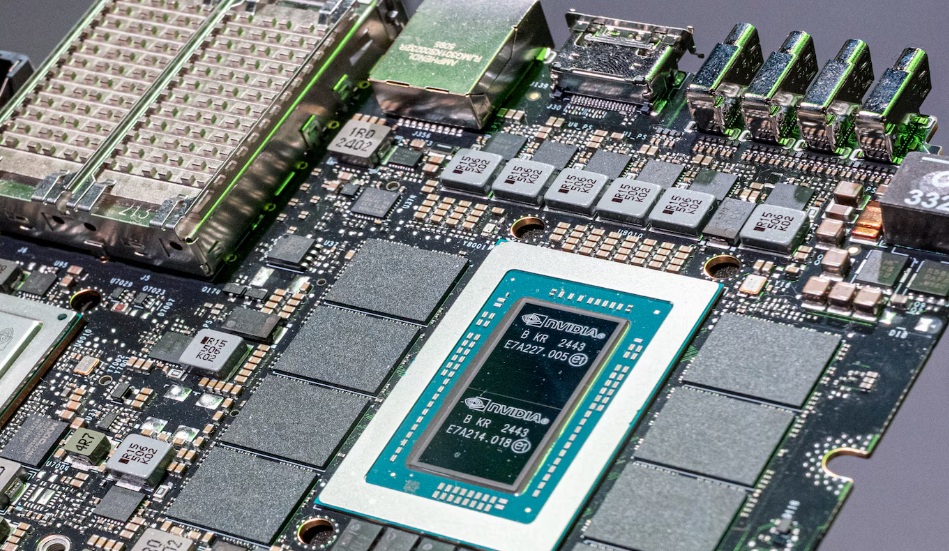
  • A GPU is an electronic circuit board that can quickly perform many mathematical calculations. 
  • Like a central processing unit (CPU), a GPU is also a chip component in computing devices.
  • The technology was originally designed to speed up 3-D graphics rendering. 
  • Traditional GPUs come in two main flavours.
    • First, there are standalone chips, which often come in add-on cards for large desktop computers.
    • Second are GPUs combined with a CPU in the same chip package, which are often found in laptops and game consoles such as the PlayStation 5.
  • In both cases, the CPU controls what the GPU does.
  • Working of GPU
    • GPUs work by using parallel processing, where multiple processors handle separate parts of a single task.
    • A GPU will also have its own RAM to store the data it is processing. This RAM is designed specifically to hold the large amounts of information coming into the GPU for highly intensive graphics use cases.
  • Applications: It is used in areas including high-performance computing, machine learning, artificial intelligence (AI), weather forecasting, and crypto currency mining.

Source: IE

Graphics Processing Units (GPU) FAQs

Q1: What is a GPU primarily used for?

Ans: Graphics rendering

Q2: What is a key application of GPUs?

Ans: AI and machine learning

Kondaveedu Fort

Kondaveedu Fort

Kondaveedu Fort Latest News

The Union minister of state recently announced plans for the comprehensive development of the historic Kondaveedu Fort.

About Kondaveedu Fort

  • Kondaveedu Fort, also known as Kondavid Fort, is a historical fortification located at Kondaveedu village in the Guntur district of Andhra Pradesh. 
  • It is spread across a range of hills at around 1,050 feet elevation.
  • It is the largest hill fort in present Andhra Pradesh.
  • History:
    • It was constructed during the time of the Telugu Chodas, strengthened by the Kakatiyas and occupied by Prolaya Vema Reddy, who shifted his capital from Addanki to Kondaveedu in 1323 AD. 
    • Later it was taken over by the Gajpathis of Orissa and ravaged by the Bahmani Sultans in 1458. 
    • The fort later came under the control of the Vijayanagara Empire, the Golconda Sultanate, the Mughals, the French, and the British. 
  • The architecture displays a blend of Hindu and Islamic styles. 
    • It was mainly constructed with granite stones and lime mortar.
    • It features massive granite fortifications, 23 bastions connected by defensive walls, and two main entrances called Kolepalli Darwaza and Nadella Darwaza.
    • Inside the fort are ruins of temples, pillared halls, granaries, water tanks, and a mosque.
    • The fort is also known for its ancient water conservation system with several ponds supplying water to inhabitants.
    • Recent archaeological findings include Buddhist stupa remains dating back to the 1st or 2nd century CE.

Source: DC


Kondaveedu Fort FAQs

Q1: What is Kondaveedu Fort?

Ans: Kondaveedu Fort is a historic hill fort located in Andhra Pradesh.

Q2: During whose rule was Kondaveedu Fort originally constructed?

Ans: During the rule of the Telugu Chodas.

Q3: Who shifted his capital to Kondaveedu Fort in 1323 AD?

Ans: Prolaya Vema Reddy.

Q4: What architectural styles are seen in Kondaveedu Fort?

Ans: A blend of Hindu and Islamic styles.

Polyrhachis garbhangaensis

What is Polyrhachis garbhangaensis

Polyrhachis garbhangaensis Latest News

Garbhanga Reserve Forest on the outskirts of Guwahati has yielded a newly identified ant species named Polyrhachis garbhangaensis.

About Polyrhachis garbhangaensis

  • It is a new species of ant.
  • It was discovered in Garbhanga Reserve Forest on the outskirts of Guwahati, Assam.
  • It has been named after its place of discovery and is proposed to be known as the “Assamese Spiny Ant.”
  • It belongs to a rare and specialised group of spiny ants called the mucronata group.
  • It is only the third species of this group ever recorded in India.
  • At about 5.6 millimetres long, the Assamese Spiny Ant is visually striking.
  • Unlike its close relatives, which are usually black, this species has a bright yellow-orange abdomen.
  • It also has curved spines on its body that likely help protect it from predators.

Source: TOI


Polyrhachis garbhangaensis FAQs

Q1: What is Polyrhachis garbhangaensis?

Ans: It is a newly discovered species of ant.

Q2: Where was Polyrhachis garbhangaensis discovered

Ans: In the Garbhanga Reserve Forest near Guwahati, Assam.

Q3: To which specialised group does Polyrhachis garbhangaensis belong?

Ans: The mucronata group of spiny ants.

Q4: What makes Polyrhachis garbhangaensis visually distinct from related species?

Ans: Its bright yellow-orange abdomen.

Global Teacher Prize

Global Teacher Prize

Global Teacher Prize Latest News

Recently, Indian teacher Rouble Nagi received the Global Teacher Prize 2026 during the World Government Summit.

About Global Teacher Prize

  • It is an annual award presented to an exceptional teacher who has made a significant impact on their students and community.
  • It was established in 2014.
  • The prize aims to highlight the importance of educators and recognize the outstanding contributions they make to society.
  • Eligibility and Criteria
    • It is open to teachers from all countries, working in various educational settings including public, private, and alternative schools.
    • Candidates are evaluated based on their innovative teaching practices, achievements in the classroom, and efforts to improve the quality of education in their community.
    • The selection process also considers the teacher’s impact on their students’ learning and their ability to overcome challenging environments.
  • Nomination: Teachers can be nominated by others or can apply themselves.
  • Award: The award comes with a cash prize of $1 million, making it one of the most prestigious recognitions in the field of education.
  • It is presented by GEMS Education and organised by the Varkey Foundation in collaboration with UNESCO.

Source: DD News

Global Teacher Prize FAQs

Q1: Who won the Global Teacher Prize 2026?

Ans: Rouble Nagi

Q2: What is the prize money for the Global Teacher Prize?

Ans: $1 million

India–US Interim Trade Agreement (ITA) – Towards a Strategic Bilateral Trade Architecture

India–US Trade Reset - Reduced Tariffs, Strategic Bargains and the China Factor

India-US Interim Trade Agreement (ITA) Latest News

  • The United States and India have agreed upon a Framework for an Interim Trade Agreement (ITA) aimed at delivering early trade gains while negotiations continue for a comprehensive US–India Bilateral Trade Agreement (BTA).
  • The US-India BTA was launched in February 2025 by President Donald Trump and Prime Minister Narendra Modi.
  • The framework reflects evolving geopolitical realities, particularly China’s rise, supply chain diversification, energy security concerns, and technology competition, which have injected new urgency into bilateral trade negotiations.

Nature and Scope of the Interim Agreement

  • A transitional but strategic arrangement:
    • Designed as a reciprocal and mutually beneficial trade arrangement, it is -
      • Intended to generate early trade benefits
      • Serves as a stepping stone toward a comprehensive BTA
    • The agreement signals renewed momentum in a relationship that has struggled for years over issues such as agriculture, digital trade, and market access.
  • India’s commitments:
    • Tariff liberalisation and rationalisation: India will eliminate or reduce tariffs on all US industrial goods, reduce tariffs on US agricultural and food products, including dried distillers’ grains, red sorghum, tree nuts, fresh and processed fruits, soybean oil, wine and spirits.
    • Addressing non-tariff barriers (NTBs):
      • India agreed to tackle import licensing delays; standards-related restrictions; and barriers affecting medical devices, ICT goods, food and agricultural products.
      • Talks to align with US or international standards to conclude within six months.
      • Significance: Non-tariff barriers have long been contentious in WTO discussions. Their removal signals regulatory convergence.
  • US commitments:
    • Tariff reductions for Indian exports
      • The US will remove tariffs on generic pharmaceuticals; gems and diamonds; selected aircraft and aircraft parts.
      • India will receive ally-equivalent tariff treatment in certain aviation sectors, and get a preferential quota for auto parts at lower tariff rates.
      • However, the US will apply an 18% reciprocal tariff on several Indian exports including textiles, clothing, leather, footwear, plastics, chemicals, and certain machinery.
    • Relief under national security tariffs:
      • The US will lift certain tariffs imposed under national security provisions, especially in aviation sectors.
      • This is significant because national security tariffs are often invoked under domestic trade laws, and their removal indicates strategic trust.

Trade, Technology and Supply Chain Cooperation

  • Strategic economic integration:
    • India plans to purchase $500 billion worth of US goods over five years, including energy products, aircraft, precious metals, technology products, and coking coal.
    • Both sides agreed to expand trade in high-tech goods such as GPUs, and deepen cooperation in innovation, supply chains, economic security, and addressing non-market practices of third countries (implicit reference to China).
  • Digital trade commitments:
    • Both countries agreed to address barriers to digital trade, committed to establishing clear and mutually beneficial digital trade rules.
    • Digital trade has been a key friction point, especially concerning data localisation, cross-border data flows, and e-commerce regulations.

Strategic Significance

  • Geopolitical drivers: China–US rivalry, supply chain realignment (“China +1” strategy), energy security, and Indo-Pacific strategic convergence.
  • Economic implications: Enhanced market access for both sides, strengthening India’s position in global value chains, potential boost to manufacturing and exports, reinforcing India’s role in trusted technology supply chains.

Key Challenges

  • Agricultural sensitivities: US agricultural access may affect Indian farmers.
  • Reciprocal tariffs: The US will apply a reciprocal tariff rate of 18% on many Indian goods, which may hurt labour-intensive sectors like textiles and leather.
  • Pharmaceutical uncertainty: Subject to US tariff investigations.
  • Digital trade disputes: Data sovereignty vs open digital markets.
  • Rules of origin enforcement: Ensuring benefits accrue primarily to US and Indian producers.

Way Forward

  • Fast-track: Conclusion of the Interim Trade Agreement (ITA).
  • Build: Trust through early harvest implementation.
  • Protect: Sensitive sectors via calibrated tariff reduction.
  • Align: Digital governance frameworks with global best practices.
  • Strengthen: Institutional mechanisms for dispute resolution.
  • Integrate: Trade negotiations with broader strategic cooperation (Quad, Indo-Pacific frameworks).

Conclusion

  • The India–US Interim Trade Framework represents more than a tariff adjustment exercise—it reflects a strategic recalibration of bilateral economic ties amid shifting global power dynamics. 
  • If implemented effectively, this framework could redefine India–US economic relations, reinforce supply chain resilience, and strengthen India’s position in the evolving global trade architecture.

Source: TH | IE

India–US Interim Trade Agreement (ITA) FAQs

Q1: Why does the India–US Interim Trade Framework mark a shift?

Ans: It reflects a strategic realignment driven by supply chain resilience, technology cooperation, and Indo-Pacific geopolitics rather than mere tariff bargaining.

Q2: What is the significance of tariff rationalisation and removal of non-tariff barriers in the India–US ITA?

Ans: It enhances market access, regulatory convergence, and integration into global value chains while addressing long-standing trade frictions.

Q3: How does the India–US ITA strengthen supply chain resilience and economic security?

Ans: By expanding cooperation in energy, technology (including GPUs), aviation, and critical goods.

Q4: What potential challenges India may face under the reciprocal tariff and agricultural access commitments?

Ans: It may strain India’s labour-intensive sectors and domestic farmers, necessitating calibrated safeguards.

Q5: What is the role of digital trade negotiations in shaping the future of India–US Bilateral Trade Agreement (BTA)?

Ans: It will be central to ensuring mutually beneficial economic integration in the emerging digital economy.

India–US Trade Pact Opens GPU Access and Data Centre Investment Opportunities

India–US Trade Pact Opens GPU Access and Data Centre Investment

GPU Access and Data Centre Investment Latest News

  • Under their interim trade agreement, India and the United States have agreed to significantly expand trade in technology products, particularly Graphics Processing Units (GPUs) and other equipment critical for data centres, alongside deeper joint technology cooperation.
  • The move aligns with India’s broader push to strengthen its digital and AI ecosystem. New Delhi has announced a tax holiday for foreign firms setting up data centres, reduced budgetary support under its flagship AI mission—shifting focus from subsidies to market-driven investment. 
  • It is witnessing a surge in iPhone exports, signalling growing integration with global technology supply chains.
  • As India lacks domestic GPU manufacturing capacity, it will rely heavily on imports, primarily from US-based firms such as Nvidia, to meet the rapidly rising compute demand of AI startups developing models and applications. 
  • The agreement is expected to improve access to high-end computing hardware while positioning India as an attractive destination for data centre investments.

On GPUs: A Positive Shift for India’s AI Ambitions

  • The IndiaAI Mission saw its allocation reduced to ₹1,000 crore for 2026–27, down from ₹2,000 crore in the current fiscal, raising concerns about India’s AI momentum.
  • The ₹10,370 crore mission aims to subsidise GPU access for startups and researchers developing AI models.
  • So far, around 40,000 GPUs have been installed under the mission—widely seen as inadequate, especially when compared to the massive compute capacity available to leading American AI companies.

India–US Trade Deal Offers an Alternative Route

  • The India–US interim trade agreement to increase trade in GPUs offers a market-driven alternative to public subsidies. 
  • Since India lacks domestic GPU manufacturing, improved access to imports—primarily from US firms—can help bridge the compute gap for Indian startups.

Contrast with Biden-Era Export Controls

  • This marks a clear departure from the approach under former US President Joe Biden.
  • Before leaving office, the Biden administration introduced stringent export controls on GPUs, placing limits on the number of GPUs India could import, citing national security concerns. 
    • These restrictions were part of a broader global framework.
  • After President Donald Trump took office, the framework was set aside, easing access for partners like India.

Escaping China-Style Technology Restrictions

  • From a strategic standpoint, India has secured favourable terms:
    • It has avoided China-style export controls, under which Beijing is barred from importing the most advanced GPUs
    • Although US restrictions on China have seen some recent dilution, they remain far stricter than those applied to India
  • This positions India as a trusted technology partner, rather than a restricted market.

India Meets Key US Demand on Data Centres

  • Data centres have emerged as a major pillar of India–US technology cooperation. In a significant policy move, India announced a tax holiday until 2047 for foreign companies setting up data centres in the country, addressing a long-standing US demand.
  • This incentive was announced in the Union Budget and signals India’s intent to position itself as a global hub for digital and AI infrastructure.

US Demands in Trade Negotiations

  • During bilateral trade talks, the United States sought:
    • Greater market access for US data centre companies
    • Tax incentives
    • Affordable access to land, electricity, and water
    • Duty exemptions on select imports
  • By offering a long-term tax holiday, India has acted on one of the core US asks, strengthening the investment climate for foreign tech firms.

Major US Investments Announced

  • Several US technology giants have announced large-scale investments in India’s data centre ecosystem:
    • Google: Announced a $15 billion investment (October) to build a 1 GW data centre in partnership with Adani Group.
    • Microsoft: Committed $17.5 billion (December), primarily focused on AI data centres.
    • Amazon: Plans to invest $35 billion over five years in India, with a significant portion expected to support data centre expansion.
  • These investments are driven by the surging compute demand of artificial intelligence.

India’s Data Centre Market Outlook

  • Current market size: ~$10 billion
  • Revenue in FY24: ~$1.2 billion 
  • Capacity addition: 795 MW of new capacity expected by 2027; Total capacity projected to reach 1.8 GW.

A $100 Billion Opportunity for India’s Electronics Sector

  • The reduction of US tariffs on Indian goods from 50% to 18% has opened the door to a major expansion of India’s electronics manufacturing sector. 
  • Industry estimates suggest India–US electronics trade could reach $100 billion, driven by improved market access and smoother technology flows.

Electronics Exports Gain Momentum

  • Electronics have emerged as a key growth engine for India:
    • Exports in 2024–25: ₹3.27 lakh crore (≈ $38 billion)
    • Largest export market: United States
  • The new trade framework is expected to accelerate export growth and deepen integration with global value chains.

Employment and Industrial Footprint

  • India’s electronics manufacturing sector:
    • Employs over 2 million workers directly
    • Is concentrated in Tamil Nadu, Karnataka, Uttar Pradesh, and Maharashtra
    • Supports a broad ecosystem of component suppliers, assemblers, and technology service providers

Source: IE | IE

GPU Access and Data Centre Investment FAQs

Q1: What does the India–US trade pact on GPUs and data centres involve?

Ans: The India–US trade pact opens GPU access and data centre investment by expanding technology trade, easing hardware imports, and strengthening joint cooperation in AI and digital infrastructure.

Q2: Why is GPU access important under the India–US trade pact?

Ans: India–US trade pact opens GPU access and data centre investment to address India’s lack of domestic GPU manufacturing and meet the rising compute needs of AI startups and researchers.

Q3: How does the pact affect India’s AI ecosystem?

Ans: India–US trade pact opens GPU access and data centre investment, offering a market-driven alternative to subsidies and helping bridge India’s computing capacity gap after reduced IndiaAI Mission allocations.

Q4: How has India addressed US demands on data centres?

Ans: India–US trade pact opens GPU access and data centre investment alongside India’s tax holiday until 2047 for foreign data centres, meeting key US demands on market access and incentives.

Q5: What economic opportunity does the trade pact create for India?

Ans: India–US trade pact opens GPU access and data centre investment, potentially enabling $100 billion electronics trade, expanding exports, employment, and positioning India as a trusted manufacturing hub.

India’s Strategy to Tackle the Mental Health Burden: Infrastructure, Gaps and Way Forward

India’s Strategy to Tackle the Mental Health Burden

Mental Health Latest News

  • The Economic Survey recently flagged a worrying rise in digital addiction and screen-related mental health issues, especially among children and adolescents. 
  • Responding to these concerns, the February 1 Union Budget announced steps to strengthen India’s mental health infrastructure.
  • Key measures include the proposal to set up a second National Institute of Mental Health and Neuro Sciences (NIMHANS) in north India, alongside plans to upgrade premier mental health institutions in Ranchi and Tezpur. 
  • These steps aim to improve regional access, reduce pressure on existing facilities, and expand specialised mental healthcare services across the country.

India’s Mental Health Burden: Scale and Severity

  • Experts warn that India is facing a serious mental health crisis. 
  • The country accounts for nearly one-third of global cases of suicide, depression, and addiction, making mental health a major public health challenge.

High Suicide Burden Among Youth

  • Data from the National Crime Records Bureau and the Sample Registration System under the Ministry of Home Affairs show that:
    • Suicide is among the leading causes of death for Indians aged 15–29 years.
    • Young people are particularly vulnerable due to academic pressure, unemployment, social stress, and digital addiction

Economic Cost of Mental Illness

  • According to the World Health Organization (WHO):
    • India is expected to lose $1.03 trillion between 2012 and 2030 due to mental health conditions.
    • Losses stem from reduced productivity, healthcare costs, and premature mortality.

Large Treatment Gap

  • A major concern is the treatment gap: 70%–92% of people with mental disorders do not receive proper care.
  • Key reasons include: Lack of awareness; Social stigma; Severe shortage of trained mental health professionals.

Shortage of Mental Health Professionals

  • As per the Indian Journal of Psychiatry:
    • India has 0.75 psychiatrists per 1,00,000 people
    • The WHO recommends at least 3 psychiatrists per 1,00,000
  • This gap severely limits access to diagnosis, counselling, and treatment.

Low Budgetary Priority

  • Although overall health spending has increased since FY2014–15, mental health has received: Only about 1% of the total health budget.
  • Limited funding has constrained infrastructure, manpower, and outreach services

Mental Health Infrastructure in India: Expanding Access Beyond Hospitals

  • To meet the rising demand for mental health services, the government has integrated mental healthcare into primary healthcare under Ayushman Bharat. 
  • Mental health services are now part of the Comprehensive Primary Health Care package delivered through Ayushman Arogya Mandirs (Health and Wellness Centres).
  • Over 1.73 lakh sub-health centres and primary health centres have been upgraded into Ayushman Arogya Mandirs
  • These centres provide basic mental health screening, counselling, and referrals, reducing dependence on specialised hospitals

Strengthening Specialist Capacity

  • To address the shortage of trained professionals, the government has expanded education and training infrastructure:
    • Over 20 Centres of Excellence sanctioned for postgraduate training in mental health
    • 47 postgraduate departments in mental health established nationwide
  • These initiatives aim to increase the availability of psychiatrists, psychologists, and mental health specialists, especially in underserved regions.

Tele-Mental Health Support: Tele MANAS

  • India has complemented physical infrastructure with digital outreach through Tele MANAS (Tele Mental Health Assistance and Networking Across States):
    • 24×7 free mental health support via helplines 14416 or 1-800-891-4416
    • Launched on October 10, 2022
    • 53 operational cells across 36 States and Union Territories
    • Backed by 23 specialised mentoring institutes
  • Tele MANAS bridges access gaps, especially for people in remote areas or those hesitant to seek in-person care.

Where Does India Fall Short on Mental Health Funding

  • India’s mental health budget has increased from ₹683 crore in 2020–21 to about ₹1,898 crore in 2024–25. 
  • However, experts argue that this rise masks a deeper problem of chronic underinvestment.
  • The allocation remains below 2% of the total health budget, which itself is only around 2% of India’s GDP—far short of what the scale of the mental health burden demands.

Mismatch Between Spending and Need

  • The underinvestment becomes stark when weighed against:
    • India’s high suicide and depression burden
    • Massive treatment gaps
    • Economic losses due to untreated mental illness
  • Despite these realities, mental health continues to receive low fiscal priority.

Overemphasis on Tertiary Institutions

  • A major concern is where the money goes. A significant portion of allocations continues to be directed toward tertiary institutions such as NIMHANS and newly established centres of excellence.
  • While important, experts argue that:
    • Tertiary institutions alone cannot mainstream mental healthcare in a country of India’s size
    • They serve a limited population and are often concentrated in urban areas
  • They stress the need for targeted funding for grassroots mental health programmes, including:
    • Community-based services
    • Early intervention models
    • Preventive and promotive mental healthcare
  • Such approaches are more effective in reaching underserved populations and reducing long-term disease burden.

Utilisation Gap Compounds the Problem

  • Beyond low allocations, there is also a utilisation issue:
    • Funds earmarked for mental health are not fully utilised at the national level
    • Administrative bottlenecks and lack of local capacity hinder effective spending
    • Health experts argue that better utilisation requires decentralised planning and community-led models, not just increased funding.

The Way Ahead: Shifting to Preventive and Community-Based Mental Healthcare

  • India urgently needs affordable access, continuity of care, and timely treatment to prevent avoidable deaths and disability from mental illness. 
  • Experts highlight an over-reliance on specialist-led, tertiary care, severe shortages of trained professionals, and a 95% access gap. 
  • The government is pivoting to a whole-of-community approach, integrating mental well-being into schools and strengthening workplace policies to address stress and burnout—signalling a shift from curative to preventive, community-based care.

Source: TH

Mental Health FAQs

Q1: Why is India’s strategy to tackle the mental health burden urgently needed?

Ans: India’s strategy to tackle the mental health burden is urgent because the country faces high suicide rates, massive treatment gaps, youth vulnerability, and rising digital addiction-related mental health disorders.

Q2: What is the scale of India’s mental health burden?

Ans: India’s strategy to tackle the mental health burden addresses a crisis where India accounts for nearly one-third of global suicide, depression, and addiction cases, with severe economic and social costs.

Q3: How is India expanding mental health infrastructure?

Ans: India’s strategy to tackle the mental health burden includes integrating services into Ayushman Bharat, upgrading 1.73 lakh centres, expanding PG departments, and strengthening tele-mental health through Tele MANAS.

Q4: Where does India’s strategy to tackle the mental health burden fall short?

Ans: India’s strategy to tackle the mental health burden suffers from underfunding, poor fund utilisation, overfocus on tertiary institutions, and inadequate investment in community-based and preventive mental healthcare.

Q5: What is the way forward in India’s strategy to tackle the mental health burden?

Ans: India’s strategy to tackle the mental health burden must prioritise community-based care, early intervention, school and workplace mental health integration, and scaling trained professionals to close the access gap.


Why AYUSH Received a Major Push in the Union Budget 2026-27

Why AYUSH Received a Major Push in the Union Budget 2026-27

AYUSH Latest News

  • The Union Budget 2026-27 significantly increased allocations for the AYUSH sector and announced major institutional and regulatory initiatives to expand its domestic and global footprint.

Understanding the AYUSH System in India

  • AYUSH refers to Ayurveda, Yoga & Naturopathy, Unani, Siddha, and Homoeopathy, India’s traditional systems of medicine that coexist with modern allopathic healthcare. 
  • Over the last decade, the government has sought to integrate AYUSH into the public health system while also positioning it as a source of economic growth and soft power.
  • Institutionally, AYUSH functions under the Ministry of AYUSH, established in 2014. 
  • The sector operates through a nationwide network of AYUSH hospitals, dispensaries, teaching institutions, research councils, and regulatory bodies. 
  • The National AYUSH Mission (NAM) is the primary vehicle for integrating AYUSH services into primary healthcare by co-locating AYUSH facilities in existing health centres.
  • India also hosts Institutes of National Importance such as the All India Institute of Ayurveda, New Delhi, and the National Institute of Homoeopathy, Kolkata, along with research bodies like the Central Council for Research in Ayurvedic Sciences. 
  • Regulatory oversight is provided by the National Commission for Indian System of Medicine and the National Commission for Homoeopathy, while drug standards are set by the Pharmacopoeia Commission for Indian Medicine and Homoeopathy.

Budgetary Expansion of the AYUSH Sector

  • The Union Budget 2026-27 marked a sharp increase in government spending on AYUSH. 
  • The total allocation rose to Rs. 4,408 crore, up from Rs. 3,992 crore in 2025-26 and Rs. 2,122 crore in 2020-21. 
  • This reflects a long-term policy shift to mainstream traditional medicine within India’s healthcare framework.
  • A major announcement was the establishment of three new All-India Institutes of Ayurveda, envisioned as centres of excellence on the lines of AIIMS. 
  • These institutions will combine patient care, advanced research, and high-quality medical education, aiming to standardise Ayurvedic practice nationally.
  • The Budget also proposed enhanced funding for upgrading the WHO Global Traditional Medicine Centre in Jamnagar, signalling India’s ambition to lead global standard-setting for traditional medicine practices.

Strengthening Infrastructure, Research, and Supply Chains

  • The National AYUSH Mission received a 66% hike to Rs. 1,300 crore, focusing on modernising AYUSH hospitals and dispensaries, expanding preventive healthcare, and upgrading existing facilities. 
  • Additional funds were earmarked for improving AYUSH pharmacies and drug-testing laboratories to address long-standing quality and safety concerns.
  • A notable innovation announced was Bharat-VISTAAR, a multilingual AI-based digital assistant designed to support farmers cultivating medicinal plants. 
  • It will provide real-time guidance on crop quality, market prices, and export certification, strengthening the medicinal plant supply chain.

India-EU Free Trade Agreement and Global Outreach

  • A key driver behind the Budget push is the India-European Union Free Trade Agreement (FTA), which has opened new opportunities for AYUSH in European markets. 
  • In EU countries that do not specifically regulate traditional medicine, Indian AYUSH practitioners can now offer services based on qualifications obtained in India.
  • The FTA also allows Indian companies to establish wellness centres and Ayurvedic clinics across the EU with legal certainty. 
  • Importantly, it enables mutual recognition of certain laboratory test results and safety certifications, easing the export of AYUSH products. 
  • The agreement also recognises India’s Traditional Knowledge Digital Library, helping prevent biopiracy and wrongful patent claims on Indian formulations.

Concerns Around Evidence, Safety, and Regulation

  • Despite the expansion, the AYUSH sector faces persistent criticism. 
  • Medical bodies such as the Indian Medical Association argue that many AYUSH therapies lack rigorous empirical validation through randomised controlled trials. 
  • Safety concerns remain, particularly regarding the presence of heavy metals like lead and mercury in some Ayurvedic formulations, which have triggered international health advisories.
  • Another contentious issue is “mixopathy”, the overlap between AYUSH and allopathic practices. 
  • Policy decisions allowing Ayurveda practitioners to perform certain surgical procedures and prescribe allopathic drugs have led to legal disputes and professional opposition, highlighting the need for clearer regulatory boundaries.

Source : TH

AYUSH FAQs

Q1: What is AYUSH?

Ans: AYUSH refers to Ayurveda, Yoga & Naturopathy, Unani, Siddha, and Homoeopathy systems of traditional medicine in India.

Q2: How much allocation did AYUSH receive in Budget 2026–27?

Ans: The sector received ₹4,408 crore, a significant increase over previous years.

Q3: What new institutions were announced for AYUSH?

Ans: Three new All-India Institutes of Ayurveda were proposed, modelled on AIIMS.

Q4: How does the India-EU FTA benefit AYUSH?

Ans: It enables Indian practitioners and products to access European markets with greater legal certainty.

Q5: What are the key concerns related to AYUSH expansion?

Ans: Concerns include lack of clinical evidence for some therapies, safety issues, and regulatory overlaps with modern medicine.

Enquire Now