Vajiram and Ravi provide Current Affairs of 8 March 2026 for UPSC aspirants. We cover all relevant news and important events crucial for the exam, helping you stay updated and well prepared.
Recently, the union Minister for Youth Affairs and Sports announced that the inaugural edition of the Khelo India Tribal Games will be held between March 25 and April 6.
About Khelo India Tribal Games
The Khelo India Tribal Games are part of the Khelo India Scheme.
The Games will feature seven medal sports – athletics, football, hockey, weightlifting, archery, swimming and wrestling.
There will be two demonstration sports – mallakhamb and kabaddi.
Host State: Chhattisgarh becoming the first state to host this landmark national event, dedicated exclusively to tribal athletes
KITG will see representation from most states and Union Territories of India.
It will be jointly managed by the Ministry of Youth Affairs & Sports, Sports Authority of India (SAI), Indian Olympic Association, National Sports Federations and the Chhattisgarh state organising committee
Mascot: ‘Morveer’, derived from two powerful words — ‘Mor’, meaning mine or our own in Chhattisgarhi, and ‘Veer’, symbolising courage and valour.
Key Facts about Khelo India Scheme
It is a flagship Central Sector Scheme of the Ministry of Youth Affairs & Sports, Government of India.
It is aimed at promoting mass participation and sporting excellence.
Khelo India Games have been declared an ‘Event of National Importance’ in 2020 under the Sports Broadcasting Signals Act, 2007.
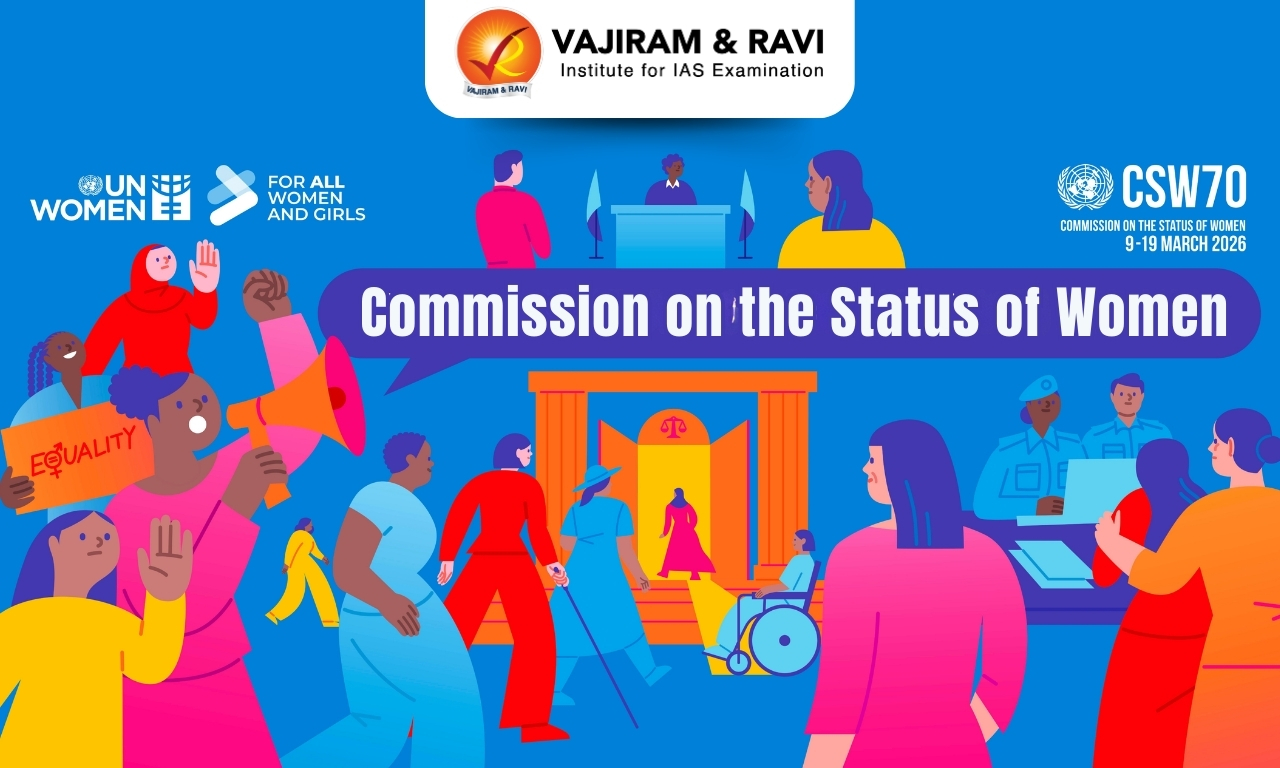
The Minister of State for Women and Child Development to participate in the 70th Session of the Commission on the Status of Women (CSW-70) at the United Nations Headquarters.
About Commission on the Status of Women
It is a functional commission of the Economic and Social Council (ECOSOC).
It was established by ECOSOC resolution of 21 June 1946.
It is the principal global intergovernmental body dedicated to the promotion of gender equality and the empowerment of women.
It is part of the United Nations, and works to promote women’s political, economic, civil, social, and educational rights.
Mandate: It is instrumental in promoting women’s and girls’ rights, documenting the reality of their lives throughout the world, and shaping global standards on gender equality and the empowerment of women and girls.
In 1996, ECOSOC expanded the Commission’s mandate
It was decided that it should take a leading role in monitoring and reviewing progress and problems in the implementation of the Beijing Declaration and Platform for Action and in mainstreaming a gender perspective in UN activities.
The Beijing Declaration and the Platform for Action, adopted by 189 countries, is the most comprehensive and transformative global agenda for the achievement of gender equality and the empowerment of women and girls.
Member States:Forty-five Member States of the United Nations serve as members of the Commission at any one time.
Member States elected by the Economic and Social Council on the basis of equitable geographical distribution:
Researchers recently found that the bacteria Deinococcus radiodurans, famous for being able to survive extreme radiation and dryness, can also survive the intense pressures of being blasted off of a planet’s surface: 14,000-24,000 earth atmospheres.
About Deinococcus radiodurans
It is a bacterium best known for its extreme resistance to the lethal effects of ionizing radiation.
This bacterium is gram-positive (which means it has a certain kind of cell wall), doesn't move on its own (it's nonmotile), and has a reddish color.
It was first found in 1956 in canned meat that had been treated with radiation to kill germs.
Dubbed “Conan the Bacterium” for its extraordinary ability to tolerate the harshest of conditions, D. radiodurans can withstand radiation doses thousands of times higher than what would kill a human.
It is known as the most radiation-resistant organism on Earth.
The secret behind this impressive resistance is the presence of a collection of simple metabolites, which combine with manganese to form a powerful antioxidant that is more resistant to radiation.
D. radiodurans has special ways to fix its own DNA if it gets damaged. An enzyme called thioredoxin reductase helps its cells fix broken DNA strands.
It can also get rid of damaged DNA parts and has extra copies of its important genes.
This helps it recover from being very dry (called desiccation) or from not having enough food (called starvation).
It can live through extreme cold, dehydration, vacuum, and even acid.
Israel reportedly used the Blue Sparrow missile to kill Ayatollah Ali Khamenei in Tehran recently.
About Blue Sparrow Missile
It is part of a family of three air-launched ballistic missiles, which also includes the Black Sparrow and the Silver Sparrow.
They are developed byRafael Advanced Defense Systems, an Israeli defense technology company.
They were built as practice targets for Israel's Arrow missile defence system.
Over time, however, the Blue Sparrow was adapted into an offensive air-to-surface weapon.
Blue Sparrow Missile Features
The missile measures 6.5 metres in length and weighs about 1.9 tonnes.
It is typically launched from fighter aircraft, including Israeli F-15 jets, whose booster rockets propel the missile to high altitude before it begins its descent.
It has a range of roughly 1,995 km.
Unlike many conventional munitions, it follows a quasi-ballistic trajectory.
After launch, the missile ascends rapidly, leaving the Earth's atmosphere before re-entering and descending toward its target.
This ability to exit and re-enter the atmosphere complicates interception by air defence systems.
The World Health Organization (WHO) has certified Denmark for the elimination of mother-to-child transmission (EMTCT) of HIV and syphilis.
About Syphilis
It is a preventable and curable bacterial sexually transmitted infection (STI).
Cause: It is caused by the bacteria, Treponema pallidum.
Transmission
People usually get syphilis from sexual contact with someone who has it.
People get it if any part of their body touches the sore or rash of someone with syphilis.
It can alsopass from mother to baby during pregnancy, childbirth, and sometimes through breastfeeding.
Symptoms of Syphilis
Syphilis develops in stages.
The disease starts as a sore that’s often painless and typically appears on the genitals, rectum, or mouth.
Sometimes it causes swelling in nearby lymph nodes.
Many people do not notice symptoms for years. Symptoms can go away and come back.
Without treatment, syphilis can damage the heart, brain, or other organs.
Syphilis in pregnancy, when not treated, treated late, or treated with the incorrect antibiotic, results in 50−80% of cases with adverse birth outcomes.
Treatment of Syphilis
It is easy to cure with antibiotics, especially during the early stages.
Penicillin is the most commonly used medication for syphilis.
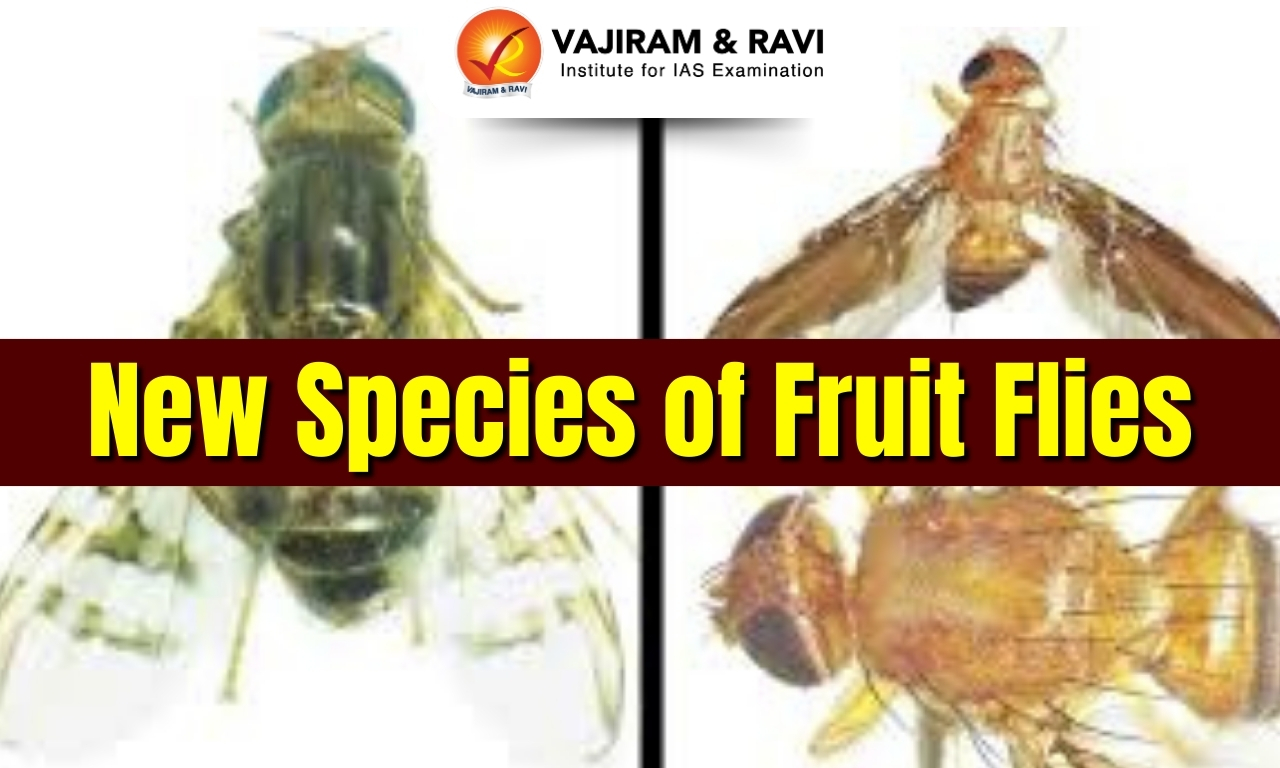
Entomologists recently identified two new species of fruit flies named Acidoxantha paratotoflava and Hemilea suneriae during a research expedition in the Himalayan foothills.
About Acidoxantha paratotoflava and Hemilea suneriae
They are two new species of fruit flies.
They were identified from the Solan region of Himachal Pradesh.
Acidoxantha paratotoflava:
It is a medium-sized, greenish-yellow fly.
It is distinguished from its closest relatives by having four distinct black stripes on its thorax and larger black spots on its abdomen.
It has unique "hook-like" structures in the male’s anatomy.
Its name, paratotoflava, was chosen because of its striking resemblance to another known fly, A. totoflava, which the researchers now believe may have been misidentified in India in the past.
Hemilea suneriae:
It is a reddish-brown fly covered in prominent black dots.
It has a unique wing pattern, which features a single clear "window" (hyaline indentation) in an otherwise dark area, whereas its closest relatives usually have two.
Other Findings about Fruit Flies
The study marked a major milestone by recording the genus Rhagoletis in India for the first time.
This group of flies is known worldwide for affecting fruit crops, yet it had remained undetected in India until this investigation.
Additionally, the researchers finally solved a century-old mystery by capturing and describing the male of Euphranta nigripeda, a species where only the female had been known to science since 1913.
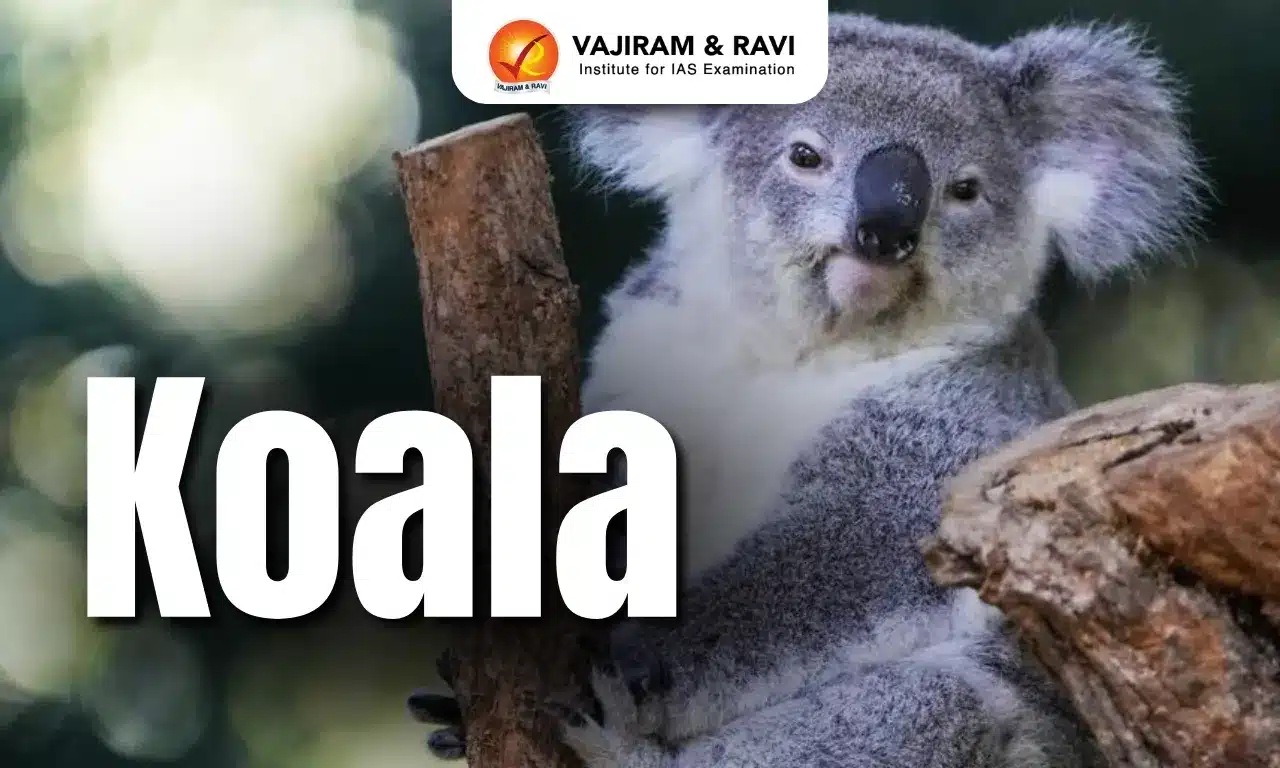
A rapid koala rebound in southeastern Australia is also boosting their genetic variation, showing one way out of an extinction death spiral.
About Koala
It is an iconic Australian animal.
Often called the koala “bear,” this tree-climbing animal is a marsupial—a mammal with a pouch for the development of offspring.
Scientific Name: Phascolarctos cinereus
It is the only extant representative of the family Phascolarctidae, and its closest living relatives are the wombats.
Koala Habitat and Distribution
The koalas live in eastern Australia and range from northern Queensland to southwestern Victoria.
Koalas are arboreal, remaining mostly in the branches of the eucalyptus trees, where they are able to feed and stay out of reach of their predators.
The koala is confined to eucalyptus forests below 600 m.
Koala Features
It is about 60 to 85 cm long and weighs up to 14 kg in the southern part of its range (Victoria and South Australia) but only about half that in subtropical Queensland to the north.
In both areas, they exhibit sexual dimorphism, with the males being larger.
Virtually tailless, the body is stout and gray, with a pale yellow or cream-coloured chest and mottling on the rump.
The broad face has a wide, rounded, leathery nose, small yellow eyes, and big fluffy ears.
The feet are strong and clawed.
They are slow-moving and sleep up to 18 hours a day.
Koala Conservation Status
It is classified as 'Vulnerable' under the IUCN Red List.
Recently, Iran has destroyed a key Terminal High Altitude Area Defence (THAAD) radar system used by the US to detect and intercept ballistic missiles in the Middle East.
About THAAD Missile System
The Terminal High Altitude Area Defence (THAAD) system is one of the most advancedmissile defence platforms.
It is developed by the United States to counter ballistic missile threats.
Key Features of THAAD Missile System
It is designed to intercept missiles during the final stage of their flight,
THAAD can destroy incoming threats both inside and outside Earth’s atmosphere, providing a critical defensive layer against short-medium-and limited intermediate-range ballistic missiles.
THAAD uses “hit-to-kill” technology.
This means its interceptor missiles destroy incoming targets by directlycolliding with them at extremely high speeds, relying on kinetic energy rather than an explosive blast.
THAAD can engage ballistic missile targets at ranges of roughly 150–200 kilometres.
The THAAD weapon system is a major element of the broader Ballistic Missile Defence System (BMDS) architecture.
Key components includes
Interceptors that destroy incoming missiles through kinetic impact;
Truck-mounted launchers used to deploy the interceptors;
Powerful AN/TPY-2 radar, which detects and tracks missile threats at a long range;
A tactical fire control and communications unit that coordinates targeting and engagement; and additional logistics and support equipment.
A typical THAAD battery includes around 90 personnel, six launchers, and 48 interceptors, with each launcher carrying eight missiles.
Regulating Social Media Use by Children Latest News
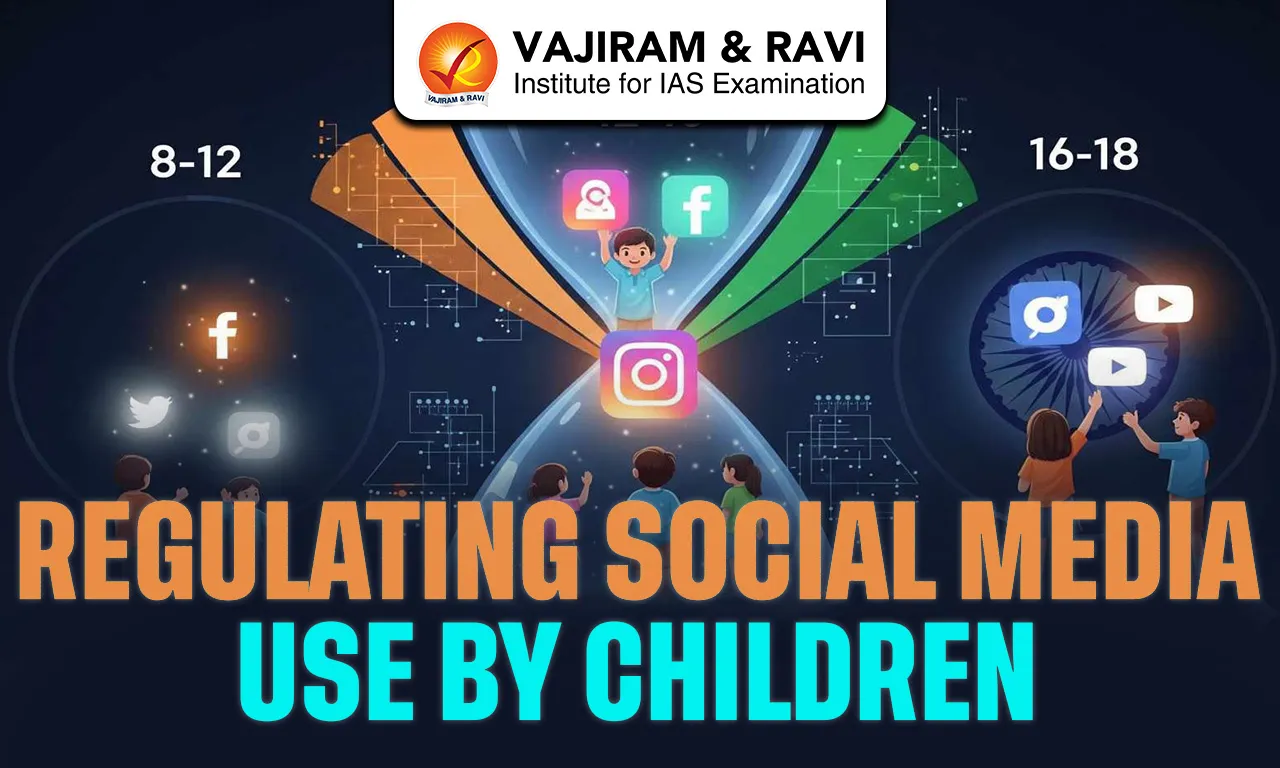
The Union Government is considering a separate legislation to regulate social media usage among children under 18 years, adopting a graded, age-based restriction framework rather than a blanket ban.
The proposed law may be introduced during the Monsoon Session of Parliament after stakeholder consultations.
The move reflects rising concerns globally about digital addiction, harmful online content, and mental health impacts on children, while also balancing digital rights and access to information.
Government’s Proposed Approach
Graded age-based restrictions:
The government is examining a tiered regulatory structure for different age groups -
8–12 years: Strictest restrictions with parental supervision and limited usage.
12–16 years: Moderate restrictions with controlled access.
16–18 years: Relatively relaxed restrictions but still monitored.
The aim is to balance child safety with digital exposure, acknowledging that today’s children are more digitally aware than earlier generations.
Possible regulatory measures:
Several mechanisms are being discussed. For example,
Login restrictions: Preventing social media access during evening or night hours.
Parental consent: For creating accounts.
Platform accountability: Social media companies may need to implement safeguards for minors.
These proposals draw inspiration from global models such as China’s one-hour-per-day limit for online gaming for minors.
Global Context - Rising Regulation of Children’s Social Media Use
Concerns regarding children’s online safety have triggered regulatory initiatives worldwide. For instance,
Australia: Introduced landmark legislation restricting children’s social media use.
Indonesia: Plans to ban Instagram and other “high-risk” platforms for users under 16.
France: President Emmanuel Macron proposed banning social media for children below 15.
European countries: Spain and others are considering similar restrictions.
These initiatives highlight growing concerns about AI-driven harmful content, cyberbullying, and digital addiction.
Policy Support
The Economic Survey 2025–26 recommended -
Age-based limits on social media use for children.
Restrictions on targeted digital advertisements for minors.
Promotion of simpler devices such as basic phones, and education-focused tablets.
The Survey also suggested content filters and usage limits to protect children from violent, sexual, gambling-related, or addictive online content.
Rationale Behind Regulation
Mental health concerns: Excessive social media use can lead to digital addiction, anxiety and depression, sleep disruption, and cyberbullying exposure.
Exposure to harmful content: Algorithms and AI-generated content have increased the circulation of violent material, sexual content, gambling promotions, and misinformation.
Child safety as a policy priority: Government sources emphasise that “citizen safety” will be the guiding principle in designing the law.
Concerns and Challenges
Operational challenges:
Tech companies warn about difficulties in implementing restrictions.
For example, geo-restrictions at the state level are difficult due to nationwide connectivity.
Different state-level rules (e.g., Karnataka vs Andhra Pradesh) may create compliance challenges.
Definitional issues: States may define “child” differently. For example, Andhra Pradesh ban for children below 13, Karnataka ban for those under 16. Such inconsistencies could create regulatory fragmentation.
Risk of circumvention: Industry representatives warn that bans may push teenagers to unregulated platforms, and logged-out browsing, bypassing safety protections.
Digital rights and freedom of expression: Digital rights groups argue that blanket bans may violate children’s rights to information, expression, and participation in digital spaces.
Digital gender divide: The Internet Freedom Foundation (IFF) cautions that restrictions framed as “protection” may reinforce patriarchal control over girls’ internet access, widening the digital gender divide, particularly in rural areas.
Way Forward
Balanced regulatory framework: Instead of outright bans, India could adopt proportionate regulations combining age verification systems, content moderation requirements, and platform accountability.
Strengthening digital literacy: Education systems should integrate digital safety education, awareness about misinformation, cyberbullying, and online risks.
Parental and institutional involvement: Policies should emphasise parental supervision, and School-level digital awareness programs.
Platform design reforms: Regulators could mandate child-safe algorithms, reduced addictive design features, stronger privacy and data protection mechanisms.
Uniform national framework: A central law would ensure consistency across states and reduce compliance complexities.
Conclusion
India is moving toward a nuanced regulatory framework for children’s social media usage, prioritising safety while preserving digital access and freedoms.
A graded, age-based system combined with digital literacy, platform accountability, and parental oversight may provide a balanced solution.
Such an approach could help mitigate risks like digital addiction, harmful content exposure, and mental health issues, while ensuring that children remain empowered participants in the digital ecosystem.
Q1: What is the need for regulating social media usage among children in India?
Ans: India is considering a graded age-based regulatory framework to address concerns such as digital addiction, mental health issues, etc.
Q2: Why are blanket bans on social media for children considered problematic?
Ans: Blanket bans may violate children’s rights to information, expression and participation, while failing to address issues such as low digital literacy.
Q3: How does the Economic Survey 2025–26 recommend addressing digital addiction among children?
Ans: The Survey suggests age-based limits on social media use, promotion of simpler devices, content filters, etc.
Q4: What are the challenges associated with state-level social media bans for children in India?
Ans: It creates regulatory inconsistencies, compliance challenges for tech companies, and difficulties in implementing geo-restrictions.
Q5: What are the potential unintended consequences of restricting social media access for children in India?
Ans: It may push teenagers to unregulated platforms, increase logged-out browsing that bypasses safeguards.
The Centre for Science and Environment (CSE) released the ‘State of India’s Environment 2026’ report.
Published annually since 1982, the report provides an overview of major environmental challenges in India, including floods, extreme weather events, wildlife behaviour changes, and air pollution.
It also examines global climate change trends and their impact on India. CSE experts warned that the global temperature rise may exceed the 1.5°C threshold, indicating that the world is nearing a critical climate tipping point.
Rising Extreme Weather Events in India
The report highlights that 2025 saw the highest frequency and impact of extreme weather events in India in the past four years.
These events included heatwaves, cold waves, heavy rainfall, and floods.
Data from January 1 to November 30, 2025 shows that extreme weather events occurred on 99% of the days.
These events resulted in 4,419 deaths and affected 17.41 million hectares of crop area.
Comparison with Previous Years
The frequency and impact of extreme weather events have increased steadily:
2024: Events on 88% of days, causing 3,393 deaths and damaging 3.61 million hectares of crops.
2023: Events on 89% of days, causing 3,208 deaths and affecting 2.09 million hectares of crops.
States Most Affected
Some states experienced a particularly high number of extreme weather days:
Himachal Pradesh: 267 days
Kerala: 173 days
Madhya Pradesh: 162 days
Need for Climate Action
The report warns that these trends indicate growing ecological stress and climate risks.
It stresses the need for strong climate action, better planning, and resilient development strategies to prevent such disasters from becoming the norm.
Increasing Flood Risks in a Warming Climate
The report states that climate change is increasing the likelihood of widespread and intense floods in India.
A warming climate is already influencing river systems, urban infrastructure, and human settlements.
It stresses that India should shift its approach from post-disaster relief to pre-disaster resilience.
Integrating climate science into planning and infrastructure design, such as culverts and land use near rivers, is essential for reducing flood risks.
Role of Nature-Based Solutions
The report highlights the importance of nature-based solutions to manage floods, including:
Restoration of wetlands
Reconnecting rivers with floodplains
Groundwater recharge and rainwater harvesting
Restoration and construction of lakes
These measures can improve natural water management and climate resilience.
Changing Behaviour of Tigers in India
The report highlights an increase in tiger attacks on humans.
Between January and June 2025, at least 43 people were killed near tiger reserves, with some cases involving tigers consuming parts of their victims.
In the same period in 2024, 44 people were killed in tiger attacks.
Reasons Behind Tiger Attacks - Tigers rarely become habitual man-eaters. However, attacks on humans may increase when tigers grow old, suffer injuries, or face a decline in natural prey, making it difficult for them to hunt in the wild.
Human–Tiger Proximity - Experts suggest that the growing interaction between humans and tiger habitats is a major factor behind the rising attacks. Increasing human settlements near forests are bringing people closer to tiger territories.
Habitat Pressure and Population Growth
The tiger population in India is increasing, while many reserves have reached saturation levels.
Around 40% of tiger territory in 20 states overlaps with areas inhabited by nearly 60 million people.
As a result, tigers are moving outside protected areas, and factors such as habitat loss, overcrowding, and human activities near forests are contributing to behavioural changes in tigers.
Air Pollution Monitoring in India: Gaps and Concerns
According to the report, only about 15% of India’s population (around 200 million people) live within 10 km of a continuous air quality monitoring station.
The remaining 85% of the population—over 1.2 billion people—live outside the measurable monitoring range.
Concentration of Monitoring in Major Cities
Air quality monitoring is largely concentrated in major cities, state capitals, and metropolitan regions.
As a result, many districts, industrial belts, and rapidly growing peri-urban areas remain outside the monitoring network, creating an incomplete picture of air pollution.
Environmental Governance and Inequality
The report highlights that the lack of monitoring is not merely a data gap but reflects structural inequality in environmental governance.
Many smaller towns with significant pollution from industries and transport lack real-time air quality data, leaving large regions without proper pollution assessment.
Q1: What is the State of India Environment Report 2026?
Ans: The State of India Environment Report 2026 by CSE reviews major environmental challenges including extreme weather, floods, wildlife behaviour changes and air pollution monitoring gaps.
Q2: What does the report say about extreme weather events in India?
Ans: The State of India Environment Report 2026 shows extreme weather events occurred on 99% of days in 2025, causing over 4,400 deaths and damaging 17.41 million hectares of crops.
Q3: How is climate change increasing flood risks in India?
Ans: The State of India Environment Report 2026 says warming temperatures are increasing flood risks and recommends climate-resilient planning and nature-based solutions such as wetland restoration and rainwater harvesting.
Q4: Why are tiger attacks on humans increasing in India?
Ans: The State of India Environment Report 2026 links rising tiger attacks to habitat pressure, increasing tiger populations, and greater human settlements near forests and tiger territories.
Q5: What does the report say about air pollution monitoring in India?
Ans: The State of India Environment Report 2026 highlights that only about 15% of Indians live near air quality monitoring stations, leaving most regions without reliable pollution data.
The Employees’ Provident Fund Organisation (EPFO) has about 31.83 lakh inoperative accounts, many of which have remained inactive for years. Around 41% have been inactive for 5–10 years, while 22% have been idle for more than 20 years.
To address this issue, the EPFO Central Board of Trustees, in its 239th meeting, approved auto-settlement of inoperative accounts with unclaimed balances of ₹1,000 or less, transferring the amount directly to the members’ registered bank accounts.
EPF and EPFO: Meaning and Functions
The Employees’ Provident Fund (EPF) is a government-backed retirement savings scheme.
In this scheme, both the employer and the employee contribute a fixed percentage of the employee’s basic salary to the EPF account.
The contributions earn interest over time, helping employees build a retirement corpus.
The accumulated amount, including both contributions and interest, can be withdrawn at retirement or under specific conditions.
Employees’ Provident Fund Organisation (EPFO)
EPFO is a statutory body established by the Government of India to administer provident fund schemes. It is managed by the Central Board of Trustees (CBT).
EPFO supports the board’s functions through a network of 147 offices across India.
Inoperative EPF Accounts: Meaning and Status
Inoperative EPF accounts are those provident fund accounts in which no interest is credited after a specified period. These typically belong to members who have retired after the age of 55.
An EPF account becomes inoperative if no contribution is received for three consecutive years after the member turns 55 or retires, whichever is later.
However, if the member is below 55 years and no contribution is made, the account continues to earn interest until the age of 58.
As of March 31, 2025, there were 31.83 lakh inoperative accounts with deposits of about ₹10,181 crore, excluding accounts of international workers.
Auto-Settlement for Inoperative Accounts
The EPFO Central Board of Trustees approved a pilot project for auto-settlement of inoperative EPF accounts with unclaimed balances of ₹1,000 or less.
In the first phase, over 1.33 lakh accounts holding about ₹5.68 crore will be covered.
Under this pilot, the money will be directly credited to members’ Aadhaar-seeded and EPFO-linked bank accounts, without requiring fresh claims or documents.
If successful, the scheme may later be extended to accounts with balances above ₹1,000.
Status of Inoperative EPF Accounts in India
The EPFO covers 27.05 lakh establishments and 34.63 crore members. Out of these, 7.98 lakh establishments actively contribute, covering 7.83 crore contributing members. EPFO manages a total corpus of over ₹28.34 lakh crore.
Distribution of Inoperative Accounts by Duration
EPFO has 31.83 lakh inoperative EPF accounts.
12.90 lakh accounts (40.52%) have been inactive for 5–10 years, holding about ₹3,402.25 crore.
6.93 lakh accounts (21.75%) have been idle for over 20 years, with ₹1,018.20 crore.
4.42 lakh accounts (18.12%) have been inactive for 3–5 years, containing ₹2,336.32 crore.
Distribution by Account Balance
Most inoperative accounts have small balances.
29.43 lakh accounts with balances up to ₹50,000 together hold ₹2,121 crore.
However, only 13,000 accounts with balances above ₹10 lakh contain ₹4,553.57 crore, indicating significant funds locked in a small number of accounts.
KYC Verification and Auto-Settlement Eligibility
EPFO conducted KYC analysis to identify accounts eligible for auto-settlement, which will initially apply to Aadhaar-seeded accounts.
1.33 lakh Aadhaar-verified accounts with balances up to ₹1,000 hold about ₹5.68 crore.
0.23 lakh Aadhaar and bank-verified accounts hold around ₹1.09 crore.
Pilot Studies and Future Scope
A pilot validation study is being conducted in 10 regional offices, focusing on accounts with balances up to ₹50,000.
For accounts with balances above ₹1,001, there are:
6.8 lakh Aadhaar-verified accounts holding ₹5,212.42 crore, and
2.31 lakh Aadhaar and bank-verified accounts with ₹3,275.35 crore.
These accounts may be considered for future phases of the auto-settlement initiative.
Q1: What is EPFO auto settlement for inoperative PF accounts?
Ans: EPFO auto settlement for inoperative PF accounts allows balances up to ₹1,000 to be automatically credited to Aadhaar-linked bank accounts without requiring members to submit claims or documents.
Q2: What are inoperative EPF accounts?
Ans: Inoperative EPF accounts are those where no contributions are received for three years after retirement or after age 55, and interest is no longer credited.
Q3: How many inoperative EPF accounts exist in India?
Ans: India has around 31.83 lakh inoperative EPF accounts with deposits worth about ₹10,181 crore, showing the scale of inactive provident fund balances.
Q4: How will the EPFO auto settlement pilot project work?
Ans: Under the pilot project, balances up to ₹1,000 in Aadhaar-seeded EPF accounts will be automatically transferred to members’ bank accounts without requiring any fresh claims.
Q5: Why did EPFO introduce auto settlement for inoperative PF accounts?
Ans: EPFO auto settlement aims to reduce unclaimed provident fund balances, simplify claim processes and return small inactive EPF deposits directly to workers.
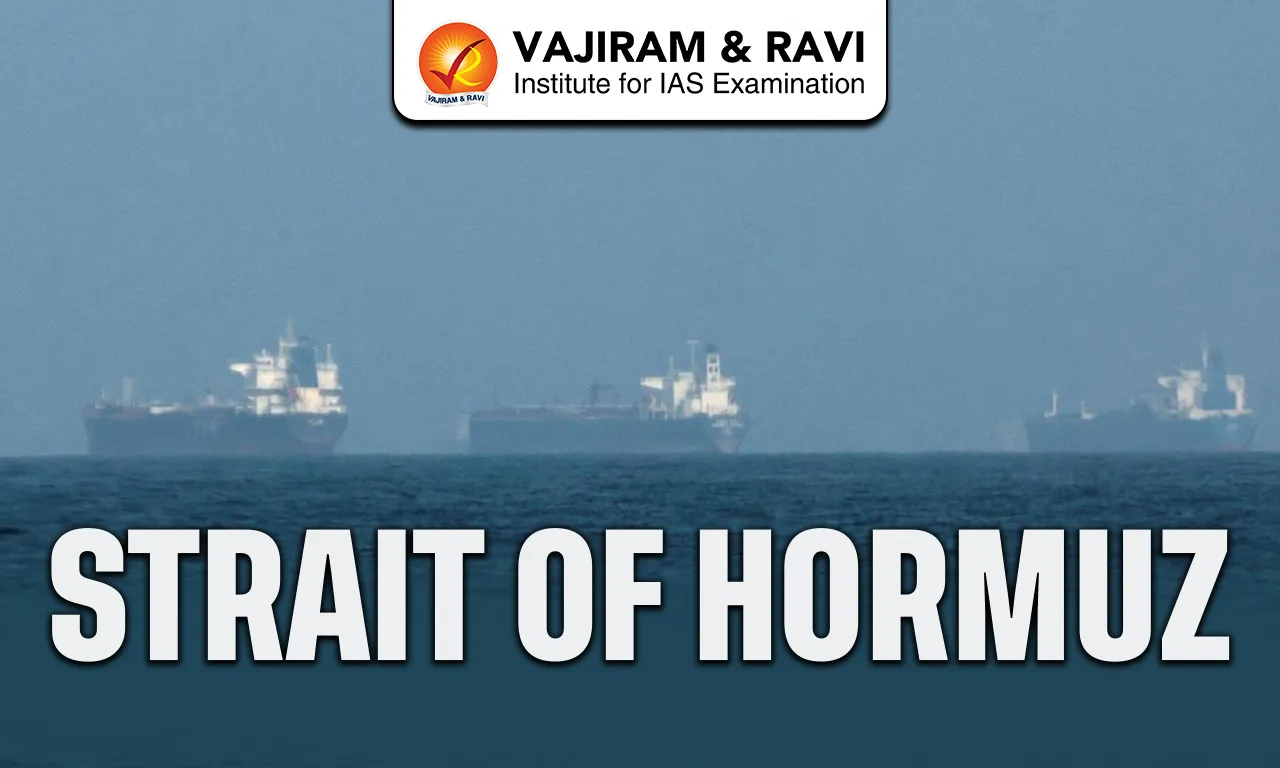
Rising tensions in West Asia and the Israel-Iran conflict have led to a sharp disruption of shipping traffic through the Strait of Hormuz, raising concerns about global energy supply and oil prices.
Strait of Hormuz: Location and Strategic Importance
[caption id="attachment_91581" align="alignnone" width="1024"] Strait of Hormuz[/caption]
The Strait of Hormuz is one of the most strategically important maritime chokepoints in the world.
It lies between Iran to the north and Oman and the United Arab Emirates (UAE) to the south, connecting the Persian Gulf with the Gulf of Oman and the Arabian Sea.
At its narrowest point, the strait is about 33 kilometres wide, making it a relatively narrow passage for global shipping traffic. Despite its small size, the strait plays a disproportionately large role in global energy trade.
A significant share of global oil and gas shipments move through this route. According to estimates, more than 20% of the world’s oil and gas supplies are transported through the Strait of Hormuz, making it one of the most critical energy transit routes in the world.
Several major oil-producing countries in the Persian Gulf rely on the strait to export their energy resources to global markets. These include Saudi Arabia, Iran, Iraq, Kuwait and Qatar
Because of this, the strait has become a critical component of global trade and geopolitical strategy.
Major Global Maritime Chokepoints
The Strait of Hormuz is part of a network of important maritime chokepoints that regulate global trade flows.
Some other major chokepoints include:
Strait of Malacca - vital for trade between East Asia and Europe.
Bab-el-Mandab Strait - located at the entrance to the Red Sea.
Suez Canal - connects the Mediterranean Sea with the Red Sea.
Panama Canal - connects the Atlantic and Pacific Oceans.
Bosphorus and Dardanelles Straits - link the Mediterranean and Black Seas.
These chokepoints play a crucial role in determining the efficiency and security of global shipping routes.
Current Situation in the Strait of Hormuz
Recent geopolitical tensions in West Asia have severely disrupted commercial traffic through the Strait.
Following military attacks involving the United States, Israel, and Iran, ship traffic through the Strait of Hormuz has reportedly fallen by nearly 95%.
According to maritime intelligence estimates, around 600 ships are currently stranded in the region.
Several vessels have also faced attacks in or near the strait, increasing the risk perception among shipping companies.
Legal Status of Maritime Routes
International maritime law generally treats seas and major straits as part of the global commons, meaning that they are open for navigation by ships from all countries.
While coastal states control their territorial waters and exclusive economic zones (EEZs), they cannot unilaterally block international shipping lanes such as the Strait of Hormuz.
However, security threats and military conflicts can make navigation extremely risky. In such situations, shipping companies may avoid the route due to fears of damage, loss of cargo, or loss of life.
As a result, insurance premiums for ships transiting the strait have increased dramatically, rising nearly 10-15 times the normal cost in the current crisis.
Strategic Leverage of the Strait for Iran
Iran has historically viewed the Strait of Hormuz as a strategic leverage point in geopolitical conflicts.
Although Iranian officials have given mixed signals about whether they intend to close the strait, some Iranian agencies have threatened attacks on ships passing through the route.
By threatening to disrupt the strait, Iran seeks to increase global pressure on the United States and Israel to end hostilities.
This tactic has been used before. During the Iran-Iraq War in the 1980s, the strait witnessed attacks on commercial shipping vessels.
Impact on India’s Energy Security
India is particularly vulnerable to disruptions in the Strait of Hormuz because of its heavy dependence on energy imports.
Key concerns include:
Oil imports: About 40% of India’s crude oil supplies pass through the strait, meaning disruptions could affect fuel availability and prices.
Liquefied Natural Gas (LNG): Qatar supplies around half of India’s LNG imports, which in turn provide about half of India’s natural gas consumption.
Natural gas is crucial for Fertiliser production, Power generation, City gas distribution and Industrial energy use.
Any interruption could therefore affect multiple sectors of the Indian economy.
Cooking gas supply: India imports nearly 60% of its liquefied petroleum gas (LPG), much of which originates from the Gulf region upstream of the strait.
A shortage of LPG would have serious implications for household cooking fuel availability.
Government Response and Mitigation Measures
Diversifying energy imports: India is exploring alternative LNG and crude oil sources such as the United States, Russia, and Australia.
Increasing domestic refining adjustments: Refineries are being encouraged to produce more propane and butane, which are key components of LPG.
Diplomatic coordination: India is in discussions with the United States to secure maritime insurance support for ships transiting the region.
These measures aim to ensure continuity in energy supplies even if the crisis continues.
Impact on Global Oil Prices
Disruptions in the Strait of Hormuz can significantly affect global energy markets.
Because a large share of the world’s oil flows through the strait, any conflict or shipping disruption can trigger price spikes.
Historically, geopolitical crises in the region have caused dramatic increases in oil prices. For example, during the Russia–Ukraine war, oil prices rose above $125 per barrel.
Currently, global oil prices remain below $90 per barrel, but prolonged disruption could lead to higher prices and inflation worldwide.







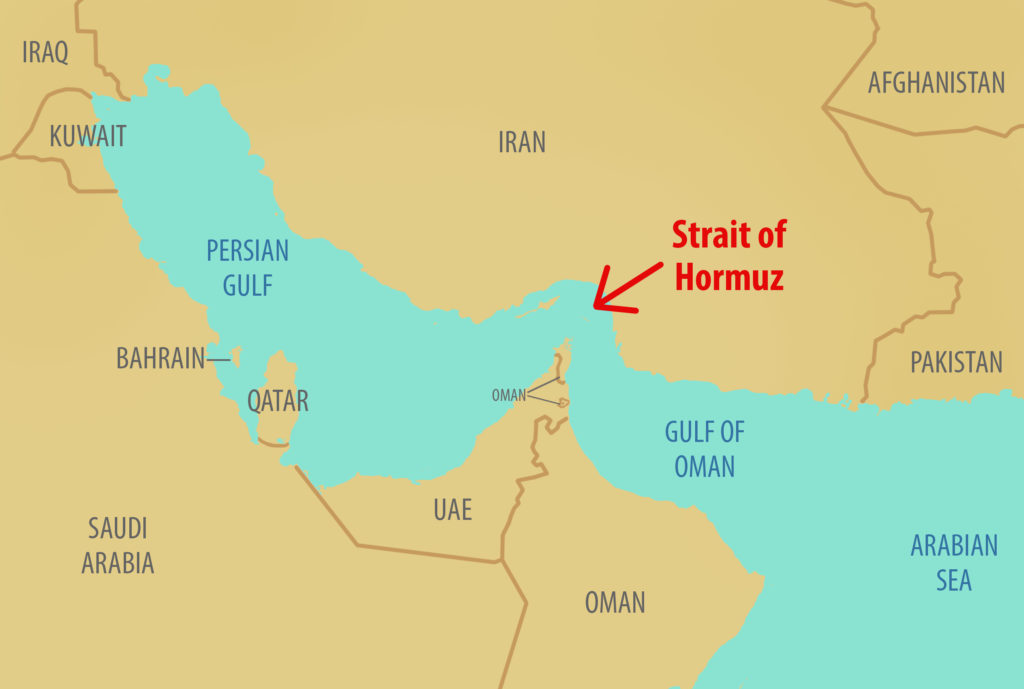 Strait of Hormuz[/caption]

