Drug Regulation in India, Organizations, Legal Framework, Challenges

Drug Regulation in India

Drug Regulation in India is a critical public health function that ensures medicines are safe, effective and of high quality before reaching patients. India is known as the “Pharmacy of the World,” supplying nearly 20% of global generic medicines and over 60% of vaccines exporting to about 200 countries. This vast scale makes regulation highly important. 

Drug Regulation in India

The Drug Regulation in India involves multiple laws, institutions and processes working together to monitor manufacturing, clinical trials, pricing and post market safety of drugs. However, repeated incidents of substandard drugs since 2020 highlight gaps in enforcement, coordination and transparency that affect both domestic health and global credibility.

Drug Regulation in India Organizations

Drug Regulation in India structure includes central, state and specialized bodies working together to regulate manufacturing, approval, pricing and safety monitoring of pharmaceuticals nationwide.

  • Central Drugs Standard Control Organization (CDSCO): CDSCO functions under the Ministry of Health and Family Welfare and is headed by the Drugs Controller General of India (DCGI). It approves new drugs, regulates clinical trials, sets standards and controls imports and exports of medicines.
  • Central Drugs Laboratory (CDL): Located in Kolkata, CDL acts as the national reference laboratory for drug testing. It resolves disputes related to drug quality, conducts testing, develops standards and trains analysts including WHO fellows.
  • State Drug Control Departments: These authorities operate under state governments and are responsible for licensing manufacturing units, inspecting facilities, monitoring local markets and taking legal action against adulterated or spurious drugs.
  • State Drug Testing Laboratories: These laboratories analyze drug samples collected by inspectors and provide scientific evidence for regulatory action. However, many labs face shortages of modern equipment and skilled personnel, reducing effectiveness.
  • Pharmacovigilance Programme of India (PvPI): PvPI monitors adverse drug reactions through a network of reporting centers. It collects safety data and recommends regulatory action, but India contributes only about 3% to the global safety database.
  • National Pharmaceutical Pricing Authority (NPPA): NPPA regulates drug prices through the Drugs (Prices Control) Order. It ensures affordability by fixing ceiling prices for essential medicines and monitoring market pricing practices.
  • Drugs Technical Advisory Board (DTAB): DTAB advises the central government on technical matters related to drug regulation, including standards, testing protocols and amendments to regulatory frameworks.
  • Drugs Consultative Committee (DCC): DCC ensures coordination between central and state regulators to maintain uniform implementation of drug laws across India’s federal system.
  • Directorate General of Health Services (DGHS): DGHS provides technical guidance on public health and supports drug regulation through policy recommendations and coordination with regulatory bodies.
  • Indian Council of Medical Research (ICMR): ICMR supports clinical research, drug trials and scientific validation, contributing to evidence based drug regulation and policy decisions in India.

Drug Regulation in India Legal Frameworks

Drug Regulation in India is governed by multiple laws, rules and schemes that define standards, licensing, safety monitoring and pricing mechanisms across the pharmaceutical sector.

  • Drugs and Cosmetics Act 1940: This is the primary legislation regulating drug import, manufacture, sale and distribution. It ensures safety, efficacy and quality while providing penalties for adulteration and substandard drugs.
  • Drugs and Cosmetics Rules, 1945: These rules provide operational details such as licensing procedures, classification of drugs, labeling requirements and Good Manufacturing Practices under Schedule M for quality assurance.
  • Pharmacy Act 1948: This Act regulates the profession of pharmacy by setting standards for education and registration of pharmacists, ensuring qualified personnel handle drug dispensing.
  • Drugs and Magic Remedies (Objectionable Advertisements) Act 1954: It prohibits misleading advertisements claiming magical cures, protecting consumers from false claims related to drugs and treatments.
  • Narcotic Drugs and Psychotropic Substances Act 1985: This law regulates narcotic and psychotropic substances, ensuring controlled medical use while preventing misuse and illegal trafficking.
  • Drugs (Prices Control) Order (DPCO), 2013: Implemented by NPPA, it controls the prices of essential medicines to ensure affordability and prevent excessive pricing by pharmaceutical companies.
  • New Drugs and Clinical Trials Rules, 2019: These rules streamline clinical trial approvals, ensure ethical standards and provide compensation mechanisms for trial related injuries or deaths.
  • Strengthening of States’ Drug Regulatory System (SSDRS): A centrally sponsored scheme aimed at improving infrastructure, laboratories and manpower at the state level for better enforcement.
  • Schedule M (WHO GMP Standards): This provision integrates global Good Manufacturing Practices into Indian regulations, ensuring quality manufacturing processes in pharmaceutical units.
  • Pharmaceuticals Technology Upgradation Assistance Scheme (PTUAS): This scheme supports small and medium pharmaceutical companies with turnover below ₹500 crore to upgrade technology and improve drug quality standards.

Drug Regulation in India Challenges

The system of Drug Regulation in India faces multiple structural, technical and governance related challenges that affect drug safety, quality control and global trust in Indian pharmaceuticals.

  • Repeated Drug Safety Incidents: Since 2020, multiple tragedies including deaths in Jammu, Gambia, Uzbekistan, Cameroon and Delhi due to contaminated drugs.
  • Quality Control Failures: Conflicting test results between state laboratories and CDL create uncertainty in drug quality assessment, weakening enforcement and raising concerns about reliability of testing processes.
  • Outdated Testing Systems: Use of wax seals, manual documentation and postal communication creates risks of sample tampering, delays and inefficiencies compared to modern digital tracking systems.
  • Fragmented Regulatory Structure: Division of responsibilities between central and state authorities leads to overlapping jurisdictions, weak coordination and inconsistent enforcement across different regions.
  • Pharmacovigilance Gaps: Underreporting of adverse drug reactions remains a major issue, with limited awareness among healthcare professionals and patients about reporting mechanisms.
  • Global Reputation Risks: WHO estimates that one in ten medicines in developing countries may be substandard and repeated export related incidents have raised questions about India’s reliability as a global supplier.

Way Forward

  • Strengthening State Infrastructure: Increasing the number of inspectors, upgrading laboratories and providing advanced training will improve enforcement capacity at the state level and ensure better compliance monitoring.
  • Improved Centre-State Coordination: Strengthening the role of DCC and promoting joint inspections between CDSCO and states will ensure uniform enforcement and reduce regulatory fragmentation across regions.
  • Expanding Pharmacovigilance: Increasing awareness, improving reporting systems and integrating digital tools will enhance detection of adverse drug reactions and shift from reactive to proactive safety monitoring.
  • Legal Framework Modernization: Updating the Drugs and Cosmetics Act 1940 to address modern challenges such as biologics, online pharmacies and data integrity will strengthen regulatory effectiveness.
  • Promoting Research and Innovation: Establishing Centers of Excellence in Drug Regulatory Science and encouraging collaboration with academic institutions will support evidence based policymaking and technological advancement.

Drug Regulation in India FAQs

Q1: What is Drug Regulation in India?

Ans: Drug regulation in India refers to the system of laws and authorities that ensure medicines are safe, effective and of good quality before reaching consumers.

Q2: Which law governs drug regulation in India?

Ans: The Drugs and Cosmetics Act 1940 is the main law that controls the manufacture, sale and distribution of drugs in India.

Q3: Who regulates Drugs in India?

Ans: The Central Drugs Standard Control Organization regulates drugs at the central level, while state authorities handle licensing and inspections.

Q4: What is the role of CDSCO in Drug Regulation in India?

Ans: The Central Drugs Standard Control Organization approves new drugs, regulates clinical trials and ensures drug quality, safety and efficacy across India.

Q5: What is the need for Drug Regulation in India?

Ans: Drug regulation is important to prevent substandard or harmful medicines, protect public health and maintain trust in the healthcare system.

Hambantota Port, History, Features, Strategic Concerns for India

Hambantota Port

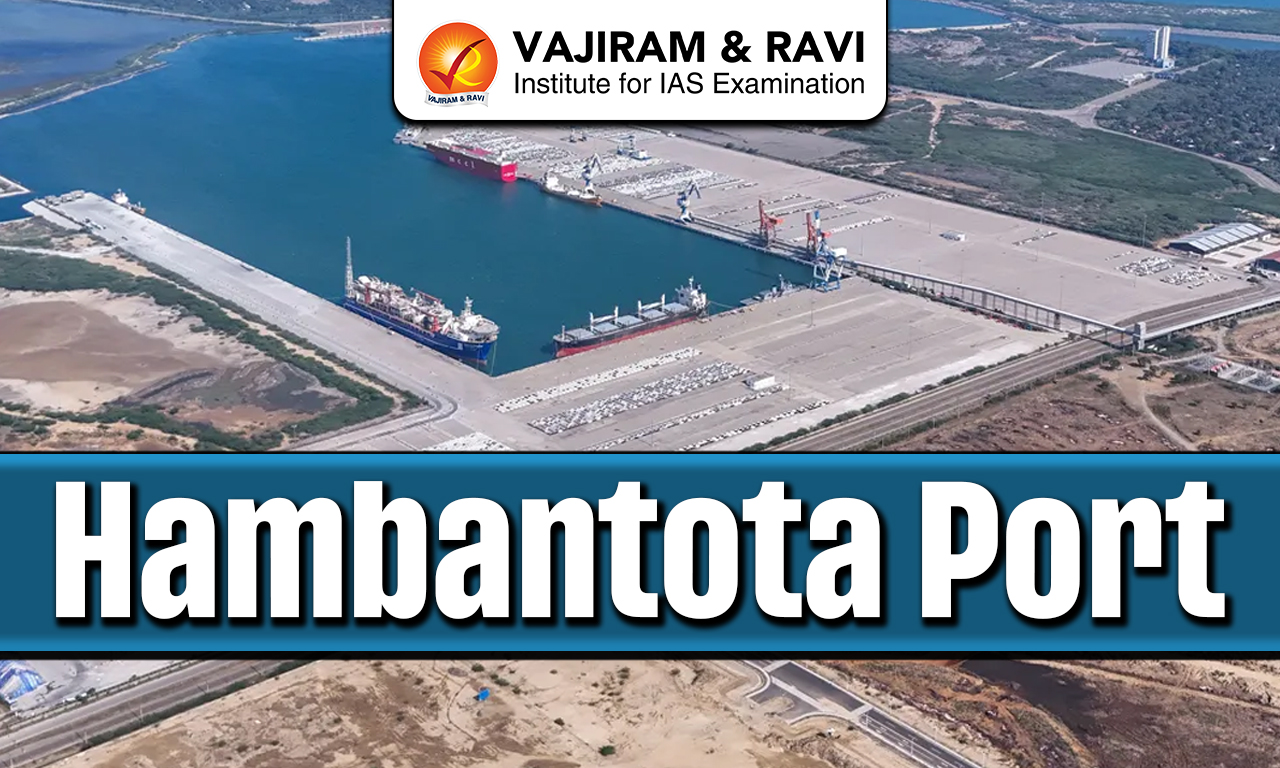
Hambantota Port is officially known as Magampura Mahinda Rajapaksa Port. It is a deep water harbour on Sri Lanka’s southern coast along the Indian Ocean. It lies close to one of the busiest global sea lanes linking the Strait of Malacca and the Suez Canal, through which nearly half of global maritime trade passes. The port has emerged as both an economic infrastructure project and a focal point in regional geopolitical discussions involving China and India.

Hambantota Port

Hambantota Port evolved from a regional project into a major global maritime and strategic asset with international attention.

  • Historical Development: Plans for Hambantota Port date back to the 1970s but were delayed due to financial constraints. The project was revived in the early 2000s under President Mahinda Rajapaksa to develop Sri Lanka as a maritime hub.
  • Construction and Funding: Construction began in 2008 with approximately US$1.3 billion in loans from the Export-Import Bank of China. It was executed by China Harbour Engineering Company and Sinohydro Corporation in multiple phases.
  • Operational Timeline: The first phase opened in November 2010, followed by expansion including berths, tank farms and service infrastructure. Initially, the port faced low traffic and concerns over its commercial viability.
  • Infrastructure and Capacity: The port spans about 2,000 hectares with an additional 15,000 acre industrial zone. Facilities include container terminals, oil storage, ship repair docks and a proposed special economic zone.
  • Lease Agreement: In 2017, Sri Lanka leased 70% stake of the port to China Merchants Port Holdings for US$1.12 billion on a 99 year lease due to debt repayment challenges, while Sri Lanka Ports Authority retained ownership.

Hambantota Port Strategic Concerns for India

Hambantota Port raises significant strategic and security concerns for India due to increasing Chinese presence in the Indian Ocean.

  • Strategic Location: The port lies near key east-west shipping routes connecting Asia, Africa and Europe, with 200-300 vessels passing daily, making it critical for global trade and energy supply lines.
  • Chinese Presence: China has invested about USD 12 billion in Sri Lanka’s infrastructure (2006-19) and holds a major stake in Hambantota, increasing its influence in South Asia and the Indian Ocean region.
  • Debt Dependency: China is Sri Lanka’s largest bilateral creditor, with loans accounting for nearly 15% of external debt, raising concerns about economic dependence and long term strategic leverage.
  • String of Pearls Strategy: Hambantota is seen as part of China’s “String of Pearls” strategy, a network of ports aimed at securing maritime routes and potentially expanding naval reach around India.
  • Belt and Road Initiative (BRI): Hambantota Port is a key component of China’s Belt and Road Initiative, particularly the 21st Century Maritime Silk Route, aimed at connecting Asia, Africa and Europe through strategic ports and trade corridors.
  • Dual Use Concerns: The port’s potential dual use nature raises fears of military utilisation. The visit of the Chinese satellite tracking vessel Yuan Wang 5 highlighted concerns about surveillance and missile tracking capabilities.
  • Regional Security Impact: The presence of Chinese controlled infrastructure near India’s maritime boundaries increases concerns about naval encirclement and affects India’s security calculations in the Indian Ocean region. 

Hambantota Port FAQs

Q1: Where is Hambantota Port located?

Ans: Hambantota Port is located in the Hambantota District on the southern coast of Sri Lanka along the Indian Ocean.

Q2: Why is Hambantota Port important globally?

Ans: It is located near a major shipping route between the Strait of Malacca and the Suez Canal, handling heavy global maritime traffic.

Q3: Why was Hambantota Port leased to China?

Ans: Sri Lanka leased the port in 2017 due to its inability to repay Chinese loans taken for its construction.

Q4: What is India’s concern regarding Hambantota Port?

Ans: India is concerned about China’s increasing presence and possible military use of the port in the Indian Ocean region.

Q5: What is the connection between Hambantota Port and China’s BRI?

Ans: Hambantota Port is part of China’s Belt and Road Initiative, aimed at strengthening global trade connectivity through maritime routes.

Niryat Bandhu Scheme, Background, Objectives, Significance

Niryat Bandhu Scheme

The Niryat Bandhu Scheme is an initiative by the Government of India to promote exports by helping new and small businesses enter international markets. It is implemented by the Directorate General of Foreign Trade (DGFT) under the Ministry of Commerce and Industry. The term “Niryat Bandhu” means “Export Friend,” which reflects the government’s role as a mentor guiding entrepreneurs through the export process. The scheme mainly focuses on first-time exporters, MSMEs, and young entrepreneurs who often lack knowledge about global trade.

Niryat Bandhu Scheme Background

  • The Niryat Bandhu Scheme was launched in October 2011 as part of India’s Foreign Trade Policy (2009-14). Before its introduction, many small and medium businesses in India faced difficulties in entering the export sector. They lacked proper knowledge about export procedures, documentation, international standards, and market opportunities.
  • The earlier trade system, though helpful, did not provide structured training or mentorship for new exporters. As a result, many businesses were unable to take advantage of global trade opportunities. Recognising this gap, the government introduced the Niryat Bandhu Scheme to provide a systematic and supportive environment for learning and growth.
  • The scheme was designed with a long-term vision to increase India’s export base by empowering MSMEs and new entrepreneurs, who are considered the backbone of the Indian economy.

Niryat Bandhu Scheme Objectives

The Niryat Bandhu Scheme has several important objectives aimed at strengthening India’s export sector:

  • To create awareness about export-import procedures, policies, and opportunities among new entrepreneurs.
  • To build the capacity of MSMEs and first-time exporters through training, workshops, and mentorship.
  • To promote entrepreneurship in international trade, especially among youth, women, and start-ups.
  • To increase India’s export competitiveness by developing skilled and informed exporters.
  • To ensure better coordination between government agencies, export promotion bodies, and industry groups.

Niryat Bandhu Scheme Target Beneficiaries

The Niryat Bandhu Scheme is designed to support a wide range of beneficiaries:

  • First-time exporters who want to enter global markets but lack knowledge and experience
  • MSMEs aiming to expand their business beyond domestic markets.
  • Students and young entrepreneurs interested in building careers in international trade.
  • Women entrepreneurs and start-ups seeking opportunities in exports.
  • Artisans, self-help groups, and rural enterprises producing traditional or indigenous products.

Niryat Bandhu Scheme Implementation and Mechanism

The scheme is implemented by the Directorate General of Foreign Trade (DGFT) through its Regional Authorities (RAs) across India. It works in collaboration with Export Promotion Councils (EPCs), industry associations, academic institutions, and state governments.

  • Training and Awareness Programmes: DGFT officials, known as Niryat Bandhus, conduct workshops, seminars, and awareness sessions across the country. These programmes cover topics like export documentation, customs procedures, foreign exchange management, and trade finance. They help participants understand the basics of exporting in a simple and practical way.
  • Mentorship and Handholding: A unique feature of the scheme is its focus on “handholding.” New exporters are guided step-by-step, from registration to completing export transactions. This reduces confusion and builds confidence among beginners.
  • Academic Integration: The scheme also connects with educational institutions. Universities and colleges are encouraged to include export-import related subjects in their curriculum. Initiatives like “Niryat Bandhu @ Your College” help students understand global trade at an early stage.
  • Digital and Online Learning: With increasing digitalisation, DGFT has introduced online platforms, webinars, and e-learning modules. These tools make training accessible to a larger number of people, including those in remote areas. The DGFT Trade Portal also provides updated information, guidelines, and export-related resources.

Niryat Bandhu Scheme Key Focus Areas

The Niryat Bandhu Scheme covers a wide range of topics that are essential for successful exporting:

  • Export-import procedures and registration formalities
  • Market identification and export promotion strategies
  • International marketing, branding, and e-commerce exports
  • Quality standards, packaging, and certification requirements
  • Customs procedures, logistics, and supply chain management
  • Trade finance, banking support, and foreign exchange rules
  • Government incentives and schemes under the Foreign Trade Policy
  • Risk management and secure payment systems
  • Special attention is given to sectors like handicrafts, textiles, agriculture, marine products, and engineering goods, where India has strong export potential.

Collaboration and Institutional Support

The scheme operates through strong coordination among various stakeholders:

  • DGFT Regional Authorities implement the scheme at the ground level
  • Export Promotion Councils provide sector-specific expertise
  • Organizations like FIEO (Federation of Indian Export Organisations) assist in training and outreach
  • State governments and the Ministry of MSME help identify and support potential exporters
  • Academic institutions contribute to research and skill development

Niryat Bandhu Scheme Achievements

Since its launch, the Niryat Bandhu Scheme has achieved several positive outcomes:

  • Conducted thousands of training and awareness programmes across India
  • Reached a large number of participants, especially MSMEs and first-time exporters
  • Improved understanding of export procedures and reduced errors in documentation
  • Encouraged entrepreneurship in global trade among youth and start-ups
  • Promoted the use of digital platforms for training and information sharing

Niryat Bandhu Scheme Challenges

Despite its success, the scheme faces some challenges:

  • Limited outreach in rural and remote areas where awareness is still low
  • Resource constraints affecting the quality and frequency of training programmes
  • Need for better digital infrastructure to support online learning
  • Lack of awareness among micro-enterprises about export opportunities
  • Insufficient follow-up support to track the progress of trained exporters

Niryat Bandhu Scheme Significance

  • Expands India’s Export Base: Encourages more businesses, especially MSMEs and first-time exporters, to enter global markets, strengthening India’s export sector.
  • Supports MSMEs and New Entrepreneurs: Provides guidance and training to small businesses, helping them overcome challenges in international trade.
  • Builds Skills and Knowledge: Enhances understanding of export procedures, documentation, and global standards through training and mentorship.
  • Promotes Entrepreneurship: Encourages youth, women, and start-ups to explore opportunities in foreign trade.
  • Improves Export Competitiveness: Helps businesses meet international quality standards and compete effectively in global markets.
  • Ensures Inclusive Growth: Supports rural producers, artisans, and small enterprises in accessing international markets.
  • Boosts Economic Growth and Employment: Increases exports, generates jobs, and strengthens India’s position in global trade.

Niryat Bandhu Scheme FAQs

Q1: What is the Niryat Bandhu Scheme?

Ans: The Niryat Bandhu Scheme is a government initiative that helps new and small businesses learn about exports and enter international markets with proper guidance and training.

Q2: Which organization implements the scheme?

Ans: It is implemented by the Directorate General of Foreign Trade (DGFT) under the Ministry of Commerce and Industry.

Q3: When was the Niryat Bandhu Scheme launched?

Ans: The scheme was launched in October 2011 as part of India’s Foreign Trade Policy (2009-14).

Q4: Who are the main beneficiaries of the scheme?

Ans: The scheme mainly benefits first-time exporters, MSMEs, students, young entrepreneurs, women entrepreneurs, and rural producers.

Q5: What are the main objectives of the scheme?

Ans: Its main objectives are to create awareness about exports, build skills through training, promote entrepreneurship, and increase India’s export competitiveness.

Jal Shakti Abhiyan, Objectives, Features, Achievements, Significance

Jal Shakti Abhiyan

Jal Shakti Abhiyan is a national water conservation campaign launched on 1 July 2019 by the Ministry of Jal Shakti to address growing water scarcity in India. It focuses on water stressed regions through community participation and coordinated government efforts. It was implemented in two phases during monsoon and retreating monsoon periods. The campaign promotes sustainable water management through conservation, recharge, reuse and restoration of water resources across rural and urban areas.

Jal Shakti Abhiyan Objectives

The key objectives and ambitions of the Jal Shakti Abhiyan has been listed below:

  • Water conservation: The campaign focuses on conserving water through rainwater harvesting, groundwater recharge and efficient usage practices to reduce dependency on declining water resources and improve long term sustainability.
  • Targeting water stressed regions: It prioritizes 1,592 water stressed blocks across 256 districts, ensuring focused intervention where groundwater depletion and water scarcity are most severe.
  • Community participation: The initiative encourages citizen involvement, making water conservation a mass movement through awareness campaigns and local level participation in planning and implementation activities.
  • Integrated water management: It promotes convergence of multiple ministries and state governments to implement coordinated strategies for water conservation, ensuring better policy alignment and resource utilization.
  • Sustainable resource planning: The campaign emphasizes preparation of district and block level water conservation plans using scientific tools, GIS mapping and local knowledge for long term water security.

Jal Shakti Abhiyan Features

The Jal Shakti Abhiyan campaign includes targeted interventions and institutional mechanisms to ensure effective implementation of water conservation strategies across India.

  • Five key interventions: The campaign focuses on rainwater harvesting, renovation of water bodies, reuse and recharge structures, watershed development and intensive afforestation to improve water availability and groundwater levels.
  • Two Phase implementation: Conducted from July to September 2019 and October to November 2019, covering both southwest and northeast monsoon regions for maximum water conservation impact.
  • Catch the Rain Initiative: It was launched as an annual campaign with the theme “Catch the Rain - Where it Falls When it Falls,” it promotes rainwater harvesting across all districts in rural and urban areas.
  • Rainwater Harvesting Structures (RWHS): Promotes large scale construction of RWHS in both rural and urban areas to capture rainwater and improve groundwater recharge capacity.
  • Establishment of Rain Centres: Rain Centres are set up at district levels to guide citizens on water conservation techniques and support creation of local water harvesting systems.
  • Institutional coordination: Coordinated by the Department of Drinking Water and Sanitation with involvement of central ministries, state governments and district administrations for unified action.
  • Expert involvement: Central teams including 256 Central Nodal Officers, 446 Block Nodal Officers and technical experts conducted field visits to guide implementation and monitor progress.
  • Special interventions: Includes enforcement of rainwater harvesting rules, reuse of treated wastewater, rejuvenation of urban water bodies, plantation drives and promotion of efficient irrigation through Krishi Vigyan Kendras.

Jal Shakti Abhiyan Significance

Jal Shakti Abhiyan plays a crucial role in addressing India’s declining water availability and ensuring long term ecological and economic sustainability.

  • Addressing water stress: With per capita water availability declining from about 5,000 cubic meters to nearly 1,500 cubic meters, the campaign aims to reverse this trend through conservation and recharge measures.
  • Groundwater sustainability: India is among the largest users of groundwater and the campaign promotes recharge structures and reduced dependency to prevent aquifer depletion and future crises.
  • Climate resilience: By promoting watershed development and afforestation, the campaign enhances resilience against climate change impacts such as erratic rainfall and drought conditions.
  • Agricultural efficiency: Encourages efficient irrigation practices and crop choices, reducing excessive water consumption in agriculture, which accounts for nearly 80% of water usage in India.
  • Social and economic benefits: Improved water availability supports drinking water supply, agriculture productivity and rural livelihoods, contributing to overall socio-economic development.

Jal Shakti Abhiyan Achievements

Jal Shakti Abhiyan has achieved significant progress in water conservation infrastructure, resource mapping and community participation since its launch.

  • Coverage: In 2019, central teams conducted 706 visits across 1,592 blocks in 256 districts, ensuring direct monitoring and implementation support at the grassroots level.
  • Infrastructure Development: Over 92,216 rainwater harvesting projects and 1,41,551 watershed development works have been completed, significantly improving water conservation capacity across regions.
  • Restoration: Around 25,397 traditional water bodies have been renovated, enhancing storage capacity and reviving local water ecosystems for long term sustainability.
  • Recharge Structures Expansion: More than 71,096 recharge structures have been completed, improving groundwater levels and supporting drinking water and irrigation needs.
  • Technological Integration: Over 24.24 lakh water bodies have been enumerated and geo-tagged, while 671 Jal Shakti Kendras have been established to provide technical guidance and awareness.

Jal Shakti Abhiyan Challenges

Despite progress, the Jal Shakti Abhiyan faces structural, technical and implementation related challenges that limit its full effectiveness.

  • Lack of basin level planning: The campaign often uses districts as planning units instead of river basins, limiting holistic water management and coordination across hydrological systems.
  • Inadequate data availability: Absence of detailed data on rainfall patterns, aquifer mapping and surface runoff reduces the effectiveness of scientific planning and decision making.
  • Weak urban focus: The campaign largely emphasizes rural areas, while urban regions with high water consumption and wastage receive relatively less attention in conservation strategies.
  • Quality concerns in structures: Many water conservation structures built under convergence schemes face durability issues due to poor construction quality and inadequate financial allocation.
  • Monitoring and evaluation gaps: Lack of clear performance indicators and long term impact assessment mechanisms makes it difficult to measure improvements in groundwater levels and water availability. 

Jal Shakti Abhiyan FAQs

Q1: What is Jal Shakti Abhiyan?

Ans: Jal Shakti Abhiyan is a national campaign launched in 2019 to promote water conservation and ensure water security through community participation and targeted interventions.

Q2: When was Jal Shakti Abhiyan launched?

Ans: It was launched on 1 July 2019 and implemented in two phases covering both monsoon and retreating monsoon periods.

Q3: What are the key focus areas of the campaign?

Ans: The campaign focuses on rainwater harvesting, renovation of water bodies, groundwater recharge, watershed development and afforestation.

Q4: Which areas are targeted under Jal Shakti Abhiyan?

Ans: It mainly targets water stressed blocks and districts across India to address groundwater depletion and water scarcity.

Q5: What is ‘Catch the Rain’ under Jal Shakti Abhiyan?

Ans: ‘Catch the Rain’ is an annual initiative launched later to promote rainwater harvesting with the theme “Catch the rain, where it falls, when it falls.”

Fossil Fuel, Types, Policies, Significance, Challenges, Examples

Fossil Fuel

Fossil Fuels are carbon rich energy resources formed through anaerobic decomposition of the buried remains of prehistoric plants, animals and micro-organisms under high temperature and pressure over millions of years within the Earth’s crust. These fuels, mainly Coal, Petroleum and Natural Gas, are extracted and burned to generate heat, electricity and mechanical energy. Their combustion releases energy but also produces carbon dioxide, a major greenhouse gas driving global warming and climate change.

Fossil Fuel Types

Fossil Fuels are classified into major categories based on their physical state, origin and composition, each with distinct formation processes and applications.

  • Primary Types: Coal, Petroleum and Natural Gas are the three major Fossil Fuels formed from terrestrial plants or marine organisms under pressure and heat over millions of years.
  • Secondary Forms: Derivatives like Kerosene, Diesel, Gasoline, LPG and Petrochemicals such as plastics and synthetic resins are produced through refining and processing of crude Fossil Fuels.
  • Other Sources: Shale Gas and Oil Sands represent unconventional Fossil Fuels extracted using advanced technologies like hydraulic fracturing due to deeper and complex geological formations.

Coal

Coal is a solid Fossil Fuel mainly composed of carbon, formed from terrestrial plant material buried in swampy environments and transformed through Coalification over millions of years.

  • Types of Coal: Anthracite contains 80-90% carbon and is hardest; bituminous holds 60-80% carbon; lignite has 40-60% carbon and higher moisture; peat is the earliest stage with lowest carbon content.
  • Formation Process: Coal forms when dense vegetation in wetlands gets buried under sediments and undergoes compression and heating, gradually transforming into higher carbon forms through geological time.
  • Distribution: China holds about 12% of global reserves; USA is second largest; India ranks third with Gondwana Coal dominating regions like Jharkhand, Odisha and West Bengal.
  • Uses: Coal is used in electricity generation, industrial fuel, metal smelting and production of coke, Coal tar and Coal gas for various industrial applications.

Petroleum

Petroleum is a liquid Fossil Fuel formed from marine organisms buried under sediments and transformed into hydrocarbons through heat and pressure, commonly called “Black Gold”.

  • Formation: Dead marine organisms settled on seabeds, got buried under sediments and converted into crude oil under high pressure and temperature over millions of years.
  • Refining Process: Crude oil is refined into products like petrol, diesel, lubricating oil, paraffin wax and petrochemicals through fractional distillation in refineries.
  • Global Distribution: Major reserves exist in Middle East regions like Saudi Arabia, Iraq and Iran; also in USA, Russia and Venezuela due to ancient marine conditions.
  • Indian Scenario: Oil discovered in Digboi (1869); ONGC established in 1956; major fields include Bombay High, Gujarat, Assam and Krishna-Godavari Basin.

Natural Gas

Natural Gas is a clean, gaseous Fossil Fuel primarily composed of methane, formed alongside Petroleum or independently in sedimentary rock formations.

  • Composition: Methane is the dominant component, making Natural Gas efficient and relatively less polluting compared to Coal and Petroleum based fuels.
  • Formation: Marine micro-organisms form organic rich mud, which transforms into kerogen and later into gas under temperatures of 90-160°C through geological processes.
  • Distribution: Major global reserves are in Russia, Iran and USA; in India, reserves are around 450 billion cubic metres mainly in Bombay High, Assam and KG Basin.
  • Uses: Used in electricity generation, transportation as CNG, domestic cooking and as a raw material for fertilizers and chemical industries.

Shale Gas

Shale Gas is an unconventional Fossil Fuel found in sedimentary rocks, extracted using advanced techniques like hydraulic fracturing.

  • Nature: It is trapped in fine grained shale rocks and requires artificial fracturing to release hydrocarbons, making extraction technologically complex and costly.
  • Extraction Method: Hydraulic fracturing (fracking) creates cracks in rock layers, allowing gas to flow to the surface for collection and processing.
  • Distribution in India: Potential reserves exist in Cambay Basin, Gondwana formations, Krishna-Godavari Basin, Cauvery Basin and Assam-Arakan region.
  • Significance: Provides additional energy security but raises environmental concerns due to water use, chemical exposure and methane leakage risks.

Fossil Fuel Policies

Policies related to Fossil Fuels aim to balance energy security, economic growth and environmental sustainability amid rising global concerns about climate change.

  • International Frameworks: Paris Climate Agreement and United Nations Sustainable Development Goal 7 promote reduction in Fossil Fuel use and transition to clean energy sources globally.
  • Energy Transition: International Energy Agency recommended no new Fossil Fuel extraction projects to meet climate targets and limit global warming impacts in its 2021 report Net Zero by 2050.
  • Indian Context: India imports about 85% of crude oil, creating policy challenges related to energy security, Atma Nirbharta and diversification of energy sources.

Fossil Fuel Challenges

Fossil Fuels face multiple environmental, economic and structural challenges due to their widespread use and associated impacts.

  • Environmental Impact: Burning releases CO2, contributing over 70% of greenhouse gas emissions, leading to global warming, ocean acidification and climate change.
  • Pollution Effects: Air pollution from Fossil Fuels costs about 3% of global GDP and causes millions of deaths due to particulate matter and toxic gases.
  • Resource Depletion: Being non-renewable, reserves are depleting rapidly compared to formation rate, creating long term energy security concerns.
  • Economic Dependency: Countries like India depend heavily on imports, exposing economies to price volatility and geopolitical risks, especially in Middle East regions.

Fossil Fuel Significance

Fossil Fuels have been central to global development, industrial growth and modern lifestyle due to their high energy density and versatility.

  • Energy Production: Provide 77% of global energy and over 60% electricity, powering industries, households and infrastructure across the world.
  • Industrial Development: Enabled Industrial Revolution through steam engines, internal combustion engines and large scale manufacturing processes.
  • Transportation: Petroleum fuels power automobiles, railways and aircraft, forming the backbone of global trade and mobility systems.
  • Agricultural Support: Natural Gas based fertilizers support nearly 50% of global food production, making Fossil Fuels essential for food security and Green Revolution advancements. 

Fossil Fuel FAQs

Q1: What are Fossil Fuels?

Ans: Fossil Fuels are carbon rich energy sources like coal, petroleum and natural gas formed from buried remains of plants and animals over millions of years.

Q2: Why are Fossil Fuels non-renewable?

Ans: They take millions of years to form but are consumed rapidly, so they cannot be replenished within a human lifetime.

Q3: Which Fossil Fuel is considered the cleanest?

Ans: Natural gas is considered the cleanest Fossil Fuel because it produces less carbon dioxide and pollutants compared to coal and petroleum.

Q4: What is the main use of Fossil Fuels?

Ans: They are mainly used for electricity generation, transportation, industrial processes and domestic purposes like cooking and heating.

Q5: What are the major environmental impacts of Fossil Fuels?

Ans: Burning Fossil Fuels releases greenhouse gases, causing global warming, air pollution, acid rain and negative impacts on human health and ecosystems.

AI for Agriculture Innovation (AI4AI) Initiative, Objectives, Key Focus Areas

AI for Agriculture Innovation (AI4AI) Initiative

The AI for Agriculture Innovation (AI4AI) Initiative, launched in September 2021 by the World Economic Forum, aims to use Artificial Intelligence (AI) to transform agriculture and global food systems. It brings together governments, private companies, and research institutions to scale practical agritech solutions.

AI for Agriculture Innovation (AI4AI) Initiative Objectives

AI for Agriculture Innovation (AI4AI) Initiative aim to 

  • To scale impactful agritech solutions globally.
  • To strengthen public-private partnerships (PPP) in digital agriculture.
  • To enhance farmer incomes and resilience.
  • To accelerate the transition towards sustainable and climate-resilient agriculture.

The initiative has an ambitious target of reaching 10 million farmers by 2030, with at least 30% women beneficiaries, highlighting its focus on gender inclusion.

AI for Agriculture Innovation (AI4AI) Initiative Key Focus Areas 

AI for Agriculture Innovation (AI4AI) Initiative works across three key focus areas to drive lasting impact in the agriculture sector:

  • Inclusivity: Using technology to ensure agricultural services are inclusive and cater to the needs of smallholder farmers, women and other marginalized groups.
  • Sustainability: Using technology to reduce the environmental footprint of the agriculture sector by minimizing the need for harmful chemicals and fertilizers, reducing water stress and building resilience against future shocks.
  • Efficiency: Using technology to ensure that losses and wastages at all stages from farm to fork are minimized.

AI4AI Starter Toolkit

AI4AI Starter Toolkit is a key component of AI for Agriculture Innovation (AI4AI) Initiative. It is a practical guide designed to help governments plan and implement AI-based agriculture projects. It explains step by step how to plan, design, and implement such projects. The toolkit also shows how governments can work with private companies, identify key problems, and choose the right solutions. It provides ready-made templates and clear instructions, making the process easier. Overall, it helps turn ideas into real, working agriculture projects quickly and efficiently.

The Government of Telangana was the first in India to adopt the AI4AI framework through the Saagu Baagu project in 2021. The state has activated two core pillars - value chain transformation and the launch of the country’s first Agricultural Data Exchange (ADeX).

AI for Agriculture Innovation (AI4AI) Initiative FAQs

Q1: What is the AI for Agriculture Innovation (AI4AI) Initiative?

Ans: The AI for Agriculture Innovation (AI4AI) Initiative, launched by the World Economic Forum in September 2021, is a global effort to use Artificial Intelligence to improve agriculture by making it more productive, sustainable, and inclusive.

Q2: What are the main objectives of the AI for Agriculture Innovation (AI4AI) Initiative?

Ans: The AI for Agriculture Innovation (AI4AI) Initiative aims to scale agritech solutions, strengthen public-private partnerships, increase farmer incomes, and promote climate-resilient agriculture systems.

Q3: What are the key focus areas of the AI for Agriculture Innovation (AI4AI) Initiative?

Ans: The AI for Agriculture Innovation (AI4AI) Initiative focuses on inclusivity by supporting small and marginal farmers, sustainability by reducing environmental impact, and efficiency by minimizing losses across the agricultural value chain.

Q4: What is the AI4AI Starter Toolkit under the AI for Agriculture Innovation (AI4AI) Initiative?

Ans: The AI4AI Starter Toolkit is a simple guide that helps governments plan and implement AI-based agriculture projects, offering step-by-step instructions, templates, and support for collaboration with private partners.

Q5: Which Indian state first adopted the AI for Agriculture Innovation (AI4AI) Initiative?

Ans: Telangana was the first Indian state to adopt the AI for Agriculture Innovation (AI4AI) Initiative.

Cape of Good Hope, Location, Background, Significance, Biodiversity

Cape of Good Hope

The Cape of Good Hope is one of the most important geographical landmarks in the world. It is located at the southern tip of the African continent and holds great historical, geographical, and strategic significance. The detailed article on the Cape of Good Hope has been discussed below in this article.

Cape of Good Hope Location

The Cape of Good Hope lies in Cape Town, within the Table Mountain National Park.

  • Situated on the southwestern coast of South Africa
  • Lies along the Atlantic Ocean
  • Near the meeting point of the Atlantic Ocean and Indian Ocean
  • Often confused with the southernmost point of Africa, which is actually Cape Agulhas

Cape of Good Hope Historical Background

The Cape of Good Hope became globally significant during the Age of Exploration when European powers were searching for new sea routes to Asia. Its discovery marked a turning point in maritime history by opening direct trade links between Europe and the East.

  • Discovered in 1488 by Bartolomeu Dias, marking the first European navigation around the southern tip of Africa
  • Initially named “Cape of Storms” due to dangerous sea conditions and strong winds
  • Renamed by John II of Portugal as “Cape of Good Hope” to symbolize a promising route to Asia
  • Played a crucial role in establishing a sea route between Europe and India and other Asian regions
  • Became a key stopover point for ships during long voyages for trade, repair, and resupply
  • Helped European nations bypass overland Silk Route trade controlled by intermediaries
  • Strengthened the rise of colonial empires, especially Portugal and later the Dutch and British
  • Lost some importance after the opening of the Suez Canal in 1869 but still remains strategically relevant

Cape of Good Hope Geographical Significance

The Cape of Good Hope holds immense geographical importance due to its location near the meeting zone of major oceans and ocean currents. It influences regional climate, marine ecosystems, and global navigation routes.

  • Located near Cape Town on the southwestern coast of South Africa
  • Lies close to the convergence zone of the Atlantic Ocean and Indian Ocean
  • Not the southernmost point of Africa; that distinction belongs to Cape Agulhas
  • Experiences a Mediterranean climate (cool, wet winters and warm, dry summers)
  • Influenced by two major ocean currents:
    • Benguela Current (cold current along the west coast)
    • Agulhas Current (warm current along the east coast)
  • These currents impact weather patterns, fog formation, and marine productivity
  • Known for rough seas and strong winds, making navigation historically challenging
  • Acts as an important alternative maritime route when the Suez Canal is unavailable 

Cape of Good Hope Biodiversity and Environment

The Cape of Good Hope is part of one of the world’s richest biodiversity regions, known for its unique vegetation and high level of endemism. It is ecologically significant and protected due to its rare species and fragile ecosystem.

  • Located within the Cape Floristic Region, one of the six floral kingdoms of the world
  • Dominated by fynbos vegetation, characterized by shrubs, grasses, and flowering plants
  • Contains thousands of plant species, many of which are endemic (found nowhere else in the world)
  • Supports diverse wildlife including antelopes, baboons, and various bird species
  • Rich marine biodiversity due to the mixing of warm and cold ocean currents
  • Protected under Table Mountain National Park
  • Faces environmental challenges such as climate change, invasive species, and habitat loss
  • Increasing tourism leads to pressure on natural resources and conservation efforts
  • Conservation programs are in place to preserve ecological balance and biodiversity

Cape of Good Hope FAQs

Q1: Where is the Cape of Good Hope located?

Ans: The Cape of Good Hope is located on the southwestern coast of South Africa, near the city of Cape Town. It lies along the Atlantic Ocean within Table Mountain National Park.

Q2: Who discovered the Cape of Good Hope?

Ans: It was discovered in 1488 by the Portuguese explorer Bartolomeu Dias. His voyage proved that a sea route to Asia via the southern tip of Africa was possible.

Q3: Why is it called the Cape of Good Hope?

Ans: The name was given by John II of Portugal, who believed the route would lead to profitable trade with India and the East. It symbolized optimism for new maritime opportunities.

Q4: Is the Cape of Good Hope the southernmost point of Africa?

Ans: No, the southernmost point of Africa is Cape Agulhas. The Cape of Good Hope is slightly northwest of it.

Q5: Which oceans meet near the Cape of Good Hope?

Ans: The Atlantic Ocean and the Indian Ocean meet near this region, making it geographically significant.

State of the Global Climate 2025, Coverage, Findings, Recommendations

State of the Global Climate 2025

The State of the Global Climate Report 2025, released on World Meteorological Day, presents a comprehensive assessment of the global climate situation. It report provides authoritative insights into global temperature trends, extreme weather events, and their socio-economic impacts.

About State of the Global Climate Report 

  • The State of the Global Climate is an annual flagship report published by the World Meteorological Organization (WMO). 
  • It provides authoritative information on the state of the climate system by updating key observed climate indicators and presenting selected high-impact weather and climate events.
  • It complements the work of the Intergovernmental Panel on Climate Change (IPCC) and other institutions by delivering a timely, consolidated global assessment of the year’s climate conditions.
  • The report is produced by WMO in collaboration with National Meteorological and Hydrological Services, international data centres, leading climate research institutions and United Nations partners.

State of the Global Climate Report Coverage

The State of the Global Climate Report 2025 provides a comprehensive overview of key indicators and events that reflect the planet’s changing climate, from rising temperatures and greenhouse gas concentrations to extreme weather and its impacts on human health.

  • It tracks global temperature, greenhouse gases (like carbon dioxide, methane, and nitrous oxide), ocean heat, sea level, ocean acidity (pH), sea-ice coverage, and glacier changes. It also introduces a new indicator called Earth’s energy imbalance, which shows how much extra energy the planet is retaining.
  • The report highlights heatwaves, cold spells, floods, droughts, and tropical cyclones.
  • It explains how climate change and heat affect human health.

State of the Global Climate Report 2025 Findings 

State of the Global Climate Report 2025 report provides authoritative insights into global temperature trends, extreme weather events, and their socio-economic impacts.

  • Record-Breaking Global Temperatures: The years 2015-2025 were the hottest 11 years on record. 2025 was the second or third hottest year on record, at about 1.43 °C above the 1850-1900 average. The year 2024, which started with a strong El Nino, remains the warmest year, at about 1.55 °C above the 1850-1900 average.
  • Intensification of Extreme Weather Events: The year 2025 experienced a series of extreme weather and climate events, including heatwaves, droughts, wildfires, floods, and tropical cyclones. These events caused thousands of deaths, affected millions, and resulted in billions of dollars in losses. Such extreme weather has cascading effects on agriculture, food security, migration, and social stability, particularly in fragile regions.
  • Ocean Warming and Heat Content: Oceans absorb over 90% of excess heat from greenhouse gas emissions. In 2025, ocean heat content reached a record high, warming more than twice as fast as in 1960-2005. This warming affects marine ecosystems, increases storms, and contributes to polar ice loss.
  • Rising Global Mean Sea Level: The global mean sea level in 2025 remained at record-high levels, approximately 11 cm higher than at the beginning of the satellite record in 1993. The rate of sea-level rise has accelerated since 2012, posing threats to coastal ecosystems, freshwater resources, and human settlements, and amplifying risks from flooding and saltwater intrusion.
  • Glacier and Polar Ice Decline: Glacier mass loss in 2024-2025 ranked among the five worst on record, with exceptional ice melt in Iceland and along the Pacific coast of North America. Arctic sea-ice extent reached the lowest or second-lowest levels on record, and Antarctic sea-ice was the third lowest, reflecting accelerated polar ice retreat and its contribution to sea-level rise.
  • Ocean Acidification and pH Decline: Approximately 29% of CO₂ emissions from 2015-2024 were absorbed by oceans, causing a continued decline in global average surface pH. Ocean acidification threatens marine biodiversity, fisheries, and shellfish aquaculture, with the Indian Ocean, Southern Ocean, eastern equatorial Pacific, and parts of the Atlantic being most affected.
  • Rising Greenhouse Gas Concentrations: Levels of the three main greenhouse gases - carbon dioxide, methane, and nitrous oxide continued to rise in 2025. In 2024, carbon dioxide reached its highest level in the last 2 million years, while methane and nitrous oxide were at their highest in at least 800,000 years. The annual rise in carbon dioxide in 2024 was the largest since modern measurements began in 1957, driven by ongoing fossil fuel emissions and the reduced effectiveness of natural carbon-absorbing systems in oceans and forests.
  • Disruption of Earth’s Energy Balance: For the first time, the report includes Earth’s energy imbalance, measuring the difference between incoming solar energy and outgoing energy. Rising greenhouse gases have caused an accumulation of excess energy, mostly stored in oceans (over 90%), while smaller portions heat the land (5%) and melt ice (3%). This imbalance drives long-term warming and climate system disruption.
  • Impacts on Human Health: Rising temperatures and extreme events have significant health consequences. Over one-third of the global workforce  is exposed to workplace heat stress annually, particularly in agriculture and construction sectors. Climate-sensitive diseases, such as dengue, are increasing rapidly, placing half of the global population at risk. These challenges underscore the need for integrated climate-health early warning systems.

State of the Global Climate Report 2025 Recommendations

State of the Global Climate Report 2025 underscores the need for urgent, coordinated global action to address both mitigation and adaptation:

  • Early Warning Systems: Strengthen meteorological monitoring and warning systems to reduce human and economic losses.
  • Resilient Agriculture and Water Management: Develop climate-resilient crops, efficient irrigation systems, and sustainable land management practices.
  • Climate Finance for Vulnerable Regions: Mobilize financial and technical support to strengthen adaptive capacity in fragile communities.
  • Transition to Low-Carbon Energy: Reduce greenhouse gas emissions to limit future warming.

The report emphasizes that without international cooperation and rapid action, the intensity and frequency of extreme weather events are expected to increase, posing serious risks to sustainable development and human well-being.

State of the Global Climate 2025 FAQs

Q1: What is the State of the Global Climate Report 2025?

Ans: It is an annual flagship report by the World Meteorological Organization (WMO) that provides an authoritative assessment of global climate trends, extreme weather events, and their socio-economic impacts.

Q2: Who prepares the State of the Global Climate Report 2025?

Ans: The report is prepared by the WMO in collaboration with National Meteorological and Hydrological Services, international data centres, leading climate research institutions, and United Nations partners, ensuring a consolidated and reliable global perspective.

Q3: Why is the State of the Global Climate Report 2025 important?

Ans: The report tracks key climate indicators such as temperature, greenhouse gases, sea level, ocean heat, and ice coverage, offering a consolidated view of how climate change is affecting the planet and human societies.

Q4: What were the key findings of the State of the Global Climate Report 2025?

Ans: The report highlighted record global temperatures, more frequent extreme weather, ocean warming, sea-level rise, glacier and polar ice loss, ocean acidification, rising greenhouse gases, disrupted Earth energy balance, and growing risks to human health.

Q5: What recommendations does the State of the Global Climate Report 2025 provide?

Ans: The report calls for strengthening early warning systems, promoting resilient agriculture and water management, mobilizing climate finance for vulnerable regions, and accelerating the transition to low-carbon energy to mitigate and adapt to climate change.

Global Cooperation Barometer 2026, Key Highlights, Recommendations

Global Cooperation Barometer 2026

The Global Cooperation Barometer 2026 provides a comprehensive assessment of how countries are cooperating with each other in today’s changing global environment.

About Global Cooperation Barometer 2026

  • The Global Cooperation Barometer 2026 is a flagship analytical report released by the World Economic Forum in collaboration with McKinsey & Company.
  • It provides a systematic assessment of the state and evolution of global cooperation in a changing geopolitical and economic environment.
  • The Barometer evaluates cooperation across five key pillars: trade and capital, innovation and technology, climate and natural capital, health and wellness, and peace and security.
  • It uses 41 indicators, which are divided into:
    • Action metrics that capture actual cooperation (e.g., trade flows, capital movement, technology exchange)
    • Outcome metrics that reflect results influenced by cooperation (e.g., life expectancy, emissions levels)
  • The analysis covers the period 2012 to 2024, allowing long-term trend assessment.

Key Highlights of Global Cooperation Barometer 2026

The Global Cooperation Barometer 2026 highlights critical trends and shifts in international collaboration, providing insights into areas of progress, emerging challenges, and opportunities for strengthening global cooperation in the current geopolitical and economic landscape.

  • The overall level of global cooperation has remained broadly stable, even in the face of increasing geopolitical tensions, economic fragmentation, and declining trust among nations.
  • However, this stability hides a deeper structural shift, as the nature of cooperation is changing significantly rather than declining outright.
  • Traditional forms of cooperation based on large multilateral institutions are weakening, with declining effectiveness in areas such as peacekeeping, global trade governance, and development assistance.
  • At the same time, there is a clear rise of minilateral and plurilateral cooperation, where smaller groups of countries collaborate based on shared interests, flexibility, and strategic alignment.
  • The global system is increasingly described as a “patchwork model of cooperation”, where different coalitions operate in different domains instead of a unified global framework.
  • Cooperation is strongest in areas where countries see clear economic or strategic benefits, especially in technology and trade.
  • There is an increasing role of non-state actors, including private companies and regional organizations, in driving cooperation.
  • Globalization is evolving into a more controlled and strategic form, often described as “selective globalization.”

Pillar-wise Detailed Highlights

The Global Cooperation Barometer 2026 organizes its findings across key pillars, providing a structured analysis of how cooperation is evolving.

Trade and Capital

  • Cooperation in this pillar has remained relatively stable, but significant internal shifts are visible.
  • Global trade is not declining but is being reconfigured along geopolitical lines, with countries increasingly trading with trusted or aligned partners (friend-shoring).
  • Services trade and capital flows are rising, while traditional goods trade faces pressure from protectionist policies.
  • Official development assistance (global aid) has declined sharply, reflecting weakening multilateral commitments.

Innovation and Technology

  • This pillar shows increasing cooperation, driven by the rapid expansion of digital technologies, artificial intelligence, and cross-border data flows.
  • Investments in AI infrastructure, data centres, and digital services have strengthened collaboration among countries.
  • However, cooperation is becoming selective due to technology restrictions, export controls, and concerns over technological sovereignty.
  • There is a growing divide between cooperation among allies and competition among rival powers.

Climate and Natural Capital

  • Cooperation has increased in areas such as climate finance, renewable energy deployment, and trade in green technologies.
  • Clean energy expansion, including solar and wind, has accelerated due to global supply chains and falling costs.
  • Despite these efforts, climate outcomes remain inadequate, with rising emissions and slow progress in protecting ecosystems.
  • This highlights a mismatch between cooperative actions and actual environmental results.

Health and Wellness

  • Health indicators such as life expectancy and disease burden have improved, largely reflecting post-pandemic recovery trends.
  • However, there is a significant decline in development assistance for health, especially from major donor countries.
  • Multilateral health funding is shrinking, while bilateral arrangements are increasing.
  • This shift places greater financial pressure on developing countries, raising concerns about future health outcomes.

Peace and Security

  • This is the weakest and most deteriorating pillar in the report.
  • Global conflicts have increased, along with displacement and humanitarian crises.
  • Multilateral peacekeeping efforts have declined, with fewer missions and reduced funding.
  • Geopolitical tensions have limited the effectiveness of institutions like the United Nations Security Council.
  • Defence spending is rising globally, indicating a shift from cooperation to strategic competition.

Recommendations

In response to the evolving nature of global cooperation, the Global Cooperation Barometer 2026 proposes following recommendations to enhance collaborative efforts among nations.

  • Emphasize constructive and confidence-building dialogue to identify shared interests and advance cooperation.
  • Avoid using dialogue as a tool for one-way positioning, and instead focus on mutual understanding and collaboration.
  • Adopt a flexible and context-specific approach to cooperation, rather than relying on uniform global models.
  • Proactively match the appropriate cooperation format to specific issues, depending on their nature and requirements.
  • Promote multi-level cooperation frameworks, including global, regional, and minilateral arrangements.
  • Encourage the development of agile, interest-based coalitions to respond to emerging challenges.
  • Build organizational capabilities in both public and private sectors to strengthen cooperation and resilience.
  • Maintain a continuous and updated understanding of the cooperation landscape, including platforms, partners, and financing mechanisms.
  • Establish cross-functional teams and institutional mechanisms to identify and act on new cooperation opportunities.
  • Develop clear decision-making processes, escalation frameworks, and pre-authorized mechanisms to enable rapid action.
  • Strengthen information-sharing protocols and institutional linkages across governments and stakeholders.
  • Enhance public-private collaboration as a key driver of global cooperation.
  • Promote private-private cooperation to accelerate progress where public policy processes are slow.
  • Utilize multi-stakeholder coalitions to combine public sector vision with private sector agility and financing capabilities.
  • Adopt a proactive, adaptive, and resilient approach to cooperation in a rapidly changing global environment.

Global Cooperation Barometer 2026 FAQs

Q1: What is the Global Cooperation Barometer 2026?

Ans: The Global Cooperation Barometer 2026 is a flagship analytical report by the World Economic Forum in collaboration with McKinsey & Company that assesses the state and evolution of global cooperation in the current geopolitical and economic environment.

Q2: Which areas does the Global Cooperation Barometer 2026 cover?

Ans: It evaluates cooperation across five key pillars: trade and capital, innovation and technology, climate and natural capital, health and wellness, and peace and security, using 41 indicators to measure actions and outcomes.

Q3: What period does the Global Cooperation Barometer 2026 analyze?

Ans: The report covers the period from 2012 to 2024, allowing for a comprehensive view of long-term trends in international collaboration.

Q4: What are the key findings of the Global Cooperation Barometer 2026?

Ans: The report highlights that while global cooperation remains broadly stable, traditional multilateral mechanisms are weakening, minilateral and plurilateral cooperation are rising, and non-state actors play an increasingly significant role in shaping collaboration.

Q5: What recommendations does the Global Cooperation Barometer 2026 provide?

Ans: It emphasizes the need for constructive dialogue, flexible approaches, multi-level and multi-stakeholder cooperation, organizational capability building, and proactive strategies to strengthen resilience and shared interests in a rapidly changing global landscape.

Nalgonda Technique, Process, Benefits, Limitations, Importance

Nalgonda Technique

The Nalgonda Technique is an indigenous and cost-effective method developed by the National Environmental Engineering Research Institute for removing excess fluoride from drinking water

About Nalgonda Technique

  • The Nalgonda Technique is an indigenous, low-cost method for defluoridation of drinking water.
  • It was developed by the National Environmental Engineering Research Institute (NEERI), Nagpur, after systematic research beginning in the early 1960s. 
  • It is named after Nalgonda, a district in Telangana, that historically reported high levels of fluoride contamination and widespread fluorosis.

Nalgonda Technique Background

Fluoride contamination of groundwater is a major public health issue in India, particularly in arid and semi-arid regions. While fluoride up to ~1.0 mg/L is beneficial for dental health, concentrations above permissible limits (1.5 mg/L as per BIS) lead to dental and skeletal fluorosis.

India’s dependence on groundwater, combined with geological conditions, has made defluoridation a critical requirement. In this context, the Nalgonda Technique emerged as a community-friendly and economically viable solution, especially for rural areas.

Nalgonda Technique Process

The Nalgonda Technique is based on the principles of coagulation, flocculation, and precipitation. When aluminium salts are added to water, they undergo hydrolysis to form aluminium hydroxide flocs, which possess a high surface area and adsorb fluoride ions. The fluoride is subsequently removed through sedimentation and filtration along with these flocs.

  • Initially, calculated doses of aluminium salts (such as alum or aluminium chloride), lime, and bleaching powder are added to the raw water.
  • Aluminium salts act as the primary coagulant for fluoride removal, lime aids in floc formation and alkalinity adjustment, and bleaching powder serves as a disinfectant.
  • Rapid mixing is then carried out to ensure uniform dispersion of the added chemicals.
  • This is followed by flocculation, during which micro-particles aggregate to form larger flocs.
  • These flocs adsorb and enmesh fluoride ions present in the water.
  • The water is then allowed to remain undisturbed for sedimentation, enabling the flocs to settle at the bottom.
  • The supernatant (clear water) is subsequently separated through filtration.
  • Finally, the treated water undergoes disinfection to make it suitable for potable use.

Advantages of Nalgonda Technique

The Nalgonda Technique offers several practical advantages, especially in the context of rural water supply and fluoride-affected regions.

  • The Nalgonda Technique is low-cost, making it suitable for rural and resource-poor areas.
  • It uses chemicals that are easily available and inexpensive.
  • The method is simple to operate and does not require advanced technology.
  • It can work even without electricity in basic setups.
  • It is flexible and can be used at household, community, and large-scale levels.
  • Because of its simplicity and affordability, it has been widely used in fluoride-affected regions.

Limitations and Concerns of Nalgonda Technique

Despite its widespread use, the Nalgonda Technique has several limitations and concerns that affect its efficiency and long-term safety.

  • The technique requires daily and accurate addition of chemicals, which needs trained handling.
  • It produces a large amount of sludge, creating disposal and environmental issues.
  • It is less effective in water with high total dissolved solids and high hardness.
  • A large part of fluoride forms soluble aluminium complexes instead of being fully removed.
  • Only a small portion of fluoride is removed as solid precipitate, reducing efficiency.
  • Residual aluminium may remain in treated water, which can be harmful to health.
  • Long-term exposure to high aluminium levels may lead to neurological problems.

To address the limitations of the Nalgonda Technique, several improvements and alternatives have been developed. Modified coagulants such as Poly Aluminium Chloride (PAC) and Poly Aluminium Hydroxy Sulphate (PAHS) are being used to enhance the efficiency of fluoride removal. In addition, adsorption-based methods, particularly those using activated alumina, have proven to be more effective in removing fluoride. Researchers are also exploring low-cost materials like brick powder as alternative adsorbents, especially for rural applications. These newer approaches aim to reduce sludge generation, improve safety, and provide more efficient defluoridation solutions, making them suitable for both household and small community-level use.

Nalgonda Technique FAQs

Q1: What is the Nalgonda Technique?

Ans: The Nalgonda Technique is a low-cost method developed in India for removing fluoride from drinking water using chemical treatment.

Q2: Who developed the Nalgonda Technique?

Ans: The Nalgonda Technique was developed by the National Environmental Engineering Research Institute, Nagpur.

Q3: What is the principle behind the Nalgonda Technique?

Ans: The Nalgonda Technique works on coagulation, flocculation, and precipitation, where aluminium salts form flocs that remove fluoride from water.

Q4: Why is the Nalgonda Technique widely used?

Ans: The Nalgonda Technique is widely used because it is simple, low-cost, and suitable for rural and community-level water treatment.

Q5: What are the main limitations of the Nalgonda Technique?

Ans: The Nalgonda Technique faces issues like sludge generation, need for regular chemical dosing, reduced efficiency in certain conditions, and concerns over residual aluminium.

Sukhoi Su-35, History, Features, Advantages, Limitations, Significance

Sukhoi Su-35

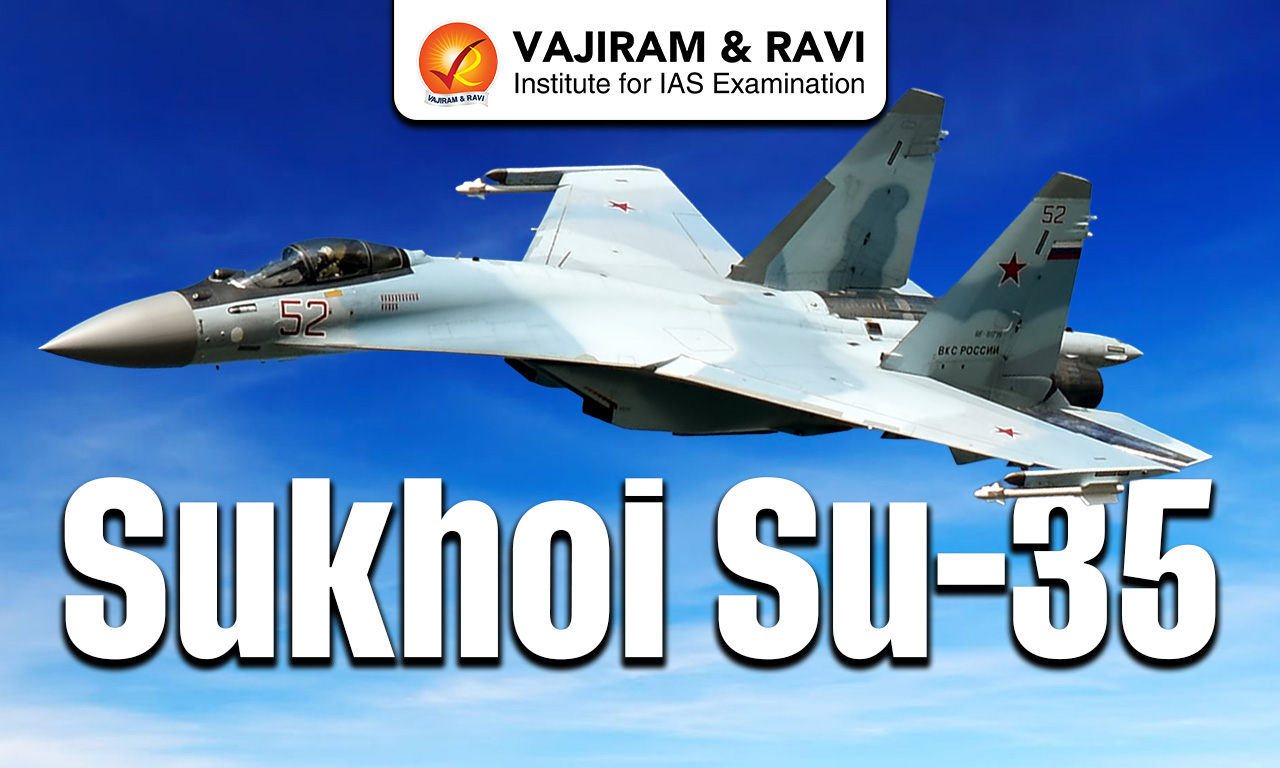
The Sukhoi Su-35 is an advanced multirole fighter aircraft developed by Russia. It is an upgraded version of the Su-27 and is designed for air superiority as well as ground attack missions. It is known for its high speed, strong maneuverability, and modern technology.

Sukhoi Su-35 Development and History

  • The Su-35 was originally developed in the Soviet Union based on the Su-27 design. Its first flight took place in June 1988. After the breakup of the Soviet Union, the aircraft was further improved to make it suitable for export. It was showcased internationally in the 1990s, including air shows in Dubai, Berlin, and Paris.
  • A modern variant, the Su-35S, was later developed and inducted into service. It saw combat use during Russia’s involvement in the Syrian Civil War in 2016, where it provided air cover and support for military operations.

Sukhoi Su-35 Design and Features

  • The Su-35 has a sleek aerodynamic design with advanced engines that include thrust-vectoring technology. This allows the aircraft to perform sharp turns and complex aerial maneuvers. It is a single-seat aircraft with a strong airframe and high payload capacity.
  • The aircraft is equipped with advanced countermeasures such as radar warning systems, missile approach warning systems, and chaff and flare dispensers, which improve its survivability in combat.

Sukhoi Su-35 Technical Specifications

  • The Su-35 has a length of about 21.9 meters and a wingspan of 15.3 meters. It is powered by two powerful turbofan engines. The aircraft can reach a maximum speed of around 2,390 km/h and operate at an altitude of up to 18,000 meters.
  • It has a large fuel capacity, allowing long-range missions, and can carry up to 8,000 kg of weapons. Its maximum take-off weight is about 34,500 kg, making it a heavy and powerful fighter jet.

Comparison with Other Fighter Jets

In the following section, we will compare the Su-35 with other prominent fighter jets to see how it performs in terms of speed, combat ability, technology, and overall effectiveness.

Parameter

Rafale

Sukhoi Su-35

Origin

France

Russia

Role

Multirole fighter

Multirole / Air superiority

Maneuverability

High but less than Su-35

Extremely high (thrust vectoring)

Maximum Speed

~Mach 1.8

~Mach 2.2

Weight (Empty)

~10 tonnes

~18,400 kg

Maximum Take-off Weight

~24.5 tonnes

~34,500 kg

Weapons

Air-to-air & air-to-ground

Air-to-air, air-to-ground, anti-ship, anti-radiation

Technology

Advanced avionics, precision strike

Strong engines, high agility

Combat Strength

Balanced multirole

Superior in aerial combat

Sukhoi Su-35 Advantages

  • One major advantage is its high maneuverability. With thrust-vectoring engines, it can perform complex aerial movements, giving it an edge in dogfights.
  • Another advantage is its high speed and long range. It can fly at very high speeds and cover large distances without needing frequent refueling, making it suitable for long missions.
  • The aircraft also has advanced radar and avionics systems, which help it detect and track multiple targets from long distances, improving combat efficiency.
  • Its multirole capability is another key strength. It can carry a wide range of weapons and perform different missions like air combat, ground attacks, and anti-ship operations.
  • The Su-35 also has a large payload capacity, allowing it to carry more weapons compared to many other fighter jets.
  • Finally, it is known for being relatively cost-effective compared to some fifth-generation fighters, while still offering very high performance, making it attractive for many countries.

Sukhoi Su-35 Limitations

  • One major limitation is the lack of full stealth technology. Unlike fifth-generation aircraft, it is more visible to modern radar systems, which can reduce its effectiveness in highly contested airspace.
  • Another issue is its large size and radar signature, making it easier to detect compared to smaller or stealth aircraft.
  • The aircraft is also expensive to operate and maintain, especially due to its powerful engines and advanced systems.
  • Its performance depends heavily on pilot skill and training, as handling such a highly maneuverable aircraft requires great expertise.
  • Additionally, in modern warfare, there is increasing reliance on network-centric and stealth-based operations, where newer fifth-generation jets may have an advantage over the Su-35.

Sukhoi Su-35 Significance

  • The Sukhoi Su-35 is important because it is a very advanced fighter jet with modern technology. It has high speed, powerful engines, and can perform complex movements in the air, which makes it very effective during combat.
  • It plays a major role in controlling the skies, as it can track and attack enemy aircraft from long distances. This helps countries protect their airspace and strengthen their defence system.
  • Another important feature of the Su-35 is its versatility. It is not limited to one type of mission; it can fight enemy aircraft, attack ground targets, and even target ships. This makes it useful in different types of military operations.
  • The aircraft is also significant because it increases a country’s military strength and acts as a strong deterrent against threats. Its presence can discourage potential enemies from taking aggressive actions.

Sukhoi Su-35 FAQs

Q1: What is the Sukhoi Su-35?

Ans: It is an advanced multirole fighter jet developed by Russia, mainly used for air superiority and ground attack missions.

Q2: When did the Sukhoi Su-35 first fly?

Ans: The Su-35 made its first flight in June 1988 as an upgraded version of the Su-27.

Q3: What are the key features of the Su-35?

Ans: It has high speed, strong maneuverability with thrust-vectoring engines, advanced radar systems, and the ability to carry a large range of weapons.

Q4: What is the maximum speed and range of the Su-35?

Ans: It can reach a maximum speed of about Mach 2.2 (around 2,390 km/h) and has a long operational range due to its large fuel capacity.

Q5: How is the Su-35 different from the Dassault Rafale?

Ans: The Su-35 is more maneuverable and faster, while the Rafale is more balanced with advanced avionics and precision strike capabilities.

Guru Ghasidas National Park, Geography, History, Flora & Fauna

Guru Ghasidas National Park

Guru Ghasidas National Park is one of the important protected areas in India, located in the state of Chhattisgarh. It is known for its rich biodiversity, dense forests, and wildlife. The park is part of a larger forest landscape and plays a key role in conserving endangered species. It is also significant from an ecological point of view as it supports a variety of flora and fauna.

Guru Ghasidas National Park Geography

  • Guru Ghasidas National Park is located in northern Chhattisgarh, covering districts like Koriya, Manendragarh-Chirmiri-Bharatpur, Surajpur, and Balrampur. It shares borders with Madhya Pradesh and Jharkhand and is part of the larger Guru Ghasidas -Tamor Pingla Tiger Reserve.
  • The park has a varied landscape of hills, plateaus, valleys, and dense tropical moist deciduous forests, with trees like sal, teak, and bamboo. Its altitude ranges from about 327 to 736 meters, supporting rich biodiversity.
  • Several rivers and streams such as the Banas River, Bijaur Nala, Gopad, and Mahan provide water and sustain wildlife. The park also acts as an important wildlife corridor connecting Bandhavgarh Tiger Reserve and Palamau Tiger Reserve, making it ecologically significant.

Guru Ghasidas National Park History

  • The history of Guru Ghasidas National Park is closely linked with the earlier Sanjay National Park and the Sanjay-Dubri Tiger Reserve. This reserve was originally created in 1983 to protect tigers and their natural habitat. At that time, the entire area was part of Madhya Pradesh.
  • In the year 2000, when Chhattisgarh was formed as a separate state, a large portion of this forest area came under its control. The Chhattisgarh government later renamed this part as Guru Ghasidas National Park, in honour of Guru Ghasidas, a respected social reformer of the region.
  • In 2011, Jairam Ramesh, who was then the Minister of State for Environment and Forests, suggested developing this area into a tiger reserve to strengthen wildlife conservation. Since around 2010, the park has had a small population of tigers, which it shares with nearby forest areas of Madhya Pradesh.

Guru Ghasidas National Park Flora

Guru Ghasidas National Park is mainly covered with sub-tropical and tropical deciduous forests. The most common tree found here is sal (also called sakhua), which forms a large part of the forest cover. Along with sal, other important trees include teak, saja, salai, mahua, shisham, gurjan, achar, tendu, and bamboo. These forests provide food and shelter to wildlife and help maintain the ecological balance of the region.

Guru Ghasidas National Park Fauna

  • The park has a rich variety of wildlife and supports a healthy ecosystem. It is home to animals like tigers, leopards, nilgai, jackals, antelopes, wild boars, bison (gaur), hyenas, and porcupines. These species show the diversity of mammals found in the park.
  • The park also has many bird species such as parakeets, bulbuls, rufous treepie, red-headed vulture, and racket-tailed drongo, making it important for bird conservation as well.
  • In addition, several reptiles like cobras, monitor lizards, and pythons are found here. Overall, the presence of different types of animals, birds, and reptiles highlights the rich biodiversity of the park and its importance for conservation.

Guru Ghasidas National Park Significance

  • Guru Ghasidas National Park is important because it plays a key role in conserving biodiversity in central India. It provides a natural habitat for many species of animals, birds, and plants, including endangered species like tigers. This makes it an important part of India’s protected area network.
  • Another major significance of the park is its role as a wildlife corridor. It connects important forest areas like Bandhavgarh Tiger Reserve and Palamau Tiger Reserve, allowing animals to move freely. This helps in maintaining genetic diversity and ecological balance.
  • The park is also important from an ecological point of view as it helps in climate regulation, soil conservation, and maintaining water resources. Its forests support rainfall patterns and reduce environmental degradation.

Guru Ghasidas National Park FAQs

Q1: What is Guru Ghasidas National Park?

Ans: It is a protected area in Chhattisgarh known for its rich biodiversity, dense forests, and wildlife, playing an important role in conservation.

Q2: Where is Guru Ghasidas National Park located?

Ans: It is located in northern Chhattisgarh, covering districts like Koriya, Surajpur, Balrampur, and Manendragarh-Chirmiri-Bharatpur, and shares borders with Madhya Pradesh and Jharkhand.

Q3: What is the geographical importance of the park?

Ans: The park has hills, valleys, and forests, and acts as a wildlife corridor connecting Bandhavgarh Tiger Reserve and Palamau Tiger Reserve.

Q4: What is the history of Guru Ghasidas National Park?

Ans: It was earlier part of Sanjay National Park and the Sanjay-Dubri Tiger Reserve (1983). After the formation of Chhattisgarh in 2000, it was renamed and developed as a national park.

Q5: What type of vegetation is found in the park?

Ans: The park mainly has tropical and sub-tropical deciduous forests, with sal as the dominant tree, along with teak, bamboo, and other species.

Renewable Energy in India, Sectors, Initiatives, Significance

Renewable Energy in India

Renewable Energy refers to energy derived from natural resources that are replenished on a human timescale, making them sustainable and environment friendly. Common examples of Renewable Energy in India include solar energy, wind power, hydropower, biomass energy and geothermal energy. These sources are cleaner alternatives to fossil fuels as they emit less pollution and greenhouse gases. These systems can be deployed in both urban and rural areas and are increasingly integrated with electrification for efficient energy use.

Renewable Energy in India

India has transitioned from a power deficit nation at Independence to a power surplus country with over 4 lakh MW installed electricity capacity. Today, India is the world’s third largest Renewable Energy producer. As of November 2025, total non fossil capacity reached 262.74 GW, accounting for about 50% of total installed capacity of 509.64 GW.

Sectors of Renewable Energy in India

India’s Renewable Energy sector includes diverse sources contributing significantly to energy mix and sustainability goals across regions and economic sectors.

  • Solar Energy: India’s solar capacity reached 132.85 GW by November 2025, crossing the 100 GW milestone in January 2025. Annual addition was 34.98 GW, showing over 41% growth compared to the previous year, making solar the largest contributor.
  • Wind Energy: Wind capacity reached 53.99 GW in November 2025, with 5.82 GW added during the year. India ranks among the top countries globally due to favorable wind conditions in southern and western regions.
  • Hydropower: Large hydro capacity stands at 50.35 GW, while small hydro contributes 5.16 GW. India ranks 5th globally in usable hydropower potential, though seasonal rainfall variability impacts generation.
  • Bioenergy: Bioenergy capacity reached 11.61 GW, including biomass and compressed biogas plants. Over 800 biomass cogeneration projects and multiple CBG plants contribute to rural employment and cleaner energy generation.
  • Hybrid and Emerging Sources: Hybrid renewable projects, including wind solar and round the clock power systems, are under implementation with 59.24 GW capacity, ensuring reliable and continuous clean energy supply.

Renewable Energy in India Significance

Renewable Energy plays a crucial role in economic growth, environmental protection and energy security while supporting global climate commitments.

  • Reducing Emissions: Renewable Energy reduces greenhouse gas emissions significantly, helping India maintain low per capita CO2 emissions at 1.8 tonnes compared to higher global averages like USA and China.
  • Energy Security: Diversifying energy sources reduces dependence on imported fossil fuels and strengthens national energy independence, ensuring stable supply for a growing economy.
  • Economic Growth: Renewable sector attracts investments, accounting for nearly 8% of total FDI inflows in 2024-25 and supports large scale infrastructure and industrial development.
  • Employment Generation: Renewable Energy projects, especially biomass and solar, create jobs in installation, maintenance and manufacturing, particularly benefiting rural areas.
  • Climate Commitments: India achieved its COP 21 target of 40% non fossil capacity ahead of schedule and aims for 500 GW by 2030 and net zero emissions by 2070.
  • Improved Public Health: Clean energy reduces air pollution compared to fossil fuels, lowering health risks and improving quality of life in urban and rural areas.

Renewable Energy in India Initiatives

India has launched multiple schemes, policies and reforms to accelerate Renewable Energy adoption and strengthen infrastructure.

  • PM Surya Ghar: Muft Bijli Yojana: Targets rooftop solar installations in one crore households with ₹75,021 crore outlay, benefiting over 18 lakh households and installing 14.43 lakh systems by December 2025.
  • PM KUSUM Scheme: Provides up to 60% subsidy on solar pumps for farmers. Over 9.42 lakh standalone pumps and 10.99 lakh grid connected pumps have been solarized, boosting rural energy access.
  • National Green Hydrogen Mission: Aims to produce 5 MMT of green hydrogen annually by 2030, with incentives for 4,50,000 TPA capacity and multiple pilot projects in transport, steel and refueling infrastructure.
  • Production Linked Incentive Scheme: Boosts domestic solar manufacturing, increasing module capacity from 38 GW to 74 GW and achieving nearly 144 GW annual manufacturing capacity.
  • Ethanol Blended Petrol Programme: Ethanol blending increased from 1.5% in 2013 to 15% in 2024, saving ₹1.26 lakh crore in foreign exchange and reducing fossil fuel dependence.
  • Green Energy Corridor: Strengthens transmission infrastructure to integrate renewable power efficiently across regions and ensures grid stability for future energy demand.

Renewable Energy in India Challenges

Despite rapid growth, the Renewable Energy in India sector faces structural, financial and technological challenges that hinder its full potential.

  • Dependence on Coal: Transition from coal is difficult due to economic dependence in states like Jharkhand and Chhattisgarh and existing coal based infrastructure.
  • Financing Constraints: India requires about Rs 2 trillion annually to meet 500 GW target by 2030, while high capital costs and slow returns discourage private investment.
  • Grid Integration Issues: Intermittent nature of solar and wind energy creates stability challenges. Current storage capacity of 219.1 MWh is far below 411 GWh requirement by 2032.
  • Supply Chain Dependency: India depends heavily on imports, especially from China, which accounts for over 56% of solar cell supply and over 70% lithium imports.
  • Land and Environmental Issues: Solar projects require 4-5 acres/MW and wind 2-40 acres/MW, leading to land conflicts, biodiversity concerns and displacement issues.
  • E waste Management: Growing solar installations will generate large waste volumes, making India the 4th largest solar panel waste producer by 2050 without adequate recycling systems.

Way forward

  • Energy Storage Expansion: Developing battery storage, pumped hydro and grid scale storage systems will manage intermittency and ensure reliable energy supply during peak demand periods.
  • Optimizing Land Use: Promoting floating solar, rooftop installations, agrivoltaics and use of wastelands can reduce land conflicts and improve efficiency in renewable deployment.
  • Strengthening Grid Infrastructure: Upgrading smart grids, integrating forecasting systems and improving coordination across states will enhance grid stability and renewable integration.
  • Financing Innovations: Expanding green bonds, improving contract transparency and attracting global funds like Green Climate Fund can bridge financing gaps for large scale projects.
  • Promoting Domestic Manufacturing: Reducing import dependency through policies like ALMM and PLI schemes will strengthen supply chains and enhance self reliance in renewable technologies.
  • Global Collaboration: Strengthening partnerships through international platforms and technology transfer initiatives will accelerate adoption and position India as a global clean energy leader.

Renewable Energy in India FAQs

Q1: What is Renewable Energy?

Ans: Renewable Energy is energy derived from natural sources like solar, wind, water and biomass that are replenished continuously and are environmentally friendly.

Q2: What is India’s current Renewable Energy capacity?

Ans: As of November 2025, India’s total Renewable Energy capacity is about 253.96 GW, contributing nearly 49.83% of total installed electricity capacity.

Q3: What is India’s target for Renewable Energy?

Ans: India aims to achieve 500 GW of non fossil fuel energy capacity and meet 50% of its energy needs from renewables by 2030.

Q4: Which Renewable Energy source is largest in India?

Ans: Solar energy is the largest contributor, with an installed capacity of 132.85 GW as of November 2025.

Q5: What are the major challenges in Renewable Energy in India?

Ans: Key challenges include high investment costs, land requirements, grid integration issues, storage limitations and dependence on imports for critical materials.

Marrakesh Agreement, Background, Need, Objectives, Significance

Marrakesh Agreement

The Marrakesh Agreement is an important international agreement that was signed in 1994 to make global trade fairer and easier. It marked the creation of the World Trade Organization (WTO), which helps countries work together, reduce trade barriers, and settle disputes. The agreement aims to promote cooperation between nations, encourage economic growth, and create rules that make trading goods and services smoother for everyone.

Marrakesh Agreement Background

  • The background of the Marrakesh Agreement goes back to the General Agreement on Tariffs and Trade, which was signed in 1947 and came into force in 1948. It was created to reduce tariffs and remove import quotas, helping countries trade more freely. For many years, it guided international trade, but it had some limitations, such as limited membership and weak institutional structure.
  • To improve the system, countries held several rounds of negotiations, the most important being the Uruguay Round (1986-1994). These discussions aimed to make global trade rules more effective and inclusive.
  • As a result, the Marrakesh Agreement was signed on April 15, 1994, leading to the creation of the World Trade Organization on January 1, 1995. It also introduced an updated version of GATT, called GATT 1994, making the global trade system more structured and organized.

Marrakesh Agreement Need

  • The Marrakesh Agreement was needed because the earlier system of global trade, based on the General Agreement on Tariffs and Trade, was no longer enough to handle the growing and changing nature of international trade. Over time, trade became more complex, involving not just goods but also services and intellectual property, which were not properly covered under the old system.
  • There was also a need for a stronger and more organized system. GATT did not have a proper institution to manage trade rules or enforce them effectively. This often led to confusion and unfair practices between countries.
  • Another important need was to create a fair platform where countries could resolve their trade disputes peacefully. Without a proper system, disagreements could turn into trade conflicts, affecting global economic stability.

Also Read: United Nations

Marrakesh Agreement Key Objectives

  • Trade Liberalization: One of the main objectives of the Marrakesh Agreement is to promote free trade by reducing barriers like tariffs, quotas, and other restrictions. It also aims to remove discrimination in trade so that all countries are treated fairly.
  • Dispute Settlement: Another important objective is to provide a clear and binding system for solving trade disputes. Through the WTO, countries can settle disagreements peacefully using agreed rules, which helps avoid trade conflicts and maintains stability in global trade.
  • Sustainable Development: The agreement also focuses on linking trade with sustainable development. It encourages countries to use natural resources wisely and balance economic growth with environmental protection, so that development can continue in the long term.
  • Supporting Developing Countries: A key objective is to support developing and least-developed countries by giving them fair opportunities in global trade. It aims to ensure that these countries benefit from trade growth according to their economic needs and are not left behind.
  • Expanding Global Trade: Overall, the agreement works to increase global trade and economic growth. By making trade easier and more predictable, it helps raise income levels, create jobs, and improve living standards across countries.

Marrakesh Agreement Key Aspects

  • Establishment of the WTO:  One of the most important aspects of the Marrakesh Agreement was the creation of the World Trade Organization. It replaced the earlier temporary system under GATT and became the main organization responsible for managing global trade rules and cooperation among countries.
  • Signatories and Scope: The agreement was signed by 123 countries, showing a collective effort to promote free and fair trade. Its main aim was to reduce tariffs, remove trade barriers, and encourage smoother flow of goods and services across borders. Over time, more countries have joined, making it a global system.
  • Legal Structure: The Marrakesh Agreement has a well-defined legal framework. It includes a main agreement and several annexes that cover different areas of trade:
    • Annex 1A deals with trade in goods, including GATT 1994.
    • Annex 1B covers trade in services under GATS.
    • Annex 1C focuses on intellectual property through the TRIPS agreement.
    • Annex 2 includes the Dispute Settlement Understanding (DSU), which provides rules for resolving trade disputes.
  • Functions of the WTO: The WTO works to make international trade smooth and fair. It helps countries negotiate trade agreements, monitors their trade policies, and provides a system to settle disputes peacefully. This ensures stability and transparency in global trade.
  • Organizational Structure: The agreement also sets up the structure of the WTO. The top body is the Ministerial Conference, which meets at least once every two years to take major decisions. Below it are councils and committees that handle specific areas like goods, services, and intellectual property.

Marrakesh Agreement Significance

  • Birth of the WTO: The Marrakesh Agreement led to the creation of the World Trade Organization, turning the earlier loose trade system into a proper and permanent international organization with clear rules and structure.
  • Comprehensive Scope: It brought different areas of trade under one system. This included trade in goods through GATT, trade in services under GATS, and intellectual property rights through TRIPS, making the framework more complete and modern.
  • Dispute Settlement Mechanism: The agreement introduced a strong and legally binding system to resolve trade disputes. This helps countries settle disagreements fairly and prevents conflicts from escalating.
  • Lowered Trade Barriers: It focused on reducing tariffs and other trade restrictions, making it easier for countries to trade with each other and boosting global commerce.
  • Focus on Sustainable Development: The agreement also aimed to improve living standards and promote economic growth while encouraging the proper use of global resources. It supports expanding trade in services and ensuring long-term development benefits for countries.

Marrakesh Agreement FAQs

Q1: What is the Marrakesh Agreement?

Ans: The Marrakesh Agreement is an international agreement signed in 1994 to make global trade easier and fairer. It led to the creation of the World Trade Organization, which manages international trade rules.

Q2: Why was the Marrakesh Agreement needed?

Ans: It was needed because the older system under the General Agreement on Tariffs and Trade was not strong enough to handle modern trade, especially services and intellectual property, and lacked a proper organization.

Q3: What is the connection between GATT and the Marrakesh Agreement?

Ans: GATT 1947 was the earlier trade system. The Marrakesh Agreement replaced it with a stronger system and introduced GATT 1994 under the WTO framework.

Q4: What were the main objectives of the Marrakesh Agreement?

Ans: Its main objectives include reducing trade barriers, promoting free and fair trade, establishing the WTO, resolving trade disputes, and supporting developing countries.

Q5: What are the key components of the Marrakesh Agreement?

Ans: It includes agreements on trade in goods (GATT), services (GATS), and intellectual property (TRIPS), along with a dispute settlement system to handle conflicts between countries.

UPSC Daily Quiz 25 March 2026

[WpProQuiz 123]

UPSC Daily Quiz FAQs

Q1: What is the Daily UPSC Quiz?

Ans: The Daily UPSC Quiz is a set of practice questions based on current affairs, static subjects, and PYQs that help aspirants enhance retention and test conceptual clarity regularly.

Q2: How is the Daily Quiz useful for UPSC preparation?

Ans: Daily quizzes support learning, help in revision, improve time management, and boost accuracy for both UPSC Prelims and Mains through consistent practice.

Q3: Are the quiz questions based on the UPSC syllabus?

Ans: Yes, all questions are aligned with the UPSC Syllabus 2025, covering key areas like Polity, Economy, Environment, History, Geography, and Current Affairs.

Q4: Are solutions and explanations provided with the quiz?

Ans: Yes, each quiz includes detailed explanations and source references to enhance conceptual understanding and enable self-assessment.

Q5: Is the Daily UPSC Quiz suitable for both Prelims and Mains?

Ans: Primarily focused on Prelims (MCQ format), but it also indirectly helps in Mains by strengthening subject knowledge and factual clarity.

National Biodiversity Authority

National Biodiversity Authority

National Biodiversity Authority Latest News

The National Biodiversity Authority (NBA) launched short-term Internship Programme  (upto 3 months), for students who are undergoing graduation/post graduation,

About National Biodiversity Authority

  • It is a statutory body established under the Biological Diversity Act, 2002.
  • It was formally set up in 2003.
  • Headquarters: It is located in Chennai, Tamil Nadu.
  • Functions: The NBA performs facilitative, regulatory, and advisory functions for the Government of India, particularly on matters related to the conservation of biodiversity, sustainable use of biological resources, and the fair and equitable sharing of benefits derived from them.

National Biodiversity Authority Composition

  • Chairperson: An eminent person with proven knowledge and experience in biodiversity conservation, sustainable use of biological resources, and equitable sharing of benefits.
  • 10 Ex-officio Members: Senior representatives from the Government of India, nominated to provide policy insights and ensure inter-ministerial coordination.
  • 5 Non-Official Members: Experts and professionals from diverse fields related to biodiversity management, nominated to contribute independent perspectives and specialized expertise.

Administrative Structure of National Biodiversity Authority 

  • State Biodiversity Boards (SBBs): Functioning at the state level to regulate access to biological resources within their jurisdiction.
  • Biodiversity Management Committees (BMCs): Established at the local village or panchayat level to promote grassroots-level biodiversity conservation and documentation.

Source: PIB

National Biodiversity Authority FAQs

Q1: Where is the NBA headquartered?

Ans: Chennai

Q2: Under which act was the NBA established?

Ans: Biological Diversity Act

Helium

Helium

Helium Latest News

India’s semiconductor and printed circuit board (PCB) industry is bracing for potential disruption in helium supplies after Iran’s attack on Qatar’s Ras Laffan LNG hub.

About Helium

  • It is an inert gas and does not react with other substances or combust.
  • It was discovered in 1868 by Jules Janssen and Norman Lockyer via a yellow spectral line during a solar eclipse. 
  • Named after the Greek word ‘Helios’, meaning Sun.
  • Properties of Helium
    • Its atomic number is 2, making it the second lightest element after hydrogen.
    • Helium also has a very low boiling point (-268.9° C), allowing it to remain a gas even in super-cold environments.
    • The gas is non-toxic, but cannot be breathed on its own, because it displaces the oxygen humans need for respiration.
    • It is the only element that cannot be solidified by sufficient cooling at normal atmospheric pressure.
  • Largest global reserves: United States, Algeria, and Russia.
  • India’s Rajmahal Volcanic Basin (Jharkhand) is a significant helium reservoir trapped for billions of years.
  • Applications of Helium
    • Pressurizing Fuel Tank: It is used to pressurize fuel tanks, ensuring fuel flows to the rocket's engines without interruption.
    • Cooling systems: It is used in cooling systems of rockets.

Source: NIE

Helium FAQs

Q1: Where is Helium primarily sourced from?

Ans: Natural gas reserves

Q2: What is the symbol for Helium?

Ans: He

Assam Rifles

Key Facts about Assam Rifles

Assam Rifles Latest News

Recently, the Union Home Minister has extended Raising Day greetings to the courageous personnel of the Assam Rifles.

About Assam Rifles

  • It is one of the six Central Armed Police Forces (CAPFs) that come under the MHA’s administrative control.
  • Function: It conducts counterinsurgency operations in north-eastern India and other areas where deemed necessary.
  • Headquarter: The headquarters of the Director-General of Assam Rifles (DGAR) is in Shillong

Assam Rifles History and Major Roles Played 

  • Assam Rifles has its origins in 1835 as a militia called the ‘Cachar Levy’ to protect British tea estates and their settlements against tribal raids. 
  • It later became the ‘Frontier Force’ conducting punitive expeditions across the borders of Assam. 
  • In 1870, the existing elements were merged into three Assam Military Police Battalions, sending over 3,000 men as part of the British Army to Europe and West Asia. 
  • In 1917, the name was changed to Assam Rifles.
  • The force has evolved post-Independence, from combat roles during the Sino-India War 1962 to being a part of the Indian Peace Keeping Force (IPKF) in Sri Lanka in 1987, besides performing peacekeeping roles in north-eastern India.

Source: PIB

Assam Rifles FAQs

Q1: What is the motto of the Assam Rifles?

Ans: Service, Security, Friendship

Q2: Which ministry does the Assam Rifles come under?

Ans: Ministry of Home Affairs

Beaver

Beaver

Beaver Latest News

According to a new international study led by researchers at the University of Birmingham, Beavers can engineer riverbeds into promising ways to prevent carbon dioxide release into the air.

About Beaver

  • The beaver, from the genus Castor, includes two amphibious rodent species.
  • They are semi-aquatic species.
  • Habitat: They live in streams, marshes, rivers, and ponds, and along the shorelines of large lakes
  •  Distribution: They are native to North America, Europe, and Asia.
  • Characteristics
    • Beavers have long, orange, visible front teeth, called incisors. These teeth grow continuously throughout its life and are worn down through daily use. 
    • Lifespan: They typically live 10 to 12 years. 
    • Communication: One important communication signal among beavers is a tail slap on the surface of the water, indicating danger. Typically performed by an adult
    • They are known as "ecosystem engineers" because they construct dams of branches, stones, and mud in streams, rivers, marshes, and ponds.
    • These beaver ponds which the animals use as sources of food, as well as protection from predators.
  • Conservation Status: IUCN Red List: Least Concern

Source: DTE

Beaver FAQs

Q1: What do beavers use to build their homes?

Ans: Mud and stones and Sticks and branches

Q2: What is unique about beaver teeth?

Ans: They continuously grow

Districts as Export Hubs (DEH) Initiative

Districts as Export Hubs (DEH) Initiative

Districts as Export Hubs (DEH) Initiative Latest News

Recently, the Minister of State for Ministry of Commerce & Industry informed the Lok Sabha about the Districts as Export Hubs (DEH) Initiative.

About Districts as Export Hubs (DEH) Initiative

  • It was launched in August 2019 to foster balanced regional development across all districts of the country.
  • The objective of DEH is to identify, brand, and promote products from each district, encouraging their sale in both domestic and international markets.
  • It is an initiative of the Directorate General of Foreign Trade, Department of Commerce.
  • Under this initiative, the export promotion activities are being decentralised to make the districts active stakeholders in boosting export growth of the identified products and services from the districts.
  • Institutional mechanism
    • An institutional mechanism has been set up in all States/UTs by forming the State Export Promotion Committee (SEPC) and District Export Promotion Committee (DEPC) at the district level.
    • The initiative has identified export potential in 734 districts across the country, spanning critical sectors like agriculture, toys, and GI products.
      • District Export Action Plans (DEAP) detailing the existing bottlenecks in the supply chain and identifying possible interventions to mitigate the existing gaps for export of the above identified products.
    • It is supporting local exporters/manufacturers to scale and find potential buyers outside India.
    • Coverage: The DEH initiative has identified products and services with export potential in all districts across the country, including GI products, agricultural clusters, and toy clusters.

Source: PIB

Districts as Export Hubs (DEH) Initiative FAQs

Q1: What is DEAP in the DEH Initiative?

Ans: District Export Action Plan

Q2: How many districts have export potential identified?

Ans: 734

Remission of Duties and Taxes on Exported Products (RoDTEP) Scheme

Remission of Duties and Taxes on Exported Products (RoDTEP) Scheme

Remission of Duties and Taxes on Exported Products (RoDTEP) Scheme Latest News

The Government of India has decided to restore the rates and value caps under the Remission of Duties and Taxes on Exported Products (RoDTEP) Scheme for all eligible export products.

About Remission of Duties and Taxes on Exported Products (RoDTEP) Scheme

  • It was introduced through an amendment to the Foreign Trade Policy 2015-20, and it became effective for exports starting January 1, 2021.
  • The primary aim of this scheme is to offset the taxes and duties incurred on exported goods that wouldn’t otherwise be credited, reimbursed, or refunded in any way, and are integrated into the exported goods.
  • It is compliant with World Trade Organization (WTO) norms and is implemented via a comprehensive end-to-end digital platform to ensure transparency and efficiency.
  • Objective: It was enforced to repeal and reduce taxes on exported products, thereby encouraging exports and increasing the number of exports in the country.
  • The scheme is administered by the Department of Revenue, Ministry of Finance.
  • It replaced the Merchandise Export Incentive Scheme (MEIS).

RoDTEP Scheme Eligibility Criteria

  • All sectors are covered under the scheme. 
  • Labor-intensive sectors will be accorded priority.
  • Both manufacturer exporters and merchant exporters (traders) are eligible for the scheme.
  • The exported products should have India as their country of origin to be eligible for benefits under the scheme.
  • Special Economic Zone Units and Export Oriented Units are also eligible.
  • The scheme also applies to goods that have been exported via courier through e-commerce platforms.
  • Re-exported products are not eligible under this scheme.

Source: PIB

Remission of Duties and Taxes on Exported Products (RoDTEP) Scheme FAQs

Q1: What is the form of RoDTEP benefits?

Ans: Transferable duty credit/electronic scrip

Q2: When was the RoDTEP Scheme launched?

Ans: January 1, 2021

Tonga

Tonga

Tonga Latest News

Recently, a strong preliminary magnitude 7.6 earthquake struck near Tonga in the South Pacific Ocean.

About Tonga

  • Location: It is a sovereign country in Polynesia, composed of an archipelago of 169 islands located in the South Pacific Ocean.
  • Neighbouring countries include Fiji to the west, Cook Islands to the east and Samoa north.
  • These islands are divided into three main groups: Tongatapu in the south, Ha‘apai in the center, and Vava‘u in the north.
  • The western islands (making up the Tongan Volcanic Arch) are all of volcanic origin; the eastern islands are nonvolcanic and are composed of coral limestone and sand
  • Capital City: The capital city of Tonga is Nukuʻalofa, situated on the northern shore of Tongatapu Island.

Geographical Features of Tonga

  • Terrain:  It features flat terrain with limestone and coral formations.
    • Mostly flat islands with limestone bedrock formed from uplifted coral formation; others have limestone overlying volcanic rock.
  • Highest Point: The highest point in this region is Kao Island in the Haʻapai group.
  • Tonga is a member of the Commonwealth Clean Ocean Alliance and Marine Protected Areas Action Groups.

Source: TH

Tonga FAQs

Q1: What is the capital of Tonga?

Ans: Nuku'alofa

Q2: Where is Tonga located?

Ans: Pacific Ocean

Great Salt Lake

Great Salt Lake

Great Salt Lake Latest News

Researchers at the University of Utah have found that freshwater saturates the rock and sediment beneath the Great Salt Lake to depths of up to 13,000 feet. 

About Great Salt Lake

  • Location: It is a saline lake located in northern Utah, United States.
  • It is the largest inland body of salt water in the Western Hemisphere and one of the most saline inland bodies of water in the world.
  • Water Source: The lake is fed by the Bear, Weber, and Jordan rivers and has no outlet.
  • The lake has fluctuated greatly in size, depending on the rates of evaporation and the flow of the rivers that feed it. 
  • Like the Dead Sea, the Great Salt Lake exists within an arid environment and has chemical characteristics similar to that of the oceans. 
  • Formation and Salinity: It has a much greater salinity than the oceans, however, since natural evaporation exceeds the supply of water from the rivers feeding the lake.
  • Surrounded by great stretches of sand, salt land, and marsh, the Great Salt Lake remains eerily isolated from the nearby cities, towns, and other human habitations.
  • Fauna: Some notable avian species that are found here include American avocet, Wilson’s phalarope, California gull, black-necked stilt, American white pelican, peregrine falcon, marbled godwit, etc.

Source: IT

Great Salt Lake FAQs

Q1: Where is the Great Salt Lake located?

Ans: Utah, USA

Q2: What is unique about the Great Salt Lake?

Ans: It's a saltwater lake with no outlet

Sperm Whale

Sperm Whale

Sperm Whale Latest News

According to a statement by the University of St Andrews in the United Kingdom, Sperm whales have been caught headbutting on camera for the first time.

About Sperm Whale

  • It is the largest of the toothed whales, easily recognized by its enormous square head and narrow lower jaw.
  • It has the largest head and the largest brain of any animal on the planet.
  • They are named after the waxy substance—spermaceti—found in their heads.
  • The spermaceti is an oil sac that helps the whales focus sound. Spermaceti was used in oil lamps, lubricants, and candles.
  • Appearance
    • The sperm whale is dark blue-gray or brownish, with white patches on the belly.
    • It has small paddle-like flippers and a series of rounded humps on its back.
  • Distribution
    • They have one of the widest global distributions of any marine mammal species.
    • They are found in all deep oceans, from the equator to the edge of the pack ice in the Arctic and Antarctic.
  • Features of Sperm Whale
    • Lifespan: Up to 60 years
    • They are highly social mammals that communicate with one another using a series of clicks called codas, and that each coda has a distinct purpose.
    • Ambergris, a material sometimes found floating in the sea, is formed in the sperm whale’s intestines around a core of undigested solid matter such as squid breaks.

Conservation Status of Sperm Whale

  • IUCN: Vulnerable
  • CITES: Appendix I

Source: DTE

Sperm Whale FAQs

Q1: What do Sperm Whales primarily feed on?

Ans: Squid

Q2: What is the scientific name of the Sperm Whale?

Ans: Physeter macrocephalus

GlobE Network

GlobE Network

GlobE Network Latest News

Recently, India hosted the 12th Steering Committee Meeting of the Global Operational Network of Anti-Corruption Law Enforcement Authorities (GlobE Network) in New Delhi.

About GlobE Network

  • The GlobE Network is a global platform of specialised anti-corruption law enforcement authorities.
  • It was established under the Riyadh Initiative during Saudi Arabia's G20 Presidency.
  • It is operating under the framework of the United Nations Convention Against Corruption (UNCAC)
  • Members:  The Network comprises 135 member countries and 250 member authorities, along with 18 observers including EUROPOL, the World Bank, and the International Association of Anti-Corruption Authorities.
  • Governance: The steering committee, consisting of one chair, one vice-chair, and 13 members, provides leadership and direction for the organisation.
    • The Ministry of Home Affairs is the central authority for GloBE Network, while the CBI and the Enforcement Directorate are its member authorities from India.
  • Functions:
    • The GlobE Network complements formal legal assistance mechanisms by enabling faster, more flexible, and direct agency-to-agency engagement.
    • It enables direct, practitioner-level cooperation among member agencies for the investigation, prosecution, and recovery of proceeds of corruption.
    • The Network is governed by its members and is supported by the United Nations Office against Drugs and Crime (UNODC) which provides the Network’s secretariat.

Source: News On Air

GlobE Network FAQs

Q1: What does GlobE stand for in GlobE Network?

Ans: Global Operational Network of Anti-Corruption Law Enforcement Authorities

Q2: What is the primary focus of the GlobE Network?

Ans: Combat corruption

SC Status After Religious Conversion: What the Supreme Court’s Ruling Says

SC Status after Religious Conversion

SC Status after Religious Conversion Latest News

  • The Supreme Court, in its recent ruling, held that a person who has converted to Christianity cannot continue to claim Scheduled Caste (SC) protections. The court upheld the Andhra Pradesh High Court's order in this regard.
  • The ruling sits at the intersection of two conflicting realities:
    • Constitutional Design - SC status is a legal-social identity tied to specific religions under the 1950 Order.
    • Ground Reality - Caste-based discrimination has been shown to persist even after conversion, particularly among Dalit Christians.

What the Court Said

  • The SC ruled that other than Hinduism, Sikhism, or Buddhism, a person cannot simultaneously:
    • Profess and practice a religion, and
    • Claim membership of a Scheduled Caste
  • The court described the bar as "absolute" with "no exceptions", stating that the two positions are "mutually exclusive and contrary to the Constitutional scheme."
  • The court held that the loss of SC status upon conversion is not gradual — it is instant: "Once the appellant converted to Christianity, the caste status which he earlier enjoyed… stood eclipsed in the eyes of law."

The Legal Basis

  • SC status is defined through the Constitution (Scheduled Castes) Order, 1950, which restricts SC status to Hindus, Sikhs, and Buddhists. 
  • The court held that claiming SC benefits for statutory purposes while professing another religion is constitutionally impermissible.

Scheduled Tribes: A Different Standard

  • The court clarified an important distinction:
    • For Scheduled Tribes, religion is not the determining factor.
    • ST identity depends on whether a person continues to be part of the community in terms of customs and social recognition.
    • This makes the SC and ST frameworks legally distinct on the question of religious conversion.

What Does "Profess" a Religion Mean

  • The court gave an important constitutional interpretation of the word "profess" as used in the 1950 Order:
    • It is not merely a private belief or personal conviction
    • It requires an outward, public manifestation of one's faith
    • "The term 'profess' connotes to publicly declare or practice a religion"
  • By this standard, the appellant's role as a pastor — leading prayers and organising gatherings — was itself conclusive proof of his religious identity.

The Case Behind the Ruling: Pastor Chintada Anand Paul vs The State

  • In 2021, Pastor Chintada Anand Paul of Pittalavanipalem village, Andhra Pradesh, filed a complaint alleging: Repeated abuse using caste slurs; Death etc.
  • A case was registered under the SC/ST (Prevention of Atrocities) Act, along with IPC provisions of wrongful restraint, criminal intimidation, and hurt.
  • The accused approached the Andhra Pradesh High Court to quash the proceedings, arguing a single key point:
    • The complainant had converted to Christianity years ago and was functioning as a pastor.
    • Therefore, he could not claim SC status and could not invoke the SC/ST Act.
  • The central legal question was: does this protection travel with a person after they voluntarily leave their community through religious conversion?

The Andhra Pradesh HC Ruling (April 2025)

  • The AP High Court ruled in favour of the accused, holding that:
    • The "caste system is alien to Christianity".
    • The SC/ST Act is "protective legislation" meant exclusively for members of the SC/ST community.
    • A converted Christian falls outside the definition of SC and cannot invoke the Act.

The Legal Framework: Why SC Status Ends Upon Conversion

  • The court's reasoning is rooted in a clear chain of constitutional and statutory provisions that tie Scheduled Caste identity directly to the religion a person professes.

The Constitution (Scheduled Castes) Order, 1950

  • Issued under Article 341 of the Constitution, this is the foundational document defining who qualifies as a Scheduled Caste. Its Paragraph 3 explicitly states:
    • "No person who professes a religion different from the Hindu, the Sikh or the Buddhist religion shall be deemed to be a member of a Scheduled Caste."
  • This makes conversion to Christianity (or any other religion outside these three) a legal cut-off point — the moment at which SC status ceases to exist in the eyes of the law.

How the Constitution Reinforces This

  • Article 366(24) defines Scheduled Castes as those groups notified by the President under Article 341
  • Articles 341 and 366(24) work in tandem, creating a self-reinforcing framework that limits SC status to members of Hindu, Sikh, or Buddhist faiths

The SC/ST Act Follows the Same Definition

  • The SC/ST (Prevention of Atrocities) Act adopts the same definitions as the constitutional provisions above. 
  • This means that the religious bar on SC status automatically extends to the protections and remedies available under the Act.
  • The entire framework leads to one conclusion — SC legal identity is inseparable from religious identity. 
  • Once a person's social membership to the SC community ends through conversion, the legal protections tied to that membership end as well.

Source: IE | TH

SC Status after Religious Conversion FAQs

Q1: Can a person retain SC status after religious conversion to Christianity?

Ans: No. The Supreme Court ruled SC status after religious conversion to Christianity ends instantly, as the Constitution (Scheduled Castes) Order, 1950 bars it absolutely.

Q2: Which religions qualify for Scheduled Caste status under Indian law?

Ans: Only persons professing Hinduism, Sikhism, or Buddhism retain SC status after religious conversion is irrelevant — other faiths are explicitly excluded under the 1950 Order.

Q3: How does SC status after religious conversion differ from Scheduled Tribe rules?

Ans: Unlike SC status, ST identity is not religion-based. It depends on continued community membership through customs and social recognition, making both frameworks legally distinct.

Q4: What does "profess" a religion mean under the 1950 Constitutional Order?

Ans: The court held it means a public, outward declaration of faith — not merely private belief — making a pastor's active religious role legally conclusive proof of conversion.

Q5: Does losing SC status after religious conversion affect SC/ST Act protections?

Ans: Yes. Since the SC/ST (Prevention of Atrocities) Act adopts the same constitutional definitions, losing SC status after religious conversion also strips all protections under that Act.

Supreme Court on Women in Armed Forces – Permanent Commission and Equality

Women in Armed Forces

Women in Armed Forces Latest News

  • The Supreme Court has upheld permanent commission and pensionary benefits for women officers in the Armed Forces, highlighting systemic gender bias. 

Women in the Armed Forces

  • Women have been inducted into the Indian Armed Forces primarily through the Short Service Commission (SSC) route.
  • Key Features of SSC
    • Officers serve for a limited tenure (generally 10-14 years). 
    • Permanent Commission (PC) allows a full career with pension benefits. 
    • Historically, women officers had limited access to PCs compared to men. 
  • Issues Faced by Women Officers
    • Limited career progression opportunities. 
    • Lack of access to command roles and training courses. 
    • Institutional bias in performance evaluation and promotions. 

Permanent Commission and Its Significance

  • PC is critical for:
    • Long-term career stability in the Armed Forces. 
    • Eligibility for promotions and leadership roles. 
    • Pension and post-retirement benefits. 
  • Denial of PC effectively restricted women officers to short-term service, creating structural inequality.

News Summary

  • The Supreme Court delivered a landmark judgment addressing discrimination faced by women Short Service Commission Officers (SSCWOs).
  • Recognition of Systemic Bias
    • The Court observed that a long-held presumption that women lacked long-term career prospects led to an uneven playing field. 
    • This assumption adversely affected their chances of obtaining permanent commission.
  • Flaws in the Evaluation System
    • The Court found that the Annual Confidential Reports (ACRs) of women officers were graded casually. 
    • Women were often assigned average or lower scores. 
    • Higher grades were informally reserved for male officers eligible for PC. 
    • This resulted in a structural disadvantage when women were later evaluated for permanent commission.
  • Unequal Opportunity Structure
    • The Court noted that women officers were not encouraged for career-enhancing courses. 
    • They were denied key appointments. 
    • They had weaker service profiles due to systemic neglect. 
    • This reflected an “unequal opportunity structure” within the Armed Forces.

Key Directions of the Supreme Court

  • Grant of Permanent Commission
    • Women officers who met eligibility criteria are entitled to Permanent Commission. 
    • The Court held that inclusion in the consideration zone is a constitutional obligation, not discretion. 
  • Pensionary Benefits
    • Women officers denied PC but released from service will be deemed to have completed 20 years of service. 
    • They will receive a pension and consequential benefits. 
  • No Vacancy Cap Barrier
    • The Court rejected the argument of limited vacancies. 
    • It held that vacancy caps cannot override the need for equality. 
  • Relief Across Forces
    • The judgment extends relief to all three branches of the Indian Armed Forces.
    • This ensures uniform application across all branches.

Constitutional and Legal Principles

  • The judgment reinforces key constitutional values:
  • Equality Before Law
    • Article 14 ensures equality before the law. 
    • Gender-based discrimination in career progression violates this principle. 
  • Equal Opportunity in Public Employment
    • Article 16 guarantees equal opportunity in public employment. 
    • Denial of PC to women was found inconsistent with this provision. 
  • Substantive Equality
    • The Court emphasised that formal equality is insufficient.
    • Structural disadvantages must be addressed to ensure real equality.

Broader Implications

  • Institutional Reform
    • The Armed Forces will need to:
      • Reform evaluation systems like ACRs. 
      • Ensure fair access to training and promotions. 
  • Gender Inclusion
    • The judgment strengthens the case for:
      • Greater inclusion of women in defence services. 
      • Expansion of roles beyond traditional limitations. 
  • Precedential Value
    • The ruling builds upon earlier judgments and sets a precedent for addressing systemic discrimination in institutions.

Source: TH | IE

Women in Armed Forces FAQs

Q1: What did the Supreme Court rule regarding women officers?

Ans: It upheld their right to permanent commission and pensionary benefits.

Q2: What key issue did the Court identify?

Ans: Systemic bias and unequal evaluation practices against women officers.

Q3: What relief was given to women officers who left service?

Ans: They are deemed to have completed 20 years of service and are eligible for pension.

Q4: How did the Court address vacancy limitations?

Ans: It ruled that vacancy caps cannot justify denial of equality.

Q5: Which constitutional principles were reinforced?

Ans: Equality before law and equal opportunity in public employment.

CJI Recusal and Judicial Ethics: Limits, Precedents & Need for Codification

CJI Recusal

CJI Recusal Latest News

  • Recently, CJI Surya Kant recused himself from hearing petitions challenging the Chief Election Commissioner and Other Election Commissioners (Appointment, Conditions of Service and Term of Office) Act, 2023 — legislation that replaced the CJI with a Union Minister on the panel for appointing Election Commissioners, thereby superseding the Supreme Court's own 2023 interim arrangement. 
  • Citing potential conflict of interest, the CJI directed that the case (Dr. Jaya Thakur v. Union of India, 2024) be listed before a bench comprising judges not in the line of succession to the office of CJI. 
  • Notably, this is the second consecutive recusal — CJI Sanjiv Khanna had similarly stepped away from the same case in 2024. While the administrative direction is clear, the CJI's oral remarks have raised questions that are likely to outlast the constitution of the new bench.

The Doctrine of Recusal: Foundations and Framework

  • Recusal is rooted in one of the oldest maxims of natural justice: Nemo judex in causa sua — "No one shall be a judge in their own cause"
  • This principle ensures that justice is not only done but is seen to be done, free from bias or conflict of interest.

Evolution of the Standard in India

  • Indian courts have progressively refined the recusal standard through key judgments:
    • Manak Lal v. Dr. Prem Chand (1957) - Strict automatic disqualification for pecuniary (financial) interest.
    • Ranjit Thakur v. Union of India (1987) - Shifted to reasonable apprehension of bias — not merely a remote possibility — as the threshold for recusal.
  • The evolution reflects a move from a rigid, interest-based test to a more perception-based standard — what a reasonable person would think about the judge's impartiality.

Who Decides: The Judge's Own Conscience

  • A critical feature of India's recusal framework is that:
    • The decision to recuse rests solely on the judge's own conscience
    • No party can compel a judge to recuse
    • No statute in India codifies the standards or procedure for recusal

The NJAC Precedent: When Recusal Was Refused

  • In Supreme Court Advocates-on-Record Association v. Union of India (2015), a five-judge Constitution Bench was hearing a challenge to the National Judicial Appointments Commission (NJAC) Act, 2014.
    •  The legislation sought to replace the Collegium system for judicial appointments.
  • Recusal was sought against Justice J.S. Khehar on the ground that he would eventually become CJI and therefore had an institutional stake in whether the Collegium or NJAC governed future appointments. 
  • Justice Khehar refused, on two grounds:
    • Universal conflict — The conflict infected every judge on the bench, since all would either benefit from the Collegium (if petitioners succeeded) or be subject to the NJAC (if they failed).
    • Doctrine of Necessity — When the only available forum itself faces a disqualifying conflict, institutional obligation must override the conflict
  • Justice Kurian Joseph added an important dimension — that a judge who chooses to recuse has a constitutional duty of transparency
  • Stating reasons for withdrawal, he held, is itself part of the oath of office taken under the Third Schedule of the Constitution.

The Present Case: Was CJI's Recusal Justified

  • The logic that compelled Justice Khehar to stay on in the NJAC case applies equally to the current CEC law challenge:
    • Under the seniority convention established by the Second Judges Case, every sitting Supreme Court judge is a potential future CJI.
    • Therefore, the same conflict of interest that moved CJI Surya Kant to recuse afflicts every judge of the court simultaneously.
  • If the conflict is universal — touching every judge equally — then the doctrine of necessity compels the court to hear the case regardless, because:
    • No alternative court of equivalent jurisdiction exists;
    • The conflict should be openly acknowledged, as the NJAC bench did, rather than used as grounds for stepping away.
  • Viewed through the NJAC precedent, CJI Surya Kant's recusal represents a departure from a principle the court itself laid down a decade ago — that universal institutional conflict is not a valid ground for individual recusal; it is precisely the situation where the doctrine of necessity must apply.

The Problematic Direction: Binding Future Judges

  • Beyond the recusal itself, the CJI's oral direction — that the replacement bench must exclude judges in line to become CJI — raises a deeper constitutional problem. 
  • Recusal is an act of individual judicial conscience; it cannot be mandated in advance by a predecessor for judges who have not yet considered the question themselves.
  • A further incongruity arises: if CJI Surya Kant recused himself due to conflict of interest, how can he — as Master of the Roster — decide which judges hear the case
  • The order authorises him to earmark the bench, even after stepping away.

The Case for Codifying Judicial Recusal in India

  • India currently has:
    • No statute governing judicial recusal
    • No binding code of conduct enforceable against Supreme Court judges
    • No mechanism to review a recusal decision once made
  • Recusal remains entirely a matter of individual judicial conscience — with no external check or objective standard.
  • The US model — under Section 455, Title 28 of the United States Code — provides a codified, objective standard for judicial disqualification.

Why the CEC Case Makes It Urgent

  • The current dispute — where two successive Chief Justices have recused from the same case — exposes the institutional cost of this vacuum. 
  • A question as consequential as who appoints the guardians of India's elections is being left to a bench constituted by informal direction rather than principled rule. 
  • The deficit, as the article notes, is institutional as much as it is individual.

The Way Forward

  • India's constitutional framework benefits from judges who exercise recusal with care and conscience. 
  • But a robust democracy demands more — a framework that transforms judicial discretion into enforceable obligation, bringing transparency, consistency, and accountability to one of the judiciary's most sensitive decisions.

Source: TH

CJI Recusal FAQs

Q1: Why did CJI Surya Kant recuse himself from the CEC appointment case?

Ans: CJI Surya Kant cited a potential conflict of interest, as the case involved legislation directly affecting the office of the Chief Justice of India.

Q2: What is the doctrine of necessity in judicial recusal?

Ans: It holds that when all judges share an identical conflict of interest, institutional duty overrides that conflict and the court must still hear the case.

Q3: How did the NJAC case set a precedent on CJI recusal in India?

Ans: In the 2015 NJAC case, Justice Khehar refused recusal, ruling that universal institutional conflict invokes the doctrine of necessity, not individual withdrawal.

Q4: What is the current legal standard for judicial recusal in India?

Ans: India has no codified recusal statute. CJI recusal remains solely a matter of individual judicial conscience, with no external mechanism to compel or review it.

Q5: Why should India codify judicial recusal standards?

Ans: Codifying CJI recusal standards ensures transparency, consistency, and accountability, preventing ad hoc withdrawals that delay consequential constitutional cases indefinitely.

Daily Editorial Analysis 25 March 2026

Daily-Editorial-Analysis

Deepening Global Corruption as a Pointer for India

Context

  • The Transparency International’s Corruption Perceptions Index (CPI) 2025 presents a troubling global picture: corruption is intensifying, weakening democratic accountability, eroding public institutions, and narrowing civic freedoms.
  • The global average score has declined to 42, with most countries below 50 and only a few maintaining high standards of transparency and institutional integrity.
  • This reflects a systemic decline in governance quality worldwide.

Global Decline and Its Implications

  • The global trend reveals a strong link between weakening oversight mechanisms and rising corruption.
  • Countries with reduced civil liberties and compromised institutional independence tend to experience worsening governance outcomes.
  • The shrinking number of high-performing nations underscores a regression in accountability frameworks and regulatory standards.
  • Corruption is increasingly embedded within governance systems, affecting both developed and developing economies.

India’s Position: Growth Without Governance Gains

  • India, with a CPI score of 39 and rank of 91, remains in the lower half globally.
  • Despite significant economic growth, its score has stagnated over a decade, indicating limited progress in governance reform.
  • While India performs better than some neighbours, it lags behind countries that have strengthened institutional capacity, policy consistency, and regulatory predictability.
  • This divergence highlights a mismatch between economic expansion and improvements in public sector accountability.
  • Sustained growth without parallel institutional strengthening risks undermining long-term development goals.

Why Corruption Perceptions Matter and Economic Costs of Corruption

  • Why Corruption Perceptions Matter
    • The CPI reflects perceived levels of public sector integrity, drawing from multiple indicators such as judicial effectiveness, public procurement, and regulatory enforcement.
    • A low score signals concerns about transparency deficits and weak accountability systems.
    • These perceptions influence investment climate, sovereign risk, and capital allocation. Investors prioritize stable environments with strong governance credibility.
    • Thus, corruption is not merely an ethical issue but a critical determinant of economic competitiveness.
  • Economic Costs of Corruption
    • Corruption imposes substantial economic costs by increasing transaction costs, fostering inefficiencies, and encouraging rent-seeking behaviour.
    • Globally, it accounts for significant losses in output. In India, estimates suggest direct losses of around 0.5% of GDP, rising to 1–1.5% when indirect effects are included.
    • These losses translate into reduced spending on infrastructure development, healthcare systems, education investment, and industrial growth.
    • Corruption diverts resources away from productive uses, weakening overall economic efficiency and slowing development.

Structural Challenges: The Compliance Burden

  • A major structural issue lies in India’s complex compliance architecture.
  • Thousands of legal provisions, many involving criminal liability, create a burdensome regulatory environment.
  • Entrepreneurs must navigate extensive compliance obligations, increasing uncertainty and costs.
  • This complexity expands discretionary power among officials, raising the likelihood of corruption.
  • Instead of ensuring compliance, excessive regulation often fosters informal practices and weakens ease of doing business.
  • Simplification of laws and reduction of criminal provisions are essential for improving regulatory transparency.

Encouraging Trends: The Role of Digital Governance

  • Despite challenges, India has made progress through digital public infrastructure. Reforms such as direct benefit transfers have reduced leakages in welfare delivery.
  • The Reserve Bank of India’s Digital Payments Index shows rising financial digitisation, while the Goods and Services Tax Network has enhanced tax transparency and formalisation.
  • Digital systems reduce human discretion, strengthen traceability, and limit opportunities for corruption.
  • These initiatives demonstrate how technology-driven governance can improve efficiency and accountability.

Balancing Economic Ambition with Institutional Reform

  • India’s ambition to become a $10 trillion economy requires alignment between economic growth and institutional strengthening.
  • Without improvements in governance, rapid expansion may create structural imbalances. Corruption undermines fiscal efficiency, weakens regulatory credibility, and erodes social trust.
  • Addressing these issues requires sustained reforms focused on judicial efficiency, policy transparency, institutional independence, and administrative simplification.
  • Incremental and consistent improvements are more effective than short-term enforcement measures.

Conclusion

  • The CPI 2025 serves as a benchmark highlighting the need for stronger governance.
  • India’s constitutional framework, democratic institutions, and growing digital capacity provide a solid foundation, however, persistent corruption perceptions indicate gaps in implementation.
  • Long-term progress depends on cumulative reforms that enhance accountability, strengthen institutional resilience, and improve governance standards.
  • Aligning institutional quality with economic ambition is essential for sustainable and inclusive development.

Deepening Global Corruption as a Pointer for India FAQs

Q1. What does the CPI 2025 indicate about global corruption?
Ans. The CPI 2025 indicates that global corruption is increasing and weakening democratic accountability and institutions.

Q2. How has India performed in the CPI 2025?
Ans. India has scored 39 and remains in the lower half, showing stagnation in governance despite economic growth.

Q3. Why do corruption perceptions matter economically?
Ans. Corruption perceptions affect investment decisions, sovereign risk, and overall economic competitiveness.

Q4. What is a key structural issue in India’s governance system?
Ans. A major issue is the complex compliance architecture that increases regulatory burden and discretionary power.

Q5. What role does digital governance play in reducing corruption?
Ans. Digital governance improves transparency, reduces leakages, and limits opportunities for discretionary corruption.

Source: The Hindu


The Judicial Push for Environmental CSR

Context

  • India has positioned itself as a global leader in corporate accountability through the Companies Act, 2013, which mandates profit-sharing for social development under Corporate Social Responsibility (CSR).
  • This progressive framework was designed to channel corporate resources toward national development goals.
  • However, despite its broad vision, environmental sustainability has remained a relatively neglected domain within CSR.
  • At a time when India faces severe ecological challenges, such as air pollution, water scarcity, and poor waste management, this imbalance raises serious concerns about the long-term sustainability of growth.

Judicial Intervention and Constitutional Mandate

  • A significant shift in the discourse on CSR has emerged through recent Supreme Court observations.
  • By invoking Article 51A(g) of the Constitution, the judiciary has reframed environmental responsibility as a constitutional duty rather than discretionary charity.
  • This interpretation establishes that the right to conduct business is inherently linked to the obligation to protect and restore the environment.
  • The Court’s intervention, particularly in response to the neglect of the Great Indian Bustard’s habitat by energy companies, underscores the urgency of integrating ecological concerns into corporate decision-making.

Skewed CSR Funding Patterns

  • An analysis of CSR expenditure over the past seven years reveals a clear imbalance in funding priorities.
  • Corporations have overwhelmingly favoured human-centric sectors, with education receiving approximately 38% of funds, healthcare 22%, and rural development 10%.
  • In contrast, environmental initiatives account for only 7–9% of CSR spending.
  • This disparity indicates that companies often perceive environmental issues as less immediate compared to social needs, resulting in chronic underinvestment in sustainability efforts.

Examples of Positive Environmental Initiatives

  • Despite the overall imbalance, certain corporations have demonstrated that impactful environmental action is both achievable and beneficial.
  • Large-scale initiatives in afforestation, water conservation, and waste management highlight the potential of CSR to contribute meaningfully to ecological restoration.
  • These efforts not only generate measurable environmental benefits but also integrate community livelihoods with conservation.
  • However, such examples remain exceptions, as most companies continue to prioritise short-term, highly visible projects over long-term ecological commitments.

Challenges in Environmental Restoration

  • One of the key reasons for the neglect of environmental CSR lies in the inherent complexity of restoration projects.
  • Unlike social initiatives that yield quick and easily measurable results, ecological restoration requires long-term investment, scientific expertise, and continuous monitoring.
  • India’s limited progress toward its Bonn Challenge targets illustrates this challenge, with corporate contributions to land restoration remaining minimal.
  • Additionally, corporations often favour initiatives that provide immediate visibility, such as awareness campaigns or rapid plantation techniques like Miyawaki forests.
  • While these projects may enhance corporate image, they can sometimes compromise native biodiversity and fail to address deeper ecological issues.
  • Structural challenges, including urban bias in project selection, inadequate policies for degraded lands, and weak collaboration with forest departments and experts, further hinder effective restoration.

The Way Forward

  • Need for Strategic Reorientation
    • The current scenario calls for a fundamental rethinking of CSR strategies, shifting from fragmented efforts to a comprehensive ecosystem recovery approach.
    • This transition requires redefining success metrics to include tangible ecological outcomes such as soil health, water retention, and biodiversity regeneration.
    • Moving beyond conventional compliance-based auditing, corporations must adopt time-bound restoration goals supported by scientific assessment.
    • Collaboration will play a crucial role in this transformation.
    • Partnerships between government agencies, academic institutions, conservation organisations, and local communities can help build specialised restoration units guided by ecological expertise.
    • Furthermore, innovative financial mechanisms, such as restoration trusts or escrow funds, can ensure sustained funding for long-term projects.
  • Towards Ecosystem-Centric Corporate Governance
    • To achieve meaningful change, corporate governance in India must evolve from a shareholder-centric model to an ecosystem-centric one.
    • Businesses need to recognise the environment as a critical stakeholder, with directors acting as fiduciaries of both financial and natural capital.
    • Environmental sustainability should no longer be treated as a peripheral obligation but as an integral component of business strategy.

Conclusion

  • India stands at a critical juncture where the integration of ecological priorities into CSR is both necessary and urgent.
  • While the country has taken significant steps toward institutionalising corporate responsibility, the environmental dimension requires far greater attention and investment.
  • By embracing an ecosystem-centric approach and aligning corporate actions with constitutional and ecological imperatives, India can pave the way for truly sustainable development, where economic progress and environmental preservation go hand in hand.

The Judicial Push for Environmental CSR FAQs

Q1. What is the main purpose of CSR under the Companies Act, 2013?
Ans. The main purpose of CSR is to ensure that companies contribute a portion of their profits toward social development.

Q2. Why is environmental CSR considered neglected in India?
Ans. Environmental CSR is neglected because most funds are directed toward sectors like education and healthcare rather than sustainability.

Q3. How has the Supreme Court changed the view of environmental responsibility?
Ans. The Supreme Court has declared environmental responsibility as a constitutional duty linked to the right to conduct business.

Q4. What is one major challenge in environmental restoration projects?
Ans. One major challenge is that restoration projects require long-term investment and scientific expertise.

Q5. What shift is needed in corporate governance?
Ans. Corporate governance needs to shift from a shareholder-centric approach to an ecosystem-centric approach.

Source: The Hindu


The Case for Plea Bargaining in India - Revitalising Justice Delivery

Context

  • According to Cesare Beccaria’s principle, the certainty and swiftness of punishment are more effective than severity.
  • In the Indian context, mounting judicial pendency and delayed justice highlight the urgent need for systemic reforms, with plea bargaining emerging as a potential solution.

India’s Judicial Backlog - A Structural Crisis

  • Over 5 crore pending cases in Indian courts, with about 4.76 crore cases pending in district and subordinate courts, 63 lakh in High Courts, and 92,000 in the Supreme Court of India.
  • The 80% backlog concentrated at district level impacts common citizens directly.
  • Pandemic exacerbated delays despite reforms like e-Courts Project, Fast-track courts, and Lok Adalats.
  • Hence, the issue is structural, not merely administrative.

Consequences of Delayed Justice

  • Human costs
    • For victims, long legal battles can mean a second trauma.
    • For pre-trial detainees, delayed trials mean years of imprisonment before they are found guilty or acquitted.
    • For individuals involved in civil disputes, such as property or divorce cases, protracted legal battles can result in substantial financial and emotional losses.
  • Economic costs
    • A slow justice system makes it harder to enforce contracts, raises the cost of doing business and dissipates investor confidence.
    • It sends the wrong signal to the investors about the country’s investment climate.
  • Institutional legitimacy
    • For example, delayed justice weakens public trust, and leads to a crisis of legitimacy in the legal system.

Plea Bargaining - Concept and Evolution

  • Introduction:
    • Plea bargaining is a relatively new concept in India’s formal criminal justice system.
    • The 2005 amendment to the Code of Criminal Procedure formally introduced plea bargaining into the Indian criminal justice system.
  • Meaning: It allows the accused to take responsibility for the crime on their own terms, usually by agreeing to a deal that includes lower charges or a lighter sentence.
  • Significance: When practised in a way that is fair and legal, this can serve the interests of both the state and the accused by allowing the case to proceed more quickly and efficiently.
  • Global practice:
    • Experiences from the US, England, Canada and Australia, show that negotiated dispute resolution mechanisms are some of the best ways to deal with large volumes of cases.
    • In fact, over 90% of criminal cases in the US are settled through plea deals instead of full trials.

Status of Plea Bargaining in India

  • Underutilised tool: Used in less than 1% of cases even after two decades.
  • Key barriers:
    • Procedural hesitation
    • Lack of incentives for lawyers
    • Limited awareness among prosecutors, defence lawyers, and litigants
    • Institutional inertia

Why Plea Bargaining Matters

  • Managing case burden: Neither a judiciary capable of withstanding greater workloads nor improved infrastructure alone will be sufficient to have any effect.
  • Reducing uncertainty: The outcome of a trial can be highly uncertain, costly, and time-consuming. Plea-bargaining presents an alternative to both parties to arrive at a mutual agreement.
  • Efficient resource allocation: Negotiated settlements allow police, prosecutors and courts to devote their time and resources to complicated and serious crimes.
  • Victim-centric justice: Victims would prefer that cases be resolved quickly with the confession of the guilty.
  • Systemic efficiency: Effective plea bargaining makes the justice system work better as a whole.

Challenges in Implementation and Way Forward

  • Risk of coercion or extortion:
    • National mission for negotiated justice - A “Sahmati Samadhan Nyaya Mission” to promote plea bargaining and pre-trial settlements.
    • Safeguards and oversight - Prevent coercion, ensure transparency and voluntariness.
    • Judicial role - Courts to actively encourage early settlement mechanisms.
  • Perception of compromised justice: Awareness and legal literacy - Educate litigants on benefits of plea bargaining.
  • Lack of standardised procedures: National protocol - As suggested by Attorney General R. Venkataramani, to standardise guidelines for uniform implementation.
  • Weak institutional capacity and training: Institutional reforms - Training prosecutors in fair negotiation, and ensuring institutional readiness.
  • Misaligned incentives for legal professionals: Incentive alignment - Reform fee structures for lawyers to encourage settlements.

Conclusion

  • India’s justice system faces a structural crisis of delay and pendency, undermining both individual rights and economic growth.
  • Revitalising plea bargaining offers a pragmatic pathway to timely, certain, and efficient justice.
  • As envisioned centuries ago by Beccaria, a justice system must prioritise certainty and speed over severity.
  • With proper safeguards and institutional support, plea bargaining can transform India’s legal landscape and restore faith in the rule of law.

Plea Bargaining in India FAQs

Q1. How delay in justice delivery undermines the rule of law?

Ans. Judicial delays erode public trust, weaken contract enforcement, and create a crisis of legitimacy in the justice system.

Q2. What is the significance of plea bargaining in addressing judicial backlog in India?

Ans. Plea bargaining enables faster case disposal, reduces burden on courts, and improves overall efficiency of justice delivery.

Q3. Why has plea bargaining remained underutilised in India despite its introduction in 2005?

Ans. Procedural hesitation, lack of incentives, low awareness, and institutional inertia have limited its adoption.

Q4. What are the economic implications of delayed justice delivery in India?

Ans. Delayed justice increases the cost of doing business, discourages investment, and weakens contract enforcement.

Q5. What institutional reforms are needed to promote negotiated justice mechanisms in India?

Ans. A national mission, trained prosecutors, incentive reforms, judicial encouragement, and strong safeguards can enhance plea bargaining adoption.

Daily Editorial Analysis 25 March 2026 FAQs

Q1: What is editorial analysis?

Ans: Editorial analysis is the critical examination and interpretation of newspaper editorials to extract key insights, arguments, and perspectives relevant to UPSC preparation.

Q2: What is an editorial analyst?

Ans: An editorial analyst is someone who studies and breaks down editorials to highlight their relevance, structure, and usefulness for competitive exams like the UPSC.

Q3: What is an editorial for UPSC?

Ans: For UPSC, an editorial refers to opinion-based articles in reputed newspapers that provide analysis on current affairs, governance, policy, and socio-economic issues.

Q4: What are the sources of UPSC Editorial Analysis?

Ans: Key sources include editorials from The Hindu and Indian Express.

Q5: Can Editorial Analysis help in Mains Answer Writing?

Ans: Yes, editorial analysis enhances content quality, analytical depth, and structure in Mains answer writing.

Enquire Now