Advanced Short Range Air-to-Air Missile

Advanced Short Range Air-to-Air Missile (1)

Advanced Short Range Air-to-Air Missile Latest News

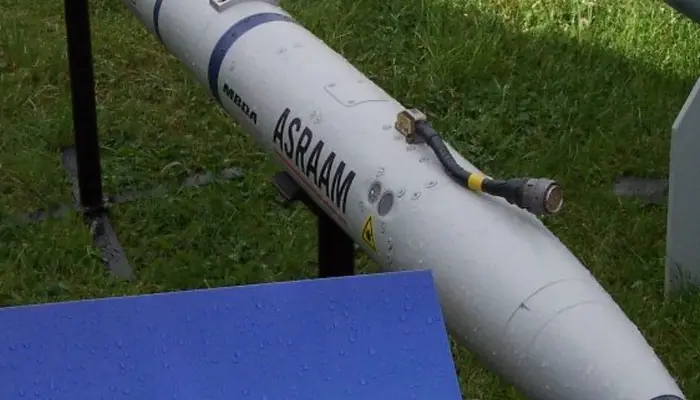
The Indian Air Force is set to equip its fleet of MiG-29 fighter jets with the Advanced Short Range Air-to-Air Missile, or ASRAAM.

About Advanced Short Range Air-to-Air Missile

  • It is a European-designed short-range air-to-air missile built by the multinational company MBDA.

Features of Advanced Short Range Air-to-Air Missile

  • The missile measures 2.9 metres in length, weighs 88 kilograms and carries a high-explosive warhead.
  • The ASRAAM uses heat-seeking technology and is optimised for close-in dogfights.
  • It operates on a fire-and-forget principle, which means once launched; the missile guides itself to the target without further input from the pilot.
  • Speed: It reaches speeds in excess of Mach 3, can engage fast-moving fighter aircraft at ranges greater than 25 kilometres and delivers pinpoint accuracy. 
  • The technology features a Lock-On After Launch (LOAL) capability, allowing the pilot to fire the weapon before the seeker even sees the target. 
  • It has already been integrated on the indigenous LCA Tejas and Jaguar aircraft.
  • The weapon is highly manoeuvrable, capable of pulling extreme G-forces to track rapidly turning fighter jets.
  • Once fired, its aerodynamic design and powerful rocket motor ensure it maintains high energy throughout its flight path.

Source: NDTV

Advanced Short Range Air-to-Air Missile FAQs

Q1: What does ASRAAM stand for?

Ans: Advanced Short-Range Air-to-Air Missile

Q2: Which country is ASRAAM primarily associated with?

Ans: UK

Rashtriya Vigyan Puraskar

Rashtriya Vigyan Puraskar

Rashtriya Vigyan Puraskar Latest News

Recently, the central government has opened nominations for the Rashtriya Vigyan Puraskar (RVP) 2026.

About Rashtriya Vigyan Puraskar

  • It is a prestigious national award recognizing outstanding contributions in the fields of science, technology, and innovation. 
  • The RVP seeks to honour scientists, technologists, and innovators whose work has significantly advanced India’s scientific landscape and contributed to national development.
  • Eligibility
    • Scientists/technologists/innovators working in government or private sector organizations or any individual working outside any organization, who have made distinguished contributions in terms of path-breaking research or innovation or discovery in any field of science, technology, or technology-led innovation shall be eligible for the awards. 
    • People of Indian Origin staying abroad with exceptional contributions benefiting the Indian communities or society shall also be eligible for the awards.
  • The awards will be presented in four categories:
    • Vigyan Ratna (VR): For lifetime achievements in science and technology.
    • Vigyan Shri (VS): For distinguished contributions in the field.
    • Vigyan Yuva–Shanti Swarup Bhatnagar (VY-SSB): To encourage young scientists (up to 45 years) showing exceptional promise.
    • Vigyan Team (VT): For collaborative excellence by research teams of three or more members.
  • The awards are administered by the RVP Secretariat, Council of Scientific and Industrial Research (CSIR), Ministry of Science & Technology, under the guidance of the Principal Scientific Advisor to the Government of India.

Source: DD News

Rashtriya Vigyan Puraskar FAQs

Q1: What are the four categories of Rashtriya Vigyan Puraskar?

Ans: Vigyan Ratna, Vigyan Shri, Vigyan Yuva-Shanti Swarup Bhatnagar, Vigyan Team

Q2: What is Rashtriya Vigyan Puraskar?

Ans: A prestigious award for science and technology

Zojila Pass

Zojila Pass

Zojila Pass Latest News

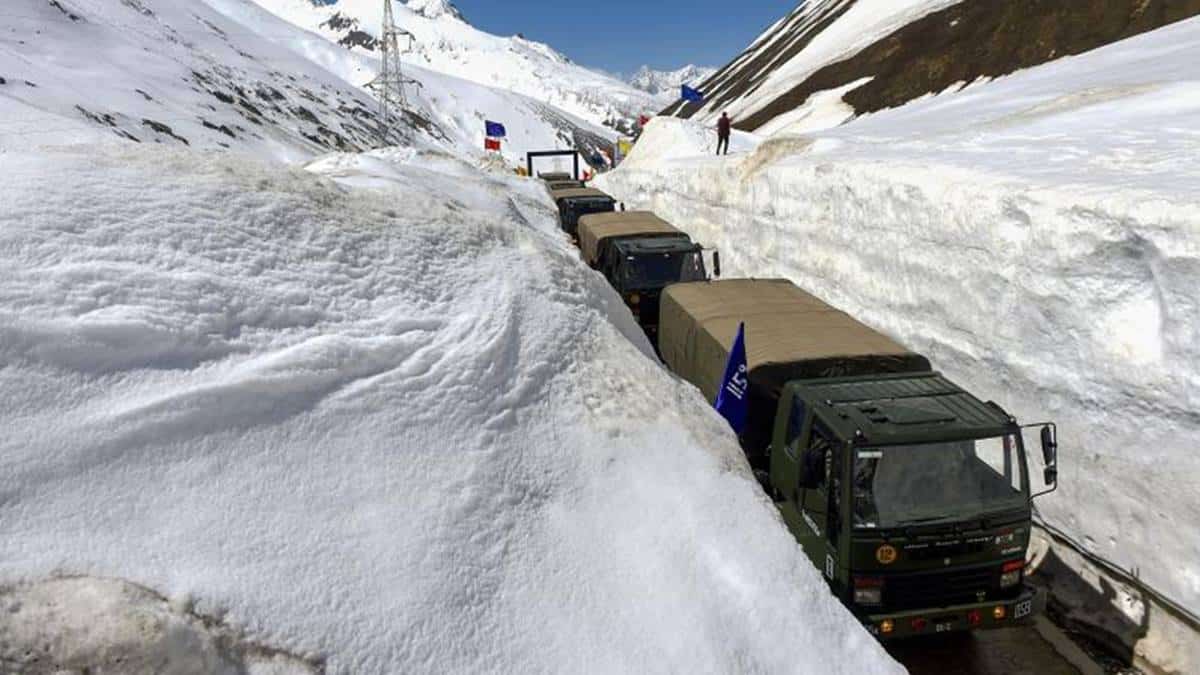
Recently, a massive snow avalanche has hit the Zojila Pass in Ladakh.

About Zojila Pass

  • Zojila Pass, also known as ‘The Mountain Pass of Blizzards’, is a high mountain pass located in the Kargil district of Ladakh.
  • It is located on the Srinagar-Kargil-Leh highway (NH-1) at a height of 11,650 feet.
  • It lies in the Greater Himalayan Range.
  • The pass remains closed for almost half of the year due to heavy snowfall.
  • History
    • It was the site of the Indo-Pakistan War of 1947-48.
    • It was captured by militias aided by the Pakistan Army in 1848, with the ultimate aim of capturing Ladakh.
    • However, the pass itself was captured by the Indian Army on 1st November 1948, in an assault codenamed Operation Bison.

What is an avalanche?

  • It is a large amount of snow that quickly moves down a slope. 
  • It can be deadly because it will bury or sweep away anything in its path. 
  • Many different conditions make an avalanche possible. 
    • An avalanche is more likely to happen on a slope without trees or large rocks.These things help to keep snow in place. 
    • A weak layer of snow also makes an avalanche likely.

Source: TH

Zojila Pass FAQs

Q1: Why is Zojila Pass important?

Ans: It's a vital link between Kashmir and Ladakh

Q2: Where is Zojila Pass located?

Ans: Jammu and Kashmir

Red-Crowned Roofed Turtle

Red-Crowned Roofed Turtle

Red-crowned Roofed Turtle Latest News

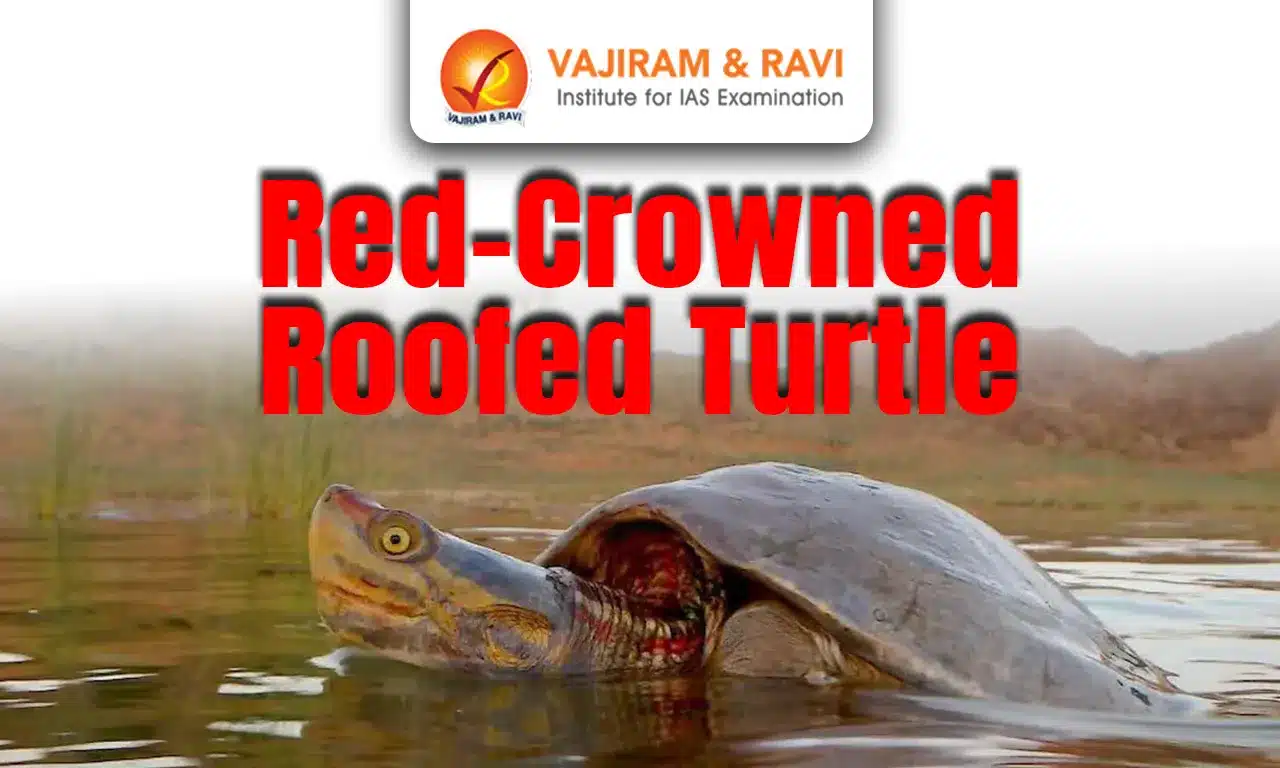
The Red-crowned Roofed Turtle which was once a jewel of the Ganga is now inhabiting a shrinking sanctuary.

About Red-crowned Roofed Turtle

  • It is a species of freshwater turtle endemic to South Asia.
  • It is one of the three large freshwater species in the genus Batagur found in India.
  • Distribution
    • It is native to India, Bangladesh, and Nepal. 
    • Historically, the species was widespread in the Ganga River, both in India and Bangladesh.
    • It also occurs in the Brahmaputra basin. 

Features of Red-Crowned Roofed Turtle

  • In comparison to their female counterparts, the males are shorter and reach only half their length. 
  • They have a reddish-orange colored head with a black crown and a greenish-brown carapace (upper shell) with yellowish patterns. 
  • Their plastron (lower shell) is yellow with black markings. 
  • Diet: It is omnivorous and feeds on a variety of plants and animals.
  • It functions as a bio-indicator of river health.
  • It contributes to the cycling of nutrients within the river, which is essential for the overall health of the aquatic environment. 

Conservation Status of Red-Crowned Roofed Turtle

  • IUCN: Critically Endangered
  • CITES: Appendix II
  • Wild Life (Protection) Act of 1972: Schedule I

Source: DTE

Red-crowned Roofed Turtle FAQs

Q1: What is the conservation status of the Red-crowned Roofed Turtle?

Ans: Critically Endangered

Q2: Where is the Red-crowned Roofed Turtle primarily found?

Ans: India and Bangladesh

Earth Hour

Earth Hour

Earth Hour Latest News

Recently, the World Wildlife Fund (WWF) India, in collaboration with the Ministry of Environment, Forest and Climate Change organised awareness and outreach activities in Gwalior to mark 20 years of Earth Hour.

About Earth Hour

  • It is a global grassroots movement uniting people to take action on environmental issues and protect the planet.
  • It is organized by the World Wildlife Fund (WWF).
  • Background: It started in Sydney, Australia, in 2007 as a symbolic lights-out event and has since grown into a global movement involving millions of people in over 190 countries and territories.
  • It takes place towards the end of March every year.
  • Participation: 
    • “Earth Hour” encourages people to switch off all lights for an hour, from 8:30 p.m. to 9:30 p.m. local time, to promote awareness of climate change challenges and energy conservation.
    • Governments and companies also participate by turning off non-essential lights in their buildings, monuments, and landmarks to raise awareness about the impact of energy consumption on our planet.
    • This symbolic act, known as the ‘lights off’ moment, unites people worldwide in a show of support for the planet and serves as a reminder of the environmental issues facing us.

Source: PIB

Earth Hour FAQs

Q1: When is Earth Hour observed?

Ans: Towards the end of March

Q2: What is the main objective of Earth Hour?

Ans: To raise awareness about climate change and energy conservation

G7 Group

G7

G7 Group Latest News

Recently, the Union External Affairs Minister met French President Emmanuel Macron on the sidelines of the G7 Foreign Ministers' Summit. 

About G7 Group

  • The Group of Seven (G7) is an informal grouping of seven of the world’s advanced economies.
  • It was founded in 1975 in response to the oil crisis. 
  • Members: Canada, France, Germany, Italy, Japan, the United Kingdom, and the United States.
    • Russia was a member from 1998, the group temporarily became the G8.
    • In 2014, the group returned to the G7 format. 
  • The G7 originally dealt exclusively with issues related to the development of the global economy. 
  • It now covers the entire spectrum of global issues, such as foreign and security policy, trade, climate, and development.
  • Governance
    • There is no firmly established secretariat, procedural guidelines, or administrative structures. 
    • Its presidency rotates each calendar year among the member states. The EU does not hold the rotating presidency of the G7.
    • The changing agenda and thematic priorities of the G7 are determined by the respective presidency. 
    • Decisions are usually taken by consensus.

Source: TH

G7 Group FAQs

Q1: Which countries are part of G7?

Ans: Canada, France, Germany, Italy, Japan, UK, USA

Q2: What is the main purpose of G7?

Ans: To address global economic and political issues

Biotechnology Research and Innovation Council

Biotechnology Research and Innovation Council

Biotechnology Research and Innovation Council Latest News

Recently, an inaugural meeting of the Biotechnology Research and Innovation Council-Research Advisory Board (BRIC-RAB) was held at the Regional Centre for Biotechnology (RCB), Faridabad. 

About Biotechnology Research and Innovation Council

  • It is an Apex Autonomous Body established as a registered Society.
  • It was formed by subsuming 14 Autonomous Institutes of the Department of Biotechnology (DBT). 
  • BRIC aims to provide a centralized and unified governance mechanism for the administration of its research institutions through intra-mural core grants.
  • It emphasizes multi-disciplinary research support from basic discovery to application in areas of strength within the DBT institutions.
    • BRIC seeks to nurture the next generation of scientific leaders by enabling the pursuit of knowledge and innovation in globally competitive and nationally relevant ecosystems.
  • The objectives of BRIC are
    • Promoting cutting-edge research in biotechnology aligned with national priorities
    • Fostering innovation and translation across institutional boundaries
    • Developing indigenous technologies and capabilities in line with the principles of Atmanirbhar Bharat
  • Nodal Ministry: Ministry of Science and Technology

Source: PIB

Biotechnology Research and Innovation Council FAQs

Q1: What is the primary objective of BRIC?

Ans: To foster innovation and entrepreneurship in biotechnology

Q2: How many Autonomous Institutions were subsumed under BRIC?

Ans: 14

Shigellosis

Shigellosis

Shigellosis Latest News

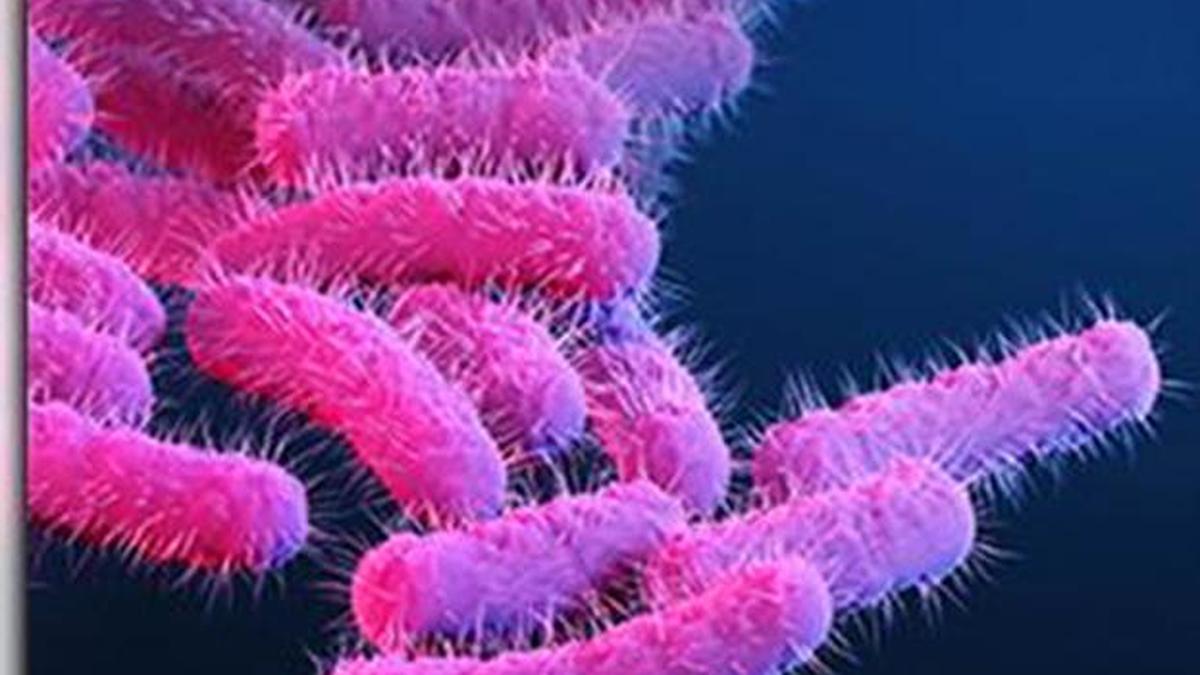
Recently, an outbreak of shigellosis, or shigella infection has been reported in Kerala.

About Shigellosis

  • It is an infection caused by the Shigella bacteria.
  • It is highly contagious, causes acute diarrhoea, and can affect anyone, but children under five are particularly susceptible.
  • It is one of the leading bacterial causes of diarrhoea worldwide.
  • Humans are the only natural reservoir of the Shigella bacteria.
  • The disease may be more severe in young children, older adults, immune-compromised individuals or malnourished persons.
  • Transmission
    • The infection is transmitted through direct, close contact with infected individuals, through the faecal-oral route and through sexual contact.
    • It can also spread through contaminated food and water or contact with faeces of an infected person.
  • Symptoms
    • The most common symptoms is diarrhoea, which can be bloody, contain mucus and last for a prolonged period of three days or more.
    • Other symptoms include stomach cramps, vomiting, fever and feeling the need to pass stool even when the bowels are empty.
  • Treatment: It is typically self-limiting, which means in most mild cases.
    • Medicines, including antibiotics may be prescribed for a serious infection.

Source: TH

Shigellosis FAQs

Q1: What is the primary mode of transmission of Shigellosis?

Ans: Contaminated food and water

Q2: Which bacterium causes Shigellosis?

Ans: Shigella

Nyctibatrachus kali

Nyctibatrachus kali

Nyctibatrachus kali Latest News

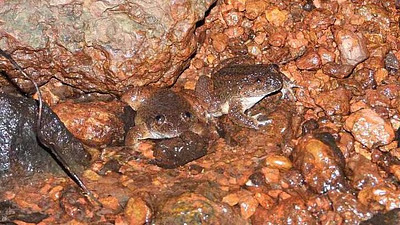
Recently, the new frog species was discovered and named it as Nyctibatrachus kali.

About Nyctibatrachus kali

  • It is more commonly called 'Kali Night Frog.
  • It was found in the Kali Tiger Reserve in Uttara Kannada district of Karnataka.
  • It was named after the nearby Kali River (the reserve is also named after the river which flows through it).
  • The new frog species is known to be a 'cryptic' one, which has similarities with the 'Kumbara Night Frog' (Nyctibatrachus kumbara) discovered in 2014.
  • Its sound resembles that of wood-chopping in the forest.

Key Facts about Kali Tiger Reserve

  • It is situated in the Uttara Kannada district of Karnataka.
  • It is composed of Dandeli Wildlife Sanctuary and Anshi National Park. 
  • River: The Kali River, which forms the major source of water for Uttara Kannada, flows through the tiger reserve.
  • Vegetation: It is a blend of semi-evergreen and moist deciduous forests, interspersed with patches of bamboo and grasslands.
  • Flora: It features species like teak, silver oak, eucalyptus, and various medicinal plants.
  • Fauna: Animals found in the Tiger Reserve include Tiger, Leopard, Elephant, Bison, Wild dog, Sambar, Spotted deer.

Source: DH

Nyctibatrachus kali FAQs

Q1: Where was Nyctibatrachus kali discovered?

Ans: Western Ghats

Q2: What is the common name of Nyctibatrachus kali?

Ans: Kali Night Frog

Satpura Tiger Reserve

Satpura Tiger Reserve (STR)

Satpura Tiger Reserve Latest News

A tiger from Madhya Pradesh’s Satpura Tiger Reserve (STR) has been allegedly poisoned to death leading to the arrest of five people in the case.

About Satpura Tiger Reserve

  • Location: It is located in the state of Madhya Pradesh.
  • It is situated in the Satpura ranges of the Central Indian Landscape.
  • It lies south of the river Narmada.
  • The tiger reserve comprises three protected areas, Satpura National Park, Bori Wildlife Sanctuary, and Pachmarhi Sanctuary.
  • Terrain: The terrain here is extremely rugged and consists of sandstone peaks, narrow gorges, ravines, and dense forests.
  • Geological formations include the Deccan trap series, Gondwanas, and metamorphic rocks.
  • Vegetation: It mainly consists of mixed deciduous forest with a variety of flora typical of the Central Indian Highlands.
  • Flora: It includes teak, bamboo, Indian ebony, various acacias, wild mango, Indian gooseberry, satinwood, etc.
    • Twenty-six species of the Himalayan region and 42 species of the Nilgiri areas are found. Hence, STR is also known as the northern extremity of the Western Ghats.
  • Fauna:  It is home to tigers, leopards, sloth bears, Indian gaurs (bison), and sambar deer.

Source: TH

Satpura Tiger Reserve FAQs

Q1: Where is Satpura Tiger Reserve located?

Ans: Madhya Pradesh

Q2: What is the primary habitat of Satpura Tiger Reserve?

Ans: Deciduous forests

India’s New NDC: How India’s New NDC Boosts Climate Action Targets

India’s New NDC - Boosting Momentum for Climate Action

India’s New NDC Latest News

  • India has approved its updated Nationally Determined Contribution (NDC), committing to 60% of installed power capacity from non-fossil sources by 2035, a 47% reduction in emissions intensity from 2005 levels, and expanding its carbon sink to 3.5–4 billion tonnes of CO₂ equivalent. 
  • These targets will be submitted to the UNFCCC and come as India’s emissions growth slowed to a two-decade low in 2025.

India’s Previous vs Updated Commitments

  • Under the Paris Agreement, countries are required to submit NDCs, but the targets themselves are voluntary commitments outlining how each nation plans to reduce emissions and transition away from fossil fuels.
  • Earlier NDC (2022) - India committed to:
    • 50% non-fossil fuel capacity by 2030; 
    • 45% reduction in emissions intensity; 
    • Carbon sink of 2.5–3 billion tonnes CO₂ equivalent.
  • Updated NDC (2026) - The new targets increase ambition:
    • 60% non-fossil capacity by 2035 
    • 47% reduction in emissions intensity 
    • Higher carbon sink target
  • India has already achieved about 52% non-fossil capacity by early 2026, surpassing earlier targets ahead of schedule. 
  • With this update, India also closes a gap, joining other G20 nations in announcing its 2035 climate commitments.

Have NDCs Driven the Clean Energy Transition

  • The impact of Nationally Determined Contributions (NDCs) on accelerating clean energy remains mixed and limited
  • While they provide a framework for climate action, their effectiveness in driving real change is debated.

Global Performance: Falling Short of Targets

  • Reports like the UNEP Emissions Gap Report 2025 show countries have repeatedly missed targets since 2015. 
  • Current NDCs close less than 14% of the emissions gap needed to limit warming to 1.5°C.
  • Although projected warming has slightly decreased, much of this is due to methodological changes rather than stronger policy action. 
  • Setbacks like the U.S. withdrawal from the Paris Agreement have further weakened progress.

Weaknesses in NDC Commitments

  • Most countries include some clean energy targets, but none present a fully aligned plan with global agreements like the COP28 “UAE Consensus”.
  • Gaps in Fossil Fuel Action
    • No country has clear targets to phase down oil and gas production 
    • Most ignore fossil fuel subsidy reforms 
    • Developing countries rely heavily on inadequate international finance

Clean Energy Growth Despite NDC Limitations

  • Renewable energy is expanding rapidly, with record solar and wind installations and renewables overtaking coal globally. 
  • However, this growth is driven mainly by falling costs and industrial competition, not NDC mandates.
  • NDCs have been more effective at tracking and reporting progress rather than driving the deep structural changes needed to move away from fossil fuels, highlighting a gap between commitments and real-world impact.

India’s Emissions Trend: Signs of a Slowdown

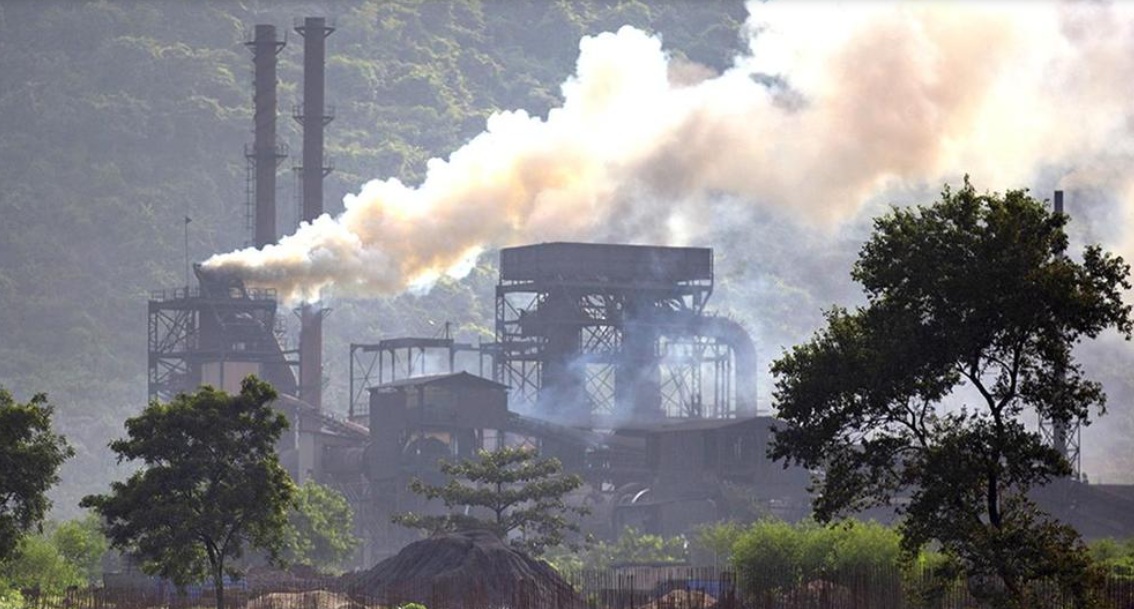
  • A 2025 analysis by CREA shows India’s CO₂ emissions grew by just 0.7%, the slowest pace in over two decades (excluding Covid), marking a sharp decline from 4–11% growth in previous years.
  • Decline in Coal-Based Emissions - Emissions from the power sector fell 3.8%, with coal generation declining for the first time since 1973 (outside the Covid period).
  • Rapid Expansion of Clean Energy - India added significant clean capacity in 2025 (47 GW solar; 6.3 GW wind; 4 GW hydro; 0.6 GW nuclear). This was enough to meet demand growth of up to 5%, signalling a structural shift.
  • Mixed Sectoral Performance - While the power sector improved, heavy industries lagged behind (Steel emissions rose by 8%; Cement emissions increased by 10%).

Possible Inflection Point Ahead

  • The analysis suggests India’s power sector may reach a tipping point by 2026, where clean energy additions match annual demand growth. 
  • Long-term projections indicate 70% non-fossil capacity by 2035-36.
  • Experts warn that 2025 conditions—mild weather and weak industrial activity—may have temporarily reduced emissions. 
  • Sustained trends over the coming years will be needed to confirm a lasting transition.

Challenges in India’s Climate Strategy

  • India’s climate targets rely on emissions intensity (emissions per unit of GDP), allowing total emissions to rise as long as economic growth outpaces them. 
  • This approach is justified on equity grounds, given India’s low per-capita emissions.
  • Continued Fossil Fuel Expansion: Despite clean energy goals, India plans - 100 GW of new coal capacity; $1 trillion in petrochemical investments by 2040; 50% increase in coal-based steel capacity by 2031. These moves could offset gains from renewable energy.
  • Stranded Renewable Capacity - Over 37 GW of renewable energy capacity remains underutilised due to inadequate grid infrastructure, limiting the effectiveness of clean energy expansion.
  • Forest Cover Gaps - India’s carbon sink targets depend on forest expansion, but current forest and tree cover is about 24%, below the 33% goal. Some of this includes trees outside forests, whose reliability is debated.

Conclusion

  • India’s climate progress will depend on resolving contradictions between growth and sustainability, improving grid readiness, and strengthening genuine carbon sinks alongside renewable expansion.

Source: TH | PIB

India’s New NDC FAQs

Q1: What is India’s new NDC?

Ans: India’s new NDC outlines updated climate commitments, including 60% non-fossil power capacity, reduced emissions intensity, and enhanced carbon sink targets by 2035.

Q2: How is India’s new NDC different from earlier targets?

Ans: India’s new NDC increases ambition from 50% to 60% non-fossil capacity and raises emissions reduction and carbon sink goals beyond previous commitments.

Q3: Have NDCs been effective globally?

Ans: India’s new NDC reflects global challenges, as NDCs have limited impact on reducing emissions, with many countries missing targets and falling short of climate goals.

Q4: What are the challenges in India’s climate strategy?

Ans: India’s new NDC faces challenges like fossil fuel expansion, weak grid infrastructure, underutilised renewable capacity, and gaps in forest cover for carbon sinks.

Q5: What does India’s emission trend indicate?

Ans: India’s new NDC aligns with slowing emission growth, driven by renewable expansion, though long-term sustainability depends on consistent policy and industrial transition.

CAPF Bill Controversy: Key Issues in CAPF Bill and IPS Deputation Debate

CAPF Bill 2026 - Codifying IPS Deputation

CAPF Bill Controversy Latest News

  • The Central Armed Police Forces (General Administration) Bill, 2026, introduced in the Rajya Sabha, proposes reserving senior leadership positions in CAPFs largely for IPS officers on deputation. 
  • It mandates:
    • 50% of Inspector General (IG) posts 
    • At least 67% of Additional Director General (ADG) posts 
    • 100% of Special DG and DG posts 
      • to be filled by IPS officers.
  • The proposal has drawn criticism from the Opposition and retired CAPF officials, who argue it may limit career progression opportunities for cadre officers within CAPFs.

Background: Supreme Court Judgment and Government’s Response

  • The Bill was introduced following a Supreme Court judgment (May 2025) which directed that deputation of IPS officers to senior posts in CAPFs should be gradually reduced within two years. 
  • The Court also recognised CAPF Group A officers as Organised Group A Services (OGAS), similar to IAS, IPS, and IFS.

Government’s Response and Legal Developments

  • The Ministry of Home Affairs (MHA) filed a review petition against the judgment, but it was dismissed in October 2025. 
  • Despite this, the MHA continued appointing IPS officers to key positions in CAPFs, leading to allegations of non-compliance.
  • Retired CAPF officers filed a contempt petition against the Union Home Secretary for not implementing the Court’s order. 
  • In response, the government proposed a legal solution, leading to Cabinet approval of the CAPF (General Administration) Bill, 2026 to address the issue through legislation.

About CAPFs

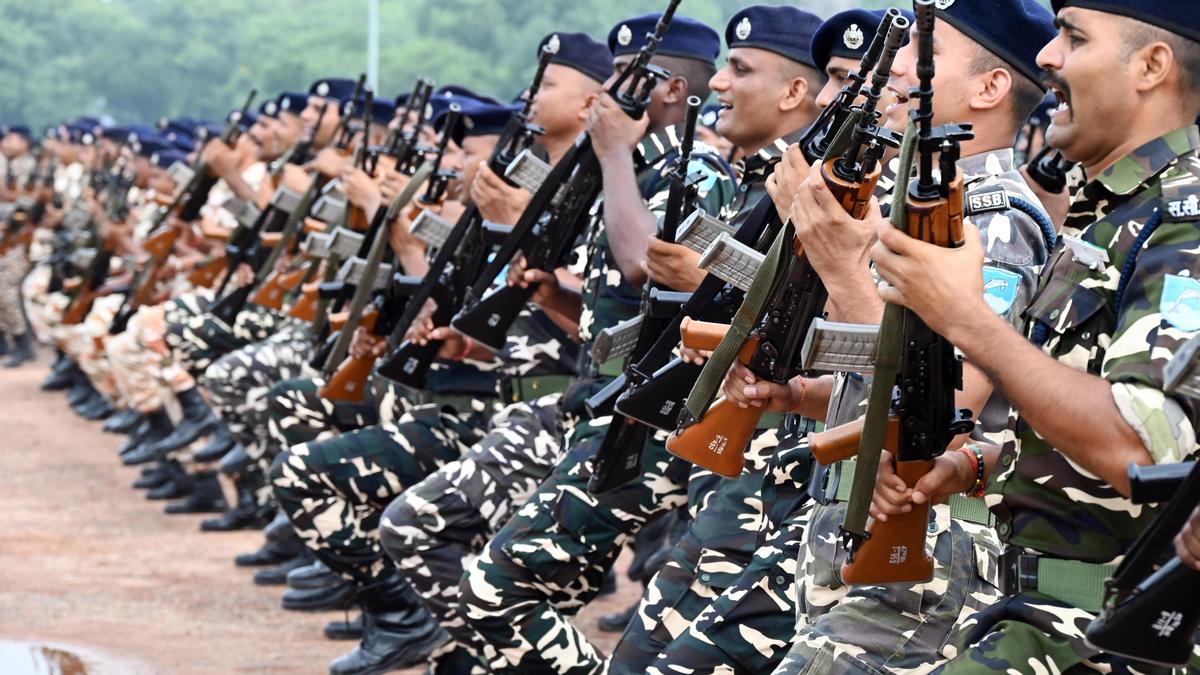
  • The Central Armed Police Forces (CAPFs) include seven forces: 
    • Assam Rifles (guards Indo-Myanmar and counter insurgency operations in NE)
    • the BSF (guards Pakistan and Bangladesh borders), 
    • CISF (protects airports and critical infrastructure), 
    • CRPF (handles internal security and law and order), 
    • SSB (guards Nepal and Bhutan borders), and 
    • ITBP (secures the China border).
    • National Security Guard (an elite counter-terrorism unit)
  • Currently, IPS officers occupy key leadership roles in CAPFs, with 20% of Deputy Inspector General posts and 50% of Inspector General posts reserved for them through executive orders. 
  • The Ministry of Home Affairs (MHA) controls both CAPFs and IPS cadres.

Personnel and Recruitment

  • CAPFs have around 13,000 Group A officers and nearly 10 lakh personnel in total. 
  • Recruitment is conducted through the Union Public Service Commission (UPSC), ensuring a structured entry into these forces.

Current IPS Deployment

  • As of March 9, 2026, there are 213 sanctioned IPS posts in CAPFs, with 35 vacancies. 
  • Across India, there are about 4,594 IPS officers, with 40% of senior posts earmarked for Central deputation and 60% for state roles.

Why is there opposition to the Bill

  • Retired CAPF officials oppose the Bill, arguing it undermines the Supreme Court’s ruling. 
  • They highlight career stagnation, noting that CAPF officers face slow promotions compared to IPS officers, who advance much faster. 
  • They also object to reserving 100% of Special Director General posts for IPS officers, limiting career growth for CAPF personnel.

Government’s Justification

  • The government maintains that CAPFs handle critical national security functions requiring coordination with states. 
  • It argues that IPS officers are essential for effective functioning and for maintaining strong Centre–State relations.

Concerns Raised by Opposition Leaders

  • Opposition leaders have criticised the Bill as an overreach. 
  • They said it undermines judicial authority and pointed to low morale in CAPFs due to poor promotions. 
  • They argued Parliament cannot override court rulings without proper legal basis. 

Other Concerns

  • Lack of Domain Expertise - Critics argue that IPS officers deputed at senior levels often lack ground-level experience in CAPFs, affecting decision-making and operational effectiveness.
  • Need for Institutional Continuity - CAPFs handle complex roles like border security, counter-insurgency, and disaster response, which require long-term experience and continuity of leadership—something cadre officers are better positioned to provide.
  • Institutional Autonomy vs Bureaucratic Control - The Bill is seen as reinforcing bureaucratic control rather than promoting professional autonomy. Experts argue that modern security forces require specialised leadership, not external administrative dominance.
  • Equality and Fair Opportunity - Permanent exclusion of CAPF officers from top leadership raises concerns under Articles 14 and 16 (equality and equal opportunity).
  • National Security vs Service Interests - Critics argue the Bill prioritises IPS career progression over strengthening CAPFs. The focus on coordination and administrative control may not stand legal scrutiny, as courts have already examined these arguments.

Source: TH | TP

CAPF Bill Controversy FAQs

Q1: What is the CAPF Bill controversy about?

Ans: CAPF Bill controversy revolves around reserving senior CAPF posts for IPS officers, raising concerns about career stagnation, autonomy, and violation of Supreme Court directives.

Q2: What did the Supreme Court say about CAPFs?

Ans: CAPF Bill controversy stems from a 2025 Supreme Court ruling recognising CAPF officers as Organised Group A Services and directing gradual reduction of IPS deputation.

Q3: Why are CAPF officers opposing the Bill?

Ans: CAPF Bill controversy highlights concerns over limited promotions, lack of leadership opportunities, and perceived dominance of IPS officers in top positions within CAPFs.

Q4: What is the government’s justification for the Bill?

Ans: CAPF Bill controversy includes government arguments that IPS officers ensure coordination with states and strengthen national security administration across CAPFs.

Q5: What constitutional concerns are raised?

Ans: CAPF Bill controversy raises issues under Articles 14 and 16 regarding equality, fair opportunity, and whether Parliament can override judicial directions through legislation.

Enquire Now