Three-Language Formula Latest News
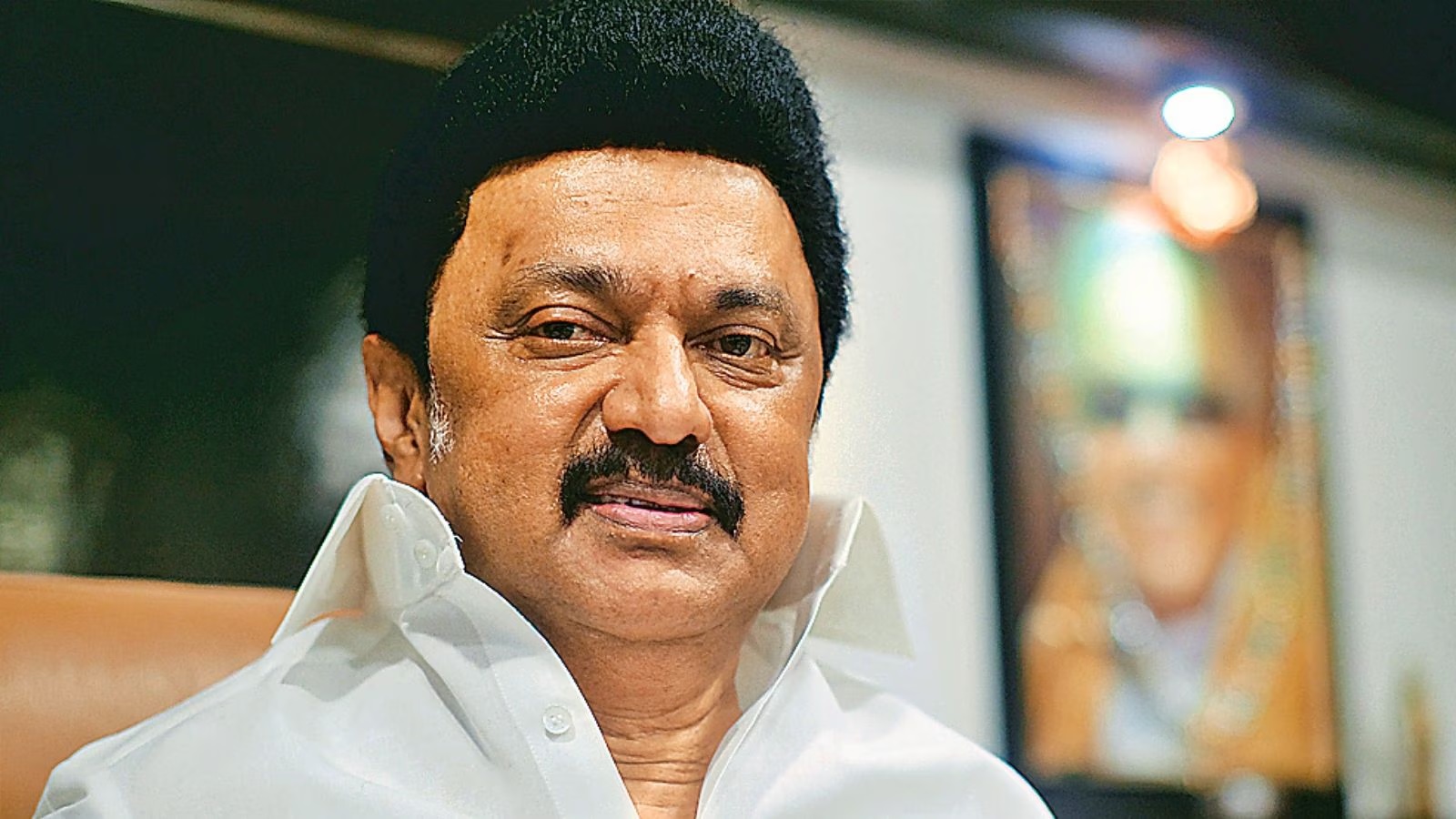
- A sharp political exchange between the Chief Minister of Tamil Nadu and the Union Minister of Education brought the debate over language policy and the implementation of the National Education Policy (NEP) 2020 into focus.
- The controversy revolves around the three-language formula, raising questions of linguistic diversity, federalism, and educational equity during an election season.
The Three-Language Formula
- About: It is an educational policy in India, first introduced in 1968 and reinforced by NEP 2020, requiring students to learn three languages: English, Hindi (or another Indian language in non-Hindi states), and the regional/mother tongue.
- Objective: It promotes -
- National integration: Encourages understanding and communication across linguistic borders.
- Linguistic/ cultural diversity: Promotes the study of both regional languages and the English language for global connection.
- Multilingualism: Fosters the development of multiple language skills from a young age.
- Key components and implementation:
- Structure: Students learn three languages up to Class 10, often with a regional language, English, and a third language (often Hindi in non-Hindi states or another Indian language in Hindi states).
- NEP 2020 integration: The policy encourages flexibility, emphasizing that no language is imposed on any state.
- CBSE adoption: Starting in the 2026-27 academic session, CBSE is implementing a mandatory third language from Class 6, focusing on studying at least two Indian languages.
Core Issue - Language Policy vs Federal Autonomy
- Tamil Nadu’s concerns - Linguistic imposition:
- The State government views the new curriculum framework as a centralising measure privileging Hindi, and a threat to India’s linguistic diversity.
- The three-language formula is seen as a covert mechanism for Hindi expansion in non-Hindi regions.
- Key criticisms:
-
- Lack of reciprocity: No mandate for Hindi-speaking states to learn southern or other Indian languages.
- Administrative gaps: Shortage of teachers and unclear funding.
- Equity concerns: Policy perceived as one-sided and discriminatory.
- Broader framing: Issue linked to federalism, fairness, and constitutional rights.
- Centre’s position - Multilingual empowerment:
- The Union government rejects allegations of imposition, arguing that policy promotes mother tongue-based education, and multilingualism enhances cognitive and global competencies.
- The policy is described as a flexible framework, not compulsory Hindi imposition, and a step toward “linguistic liberation”.
- Funding support through Samagra Shiksha Scheme, and accusation that Tamil Nadu is blocking initiatives like the PM SHRI Schools, and the Navodaya Vidyalayas.
Key Points of Contention
- Three-language formula: Debate over flexibility vs hidden compulsion, and uniform implementation across states.
- Fiscal federalism:
- Allegation by Tamil Nadu that the centre is using funds as a tool of coercion. For example, withholding about ₹2,200 crore under Samagra Shiksha.
- Raises issue of conditional transfers vs state autonomy.
- Implementation gaps: Questions raised are availability of qualified language teachers, infrastructure and funding clarity, and actual implementation in Hindi-speaking states.
- Institutional bias: Concerns over the limited teaching of southern languages in central institutions (e.g., Kendriya Vidyalayas), and unequal promotion of classical languages.
Underlying Themes
- Federalism vs centralisation: Debate reflects tension between cooperative federalism, and centralising tendencies of the Union.
- Linguistic identity and politics: Language seen as a marker of cultural identity, and a tool of political mobilisation.
- Education as a concurrent subject: Highlights friction in policy design (Centre) vs implementation (States).
Challenges and Way Forward
- Trust deficit: Between Centre and States. Strengthening cooperative federalism - institutional dialogue via the Inter-State Council, and the GST Council-like consultative mechanisms in education.
- Lack of transparent implementation data: Publish State-wise data on language implementation, teacher recruitment and fund allocation.
- Politicisation of education policy: Fiscal neutrality - decouple education funding from political compliance. Ensure predictable and rule-based transfers.
- Inadequate teacher capacity and institutional readiness: Ensuring policy flexibility - genuine state-specific adaptations in language policy, and avoiding one-size-fits-all frameworks.
- Risk of homogenisation vs preservation of diversity: Promoting true multilingualism - encouraging reciprocal language learning, and expansion of non-Hindi languages in northern states.
Conclusion
- The controversy goes beyond language—it reflects a deeper contest over the nature of Indian federalism and cultural pluralism.
- While the Centre emphasises national integration through multilingualism, states like Tamil Nadu stress autonomy and linguistic identity.
- A balanced approach—grounded in dialogue, flexibility, and mutual respect—is essential to ensure that education policy strengthens, rather than strains, India’s unity in diversity.
Source: IE
Three-Language Formula FAQs
Q1: What are the key concerns raised by states regarding the three-language formula?
Ans: States fear linguistic imposition, lack of reciprocity, and erosion of federal autonomy under a seemingly flexible three-language framework.
Q2: How the language policy debate reflects tensions in Indian federalism?
Ans: The debate highlights conflicts between centralising tendencies of the Union and states’ demand for autonomy over education and cultural identity.
Q3: What is the role of fiscal federalism in the implementation of education policies in India?
Ans: Conditional funding mechanisms risk undermining state autonomy and can be perceived as tools of coercion in policy implementation.
Q4: What are the challenges in implementing multilingual education in India?
Ans: Key challenges include shortage of trained teachers, uneven implementation, politicisation, and lack of institutional capacity.
Q5: Why is language policy in India as much about identity as it is about education?
Ans: Language policy intertwines cultural identity, political mobilisation, and educational objectives, making it a sensitive and contested domain.