Rotating Detonation Engine (RDE)

Rotating Detonation Engine

Rotating Detonation Engine Latest News

Recently, India-based defence start-up D-Propulse announced that it had successfully demonstrated a rotating detonation engine at a Defence Research & Development Organisation facility in Hyderabad.

About Rotating Detonation Engine 

  • It is a type of propulsion system that differs from conventional gas turbines and ramjets in the way it uses fuel. 
  • Usually, engines use deflagration, which is a subsonic, steady way of burning fuel through a flame. 
  • On the contrary, an RDE uses detonation, wherein the fuel burns faster as rapid supersonic explosions rotate through the chamber of the engine. 
  • This rapid detonation produces more thrust for the same amount of fuel.  
  • This volume savings can be used to increase fuel and/or payload volume, providing potential range, speed, and affordability benefits compared to rockets, ramjets, and gas-turbines. 
  • These mechanically simple RDEs have no moving parts, making them less complex than gas turbine engines and therefore potentially lower cost and simpler to manufacture. 

News: TH

Rotating Detonation Engine FAQs

Q1: What is a Rotating Detonation Engine (RDE)?

Ans: An RDE is a type of propulsion system that uses rotating supersonic detonations to burn fuel and generate thrust.

Q2: How does an Rotating Detonation Engine (RDE) differ from conventional gas turbines and ramjets?

Ans: It differs in the way it burns fuel, using detonation instead of conventional deflagration.

Q3: What is a major advantage of the rapid detonation used in an Rotating Detonation Engine (RDE)?

Ans: It produces more thrust for the same amount of fuel.

Q4: What potential benefits can Rotating Detonation Engines (RDEs) provide in terms of propulsion performance?

Ans: They can potentially provide greater range, higher speed, and improved affordability.

Medak Fort

Medak Fort

Medak Fort Latest News

In a rare honour, the postal department launched a postal cover and a postal stamp on the historical Medak fort recently.

About Medak Fort

  • It is a historic hill fort located in Medak town, Telangana
  • The fort was built during the 12th century under the reign of the Kakatiya ruler, Pratapa Rudra, and it was initially called ‘MethukuDurgam’ in Telugu. 
  • It served as a command post for the Kakatiyas and later for the Qutub Shahis. 

Medak Fort Features

  • Spread over 100 acres at an average elevation of 90 metres from ground level, the fort houses a small lake, a barrack, a warehouse, and a 11-foot-long cannon from 17th Century CE. 
  • It has three main entrances, namely the “Prathama Dwaram”, the “SimhaDwaram” which features two snarling lions at the top of these entrances while the “GajaDwaram”, or the Elephant’s Entrance features a sculpture where two elephants are majestically interlocked on both sides of this entrance.
  • The main entrance features the double-headed “Gandabherundam”, the emblem of Vijayanagara Empire built by the great ruler Srikrishna Devaraya.  
  • The fort also has a 17th-century mosque on its premises built by the Qutub Shahis, as well as granaries.

News: TT

Medak Fort FAQs

Q1: Where is Medak Fort located?

Ans: Medak Fort is located in Medak town, Telangana.

Q2: Under whose reign was Medak Fort built?

Ans: The fort was built during the 12th century under the reign of the Kakatiya ruler, Pratapa Rudra.

Q3: What role did Medak Fort serve during the Kakatiya period?

Ans: It served as a command post for the Kakatiyas.

Q4: Which dynasty later used Medak Fort as a command post?

Ans: The Qutub Shahis.

National Anubhav Awards

National Anubhav Awards

National Anubhav Awards Latest News

Recently, the Minister of State for Personnel, Public Grievances and Pensions confered the National Anubhav Awards, 2026 to 15 selected awardees in New Delhi. 

About National Anubhav Awards

  • It was launched in March 2015 by the Department of Pension & Pensioners’ Welfare (DoPPW), Ministry of Personnel, Public Grievances & Pensions.
  • It was introduced to recognize and incentivize outstanding contributions.
  • Eligibility: The employees of Central Government, Central Public Sector Enterprises (CPSEs) and Public Sector Banks who are going to retire in the next 8 months or who have retired within 3 years are the ‘eligible employees’ for the submission of Anubhav write-ups. 
  • Objectives
    • It aims to create a database of significant suggestions and work experiences.
    • It channels the human resource of retiring employees for nation building.
    • Enable Ministries/ Departments to take crucial steps while considering useful and replicable suggestions.
  • Each ANUBHAV Awardees will be felicitated with a medal and certificate and a Prize of 10,000 rupees, whereas a Jury certificate Winner will be presented with a medal and a certificate.

Source: News On Air

National Anubhav Awards FAQs

Q1: Who is eligible to submit entries for Anubhav Awards?

Ans: Central Govt employees 8 months before retirement to 1 year after retirement

Q2: Which Ministry administers Department of Pension & Pensioners’ Welfare (DoPPW)?

Ans: Ministry of Personnel, Public Grievances & Pensions

Appeal and Complaint Management System Portal

Appeal and Complaint Management System Portal

Appeal and Complaint Management System Portal Latest News

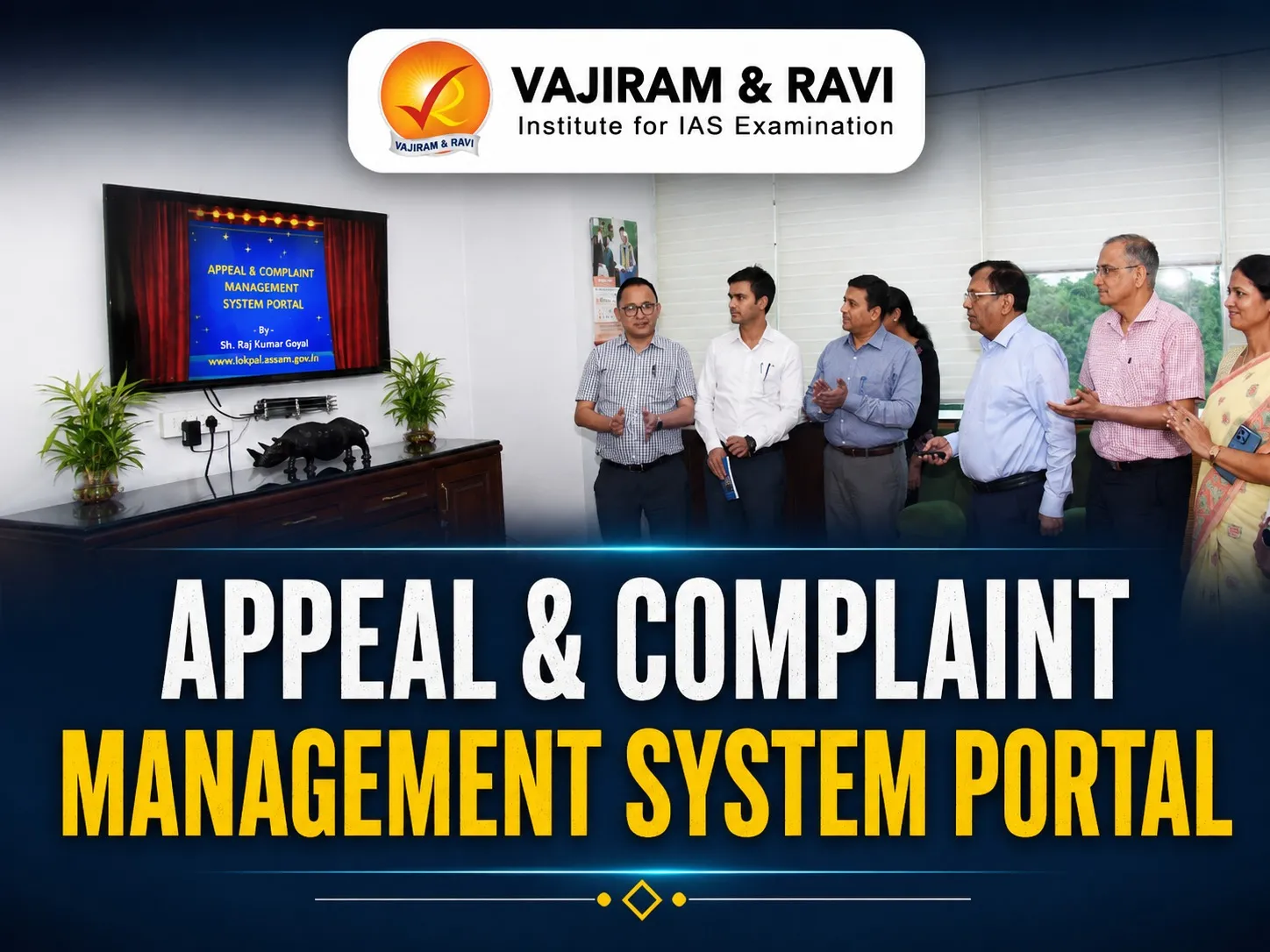
Recently, the Central Information Commission (CIC) launched its upgraded Appeal and Complaint Management System (AppCoMS 2.0). 

About Appeal and Complaint Management System Portal

  • It is an online web application portal, initially introduced by the Central Information Commission in September 2016.
  • It enables citizens to file Second Appeals and Complaints online and facilitates end-to-end digital processing of cases.
  • It includes registration, scheduling of hearings, issuance and uploading of decisions and other related processes.

Key Facts about Appeal and Complaint Management System Portal 2.0

  • It has been developed as a technologically upgraded platform with enhanced security standards, improved functionalities and streamlined workflows.
  • Key feature of AppCoMS 2.0
    • It has introduced a feature of user accounts for Applicants, Central Public Information Officers (CPIOs) of the Public Authorities and other stakeholders, linked with their e-mail ID and mobile number.
    • In the upgraded system, applicants will be able to submit Second Appeals and Complaints through their user accounts.
    • Under this version, applicants can view case timelines, access documents, download hearing notices and decisions/ orders.
    • It has the facility for use of Digital Signature Certificates (DSCs) for digitally signing and issuing notices/orders by the Commission.

Source: PIB

Appeal and Complaint Management System Portal FAQs

Q1: Appeal and Complaint Management System Portal was initially introduced by which organisation?

Ans: Central Information Commission in September 2016

Q2: Who is the appellate authority for second appeal under RTI Act?

Ans: Central Information Commission

Lake Powell

Lake Powell

Lake Powell Latest News

Lake Powell, one of the largest reservoirs in the United States, has fallen to its lowest level since it began filling, deepening concerns over the future of the Colorado River and the millions of people who rely on it.

About Lake Powell

  • It is a huge man-made lake located on the Colorado River and stretches across parts of Utah and Arizona in the United States.  
  • The lake was created by building the Glen Canyon Dam, which flooded Glen Canyon.   
  • It's the second-largest reservoir in the United States by volume (second only to Lake Mead). 
  • When full, it is designed to hold more than 26 million acre-feet (MAF) of water that originates from snowpack in the Upper Colorado River Basin.
  • It acts like a giant water bank for states in the Upper Colorado River Basin. 
  • Lake Powell is an oligotrophic reservoir, which means that nutrient concentrations and algal production are generally low. This often results in very clear-water conditions.
  • The lake is also a major recreation area, known for magnificent sandstone canyons and rock formations.

News: MC

Lake Powell FAQs

Q1: What is Lake Powell?

Ans: Lake Powell is a huge man-made reservoir located on the Colorado River in the United States.

Q2: How was Lake Powell created?

Ans: It was created by constructing the Glen Canyon Dam, which flooded Glen Canyon.

Q3: Which reservoir is larger than Lake Powell in the United States by volume?

Ans: Lake Mead.

Q4: Where does much of the water stored in Lake Powell originate?

Ans: From snowpack in the Upper Colorado River Basin.

INS Imphal

INS Imphal

INS Imphal Latest News

More than 200 students from Indian schools in Muscat recently visited the indigenously built warship INS Imphal while it was berthed at Sultan Qaboos Port in the Omani capital.

About INS Imphal

  • It is an indigenously built stealth guided missile destroyer of the Indian Navy.
  • It is the third ship to be built under the Project P-15B series of stealth destroyers, otherwise known as the Visakhapatnam-class.
  • It was commissioned into the Indian Navy in December 2023.
  • The Navy’s Warship Design Bureau designed the ship in-house, and Mazagon Dock Ltd. (MDL) was responsible for its construction.
  • It is the first warship to be named after a city in the Northeast, Imphal — the capital of Manipur.
  • It was the first naval warship commissioned with accommodation for women officers and sailors.
  • It is a unit of the Indian Navy’s Western Fleet.
  • Missions include anti-air warfare (AAW), anti-surface warfare (ASuW), and anti-submarine warfare (ASW).

INS Imphal Features

  • The ship boasts a high indigenous content of approximately 75 percent.
  • The ship measures 163m in length, 17m in breadth with a displacement of 7,400 tonnes and is amongst the most potent warships built in India.  
  • The ship has a total complement of about 315 personnel.
  • It is propelled by four powerful Gas Turbines, in a Combined Gas & Gas configuration, and is capable of achieving speeds in excess of 30 knots (56 km/hour).
  • It has a maximum operating endurance of 45 days.
  • It has enhanced stealth features, resulting in a reduced Radar Cross Section. 
  • The ship has BrahMos missiles, medium-range surface-to-air missiles, indigenous anti-submarine rocket launchers, and a 76 mm super-rapid gun mount.
  • It has modern surveillance radar, which provides target data to the gunnery weapon systems.
  • It has a total atmospheric control system (TACS) that offers protection to the crew from chemical, biological, and nuclear threats.

News: ANI

INS Imphal FAQ's

Q1: What is INS Imphal?

Ans: INS Imphal is an indigenously built stealth guided missile destroyer of the Indian Navy.

Q2: Under which project was INS Imphal built?

Ans: It was built under Project P-15B.

Q3: When was INS Imphal commissioned into the Indian Navy?

Ans: It was commissioned in December 2023.

Q4: What are the major warfare roles of INS Imphal?

Ans: Its major roles include anti-air warfare (AAW), anti-surface warfare (ASuW), and anti-submarine warfare (ASW).

Electronics Components Manufacturing Scheme

Electronics Components Manufacturing Scheme

Electronics Components Manufacturing Scheme Latest News

Recently, the Ministry of Electronics and Information Technology (MeitY) has approved 31 more applications under the Electronics Components Manufacturing Scheme (ECMS). 

About Electronics Components Manufacturing Scheme

  • It was launched in 2025 by the Ministry of Electronics and Information Technology.
  • Objective: To develop a robust component manufacturing ecosystem by attracting investments (global / domestic) across the value chain by integrating its domestic electronic industry with the Global Value Chains (GVCs).
  • The scheme will offer three incentive structures
    • Turnover-linked incentive (based on revenue)
    • Capex-linked incentive (for investments in plants & machinery)
    • Hybrid incentive model (a combination of both)
  • Employment generation will be a mandatory requirement for all applicants, including both component manufacturers and capital equipment producers.
  • Tenure: It has a six-year tenure with a one-year gestation period for the Turnover Linked Incentive and the Capex Incentive is available for a five-year period. 
  • The scheme focuses particularly on passive electronic components. In contrast, active components fall under the purview of the India Semiconductor Mission (ISM).
  • Target: It promotes the manufacturing of select passive electronic components, including resistors, capacitors, speakers, microphones, special ceramics, relays, switches, and connectors.

Source: IE

Electronics Components Manufacturing Scheme FAQs

Q1: Electronics Components Manufacturing Scheme - ECMS was launched by which ministry?

Ans: Ministry of Electronics & IT

Q2: What is the primary objective of Electronics Components Manufacturing Scheme?

Ans: Build domestic ecosystem for electronic components

Huntington’s Disease

Huntington’s Disease

Huntington's Disease Latest News

New treatments for Huntington's disease could be on the horizon following research led by scientists at Lawrence Berkeley National Laboratory, United States.

About Huntington's Disease

  • It is a progressive neurodegenerative disorder that changes brain functioning over time.  
  • It is a rare hereditary disorder in which brain cells, or neurons, in certain areas of your brain start to break down. 
    • The destruction of nerve cells happens in the basal ganglia, or the region of your brain that regulates your body’s movements.
    • It also affects the brain cortex (surface of your brain) that regulates your thinking, decision-making, and memory.
  • As the neurons degenerate, the disease can lead to emotional disturbances, loss of intellectual abilities, and uncontrolled movements.

What causes Huntington's Disease?

  • A genetic mutation of the HTT gene causes HD. If one of your parents has HD, you have a 50% chance of also developing it.
  • The HTT gene makes a protein called huntingtin. The exact function of this protein is not yet known, but researchers believe it plays a role in supporting the function of nerve cells in the brain.  
  • If you have HD, your DNA doesn’t have all the information needed to make the huntingtin protein.
  • As a result, these proteins grow in an abnormal shape and destroy your neurons.
  • Your neurons die because of this genetic mutation.

How common is HD?

HD affects an estimated 3 to 7 out of every 100,000 people, most often people of European ancestry (biological family comes from European descent).

Huntington's Disease Symptoms

  • HD symptoms can begin at any age but usually first appear between the ages of 30 and 50 years. 
  • About 5-10% of people have symptoms before age 20 (Juvenile HD) and 10% have onset after age 60 (late onset).  
  • Common symptoms include uncontrollable dance-like movements (chorea) and abnormal body postures, as well as problems with behavior, emotion, thinking, and personality.
  • Other symptoms may include tremor (unintentional back-and-forth movement in the person’s muscles) and unusual eye movements. The eye movements can happen early in the disease.
  • These symptoms get worse over time.
  • As HD progresses, you will need constant assistance and supervision because of the debilitating nature of the disease.

Huntington's Disease Treatment

  • There is no cure for HD. 
  • Medicines can help manage some of the symptoms, but cannot slow down or stop the disease. 
  • People usually die from the disease within 15 to 20 years of developing symptoms.

News: MED

Huntington's Disease FAQs

Q1: What is Huntington's disease?

Ans: Huntington's disease (HD) is a progressive neurodegenerative disorder that affects brain functioning over time.

Q2: What are the major effects of neuronal degeneration in Huntington's disease?

Ans: It can cause emotional disturbances, loss of intellectual abilities and uncontrolled movements

Q3: Which gene mutation causes Huntington's disease?

Ans: A mutation in the HTT gene causes Huntington's disease.

Q4: Is there a cure for Huntington's disease?

Ans: No, there is currently no cure for Huntington's disease.

Exercise MAITREE

Exercise MAITREE

Exercise MAITREE Latest News

Recently, the Indian Army contingent departed for Thailand to participate in the 15th edition of the India-Thailand Joint Military Exercise MAITREE-XV (2026). 

About Exercise MAITREE

  • It is the joint military exercise between India and Thailand.
  • It was instituted in 2006.
  • It is an important platform for sharing best practices and strengthening military cooperation between India and Thailand.
  • In Exercise MAITREE 2026, the Indian Army contingent is represented primarily by troops from 9 Gorkha Rifles.
  • Focus:  The exercise will involve company-level joint training focused on operations in jungle and semi-urban terrain.
  • Aim: Aim of the exercise is to foster Military Cooperation between India and Thailand.
  • The Exercise will enhance combined capabilities in executing Joint Counter Insurgency/ Terrorist Operations in Jungle and semi-urban Environment under Chapter VII of United Nations Charter.
  • The training will include field exercises, combat discussions, lectures, demonstrations and a culminating validation exercise.
  • The contingents will also exchange operational experience and showcase contemporary equipment and technologies employed during joint operations.
  • Significance: It will further reinforce the longstanding bilateral relations between the two nations.

Source: PIB

Exercise MAITREE FAQs

Q1: Exercise MAITREE involves which forces of both countries?

Ans: Army

Q2: Exercise MAITREE is a bilateral military exercise between which two countries?

Ans: India and Thailand

India and NASA’s Moon Base Programme – Explained

Moon Base Programme

Moon Base Programme Latest News

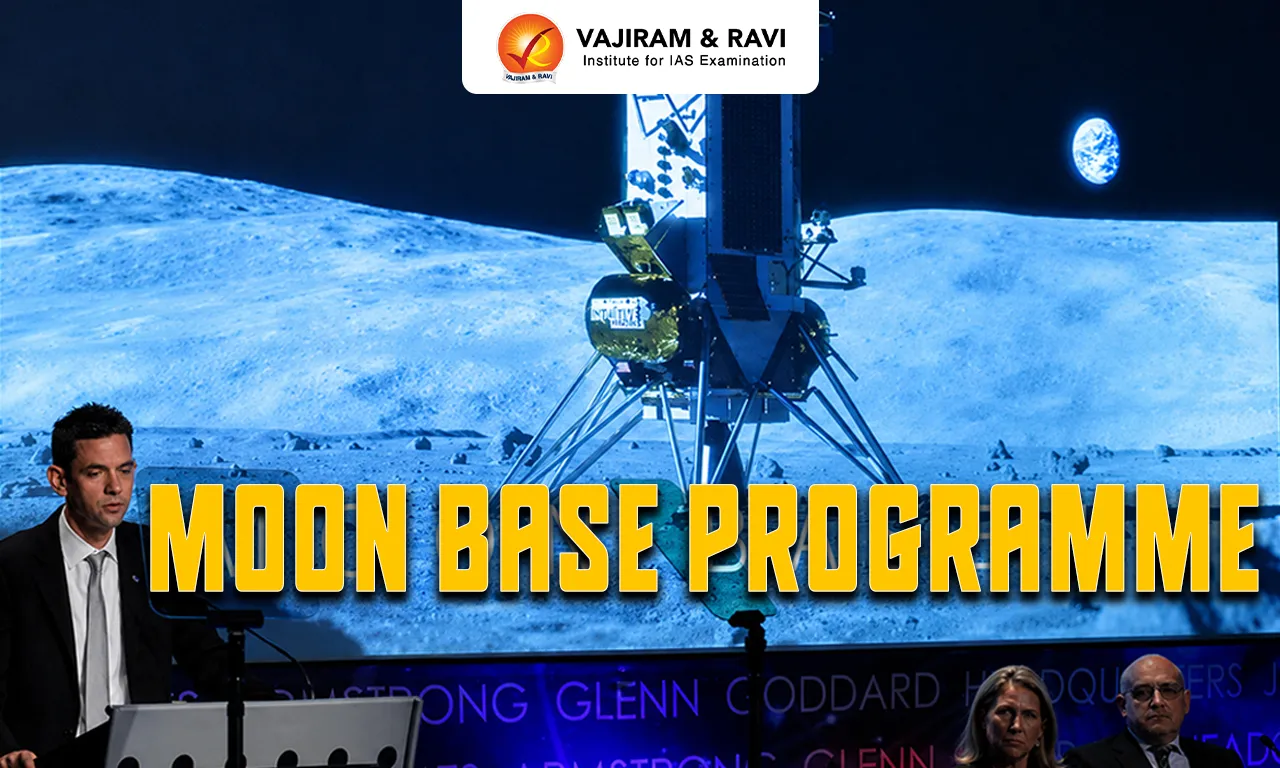
  • India has received an invitation to join NASA's Moon Base programme, an initiative that could mark a turning point for ISRO and significantly accelerate India's space technology development.

About the Moon Base Programme

  • The Moon Base programme aims to create a permanent research station on the Moon that can be inhabited by astronauts and robots for prolonged periods.
  • The base is to be built in stages over several years and is meant to facilitate lunar research while allowing exploration and exploitation of lunar resources. 
  • It is expected to be one of the most challenging engineering exercises ever undertaken, requiring several trips to the Moon by both crewed and robotic missions. It could also become the costliest scientific project in history.
  • In scale and ambition, the programme can be compared only to the Apollo missions. 
  • In terms of its long-term impact on humanity and the future of the planet, it may prove far more consequential.

Why NASA Is Seeking Partners

  • NASA is not in a position to execute this programme entirely on its own, nor does it intend to.
  • Its budget has been significantly reduced under the current US administration, and most of its hardware production has shifted to the private sector. 
  • As a result, NASA is actively seeking partners from both the international community and private industry to collaborate on the project.

The Artemis Accords

  • Countries that have signed the Artemis Accords have already demonstrated a willingness to participate in such collaboration.
  • The Accords now include 70 nations, among them major space-faring countries such as Japan, India, South Korea, and Israel, along with several European nations. India joined as the 27th signatory in 2023.
  • The Accords are essentially a set of principles and good practices that countries agree to follow while carrying out space activities. 
  • However, they are increasingly viewed as a US-led grouping seeking to write its own rules for space exploration and the use of extraterrestrial resources, somewhat bypassing established multilateral arrangements. 
  • The absence of two major space powers, Russia and China, lends weight to this perception.
  • India has traditionally been reluctant to join such groupings, but its early signing of the Artemis Accords made its choice clear. 
  • While there is no official confirmation yet, ISRO is widely expected to accept the invitation to collaborate on the Moon Base programme.

What India Stands to Gain

  • Joining the programme makes strategic sense for ISRO for several reasons.
  • ISRO has its own plans for human spaceflight missions, a space station, and eventually landing humans on the Moon. 
  • Participating in the Moon Base programme offers the opportunity to gain valuable experience in planning and executing complex missions of this nature, allowing India to leapfrog in technology development.
  • ISRO has demonstrated it can execute such missions independently, but doing so would require considerable time and enormous financial resources.
  • Space exploration has reached a stage where a ten-year gap in technology development can leave a nation significantly behind. It would also make little economic sense to reinvent capabilities that already exist elsewhere.

The Economic Rationale

  • ISRO's current plans are extremely ambitious. They include:
    • An independent human spaceflight programme, 
    • A Moon landing programme, and 
    • A full-fledged space station. 
  • While it is important for India to possess these capabilities, sustaining all of them independently raises serious economic questions.
  • The Bharat Antariksh Station illustrates this well. While ISRO must have the technology to build such infrastructure, it is unlikely that India will have, within a decade, a scientific ecosystem large enough to require an entire space station for its exclusive use throughout the year. 
  • It will almost certainly have to function as shared infrastructure, much like the International Space Station does today.
  • Similarly, while independent capabilities to send humans into space and land them on the Moon are crucial, maintaining a separate full-fledged lunar exploration programme may not be economically viable. 
  • The costs are prohibitively high even for the world's largest economy. For India, which is pursuing multiple parallel development goals, allocating resources on that scale would be difficult.

Addressing Concerns About Alignment

  • Concerns that India is joining a US-led bloc may be overstated.
  • The Artemis Accords are not comparable to a geopolitical or military alliance. Space, at present, is not adversarial.
  • If the US lands on the Moon ahead of others, it does not gain control over the area or its resources, nor does it harm the interests of China or Russia, which are pursuing similar objectives through their own partnership.
  • The Moon is large enough, and its resources abundant enough, to support the efforts of all parties in the foreseeable future.
  • This is why the current global trend of de-globalisation and go-it-alone approaches in critical technologies such as semiconductors, clean energy, and artificial intelligence does not apply to space. There is no domination of supply chains or control over resources in the same way.
  • Importantly, signing the Artemis Accords or joining the Moon Base effort does not prevent India from continuing its long-standing space cooperation with Russia.

Caveats for ISRO

  • While the opportunity is significant, ISRO must navigate it carefully.
  • It needs to ensure that it does not lose sight of its own targets and objectives while collaborating with the US. 
  • It must also avoid becoming locked into the US technology ecosystem to the point of creating overdependence.
  • The Artemis Accords do emphasise the development of interoperable systems. 
  • However, this is not a major restriction for ISRO, which is only beginning to develop these systems and can build interoperability in from the start.

Significance

  • Space cooperation with the US represents a major opportunity for ISRO to fast-track project timelines and reach the frontiers of technology development.
  • Such collaboration typically generates substantial spin-off benefits, advances in materials, robotics, life support systems, communications, and computing that can produce cascading dividends across multiple sectors of the economy.
  • For a country building its scientific and industrial base, these secondary gains can be as valuable as the primary mission objectives.

Source: IE | TH

Moon Base Programme FAQs

Q1: What is NASA's Moon Base programme?

Ans: It is an initiative to create a permanent research station on the Moon, inhabitable by astronauts and robots for prolonged periods, built in stages over several years.

Q2: When did India sign the Artemis Accords?

Ans: India joined the Artemis Accords in 2023 as the 27th signatory nation.

Q3: How many countries are part of the Artemis Accords?

Ans: There are currently 70 nations in the grouping, including Japan, South Korea, Israel, and several European countries.

Q4: Why is NASA seeking international partners for the programme?

Ans: NASA's budget has been significantly reduced and most hardware production has shifted to the private sector, making collaboration necessary.

Q5: What is the main risk for ISRO in joining the programme?

Ans: The main risks are losing sight of its own targets and objectives, and becoming overdependent on the US technology ecosystem.

Mining Bill 2026: Centre-State Fiscal Federalism and Mineral Revenue Debate

Mining Bill 2026

Mining Bill 2026 Latest News

What Does the Amendment Change?

  • The Bill restricts states from imposing specified levies on mineral rights and mineral-bearing land.
  • This comes even as several mineral-rich states had begun exploring such levies following the Supreme Court's landmark 2024 ruling that upheld states' power to tax mineral rights.
  • The Bill will also extinguish unpaid or unrecovered dues arising from such levies imposed before it comes into force — estimated at around Rs 2 lakh crore across the mining sector.
  • According to the Mines Ministry, around 14 levies currently exist in the mineral sector; these will continue, but their cumulative burden will be capped at a percentage to be decided after consultation with states.

Background: The Supreme Court's 2024 Ruling

  • In July 2024, the Supreme Court upheld states' power to levy taxes on mineral rights and mineral-bearing land, overruling the 1989 judgment in India Cement Ltd v. State of Tamil Nadu.
    • The 1989 judgement had held that royalty was a tax falling under the Union List, beyond states' legislative competence. 
  • The 2024 ruling also waived interest and penalties on pre-judgment tax demands and allowed staggered payment of dues over 12 years from April 1, 2026. 
  • This opened the door for states to raise additional mining revenue — Jharkhand and Tamil Nadu introduced Mineral-Bearing Land (MBL) taxes, while Karnataka proposed a tax on non-auctioned iron ore mines. 
    • Jharkhand's MBL tax on iron ore rose from Rs 100 to Rs 400 per tonne.
    • Tamil Nadu imposed an MBL tax of Rs 160 per tonne on limestone.

Centre's Rationale

  • The Centre argues that unchecked state-level levies raise the cost of key minerals, feeding into inflation and infrastructure costs.
  • Mining industry experts note that beyond royalty, companies already pay District Mineral Foundation and National Mineral Exploration Trust contributions, along with environmental and pollution cesses — with the MBL tax seen as the largest additional burden.
  • Industry voices argue the amendments provide fiscal certainty without causing material revenue loss to states, since many of these levies have been under legal dispute for decades.

States' Opposition and Revenue Concerns

  • Jharkhand: CM of Jharkhand has cited potential revenue loss. In a letter to the Prime Minister, he stated mining revenue formed about 84.9% of the state's own non-tax revenue in 2024-25, with the Mineral Bearing Land Cess alone expected to generate around Rs 11,000 crore annually. 
  • Kerala: The govt has raised concerns over implications for India's federal structure. 

Data on dependence

  • As per the CAG report on state finances, states' own non-tax revenue stood at Rs 3.3 lakh crore in 2024-25, of which 41% (Rs 1.36 lakh crore) came from mineral and petroleum receipts. 
  • Nationally, this forms just 3.4% of states' revenue receipts, but the share is far higher for mineral-rich states: 23% for Odisha, 13% for Jharkhand, and 5% for Chhattisgarh.

Need for a Balanced Approach

  • Experts caution against framing the issue as a binary choice between competitive mining and state revenues. 
  • Instead, they recommend the Centre use the new framework to set transparent guardrails through genuine consultation with mineral-producing states, ensuring cost predictability for industry without leaving states fiscally shortchanged.

Conclusion

  • The Mining Amendment Bill, 2026, revives the classic Centre-state fiscal federalism debate — balancing industry's need for tax certainty against resource-rich states' dependence on mineral revenue for welfare and development. 
  • Its success will hinge on transparent, consultative implementation rather than a one-sided assertion of central authority.

Source: IE | DH

Mining Bill 2026 FAQs

Q1: What is the Mining Bill 2026?

Ans: The Mining Bill 2026 restricts states from imposing specified levies on mineral rights and mineral-bearing land while capping the cumulative burden.

Q2: Why has the Mining Bill 2026 created a Centre-state dispute?

Ans: The Mining Bill 2026 has raised concerns because mineral-rich states fear losing substantial revenues derived from taxes and levies on mineral resources.

Q3: What did the Supreme Court's 2024 ruling say about mineral taxation?

Ans: Before the Mining Bill 2026, the Supreme Court recognised states' power to tax mineral rights and mineral-bearing land, overturning the earlier India Cement ruling.

Q4: Why does the Centre support the Mining Bill 2026?

Ans: The Mining Bill 2026 is intended to prevent excessive state levies from increasing mineral costs, inflationary pressures, and infrastructure expenses.

Q5: How can the Mining Bill 2026 balance state and industry interests?

Ans: The Mining Bill 2026 should use transparent limits and genuine consultation with mineral-producing states to provide industry certainty without weakening state finances.

Surrogate Advertising in India: Rules, Celebrity Endorsements and Regulatory Scrutiny

Surrogate Advertising

Surrogate Advertising Latest News

  • Maharashtra's Food and Drug Administration (FDA) issued show-cause notices to actors Shah Rukh Khan, Ajay Devgn, and Tiger Shroff, alleging that their advertisement for Vimal Elaichi amounts to surrogate advertising for the banned Vimal Pan Masala brand. 
  • This marks the first instance of the regulator examining surrogate advertising, even as it intensifies its crackdown on tobacco-containing products.

What Is Surrogate Advertising?

  • Surrogate advertising promotes a product under a different, permitted brand name, logo, or visual style. 
  • It is used for goods like alcohol, tobacco, and pan masala, which face advertising bans or restrictions. 
  • The technique keeps the original brand visible in consumers' minds despite the restriction.

What the FDA Notices Allege

  • The FDA claims the Vimal Elaichi ad's presentation, dialogue, product name, and market context raise a "serious question" over whether it indirectly promotes Vimal Pan Masala — a product currently prohibited in Maharashtra. 
  • Maharashtra has banned gutkha and pan masala containing tobacco or nicotine since 2012 under Section 30(2)(a) of the Food Safety and Standards (FSS) Act, 2006
    • This prohibition is renewed annually. 
  • The FDA has invoked: 
    • Section 24 of the FSS Act — restricts misleading and deceptive food advertisements.
    • Section 53 of the FSS Act — penalty of up to Rs 10 lakh for anyone "party to the publication" of a misleading advertisement.
    • The Food Safety and Standards (Advertising and Claims) Regulations, 2018.

What the Actors Have Been Asked to Do

  • The FDA has given the actors 15 days to respond with written explanations and has directed them to:
    • Immediately discontinue participation in and endorsement of the ad, and remove it from their social media handles.
    • Submit their endorsement contracts, campaign briefs, product information, and payment details.
    • Disclose details of the due diligence carried out before endorsing the product.
    • Furnish evidence on whether Vimal Elaichi is an independently sold product or a surrogate/brand extension of Vimal Pan Masala.
    • Disclose any material connection with the advertiser or brand owner, as required under the CCPA (Central Consumer Protection authority) Guidelines, 2022.

The Legal Framework on Misleading and Surrogate Ads

  • The Central Consumer Protection Authority (CCPA), established under Section 10 of the Consumer Protection Act, 2019, notified guidelines in 2022 to curb misleading advertisements and endorsements. 
  • Under Section 2(28) of the Consumer Protection Act, 2019, a "misleading advertisement" includes one that falsely describes a product, gives false guarantees, implies an unfair trade practice, or conceals important information. 
  • The guidelines define "surrogate advertisement" as one that circumvents a legal prohibition by advertising a permitted product to indirectly promote a prohibited one. 
  • Penalties under Section 21 of the Consumer Protection Act, 2019: 
    • Up to Rs 10 lakh for a first violation, and up to Rs 50 lakh for subsequent violations.
    • The CCPA can bar an endorser from making any endorsements for up to 1 year (first violation) or up to 3 years (subsequent violations).

Past Regulatory History

  • In 2018, the Directorate General of Health Services (DGHS), under the Union Health Ministry, issued show-cause notices to Vishnu Pouch Packaging Pvt Ltd (the brand's promoter) under the Cigarettes and Other Tobacco Products Act, 2003, alleging indirect tobacco advertising.
  • In January 2024, the Delhi High Court dismissed DGHS's appeals, allowing the company to continue advertising its tobacco-free product, while observing that businesses have a "fundamental right to carry on business" involving pan masala without tobacco, so long as it has constitutional sanction.

Conclusion

  • The Vimal Elaichi case highlights the persistent regulatory challenge of distinguishing genuine product advertising from surrogate promotion of banned substances. 
  • As Maharashtra tightens enforcement against tobacco products, this episode could set an important precedent for celebrity accountability and brand-endorsement due diligence under India's consumer protection framework.

Source: IE | N18

Surrogate Advertising FAQs

Q1: What is Surrogate Advertising?

Ans: Surrogate Advertising promotes a permitted product using a brand name, logo, or visual identity associated with a prohibited product such as tobacco or pan masala.

Q2: Why is Surrogate Advertising under scrutiny in Maharashtra?

Ans: Surrogate Advertising is under scrutiny after Maharashtra FDA questioned whether a Vimal Elaichi advertisement indirectly promoted the prohibited Vimal Pan Masala brand.

Q3: What penalties can apply to Surrogate Advertising?

Ans: Surrogate Advertising can attract penalties of up to ₹10 lakh initially and ₹50 lakh for subsequent violations under consumer protection regulations.

Q4: What responsibility do celebrities have regarding Surrogate Advertising?

Ans: In Surrogate Advertising cases, endorsers may need to demonstrate due diligence, disclose contracts and connections, and comply with consumer protection guidelines.

Q5: How does Indian law regulate Surrogate Advertising?

Ans: Surrogate Advertising is addressed through the Consumer Protection Act, 2019, CCPA guidelines, and food safety provisions restricting misleading and deceptive advertisements.

India’s Overseas Critical Mineral Quest

Critical Mineral

Critical Mineral Latest News

  • Critical minerals such as lithium, cobalt, nickel, rare earth elements and graphite are indispensable for electric vehicles (EVs), batteries, renewable energy, electronics, defence and advanced manufacturing. 
  • With domestic reserves and production insufficient to meet future demand, India is seeking overseas mineral assets through Khanij Bidesh India Ltd. (KABIL).
  • India’s critical-mineral strategy combines domestic exploration, overseas asset acquisition, recycling, substitution and processing capacity to reduce vulnerability to concentrated global supply chains.

KABIL and India’s Overseas Strategy

  • Established in 2019, KABIL is a joint venture of National Aluminium Company Ltd. (NALCO), Hindustan Copper Ltd. (HCL) and Mineral Exploration & Consultancy Ltd. (MECL). 
  • Its mandate is to identify, explore, acquire and develop overseas critical-mineral assets.
  • However, KABIL’s expansion has faced difficulties in Australia, Vietnam, Mali and Chile, with several proposed investments being delayed or abandoned. Argentina remains the principal area of tangible progress.

Relative Success and Opportunity Lost

  • Argentina:
    • KABIL has acquired five lithium brine blocks in Catamarca province. It is also evaluating seven additional greenfield lithium blocks in Catamarca and negotiating two more lithium projects in Jujuy.
    • The progress in Argentina reflects India’s attempt to secure lithium resources at source and develop a more resilient supply chain for the emerging battery economy.
  • Australia:
    • In December 2024, a consortium of KABIL, Coal India Ltd. (CIL), Oil India Ltd. (OIL) and ONGC Videsh Ltd. (OVL) submitted a non-binding offer of $184 million for stakes in Australia’s Mt Marion and Wodgina lithium mines.
    • After the bidding process was reopened, the consortium revised its offer to $233 million in September 2025. 
    • Nevertheless, the assets were ultimately acquired by South Korea’s POSCO, which paid $765 million for 15% stakes in each mine.
  • Why India lost the bid:
    • KABIL identified several lessons from the failed transaction -
      • High asset valuations amid intense international competition.
      • Volatility in lithium prices, creating uncertainty over project profitability.
      • Wide divergence in long-term spodumene concentrate price forecasts.
      • Absence of an adequate domestic value chain for spodumene concentrate.
      • Limited time for consortium partners to complete due diligence.
      • Financial constraints and difficulties in mobilising large amounts of capital.
    • The episode demonstrates that acquiring mineral resources alone is insufficient; India also requires domestic capabilities in processing, refining, technology, logistics and manufacturing.

Chile - Financial Constraints and Institutional Delays

  • KABIL also explored a lithium brine project in Chile involving a high-value investment. 
  • After signing a non-disclosure agreement (NDA) in October 2025, it obtained initial access to the project's data room.
  • Given the scale of investment, KABIL decided to pursue the opportunity jointly with other PSUs. 
  • However, due diligence could not be completed within the available timeframe, preventing submission of a bid.
  • In another opportunity involving Chile’s state-owned mining company ENAMI, KABIL explored the entire lithium value chain—from exploration and extraction to processing and commercialisation. 
  • It eventually transferred the opportunity to CIL because of limited financial capacity and the substantial investment already required for its Argentine projects.

Structural Challenges Experienced by KABIL

  • Four constraints:
    • Financial limitations: Critical-mineral projects require large upfront capital and have long gestation periods.
    • Commodity-price volatility: Lithium prices can fluctuate sharply, making high-priced acquisitions risky.
    • Global competition: Countries and companies with deeper financial resources can outbid Indian entities for strategic assets.
    • Geopolitical and country risks: Mining investments are exposed to regulatory changes, political instability, local opposition and resource nationalism in host countries.
  • India must therefore move from a narrow “mine acquisition” approach towards an integrated overseas mineral strategy involving sovereign partnerships, risk-sharing finance, long-term offtake agreements and domestic processing capacity.

Way Forward

  • India should strengthen KABIL through greater financial autonomy, professional project evaluation, faster inter-PSU coordination and specialised mineral expertise. 
  • Public-sector entities can partner with private companies, foreign governments and global mining firms to distribute risks.
  • Simultaneously, India needs to develop a domestic critical-mineral value chain, including beneficiation, refining, battery-material production and recycling.
  • The long-term objective should be mineral security rather than ownership of individual mines.
  • Diversified suppliers, strategic stockpiles, recycling, technological substitution and resilient supply chains can collectively reduce India’s external vulnerability.

Source: IE

Critical Mineral FAQs

Q1: Why are critical minerals strategically important for India?

Ans: Critical minerals such as lithium and rare earths are essential for EVs, batteries, renewable energy, etc.

Q2: What are the major challenges faced by KABIL in acquiring overseas critical-mineral assets?

Ans: KABIL faces high asset valuations, volatile mineral prices, financial constraints, intense global competition, etc.

Q3: What lessons can India draw from losing the Australian lithium assets to POSCO?

Ans: India needs greater financial capacity, faster decision-making, better price-risk assessment, stronger inter-PSU coordination, etc.

Q4: Why is overseas acquisition of critical minerals alone insufficient?

Ans: Mineral security requires an integrated ecosystem covering exploration, mining, beneficiation, refining, etc.

Q5: What measures are needed to strengthen India’s overseas critical-mineral strategy?

Ans: India should provide KABIL greater financial and operational autonomy, promote public-private and international partnerships.

Mount Kanlaon

Mount Kanlaon

Mount Kanlaon Latest News

A recent emission from Kanlaon Volcano produced a grayish plume that rose approximately 200 meters above the summit crater before drifting north.

About Mount Kanlaon

  • It is an active stratovolcano located in the Philippines
  • It is the tallest mountain on Negros Island and the highest peak in the Visayas region, standing about 2,465 meters (8,087 feet) above sea level.  
  • It is part of the Pacific Ring of Fire.
  • It is dotted with fissure-controlled pyroclastic cones and craters, many of which are filled by lakes. 
  • The summit contains a broad elongated northern caldera with a crater lake and a smaller, but higher, historically active crater to the south.  
  • The base of Kanlaon covers an area of 30 km x 14 km. 
  • It is underlain by tropical volcanic materials composed of sheeted lava flows, lahar deposits, airfall tephra, and apron pyroclastic materials.
  • It is biologically diverse; and home to a number of species of flora and fauna.
  • The slopes are also headwater catchments of major river systems on the entire Negros Island.
  • Volcanic Activity:
    • It has erupted more than 30 times since 1819. 
    • Most of its eruptions are phreatic, which means they are caused by steam and produce small to medium amounts of ash. 
    • This ash usually falls around the volcano.

News: REUT

Mount Kanlaon FAQs

Q1: What is Mount Kanlaon?

Ans: Mount Kanlaon is an active stratovolcano located in the Philippines.

Q2: On which island is Mount Kanlaon located?

Ans: Mount Kanlaon is located on Negros Island.

Q3: What geological features dot Mount Kanlaon?

Ans: Fissure-controlled pyroclastic cones and craters.

Q4: What type of eruptions are most common at Mount Kanlaon?

Ans: Most of its eruptions are phreatic, which means they are caused by steam and produce small to medium amounts of ash.

Delhi Lakshmi Yojana 2026, Eligibility, Benefits ₹2500 Per Month

Delhi Lakshmi Yojana

Delhi Lakshmi Yojana 2026 is a women focused welfare scheme approved by the Delhi Government to strengthen economic empowerment and social security. The scheme provides eligible women with monthly financial assistance of ₹2,500. The government has allocated ₹5,110 crore in the 2026-27 Budget for its implementation. Registration starts from 1 August and the scheme is expected to benefit more than 17 lakh women by improving financial security, savings, education, healthcare, skill development and social participation.

Delhi Lakshmi Yojana 2026

The Delhi Lakshmi Yojana aims to provide regular financial support while encouraging long term savings and financial inclusion among eligible women.

  • Monthly Financial Assistance: Every eligible woman will receive financial assistance of ₹2,500 per month under the scheme. The initiative has been introduced to improve women's economic security and increase their financial independence.
  • Budget Allocation: The Delhi Government has earmarked ₹5,110 crore in the 2026-27 Budget for implementing the scheme, making it one of the major welfare initiatives focused on women in the national capital.
  • Registration Date: The online registration portal opens on 1 August. Applicants must complete online registration and document verification before becoming eligible for receiving financial assistance.
  • Expected Beneficiaries: The government estimates that more than 17 lakh women across Delhi will benefit from the scheme, making it one of the largest direct financial support programmes for women in the city.
  • Savings Based Payment Model: Beneficiaries can choose between depositing ₹1,500 into a Recurring Deposit (RD) or Fixed Deposit (FD) and ₹1,000 into a Digital Rupee wallet, or depositing the full ₹2,500 into an RD or FD to promote long term savings.
  • Three Year Lock in: Money deposited in the Recurring Deposit remains locked for three years, after which the accumulated amount along with earned interest is credited to the beneficiary's bank account.
  • Direct Benefit Transfer: Financial assistance is expected to be transferred directly into Aadhaar linked bank accounts after successful verification, ensuring transparent and efficient benefit delivery.

Delhi Lakshmi Yojana Eligibility Criteria 2026

Eligible applicants must satisfy the prescribed age, income, residence and family related conditions before receiving benefits under the Delhi Lakshmi Yojana 2026.

  • Age Requirement: Women between 21 and 60 years of age are eligible under the approved scheme. As per the detailed operational guidelines, only one eligible woman from each family can receive the benefit.
  • Income Limit: Applicants must belong to families having an annual income of up to ₹2.5 lakh. Income verification is a mandatory part of the application process before financial assistance is approved.
  • Delhi Residency: The applicant should have been a resident of Delhi for at least 10 years and must submit a self declaration confirming continuous residence during registration.
  • Family Conditions: Only the eldest eligible woman in a family can receive benefits where multiple women qualify. The applicant and family members should not have any criminal record.

Who is Not Eligible for Delhi Lakshmi Yojana 2026?

  • Government Employees and Pensioners: Women who are government employees, receive government pensions, or already receive regular financial assistance under another government scheme are not eligible.
  • Taxpayers and High Income Households: Women from families paying income tax, filing GST returns, owning a four wheeler, or consuming more than 2,400 electricity units annually are excluded from the scheme.
  • Family Restrictions: Women with more than three living children are not eligible. Families having members employed in Central Government, State Government, Public Sector Undertakings, or other government organisations are also excluded.

Delhi Lakshmi Yojana Benefits 2026

The Delhi Lakshmi Yojana Scheme combines direct financial assistance with savings incentives to improve household financial stability and women's long term economic security.

  • Regular Financial Support: A monthly assistance of ₹2,500 provides eligible women with a reliable source of financial support for household needs and greater financial independence.
  • Promotes Savings: Mandatory or voluntary deposits into RD or FD accounts encourage disciplined savings and help beneficiaries build long term financial assets through accumulated interest.
  • Supports Social Development: The scheme is designed to improve access to education, healthcare, skill development, savings and greater participation of women in economic and social activities.
  • Strengthens Financial Inclusion: Aadhaar linked Direct Benefit Transfer and digital payment options encourage formal banking, digital financial participation and transparent fund distribution.

Delhi Lakshmi Yojana Apply Online Process 2026

Applicants must complete online registration and verification before receiving benefits under the Delhi Lakshmi Yojana scheme.

  • Portal Registration: Eligible women should visit the official registration portal from 1 August, complete the application form and provide all required personal, income and family information.
  • Document Submission: Applicants must upload prescribed documents, submit the required self declaration and provide Aadhaar linked bank account details for verification and fund transfer.
  • Verification and Payment: Government authorities will verify eligibility, residence, income and other conditions before approving applications. The first instalment is expected around Raksha Bandhan, tentatively on 28 August.

[my_image src="https://vajiramias.sgp1.cdn.digitaloceanspaces.com/wp/current-affairs/2026/08/delhi-laxshmi-yojana-login.webp?v=2" size="full" align="center" width="auto" height="696px" alt="delhi laxshmi yojana login" title="delhi laxshmi yojana login"]

Delhi Lakshmi Yojana Documents Required

Applicants must submit valid identity, residence and financial documents to establish eligibility under the Delhi Lakshmi Yojana.

  • Identity Documents: Aadhaar Card and Voter Identity Card are required to establish identity during online registration and verification.
  • Residence and Income Proof: Applicants must submit proof of residence, income related documents and a self declaration confirming at least 10 years of Delhi residence and absence of any criminal record.
  • Bank and Family Details: Aadhaar linked bank account details, information about family members and other supporting documents are required for eligibility verification and Direct Benefit Transfer.

Delhi Lakshmi Yojana Significance

The Delhi Lakshmi Yojana is expected to strengthen women's financial security by combining monthly income support with long term savings. 

  • With a budget allocation of ₹5,110 crore and an expected coverage of over 17 lakh women, the scheme focuses on Women Empowerment, social security, financial inclusion and household stability. 
  • Its emphasis on Direct Benefit Transfer, digital payments and savings based financial support seeks to improve women's participation in economic activities while encouraging responsible financial planning and self reliance.

Delhi Lakshmi Yojana 2026 FAQs

Q1: What is the Delhi Lakshmi Yojana 2026?

Ans: Delhi Lakshmi Yojana is a Delhi Government scheme that provides eligible women with ₹2,500 per month to promote economic empowerment and social security.

Q2: Who is eligible for the Delhi Lakshmi Yojana 2026?

Ans: Women aged 21 to 60 years with an annual family income of up to ₹2.5 lakh and meeting the prescribed eligibility conditions can apply.

Q3: When will Delhi Lakshmi Yojana registration begin?

Ans: The online registration portal for the Delhi Lakshmi Yojana will open on 1 August 2026, after which eligible women can submit applications.

Q4: What documents are required for Delhi Lakshmi Yojana 2026?

Ans: Applicants generally need an Aadhaar Card, Voter ID, income proof, residence proof, Aadhaar linked bank account details and the required self declaration.

Q5: Who is not eligible for Delhi Lakshmi Yojana 2026?

Ans: Women with more than three children, government employees, pensioners, taxpayers, GST filers and families not meeting prescribed eligibility conditions are ineligible.

Daily Editorial Analysis 18 August 2026

Daily-Editorial-Analysis

Taxing ‘Frivolous’ Industries Will Not Fund India’s Science

Context

  • India’s scientific research faces persistent funding constraints, often prompting calls to tax profitable non-essential industries such as cinema, tourism, apparel and professional sport.
  • Though seemingly attractive, this approach rests on the mistaken assumption that economic wealth is a fixed resource.
  • A stronger solution lies in improving the efficiency of existing public expenditure, removing bureaucratic barriers and encouraging private and international investment in science.

A Flawed Proposition

  • Taxing industries such as the IPL assumes that their profits come at the expense of scientific funding. This ignores the economic cascade effects of commercial activity.
  • Organised sport generates employment in broadcasting, merchandise, food services, physiotherapy, rehabilitation and sports science.
  • Cinema, tourism and manufacturing similarly create extensive economic networks.
  • Science and commercial industries are also interdependent. Films require computing, optics and engineering; textiles depend on chemistry and materials science; sport increasingly uses biomechanics, medicine and nutrition.
  • Thus, economic progress is not a zero-sum game in which the growth of one sector necessarily harms another.

The Problem of State Allocation

  • Even if additional taxes generated revenue, efficient allocation would remain difficult.
  • Government expenditure involves competing public priorities, including science, healthcare, education, infrastructure and public safety.
  • The problem becomes more complex within science itself. Decisions must be made about disciplines, institutions, infrastructure and research priorities.
  • Determining productivity and distributing funds can create bureaucratic discretion, institutional rivalry and conflicts of interest.
  • Government subsidies also inevitably carry conditions, reducing the autonomy researchers expect from public funding.

What Is Allowed Instead of What Is Needed

  • India’s research system frequently divides funds into rigid categories such as equipment, electronics, consumables and travel.
  • Such classifications can prevent laboratories from spending money where it is actually needed.
  • This creates a damaging incentive: researchers may purchase what is permitted rather than what is scientifically necessary, particularly before the end of a financial year.
  • Fear of losing unspent funds can further encourage wasteful expenditure.
  • Consequently, scientists spend valuable time navigating procurement procedures instead of conducting research.
  • Such bureaucratic distortions resemble the inefficiencies associated with the former Licence Raj.

Necessary Steps Towards Meaningful Reforms

  • Structural Reforms Are More Important Than New Taxes

    • The priority should be to improve the use of existing resources.
    • Greater flexibility in research funding would allow scientists to respond to changing experimental requirements without excessive administrative intervention.
    • Recruitment procedures also require reform.
    • Outdated regulatory structures can make Indian institutions less attractive to talented researchers and contribute to the loss of scientific talent overseas.
    • Reducing GST and import duties on scientific equipment would further lower the cost of research.
    • Many specialised instruments cannot be procured domestically at the required quality or scale, making affordable global access essential for competitive research.
  • Encouraging Private and Foreign Investment

    • India should develop a diversified science-funding ecosystem involving government, industry, philanthropy, universities and international institutions.
    • Excessive CSR compliance requirements can encourage companies to support short-term, low-risk projects rather than ambitious research.
    • Similarly, complicated procedures for foreign contributions discourage laboratories from accessing international resources.
    • Private endowments can provide greater accountability because donors and institutions have a direct interest in research outcomes.
  • Rethinking Import Substitution and Procurement

    • Domestic manufacturing should be encouraged without compromising scientific quality.
    • Import substitution can become counterproductive when protection from global competition reduces incentives to develop world-class products.
    • Rigid procurement systems can similarly force researchers to choose cheaper but inferior equipment.
    • Scientific research requires precision, reliability and technological quality, not merely the lowest nominal price.
    • Procurement rules should therefore encourage competition, innovation and performance.

The Way Forward

  • India needs to remove institutional bottlenecks rather than impose punitive taxation.
  • Flexible grants, competitive procurement, lower taxes on scientific equipment, easier access to foreign funding and greater private participation can strengthen the research ecosystem.
  • Successful industries should not be treated merely as convenient sources of additional revenue.
  • They create employment, investment, innovation and tax revenues while contributing to wider economic growth.

Conclusion

  • India’s scientific challenge is not simply a shortage of money but an institutional and structural problem.
  • Taxing sport, entertainment or other successful industries does little to resolve inefficient procurement, rigid funding categories or barriers to private investment.
  • A stronger strategy requires greater institutional autonomy, efficient public spending, lower research costs and diversified funding.
  • Economic growth and scientific advancement should be viewed as complementary rather than competing objectives.
  • India can become a global scientific leader by removing the barriers that prevent existing capital, talent and knowledge from being used effectively.

Taxing ‘Frivolous’ Industries Will Not Fund India’s Science FAQs

Q1. Why is taxing profitable industries to fund science considered flawed?
Ans. It wrongly assumes that economic growth in one sector comes at the expense of another.

Q2. What is a major problem with government funding for science?
Ans. Rigid bureaucratic rules often prevent scientists from using funds according to actual research needs.

Q3. How can India reduce the cost of scientific research?

Ans. India can reduce GST and import duties on scientific equipment.

Q4. Why should private and foreign investment in science be encouraged?
Ans. They can diversify research funding and reduce excessive dependence on government grants.

Q5. What is the best way to strengthen Indian science?
Ans. India should remove bureaucratic bottlenecks, increase institutional autonomy and encourage diversified funding.

Source: The Hindu


How AI Can Be Optimised for Better Healthcare 

Context

  • Modern medicine possesses enormous knowledge, but ensuring that this expertise reaches patients at the right time remains a major challenge.
  • Access traditionally depends on trained clinicians, healthcare institutions and connecting systems, all of which are difficult to expand rapidly.
  • For India, where healthcare capacity is expanding alongside a complex disease burden, Artificial Intelligence (AI) offers a new possibility: extending medical expertise without proportionately increasing human resources.
  • AI is increasingly entering diagnosis, consultations and hospital operations. The challenge is to make these systems reliable, safe, affordable and clinically appropriate for routine use.

Expanding the Reach of Medical Expertise

  • AI can narrow the gap between medical knowledge and its availability at the point of care.
  • By January 2025, the S. FDA had authorised more than 1,000 AI-enabled medical devices, particularly in areas such as radiology and cardiology.
  • The U.K. NHS has also introduced AI-enabled ambient scribing to reduce administrative workloads.
  • For India, this transformation is particularly important because specialist healthcare remains concentrated in major cities, while smaller towns and rural areas often face shortages of specialised expertise.
  • AI can help prioritise medical scans, identify deteriorating patients and assist doctors in complex cases.
  • Its greatest value may therefore lie in multiplying the productivity of existing healthcare professionals.

The Economic Benefits

  • India faces rising patient volumes, chronic diseases and limited clinical capacity. AI can improve efficiency by reducing time spent on repetitive administrative and operational tasks.
  • India has already established a strong digital foundation. By May 2026, more than 100 crore health records had been linked to Ayushman Bharat Health Accounts.
  • The Ayushman Bharat Digital Mission's Scan and Share service has also reduced outpatient registration waiting times dramatically.
  • AI can extend these gains to appointment scheduling, clinical documentation, claims processing, inventory management and discharge procedures.
  • A January 2026 McKinsey analysis estimated that AI could reduce healthcare revenue-cycle collection costs by 30% to 60%.
  • Such savings can release resources for doctors, nurses, equipment and infrastructure while reducing administrative burdens and staff fatigue.

Beyond Hospitals: New Healthcare Models

  • Remote monitoring can maintain patient connectivity after discharge, while AI-supported preventive programmes can identify high-risk individuals before their conditions become severe.
  • Virtual specialist support can connect smaller hospitals with experts elsewhere, while AI-assisted diagnostics can bring advanced medical capabilities closer to underserved communities.
  • Patients with diabetes, cardiovascular disease and cancer could benefit from continuous monitoring rather than relying solely on episodic hospital visits.
  • This can shift healthcare from a reactive approach towards early detection, prevention and continuous disease management.
  • Healthier populations are more productive, require fewer costly interventions and enjoy better quality of life, creating substantial economic benefits.

The Need for Judicious Use

  • AI should not be adopted indiscriminately. Effective healthcare AI requires clinical validation, representative data, human oversight and continuous evaluation.
  • A system performing well in one hospital or population may not produce similar results elsewhere because India's States differ in demographics, disease patterns, infrastructure and healthcare access.
  • AI performance can also change as patient populations and clinical practices evolve.
  • Therefore, healthcare systems must continuously monitor AI tools rather than assume that effectiveness at launch guarantees long-term reliability.
  • The FDA's efforts to improve real-world evaluation of AI-enabled medical devices underline the importance of this approach.
  • Since healthcare decisions directly affect human lives, patient safety and accountability must take precedence over technological enthusiasm.

AI as an Instrument of Inclusive Development

  • India does not need AI everywhere. It needs AI where it can reduce delays, improve clinical decisions, expand access and prevent avoidable deterioration.
  • Responsible integration should therefore take priority over indiscriminate deployment.
  • Healthcare is fundamental to economic development because national prosperity ultimately depends on the health, longevity and productivity of people.
  • India's next phase of development will require not only physical and digital infrastructure but also stronger human capital.
  • AI can support this transformation by making medical expertise more accessible, improving operational efficiency and strengthening preventive and continuous care.

Conclusion

  • The success of AI in healthcare should not be measured by the number of algorithms or hospitals using it, but by better patient outcomes.
  • Its real impact will be visible when patients receive timely diagnosis, doctors gain more time for meaningful care, specialist expertise reaches smaller communities and preventable deterioration is reduced.
  • With efficiency, equity, clinical responsibility and human oversight, AI can help transform Indian healthcare from a largely reactive system into one focused increasingly on anticipation, prevention and continuous management.
  • Its ultimate economic return will lie in healthier citizens, greater productivity, longer lives and improved human well-being.

How AI Can Be Optimised for Better Healthcare FAQs

Q1. What is the main potential of AI in Indian healthcare?
Ans. AI can extend medical expertise and improve access to healthcare.

Q2. How can AI benefit healthcare economics?
Ans. AI can reduce administrative costs and improve the efficiency of healthcare services.

Q3. How can AI improve healthcare beyond hospitals?
Ans. AI can enable remote monitoring, preventive care and virtual specialist support.

Q4. Why should AI be used cautiously in healthcare?
Ans. AI requires clinical validation, representative data and human oversight to ensure patient safety.

Q5. How should the success of healthcare AI be measured?
Ans. Its success should be measured by better patient outcomes, wider access and improved human well-being.

Source: The Hindu

Daily Editorial Analysis 2026 FAQs

Q1: What is editorial analysis?

Ans: Editorial analysis is the critical examination and interpretation of newspaper editorials to extract key insights, arguments, and perspectives relevant to UPSC preparation.

Q2: What is an editorial analyst?

Ans: An editorial analyst is someone who studies and breaks down editorials to highlight their relevance, structure, and usefulness for competitive exams like the UPSC.

Q3: What is an editorial for UPSC?

Ans: For UPSC, an editorial refers to opinion-based articles in reputed newspapers that provide analysis on current affairs, governance, policy, and socio-economic issues.

Q4: What are the sources of UPSC Editorial Analysis?

Ans: Key sources include editorials from The Hindu and Indian Express.

Q5: Can Editorial Analysis help in Mains Answer Writing?

Ans: Yes, editorial analysis enhances content quality, analytical depth, and structure in Mains answer writing.


Enquire Now