Salmonella Infections in India, Spread, Hidden Burden, Resistance

Salmonella Infections in India

Salmonella infections in India are a broader public health concern than typhoid alone. A 2026 Lancet study estimated 4.9 million typhoid cases and about 7,850 deaths in India in 2023. At the same time, non-typhoidal Salmonella (NTS), which commonly causes gastroenteritis, often goes undiagnosed because many mild cases resolve without testing.

The growing antimicrobial resistance (AMR) of Salmonella is further narrowing treatment options. India therefore needs to address the problem through food safety, safe water and sanitation, better surveillance, vaccination and antimicrobial stewardship, rather than relying mainly on antibiotics.

What Are Salmonella Infections?

Salmonella is a group of bacteria that can infect humans and animals and cause diseases ranging from foodborne diarrhoea to typhoid fever. The infections are broadly divided into typhoidal and non-typhoidal Salmonella infections.

  • Typhoidal Salmonella, mainly Salmonella Typhi and Salmonella Paratyphi, causes typhoid and paratyphoid fever, collectively known as enteric fever.
  • Non-typhoidal Salmonella (NTS) is mainly associated with contaminated food and commonly causes gastroenteritis, resulting in diarrhoea, abdominal cramps, fever and sometimes vomiting.
  • In severe cases, Salmonella can spread beyond the intestine and enter the bloodstream, causing invasive infection and potentially life-threatening complications.
  • Young children, older adults and people with weakened immunity are at greater risk of severe disease.

How Salmonella Infections Spread?

Salmonella infections are primarily transmitted through the faecal-oral route, usually when a person consumes food or water contaminated with the bacteria. The source of contamination, however, differs between typhoidal and non-typhoidal Salmonella.

  • Typhoidal Salmonella is mainly transmitted from person to person through contaminated food and water. An infected person or carrier can contaminate food or drinking water when faecal matter enters the food or water supply.
  • Non-typhoidal Salmonella has a wider transmission cycle involving animals, food and the environment. Poultry, eggs, meat and other animal-derived foods can carry the bacteria and transmit infection when they are contaminated or inadequately cooked.
  • Contamination may occur at several stages of the food chain, beginning at farms and slaughterhouses and continuing through processing, transportation, storage, restaurants and household kitchens.
  • Poor sanitation, unsafe water, inadequate food hygiene and improper storage of perishable foods can therefore increase the risk of transmission.

The Wider Burden of Salmonella Infections Beyond Typhoid

India’s Salmonella burden extends beyond reported typhoid cases, with NTS forming an important but under-recognised part of the problem.

  • Many NTS infections remain undiagnosed because mild cases often resolve without medical consultation or laboratory testing. This makes the actual burden difficult to estimate and leaves many community-level infections outside routine surveillance.
  • Although most NTS infections are self-limiting, some can become invasive and cause bloodstream infections.
  • The risk of serious disease is higher among young children, older adults and people with weakened immunity.

The concern, therefore, is not only the recognised burden of typhoid but also the hidden burden of NTS infections that remain outside routine diagnosis and surveillance.

Rising Antimicrobial Resistance and Treatment Challenges

Antimicrobial resistance is making serious Salmonella infections increasingly difficult to treat and reducing the effectiveness of important antibiotics.

  • Fluoroquinolone resistance in S. Typhi reached about 85% during 2015–19, although it subsequently declined.
  • During the 2025 enteric fever outbreak in Thane, 44 of 167 culture-confirmed cases (26.35%) were resistant to ceftriaxone.
  • The Thane outbreak also found a significant association between tanker-water supply and ceftriaxone resistance, highlighting a link between water systems and resistant infections.
  • Carbapenem-resistant S. Typhi carrying the blaNDM-5 gene has also been reported in India.
  • Resistance across multiple antibiotic classes can result in extensively drug-resistant typhoid, leaving clinicians with limited treatment options.
  • Unnecessary antibiotic use further accelerates the emergence and spread of resistant strains.

Treatment therefore requires accurate diagnosis and rational antibiotic use rather than simply shifting to stronger drugs.

  • Blood culture is important for suspected typhoid and should preferably be performed before antibiotics are started.
  • The Widal test should not be used alone because of its diagnostic limitations.
  • Uncomplicated NTS gastroenteritis generally requires fluid and electrolyte replacement, while antibiotics are mainly reserved for severe, invasive or high-risk infections.
  • Culture and antimicrobial susceptibility testing can help select an effective antibiotic when treatment is required.

Gaps in Prevention and Control

India’s main weaknesses lie in fragmented surveillance and uneven implementation of water, sanitation and food-safety measures.

  • Unsafe water and inadequate sanitation continue to create conditions for typhoid transmission.
  • Food contamination can occur at multiple stages, while monitoring the large informal food sector remains difficult.
  • Gaps in hygiene, refrigeration and food handling increase the risk of contamination.
  • Human, animal, food and environmental surveillance is not sufficiently integrated, limiting understanding of Salmonella transmission and resistance.
  • Laboratory capacity gaps can restrict timely identification of infections and emerging resistance.

Way Forward

India needs to focus on preventing Salmonella transmission and reducing the need for antibiotic treatment in the first place.

  • Strengthen One Health surveillance by integrating human, animal, food and environmental health data.
  • Improve water, sanitation and hygiene to reduce faecal-oral transmission of typhoid.
  • Strengthen farm-to-fork food safety through better hygiene, testing, refrigeration and regulatory enforcement.
  • Improve food-handler training and monitoring, particularly in the informal food sector.
  • Expand laboratory surveillance to detect Salmonella infections and emerging antimicrobial resistance earlier.
  • Strengthen typhoid vaccination as an additional prevention measure. The WHO recommends typhoid conjugate vaccines for children from six months of age, although typhoid vaccination is not currently part of India’s universal immunisation programme.
  • Strengthen antimicrobial stewardship to reduce unnecessary antibiotic use and slow resistance.
  • Promote household food safety through safe water, thorough cooking of poultry and eggs, proper refrigeration and prevention of cross-contamination.

A prevention-oriented One Health approach can reduce Salmonella transmission, limit antimicrobial resistance and lessen dependence on antibiotics.

Salmonella Infections in India FAQs

Q1: What is Salmonella?

Ans: Salmonella is a group of bacteria that can cause infections ranging from gastroenteritis and foodborne diarrhoea to typhoid and paratyphoid fever.

Q2: How do Salmonella infections spread?

Ans: Salmonella mainly spreads through contaminated food and water. Typhoid is primarily linked to faecal contamination, while non-typhoidal Salmonella is commonly associated with poultry, eggs, meat and other animal-derived foods.

Q3: What is the difference between typhoid and non-typhoidal Salmonella?

Ans: Typhoid is caused by Salmonella Typhi and Salmonella Paratyphi, whereas non-typhoidal Salmonella mainly causes gastroenteritis. NTS can also cause serious invasive infections in vulnerable individuals.

Q4: Why is antimicrobial resistance in Salmonella a concern?

Ans: Antimicrobial resistance can make Salmonella infections harder to treat by reducing the effectiveness of commonly used antibiotics. Rising resistance to fluoroquinolones, ceftriaxone and even carbapenems highlights the need for accurate diagnosis and antimicrobial stewardship.

Q5: How can Salmonella infections be prevented?

Ans: Prevention requires safe drinking water, sanitation, food hygiene, proper cooking and refrigeration, prevention of cross-contamination, typhoid vaccination and responsible antibiotic use. A One Health approach is important because Salmonella transmission involves humans, animals, food and the environment.

Samarthak, Indian Navy’s First Multi-Purpose Vessel

Samarthak, Indian Navy’s First Multi-Purpose Vessel

Samarthak, the Indian Navy’s first Multi-Purpose Vessel (MPV), was delivered on 27 August 2026 by Larsen & Toubro (L&T) at its Kattupalli shipyard in Tamil Nadu. With over 75% indigenous content, the vessel is designed primarily for the trial and evaluation of naval systems, while also supporting surveillance, offshore patrolling and Humanitarian Assistance and Disaster Relief (HADR) operations. 

About Samarthak

  • Samarthak is the Indian Navy’s first Multi-Purpose Vessel (MPV), built by Larsen & Toubro (L&T) at its Kattupalli shipyard in Tamil Nadu. 
  • It is the first of two MPVs being built by L&T under a ₹887 crore contract signed with the Ministry of Defence in March 2022 under the Buy (Indian) category.
  • The vessel was launched in October 2024 and delivered to the Indian Navy on 27 August 2026.
  • With over 75% indigenous content, Samarthak reflects the growing role of Indian industry in specialised naval shipbuilding.
  • The name Samarthak, meaning “The Proponent”, signifies its role as an enabler of multiple naval missions.

Samarthak Role and Capabilities

Unlike a conventional vessel built for a single purpose, Samarthak has been designed as a flexible platform that can be used for both naval trials and operational support.

  • Trial and evaluation: Its primary role is to test and evaluate naval weapons, sensors and other systems before their wider operational use.
  • Maritime surveillance and reconnaissance: It can support monitoring and information-gathering activities at sea.
  • Offshore patrolling: It can undertake maritime security and surveillance duties.
  • Humanitarian Assistance and Disaster Relief (HADR): It can support relief and rescue operations during natural disasters and other emergencies.
  • Unmanned systems: The vessel can support the operation of certain unmanned aerial and surface systems, expanding its utility in modern naval operations.

This combination of roles gives the Navy greater flexibility to use a single platform for different requirements, while also providing a dedicated platform for testing emerging naval technologies.

Significance for India

The importance of Samarthak extends beyond its operational role because it links naval capability with defence indigenisation.

  • Aatmanirbhar Bharat: More than 75% indigenous content demonstrates India's growing ability to build specialised naval platforms domestically.
  • Defence technology development: Its trial and evaluation role can facilitate the testing of indigenous weapons, sensors and naval systems.
  • Private-sector participation: Construction by L&T highlights the increasing role of Indian private shipyards in naval modernisation.
  • Maritime security: Surveillance and patrolling capabilities can strengthen India's ability to monitor its maritime domain.
  • HADR and regional outreach: Its support for disaster-relief operations adds to India's ability to respond to emergencies in the Indian Ocean Region.
  • Defence-industrial ecosystem: Such projects create demand for domestic shipbuilding, engineering, electronics and other defence-related industries.

Samarthak, Indian Navy’s First Multi-Purpose Vessel FAQs

Q1: What is Samarthak?

Ans: Samarthak is the Indian Navy’s first Multi-Purpose Vessel (MPV), designed primarily for the trial and evaluation of naval systems and also capable of undertaking surveillance, offshore patrolling and HADR operations.

Q2: Who built Samarthak?

Ans: It was built by Larsen & Toubro (L&T) at its Kattupalli shipyard in Tamil Nadu.

Q3: When was Samarthak delivered to the Indian Navy?

Ans: Samarthak was delivered to the Indian Navy on 27 August 2026.

Q4: What is the main purpose of Samarthak?

Ans: Its primary purpose is to serve as a trial and evaluation platform for naval weapons, sensors and other systems. It can also support maritime surveillance, offshore patrolling and HADR operations.

Q5: How does Samarthak support Aatmanirbhar Bharat?

Ans: Samarthak has over 75% indigenous content and was built by an Indian private-sector shipyard. It therefore strengthens indigenous shipbuilding, private-sector participation and India's domestic defence-industrial ecosystem.

Traditional Art, Famous Indian Art From, State Wise List 2026

Traditional Art

Traditional Art in India represents a continuous cultural heritage shaped by thousands of years of history, religions, communities, regions and artistic practices. It includes visual, performing and literary expressions. Indian art developed from prehistoric rock paintings and ancient sculptures to temple architecture, classical dance, folk music, puppetry, theatre and literature. Its forms reflect daily life, religious beliefs, social customs, regional identities and changing cultural influences across different historical periods.

What is Traditional Art?

Traditional Art refers to artistic practices preserved and transmitted across generations through established techniques, themes, materials, stories, performances and cultural customs. In India, these traditions include painting, pottery, architecture, sculpture, dance, music, puppetry, theatre, martial arts and literature. Their development reflects interactions among Hinduism, Buddhism, Jainism, Sikhism, Islam, regional cultures, foreign influences, royal patronage, community traditions and changing social conditions.

Types of Traditional Art

Traditional Art in India can be broadly understood through three major categories based on its mode of expression and transmission.

  • Visual Arts: Visual arts include painting, pottery, architecture, sculpture, textiles, jewellery and other material forms that communicate ideas through visible designs and objects.
  • Performing Arts: Performing arts include dance, music, puppetry, theatre and martial traditions presented through movement, sound, acting, storytelling and physical performance.
  • Literary Arts: Literary arts include poetry, prose, epics, sacred texts, devotional compositions, chronicles, plays, novels, short stories and regional literary traditions.

Famous Art Forms of India

Traditional Art Forms are commonly passed between generations through families, communities, teachers, performers, craftsmen, religious institutions and the guru-shishya tradition. Different geographical regions developed distinctive artistic styles because of variations in language, environment, history, religious traditions, communities and royal patronage.

The major famous Art Forms of India including Paintings, Architecture, Sculpture, Dance, etc has been discussed below:

Painting

Indian painting developed across prehistoric, religious, courtly, folk, tribal, colonial, modern and contemporary traditions, leaving important regional styles and historical records.

  • Prehistoric Paintings: Bhimbetka rock shelters contain paintings dating back about 10,000 years, showing humans, animals, hunting activities and scenes connected with early community life.
  • Rock Art: India has about 1,300 rock art sites with more than a quarter of a million figures and figurines, demonstrating the antiquity of visual expression.
  • Ajanta Paintings: The Ajanta Caves preserve important murals, including some of the oldest surviving historical period frescoes, with major surviving groups dating from the 5th century CE.
  • Temple Painting: Religious painting developed alongside temple traditions, with murals, frescoes, carvings and painted surfaces associated with Hindu, Buddhist and Jain cultural traditions.
  • Miniature Painting: Mughal miniature painting developed strongly during the late 16th century through interaction between Indian traditions and Persian miniature techniques.
  • Mughal Patronage: Akbar expanded court painting significantly, with the number of painters increasing from about 30 during the Hamzanama period to around 130 by the mid 1590s.
  • Rajput and Pahari Styles: Rajput, Pahari, Kangra and related regional schools developed distinctive themes involving mythology, nature, courtly life, festivals and religious narratives.
  • Raja Ravi Varma: Raja Ravi Varma combined Indian subjects with European oil painting techniques, creating a distinctive visual synthesis during the colonial period.
  • Bengal School: The Bengal School emerged during the early 20th century and was strongly associated with Abanindranath Tagore and the revival of Indian artistic themes.
  • Folk Painting: Madhubani, Warli and Gond painting represent important folk and tribal traditions using distinctive colours, geometric patterns, nature based imagery, mythology and community themes.
  • Pattachitra: Pattachitra developed in Odisha and West Bengal as a traditional cloth based scroll painting tradition noted for detailed compositions and mythological narratives.

Pottery

Pottery is among the oldest Indian crafts and provides important evidence of technological skill, regional traditions, daily life and changing artistic practices.

  • Early Evidence: Archaeological evidence from Neolithic sites in present day Pakistan demonstrates sophisticated clay pottery production around 6000 BC.
  • Major Varieties: Indian pottery traditions include ochre, red and black, Painted Grey Ware, Northern Black Polished Ware, glazed pottery and unglazed pottery.
  • Regional Craft: Different regions developed specialised clay traditions based on locally available materials, community practices, functional needs, decorative preferences and inherited techniques.
  • Cultural Role: Pottery has served both practical and artistic purposes, producing household objects, ritual articles, decorative pieces, toys, figurines and other community specific objects.

Architecture

Indian architecture records the evolution of civilizations, kingdoms, religious traditions, technological practices and cultural interactions from antiquity to the colonial period.

  • Harappan Architecture: Harappan settlements demonstrate organised urban planning and provide some of the earliest major architectural evidence from the Indian subcontinent.
  • Mauryan Architecture: Mauryan architecture is associated with monumental stone work, pillars, stupas, polished surfaces and strong artistic influences from indigenous, Persian and Hellenistic traditions.
  • Post Mauryan Architecture: Buddhist architecture expanded through stupas, railings, toranas, monasteries, prayer halls and rock cut structures during the post Mauryan period.
  • Gupta Architecture: The Gupta period witnessed important developments in temple architecture and religious sculpture and is widely regarded as a classical phase of northern Indian art.
  • South Indian Architecture: Pallava, Chola, Chalukya, Hoysala and Vijayanagara traditions produced distinctive temples, sculptures, monuments, gateways and architectural forms.
  • Delhi Sultanate: The Delhi Sultanate introduced and developed architectural traditions combining Indian construction practices with Islamic architectural elements.
  • Mughal Architecture: Mughal architecture developed through Persian, Central Asian and Indian influences and produced major monuments, gardens, mosques, tombs, forts and palaces.
  • Indo-Gothic Style: Colonial architecture incorporated European Gothic elements with Indian features, producing hybrid architectural forms during British rule.
  • Neo-Roman Style: Neo-Roman architectural influences also formed part of the wider range of European derived architectural styles introduced during the colonial period.

Sculpture

Indian sculpture developed from small Indus Valley objects to monumental religious sculpture, temple carvings, bronze images and sophisticated regional traditions.

  • Indus Valley Sculpture: Indus Valley sites produced terracotta figures, stone objects, seals and bronze figures, including the famous Dancing Girl from Mohenjo daro.
  • Mauryan Sculpture: Mauryan sculpture became prominent through polished stone pillars, animal capitals, religious monuments and monumental representations associated with imperial patronage.
  • Lion Capital: The Lion Capital of Ashoka at Sarnath became the official State Emblem of India after independence.
  • Buddhist Sculpture: Sanchi, Bharhut, Amaravati, Mathura and Gandhara became important centres of Buddhist sculptural development.
  • Mathura Tradition: Mathura developed a major sculptural tradition involving Buddhist, Hindu and Jain imagery and later influenced artistic development across northern India.
  • Gupta Sculpture: Gupta sculpture established influential forms of Buddha, Hindu deity and Jain Tirthankara representations and became an important classical phase.
  • Chola Bronzes: Chola artists became renowned for bronze sculpture and the lost wax casting technique, including the iconic representation of Shiva as Nataraja.
  • Temple Sculpture: Temple architecture across India integrated sculpture into pillars, walls, gateways, sanctums and other architectural elements.

Dance

Indian dance combines movement, expression, music, storytelling, religious themes and regional traditions, with classical forms shaped by long established performance principles.

  • Natya Shastra: The Natya Shastra, traditionally associated with Bharata Muni, is an important treatise describing dance, drama, music, emotions, gestures, stagecraft, costumes and performance techniques.
  • Classical Dances: There are officially recognised 8 Classical Dances in India:
    • Bharatanatyam: Originating in Tamil Nadu, Bharatanatyam is known for expressive movements, sculpturesque poses, devotional themes and detailed facial and bodily expressions.
    • Kathak: Associated with northern India, Kathak uses rapid footwork, spins, expressive gestures and storytelling, often presenting Radha Krishna themes and Persian and Urdu poetic traditions.
    • Kathakali: Originating in Kerala, Kathakali combines dance, acting, music, elaborate costumes, detailed makeup and gestures to present stories from the Ramayana, Mahabharata and Puranas.
    • Odissi: Originating in Odisha, Odissi is recognised for lyrical movements, devotional expression and the distinctive tribhanga posture.
    • Kuchipudi: Originating in Andhra Pradesh, Kuchipudi combines graceful dance with dramatic storytelling and includes the distinctive practice of dancing on the rim of a brass plate.
    • Manipuri: Originating in Manipur, Manipuri is characterised by fluid and soft movements and frequently presents the Raas Lila of Radha and Krishna.
    • Mohiniyattam: Originating in Kerala, Mohiniyattam is traditionally performed by women and emphasises graceful movements, facial expression, love and devotion.
    • Sattriya: Originating in Assam, Sattriya developed within the Vaishnavite monastery tradition and later became an established stage performance.
  • Folk Dance: Bhangra of Punjab, Garba of Gujarat and Lavani of Maharashtra demonstrate regional traditions connected with celebrations, community life, rituals and local cultural identity.

Music

Indian music includes classical, folk and devotional traditions, with distinctive systems of performance, regional forms, instruments, compositions, rhythms and inherited knowledge.

  • Hindustani Music: Hindustani classical music is mainly associated with northern India and is recognised for the raga system, improvisation and expressive performance.
  • Carnatic Music: Carnatic classical music is mainly associated with southern India and places strong emphasis on structured compositions and systematic performance traditions.
  • Folk Music: Indian folk music varies across regions and communities and commonly reflects daily life, local stories, occupations, celebrations, beliefs and social experiences.
  • Devotional Music: Bhajans, Kirtans and Qawwalis represent important devotional traditions that express spiritual devotion, religious themes and community participation.
  • Sama Veda: Early literary references to Indian music occur in Vedic literature, while the Sama Veda is particularly associated with musical recitation and seven notes.
  • Gandharva Veda: Gandharva Veda is traditionally described as the science of music associated with the Sama Veda.
  • Musical Tradition: Classical music traditionally follows established principles and the guru shishya tradition, while folk music generally develops through community practice without a fixed universal system.

Puppetry

Indian puppetry is an old storytelling and entertainment tradition that combines craftsmanship, movement, narration, music, local stories, mythology and performance.

  • Ancient Evidence: Puppets with sockets have been discovered at Mohenjo daro and Harappa, indicating that puppet traditions existed during the Indus Valley period.
  • Literary References: References to marionette theatre occur around 500 BC, while puppetry is also mentioned in the Mahabharata and the Tamil epic Silappadikaram.
  • String Puppets: String puppetry uses suspended puppets controlled through strings and has developed distinctive regional forms across India.
  • Shadow Puppets: Shadow puppetry creates figures through silhouettes projected against a screen and traditionally presents stories, myths and regional narratives.
  • Glove Puppets: Glove puppetry involves puppets worn and controlled by performers using their hands and fingers.
  • Rod Puppets: Rod puppets are manipulated through rods and have developed as an important form within Indian traditional theatre and storytelling.

Theatre

Traditional Indian theatre developed as a combined form of acting, dance, music, narration, storytelling, ritual and regional cultural expression.

  • Natya Shastra: The Natya Shastra is regarded as the foundational Indian treatise on dramaturgy and describes ten types of dramatic forms.
  • Sanskrit Theatre: Sanskrit theatre developed as a classical dramatic tradition combining dialogue, acting, music, dance and structured performance.
  • Ramlila: Ramlila presents episodes from the Ramayana through community based dramatic performances and remains an important traditional theatre form.
  • Yakshagana: Yakshagana of Karnataka combines dance, music, dialogue, costumes, makeup and storytelling, commonly drawing upon mythological narratives.
  • Kathakali Theatre: Kathakali functions as a dance drama tradition in Kerala and communicates stories through acting, movement, music, elaborate costumes and facial expression.
  • Folk Theatre: Regional theatre traditions preserve local languages, customs, beliefs, social practices, myths and community histories through performance.
  • Modern Theatre: Modern Indian theatre absorbed Western influences and increasingly explored social, political, cultural and individual experiences through new dramatic forms.

Martial Arts

Indian martial traditions developed from systems connected with warfare, physical training, self defence, ritual practices, dance and regional cultural traditions.

  • Traditional Purpose: Martial arts were historically associated with combat and warfare but later became connected with physical fitness, self defence, rituals, demonstrations and cultural preservation.
  • Kalarippayattu: Kalarippayattu is a traditional martial art associated with Kerala and represents the close relationship between combat traditions and physical cultural practices.
  • Silambam: Silambam is a traditional martial art associated particularly with Tamil cultural traditions and is known for weapon based training.
  • Colonial Period: Certain martial traditions, including Kalarippayattu and Silambam, faced restrictions during British rule before gaining renewed prominence after independence.
  • Performing Connection: Several Indian martial traditions share links with dance, yoga, body movement, ritual performance and other physical cultural practices.

Literature

Indian literature represents a multilingual and historically continuous tradition that includes sacred texts, epics, poetry, drama, devotional writing, prose, chronicles and modern literary works.

  • Vedas: The Vedas form an important foundation of ancient Indian literary and intellectual traditions and contain hymns, ritual knowledge, philosophical ideas and cultural material.
  • Upanishads: The Upanishads contain philosophical discussions concerning knowledge, reality, ethics, meditation, existence and spiritual inquiry.
  • Ramayana: Traditionally attributed to Valmiki, the Ramayana explores duty, righteousness, devotion, relationships, morality and the ideals of conduct.
  • Mahabharata: Traditionally attributed to Vyasa, the Mahabharata presents themes of war, duty, morality, politics, family conflict and ethical choice.
  • Bhagavad Gita: The Bhagavad Gita forms a philosophical dialogue within the Mahabharata and discusses duty, action, knowledge, devotion and ethical responsibility.
  • Sanskrit Classics: Kalidasa’s Shakuntala and Bhasa’s plays represent important achievements in classical Sanskrit literary and dramatic traditions.
  • Bhakti Literature: Bhakti poetry developed strongly in regional languages and emphasised personal devotion, spiritual love and accessible religious expression.
  • Sufi Literature: Sufi poetry contributed themes of spiritual love, devotion, mysticism and human equality to the literary traditions of the Indian subcontinent.
  • Colonial Literature: Rabindranath Tagore, Bankim Chandra Chattopadhyay and Mirza Ghalib made major literary contributions while responding to changing social and political conditions.
  • Modern Literature: The Progressive Writers’ Movement encouraged literature addressing social reform, nationalism, human rights, inequality and wider social concerns.
  • Contemporary Literature: Contemporary Indian writing explores identity, diaspora, gender, globalization, social change, regional experiences and individual realities.
  • Regional Literature: Tamil, Bengali, Marathi, Punjabi, Malayalam and other linguistic traditions possess distinctive bodies of poetry, drama, novels, short stories and other literary works.

28 States and their Art Form List

India’s 28 states preserve distinctive traditional art forms combining visual, performing, craft, literary and community based artistic traditions developed through regional histories, communities, religious traditions, local materials and inherited artistic practices.

Andhra Pradesh

Kuchipudi is the prominent classical dance tradition associated with Andhra Pradesh, alongside regional painting, craft, music and storytelling practices. Famous Art Forms of Andhra Pradesh include:

  • Painting: Kalamkari. 
  • Dance: Kuchipudi. 
  • Puppetry: Tholu Bommalata. 
  • Architecture: Amaravati architectural tradition. 
  • Craft: Kondapalli Toys.

Arunachal Pradesh

Traditional artistic practices include community based crafts, textiles, masks, ritual performances, music and dance associated with its diverse indigenous communities. Famous Art Forms of Arunachal Pradesh include:

  • Painting: Thangka. 
  • Dance: Aji Lhamu, Ponung. 
  • Music: Folk songs and Buddhist musical traditions. 
  • Puppetry: Traditional Buddhist puppet traditions. 
  • Craft: Monpa carpets and bamboo cane crafts.

Assam

Sattriya is the major classical dance tradition, while Assamese cultural expression also includes folk music, dance, theatre, weaving and traditional crafts. Famous Art Forms of Assam include:

  • Painting: Assamese manuscript painting. 
  • Dance: Sattriya, Bihu. 
  • Music: Bihu songs, Borgeet. 
  • Theatre: Ankiya Naat, Bhaona. 
  • Craft: Muga silk weaving, Majuli mask making.

Bihar

Madhubani painting originated in the Mithila region and is recognised for vivid colours, geometric patterns, mythology, nature and everyday life themes. Famous Art Forms of Bihar include:

  • Painting: Madhubani or Mithila painting. 
  • Dance: Jat Jatin, Jhijhiya. 
  • Music: Sohar, Kajari, Chaita. 
  • Theatre: Bidesia. 
  • Craft: Sujuni embroidery, Sikki craft.

Chhattisgarh

Gond related artistic traditions and tribal visual expressions are important parts of the state’s wider folk and indigenous cultural heritage. Famous Art Forms of Chhattisgarh include:

  • Painting: Gond painting. 
  • Dance: Panthi, Raut Nacha, Sua Nacha. 
  • Music: Pandavani. 
  • Theatre: Nacha. 
  • Craft: Bastar Dhokra, Bell Metal craft.

Goa

Traditional Goan cultural expression includes folk music, dance, theatre, religious performance traditions, decorative arts and community celebrations. Famous Art Forms of Goa include:

  • Painting: Kaavi art. 
  • Dance: Fugdi, Dhalo. 
  • Music: Mando, Dulpod. 
  • Theatre: Tiatr. 
  • Architecture: Indo-Portuguese architecture.

Gujarat

Garba is a major folk dance tradition of Gujarat and is strongly associated with community celebrations and regional cultural identity. Famous Art Forms of Gujarat include:

  • Painting: Pithora painting. 
  • Dance: Garba, Dandiya Raas, Tippani. 
  • Music: Bhavai music traditions. 
  • Theatre: Bhavai. 
  • Puppetry: Ravana Chhaya style traditional puppet influences. 
  • Craft: Patola weaving, Rogan art.

Haryana

Folk performance traditions, music, dance, storytelling, embroidery, pottery and rural crafts form important parts of Haryana’s traditional cultural expression. Famous Art Forms of haryana include:

  • Painting: Phulkari related regional embroidery traditions. 
  • Dance: Dhamal, Khoria, Saang. 
  • Music: Ragini. 
  • Theatre: Saang. 
  • Craft: Pottery, handloom weaving.

Himachal Pradesh

Pahari painting represents an important northern Indian miniature tradition associated with the Himalayan region, including the celebrated Kangra style. Famous Art Forms of Himachal Pradesh include:

  • Painting: Kangra painting, Chamba painting. 
  • Dance: Nati. 
  • Music: Himachali folk music. 
  • Architecture: Kath Kuni architecture. 
  • Craft: Chamba Rumal, Kullu shawls.

Jharkhand

Tribal painting, craft, music, dance, metalwork, weaving and community rituals form significant elements of Jharkhand’s traditional artistic heritage. Famous Art Forms of Jharkhand include:

  • Painting: Sohrai, Khovar. 
  • Dance: Chhau, Jhumair, Paika. 
  • Music: Domkach songs, Jhumair songs. 
  • Craft: Dokra, Sohrai wall art.

Karnataka

Yakshagana combines dance, music, dialogue, costumes, makeup and mythology, while Karnataka also preserves Chalukya, Hoysala and Vijayanagara architectural traditions. Famous Art Forms of Karnataka include:

  • Painting: Mysore painting. 
  • Dance: Yakshagana, Dollu Kunitha. 
  • Music: Carnatic music tradition. 
  • Theatre: Yakshagana. 
  • Architecture: Hoysala, Chalukya and Vijayanagara architecture. 
  • Craft: Channapatna Toys, Bidriware.

Kerala (Keralam)

Kathakali and Mohiniyattam are major classical dance traditions, while Kerala is also known for mural painting and traditional theatre practices. Famous Art Forms of Kerala (Keralam) include:

  • Painting: Kerala mural painting. 
  • Dance: Kathakali, Mohiniyattam, Thiruvathirakali. 
  • Music: Sopana Sangeetham. 
  • Theatre: Koodiyattam, Kathakali. 
  • Puppetry: Tholpavakoothu. 
  • Architecture: Traditional Kerala temple architecture.

Madhya Pradesh

Gond painting is an important tribal art tradition, known for vivid colours, bold lines, nature based themes, elaborate patterns and spiritual associations. Famous Art Forms of Madhya Pradesh include:

  • Painting: Gond painting, Mandana. 
  • Dance: Matki, Rai, Jawara. 
  • Music: Pandavani. 
  • Theatre: Mach. 
  • Architecture: Khajuraho temple architecture. 
  • Craft: Bagh prints.

Maharashtra

Warli painting uses simple geometric forms and white designs against red or ochre backgrounds to portray everyday life, nature, rituals and celebrations. Famous Art Forms of Maharashtra include:

  • Painting: Warli painting. 
  • Dance: Lavani, Lezim, Tamasha. 
  • Music: Powada, Lavani music. 
  • Theatre: Tamasha. 
  • Architecture: Maratha architecture, rock cut architecture at Ajanta and Ellora. 
  • Craft: Paithani weaving.

Manipur

Manipuri classical dance is characterised by soft, fluid movements and frequently presents the devotional Raas Lila tradition associated with Radha and Krishna. Famous Art Forms of Manipur include:

  • Painting: Thangka. 
  • Dance: Manipuri, Ras Lila. 
  • Music: Pena music. 
  • Theatre: Shumang Leela. 
  • Puppetry: Manipuri string and traditional puppet traditions. 
  • Craft: Longpi pottery.

Meghalaya

Indigenous artistic traditions include weaving, bamboo and cane craft, community music, dance, decorative objects and ritual cultural expressions. Famous Art Forms of Meghalaya include:

  • Painting: Traditional Khasi and Garo decorative art. 
  • Dance: Nongkrem, Shad Suk Mynsiem, Wangala. 
  • Music: Khasi and Garo folk music. 
  • Craft: Bamboo and cane crafts.

Mizoram

Traditional Mizo cultural expression includes community dances, folk music, weaving, textiles, bamboo crafts and ceremonial artistic practices. Famous Art Forms of Mizoram include:

  • Painting: Traditional textile motifs. 
  • Dance: Cheraw, Khuallam, Chheih Lam. 
  • Music: Mizo folk songs. 
  • Craft: Puan weaving, bamboo and cane crafts.

Nagaland

Traditional Naga art includes textiles, wood carving, beadwork, ornaments, ceremonial objects, community dances and distinctive indigenous visual motifs. Famous Art Forms of Nagaland include:

  • Painting: Traditional Naga textile and decorative art. 
  • Dance: Chang Lo, Zeliang dances. 
  • Music: Naga folk music. 
  • Craft: Naga shawls, wood carving, beadwork.

Odisha

Odissi is a classical dance form of Odisha, while Pattachitra provides a major traditional painting tradition based on detailed mythological compositions. Famous Art Forms of Odisha include:

  • Painting: Pattachitra, Saura painting. 
  • Dance: Odissi, Gotipua. 
  • Music: Odissi music. 
  • Theatre: Prahlada Nataka. 
  • Puppetry: Kathi Kandhei. 
  • Architecture: Kalinga temple architecture. 
  • Craft: Pipili applique.

Punjab

Bhangra represents a major Punjabi folk dance tradition and reflects community celebration, rhythmic movement, regional identity and agricultural cultural associations. Famous Art Forms of Punjab include:

  • Painting: Punjabi Phulkari. 
  • Dance: Bhangra, Giddha. 
  • Music: Punjabi folk music, Tappa. 
  • Theatre: Nautanki. 
  • Craft: Phulkari embroidery.

Rajasthan

Rajput painting traditions developed around courtly life, legends, festivals, nature, mythology and the distinctive cultural heritage of Rajputana. Famous Art Forms of Rajasthan include:

  • Painting: Phad painting, Miniature painting. 
  • Dance: Ghoomar, Kalbelia, Chari. 
  • Music: Maand, Panihari songs. 
  • Puppetry: Kathputli. 
  • Theatre: Khyal. 
  • Architecture: Rajput architecture. 
  • Craft: Thewa, Blue Pottery.

Sikkim

Traditional Sikkimese cultural expression includes Buddhist artistic traditions, religious paintings, ritual objects, textiles, music and community performances. Famous Art Forms of Sikkim include:

  • Painting: Thangka. 
  • Dance: Cham, Maruni. 
  • Music: Lepcha and Bhutia folk music. 
  • Architecture: Buddhist monastery architecture. 
  • Craft: Carpet weaving, traditional wood carving.

Tamil Nadu

Bharatanatyam is a major classical dance tradition, while Chola bronze sculpture and South Indian temple architecture represent major artistic achievements. Famous Art Forms of Tamil Nadu include:

  • Painting: Tanjore painting. 
  • Dance: Bharatanatyam, Karagattam. 
  • Music: Carnatic music. 
  • Theatre: Therukoothu. 
  • Architecture: Chola and Dravidian temple architecture. 
  • Sculpture: Chola bronze sculpture.

Telangana

Nakashi art and Cherial Scroll Painting represent traditional visual forms associated with storytelling, local legends, religious themes and community narratives. Famous Art Forms of Telangana include:

  • Painting: Cherial Scroll Painting, Nakashi art. 
  • Dance: Perini Shivatandavam, Lambadi dance. 
  • Music: Oggu Katha musical tradition. 
  • Theatre: Oggu Katha. 
  • Craft: Bidriware, Pembarthi metal craft.

Tripura

Traditional Tripuri artistic practices include bamboo and cane work, weaving, folk music, dance, decorative crafts and indigenous community traditions. Famous Art Forms of Tripura include:

  • Painting: Traditional tribal painting. 
  • Dance: Hojagiri, Garia. 
  • Music: Reang and Tripuri folk music. 
  • Craft: Bamboo and cane craft, handloom weaving.

Uttar Pradesh

Kathak is strongly associated with northern India, while Ramlila represents an important traditional theatre form based on the Ramayana. Famous Art Forms of Uttar Pradesh include:

  • Painting: Sanjhi art. 
  • Dance: Kathak, Raslila. 
  • Music: Hindustani classical music, Dadra. 
  • Theatre: Ramlila, Nautanki. 
  • Puppetry: Kathputli and glove puppet traditions. 
  • Architecture: Mughal and Awadhi architecture.

Uttarakhand

Himalayan folk traditions include regional music, dance, painting, weaving, woodwork, ritual practices and community based cultural performances. Famous Art Forms of Uttarakhand include:

  • Painting: Aipan. 
  • Dance: Chholiya, Jhora. 
  • Music: Jagar, Garhwali and Kumaoni folk music. 
  • Theatre: Ramman. 
  • Architecture: Traditional Himalayan temple architecture. 
  • Craft: Ringaal bamboo craft.

West Bengal

Pattachitra traditions, Kalighat painting, Bengal School influences, folk theatre, music, literature and traditional crafts form major elements of West Bengal’s cultural heritage. Famous Art Forms of West Bengal include: 

  • Painting: Kalighat painting, Pattachitra. 
  • Dance: Chhau, Gambhira. 
  • Music: Baul, Rabindra Sangeet. 
  • Theatre: Jatra. 
  • Puppetry: Putul Nach. 
  • Architecture: Bengal temple architecture. 
  • Craft: Kantha embroidery.

Traditional Art FAQs

Q1: What is Traditional Art?

Ans: Traditional Art refers to artistic practices passed from one generation to another, including painting, sculpture, architecture, dance, music, puppetry, theatre, martial arts and literature.

Q2: What are the main types of Traditional Art in India?

Ans: The main types of Traditional Art in India are visual arts, performing arts and literary arts, covering forms such as painting, dance, music, sculpture, theatre and literature.

Q3: Which are the major traditional painting forms of India?

Ans: Major traditional painting forms include Madhubani, Warli, Gond, Pattachitra, Kalamkari, Kangra, Phad, Tanjore, Kalighat and Cherial Scroll Painting.

Q4: How many classical dance forms are recognised in India?

Ans: India has eight classical dance forms recognised by the Sangeet Natak Akademi: Bharatanatyam, Kathak, Kathakali, Kuchipudi, Manipuri, Mohiniyattam, Odissi and Sattriya.

Q5: What is the difference between folk art and classical art in India?

Ans: Folk art is generally community based and region specific, while classical art follows established traditions, formal principles and recognised systems of training and performance.

Javelin Missile System, Features, Attack Modes, Importance

Javelin Missile System

India has signed an agreement with the United States to procure the Javelin anti-tank guided missile system for the Indian Army, marking an important development in India-US defence cooperation.

What Is the Javelin Missile System?

Javelin is a US-developed, man-portable anti-tank guided missile (ATGM) system designed mainly to destroy armoured targets.

  • It entered service with the US military in 1996.
  • It is a fire-and-forget weapon, meaning the missile guides itself after launch and the operator does not need to continuously guide it.
  • It uses an infrared guidance system to identify and track the target.
  • It can be carried and operated by individual soldiers and can also be integrated with suitable platforms.
  • The system is produced by the Javelin Joint Venture of Lockheed Martin and Raytheon.

How Does the Javelin Missile System Work?

  • The operator first uses the Command Launch Unit (CLU) to detect and lock onto the target. 
  • Once the missile is launched, its infrared guidance system automatically guides it towards the target, allowing the operator to relocate rather than continuously guide the missile. 
  • Javelin also uses a soft-launch mechanism. An initial motor pushes the missile out of the launch tube before the main flight motor ignites. This reduces the danger from exhaust and allows the weapon to be fired from relatively confined positions. 
  • The missile has two principal attack modes:
    • Top-attack mode: The missile climbs and then dives onto the target from above, exploiting the relatively weaker armour on the roof of many armoured vehicles.
    • Direct-attack mode: The missile follows a more direct trajectory and is useful against targets such as fortifications and other positions
  • The system uses a tandem warhead, designed to defeat modern armour, including explosive reactive armour.

Why Is Javelin Missile System Important for India?

The proposed acquisition can strengthen India's infantry-level anti-armour capability while adding a combat-proven system to its military inventory.

  • Anti-armour capability: It gives infantry units a portable weapon against tanks and other armoured vehicles.
  • Fire-and-forget capability: Soldiers can relocate after firing instead of remaining exposed to guide the missile.
  • Top-attack capability: It can exploit vulnerabilities in the upper armour of armoured vehicles.
  • Operational flexibility: Its portability allows infantry units to operate the system in different battlefield conditions.
  • Battlefield experience: Javelin gained international prominence during the Russia-Ukraine war, where Ukrainian forces used it against Russian armoured vehicles. Its use demonstrated the battlefield value of portable, precision-guided anti-tank weapons.
  • Modern warfare: The system reflects the increasing importance of precision, mobility and survivability in ground combat.
  • Deepens India-US defence ties: The procurement through the Foreign Military Sales (FMS) route adds to growing defence cooperation between the two countries.
  • Creates co-production opportunities: The possibility of co-production could increase Indian industry’s role in manufacturing and support India's defence-indigenisation efforts.

Javelin Missile System FAQs

Q1: What is the Javelin missile system?

Ans: Javelin is a US-developed, man-portable Anti-Tank Guided Missile (ATGM) system designed mainly to engage tanks and other armoured targets.

Q2: How does the Javelin missile work?

Ans: Javelin uses infrared guidance and a fire-and-forget system, allowing the missile to guide itself after launch without continuous guidance by the operator.

Q3: What type of missile is Javelin?

Ans: Javelin is a man-portable Anti-Tank Guided Missile (ATGM) designed mainly to engage tanks and other armoured vehicles.

Q4: What does “fire-and-forget” mean in Javelin?

Ans: It means that after the missile is launched and locked onto the target, its guidance system tracks the target automatically, so the operator does not have to guide it throughout its flight.

Q5: What are the two attack modes of Javelin?

Ans: Javelin has top-attack and direct-attack modes. The top-attack mode strikes the target from above, while the direct-attack mode follows a more direct trajectory.

Chandragupta Maurya, Rise, Mauryan Empire, Administration & Legacy

Chandragupta Maurya

Chandragupta Maurya was the founder of the Mauryan Empire and one of the most influential rulers of ancient India. He played a major role in overthrowing the Nanda dynasty and bringing large parts of the Indian subcontinent under a strong centralised administration. With the guidance of Chanakya, he built a powerful empire and developed an organised system of governance. His reign also saw important military and diplomatic developments, including relations with Seleucus I Nicator. This article covers Chandragupta Maurya’s early life, rise to power, administration, expansion, major achievements and historical significance

Chandragupta Maurya Early Life and Background

The early life and background of Chandragupta Maurya provide an insight into his origins, upbringing and training, which played an important role in his rise to power. 

  • Chandragupta Maurya was the founder of the Mauryan dynasty and one of the most important rulers of ancient India. 
  • He is generally believed to have ruled from around 321 BCE to 297 BCE and played a major role in bringing several regions of the Indian subcontinent under a single political authority.
  • The exact origin and early life of Chandragupta Maurya remain uncertain because different Greek, Buddhist, Jain and Brahmanical sources provide different accounts of his ancestry. 
  • Some traditions describe him as belonging to the Moriya or Maurya Kshatriya clan, while other accounts connect his origins with a humble background.
  • According to traditional accounts, Chandragupta lost his father at an early age and faced difficult circumstances during his childhood. 
  • He was reportedly brought up by a pastoral family before coming under the guidance of Chanakya, also known as Kautilya.
  • Chanakya played an important role in Chandragupta Maurya’s rise. He recognised the young Chandragupta’s leadership abilities and trained him in areas such as administration, military strategy and statecraft.
  • Chandragupta is traditionally associated with Taxila, where he is said to have received education and military training. 
  • His association with Chanakya helped prepare him for the political and military challenges that lay ahead.
  • Chanakya's political ideas are closely associated with the Arthashastra, an important Sanskrit work dealing with governance, administration, economics, diplomacy and statecraft. Chandragupta's rule is often studied in connection with these ideas.

Rise of Chandragupta Maurya and Foundation of the Mauryan Empire

The rise of Chandragupta Maurya marked the beginning of the Mauryan Empire, as he overthrew the Nanda dynasty with the guidance of Chanakya and established a powerful new kingdom.

  • Chandragupta's rise took place during a period when Magadha was ruled by the Nanda dynasty. With the guidance of Chanakya, he organised military forces and built support to challenge Nanda authority.
  • Chandragupta eventually defeated Dhana Nanda, the last Nanda ruler according to several traditions and captured Pataliputra, the capital of Magadha. This victory laid the foundation of the Mauryan Empire around 321 BCE.
  • After establishing his authority in Magadha, Chandragupta consolidated his position and brought several territories under Mauryan control. His rise marked the beginning of one of the earliest large-scale empires in the Indian subcontinent.
  • Following the death of Alexander the Great in 323 BCE, political conditions changed in north-western India. 
  • Chandragupta took advantage of this situation and expanded his authority into areas that had earlier been controlled by Macedonian or Greek officials.
  • Chandragupta's success was closely linked with the strategic guidance of Chanakya. While Chanakya provided political and strategic direction, Chandragupta led the military campaigns and administration that helped establish the new empire.
  • The Mauryan state gradually developed into a powerful and organised empire. Chandragupta laid the political foundation that was later strengthened by his successors, particularly Bindusara and Ashoka.

Chandragupta Maurya and His Administration

Chandragupta Maurya developed a strong and centralised administrative system to govern his vast empire, with organised taxation, a powerful army and efficient officials. 

  • Chandragupta Maurya established a strong centralised administration to govern his expanding empire. The system included officials, taxation arrangements, military organisation and mechanisms for maintaining law and order.
  • Pataliputra served as the centre of Mauryan administration. From the capital, the ruler and his officials managed the affairs of a large territory and supervised different aspects of governance.
  • The Mauryan state maintained a large standing army consisting of infantry, cavalry and war elephants. Greek accounts provide different estimates of its size, but they clearly indicate that Chandragupta possessed a powerful military force.
  • A secret intelligence network was also an important feature of the administration described in traditions associated with Chandragupta and the Arthashastra. Information gathering helped the state monitor officials, political developments and possible threats.
  • Agriculture and trade were important parts of the Mauryan economy. The state regulated economic activities and promoted infrastructure that supported communication, transportation and commercial exchange.
  • Roads and other infrastructure played an important role in connecting different parts of the empire. Major routes linked Pataliputra with Taxila and other regions, helping movement of people, goods and military forces.
  • The Mauryan administration also paid attention to weights and measures, taxation and economic regulation. These measures helped strengthen the economic base of the empire and supported its large administrative and military structure.
  • The organised nature of Chandragupta's administration helped maintain control over a vast territory and provided a foundation for the continued expansion of the Mauryan Empire under his successors.

Chandragupta Maurya and the Expansion of the Mauryan Empire

The expansion of the Mauryan Empire under Chandragupta Maurya brought large parts of northern and central India under his control through military campaigns and strategic alliances. 

  • After consolidating Magadha and northern India, Chandragupta expanded the Mauryan Empire towards the north-western regions of the Indian subcontinent. This brought several territories formerly associated with Alexander's eastern empire under Mauryan control.
  • A major event in Chandragupta's expansion was his conflict with Seleucus I Nicator, one of Alexander's successors. The confrontation took place around 305 BCE in the north-western region.
  • Chandragupta emerged successful from the conflict and a treaty was concluded between the Mauryas and Seleucids. Under the agreement, Seleucus ceded territories east of the Indus, while Chandragupta is said to have provided 500 war elephants.
  • The treaty also helped establish friendly relations between the Mauryan and Seleucid kingdoms. Diplomatic contacts increased and Greek envoys were sent to the Mauryan court.
  • Megasthenes, a Greek ambassador, visited the court of Chandragupta Maurya. His observations were recorded in a work known as Indica, which provides valuable information about Mauryan India, although the original text has not survived in full.
  • By the end of Chandragupta's reign, the Mauryan Empire covered a vast part of northern and central India, extending towards the north-west and the Vindhya region. His son Bindusara continued the expansion of the empire towards the south.

Chandragupta Maurya Achievements, Legacy and Historical Significance

The achievements, legacy and historical significance of Chandragupta Maurya reflect his contribution to building a powerful empire and establishing an organised system of governance in ancient India.

  • Foundation of the Mauryan Empire: Chandragupta Maurya is remembered as the founder of the Mauryan Empire and for bringing many previously separate territories under a single political authority. His achievements laid the foundation for one of ancient India's most powerful empires.
  • Political Unification: He played an important role in the political consolidation of large parts of the Indian subcontinent. His empire extended from the north-western regions towards northern and central India, creating a strong territorial base for later Mauryan rulers.
  • Strong Administration: Chandragupta developed a centralised and organised system of governance, supported by officials, taxation, military power and intelligence networks. This administrative structure helped the empire remain stable and effective.
  • Military Strength: His successful campaigns against the Nanda dynasty and Seleucus I Nicator demonstrated the strength and organisation of the Mauryan military. The large army also helped protect and consolidate the expanding empire.
  • Diplomatic Relations: The treaty with Seleucus established a period of peaceful relations and diplomatic exchange between the Mauryan and Seleucid realms. The presence of Megasthenes at the Mauryan court is an important example of these contacts.
  • Economic and Infrastructure Development: The Mauryan administration supported agriculture, trade, roads, irrigation and other infrastructure, helping strengthen communication and economic activity across the empire.
  • Association with Jainism: According to Jain tradition, Chandragupta later accepted Jainism under the influence of the sage Bhadrabahu. During a period associated with a severe famine, he is said to have travelled to Shravanabelagola in present-day Karnataka.
  • Renunciation and Death: Jain traditions state that Chandragupta abdicated the throne in favour of his son Bindusara and spent his final years at Shravanabelagola. He is traditionally believed to have died around 297 BCE through Sallekhana, a Jain practice of gradually giving up food under specific religious circumstances.
  • Historical Significance: Chandragupta Maurya's reign marked the beginning of the Mauryan imperial tradition. His political achievements, administrative system, military organisation and diplomatic relations created the foundation on which Bindusara and Ashoka later expanded the empire.
  • Enduring Legacy: Chandragupta remains one of the most significant rulers of ancient Indian history. His rise from uncertain and humble beginnings to the founder of a major empire, together with Chanakya's strategic guidance, continues to make his life an important subject of historical study.

Chandragupta Maurya FAQs

Q1: Who was Chandragupta Maurya?

Ans: Chandragupta Maurya was the founder of the Mauryan Empire and one of the most important rulers of ancient India. He established a powerful empire in the 4th century BCE with the guidance of Chanakya.

Q2: When did Chandragupta Maurya rule?

Ans: Chandragupta Maurya ruled approximately from 321 BCE to 297 BCE. He was succeeded by his son Bindusara.

Q3: Who helped Chandragupta Maurya establish the Mauryan Empire?

Ans: Chanakya, also known as Kautilya, played a major role in helping Chandragupta Maurya overthrow the Nanda dynasty and establish the Mauryan Empire.

Q4: How did Chandragupta Maurya establish the Mauryan Empire?

Ans: Chandragupta Maurya, with Chanakya's guidance, defeated the Nanda ruler Dhana Nanda and captured Pataliputra. This laid the foundation of the Mauryan Empire around 321 BCE.

Q5: What was the role of Chandragupta Maurya in the expansion of the Mauryan Empire?

Ans: Chandragupta Maurya expanded his kingdom across large parts of northern and central India and into the northwest. His campaigns helped create one of the largest empires of ancient India.

UPSC Daily Quiz 29 August 2026

UPSC Daily Quiz

[WpProQuiz 242]

UPSC Daily Quiz FAQs

Q1: What is the Daily UPSC Quiz?

Ans: The Daily UPSC Quiz is a set of practice questions based on current affairs, static subjects, and PYQs that help aspirants enhance retention and test conceptual clarity regularly.

Q2: How is the Daily Quiz useful for UPSC preparation?

Ans: Daily quizzes support learning, help in revision, improve time management, and boost accuracy for both UPSC Prelims and Mains through consistent practice.

Q3: Are the quiz questions based on the UPSC syllabus?

Ans: Yes, all questions are aligned with the UPSC Syllabus 2025, covering key areas like Polity, Economy, Environment, History, Geography, and Current Affairs.

Q4: Are solutions and explanations provided with the quiz?

Ans: Yes, each quiz includes detailed explanations and source references to enhance conceptual understanding and enable self-assessment.

Q5: Is the Daily UPSC Quiz suitable for both Prelims and Mains?

Ans: Primarily focused on Prelims (MCQ format), but it also indirectly helps in Mains by strengthening subject knowledge and factual clarity.

National Bank for Financing Infrastructure and Development

National Bank for Financing Infrastructure and Development

National Bank for Financing Infrastructure and Development Latest News

Recently, the National Bank for Agriculture and Rural Development and the National Bank for Financing Infrastructure and Development (NaBFID) have signed an MoU for financing infrastructure projects with significant rural impact.

About National Bank for Financing Infrastructure and Development

  • It is a specialized Development Finance Institution in India.
  • It is aimed at supporting the country’s infrastructure sector, which can significantly gain from an enabling credit flow by means of attractive instruments and channelized investment.
  • NaBFID was set up in 2021, by an Act of the Parliament (The National Bank for Financing Infrastructure and Development Act, 2021), 
  • Objectives: Addressing the gaps in long-term non-recourse finance for infrastructure development, strengthening the development of bonds and derivatives markets in India, and sustainably boosting the country’s economy.
  • It shall be regulated and supervised by RBI as an All-India Financial Institution (AIFI).
  • The principal idea behind the setup of NaBFID is to provide a dedicated and specialized institution focused on addressing the long-term financing needs of the infrastructure sector in India.

Source: ET

National Bank for Financing Infrastructure and Development FAQs

Q1: Who is supervising NaBFID?

Ans: It is by RBI as an all India financial institution.

Q2: When did NaBFID established?

Ans: 2021

Promotion of Research and Innovation in Pharma and MedTech Scheme

Promotion of Research and Innovation in Pharma and MedTech Scheme

Promotion of Research and Innovation in Pharma and MedTech Scheme Latest News

Recently, the Department of Pharmaceuticals has announced the second call for applications under the Promotion of Research and Innovation in Pharma and MedTech (PRIP) Scheme. 

About Promotion of Research and Innovation in Pharma and MedTech Scheme

  • It was launched to transform India into a global powerhouse for R&D in the Pharma MedTech sector.
  • It is an initiative of the Department of Pharmaceuticals, Ministry of Chemicals & Fertilizers in 2023.
  • Total Financial Outlay: ₹5000 crores.
  • The aim of the scheme is to promote industry-academia linkage for R&D in priority areas and to inculcate the culture of quality research and nurture our pool of scientists.
  • Initiatives such as MedTech Mitra and Patent Mitra and the online platform under the Scheme will facilitate collaboration and partnership among various stakeholders.
  • It focuses on two components
  • Component A
    • Strengthening research infrastructure through establishment of Centres of Excellence (CoE) in the seven existing National Institutes of Pharmaceutical Education and Research (NIPERs). 
    • These CoEs would be set up in pre identified areas with a financial outlay of Rs 700 Crores.
  • Component B
    • Promoting research in the pharmaceutical sector by encouraging research in six priority areas wherein financial assistance will be provided for the Industries, MSME, SME, Startups working with government institutes and for both in- house and academic research.
    • Under this for Early Stage Projects, MSMEs and startups may apply for projects costing up to ₹9 crore for assistance of up to ₹5 crore.
    • For Later Stage Projects, projects of industry, MSMEs and startups costing up to ₹285 crore may apply for assistance up to ₹100 crore. 
  • Priority Areas
    • New Chemical Entity, New Biological Entity, and Phyto-pharmaceuticals 
    • Complex generics and Biosimilars
    • Precision medicine (Targeted innovative therapeutics)
    • Medical devices
    • Orphan Drugs 
    • Drug development for anti-microbial resistance (AMR)

Source: News On Air

Promotion of Research and Innovation in Pharma and MedTech Scheme FAQs

Q1: What is the aim of Promotion of Research and Innovation in Pharma and MedTech Scheme?

Ans: It was launched to transform India into a global powerhouse for R&D in the Pharma MedTech sector.

Q2: Which ministry launched the Promotion of Research and Innovation in Pharma and MedTech Scheme?

Ans: Ministry of Chemicals & Fertilizers

Gene-Edited Rice Varieties

Gene-Edited Rice Varieties

Gene-Edited Rice Varieties Latest News

India developed two genome-edited rice varieties — DRR Dhan 100 (Kamala) and Pusa Rice DST1 and is set to release Pusa Rice DST1 for commercial production in the upcoming rabi season. 

About Pusa DST Rice 1

  • It is derived from MTU1010, which is suitable for rabi season in southern states.
  • It is developed by Indian Council of Agricultural Research (ICAR)-Indian Agricultural Research Institute (IARI), New Delhi.
  • Properties: The edit in its genome targets the Drought and Salt Tolerance (DST) gene, with the aim of improving the plant’s ability to cope with drought and salt-affected soils. 
  • It is expected to be grown in Andhra Pradesh, Telangana, Karnataka, Tamil Nadu, Kerala, Chhattisgarh, Odisha, Madhya Pradesh, Maharashtra, Jharkhand, Bihar, Uttar Pradesh and West Bengal.

About DRR Dhan 100

  • It is also called Kamala variety.
  • It was developed by ICAR-Indian Institute of Rice Research, Hyderabad, from the popular Samba Mahsuri (BPT 5204) variety.
  • Scientists edited a gene involved in cytokinin metabolism, with the aim of increasing the number of grains produced by each panicle.
  • Properties: The resulting variety is said to mature about 20 days earlier than Samba Mahsuri, in around 130 days, and has a stronger stalk that is less prone to lodging, or falling over.

Source: TH

Gene-Edited Rice Varieties FAQs

Q1: What are India's 2 genome-edited rice from India?

Ans: DRR Dhan 100 Kamala and Pusa DST1

Q2: What are the Kamala traits of DRR Dhan 100 Kamala?

Ans: It matures about 20 days earlier than Samba Mahsuri, in around 130 days, and has a stronger stalk that is less prone to lodging, or falling over.

Kuwait

Kuwait

Kuwait Latest News

Recently, the inaugural meeting of the India-Kuwait Joint Defence Committee (JDC) was held in New Delhi. 

About Kuwait

  • It is a country in Western Asia, situated in the northern edge of Eastern Arabia at the tip of the Persian Gulf.
  • Bordering Countries: It is bordered by two countries namely Iraq in the north and west, and Saudi Arabia in the south.
  • Maritime Border: It is bounded by the Persian Gulf in the east.
  • It is a member of the Gulf Cooperation Council, Arab League, Organisation of Islamic Cooperation & OPEC.
  • Capital City: Kuwait City

Geographical Features of Kuwait

  • Climate: Kuwait has a hyper-arid desert climate that is highly variable with recurrent extremes.
  • Rivers: There are no perennial lakes or rivers. Instead, there are wadis or transient watercourses that end in inland basins.
  • Most parts of Kuwait are covered by the Arabian Desert.
  • Natural Resources: Natural gas and petroleum are Kuwait's most significant mineral resources.

Source: PIB

Kuwait FAQs

Q1: Where is Kuwait is located?

Ans: It is a country in Western Asia, situated in the northern edge of Eastern Arabia at the tip of the Persian Gulf.

Q2: What is the capital of Kuwait?

Ans: Kuwait City

Sesame

Sesame

Sesame Latest News

According to a pre-sowing price forecast by the Tamil Nadu Agricultural University (TNAU) prices of good-quality black sesame are likely to rule at ₹140-145 a kg during the harvest season.  

About Sesame

  • Sesame (Sesamum indicum L.) is the oldest indigenous oilseed crop in India.
  • It is a primordial oilseed crop since the remnants of sesame seeds were discovered at Harappa and Mohenjodaro.
  • Required Climate Conditions
    • It can be cultivated up to the latitude of 1600m (India 1200 m).
    • Temperature: Normally the optimum temperature required during its life cycle is between 25-35 0C.
    • If the temperature is more than 40 0C with hot winds the oil content reduces.
    • Soil: Sesame can be grown on a wide range of soils, however well drained light to medium textured soils are preferred. It does best on sandy loams with adequate moisture.
    • Climate: Semi-arid climate of Western India, Central, Eastern and Southern part of India including lower Himalayas.
    • Season: It is cultivated during Kharif in arid and semi-arid tropics and rabi/summer in cooler areas.
  • The crop is grown in almost all parts of the country. More than 85% production of sesame comes from West Bengal, Madhya Pradesh, Rajasthan, Uttar Pradesh, Gujarat, Andhra Pradesh and Telangana.
  • Uses: Sesame oil is excellent from a medicinal point of view. It contains antioxidants, and it is perfect for heart patients.

Source: TH

Sesame FAQs

Q1: What is sesame seed scientific name?

Ans: Sesamum indicum

Q2: Which states majorly grow Sesame crop?

Ans: West Bengal, Madhya Pradesh, Rajasthan, Uttar Pradesh, Gujarat, Andhra Pradesh and Telangana

PARIVARTAN Scheme

PARIVARTAN Scheme

PARIVARTAN Scheme Latest News

Recently, the government has said that around one thousand five hundred beneficiaries have been registered on the PARIVARTAN scheme after its launch.

About PARIVARTAN Scheme

  • PARIVARTAN (Programme for Accelerated Renewal and Incentivization of Vehicle Assets for Reducing Transport Air Pollution and Network Emissions) scheme was launched by the central government.
  • It is aimed at facilitating the replacement of older, highly polluting trucks and buses operating in the National Capital Region (NCR) with cleaner Bharat Stage (BS)-VI compliant or electric vehicles.
  • Implementing Ministry: It is implemented by the Ministry of Road Transport and Highways (MoRTH).
  • Funding: It is funded by the National Capital Region Planning Board (NCRPB)
  • States Covered: Rajasthan, Haryana, Uttar Pradesh and NCT of Delhi issued notifications granting Motor Vehicle Tax
  • Incentives provided under the Scheme
    • Motor Vehicle Tax concessions, registration fee waivers,
    • 5% interest subvention on vehicle loans,
    • A minimum 8% OEM discount on eligible new vehicles,
    • Monthly fuel voucher support for eligible diesel and CNG replacement vehicles, and
    • One-time financial assistance for electric replacement vehicles and Certificate of Deposit (CoD) trading.
  • It will be implemented through an integrated digital platform that will seamlessly interface with VAHAN, V-Scrap, DigiELV, the Public Financial Management System (PFMS), participating lenders.

Source: News On Air

PARIVARTAN Scheme FAQs

Q1: What is the objective of PARIVARTAN Scheme?

Ans: It is aimed at facilitating the replacement of older, highly polluting trucks and buses operating in the National Capital Region (NCR) with cleaner Bharat Stage (BS)-VI vehicles.

Q2: Which ministry is implementing the PARIVARTAN Scheme?

Ans: It is implemented by the Ministry of Road Transport and Highways (MoRTH).

Open General Export Licence

Open General Export Licence

Open General Export Licence  Latest News

Recently, the Department of Defence Production, Ministry of Defence has undertaken a comprehensive set of reforms to simplify the Defence Export Standard Operating Procedure (SOP) and the Open General Export Licence (OGEL) framework.

About Open General Export Licence

  • It was first introduced in 2019, following demands from exporters, to make defence exports easier.
  • It is a standing one-time export authorization.
  • It enables eligible exporters to self-generate export authorisations for multiple consignments of specified defence items, without seeking a separate authorisation for each consignment.
  • OEGL Framework
    • The government has merged three existing OGEL SOPs covering major platforms and equipment, parts and components, and intra-company transfer of technology into a single framework.
    • Validity: OGEL validity has been increased from two to three years, reducing the frequency of renewals and associated compliance requirements.
    • Countries covered: OGEL coverage has been expanded from 41 to all countries, except negative/sensitive nations and those facing UN Security Council sanctions or arms embargoes.
    • A new provision facilitates Indian companies having long-term contracts or agreements with Foreign Original Equipment Manufacturers (FOEMs).
      • OGEL may be granted for eligible items and the particular FOEM, with validity aligned with the underlying contract or agreement, subject to prescribed conditions.
    • Expanded Coverage: The range of items covered under OGEL has been expanded, providing greater flexibility to eligible exporters.
      • The revised framework also permits civil-end-use exports of specified parts and components of small-calibre arms and protective equipment, further broadening legitimate international business opportunities.

Source: PIB

Open General Export Licence FAQs

Q1: What is OGEL?

Ans: One-time blanket permission to export specified items to specified destinations without applying for SCOMET licence each time

Q2: What is the Purpose of Open General Export Licence?

Ans: Ease of doing business defence export

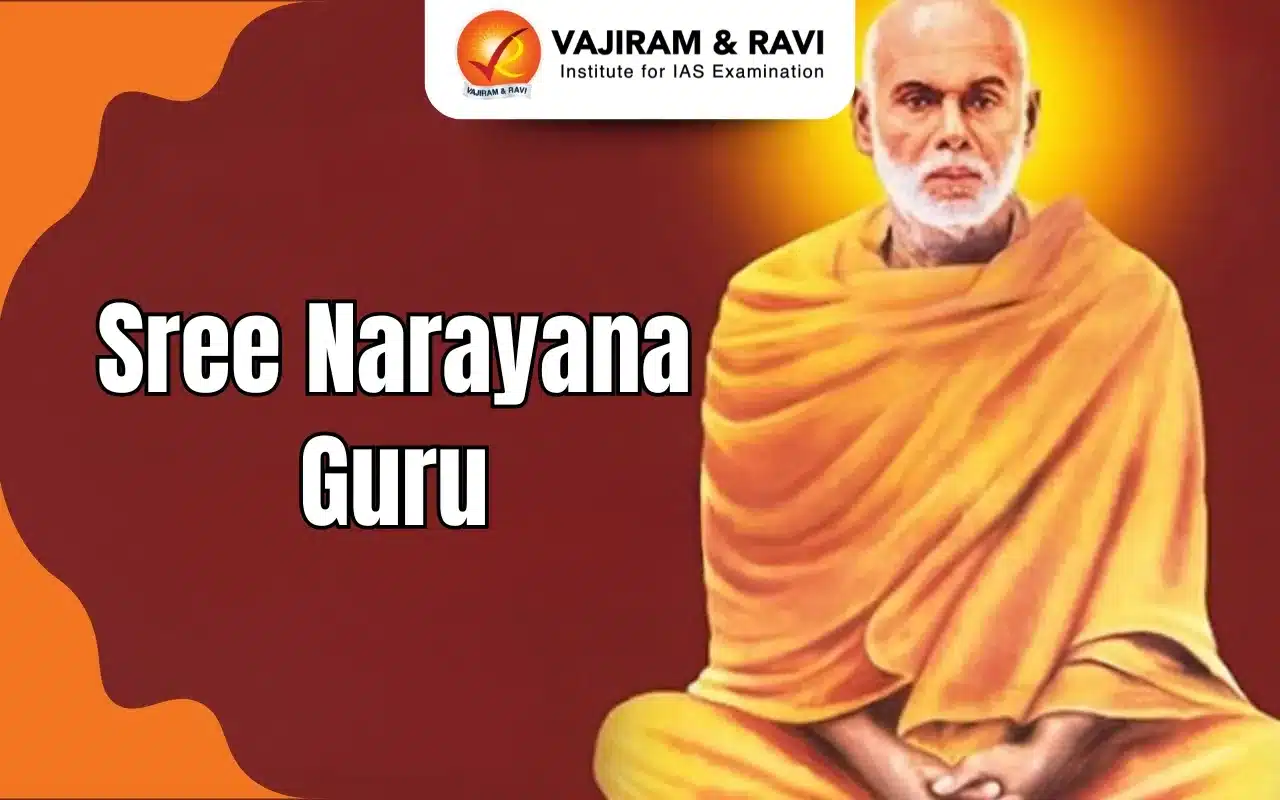
Sree Narayana Guru

Sree Narayana Guru

Sree Narayana Guru Latest News

Recently, the Prime Minister of India paid tributes to Sree Narayana Guru on his birth anniversary. 

About Sree Narayana Guru

  • Sree Narayan Guru was a saint, philosopher, spiritual leader, and social reformer from Kerala.
  • The Guru was born into an Ezhava family.
  • He was one of the most successful social reformers to revolt against the caste system in India. 
  • He demonstrated a path to social emancipation without invoking the dualism of the oppressed and the oppressor.
  • Gurudevan, as he was known among his followers, led a reform movement in Kerala, revolted against the caste system.
  • Philosophy:Oru Jathi, Oru Matham, Oru Daivam, Manushyanu” translates to “One Caste, One Religion, One God for Mankind” and is a core message advocated by Shri Narayana Guru.

Works of Sree Narayana Guru

  • Aruvippuram Movement (1888): Sree Narayana Guru consecrated a Shiva idol at Aruvippuram, a village in present-day Thiruvananthapuram district of Kerala, symbolising resistance against social injustice, particularly the caste-based restrictions that barred lower castes from temple entry. 
  • Established SNDP
    • Under the Indian Companies Act, the Sri Narayana Guru Dharma Paripalana Yogam (SNDP) was established in 1903. 
    • Narayana Guru served as its permanent chairman, while Kumaran Asan, a renowned poet and disciple of Guru, became its general secretary.
    • The Ezhava’s right to attend public schools, access to government services, and political representation were all addressed by the SNDP.
  • The Guru also led the ‘Vaikom Satyagraha protest movement against caste discrimination, untouchability, and inequality. 
  • The Sivagiri foundation was established in 1924 by the Guru to promote virtues of cleanliness, education, devotion, agriculture, handicrafts, and trade.
  • The Sivagiri pilgrimage (Sivagiri Theerthadanam), initiated by his followers, promotes values of purity, education, and organization.
  • Literary Contributions: He authored several important works, including Advaitha Deepika, Atmavilasam, Daiva Dasakam, and Brahmavidya Panchakam.

Source: PIB

Sree Narayana Guru FAQs

Q1: Who was Sree Narayana Guru?

Ans: Sree Narayana Guru was a saint, philosopher, spiritual leader, and social reformer from Kerala.

Q2: What is the main contribution of Sree Narayana Guru?

Ans: He was one of the most successful social reformers to revolt against the caste system in India.

National Test House

National Test House

National Test House Latest News

The National Test House (NTH) is set to host a celebration for its 115th Foundation Day at its Jakkuru Campus in Bengaluru. 

About National Test House

  • It is a premier scientific organization of the Government of India.
  • It was established in 1912 under the then Railway Board.
  • Mandate: It is India’s largest multi-location multidisciplinary industrial central government’s testing laboratory dealing with almost all sorts of testing, calibration and quality evaluation related to industry, commerce, trade etc. as per international and national standards.
  • Functions
    • Technical Role: It offers technical consultancy, testing, calibration, and quality evaluation across various sectors, adhering to both national and international standards.
    • Accreditation Role: It is also actively involved in supporting the National Accreditation Board for Testing and Calibration Laboratories (NABL) and BIS by providing technical assistance in the accreditation and standard formation activities, respectively.
    • Drone certification: It is the pioneering governmental entity in India for drone certification.
    • Other Functions: Testing, Electric Vehicle (EV) Battery Testing, Organic Food Testing and other advanced technological areas.
  • Its branches are established at Kolkata, Mumbai, Chennai, Ghaziabad, Jaipur, Guwahati, and Varanasi.
  • Nodal Ministry: It is functioning under the administrative control of the Department of Consumer Affairs, Ministry of Consumer Affairs, Food & Public Distribution.

Source: PIB

National Test House FAQs

Q1: What is National Test House?

Ans: India's largest multidisciplinary govt testing lab - Testing, calibration, quality assurance

Q2: National Test House works under which ministry?

Ans: Ministry of Consumer Affairs Food Public Distribution

Acting Chief Justice and Judicial Appointments – The Question Before the Collegium

Acting Chief Justice

Acting Chief Justice Latest News

  • A controversy involving the Acting Chief Justice of the Rajasthan High Court has revived a recurring question before the Supreme Court Collegium: how to treat recommendations for the appointment of High Court judges sent by an Acting Chief Justice.

The Collegium System

  • Judicial appointments to the higher judiciary in India are made through the Collegium system, evolved through a series of Supreme Court judgments rather than written into the Constitution.

The Convention on Acting Chief Justices

  • An Acting Chief Justice is appointed when the post of Chief Justice of a High Court falls vacant and a permanent appointment has not yet been made. The senior-most available judge usually takes charge in this capacity.
  • Conventionally, Acting Chief Justices do not make recommendations for judicial appointments. 
  • The reasoning is straightforward: their tenures are typically short, and vetting candidates requires familiarity with the Bar, consultation with colleagues, and considered assessment that a brief stint may not permit.
  • However, in exceptional cases where such names have been sent, the Collegium has adopted varied approaches rather than following a fixed rule.

News Summary

  • The Acting Chief Justice of the Rajasthan High Court has held the position since late September 2025, a tenure of almost a year. 
  • The Supreme Court Collegium will now have to consider at least four names recommended by him.

Judicial Precedents

  • The Bombay High Court Case (2020)
    • A judge served as Acting Chief Justice of the Bombay High Court from February 20 to March 19, 2020, and then as Chief Justice from March 20 until retirement on April 27, 2020. During this period, he prepared a list of 22 names for appointment as High Court judges.
    • Two consultee judges objected in writing, arguing that no Chief Justice could properly vet 22 candidates, each requiring consultation with the Bar, in so short a tenure. They urged that the list be sent back to the sitting Chief Justice.
    • A third consultee judge disagreed, noting that the recommending judge had served on the Bombay High Court since 2004 and knew the Bar well.
    • Relying on this affirmative response, the Collegium sent 18 of the 22 recommendations to the Centre. 
    • The Centre, however, returned the names, underlining the reservations recorded by the consultee judges. Fresh lists were subsequently drawn up by the High Court.
  • The Rajasthan High Court Case (2022)
    • In another instance, the Centre raised objections to at least 12 names sent by the then Chief Justice of the Rajasthan High Court, on the ground that the recommendations were made during the fag end of his tenure.
    • The Collegium asked whether there were specific objections against any name based on intelligence inputs, but received no response. The Centre subsequently cleared 8 of the 12 names.
    • Together, these cases show that the Collegium has treated such recommendations case by case, weighing the recommending judge's familiarity with the High Court against the brevity of the tenure.

The Underlying Controversy

  • The present question has arisen against the backdrop of a separate dispute.
  • A Supreme Court judge, previously of the Rajasthan High Court, wrote three letters to the Chief Justice of India, seeking that the Acting Chief Justice be replaced by a Chief Justice from outside the state.
  • The letters alleged manipulation of case listings, threats to fellow judges citing closeness to the CJI, and misuse of administrative powers. They also described the acting tenure as "unusually long."
  • The CJI responded that allegations against a sitting judge could not be adjudicated through the media and must go through institutional channels.

Why This Matters

  • The question is narrow in form but touches on broader institutional concerns.
  • Judicial vacancies remain a persistent problem across High Courts, and returning recommendations on procedural grounds can delay appointments further. 
  • At the same time, appointments made without adequate vetting risk compromising the quality of the higher judiciary.
  • The debate also highlights the problem of prolonged acting tenures. When an Acting Chief Justice remains in place for a year, questions inevitably arise about whether the arrangement has become a substitute for a permanent appointment rather than a stopgap.
  • Finally, the absence of a written rule on this point illustrates a wider feature of the Collegium system, much of it rests on convention and precedent rather than codified procedure, which allows flexibility but also invites inconsistency.

Conclusion

  • Whether an Acting Chief Justice can recommend names for judicial appointment has no settled answer, and past practice has varied with circumstance. 
  • The Collegium's approach in the present case will effectively set a precedent, either affirming that merit and familiarity with the Bar matter more than official designation, or reinforcing the convention that permanent appointments should precede such consequential recommendations. 
  • Either way, this underlines the case for clearer, written norms within the appointments process.

Source: IE

Acting Chief Justice FAQs

Q1: Who is an Acting Chief Justice of a High Court?

Ans: A judge, usually the senior-most available, who heads a High Court temporarily when the post of Chief Justice falls vacant and no permanent appointment has been made.

Q2: Why do Acting Chief Justices conventionally not recommend appointments?

Ans: Because their tenures are typically short and vetting candidates requires familiarity with the Bar and considered consultation that a brief stint may not permit.

Q3: Who comprises the Collegium for High Court appointments?

Ans: The Chief Justice of India along with the two senior-most judges of the Supreme Court.

Q4: What are consultee judges?

Ans: Supreme Court judges familiar with a particular High Court who are consulted by the Collegium before names are forwarded to the Centre.

Q5: How long has the Rajasthan High Court had an Acting Chief Justice?

Ans: Since late September 2025, a tenure of almost a year.

PM Modi’s Central Asia Visit: Why Central Asia Matters for India

PM Modi's Central Asia Visit

PM Modi's Central Asia Visit Latest News

  • PM Modi is on a Central Asia trip. He will visit Uzbekistan from August 29-30 on a bilateral visit, followed by the Kyrgyz Republic to attend the 26th Shanghai Cooperation Organisation (SCO) Summit from August 31 to September 1.
  • India's focused engagement with the region's five countries — Kazakhstan, the Kyrgyz Republic, Uzbekistan, Tajikistan, and Turkmenistan — began in 2012, with the framing of the "Connect Central Asia" policy
  • The policy gained momentum when Modi became the first Indian Prime Minister to visit all five Central Asian nations in July 2015. This latest visit continues that outreach.

What Central Asia Offers

  • Central Asia has traditionally been viewed as Russia's strategic backyard, with a 20-30% ethnic Russian population and widespread use of the Russian language. 
  • The region's growing global significance was underscored when Chinese President Xi Jinping chose it for his first overseas trip after the COVID-19 pandemic disruption, visiting four of the five Central Asian countries in September 2022.
  • The region is exceptionally rich in mineral and natural resources:
    • Kazakhstan: One of the world's largest uranium reserves, along with coal, lead, zinc, gold, and iron ore
    • Kyrgyz Republic: Gold and hydropower potential
    • Turkmenistan: One of the world's largest natural gas reserves
    • Tajikistan: Significant hydropower potential
    • Uzbekistan: Gold, uranium, and natural gas
  • This resource wealth has drawn global powers seeking to tap into the region's vast potential.

India's Strategic Stakes: The Battle for Space

  • For India, engagement with Central Asia serves multiple strategic objectives:
    • Security cooperation: Particularly important following the Taliban's takeover of Afghanistan.
    • Countering China's influence: Balancing Beijing's expanding footprint through its Belt and Road Initiative.
    • Connectivity: Advancing plans like the International North-South Transport Corridor (INSTC).
    • Energy security: Leveraging Kazakhstan's uranium reserves and Turkmenistan's role in the proposed Turkmenistan-Afghanistan-Pakistan-India (TAPI) gas pipeline.
    • Historical and cultural ties: Building on centuries-old civilisational links.
    • Trade potential: Expanding economic partnerships.
  • India regards Central Asia as part of its extended neighbourhood, with outreach aimed at securing political, security, and economic benefits. 
  • A notable diplomatic gesture came in January 2022, when New Delhi invited Central Asian leaders to its Republic Day celebrations
  • India's engagement is partly driven by a desire to prevent China from dominating this post-Soviet space through its substantial regional investments.

Key Challenges

  • Despite the clear economic opportunities from Central Asia's mineral wealth, India faces a significant hurdle: the lack of direct overland transport access, since Pakistan blocks India's land route to the region. 
  • This challenge is a primary driver behind India's push to integrate the INSTC with Iran's Chabahar port, creating an alternative access route to this resource-rich region.
  • Security concerns also loom large. Central Asia is widely seen as the northern boundary of the Islamic world, and the Taliban's ascent in Afghanistan has heightened fears of radicalism and a potential regrouping of the Islamic State — posing risks not just for India but for the Central Asian states themselves.
  • Additionally, the Russia-Ukraine conflict has triggered demographic shifts, with reports of skilled Russians relocating to Central Asian countries since they cannot easily move westward. 
  • While this migration could boost local economies through an inflow of talent and capital, it may also generate social and political tensions within these nations.

Civilisational and Cultural Links with Uzbekistan

  • India shares a particularly deep cultural and civilisational connection with Uzbekistan. 
  • Notably, the only known Buddhist monastery in Central Asia is located at Kara Tepa, Termez, Uzbekistan — an important centre during the Kushana era, when Buddhist influence extended into the region.
  • Linguistic ties run deep as well, with nearly 3,000 shared words between Hindi and Uzbek. 
  • Cultural parallels extend to cuisine too — ghee-sariyok, samosa-samsa, naan-non, and pulao-pilaf reflect shared culinary heritage. 
  • Economically, India ranks among Uzbekistan's top 10 trading partners, with bilateral trade reaching close to $1 billion in 2025-26.

Conclusion

  • PM Modi's Central Asia visit reflects India's sustained strategic push to deepen ties with a region critical to its security, energy, and connectivity interests, while also countering growing Chinese influence in the post-Soviet space. 
  • Despite persistent challenges — particularly the lack of direct overland access due to Pakistan and rising regional security risks from Afghanistan — India's civilisational links, economic potential, and multilateral engagement through platforms like the SCO position Central Asia as an increasingly vital pillar of its extended neighbourhood policy.

Source: IE | IDSA

PM Modi's Central Asia Visit FAQs

Q1: Why is PM Modi's Central Asia Visit important for India?

Ans: PM Modi's Central Asia Visit strengthens India's strategic, economic and security engagement with a resource-rich region considered part of India's extended neighbourhood.

Q2: What resources make Central Asia important during PM Modi's Central Asia Visit?

Ans: PM Modi's Central Asia Visit highlights access to uranium, natural gas, gold, hydropower, coal and other resources vital for India's energy and economic interests.

Q3: How does connectivity feature in PM Modi's Central Asia Visit?

Ans: PM Modi's Central Asia Visit reinforces India's efforts to improve connectivity through the International North-South Transport Corridor and Iran's Chabahar port.

Q4: What security concerns shape PM Modi's Central Asia Visit?

Ans: PM Modi's Central Asia Visit addresses security challenges arising from Afghanistan, potential radicalism, terrorism and China's expanding strategic influence across Central Asia.

Q5: How does Uzbekistan feature in PM Modi's Central Asia Visit?

Ans: PM Modi's Central Asia Visit with Uzbekistan builds on deep civilisational links, including Buddhist heritage, linguistic similarities, cultural connections and growing bilateral trade.

Javelin Missile

Javelin Missile

About Javelin Missile 

  • It is an American-made, medium-range, man-portable, anti-tank guided missile.
  • The Javelin first entered service with the US military in 1996.
  • It is developed and produced jointly by American defence majors Raytheon and Lockheed Martin.

Key features of  Javelin Missile 

  • Javelin is a single man-portable fire-and-forget medium-range antitank weapon system.
  • It can be fired in top or direct attack modes.
  • Range: It has a standard effective range of 2.5 km.
  • A single person can carry this missile system and fire it from their shoulder.
  • It can also be fired from a remote launcher mounted on an unmanned ground vehicle.
  • It is designed to tackle heavily armored vehicles such as main battle tanks and lighter-skinned military vehicles.
  • It is also effective against fortifications, bunkers and helicopters.

Working of Javelin Missile 

  • It automatically guides itself to the target after launch, allowing the gunner to take cover and avoid counter fire.
  • The soldiers or marines using it can reposition immediately after firing, or reload to “engage another threat.”
  • The weapon uses an arched top-attack profile, climbing above its target for improved visibility, and then strikes where the armor is weakest.

Source: IE

Javelin Missile FAQ's

Q1: What is Javelin Missile?

Ans: It is an American-made, medium-range, man-portable, anti-tank guided missile.

Q2: Which companies have developed the Javelin Missile?

Ans: It is developed and produced jointly by American defence majors Raytheon and Lockheed Martin.

Glacial Collapse: The Science Behind the Nepal-Tibet Floods

Glacial Collapse

Glacial Collapse Latest News

  • Flash floods devastated Nepal's Rasuwa district and parts of Tibet this week. Officials initially suspected an earthquake. Experts and the US Geological Survey later confirmed the seismic signal was a result of a glacial collapse — not its cause. 
  • This raised a key question: what exactly is a glacial collapse, and how frequent are such events?

What Is a Glacial Collapse?

  • A glacial collapse is the sudden detachment of a large mass of ice, rock, and water from a glacier. 
  • It occurs on steep mountain slopes. Sometimes millions of cubic metres of material break away. This mass can transform into a fast-moving, ice-rich avalanche or debris flow.
  • The term is not a formal scientific definition in glaciology. It is, however, widely used to describe such events. 
  • The journal Earth System Science Data describes this broader category as gravity-driven failures of glacier ice. It includes ice avalanches, glacier detachments, and rock-ice avalanches.

How a Glacier Forms and Collapses

  • A glacier forms when snow builds up and survives several melting seasons. These layers compress into firn — a stage between fresh snow and solid glacial ice. Over time, firn recrystallises into ice, becoming part of the glacier.
  • Once the glacial mass grows heavy enough, it begins to flow outward. Steep mountain gradients cause this outward flow, which can trigger collapse. 
  • Warming temperatures add to the risk. Melted water collects in channels beneath the glacier. When the glacier's lower portion collapses, these channels open suddenly, releasing water in large volumes.
  • As the ice mass moves over uneven terrain, stress builds up. This stress can exceed the ice's structural strength, causing fractures. 
  • Surface melting adds further weakness: water seeps into cracks, and repeated freeze-thaw cycles force these cracks apart until the ice splits through.

Role of the Glacier's Base

  • What lies beneath a glacier also matters. Many Himalayan glaciers rest on soft mud or clay — known as "wet-base" glaciers
  • In these cases, water collects in large quantities at the glacier's base, sometimes connected through internal tunnels. 
  • When such glaciers collapse, the sudden rush of water mixes with loose dirt, rock, and riverbed material. This debris-laden torrent can race down narrow valleys at very high speed.
  • Collapsed ice and rock can also block river channels, forming temporary natural dams
  • When such dams break under pressure, they trigger a second wave of flooding — exactly what happened in Nepal this week.

How Common Are Glacial Collapses?

  • Glacial collapses remain rare and highly unusual, according to scientists and geologists. 
  • Only a handful of such events have been documented over the past decade — though Tibet has emerged as a hotspot for some of the world's largest recorded cases. 
  • Notable past instances include:
    • July 2016, Aru Range, Tibet: A valley glacier's lower section detached, releasing about 68 million cubic metres of ice and killing nine herders and hundreds of animals. A nearby glacier collapsed two months later, releasing about 83 million cubic metres — NASA called it a rare occurrence.
    • 2018, Sedongpu Basin, Tibet: Two ice-rock avalanches spilled debris into the Yarlung Tsangpo River (upper Brahmaputra), blocking it and forming a dangerous temporary lake.
    • November 2022, Bukadaban Feng glacier, Kunlun Mountains: About 40 million cubic metres of ice detached, crashing into a lake below and creating a 13-metre wave. It went unnoticed initially due to the remote location.
    • 2018, Ronti Peak, Uttarakhand, India: About 27 million cubic metres of rock and glacier ice collapsed, killing over 200 people — though this was classified more as a rock avalanche coupled with ice.
    • May 2025, Blatten, Switzerland: A cascade of rock, soil, and ice buried much of the village. Experts linked the collapse to climate change in the Alps.

The Climate Change Question

  • Experts noted that climate change in the Himalayas shows increased heatwaves, glacial retreat, and permafrost reduction — all of which can drive landslides and glacial outburst floods.
  • Glaciers across the Hindu Kush Himalaya region — spanning Afghanistan, Bangladesh, Bhutan, China, India, Myanmar, Nepal, and Pakistan — lost ice 65% faster between 2011-2020 than in the previous decade. 
  • Nepal's glaciers alone have lost nearly one-third of their ice volume over roughly three decades, according to a 2023 UN assessment.
  • Hydrologists flagged a critical warning-system challenge: the absence of rainfall before such events defeat most operational flood warning systems, which typically rely on precipitation data. 
  • By the time a mud flow becomes visible, it is often too late to escape — the fast-moving mixture behaves "like liquid concrete."

Conclusion

  • Glacial collapses remain rare geological events, but their consequences can be catastrophic — as seen in the Nepal-Tibet floods. 
  • While scientists resist attributing any single event directly to climate change, the broader pattern of accelerated Himalayan glacial melt raises the risk of such collapses recurring. 
  • This underscores the urgent need for improved seismic and satellite monitoring, early-warning systems attuned to non-rainfall triggers, and greater regional cooperation to protect downstream communities.

Source: IE | AJ

Glacial Collapse FAQs

Q1: What is Glacial Collapse?

Ans: Glacial Collapse is the sudden detachment of ice, rock and water from a glacier, potentially creating fast-moving avalanches, debris flows and catastrophic flooding.

Q2: How does Glacial Collapse occur?

Ans: Glacial Collapse can occur when accumulated stress, steep terrain, fractures, surface melting and water beneath glaciers weaken ice beyond its structural strength.

Q3: What role does a glacier's base play in Glacial Collapse?

Ans: A wet glacier base can accumulate water beneath the ice; Glacial Collapse may then release debris-laden torrents and trigger temporary river blockages.

Q4: How common are Glacial Collapse events?

Ans: Glacial Collapse events are rare and highly unusual, with only a handful documented over the past decade, although Tibet has recorded major examples.

Q5: Is Glacial Collapse caused by climate change?

Ans: Scientists avoid attributing individual Glacial Collapse events directly to climate change, but accelerated Himalayan melting, permafrost loss and retreating glaciers may increase risks.

Daily Editorial Analysis 29 August 2026

Daily-Editorial-Analysis

Reform for Sustained Growth - Why India's Growth Still Needs Structural Reform

Context

  • India's GDP growth for the last quarter is expected to be as high as 8%, defying fears that the Middle East conflict and its accompanying oil-price shock would derail the economy.
  • The subsidised FCNR flows and other measures used to manage the external front are also expected to show an impressive final tally.
  • While the economy has shown short-term resilience, this resilience is largely cyclical, not structural — and sustaining growth now requires deeper reform.

How India Absorbed the Shock — Three Factors

  • Coordinated fiscal-monetary-regulatory stimulus (2025): Direct taxes were cut in February, GST was rationalised in September, and policy rates were reduced by 150 basis points, accompanied by regulatory easing in the financial sector.
  • Export diversification and currency depreciation: Non-oil exports accelerated, helped by a nearly 15% real effective exchange rate depreciation since 2025, reduced US tariffs, and resilient global demand.
  • Swift and nimble energy diversification:
    • India diversified crude imports (from Russia, LNG from the US and Oman) to avoid domestic shortages.
    • Paradoxically, India imported 17% more energy than normal last quarter, and the government absorbed the bulk of the oil shock to protect the private sector — though this will add to fiscal pressure ahead.

The Caution - Cyclical Strength, Not Structural Depth

  • Much of the recent pick-up is cyclical, driven by tax and interest-rate cuts and credit growth, and these impulses will eventually wane.
  • The real test of long-term growth is the investment rate, which remains stuck at its decadal average of 32% of GDP and has not risen in recent years, despite rising public investment and real-estate capex.
  • Corporate capex continues to languish at 10–11% of GDP, and balance sheets of the top 1,000 listed firms show no discernible pick-up in 2025–26.
  • Central government capex — which underpinned the post-Covid recovery, growing 30% between 2020 and 2023 — has slowed sharply: 11% growth in 2024 and just 1.6% in 2025, as fiscal space was consumed by tax cuts.
  • Cash transfers are also placing pressure on state capex, which is now growing below nominal GDP.

Why Corporate Capex Remains Sluggish

  • The weak demand visibility is the key constraint. Factories have been running at only 75–76% capacity for ten years, and China's excess production flooding global markets — including India — gives companies good reason to hold back on new investment.
  • Only strong, sustained consumption and export demand can break this cycle, as seen between 2003 and 2012, when 16% export growth crowded in private capex.
  • In contrast, post-pandemic private consumption and export growth have been a modest ~5%, aside from last year's stimulus-driven bump.

The Consumption and Export Challenge

  • Consumption is currently being fuelled by credit rather than income growth.
  • For example, NBFC lending to households is growing at 20%, and unsecured personal bank lending momentum has risen to 25%, reflecting a sharp rise in household leverage. For this not to backfire, accelerating household incomes is essential.
  • On exports, white-collar jobs created through Global Capability Centres (GCCs) and service exports have driven urban consumption, but "the AI writing is on the wall".
  • Service export growth (in nominal dollar terms) has halved to 8% over the last year from 16% in the previous four years, and export growth among major IT firms has been flat.
  • PLFS data show employment rates rising, but a significant share of new jobs remain "self-employed" rather than "salaried," even though the mix improved somewhat in 2025.
  • The share of the workforce in agriculture, while declining, remains higher than pre-pandemic levels.

The Fundamental Challenge - Labour vs Capital

  • The core structural question is: how can labour be made a more attractive factor of production relative to capital, in an era of automation and AI? India's capital-labour ratio has been rising for over two decades.
  • Reversing this requires policy focus on education, skilling, health, and rationalising labour laws — old constraints that remain unresolved even as challenges evolve.
  • Raising the cost of labour indirectly (relative to capital) could help redirect scarce fiscal resources toward labour-intensive sectors.

Exports and Trade Policy

  • India's goods exports have declined from 17% of GDP a decade ago to 11%, yet policymakers are credited for not succumbing to export pessimism —
    • Signing a series of Free Trade Agreements (FTAs),
    • Moving to rationalise tariffs and QCOs (Quality Control Orders), and
    • Allowing exchange-rate depreciation.
  • But for exports to become structurally competitive, factors of production must become more enabling: tariffs and non-tariff barriers need decisive rationalisation, and overregulation must be eased more holistically.

Conclusion

  • Boosting consumption and investment structurally is key to a sustained private capex cycle, which in turn is key to crowding in FDI and stabilising the balance of payments.
  • A cyclical pick-up and strong capital inflows are welcome, but should be seen as a bridge — a means, not an end — to address deeper structural issues.

Reform for Sustained Growth FAQs

Q1. Why is India's recent 8% GDP growth described as "cyclical" rather than "structural"?

Ans. It is driven by temporary tax cuts, rate cuts, and credit-fuelled consumption, while the investment rate has stayed flat.

Q2. What is the single biggest constraint holding back corporate capex in India?

Ans. Weak demand visibility — capacity utilisation has been stuck at 75–76% for a decade, discouraging fresh private investment.

Q3. How has the "West Asia shock" affected India's economy?

Ans. It raised India's oil import bill sharply, but the government cushioned the private sector.

Q4. What structural challenges India faces regarding labour and capital?

Ans. India's rising capital-labour ratio means capital is increasingly favoured over labour; policy must make labour more competitive.

Q5. Why can't cyclical stimulus alone sustain India's growth?

Ans. Because stimulus effects fade over time; only structural reforms can crowd in private capex and stabilise the BoP long-term.

Source: IE

Daily Editorial Analysis 2026 FAQs

Q1: What is editorial analysis?

Ans: Editorial analysis is the critical examination and interpretation of newspaper editorials to extract key insights, arguments, and perspectives relevant to UPSC preparation.

Q2: What is an editorial analyst?

Ans: An editorial analyst is someone who studies and breaks down editorials to highlight their relevance, structure, and usefulness for competitive exams like the UPSC.

Q3: What is an editorial for UPSC?

Ans: For UPSC, an editorial refers to opinion-based articles in reputed newspapers that provide analysis on current affairs, governance, policy, and socio-economic issues.

Q4: What are the sources of UPSC Editorial Analysis?

Ans: Key sources include editorials from The Hindu and Indian Express.

Q5: Can Editorial Analysis help in Mains Answer Writing?

Ans: Yes, editorial analysis enhances content quality, analytical depth, and structure in Mains answer writing.

Enquire Now