The 89th Constitutional Amendment Act 2003, officially called the Constitution (Eighty ninth Amendment) Act 2003, was enacted on 28th September 2003 in the 54th Year of the Republic of India to amend the Constitution. This amendment aimed to strengthen institutional mechanisms for safeguarding the interests of Scheduled Castes and Scheduled Tribes by restructuring existing provisions. It introduced key constitutional changes by modifying Article 338 and inserting a new Article 338A to create separate commissions.
89th Constitutional Amendment Act Provisions
The amendment introduced structural changes by separating institutions for Scheduled Castes and Scheduled Tribes, ensuring focused governance and protection of their rights.
- Commencement: The Act came into force on a date notified by the Central Government in the Official Gazette.
- Amendment of Article 338: Article 338 was revised to exclusively deal with the National Commission for Scheduled Castes by changing its marginal heading and removing references to Scheduled Tribes from clauses (5), (9) and (10).
- Composition of NCSC: The National Commission for Scheduled Castes consists of a Chairperson, Vice Chairperson and three other Members, with service conditions and tenure determined by the President through rules.
- Insertion of Article 338A: A new Article 338A was inserted to establish the National Commission for Scheduled Tribes as a separate constitutional body for addressing tribal concerns independently.
- Composition of NCST: The National Commission for Scheduled Tribes includes a Chairperson, Vice Chairperson and three other Members appointed by the President under warrant and seal, with defined service conditions.
- Appointment and Authority: The Chairperson, Vice Chairperson and Members of the Commission are appointed by the President and the Commission has the authority to regulate its own procedures.
- Duties of NCST: The Commission investigates safeguards for Scheduled Tribes, inquires into complaints, participates in development planning and evaluates socio-economic progress under Union and State governments.
- Reporting Mechanism: The Commission submits annual and special reports to the President, who places them before Parliament along with action taken reports and reasons for non acceptance of recommendations.
- State Level Reporting: Reports concerning states are forwarded to respective Governors who present them before State Legislatures with explanations on action taken or proposed measures.
- Civil Court Powers: The Commission has powers of a civil court including summoning persons, examining witnesses, receiving evidence, requisitioning documents and issuing commissions for examination.
- Policy Consultation Requirement: The Union and State Governments are required to consult the Commission on all major policy matters affecting Scheduled Tribes, ensuring institutional participation in governance.
89th Constitutional Amendment Act Significance
The 89th Constitutional Amendment Act marked a major shift in governance by creating specialized institutions to address distinct socio-economic and cultural issues of Scheduled Castes and Scheduled Tribes.
- The Act separated the earlier National Commission for Scheduled Castes and Scheduled Tribes into two independent bodies, enabling focused attention on distinct issues faced by each group.
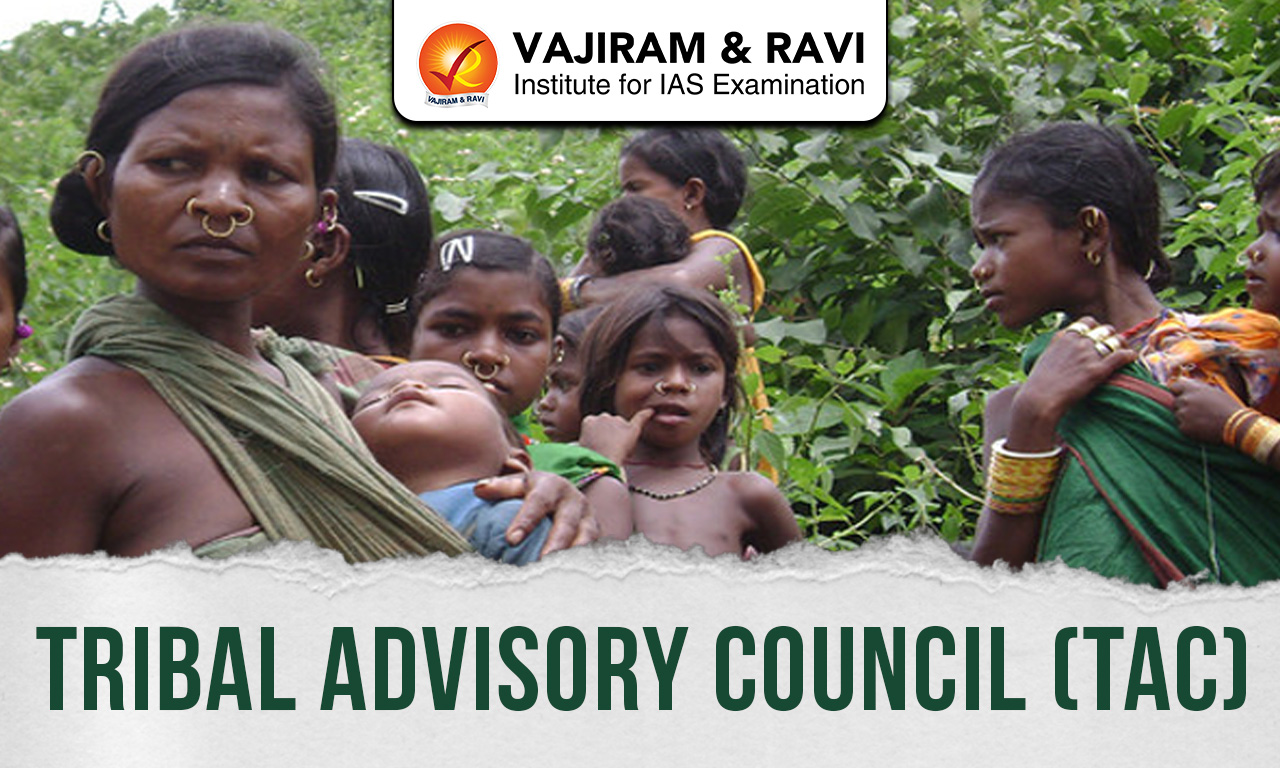
- By establishing the National Commission for Scheduled Tribes, the amendment ensured dedicated monitoring of safeguards and targeted socio-economic development for tribal communities.
- The bifurcation reduced administrative burden and improved efficiency by allowing each commission to concentrate on specific constitutional responsibilities without overlapping functions.
- The amendment complemented the creation of the Ministry of Tribal Affairs in October 1999, ensuring coordinated policy implementation for Scheduled Tribes at the national level.
- It acknowledged that Scheduled Tribes differ geographically and culturally from Scheduled Castes, requiring separate policy approaches and institutional mechanisms for effective governance.
- The amendment enhanced constitutional safeguards by empowering the new commission to investigate complaints, monitor rights and recommend measures for protection and welfare.
- The reporting system to the President, Parliament and State Legislatures increased transparency and accountability in implementing welfare measures for Scheduled Tribes.
- Granting civil court powers to the Commission strengthened its authority to enforce compliance, gather evidence and ensure proper investigation into violations of tribal rights.
- Mandatory consultation with the Commission ensured that tribal perspectives are incorporated into major policy decisions, promoting inclusive governance and development.
- The amendment laid the foundation for a stronger institutional framework that continues to guide policy, protection and advancement of Scheduled Tribes in India.






 Last updated on April, 2026
→ UPSC Final Result 2025 is now out.
→ UPSC has released UPSC Toppers List 2025 with the Civil Services final result on its official website.
→ Anuj Agnihotri secured AIR 1 in the UPSC Civil Services Examination 2025.
→ UPSC Marksheet 2025 is now out.
→ UPSC Notification 2026 & UPSC IFoS Notification 2026 is now out on the official website at upsconline.nic.in.
→ UPSC Calendar 2026 has been released.
→ Check out the latest UPSC Syllabus 2026 here.
→ UPSC Prelims 2026 will be conducted on 24th May, 2026 & UPSC Mains 2026 will be conducted on 21st August 2026.
→ The UPSC Selection Process is of 3 stages-Prelims, Mains and Interview.
→ Prepare effectively with Vajiram & Ravi’s UPSC Prelims Test Series 2026 featuring full-length mock tests, detailed solutions, and performance analysis.
→ Enroll in Vajiram & Ravi’s UPSC Mains Test Series 2026 for structured answer writing practice, expert evaluation, and exam-oriented feedback.
→ Join Vajiram & Ravi’s Best UPSC Mentorship Program for personalized guidance, strategy planning, and one-to-one support from experienced mentors.
→ Shakti Dubey secures AIR 1 in UPSC CSE Exam 2024.
→ Also check Best UPSC Coaching in India
89th Constitutional Amendment Act FAQs
Q1. What is the 89th Constitutional Amendment Act 2003?+
Q2. What was the main purpose of the 89th Amendment Act?+
Q3. Which Articles were affected by the 89th Amendment Act?+
Q4. Which commission was created under Article 338A?+
Q5. Why was a separate commission for Scheduled Tribes created?+
Tags: 89th constitutional amendment act constitutional