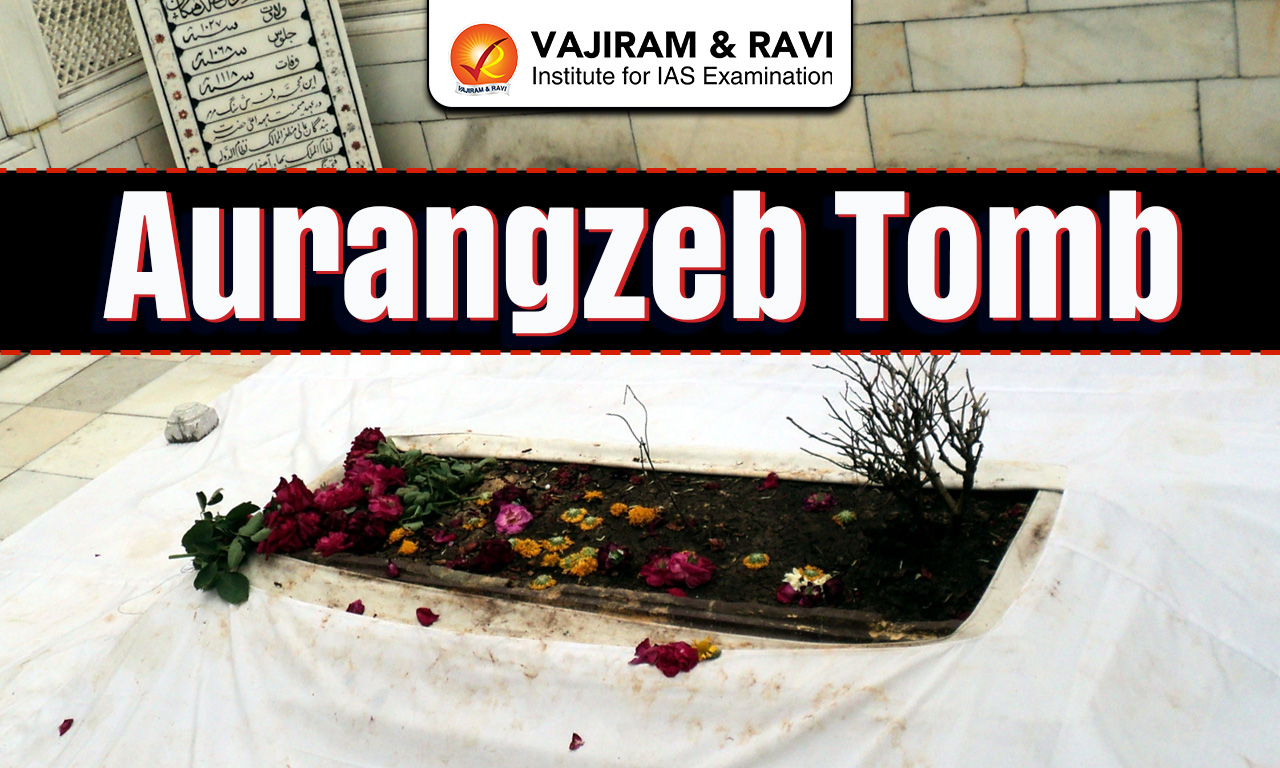
The Tomb of Aurangzeb is one of the most historically significant yet uniquely modest Mughal monuments in India. Located in the quiet town of Khuldabad near the famous Ellora Caves, this tomb stands in stark contrast to the grand mausoleums of other Mughal emperors.
Aurangzeb Tomb
The tomb of Aurangzeb in Khuldabad is a simple, open-air grave reflecting his wish for a modest and humble burial.
- Location: Situated in Khuldabad, near Ellora Caves.
- Architecture: Plain, unadorned structure with no grand dome or decoration.
- Sufi Influence: Built following traditions of the Chishti Order.
- Historical Fact: Aurangzeb died in 1707 in Ahmednagar and was buried here.
- Renovation: Later enclosed and maintained during the time of Lord Curzon.
- Uniqueness: One of the simplest tombs among Mughal emperors.
About Aurangzeb
Aurangzeb (Abul Muzaffar Muhi-ud-Din Muhammad Aurangzeb Alamgir) was the sixth Mughal Emperor who ruled India from 1658 to 1707. Under his reign, the Mughal Empire reached its greatest territorial extent, but his policies also contributed to its gradual decline.
- Reign & Expansion: Ruled for nearly 50 years (1658-1707), the longest among Mughal emperors, expanding the empire across most of the Indian subcontinent.
- Family Background: Son of Shah Jahan and Mumtaz Mahal; part of the prestigious Mughal dynasty.
- War of Succession: Captured the throne after defeating his brother Dara Shikoh in the Battle of Samugarh.
- Administrative Ability: Known for strong central administration, strict governance, and emphasis on law and order based on Islamic principles.
- Religious Policies: Reimposed Jizya tax on non-Muslims (1679); followed orthodox Sunni Islam, though also issued grants to some Hindu temples.
- Deccan Campaigns: Annexed Bijapur (1686) and Golconda (1687); spent years in the Deccan fighting the Marathas.
- Conflicts with Regional Powers: Faced resistance from leaders like Shivaji and Sambhaji, weakening Mughal control.
- Rajput Relations: Strained ties with Rajputs, especially in Mewar and Marwar, reducing earlier alliances built by Akbar.
- Sikh Policy: Ordered execution of Guru Tegh Bahadur, leading to strong opposition from Guru Gobind Singh.
- Economic Impact: Continuous warfare, especially in the Deccan, drained the empire’s treasury and administrative efficiency.
- Death & Burial: Died in 1707 in Ahmednagar and was buried in a simple grave at Khuldabad, reflecting his personal austerity.
- Legacy: Remembered as a powerful yet controversial ruler—his expansion strengthened the empire temporarily, but his policies contributed to its long-term decline.


 Last updated on Oct, 2026
→ UPSC 2027 Notification will be released on 13 January 2027 at upsconline.nic.in.
→ Check Nobel Prize 2026 Winners List here.
→ Download PIB PRiSM Monthly Magazine 2026 here.
→ Check UPSC Monthly Current Affairs Magazine The Recitals here.
→ Check out the latest UPSC Syllabus here.
→ Download UPSC Model Answers for Mains 2026
→ UPSC Mains Question Paper 2026 is out now for Essay & GS Paper 1, 2, 3 & 4.
→ UPSC Calendar 2027 has been released.
→ Enroll in Vajiram & Ravi’s UPSC Mains Test Series 2027 for structured answer writing practice, expert evaluation, and exam-oriented feedback.
→ Join Vajiram & Ravi’s UPSC Mentorship Program 2027 for personalized guidance, strategy planning, and one-to-one support from experienced mentors.
→ Go through the UPSC Mains Previous Year Papers to enhance your preparation.
→ UPSC has released UPSC Toppers List 2025 with the Civil Services final result on its official website.
→ Also check Best UPSC Coaching in India
Aurangzeb Tomb FAQs
Q1. Where is the tomb of Aurangzeb located?+
Q2. When did Aurangzeb die?+
Q3. What is unique about Aurangzeb’s tomb?+
Q4. Which architectural tradition influenced the tomb?+
Tags: ancient history aurangzeb tomb indian history