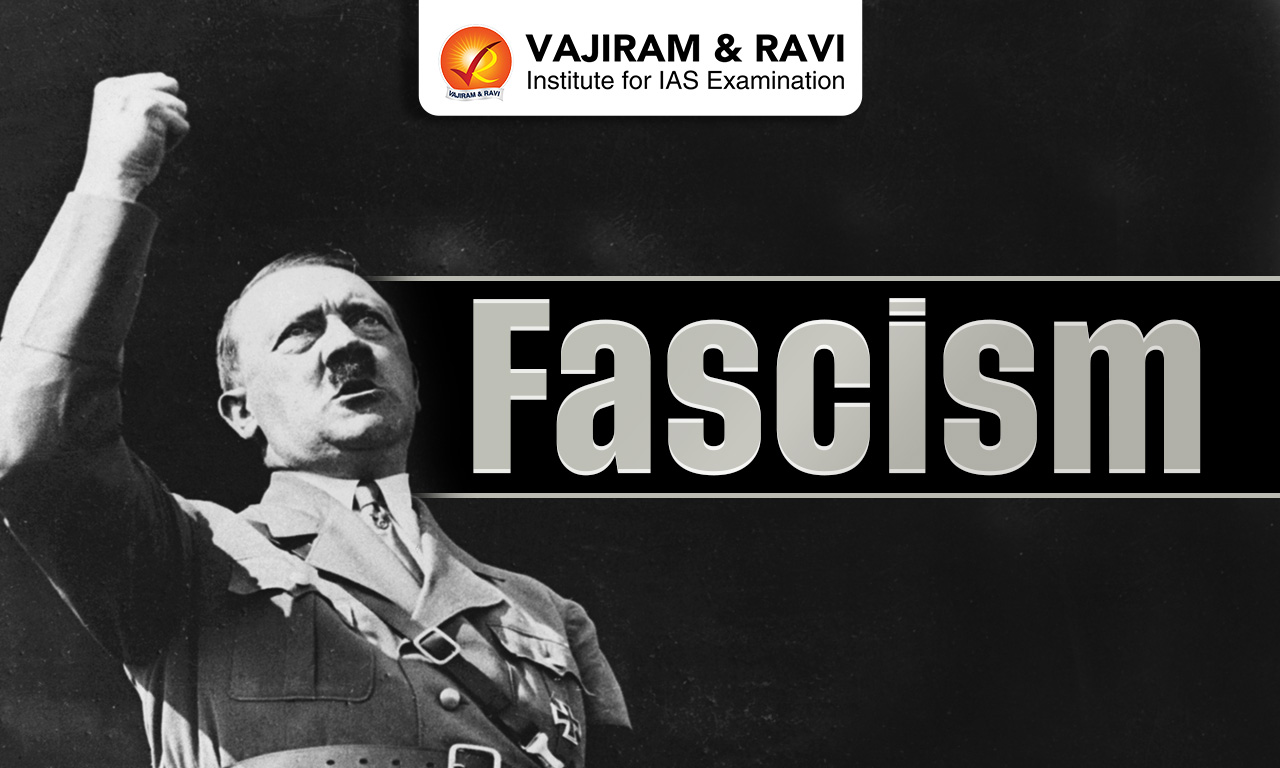
Fascism is an authoritarian and ultra-nationalist political ideology that emerged in early 20th-century Europe, primarily associated with regimes led by Benito Mussolini in Italy and Adolf Hitler in Germany. The term originates from the Italian word fascio, meaning a bundle or group, symbolizing unity and strength through collective identity.
Fascism places the nation above individual interests and promotes a centralized, dictatorial government led by a single powerful leader. It rejects liberal democracy, political pluralism, and often suppresses dissent through censorship, propaganda, and violence. Fascist regimes typically emphasize militarism, expansionism, and strict social control.
Fascism Features
Fascism is characterized by a set of defining features that distinguish it from other political ideologies:
- Extreme Nationalism: Fascism promotes intense pride in the nation, often accompanied by the belief in national superiority and cultural purity.
- Authoritarian Leadership: Power is concentrated in a single leader who exercises absolute control over the state and its institutions.
- Suppression of Opposition: Political dissent is not tolerated; opposition parties, free press, and civil liberties are often eliminated.
- Militarism: Fascist states prioritize military strength, expansion, and discipline, often glorifying war as a means of national growth.
- Propaganda and Censorship: Governments control media and communication to influence public opinion and maintain authority.
- Anti-Democratic Nature: Fascism rejects democratic principles like free elections, rule of law, and individual rights.
- Economic Control: While allowing private property, fascist regimes regulate industries to serve national interests.
- Cult of Personality: Leaders are portrayed as heroic figures, creatinsg unquestioned loyalty among citizens.
- Social Control: Strict regulation of society, including education, culture, and personal freedoms, is enforced to maintain uniformity.
Fascism Types
Although fascism shares common characteristics, it has taken different forms in various countries:
- Italian Fascism: Founded by Benito Mussolini, this form emphasized corporatism, state control, and national unity. It was the original model of fascism.
- German Nazism: Developed under Adolf Hitler, Nazism combined fascist ideology with racial theories, anti-Semitism, and expansionist ambitions.
- Spanish Falangism: Led by Francisco Franco, this version incorporated elements of fascism with conservative and nationalist traditions in Spain.
- Clerical Fascism: A blend of fascist ideology with religious institutions, seen in some European regimes where the church supported authoritarian governance.
- Neo-Fascism: Modern adaptations of fascist ideology that exist in some extremist political movements today, often focusing on nationalism and anti-immigration sentiments.


Consequences of Fascism
The rise and implementation of fascism had profound and often catastrophic consequences:
- Global Conflict: Fascist expansionism directly contributed to World War II, one of the deadliest wars in history.
- Human Rights Violations: Millions suffered under fascist regimes due to repression, forced labor, and genocidal policies such as the Holocaust.
- Destruction of Democracy: Democratic institutions were dismantled, leading to long-term political instability.
- Economic Disruption: Although some short-term economic recovery occurred, long-term effects included war devastation and resource depletion.
- Social Division: Fascism fostered hatred, discrimination, and division based on race, religion, and ideology.
- Loss of Freedom: Citizens lived under constant surveillance, censorship, and fear, with limited personal liberties.

 Last updated on Oct, 2026
→ UPSC 2027 Notification will be released on 13 January 2027 at upsconline.nic.in.
→ Check Nobel Prize 2026 Winners List here.
→ Download PIB PRiSM Monthly Magazine 2026 here.
→ Check UPSC Monthly Current Affairs Magazine The Recitals here.
→ Check out the latest UPSC Syllabus here.
→ Download UPSC Model Answers for Mains 2026
→ UPSC Mains Question Paper 2026 is out now for Essay & GS Paper 1, 2, 3 & 4.
→ UPSC Calendar 2027 has been released.
→ Enroll in Vajiram & Ravi’s UPSC Mains Test Series 2027 for structured answer writing practice, expert evaluation, and exam-oriented feedback.
→ Join Vajiram & Ravi’s UPSC Mentorship Program 2027 for personalized guidance, strategy planning, and one-to-one support from experienced mentors.
→ Go through the UPSC Mains Previous Year Papers to enhance your preparation.
→ UPSC has released UPSC Toppers List 2025 with the Civil Services final result on its official website.
→ Also check Best UPSC Coaching in India
Fascism FAQs
Q1. What is fascism?+
Q2. Who founded fascism?+
Q3. What are the main features of fascism?+
Q4. How is fascism different from democracy?+
Q5. Is Nazism a type of fascism?+
Tags: fascism political science