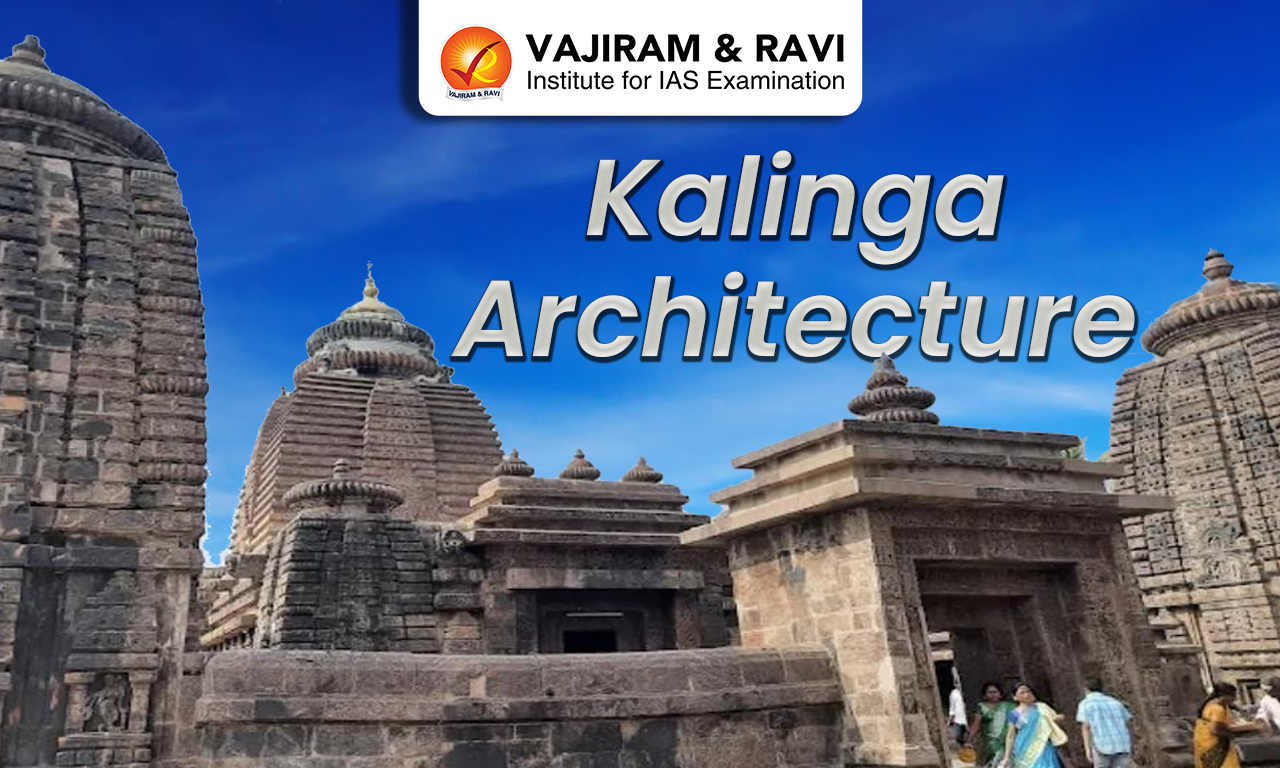
Kalinga architecture is one of the most refined and regionally distinct styles of Indian temple architecture, originating in the ancient land of Kalinga (modern-day Odisha). Known for its intricate carvings, towering shikharas, and symbolic layouts, this architectural tradition reflects a harmonious blend of spirituality, engineering excellence, and artistic mastery. The grand Jagannath Temple stands as a timeless example of the maturity and devotional depth of Kalinga temple architecture.
Kalinga Architecture Key Features
Kalinga temples are known for their distinctive design elements and elaborate detailing.
- Vertical Emphasis: Temples are built with a strong vertical orientation, symbolizing a connection between earth and the divine.
- Curvilinear Shikhara: The tower above the sanctum is often curvilinear, rising smoothly and bending inward at the top.
- Intricate Carvings: Walls are adorned with sculptures depicting gods, dancers, mythical creatures, and everyday life.
- Use of Stone: Structures are primarily built using sandstone and laterite, showcasing durability and craftsmanship.
- Amalaka and Kalasha: The top of the shikhara is crowned with an amalaka (ribbed stone disk) and a kalasha (finial), representing cosmic elements.
- Symbolism: Every architectural component holds spiritual significance, representing cosmic order and divine presence.
Types of Kalinga Temples
Kalinga temple architecture is broadly classified into three main types, each with unique structural and functional characteristics:
1. Rekha Deula
Rekha Deula is the most prominent and sacred temple type, primarily used to house the main deity.
- Purpose: Sanctum sanctorum (Garbhagriha)
- Ground Plan: Square
- Shikhara Style: Tall, curvilinear tower that rises vertically and bends inward near the top
- Distinct Feature: Vertical lines (Rekhas) run from the base to the top
- Principal Deities: Vishnu, Shiva, Surya
Examples:
2. Pidha Deula
Pidha Deula structures are typically used as assembly or offering halls attached to the main shrine.
- Purpose: Jagamohana (assembly hall), Natamandira (dance hall), Bhogamandapa (offering hall)
- Ground Plan: Square
- Shikhara Style: Stepped pyramid with horizontal tiers (Pidhas)
- Distinct Feature: Series of diminishing platforms stacked one above another
- Symbolism: Represents ascending spiritual levels
Example:
3. Khakhara Deula
Khakhara Deula is a unique and less common type, often associated with goddess worship.
- Purpose: Sanctum sanctorum
- Ground Plan: Rectangular
- Shikhara Style: Elongated, barrel-vaulted roof resembling a wagon vault
- Distinct Feature: Inspired by ancient Valabhi-style shrines
- Principal Deities: Chamunda, Durga
Example:
- Baitala Deula


Kalinga Architecture Significance
- Sacred Cosmology: Temple layout symbolizes the universe; the sanctum acts as the cosmic center (axis mundi).
- Pilgrimage Importance: Major religious centres like the Jagannath Temple sustain living traditions of bhakti and rituals.
- Engineering Precision: Advanced stone construction, interlocking systems, and load distribution without mortar.
- Distinct Shikhara Forms: Clear typology, Rekha (curvilinear), Pidha (stepped), Khakhara (barrel-vaulted).
- Iconographic Richness: Sculptures encode Puranic themes, temple rituals, and social life.
- Cultural Archive: Visual record of dance, music, attire, and daily practices.
- Regional Identity: Defines Odisha’s unique sub-style within Nagara architecture.
- Mature Temple Planning: Axial alignment of Deula-Jagamohana-Natamandira-Bhogamandapa.
- Artistic Excellence: High-relief carvings and refined ornamentation seen in Konark Sun Temple.
- Continuity Over Centuries: Evolution from early forms to peak maturity (10th–12th CE).

 Last updated on Sep, 2026
→ UPSC Mains Question Paper 2026 is out now for Essay & GS Paper 1, 2, 3 & 4.
→ UPSC Mains GS Paper 1 2026 is out now.
→ UPSC Mains GS Paper 2 2026 is out now.
→ UPSC Mains GS Paper 3 2026 is out now.
→ UPSC Mains GS Paper 4 2026 is out now.
→ UPSC Mains Indian Language Paper & English Compulsory Paper are out now.
→ Check out the latest UPSC Syllabus 2026 here.
→ UPSC Mains Admit Card 2026 is now out.
→ Enroll in Vajiram & Ravi’s UPSC Mains Test Series 2027 for structured answer writing practice, expert evaluation, and exam-oriented feedback.
→ Join Vajiram & Ravi’s UPSC Mentorship Program 2027 for personalized guidance, strategy planning, and one-to-one support from experienced mentors.
→ Go through the UPSC Mains Previous Year Papers to enhance your preparation.
→ Download UPSC Mains Essay Paper 2025, UPSC Mains GS Paper-I 2025, UPSC Mains GS Paper-II 2025, UPSC Mains GS Paper-III 2025, UPSC Mains GS Paper-IV 2025, UPSC Mains English (Compulsory) Paper 2025, UPSC Mains Hindi (Qualifying) Paper 2025 here.
→ UPSC has released UPSC Toppers List 2025 with the Civil Services final result on its official website.
→ UPSC Calendar 2027 has been released.
→ Also check Best UPSC Coaching in India
Kalinga Architecture FAQs
Q1. What is Kalinga Architecture?+
Q2. Where did Kalinga architecture originate?+
Q3. What is the time period of Kalinga architecture?+
Q4. What are the main types of Kalinga temples?+
Q5. What is Rekha Deula?+
Q6. What is Pidha Deula?+
Tags: history notes indian history kalinga architecture