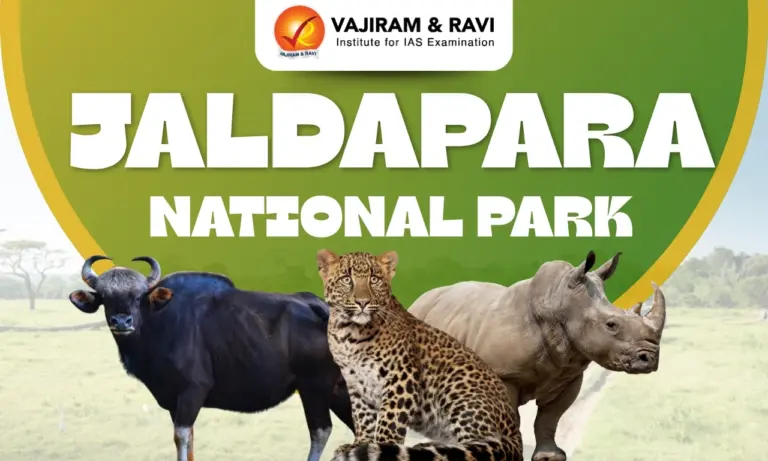
Jaldapara National Park is one of the most famous wildlife destinations in eastern India. Located in the foothills of the Eastern Himalayas, the park is known for its rich biodiversity, lush grasslands, dense forests, and diverse wildlife. It is especially famous for being home to the Indian one-horned rhinoceros, making it one of the most important rhino habitats after Kaziranga National Park.
Jaldapara National Park Location
Jaldapara National Park is situated in the Alipurduar district of West Bengal, near the border with Bhutan. The park lies in the Terai region, which is characterized by fertile plains, rivers, and extensive grasslands.
Its strategic location at the foothills of the Eastern Himalayas creates a favorable environment for a wide variety of plants and animals. The region receives heavy rainfall during the monsoon, making it rich in biodiversity.
Jaldapara National Park Geography and Landscape
Jaldapara National Park has a unique geographical landscape with vast grasslands, riverine forests, wetlands, and fertile alluvial plains, creating an ideal habitat for diverse wildlife and rich biodiversity.
- Covers an area of approximately 216 square kilometres with an elevation ranging from 60 to 175 metres above sea level.
- The park is characterized by tall elephant grass, riverine forests, marshes, open woodlands, and seasonal wetlands.
- The Torsa River is the main river flowing through the park and plays a vital role in maintaining its ecosystem.
- Other important rivers and streams associated with the park include the Malangi River, Hollong River, Chirakhawa River, and Kalijhora Stream.
- The rivers provide freshwater, support grassland ecosystems, recharge wetlands, and sustain a wide variety of flora and fauna.
- Jaldapara experiences a tropical monsoon climate with distinct summer, monsoon, and winter seasons.
- Summer (March-June) remains warm with temperatures ranging from 20°C to 35°C.
- Monsoon (June-September) brings heavy rainfall, causing rivers to swell and the park to remain largely closed for visitors.
- Winter (October-February) is cool and pleasant, with temperatures between 10°C and 25°C, making it the best season for wildlife sightings.
- The combination of fertile soil, abundant rainfall, and perennial rivers supports the park’s rich biodiversity and ecological balance.


Jaldapara National Park Flora & Fauna
Jaldapara National Park is one of the richest biodiversity hotspots in eastern India, known for its lush vegetation, extensive grasslands, and a wide variety of wild animals, birds, and reptiles.
Jaldapara National Park Flora
The fertile alluvial soil and high rainfall support dense forest cover and rich plant diversity.
- Dominated by tall elephant grass, which provides food and shelter to herbivores like the Indian one-horned rhinoceros and Asian elephant.
- Features riverine forests, mixed deciduous forests, marshes, and wetlands.
- Important tree species include Sal, Khair, Sissoo, Simul, and Bamboo.
- Other vegetation includes Cane, Wild Banana, Ferns, Reeds, and various aquatic plants.
Jaldapara National Park Fauna
The park’s rich network of grasslands, forests, and rivers provides an ideal habitat for a diverse range of wildlife, making it one of India’s most significant protected areas.
- Famous for the Indian One-Horned Rhinoceros, the park’s flagship species and one of the largest rhino populations in India outside Assam.
- Supports large populations of Asian Elephants, Indian Gaurs, Leopards, and Wild Boars.
- Common deer species include Hog Deer, Sambar Deer, Spotted Deer (Chital), and Barking Deer.
- Other mammals found in the park include Rhesus Macaque, Jungle Cat, Small Indian Civet, Indian Hare, and occasionally the Himalayan Black Bear.
- More than 250 bird species have been recorded, including the Bengal Florican, Pied Hornbill, Indian Peafowl, Crested Eagle, Kingfishers, Woodpeckers, Herons, Egrets, and several migratory birds.
- Important reptiles include the Indian Python, King Cobra, Indian Cobra, Monitor Lizard, Rat Snake, Freshwater Turtles, and Tortoises.

 Last updated on Oct, 2026
→ UPSC 2027 Notification will be released on 13 January 2027 at upsconline.nic.in.
→ Check Nobel Prize 2026 Winners List here.
→ Download PIB PRiSM Monthly Magazine 2026 here.
→ Check UPSC Monthly Current Affairs Magazine The Recitals here.
→ Check out the latest UPSC Syllabus here.
→ Download UPSC Model Answers for Mains 2026
→ UPSC Mains Question Paper 2026 is out now for Essay & GS Paper 1, 2, 3 & 4.
→ UPSC Calendar 2027 has been released.
→ Enroll in Vajiram & Ravi’s UPSC Mains Test Series 2027 for structured answer writing practice, expert evaluation, and exam-oriented feedback.
→ Join Vajiram & Ravi’s UPSC Mentorship Program 2027 for personalized guidance, strategy planning, and one-to-one support from experienced mentors.
→ Go through the UPSC Mains Previous Year Papers to enhance your preparation.
→ UPSC has released UPSC Toppers List 2025 with the Civil Services final result on its official website.
→ Also check Best UPSC Coaching in India
Jaldapara National Park FAQs
Q1. Where is Jaldapara National Park located?+
Q2. Which animal is Jaldapara National Park famous for?+
Q3. When was Jaldapara National Park established?+
Q4. Which river flows through Jaldapara National Park?+
Q5. What are the major vegetation types found in Jaldapara National Park?+
Q6. Which major animals are found in Jaldapara National Park?+
Tags: jaldapara national park