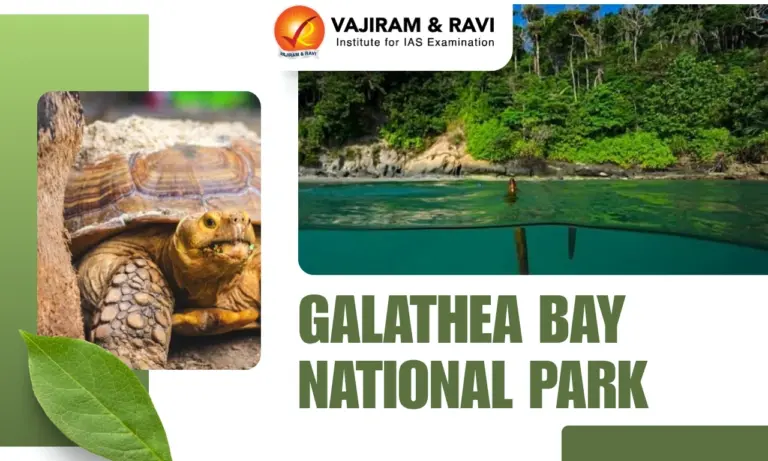
Galathea National Park is one of India’s most ecologically rich protected areas, located on Great Nicobar Island in the Andaman and Nicobar Islands. The park is known for its dense tropical rainforests, pristine beaches, mangrove ecosystems, and rich marine biodiversity. It is home to many rare and endangered species, making it one of the country’s most important biodiversity hotspots.
The Galathea National Park is named after the Galathea River, which flows through the region before meeting the sea. It forms an important part of the Great Nicobar Biosphere Reserve, a UNESCO-recognized biosphere reserve known for its exceptional biodiversity.
Galathea National Park History
Galathea National Park was established to protect the unique tropical rainforests, coastal ecosystems, and rich wildlife of Great Nicobar Island. Over the years, it has become one of India’s most significant protected areas due to its exceptional biodiversity and globally important nesting beaches for the Giant Leatherback Turtle.
- Establishment as a National Park (1992): Galathea National Park was officially established in 1992 by the Government of India to conserve the island’s unique terrestrial and marine ecosystems.
- Named After the Galathea River: The park derives its name from the Galathea River, which flows through the protected area before emptying into the Bay of Bengal.
- Part of the Great Nicobar Biosphere Reserve: The park forms an important component of the 4, helping protect one of India’s richest biodiversity hotspots.
- UNESCO Recognition: The Great Nicobar Biosphere Reserve, which includes the park, became part of UNESCO’s World Network of Biosphere Reserves in 2013, highlighting its global ecological significance.
- Conservation of Endangered Species: The park was created to safeguard several endangered and endemic species, including the Giant Leatherback Turtle, Nicobar Megapode, Saltwater Crocodile, and numerous rare plants.
- Marine and Coastal Protection: Galathea Bay within the park is internationally recognized as one of the world’s most important nesting sites for the Giant Leatherback Turtle, making marine conservation a key management priority.
- Scientific Research and Monitoring: Researchers regularly study the park’s forests, coral reefs, mangroves, and wildlife to monitor ecosystem health and support conservation planning.
Galathea National Park Flora
Galathea National Park supports dense tropical rainforests with a rich variety of native and endemic plant species. Its warm, humid climate and heavy rainfall create ideal conditions for evergreen forests, mangroves, and coastal vegetation.
- Tropical Evergreen Forests: The park is predominantly covered with dense tropical evergreen forests, featuring tall trees that remain green throughout the year.
- Mangrove Vegetation: Mangrove forests grow along the coastal areas and estuaries, protecting the shoreline from erosion while serving as breeding grounds for fish and other marine life.
- Littoral Forests: These coastal forests thrive near sandy beaches and help stabilize coastal ecosystems against strong winds and tidal waves.
- Freshwater Swamp Forests: Low-lying areas with freshwater support swamp forests that provide habitat for amphibians, reptiles, and numerous bird species.
- Bamboo and Cane Species: Various species of bamboo and cane are found in the park, contributing to forest structure and providing shelter for wildlife.
- Orchids and Ferns: The humid rainforest environment supports a wide range of orchids, ferns, mosses, and other moisture-loving plants.
- Wild Palms and Pandanus: Different species of wild palms and Pandanus are common, especially in coastal and lowland forest regions.
- Medicinal Plants: The forests contain several medicinal plant species that are valuable for traditional knowledge and scientific research.
- Climbers and Epiphytes: Numerous vines, lianas, and epiphytic plants grow on large trees, increasing the diversity and complexity of the rainforest ecosystem.


Galathea National Park Fauna
Galathea National Park is home to an extraordinary variety of terrestrial and marine wildlife, making it one of India’s most important biodiversity hotspots.
- Mammals: The park is home to species such as the Nicobar Long-tailed Macaque, Nicobar Tree Shrew, Wild Pig, Crab-eating Macaque, and Fruit Bats, many of which are endemic to the Nicobar Islands.
- Birds: It supports a rich bird population, including the Nicobar Megapode, Nicobar Imperial Pigeon, White-bellied Sea Eagle, Kingfishers, Parakeets, Herons, and Egrets.
- Reptiles: The park is internationally famous for the Giant Leatherback Turtle, while other reptiles include the Saltwater Crocodile, Water Monitor Lizard, Green Sea Turtle, Hawksbill Turtle, and Reticulated Python.
- Marine Life: The surrounding waters contain vibrant coral reefs, reef fishes, dolphins, rays, reef sharks, sea cucumbers, starfish, crabs, and various molluscs.
- Important Nesting Site: Galathea Bay is recognized as one of the world’s most important nesting grounds for the Giant Leatherback Turtle, attracting global conservation attention.
Great Nicobar Biosphere Reserve and Galathea National Park
The Great Nicobar Biosphere Reserve is one of India’s most important protected areas and includes Galathea National Park as its core conservation zone. It conserves tropical rainforests, mangroves, coral reefs, and rich marine ecosystems. The reserve is home to many endangered and endemic species, including the Giant Leatherback Turtle and Nicobar Megapode.
Galathea National Park Climate and Vegetation
Galathea National Park has a hot, humid tropical climate with heavy rainfall throughout the year, supporting dense evergreen forests, rich biodiversity, and indigenous tribal communities.
- Tropical Climate: The park experiences warm temperatures, high humidity, and abundant rainfall from both the southwest and northeast monsoons.
- Dense Evergreen Forests: Tropical evergreen forests dominate the landscape, along with semi-evergreen, littoral, mangrove, and freshwater swamp forests.
- Rich Plant Diversity: The vegetation includes bamboo, cane, orchids, ferns, wild palms, medicinal plants, and many endemic species unique to the Andaman and Nicobar Islands.
- Coastal and Marine Ecosystems: Mangroves, sandy beaches, estuaries, and coral reefs protect the coastline and support a wide variety of terrestrial and marine wildlife.
- Shompen Tribe: The Shompen are a Particularly Vulnerable Tribal Group (PVTG) living in the interior forests of Great Nicobar Island. They traditionally depend on hunting, gathering, and forest resources for their livelihood.
- Nicobarese Tribe: The Nicobarese mainly inhabit the coastal regions of Great Nicobar Island.

 Last updated on Sep, 2026
→ UPSC 2027 Notification will be released on 13 January 2027 at upsconline.nic.in.
→ UPSC Mains Question Paper 2026 is out now for Essay & GS Paper 1, 2, 3 & 4.
→ UPSC Mains GS Paper 1 2026 is out now.
→ UPSC Mains GS Paper 2 2026 is out now.
→ UPSC Mains GS Paper 3 2026 is out now.
→ UPSC Mains GS Paper 4 2026 is out now.
→ UPSC Mains Indian Language Paper & English Compulsory Paper are out now.
→ Check out the latest UPSC Syllabus 2026 here.
→ UPSC Mains Admit Card 2026 is now out.
→ Enroll in Vajiram & Ravi’s UPSC Mains Test Series 2027 for structured answer writing practice, expert evaluation, and exam-oriented feedback.
→ Join Vajiram & Ravi’s UPSC Mentorship Program 2027 for personalized guidance, strategy planning, and one-to-one support from experienced mentors.
→ Go through the UPSC Mains Previous Year Papers to enhance your preparation.
→ Download UPSC Mains Essay Paper 2025, UPSC Mains GS Paper-I 2025, UPSC Mains GS Paper-II 2025, UPSC Mains GS Paper-III 2025, UPSC Mains GS Paper-IV 2025, UPSC Mains English (Compulsory) Paper 2025, UPSC Mains Hindi (Qualifying) Paper 2025 here.
→ UPSC has released UPSC Toppers List 2025 with the Civil Services final result on its official website.
→ UPSC Calendar 2027 has been released.
→ Also check Best UPSC Coaching in India
Galathea National Park FAQs
Q1. Where is Galathea National Park located?+
Q2. When was Galathea National Park established?+
Q3. Why is Galathea National Park famous?+
Q4. Which biosphere reserve includes Galathea National Park?+
Q5. Which tribes live around Galathea National Park?+
Q6. Which are the major animals found in Galathea National Park?+
Tags: galathea national park geography geography notes