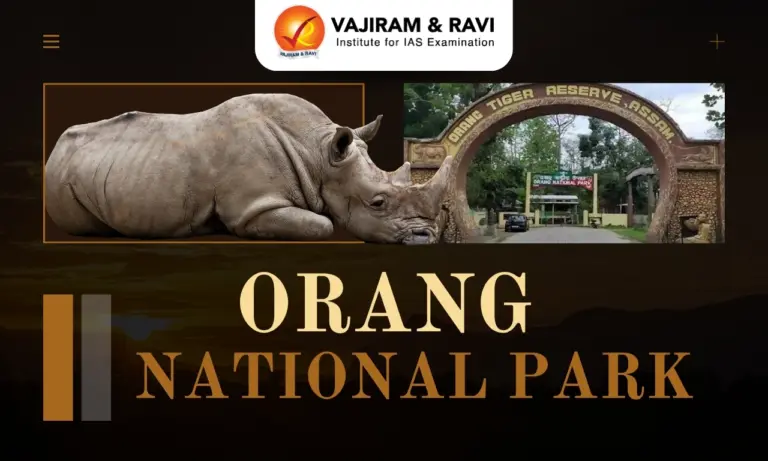
Orang National Park is one of Assam’s most important protected areas, known for its rich biodiversity and successful conservation of the one-horned rhinoceros. Located on the northern bank of the Brahmaputra River, the park is often called the “Mini Kaziranga” because of its landscape and wildlife, which closely resemble those of Kaziranga National Park. Orang is home to several endangered species, making it an important destination for wildlife conservation and ecological research.
Orang National Park
Orang National Park is situated in the Darrang and Sonitpur districts of Assam. It covers an area of approximately 79.28 sq. km and is characterized by alluvial floodplains, grasslands, wetlands, and riverine forests. The park forms part of the Indo-Burma Biodiversity Hotspot, one of the world’s richest biodiversity regions.
Orang National Park History
Orang has a fascinating conservation history that reflects India’s efforts to protect endangered wildlife and fragile ecosystems.
- Originally inhabited by local tribal communities before being abandoned due to disease outbreaks and socio-economic reasons.
- Declared the Orang Wildlife Sanctuary in 1985 to conserve its unique biodiversity.
- Upgraded to National Park status in 1999 after recognizing its ecological importance.
- Declared the 49th Tiger Reserve of India in 2016 under Project Tiger.
- Conservation measures have significantly increased the population of the Indian one-horned rhinoceros.
- Today, Orang is considered one of Assam’s most successful wildlife conservation landscapes.


Orang National Park Flora
The flora of Orang National Park is dominated by alluvial grasslands, riverine forests, and wetlands, creating an ideal habitat for a wide variety of wildlife.
- Tall Elephant Grass: Dominates the park and provides shelter for one-horned rhinoceroses, tigers, and deer.
- Riverine Forests: Found along the Brahmaputra River, comprising species such as Arjun, Sissoo, and Khair.
- Moist Deciduous Trees: Includes Simul (Silk Cotton), Jamun, and Indian Rosewood, supporting diverse fauna.
- Alluvial Grasslands: Regularly replenished by seasonal floods, making them highly fertile and productive.
- Wetland Vegetation: Aquatic plants and reeds flourish in marshes, providing habitat for fish, amphibians, and waterbirds.
- Bamboo and Shrubs: Scattered bamboo clumps and dense shrubs offer food and nesting sites for birds and small mammals.
- Ecological Importance: The park’s vegetation helps prevent soil erosion, maintain ecological balance, and support biodiversity.
Orang National Park Fauna
Orang National Park is renowned for its rich fauna, supporting several endangered mammals, birds, reptiles, and aquatic species within its grasslands, wetlands, and riverine forests.
- Greater One-Horned Rhinoceros: The park is one of India’s most important habitats for the Indian one-horned rhinoceros.
- Royal Bengal Tiger: Declared a Tiger Reserve in 2016, Orang provides a suitable habitat for the Royal Bengal Tiger.
- Asian Elephant: Herds of Asian elephants frequently move through the park’s forests and grasslands.
- Wild Water Buffalo: Orang supports a healthy population of the endangered wild water buffalo.
- Deer Species: Herbivores such as the Hog Deer and Swamp Deer are commonly found in the park.
- Primates: The park is home to Rhesus Macaques, Capped Langurs, and other monkey species.
- Bird Diversity: Over 220 species of birds, including the Bengal Florican, Lesser Adjutant Stork, Great Hornbill, Spot-billed Pelican, and various migratory waterbirds, have been recorded.
- Reptiles: Important reptile species include the Indian Python, King Cobra, Indian Cobra, Monitor Lizard, and several freshwater turtles.
- Aquatic Life: The wetlands and water bodies support numerous fish, amphibians, and other aquatic organisms, contributing to the park’s ecological balance.
- Conservation Significance: The diverse fauna makes Orang National Park a key biodiversity hotspot and an important protected area for wildlife conservation in Northeast India.
Orang National Park Climate and Vegetation
Orang National Park experiences a tropical monsoon climate and is characterized by alluvial grasslands, riverine forests, and wetlands, which together support its rich biodiversity.
Climate
- Tropical Monsoon Climate: The park has warm temperatures and high humidity throughout the year.
- Summer Season: Temperatures range between 25°C and 37°C, with hot and humid conditions.
- Monsoon Season: Receives heavy rainfall from June to September, leading to seasonal flooding by the Brahmaputra River.
- Winter Season: Winters are cool and pleasant, with temperatures ranging from 8°C to 25°C, making it the best time for wildlife viewing.
- Annual Rainfall: The park receives over 2,000 mm of rainfall annually, sustaining its forests and wetlands.
Vegetation
- Alluvial Grasslands: Extensive grasslands dominate the landscape and provide ideal grazing grounds for herbivores like the one-horned rhinoceros and hog deer.
- Riverine Forests: Dense forests along riverbanks consist of species such as Arjun, Khair, Sissoo, and Simul.
- Wetlands and Marshes: Numerous wetlands support aquatic plants, migratory birds, reptiles, and fish.
- Moist Deciduous Forests: These forests provide habitat for tigers, elephants, and various primates.
- Seasonal Floodplains: Annual floods replenish soil nutrients, helping maintain the park’s fertile grasslands and diverse plant communities.
- Ecological Importance: The varied vegetation plays a vital role in preventing soil erosion, maintaining ecological balance, and supporting Orang National Park’s rich wildlife.
Why is Orang National Park Called the “Mini Kaziranga”?
Orang National Park is popularly known as the “Mini Kaziranga” because it has ecological features similar to Kaziranga National Park, including vast alluvial grasslands, wetlands, and a thriving population of the Greater One-Horned Rhinoceros. It also supports species such as the Royal Bengal Tiger, Asian Elephant, and Wild Water Buffalo, making it an important wildlife habitat in Assam.
Orang National Park Conservation Initiatives
Several conservation initiatives have been implemented to protect Orang National Park’s biodiversity, endangered species, and fragile floodplain ecosystem.
- Project Tiger: Orang was declared a Tiger Reserve in 2016, strengthening tiger conservation and habitat management.
- Rhino Conservation: Continuous efforts are made to protect the Greater One-Horned Rhinoceros through habitat improvement and population monitoring.
- Anti-Poaching Measures: Regular forest patrols, surveillance, and intelligence networks help prevent illegal hunting and wildlife crimes.
- Habitat Management: Grassland restoration, wetland conservation, and invasive species control improve wildlife habitats.
- Wildlife Monitoring: Camera traps, scientific surveys, and periodic wildlife censuses are conducted to monitor animal populations.
- Community Participation: Local communities are encouraged to support conservation through awareness programmes and eco-development initiatives.
- Human-Wildlife Conflict Mitigation: Measures such as rapid response teams and awareness campaigns help reduce conflicts between wildlife and nearby villages.
- Flood Management and Rescue Operations: Forest authorities carry out wildlife rescue and rehabilitation during seasonal floods caused by the Brahmaputra River.
- Eco-tourism Promotion: Sustainable tourism practices are promoted to support conservation while generating livelihoods for local communities.
Orang National Park Threats and Conservation Challenges
Orang National Park faces several natural and human-induced threats that affect its wildlife, habitats, and long-term ecological sustainability.
- Poaching: Illegal hunting, particularly of the Greater One-Horned Rhinoceros for its horn, remains a major conservation concern.
- Seasonal Flooding: Annual floods from the Brahmaputra River can displace wildlife and damage habitats, although they also help maintain the park’s ecosystem.
- Habitat Degradation: Encroachment, invasive plant species, and changes in land use can degrade grasslands and wetlands.
- Human-Wildlife Conflict: Animals such as elephants and tigers sometimes stray into nearby villages, leading to conflicts with local communities.
- Climate Change: Changing rainfall patterns and extreme weather events may alter the park’s floodplain ecosystem and biodiversity.
- Illegal Grazing: Livestock grazing in buffer areas can reduce the availability of natural forage for wild herbivores.
- Invasive Species: The spread of invasive plants threatens native vegetation and reduces habitat quality.
- Pollution: Agricultural runoff and waste from nearby settlements can impact wetlands and aquatic ecosystems.
- Tourism Pressure: Unregulated tourism may disturb wildlife and damage sensitive habitats if not managed sustainably.
- Need for Stronger Conservation: Continued anti-poaching efforts, habitat restoration, community participation, and scientific monitoring are essential to ensure the long-term protection of Orang National Park.

 Last updated on Sep, 2026
→ UPSC 2027 Notification will be released on 13 January 2027 at upsconline.nic.in.
→ Asian Games 2026 are being held in Aichi-Nagoya, Japan, from 19 September to 4 October.
→ Check out the latest UPSC Syllabus here.
→ Download UPSC Model Answers for Mains 2026
→ UPSC Mains Question Paper 2026 is out now for Essay & GS Paper 1, 2, 3 & 4.
→ UPSC Calendar 2027 has been released.
→ Enroll in Vajiram & Ravi’s UPSC Mains Test Series 2027 for structured answer writing practice, expert evaluation, and exam-oriented feedback.
→ Join Vajiram & Ravi’s UPSC Mentorship Program 2027 for personalized guidance, strategy planning, and one-to-one support from experienced mentors.
→ Go through the UPSC Mains Previous Year Papers to enhance your preparation.
→ UPSC has released UPSC Toppers List 2025 with the Civil Services final result on its official website.
→ Also check Best UPSC Coaching in India
Orang National Park FAQs
Q1. Is Orang the smallest Tiger Reserve in India?+
Q2. What is the other name of Orang National Park?+
Q3. Which river flows near Orang National Park?+
Q4. When was Orang National Park established?+
Q5. Which animals are famous in Orang National Park?+
Tags: geography geography notes orang national park