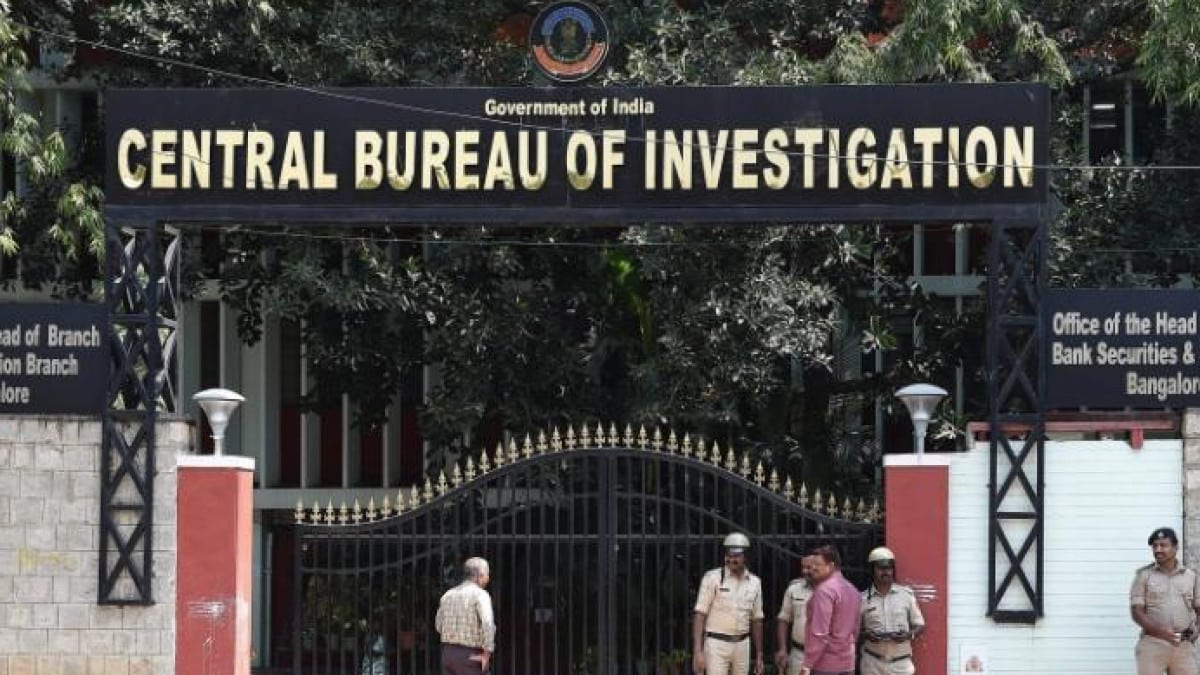
About General Consent to the CBI:
- Why is the consent of states needed?
- The CBI is governed by The Delhi Special Police Establishment (DSPE) Act of 1946, which requires the investigative agency to obtain the consent of state governments before it can investigate a crime in a particular state.
- Section 6 of The DSPE Act (“Consent of State Government to exercise of powers and jurisdiction”) says: “Nothing contained in section 5 (titled “Extension of powers and jurisdiction of special police establishment to other areas”) shall be deemed to enable any member of the Delhi Special Police Establishment to exercise powers and jurisdiction in any area in a State, not being a Union territory or railway area, without the consent of the Government of that State”.
- In other words, without a state government’s consent, the CBI cannot exercise its power within that state’s borders.
- The CBI’s position is in this respect different from that of the National Investigation Agency (NIA), which is governed by The NIA Act, 2008, and has jurisdiction all over the country.
- What is the general consent for CBI?
- Consent given by a state government to the CBI can come in two forms, either case-specific, or ‘general’.
- General consent, as the name indicates, allows the CBI to operate seamlessly within states.
- When a state gives a general consent to the CBI for probing a case, the agency is not required to seek fresh permission every time it enters that state in connection with investigation or for every case.
- Withdrawal of general consent also means that the CBI will not be able to register any fresh case involving central government officials or private persons in a particular state without prior permission of that state government.
- The CBI can continue to investigate cases in a state registered prior to the withdrawal of general consent.
- In contrast, if the CBI does not have the general consent of a state government, it is required to apply for consent on a case-by-case basis and cannot act before the consent is given.
- If specific consent is not granted, the CBI officials will not have the power of police personnel when they enter that state.
Q1) What is the Central Bureau of Investigation (CBI)?
CBI is the premier investigative agency in the country today, with a dual responsibility to investigate grievous cases and provide leadership and direction in fighting corruption to the Police force across the country.
Source: TN govt withdraws general consent given to CBI to probe cases without prior nod


 Last updated on Sep, 2026
→ UPSC Mains Question Paper 2026 is out now for Essay & GS Paper 1, 2, 3 & 4.
→ UPSC Mains GS Paper 1 2026 is out now.
→ UPSC Mains GS Paper 2 2026 is out now.
→ UPSC Mains GS Paper 3 2026 is out now.
→ UPSC Mains GS Paper 4 2026 is out now.
→ UPSC Mains Indian Language Paper & English Compulsory Paper are out now.
→ Check out the latest UPSC Syllabus 2026 here.
→ UPSC Mains Admit Card 2026 is now out.
→ Enroll in Vajiram & Ravi’s UPSC Mains Test Series 2027 for structured answer writing practice, expert evaluation, and exam-oriented feedback.
→ Join Vajiram & Ravi’s UPSC Mentorship Program 2027 for personalized guidance, strategy planning, and one-to-one support from experienced mentors.
→ Go through the UPSC Mains Previous Year Papers to enhance your preparation.
→ Download UPSC Mains Essay Paper 2025, UPSC Mains GS Paper-I 2025, UPSC Mains GS Paper-II 2025, UPSC Mains GS Paper-III 2025, UPSC Mains GS Paper-IV 2025, UPSC Mains English (Compulsory) Paper 2025, UPSC Mains Hindi (Qualifying) Paper 2025 here.
→ UPSC has released UPSC Toppers List 2025 with the Civil Services final result on its official website.
→ UPSC Calendar 2027 has been released.
→ Also check Best UPSC Coaching in India