GST 2.0 Latest News
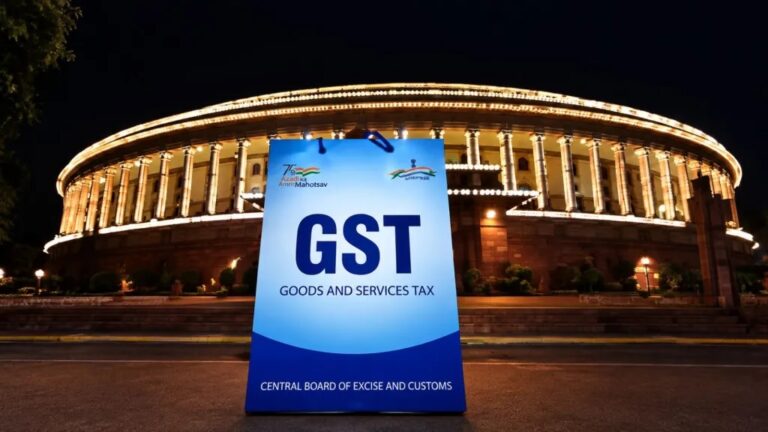
- More than nine years after the rollout of the Goods and Services Tax (GST) in July 2017, the GST regime, now dubbed as GST 2.0, is considering a significant change – removal of arrest powers under GST laws.
- The proposal is expected to be discussed at the 57th GST Council meeting on October 7, 2026. The move follows consultations between the Centre and States over the past eight-nine months.
- Businesses have raised concerns that arrest provisions have sometimes resulted in overreach, harassment and uncertainty, affecting the ease of doing business.
- If approved, the proposal would require legislative amendments to the GST laws, potentially during the Winter Session of Parliament.
Need to Decriminalise GST Offences
- Industry representatives have raised concerns that arrest powers can be used as a bargaining tool, particularly in sectors such as banking and insurance, compelling businesses to settle tax disputes or penalties to avoid prolonged litigation.
- The proposed reform seeks to –
- Improve taxpayer confidence and investor sentiment.
- Reduce perceptions of fear and harassment by tax authorities.
- Strengthen the ease of doing business (EoDB).
- Separate genuine tax administration from criminal enforcement.
- However, intentional fraud and deceit would continue to attract prosecution. In such cases, arrests could be undertaken under the Bharatiya Nyaya Sanhita (BNS) rather than through GST-specific arrest provisions.


Existing GST Arrest Framework
- Under the Central Goods and Services Tax (CGST) Act, tax violations can attract –
- Penalty under Section 122;
- Interest under Section 50;
- Recovery of tax dues; and
- In serious cases involving deliberate tax evasion, arrest and prosecution.
- Section 69 of the CGST Act empowers the Commissioner to authorise an arrest where there are “reasons to believe” that a person has committed specified offences.
- These include cases involving –
- Fake invoices;
- Fraudulent availment of Input Tax Credit (ITC);
- Invoices without actual supply;
- Collection of GST without depositing it with the government; and
- Availing ITC without receiving goods or services.
- The law requires the reasons for arrest to be supported by credible evidence, recorded in writing, and authorised by the Commissioner.
Scale of Enforcement
- Between 2021-22 and 2024-25, Central GST formations made 887 arrests in 72,393 GST-offence cases. Arrests undertaken by State authorities are additional.
- Common fraud mechanisms include –
- Creation of fake identities and mule accounts;
- Generation of fake invoices without actual supply;
- Fraudulent claims of input tax credit;
- Undervaluation of goods; and
- Supplying taxable goods or services without paying GST.
- These practices can undermine tax compliance and cause significant revenue leakage.
Throwback to the VAT Regime
- The proposed removal of arrest powers would bring GST enforcement closer to the pre-GST Value Added Tax (VAT) framework, which generally did not provide tax authorities with direct arrest powers.
- Interestingly, concerns over GST arrest provisions existed even before GST was launched.
- During the fifth GST Council meeting in December 2016, representatives of Maharashtra and West Bengal questioned whether granting arrest powers to tax authorities was consistent with EoDB and existing VAT practice.
- At the same time, the Central Board of Indirect Taxes and Customs (CBIC) had defended arrest provisions as necessary to deter unscrupulous tax evaders and maintain discipline in tax administration.
- It highlighted safeguards such as Commissioner-level authorisation and specified/severe offences and monetary thresholds (combined evasion of duty was Rs 2 crore or more).
Towards Wider Tax Decriminalisation
- The proposed GST reform is part of a broader movement towards decriminalisation of tax-related defaults.
- On the direct-tax side, the Central Board of Direct Taxes (CBDT) removed arrest and detention provisions from tax-recovery rules through the Income-Tax (Fourth Amendment) Rules, 2026, with retrospective effect from April 1, 2026.
Conclusion
- The issue highlights the need to balance revenue mobilisation and tax compliance with taxpayer rights, due process, EoDB and administrative accountability.
- It also raises important questions about cooperative federalism, as GST administration requires coordination between the Centre and States through the GST Council.
- Thus, GST 2.0 should aim to create a tax system that is both enforcement-oriented and taxpayer-friendly.
Source: IE

 Last updated on Sep, 2026
→ UPSC 2027 Notification will be released on 13 January 2027 at upsconline.nic.in.
→ Asian Games 2026 are being held in Aichi-Nagoya, Japan, from 19 September to 4 October.
→ Check out the latest UPSC Syllabus here.
→ Download UPSC Model Answers for Mains 2026
→ UPSC Mains Question Paper 2026 is out now for Essay & GS Paper 1, 2, 3 & 4.
→ UPSC Calendar 2027 has been released.
→ Enroll in Vajiram & Ravi’s UPSC Mains Test Series 2027 for structured answer writing practice, expert evaluation, and exam-oriented feedback.
→ Join Vajiram & Ravi’s UPSC Mentorship Program 2027 for personalized guidance, strategy planning, and one-to-one support from experienced mentors.
→ Go through the UPSC Mains Previous Year Papers to enhance your preparation.
→ UPSC has released UPSC Toppers List 2025 with the Civil Services final result on its official website.
→ Also check Best UPSC Coaching in India
GST 2.0 FAQs
Q1. What are the key arguments for removing arrest powers under GST laws?+
Q2. What is the existing framework for arrest under the CGST Act?+
Q3. What are the major methods used to commit GST fraud?+
Q4. How would removal of GST arrest powers resemble the pre-GST VAT regime?+
Q5. How can GST reforms balance taxpayer rights with effective tax administration? +
Tags: GST 2.0 mains articles upsc current affairs upsc mains current affairs