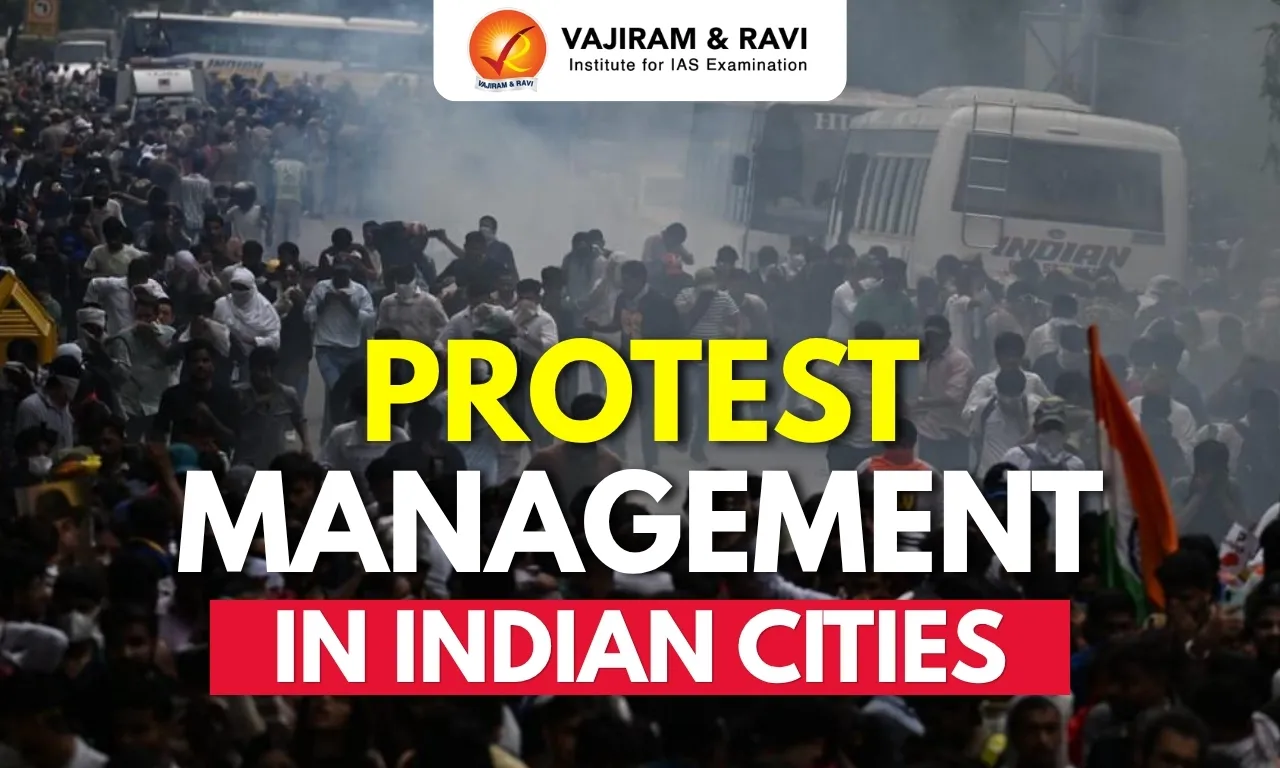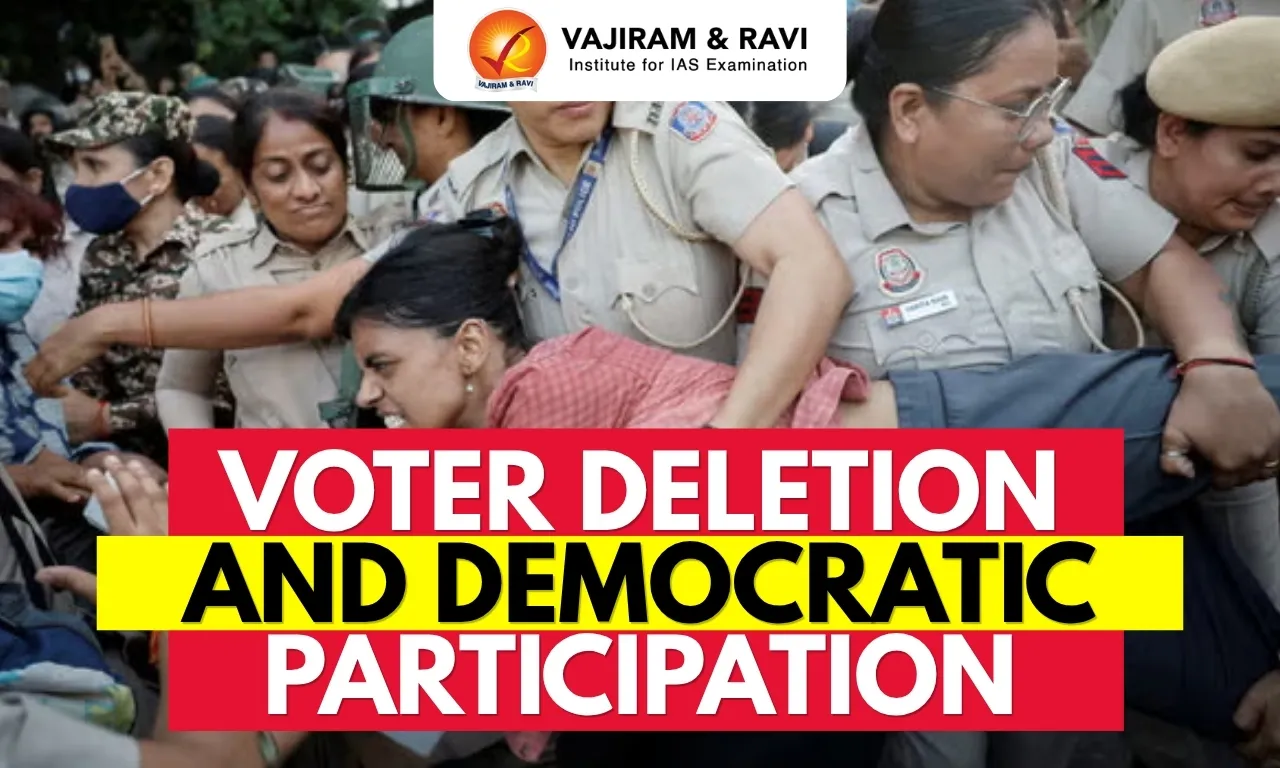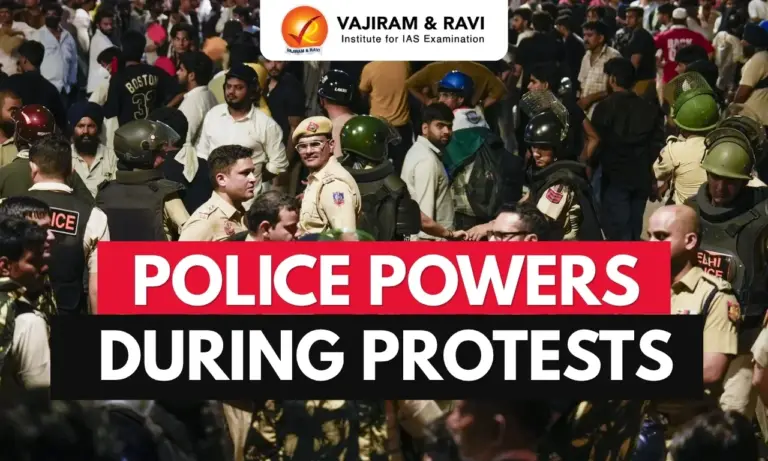
Police powers during protests in India are governed by laws such as the Bharatiya Nagarik Suraksha Sanhita (BNSS), 2023, the Bharatiya Nyaya Sanhita (BNS), 2023, and constitutional safeguards. These laws empower the police to maintain public order, prevent violence, disperse unlawful assemblies and take preventive action. However, these powers must be exercised lawfully, proportionately and with respect for fundamental rights.
The central challenge is to balance the right to peaceful protest with public order, individual liberty and the rule of law. While the state can regulate demonstrations to prevent violence and disruption, restrictions should not unnecessarily interfere with citizens’ democratic rights.
Constitutional Provisions Related to the Right to Protest
The Indian Constitution protects citizens’ right to peaceful protest while allowing reasonable restrictions to maintain public order and protect national security.
- Article 19(1)(a): Freedom of Speech and Expression – Guarantees citizens the right to express opinions, criticise government policies and raise public concerns peacefully.
- Article 19(1)(b): Right to Assemble Peacefully – Grants citizens the right to assemble peacefully and without arms, subject to reasonable restrictions.
- Article 19(2): Restrictions on Freedom of Speech – Allows the state to impose reasonable restrictions on freedom of speech and expression on specified grounds, including public order, security of the state and sovereignty and integrity of India.
- Article 19(3): Restrictions on Peaceful Assembly – Permits reasonable restrictions on the right to assemble peacefully in the interests of India’s sovereignty and integrity and public order.
- Article 21: Right to Life and Personal Liberty – Protects individuals against unlawful deprivation of life and personal liberty. Police action, including detention and the use of force, must comply with applicable law and constitutional safeguards.
- Article 22: Protection Against Arbitrary Arrest and Detention – Provides safeguards for arrested persons, including the right to be informed of the grounds of arrest, consult a lawyer and be produced before a magistrate within 24 hours, excluding necessary journey time, subject to constitutional exceptions.
- Article 32: Right to Constitutional Remedies – Allows individuals to approach the Supreme Court to enforce fundamental rights, including when police action violates constitutional protections.
- Article 226: Power of High Courts to Issue Writs – Empowers High Courts to issue writs for the enforcement of fundamental rights and for other legal purposes, including addressing unlawful detention or arbitrary restrictions on protests.
Extraordinary Police Powers During Protests
In situations involving serious threats to public order or national security, authorities may invoke additional preventive laws. Such powers are distinct from ordinary police powers and are subject to their own legal requirements.
- National Security Act (NSA), 1980: Allows preventive detention in specified circumstances involving threats to national security, public order and other grounds set out in the Act. It is not an ordinary power to detain people simply for participating in peaceful protests.
- Preventive detention safeguards: The law prescribes procedures relating to the grounds of detention, representation by the detained person and review by an Advisory Board, subject to applicable statutory provisions.
- Judicial scrutiny: The legality of detention and compliance with statutory and constitutional safeguards may be examined by courts.


Challenges in Regulating Protests in India
Despite the existing legal framework, regulating protests remains challenging because authorities must protect public safety without undermining democratic participation.
- Balancing liberty and public order: Excessive restrictions can discourage legitimate dissent, while inadequate policing can allow violence and damage to property.
- Possibility of arbitrary action: Broad prohibitory orders and preventive arrests may affect peaceful protesters if not supported by specific and lawful grounds.
- Excessive use of force: Unnecessary force can cause injuries, escalate tensions and weaken public trust in law-enforcement agencies.
- Misuse of preventive detention: Extraordinary detention powers can raise concerns about personal liberty and due process when safeguards are not strictly followed.
- Disruption of public life: Prolonged road blockades and disruption of essential services can affect commuters, businesses, patients and emergency vehicles.
- Limited accountability: Delays in investigating alleged police excesses can make it difficult to establish responsibility and provide effective remedies.
Way Forward
A balanced approach should enable peaceful dissent while ensuring that police action remains lawful, proportionate and accountable.
- Clear operational guidelines: Establish transparent protocols for managing crowds, issuing dispersal orders, making arrests and using force.
- Dialogue before escalation: Encourage communication between protest organisers, police and local authorities to resolve disputes and prevent confrontation.
- Proportionate restrictions: Apply prohibitory orders only when justified by the circumstances, with appropriate geographical scope and duration.
- Training and sensitisation: Train police personnel in crowd management, de-escalation, human rights and constitutional protections.
- Independent accountability: Ensure impartial investigation of allegations of excessive force, unlawful detention and custodial abuse.
- Accessible protest spaces: Provide suitable locations for demonstrations while maintaining access to public roads, hospitals and essential services.
- Effective judicial remedies: Ensure timely access to legal assistance and courts for individuals challenging unlawful arrest, detention or restrictions.

 Last updated on Oct, 2026
→ UPSC 2027 Notification will be released on 13 January 2027 at upsconline.nic.in.
→ Check Nobel Prize 2026 Winners List here.
→ Download PIB PRiSM Monthly Magazine 2026 here.
→ Check UPSC Monthly Current Affairs Magazine The Recitals here.
→ Check out the latest UPSC Syllabus here.
→ Download UPSC Model Answers for Mains 2026
→ UPSC Mains Question Paper 2026 is out now for Essay & GS Paper 1, 2, 3 & 4.
→ UPSC Calendar 2027 has been released.
→ Enroll in Vajiram & Ravi’s UPSC Mains Test Series 2027 for structured answer writing practice, expert evaluation, and exam-oriented feedback.
→ Join Vajiram & Ravi’s UPSC Mentorship Program 2027 for personalized guidance, strategy planning, and one-to-one support from experienced mentors.
→ Go through the UPSC Mains Previous Year Papers to enhance your preparation.
→ UPSC has released UPSC Toppers List 2025 with the Civil Services final result on its official website.
→ Also check Best UPSC Coaching in India
Police Powers During Protests in India FAQs
Q1. Which law governs police powers during protests in India?+
Q2. What is Section 163 of the BNSS?+
Q3. Can police arrest protesters without a warrant?+
Q4. Can police use force to disperse a protest?+
Q5. Is the right to protest a fundamental right in India?+
Q6. What did the Supreme Court rule in the Shaheen Bagh case?+
Tags: police powers during protests police powers during protests in india