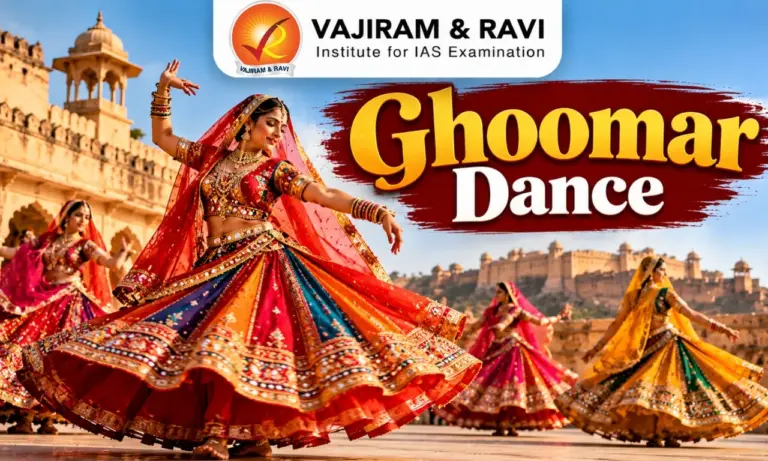
Ghoomar Dance is a traditional folk dance of Rajasthan, India, known for its graceful circular movements and colourful costumes. Originating among the Bhil tribe, it later became popular among Rajput royalty and evolved into an important symbol of Rajasthan’s cultural identity, performed during weddings, festivals and auspicious occasions.
Ghoomar Dance
Ghoomar Folk Dance of Rajasthan is a traditional women’s dance form associated with joy, grace and community celebrations. Its name comes from the Hindi word ‘ghoomna’, meaning to twirl or spin.
The dance is characterised by the following features:
- Origin: Ghoomar originated with the Bhil tribe, which performed it to worship Goddess Saraswati and local deities.
- Historical Development: The dance was later adopted and refined by Rajput royal households, becoming an important part of Rajasthan’s cultural traditions.
- Performance Style: Women perform graceful twirls and move in circles, creating a distinctive visual effect through their flowing skirts.
- Traditional Occasions: It is performed during weddings, festivals of India such as Teej, Gangaur and Diwali and other auspicious events.
- Cultural Significance: Ghoomar symbolises joy, womanhood, prosperity, good fortune and communal harmony.
- Cultural Heritage: Recognised as an important part of Rajasthan’s intangible cultural heritage, it represents the rich folk traditions of the State.
Ghoomar Dance Features
Ghoomar Dance reflects Rajasthan’s traditional culture through its colourful attire, graceful movements and ceremonial significance, making it a distinctive Folk Dance of India.
- Costume: Dancers wear colourful ghaghara cholis, embroidered skirts with mirror work, blouses and odhnis or dupattas, complemented by heavy traditional jewellery.
- Circular Movements: The signature twirling movement, known as ghoomna, makes the skirts flare out beautifully as dancers move in and out of circles.
- Performers: Ghoomar is traditionally performed by women, particularly during social gatherings, weddings and celebrations associated with family and community life.
- Ritual Significance: The dance is associated with auspicious occasions and is traditionally performed by newlywed brides to mark their acceptance into a new household.
- Cultural Identity: As the Folk Dance of Rajasthan, Ghoomar expresses the region’s customs, traditions and collective cultural identity through music, movement and attire.
- Occasions: There is no fixed date for its performance. It is celebrated throughout the year during marriages, festivals of Rajasthan and community gatherings.


Ghoomar Dance Music and Instruments
Ghoomar Dance combines traditional Rajasthani folk songs with rhythmic instruments, creating a lively musical setting that complements the dancers’ graceful circular movements.
- Dhol: The dhol provides rhythmic beats that support the dancers’ movements and maintain the flow of the performance.
- Dholak: The dholak contributes traditional percussion rhythms, helping create the musical pattern accompanying the dance.
- Shehnai: The shehnai adds a distinctive melodic sound to the performance, particularly suited to ceremonial and festive occasions.
- Harmonium: The harmonium supports the accompanying folk songs and contributes to the overall musical arrangement.
- Sarangi: The sarangi adds a traditional string instrument sound, enriching the musical accompaniment of Ghoomar.
- Folk Songs: Traditional folk songs accompany the dance, connecting its movements with Rajasthan’s cultural expressions and festive traditions.
- Musical Rhythm: The combination of percussion, melodies and singing complements the circular movements and graceful twirls that define the dance form.

 Last updated on Oct, 2026
→ UPSC 2027 Notification will be released on 13 January 2027 at upsconline.nic.in.
→ Check Nobel Prize 2026 Winners List here.
→ Download PIB PRiSM Monthly Magazine 2026 here.
→ Check UPSC Monthly Current Affairs Magazine The Recitals here.
→ Check out the latest UPSC Syllabus here.
→ Download UPSC Model Answers for Mains 2026
→ UPSC Mains Question Paper 2026 is out now for Essay & GS Paper 1, 2, 3 & 4.
→ UPSC Calendar 2027 has been released.
→ Enroll in Vajiram & Ravi’s UPSC Mains Test Series 2027 for structured answer writing practice, expert evaluation, and exam-oriented feedback.
→ Join Vajiram & Ravi’s UPSC Mentorship Program 2027 for personalized guidance, strategy planning, and one-to-one support from experienced mentors.
→ Go through the UPSC Mains Previous Year Papers to enhance your preparation.
→ UPSC has released UPSC Toppers List 2025 with the Civil Services final result on its official website.
→ Also check Best UPSC Coaching in India
Ghoomar Dance FAQs
Q1. What is Ghoomar Dance?+
Q2. What is the origin of Ghoomar Dance?+
Q3. Why is Ghoomar Dance important in Rajasthan?+
Q4. Which instruments are used in Ghoomar Dance?+
Q5. On which occasions is Ghoomar Dance performed?+
Tags: dance ghoomar dance