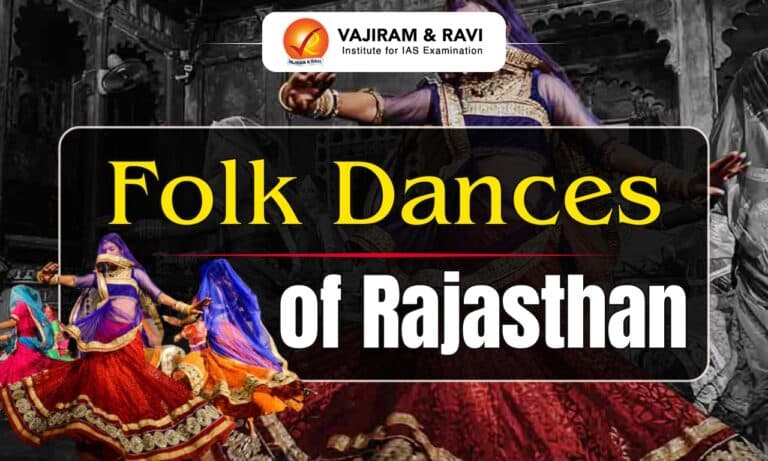
Folk Dances of Rajasthan reflect the rich culture, traditions, and vibrant lifestyle of the people of the state. These dances are not just forms of entertainment but are deeply connected with daily life, festivals, and social celebrations. Performed with colorful costumes, lively music, and energetic movements, they showcase the spirit of joy and togetherness. Each region and community in Rajasthan has its own unique dance style, which adds to the diversity and cultural richness of the state.
Famous Folk Dances of Rajasthan
The famous folk dances of Rajasthan represent the vibrant and lively cultural heritage of the state. These dances are an important part of traditional life and are commonly performed during festivals, fairs, and special occasions. Known for their graceful movements, colorful costumes, and energetic expressions, they reflect the spirit and identity of different communities. Some of the well-known folk dances of Rajasthan are discussed below.
1. Ghoomar
- Ghoomar is one of the most popular and traditional folk dances of Rajasthan, mainly performed by women during important occasions.
- The dance is known for its graceful circular movements, where performers spin continuously, creating a visually appealing scene.
- It was originally associated with the Bhil community and later became an integral part of Rajput culture.
- It is commonly performed during festivals like Holi and Teej, as well as during weddings and social celebrations.
- The dancers wear traditional attire such as ghagra, choli, and odhani, and their synchronized movements reflect joy, elegance, and cultural pride.
2. Kalbeliya
- Kalbeliya is a famous folk dance performed by the Kalbeliya tribe, also known for their traditional association with snake charming.
- The dance is recognized for its serpentine movements, where dancers imitate the flexible and rhythmic motion of snakes.
- Women wear black flowing costumes with intricate embroidery, which enhances the visual effect of the dance.
- The performance is accompanied by traditional instruments like pungi, dholak, and khanjari, played by male members of the community.
- It reflects the cultural identity and lifestyle of the tribe and has gained international recognition as an important cultural heritage.
3. Kachhi Ghodi Dance
- Kachhi Ghodi is a distinctive folk dance performed by men, mainly from the Shekhawati region of Rajasthan.
- The dancers wear a dummy horse costume, creating the illusion of riding a horse during the performance.
- This dance form is used to depict stories of local bandits, bravery, and heroic deeds through movements and expressions.
- Performers dress in traditional attire such as turbans, kurtas, and dhotis, often carrying swords for symbolic combat.
- It combines entertainment with storytelling, making it both engaging and culturally significant.
4. Bhavai Dance
- Bhavai is a unique and skillful dance performed mainly by women of tribal communities in Rajasthan.
- The main highlight is the balancing of multiple earthen or brass pots on the head while performing complex movements.
- In some performances, dancers also balance on narrow surfaces like plates or sword edges, demonstrating remarkable control and balance.
- The dance represents the daily life and resilience of rural women, especially tasks like carrying water.
- It is accompanied by music played on instruments such as sarangi, harmonium, and dholak, adding rhythm to the performance.
5. Kathputli Dance
- Kathputli is a traditional puppet-based performance art, which holds an important place in Rajasthan’s cultural heritage.
- The word refers to wooden puppets controlled by strings, skillfully handled by puppeteers.
- This art form is traditionally practiced by the Bhat community, who pass it down through generations.
- The performances narrate stories based on mythology, folklore, and social themes, making them both entertaining and informative.
- Apart from entertainment, it also serves as a source of livelihood for many traditional artist families.
6. Chari Dance
- Chari Dance is performed by women, particularly from the Gujjar and Saini communities, during festive and joyful occasions.
- The main feature of this dance is balancing a brass pot with a lit lamp on the head while performing graceful movements.
- It symbolizes happiness, celebration, and prosperity, especially during marriages and special events.
- The dance also reflects the traditional practice of fetching water, which was an important part of rural life.
- It is accompanied by instruments like dholak, nagada, and harmonium, creating a lively atmosphere.
7. Gair Dance
- Gair is a popular group dance, mainly performed by the Bhil community during festivals.
- It is especially associated with Holi and other festive occasions, reflecting a spirit of celebration and unity.
- Dancers move in circular formations, both clockwise and anti-clockwise, creating coordinated patterns.
- They carry sticks or sometimes swords, which are used rhythmically during the dance.
- The dance highlights team coordination, energy, and collective participation.
8. Dhamal / Chang Dance
- Dhamal or Chang Dance is a vibrant and energetic folk dance associated with major festivals.
- It is named after the “Chang”, a traditional percussion instrument used during the performance.
- The dance is mainly performed during Holi and Maha Shivratri, adding to the festive spirit.
- A unique feature is that men often dress as women, making the performance more lively and engaging.
- The dance is full of enthusiasm, rhythm, and joy, reflecting the celebratory culture of Rajasthan.
Also Read : Festivals of Rajasthan
Folk Dances of Rajasthan Cultural Significance
- Folk dances like Ghoomar and Kalbeliya help in preserving the rich cultural heritage, traditions, and values of Rajasthan by passing them from one generation to another in an engaging way.
- Performances of Gair, Chang, and Chari dance during festivals such as Holi and weddings add energy and meaning to celebrations, making them an important part of social and religious life.
- Dances such as Kalbeliya and Kachhi Ghodi reflect the unique identity, lifestyle, and history of specific communities, showcasing their traditions through movements and storytelling.
- Forms like Bhavai and Chari dance represent daily life activities, such as balancing pots or carrying water, highlighting the strength and skills of rural life.
- Group performances like Gair dance promote unity, coordination, and social bonding, bringing people together in a spirit of joy and cooperation.
- Artistic traditions like Kathputli and popular dances like Ghoomar attract tourists and global recognition, helping to promote Rajasthan’s culture and support local artists.


 Last updated on Oct, 2026
→ UPSC 2027 Notification will be released on 13 January 2027 at upsconline.nic.in.
→ Check Nobel Prize 2026 Winners List here.
→ Download PIB PRiSM Monthly Magazine 2026 here.
→ Check UPSC Monthly Current Affairs Magazine The Recitals here.
→ Check out the latest UPSC Syllabus here.
→ Download UPSC Model Answers for Mains 2026
→ UPSC Mains Question Paper 2026 is out now for Essay & GS Paper 1, 2, 3 & 4.
→ UPSC Calendar 2027 has been released.
→ Enroll in Vajiram & Ravi’s UPSC Mains Test Series 2027 for structured answer writing practice, expert evaluation, and exam-oriented feedback.
→ Join Vajiram & Ravi’s UPSC Mentorship Program 2027 for personalized guidance, strategy planning, and one-to-one support from experienced mentors.
→ Go through the UPSC Mains Previous Year Papers to enhance your preparation.
→ UPSC has released UPSC Toppers List 2025 with the Civil Services final result on its official website.
→ Also check Best UPSC Coaching in India
Folk Dances of Rajasthan FAQs
Q1. What are the main characteristics of folk dances of Rajasthan?+
Q2. Which is the most popular folk dance of Rajasthan?+
Q3. What is Kalbeliya dance famous for?+
Q4. What is unique about Bhavai dance?+
Q5. What is the theme of Kachhi Ghodi dance?+
Q6. What is Kathputli dance in Rajasthan?+
Q7. When is Chari dance performed?+
Q8. Which community performs Gair dance?+
Tags: art and culture art and culture notes folk dances of rajasthan