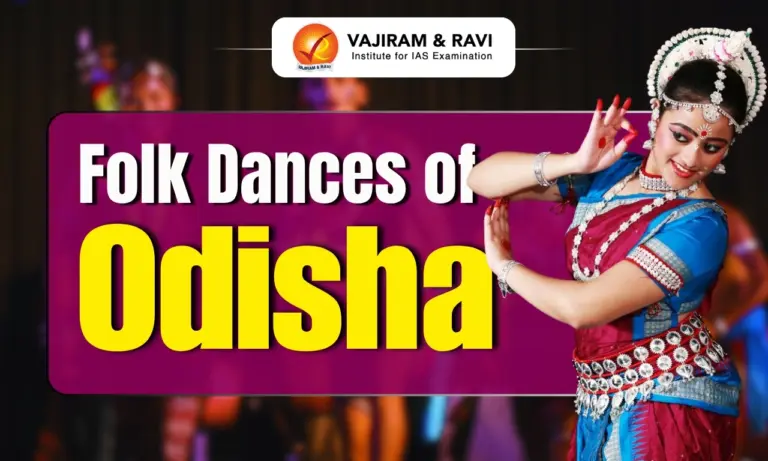
Folk dances of Odisha reflect the rich cultural traditions, religious beliefs, and community life of the state. These dances are closely connected with festivals, rituals, and celebrations, making them an important part of people’s lives. They are usually performed with colorful costumes, rhythmic music, and expressive movements that showcase both joy and devotion. Folk dances of Odisha represent the simplicity, unity, and cultural heritage of the region in a lively and engaging way.
Famous Folk Dances of Odisha
Famous folk dances of Odisha represent the rich cultural diversity and traditional heritage of the state. These dances have developed over time in different regions, reflecting the local customs, beliefs, and lifestyles of the people. Many of them are linked with festivals, rituals, and community celebrations, while others show elements of devotion, martial traditions, and daily life. Each dance form has its own unique style, music, costumes, and theme, making Odisha’s folk culture vibrant and diverse. The major and most popular folk dances of Odisha are discussed below, highlighting their features, significance, and regional variations.
1. Gotipua Dance
- Gotipua is a traditional dance of Odisha, widely considered the precursor of Odissi dance, and it developed around the 17th century when temple dancing traditions started declining.
- It is performed by young boys dressed as female characters, who beautifully portray stories of Radha–Krishna through graceful expressions (abhinaya) and acrobatic movements.
- The dance is especially famous in Puri and Raghurajpur, a heritage village known for preserving this art form and housing the Gotipua Dance Academy.
- The performance includes singing and dancing together, where dancers enact devotional poetry written by Oriya poets in a simple yet expressive manner.
- Musical accompaniment is provided by instruments like Mardala, cymbals (gini), and harmonium, creating a devotional atmosphere.
- Over time, Gotipua influenced the revival of Odissi dance in the 20th century, and today it represents a blend of tradition, devotion, and physical skill.
Also Read:- Festivals of Odisha
2. Chhau Dance
- Chhau Dance is a famous martial folk dance of eastern India, with the Mayurbhanj style being prominent in Odisha.
- It reflects warrior traditions, depicting battle scenes, attack and defence movements, and is believed to have evolved from the training practices of the Paikas (warrior clan).
- The dance is known for its vigorous movements, strong footwork, and stylized body postures, often resembling a soldier in action.
- It is usually performed during the Chaitra Parva festival (March–April) and narrates stories from the Ramayana and Mahabharata.
- The Mayurbhanj Chhau is unique because it is performed without masks, unlike other styles like Seraikela and Purulia Chhau.
- Musical instruments such as dhol, dhumsa (kettledrum), and mahuri provide energetic rhythms, making the performance powerful and dramatic.
3. Ghumura Dance
- Ghumura Dance is a traditional drum-based folk dance from regions like Kalahandi, Sambalpur, and Balangir in Odisha.
- The dance is named after the Ghumura drum, a pitcher-shaped percussion instrument made of terracotta and worn around the neck of the dancer.
- It is performed mainly by men, who dance in groups with energetic steps while playing the drum tied to their chest.
- The dance reflects martial traditions, with performers sometimes carrying swords and shields, symbolizing bravery and strength.
- Costumes include colorful dhotis, jackets, turbans with peacock feathers, and accessories like ghungroo and waist bells (ghaagudi).
- It is traditionally performed during festivals like Gamha Purnima (Shravan full moon) and combines music, rhythm, and group coordination.
4. Ranappa Dance
- Ranappa literally means “dancing on stilts”, and it is mainly practiced in the Ganjam district of Odisha.
- Performers balance themselves on long wooden stilts and dance with remarkable skill and coordination, making it visually striking.
- The dance often includes enactments of stories from Lord Krishna’s childhood, adding a mythological and devotional element.
- It is usually performed in villages during local festivals and fairs, reflecting rural traditions and entertainment.
- The use of stilts symbolizes balance, agility, and control, making it both a sportive and artistic performance.
5. Chaiti Ghoda Dance
- Chaiti Ghoda Dance is popular among the fishing community (Keuta community) in the coastal districts of Odisha, especially Ganjam.
- It is a dummy horse dance, where performers appear to be riding a decorated artificial horse, creating a lively visual effect.
- The dance is performed during a festival in the month of Chaitra (March–April) and is associated with the worship of Goddess Basuli.
- It has roots in local mythology (Kaivarta Purana), linking the dance to the origin and livelihood of fishermen.
- Music is provided by instruments like dhol and mahuri, and sometimes a female dancer joins the performance.
- The dance combines devotion, storytelling, and community celebration, marking the transition of seasons.
6. Sambalpuri Dance
- Sambalpuri Dance is a broad term for various folk dances of western Odisha, including Dalkhai, Rasarkeli, Jaiphula, etc.
- It reflects the rural and tribal culture of the region, with themes of nature, love, and daily life.
- The dance is known for its colorful Sambalpuri costumes, especially sarees with traditional designs, and energetic movements.
- It is commonly performed during festivals like Nuakhai and Bhaijiuntia, which celebrate harvest and family bonds.
- The music includes instruments like dhol, nisan, flute, and traditional songs in the Sambalpuri dialect.
- Sambalpuri dance represents the vibrant lifestyle, simplicity, and cultural richness of western Odisha.
7. Dalkhai Dance
- Dalkhai is one of the most popular folk dances of Odisha, mainly performed by young tribal women from communities like Binjhal and Kuda.
- It is associated with festivals like Dusserah and Bhaijiuntia, where women pray for the well-being of their brothers.
- The dance involves rhythmic steps, graceful hand movements, and group formations, making it visually appealing.
- Songs sung during the performance are in the Sambalpuri language and often describe nature, seasons, and emotions.
- Musical instruments like dhol, nisan, and flute accompany the dance, creating a lively atmosphere.
- It reflects the social traditions, emotional bonding, and festive spirit of tribal life in Odisha.
8. Karma Dance
- Karma Dance is performed by tribal communities in districts like Sambalpur and Balangir in honor of Karamsani (goddess of fate).
- It begins on the 11th day of the bright fortnight of Bhadra month and continues for several days as part of rituals.
- Both men and women participate, dancing together in colorful attire around a sacred tree or branch.
- The dance symbolizes prosperity, fertility, and good fortune, deeply rooted in tribal beliefs.
- Music is provided by instruments like mandal (drum) and cymbals, maintaining a steady rhythm.
- It highlights the close connection between nature, religion, and community life.
9. Paika Dance
- Paika Dance is a martial dance form performed by men dressed as warriors, representing the valor of the Paika community.
- It includes sword and shield movements, simulating real battle scenes with energy and discipline.
- The dance reflects Odisha’s military history and resistance traditions, especially linked to the Paika rebellion.
- It is accompanied by dhol beats, which enhance the intensity and rhythm of the performance.
- The dance emphasizes strength, courage, and coordination, making it both historical and entertaining.
10. Dhap Dance
- Dhap Dance is a Sambalpuri folk dance performed by the Kandha tribe of Odisha.
- It is usually performed during marriage ceremonies and social gatherings, serving as a form of entertainment.
- The dance is named after the ‘dhap’ instrument, a traditional percussion instrument used during the performance.
- Both men and women participate, dancing in groups with simple yet rhythmic movements.
- It reflects the joyful and communal lifestyle of tribal societies in Odisha.
Folk Dances of Odisha Cultural Significance
- Folk dances like Gotipua and Chhau reflect the deep religious devotion of the people, as many performances are based on mythological stories of Radha–Krishna and epics like the Ramayana and Mahabharata.
- Dances such as Paika and Ghumura highlight the martial traditions and warrior culture of Odisha, preserving the history and valor of communities like the Paikas.
- Folk forms like Dalkhai, Sambalpuri Dance, and Karma Dance are closely linked with festivals and seasonal celebrations like Nuakhai and Bhaijiuntia, showing the importance of agriculture and community bonding.
- Dances such as Chaiti Ghoda represent the livelihood and beliefs of specific communities, especially the fishing community, connecting culture with occupation and local traditions.
- Performances like Ranappa and Dhap Dance serve as a means of entertainment and social interaction, bringing people together during village fairs, marriages, and gatherings.
- Many dances including Sambalpuri and Dalkhai promote regional identity and cultural unity, as they use local language, music, and traditional costumes.
- Folk dances of Odisha act as a medium of cultural preservation and transmission, passing on values, traditions, and heritage from one generation to another.


 Last updated on Oct, 2026
→ UPSC 2027 Notification will be released on 13 January 2027 at upsconline.nic.in.
→ Check Nobel Prize 2026 Winners List here.
→ Download PIB PRiSM Monthly Magazine 2026 here.
→ Check UPSC Monthly Current Affairs Magazine The Recitals here.
→ Check out the latest UPSC Syllabus here.
→ Download UPSC Model Answers for Mains 2026
→ UPSC Mains Question Paper 2026 is out now for Essay & GS Paper 1, 2, 3 & 4.
→ UPSC Calendar 2027 has been released.
→ Enroll in Vajiram & Ravi’s UPSC Mains Test Series 2027 for structured answer writing practice, expert evaluation, and exam-oriented feedback.
→ Join Vajiram & Ravi’s UPSC Mentorship Program 2027 for personalized guidance, strategy planning, and one-to-one support from experienced mentors.
→ Go through the UPSC Mains Previous Year Papers to enhance your preparation.
→ UPSC has released UPSC Toppers List 2025 with the Civil Services final result on its official website.
→ Also check Best UPSC Coaching in India
Folk Dances of Odisha FAQs
Q1. What are the famous folk dances of Odisha?+
Q2. What is the cultural significance of folk dances in Odisha?+
Q3. Why is Gotipua dance important in Odisha?+
Q4. What is unique about Chhau dance of Odisha?+
Q5. Which folk dances of Odisha reflect martial traditions?+
Q6. Which dances are performed during festivals in Odisha?+
Q7. What is Chaiti Ghoda dance associated with?+
Q8. What is Sambalpuri dance known for?+
Tags: art and culture art and culture notes folk dances of odisha