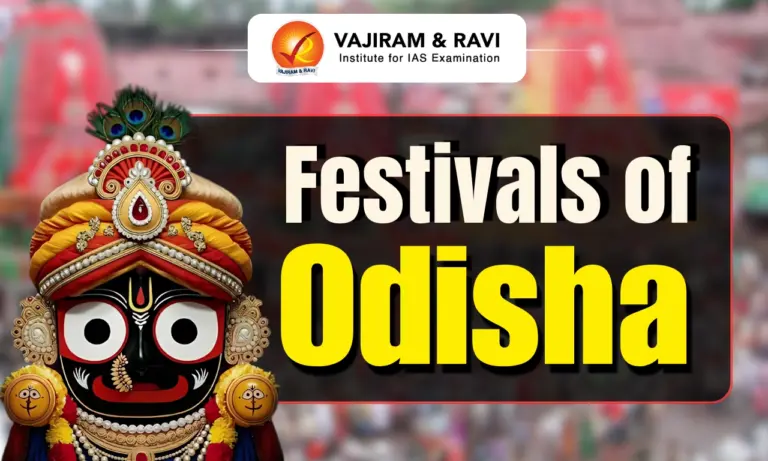
Odisha is known for its vibrant festivals that reflect the state’s rich cultural heritage, religious traditions, tribal customs, and agricultural practices. Celebrated throughout the year, these festivals bring together people from different communities and showcase Odisha’s unique art, music, dance, and devotion. Many of these festivals have historical significance and attract devotees and tourists from across India and abroad.
Major Festivals of Odisha
Odisha celebrates a wide variety of festivals associated with Hindu traditions, tribal culture, seasonal changes, and harvest cycles. Some festivals have gained international recognition, while others continue to preserve the state’s regional identity.
1. Jagannath Rath Yatra The Grand Chariot Festival of Puri
.Jagannath Rath Yatra is Odisha’s most important religious festival, celebrated annually in Puri and renowned as one of the world’s largest chariot festivals.
- Celebrated on Ashadha Shukla Dwitiya (June–July).
- Associated with the Jagannath Temple, Puri, one of the Char Dham pilgrimage sites.
- Dedicated to Lord Jagannath, Lord Balabhadra, and Goddess Subhadra.
- The deities travel to the Gundicha Temple, symbolizing their annual visit to their aunt’s temple.
- Three new wooden chariots are constructed every year using traditional methods and sacred wood.
- The three chariots are Nandighosa (Jagannath), Taladhwaja (Balabhadra), and Darpadalana (Subhadra).
- The Pahandi ritual marks the ceremonial procession of the deities to the chariots.
- The Chhera Pahanra ritual is performed by the Gajapati King of Puri, symbolizing equality before God.
- Millions of devotees pull the chariots as an act of devotion.
- Promotes pilgrimage tourism and preserves Odisha’s temple traditions.
2. Raja Parba Odisha’s Festival of Womanhood and Agriculture
Raja Parba is a unique cultural festival that celebrates womanhood, fertility, and the beginning of the agricultural season.
- Celebrated for three days in mid-June before the monsoon.
- Dedicated to Bhudevi (Mother Earth).
- Belief that Mother Earth undergoes her annual menstrual cycle.
- Agricultural activities such as ploughing and digging are suspended.
- Marks the arrival of the monsoon and preparation for cultivation.
- Women wear traditional attire and participate in cultural activities.
- Swings are decorated in villages and towns.
- Traditional delicacies like Poda Pitha and Manda Pitha are prepared.
- Folk songs and games are organized across the state.
- Highlights the close relationship between nature, agriculture, and society.
3. Durga Puja in Odisha
Durga Puja is one of Odisha’s grandest festivals, celebrated with elaborate decorations, rituals, and cultural programmes.
- Celebrated during Ashwin (September–October).
- Commemorates Goddess Durga’s victory over Mahishasura.
- Cuttack is famous for its silver filigree (Tarakasi) themed pandals.
- Temples perform special rituals and devotional ceremonies.
- Large artistic pandals display social and cultural themes.
- Cultural programmes and fairs attract thousands of visitors.
- Supports artisans, sculptors, and local businesses.
- Strengthens community participation and social harmony.
- Promotes Odisha’s traditional craftsmanship.
4. Bali Jatra Celebrating Odisha’s Maritime Heritage
Bali Jatra is one of Odisha’s largest cultural festivals, commemorating the rich maritime trade and seafaring tradition of ancient Kalinga with Southeast Asian countries.
- Celebrated annually on Kartika Purnima (October–November), mainly in Cuttack on the banks of the Mahanadi River.
- Commemorates the overseas voyages of ancient Sadhabas (Odia merchants) who sailed to Bali, Java, Sumatra, Borneo, Sri Lanka, and other Southeast Asian regions for trade.
- The festival derives its name from Bali Island (Indonesia), reflecting the strong maritime links between ancient Kalinga and Southeast Asia.
- Devotees perform the ritual of Boita Bandana, floating miniature boats in rivers and ponds while chanting traditional verses.
- Symbolizes Odisha’s flourishing maritime trade during the Kalinga period, especially from the ports of Tamralipti, Palur, Manikpatna, and Chelitalo.
- Serves as a reminder of Odisha’s contributions to ancient Indian Ocean trade, cultural exchange, and navigation.
- One of India’s largest open-air trade fairs, featuring handicrafts, handloom products, traditional cuisine, books, and cultural exhibitions.
- Promotes Pattachitra paintings, silver filigree (Tarakasi), appliqué work of Pipili, stone carving, and handloom textiles.
5. Nuakhai The Harvest Festival of Western Odisha
Nuakhai is the most important harvest festival of western Odisha, celebrated to express gratitude for the new paddy harvest and to strengthen agricultural and community traditions.
- Celebrated annually after the harvesting of the kharif paddy crop, usually in the month of Bhadrapada (August–September).
- The word “Nuakhai” is derived from “Nua” (new) and “Khai” (food/eating), meaning the celebration of the new harvest.
- Predominantly observed in the districts of Sambalpur, Bargarh, Balangir, Kalahandi, Nuapada, Jharsuguda, Sonepur, and Boudh.
- The newly harvested rice is first offered to the family or village deity before being consumed by the household
- Farmers express gratitude to nature and seek blessings for a prosperous agricultural season.
- Family members reunite to celebrate the festival, reinforcing social harmony and family bonds.
- Traditional Odia dishes are prepared using freshly harvested rice and local ingredients.
- Folk dances such as Dalkhai, Rasarkeli, and Karma, along with folk music, form an integral part of the celebrations.
- Tribal and rural communities participate enthusiastically, reflecting the region’s rich cultural diversity.
6. Kumar Purnima Festival of Youth and Prosperity
Kumar Purnima is a traditional festival of Odisha dedicated to Lord Kartikeya (Kumar), celebrated to mark youth, prosperity, and the harvest season under the full moon of Ashwin.
- Celebrated on the full moon day (Purnima) of the month of Ashwin (September–October).
- Dedicated to Lord Kartikeya (Kumar), the son of Lord Shiva and Goddess Parvati, who symbolizes youth, courage, and valor.
- Unmarried girls observe the festival and pray for good health, prosperity, and an ideal life partner.
- Devotees worship the full moon (Chanda Puja) in the evening, considering it a symbol of beauty, purity, and prosperity.
- Girls wake up before sunrise to offer prayers to the rising sun and perform traditional rituals.
- Traditional songs such as Jhia Anukul songs are sung, and cultural games are organized.
- Homes are decorated with Rangoli (Jhoti Chita) and lamps to mark the occasion.
- Special delicacies, including Chuda Ghasa, Khai, Coconut, Banana, and seasonal fruits, are offered as prasad.
- The festival reflects Odisha’s rich folk traditions and social customs centered on youth and family values.
- Encourages community participation through cultural programmes, music, and traditional celebrations.
- Marks the end of the monsoon season and the arrival of clear autumn skies with a bright full moon.
- Plays an important role in preserving Odisha’s cultural heritage and strengthening social harmony.
7. Dola Purnima
Dola Purnima is an important Vaishnavite festival of Odisha dedicated to Lord Krishna and Goddess Radha, celebrated with devotional processions, temple rituals, and the traditional festival of colours.
- Celebrated on the full moon day (Purnima) of the month of Phalguna (February–March).
- Dedicated to Lord Krishna and Goddess Radha, symbolizing divine love and devotion.
- Considered Odisha’s traditional form of Holi and is widely celebrated across the state.
- Idols of Radha and Krishna are placed in beautifully decorated vimanas (palanquins) and taken in grand processions.
- Temples organize bhajans, kirtans, devotional singing, and special pujas throughout the festival.
- Devotees offer Abira (coloured powder), flowers, sweets, and fruits to the deities.
- People celebrate by applying colours, exchanging greetings, and participating in community gatherings.
- The festival is closely associated with the Vaishnava tradition and the teachings of Sri Chaitanya Mahaprabhu.
- Marks the arrival of spring (Vasant Ritu) and symbolizes joy, renewal, and the victory of good over evil.
- Celebrated with great enthusiasm in Puri, Bhubaneswar, Cuttack, and other parts of Odisha.
Role of Festivals in Preserving Odisha’s Art, Culture, and Traditions
The festivals of Odisha play a vital role in preserving the state’s rich cultural heritage by promoting traditional arts, religious practices, folk traditions, and community values across generations.
- Preserve ancient temple rituals, customs, and religious traditions associated with Jagannath culture and other regional deities.
- Promote classical dance forms such as Odissi and folk dances including Dalkhai, Ghumura, Chhau, Karma, and Sambalpuri dance.
- Encourage traditional music, devotional bhajans, folk songs, and regional musical instruments.
- Support indigenous art forms such as Pattachitra painting, Pipili appliqué work, silver filigree (Tarakasi), stone carving, palm leaf engraving, and Dhokra craft.
- Promote Odisha’s famous handloom traditions, including Sambalpuri, Bomkai, Kotpad, and Ikat textiles.
- Preserve tribal customs, indigenous knowledge, and local cultural practices through community celebrations.
- Strengthen social harmony by bringing together people from different communities, castes, and regions.
- Encourage intergenerational transmission of folklore, oral traditions, and cultural values.
- Boost religious and cultural tourism, generating employment for artisans, performers, guides, and local businesses.
- Provide platforms for craftsmen, folk artists, musicians, and dancers to showcase their skills
- Strengthen Odisha’s cultural identity while promoting national integration and cultural diversity.


 Last updated on Oct, 2026
→ UPSC 2027 Notification will be released on 13 January 2027 at upsconline.nic.in.
→ Check Nobel Prize 2026 Winners List here.
→ Download PIB PRiSM Monthly Magazine 2026 here.
→ Check UPSC Monthly Current Affairs Magazine The Recitals here.
→ Check out the latest UPSC Syllabus here.
→ Download UPSC Model Answers for Mains 2026
→ UPSC Mains Question Paper 2026 is out now for Essay & GS Paper 1, 2, 3 & 4.
→ UPSC Calendar 2027 has been released.
→ Enroll in Vajiram & Ravi’s UPSC Mains Test Series 2027 for structured answer writing practice, expert evaluation, and exam-oriented feedback.
→ Join Vajiram & Ravi’s UPSC Mentorship Program 2027 for personalized guidance, strategy planning, and one-to-one support from experienced mentors.
→ Go through the UPSC Mains Previous Year Papers to enhance your preparation.
→ UPSC has released UPSC Toppers List 2025 with the Civil Services final result on its official website.
→ Also check Best UPSC Coaching in India
Festivals of Odisha FAQs
Q1. Which is the most famous festival of Odisha?+
Q2. What is the harvest festival of Odisha?+
Q3. Which festival marks the Odia New Year?+
Q4. Why is Bali Jatra celebrated?+
Q5. Why is Raja Parba important in Odisha?+
Q6. Which festival is associated with Lord Jagannath besides Rath Yatra?+
Q7. Where is the Konark Dance Festival celebrated?+
Tags: festivals of odisha