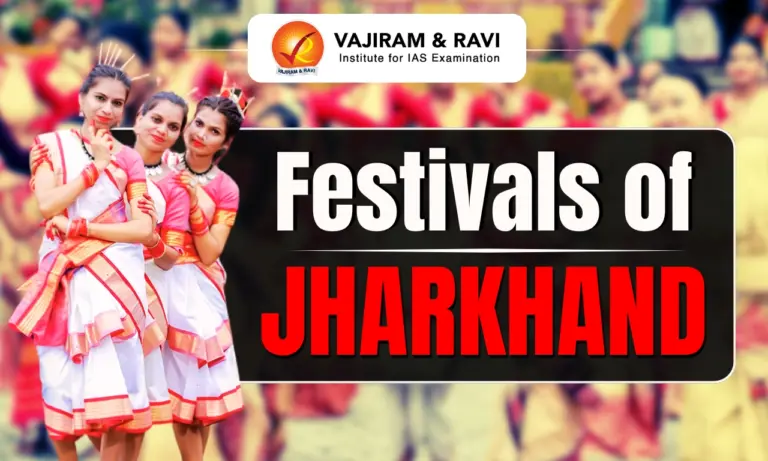
Jharkhand is one of India’s most culturally rich states, where tribal traditions, agriculture, forests and nature deeply influence everyday life. The state celebrates nearly forty festivals and fairs throughout the year, reflecting harmony among different communities and preserving centuries old cultural heritage. Tribal festivals such as Sarhul, Karma, Sohrai, Tusu Parab, Rohini and Bhagta Parab remain the most distinctive celebrations. These Festivals of Jharkhand are closely connected with farming seasons, forests, village deities, cattle and community life, making them an important part of Jharkhand’s cultural identity.
Festivals of Jharkhand 2026
The Festivals of Jharkhand represent the state’s vibrant tribal heritage, agricultural traditions and deep respect for nature. Most celebrations mark important stages of farming, seasonal changes, or the worship of local deities and sacred trees. Music, folk dances, rituals, fasting, community feasts and traditional instruments are integral to these occasions. While major national festivals are also celebrated across the state, tribal festivals continue to be the strongest expression of Jharkhand’s cultural traditions and social unity.
List of Main Festivals of Jharkhand 2026
The Festivals of Jharkhand include major festivals including Diwali, Holi, Navratri, etc. Along with them several regional festivals are also celebrated that are mentioned below:
Karam Festival of Jharkhand
Karam (also called Karma) is dedicated to Karam Devta, the deity associated with power, youth and vitality. It is celebrated on the eleventh lunar day of the Bhadra month by several tribal communities.
- Forest rituals: Young villagers collect wood, flowers and fruits from nearby forests for the worship of Karam Devta, highlighting the close relationship between tribal life and nature.
- Community celebrations: Men and women perform traditional songs and dances accompanied by drumbeats, creating one of the most vibrant youth centred tribal festivals in Jharkhand.
- Communities celebrating: The Baiga, Oraon, Majhwar and Binjhwar tribes are among the important communities that observe the Karma festival with great enthusiasm.
Jawa Festival of Jharkhand
Jawa is celebrated mainly by unmarried tribal girls during the Karma festival period to pray for good fertility, prosperity and a happy household. It is observed during the same period as the Karam Festival.
- Traditional rituals: Girls decorate small baskets with germinating seeds and offer green melons to Karam Devta as symbols of fertility, grains and future prosperity.
- Songs and participation: The festival is marked by traditional songs and dances performed by unmarried girls, adding to the festive atmosphere across the tribal regions of Jharkhand.
Sarhul Festival of Jharkhand
Sarhul is the most important tribal festival of Jharkhand and literally means “worship of the Sal tree,” reflecting the community’s deep respect for forests and nature.
- Nature worship: The festival honours the Sal tree, believed to be the abode of Goddess Sarna, while Dharti Mata is also worshipped for protecting villages from natural calamities.
- Seasonal significance: Sarhul is celebrated during spring when fresh Sal flowers bloom, marking renewal, prosperity and the beginning of a joyful agricultural season.
- Pahan’s rituals: The village priest, known as Pahan, observes fasting, bathes before dawn, wears a new dhoti made of virgin cotton and performs sacred village rituals.
- Rain prediction: Three newly filled earthen pots are observed the following morning. A normal water level signifies good rainfall, while a reduced level is interpreted as possible drought or famine.
- Sacred offerings: The Pahan offers three young roosters separately to the supreme deity, village deities and ancestors while villagers gather at the Sarna sacred grove.
- Traditional celebrations: Dhol, Nagara and Turhi accompany prayers, after which Sal flowers are distributed among villagers and placed on rooftops in the ritual known as Phool Khonsi.
- Regional traditions: Rice beer known as Handia is shared among villagers. In the Kolhan region, Sarhul is called Baa Porob, meaning the Flower Festival and celebrations continue for weeks.
Tusu Parab or Makar Festival of Jharkhand
This winter harvest festival is celebrated on the last day of the Poush month, mainly in the Bundu, Tamar and Raidih region of Jharkhand.
- Unmarried girls’ tradition: Girls decorate bamboo or wooden frames with colourful paper before immersing or offering them to nearby hilly rivers as part of the celebration.
- Folk heritage: Although no documented historical origin exists, Tusu is famous for its rich collection of traditional songs expressing simplicity, innocence and rural tribal life.
- Historical region: The Bundu, Tamar and Raidih belt also holds historical importance because of its association with India’s freedom movement.
Rohini Festival of Jharkhand
Rohini is regarded as one of Jharkhand’s earliest agricultural festivals and marks the beginning of seed sowing for the farming season.
- Agricultural importance: Farmers begin sowing seeds on this day through simple rituals without elaborate singing or dancing, unlike many other tribal festivals.
- Associated celebrations: Chitgomha and Rajaswala Ambavati are also observed alongside Rohini in several parts of the state.
Bhagta Parab Festival of Jharkhand
Bhagta Parab is celebrated between spring and summer. It is primarily dedicated to the worship of Budha Baba among Jharkhand’s tribal communities.
- Religious observance: Devotees fast during the day and accompany the Pahan, also known as Laya, to the Sarana Mandir after his ceremonial bath.
- Unique ritual: Devotees form a chain by locking their thighs together and offer their bare chests for the Pahan to walk over as a mark of devotion.
- Chhau performance: Evening celebrations feature energetic Chhau dance performances combining colourful masks, vigorous movements and impressive gymnastic skills.
- Traditional bravery: The following day includes daring rituals where devotees suspend themselves from a horizontal wooden pole fixed atop a Shal pole reaching nearly 40 feet in height.
- Regional importance: Bhagta Parab enjoys special popularity in the Tamar region, where these distinctive rituals attract large community participation.
Sohrai Festival of Jharkhand
Sohrai is an important agricultural festival dedicated to the care and well being of domestic animals, especially cows and buffaloes that support farming activities.
- Time of celebration: The festival is observed on the new moon day immediately after Diwali, marking gratitude towards livestock.
- Animal worship: Earthen lamps are lit, cattle are washed, decorated with vermilion mixed in oil, garlanded and honoured for their contribution to rural livelihoods.
- Festive activities: Traditional games, including bull fights, form an important part of Sohrai celebrations in many villages.
Hal Punhya Festival of Jharkhand
It is celebrated on the first day of the Magh month. Hal Punhya is also known as Akhain Jatra, marks the beginning of ploughing activities.
- Farming ritual: Farmers symbolically plough two and a half circles in their fields to seek good fortune and a successful agricultural season.
Bandna Festival of Jharkhand
Bandna is celebrated on Kartik Amavasya and focuses on honouring cows, bulls and other domestic animals that play a vital role in village life.
- Animal decoration: Livestock are cleaned, painted with natural colours, decorated with ornaments and well fed as expressions of gratitude and respect.
- Ohira songs: Special folk songs called Ohira acknowledge the contribution of animals to everyday agricultural work and rural livelihoods.
- Final celebration: On the concluding day, decorated bulls and buffaloes participate in traditional displays where crowds witness their strength and energy.
Jani-Shikaar Festival of Jharkhand
This unique festival is organised once every twelve years and commemorates the bravery of Kurukh women in protecting Rohtasgarh Fort.
- Historical tradition: Women wear men’s clothing and symbolically go hunting to remember how they successfully repelled repeated attacks during the Sarhul festival when the men were unable to defend the fort.
Chhath Pooja Festival of Jharkhand
Chhath is an ancient Vedic festival dedicated to Surya, the Sun God and is celebrated with great devotion in Jharkhand.
- Religious significance: Devotees offer prayers to express gratitude for sustaining life and seek well being, prosperity, progress and the fulfilment of wishes.
- Beliefs: Sun worship during Chhath is traditionally associated with good health, family prosperity, longevity and protection from diseases.


 Last updated on Oct, 2026
→ UPSC 2027 Notification will be released on 13 January 2027 at upsconline.nic.in.
→ Check Nobel Prize 2026 Winners List here.
→ Download PIB PRiSM Monthly Magazine 2026 here.
→ Check UPSC Monthly Current Affairs Magazine The Recitals here.
→ Check out the latest UPSC Syllabus here.
→ Download UPSC Model Answers for Mains 2026
→ UPSC Mains Question Paper 2026 is out now for Essay & GS Paper 1, 2, 3 & 4.
→ UPSC Calendar 2027 has been released.
→ Enroll in Vajiram & Ravi’s UPSC Mains Test Series 2027 for structured answer writing practice, expert evaluation, and exam-oriented feedback.
→ Join Vajiram & Ravi’s UPSC Mentorship Program 2027 for personalized guidance, strategy planning, and one-to-one support from experienced mentors.
→ Go through the UPSC Mains Previous Year Papers to enhance your preparation.
→ UPSC has released UPSC Toppers List 2025 with the Civil Services final result on its official website.
→ Also check Best UPSC Coaching in India
Festivals of Jharkhand 2026 FAQs
Q1. Which is the most important tribal festival of Jharkhand?+
Q2. What is the Karma/ Karam Festival in Jharkhand?+
Q3. Why is the Sohrai Festival celebrated in Jharkhand?+
Q4. Which harvest festivals are celebrated in Jharkhand?+
Q5. How many main festivals are commonly celebrated in Jharkhand?+
Tags: fairs and festivals of india festival festivals festivals of jharkhand festivals of states