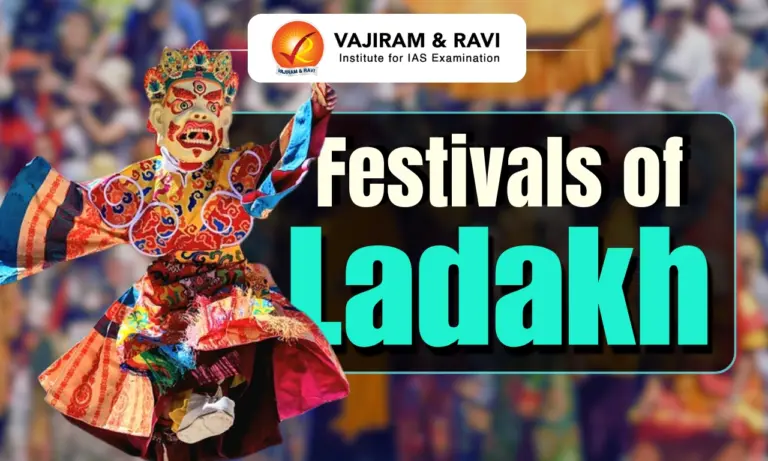
Ladakh is a land of majestic mountains, ancient monasteries, and vibrant cultural traditions. The Festivals of Ladakh reflect the region’s rich Buddhist heritage, unique customs, and close connection with nature. These festivals are celebrated with colorful masked dances, traditional music, religious rituals, local cuisine, and community gatherings. They not only preserve Ladakh’s cultural identity but also attract thousands of tourists from across the world.
Major Festivals of Ladakh
The major festivals of Ladakh are celebrated throughout the year and reflect the region’s rich Buddhist heritage, vibrant traditions, and unique cultural identity. These festivals are marked by colorful Cham dances, religious ceremonies, traditional music, and community celebrations held mainly at ancient monasteries. Popular festivals such as Hemis, Losar, Dosmoche, Sindhu Darshan, and Ladakh Harvest Festival attract both pilgrims and tourists.
1. Hemis Festival
The Hemis Festival is the most celebrated monastery festival in Ladakh, held at Hemis Monastery to commemorate the birth anniversary of Guru Padmasambhava (Guru Rinpoche). It is renowned for its vibrant religious ceremonies and traditional Cham dance performances.
- Celebrated annually in June-July according to the Tibetan lunar calendar.
- Held at the Hemis Monastery, one of the largest and wealthiest monasteries in Ladakh.
- Marks the birth anniversary of Guru Padmasambhava, who introduced Tantric Buddhism to Tibet.
- Monks perform the sacred Cham Dance, symbolizing the victory of good over evil.
- Features traditional music using drums, cymbals, and long horns.
- Attracts pilgrims, photographers, and tourists from around the world.
- A giant Thangka of Guru Padmasambhava is displayed once every 12 years.


2. Losar Festival
The Losar Festival marks the Tibetan New Year and is one of the oldest and most important festivals celebrated in Ladakh. It signifies new beginnings, prosperity, and spiritual purification.
- Celebrated during December-January, depending on the Tibetan lunar calendar.
- Marks the beginning of the Tibetan New Year.
- Homes and monasteries are cleaned and decorated before the celebrations.
- Special prayer ceremonies are conducted for peace and prosperity.
- Families prepare traditional Ladakhi dishes such as Khambir, Thukpa, and Butter Tea.
- Folk dances, cultural performances, and community feasts are organized.
- Symbolizes renewal, happiness, and good fortune.
3. Dosmoche Festival
The Dosmoche Festival, also known as the Festival of the Scapegoat, is celebrated to ward off negative forces and ensure peace and prosperity for the coming year. It is one of the important winter festivals of Ladakh.
- Celebrated in February at Leh and Likir Monastery.
- Initiated during the reign of the Ladakhi monarchy.
- Monks perform sacred Cham dances wearing elaborate masks.
- Religious rituals are conducted to eliminate evil spirits and negative energies.
- Sacred offerings and symbolic effigies are used during the ceremonies.
- Strengthens community harmony and spiritual well-being.
- Marks the transition from winter towards spring.
4. Sindhu Darshan Festival
The Sindhu Darshan Festival is a cultural festival dedicated to the River Indus (Sindhu), highlighting its historical, cultural, and civilizational importance. It also promotes national integration and cultural harmony.
- Celebrated annually in June on the banks of the River Indus near Leh.
- Honors the River Indus, one of the world’s oldest river systems.
- Features multi-cultural performances by artists from different parts of India.
- Includes prayer ceremonies, river worship, and cultural exhibitions.
- Promotes national unity, interfaith harmony, and cultural tourism.
- Showcases Ladakhi traditions, handicrafts, and local cuisine.
- Encourages awareness about the historical significance of the Indus River.
5. Phyang Tsedup Festival
The Phyang Tsedup Festival is an important Buddhist festival celebrated at Phyang Monastery in Ladakh. It is known for its sacred rituals, vibrant Cham dances, and preservation of Tibetan Buddhist traditions.
- Celebrated annually during July-August.
- Held at the historic Phyang Monastery near Leh.
- Monks perform the sacred Cham Dance wearing colorful masks and robes.
- Dedicated to the teachings of Lord Buddha and Guru Padmasambhava.
- Includes prayer ceremonies, religious discourses, and traditional music.
- Promotes Buddhist philosophy, cultural heritage, and community participation.
- Attracts pilgrims and tourists from India and abroad.
6. Tak Tok Festival
The Tak Tok Festival is celebrated at the Tak Tok Monastery, the only monastery in Ladakh belonging to the Nyingma school of Tibetan Buddhism. The festival commemorates Guru Padmasambhava and showcases unique religious traditions.
- Celebrated annually during July-August.
- Held at Tak Tok Monastery, located about 50 km from Leh.
- Dedicated to Guru Padmasambhava (Guru Rinpoche).
- Features sacred Cham dance performances by Buddhist monks.
- Includes prayers, rituals, and blessings for devotees.
- Highlights the traditions of the Nyingma sect of Tibetan Buddhism.
- Encourages spiritual learning and preservation of Ladakh’s monastic culture.
7. Ladakh Harvest Festival
The Ladakh Harvest Festival is a cultural festival organized to celebrate the successful harvest season and showcase the rich traditions of Ladakh. It reflects the region’s agricultural heritage while promoting tourism and local craftsmanship.
- Celebrated annually in September.
- Organized by the Ladakh Administration and the Tourism Department.
- Showcases folk dances, traditional music, and cultural processions.
- Features polo matches, archery competitions, and local sports.
- Exhibits Ladakhi handicrafts, handloom products, and regional cuisine.
- Promotes cultural tourism and supports local artisans and farmers.
- Highlights the diversity of Ladakh’s ethnic communities and traditions.
8. Yuru Kabgyat Festival
The Yuru Kabgyat Festival is a prominent monastery festival celebrated at the ancient Lamayuru Monastery, one of the oldest monasteries in Ladakh. It is famous for its sacred masked dances and elaborate Buddhist rituals.
- Celebrated annually during June-July.
- Held at Lamayuru Monastery, one of the oldest monasteries in the Himalayan region.
- Monks perform the sacred Cham Dance, symbolizing the triumph of good over evil.
- Includes prayer ceremonies, religious teachings, and ritual offerings.
- Celebrates the spiritual legacy of Mahayana Buddhism.
- Draws pilgrims and visitors from across India and abroad.
- Plays a vital role in preserving Ladakh’s Buddhist heritage and monastic traditions.
9. Matho Nagrang Festival
The Matho Nagrang Festival is one of Ladakh’s most unique Buddhist festivals, celebrated at Matho Monastery. It is renowned for its ancient oracle tradition, where monks in a spiritual trance offer predictions and blessings for the coming year.
- Celebrated annually during February-March.
- Held at Matho Monastery, located near Leh.
- Famous for the Oracle (Rongtsan) tradition, where selected monks enter a spiritual trance.
- Oracles make predictions regarding the well-being of the people and the region.
- Includes sacred Cham dance performances by Buddhist monks.
- Devotees seek blessings, guidance, and spiritual protection.
- Reflects the rich traditions of Tibetan Buddhism and Ladakh’s monastic culture.
10. Stok Guru Tsechu
The Stok Guru Tsechu is an important religious festival celebrated at Stok Monastery, known for its sacred rituals and oracle performances. It is one of the earliest monastery festivals of the year and holds deep spiritual significance for the local community.
- Celebrated annually during February.
- Held at Stok Monastery, near Leh.
- Dedicated to Guru Padmasambhava (Guru Rinpoche) and Buddhist teachings.
- Features traditional Cham dance performed by monks wearing elaborate masks.
- Includes the oracle tradition, where monks deliver spiritual messages and blessings.
- Attracts devotees, pilgrims, and tourists seeking cultural and religious experiences.
- Promotes the preservation of Ladakh’s Buddhist heritage, monastic traditions, and community values.
Festivals of Ladakh Significance
The Festivals of Ladakh are an integral part of the region’s cultural and religious life. They preserve centuries-old Buddhist traditions, strengthen community bonds, and showcase Ladakh’s unique heritage through rituals, music, dance, and local customs. These festivals also play an important role in promoting tourism and preserving the region’s rich cultural identity.
- Preserve Buddhist Heritage: Help protect and promote the teachings, rituals, and traditions of Tibetan Buddhism.
- Promote Cultural Identity: Reflect Ladakh’s unique customs, language, traditional attire, music, and art forms.
- Strengthen Social Harmony: Bring together local communities, monks, and visitors in collective celebrations and religious ceremonies.
- Celebrate Spiritual Values: Encourage peace, compassion, mindfulness, and moral living through prayers and sacred rituals.
- Preserve Monastic Traditions: Support the continuation of ancient practices followed in Ladakh’s historic monasteries (Gompas).
- Promote Tourism: Attract domestic and international tourists, contributing to the region’s economy and cultural exchange.
- Support Local Livelihoods: Generate income for artisans, performers, hoteliers, guides, and local businesses through festival-related activities.
- Showcase Traditional Arts: Provide a platform for Cham dances, folk music, handicrafts, and traditional Ladakhi cuisine.
- Strengthen National Integration: Festivals such as the Sindhu Darshan Festival promote cultural unity by bringing together participants from different parts of India.
- Preserve Intangible Cultural Heritage: Ensure that Ladakh’s oral traditions, rituals, festivals, and performing arts are passed on to future generations.

 Last updated on Oct, 2026
→ UPSC 2027 Notification will be released on 13 January 2027 at upsconline.nic.in.
→ Check Nobel Prize 2026 Winners List here.
→ Download PIB PRiSM Monthly Magazine 2026 here.
→ Check UPSC Monthly Current Affairs Magazine The Recitals here.
→ Check out the latest UPSC Syllabus here.
→ Download UPSC Model Answers for Mains 2026
→ UPSC Mains Question Paper 2026 is out now for Essay & GS Paper 1, 2, 3 & 4.
→ UPSC Calendar 2027 has been released.
→ Enroll in Vajiram & Ravi’s UPSC Mains Test Series 2027 for structured answer writing practice, expert evaluation, and exam-oriented feedback.
→ Join Vajiram & Ravi’s UPSC Mentorship Program 2027 for personalized guidance, strategy planning, and one-to-one support from experienced mentors.
→ Go through the UPSC Mains Previous Year Papers to enhance your preparation.
→ UPSC has released UPSC Toppers List 2025 with the Civil Services final result on its official website.
→ Also check Best UPSC Coaching in India
Festivals of Ladakh FAQs
Q1. Which is the most famous festival of Ladakh?+
Q2. What is the significance of the Losar Festival?+
Q3. Which festival of Ladakh is famous for oracle predictions?+
Q4. What is the Cham Dance in Ladakh?+
Q5. Which festival celebrates the River Indus in Ladakh?+
Tags: festivals festivals of ladakh geography geography notes