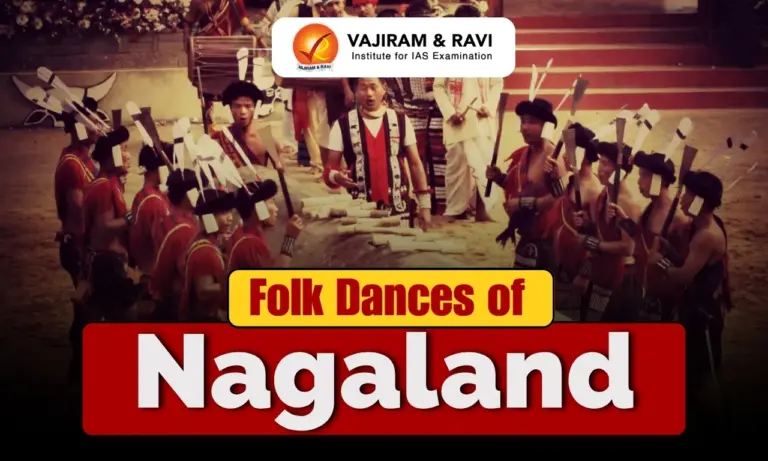
Folk Dances of Nagaland reflect the traditions, social values, festivals and historical experiences of different Naga communities. These dances are closely connected with harvests, purification rituals, feasts, warfare traditions and community celebrations. Major forms include Changsang, Chang Lo, Monyu Asho, Melo Phita, Udoho, Rukhyo Sharu, Kukuyipheto, Khupielilie and Baimaijai. Each dance has a distinct community identity and cultural purpose.
Folk Dances of Nagaland
Folk Dances of Nagaland are performed by different tribes during important festivals and social occasions. Their themes range from victory and warfare to harvest, purification, prayer, community life and traditional celebrations. Costumes, songs, instruments, group formations and movements differ across tribes. These performances preserve oral traditions and provide an important way of passing cultural knowledge from older generations to younger members of the community.
Folk Dances of Nagaland Features
The major highlighting features of the Folk Dances of Nagaland has been listed below:
- Cultural Significance: Folk Dances of Nagaland preserve tribal identity through traditional movements, songs, costumes, ceremonies and historical themes. They also connect festivals with community participation, social memory and intergenerational cultural transmission.
- Warrior Traditions: Several Folk Dances of Nagaland retain themes connected with historical warfare. Udoho, Rukhyo Sharu, Kulu-Tsen, Chang Lo and Angushu Kighilhe particularly reflect warrior, victory, or head hunting traditions.
- Festival Based Performance: Many Folk Dances of Nagaland are inseparable from specific festivals. Changsang is linked with Naknyuliim, Melo Phita with Sekrenyi, Monyu Asho with Phom Monyu and Akok-Khi with Mongmong.
- Community Participation: These dances are not limited to entertainment. Their performance can involve men, women, young people, elders, village groups and festival participants, making dance an important part of collective cultural life.
- Cultural Diversity: The variety of Folk Dances of Nagaland reflects the state’s numerous tribal communities. Differences in dance themes, costumes, instruments, movements and festival associations demonstrate the distinct cultural identities maintained across communities.


List of Famous Folk Dances of Nagaland
The following list of Folk Dances of Nagaland represent important tribal traditions and show the cultural diversity of Nagaland through distinct themes, occasions and performance styles.
- Changsang Dance: Changsang is a traditional folk dance of the Chang Naga Tribe. It is performed during Naknyuliim festival and includes colorful traditional outfits, songs and prayers to propitiate the sky God.
- Chang Lo / Sua Lua: Chang Lo, also called Sua Lua, is a traditional dance of the Chang Naga tribe. It historically celebrated victory over enemies and represents the community’s warrior traditions.
- Monyu Asho: Monyu Asho is performed by the Phom Nagas during the Phom Monyu festival in April. The festival follows sowing and marks winter’s end, summer’s beginning and prayers for successful crops.
- Melo Phita: Melo Phita is an Angami traditional dance performed during Sekrenyi in February. Sekrenyi is a purification festival associated with cleansing the body and soul and marking young people’s transition into adulthood.
- Udoho: Udoho is a traditional war dance of the Angami Naga tribe. Its name refers to holding a spear and shouting at an enemy, portraying the position and spirit of a warrior.
- Angushu Kighilhe: Angushu Kighilhe is a traditional war dance of the Sumi tribe. It is performed by menfolk and represents the martial traditions preserved within Sumi cultural practices.
- Rukhyo Sharu: Rukhyo Sharu is a traditional folk dance of the Lotha Naga tribe. Its literal meaning is “victory dance” and it was historically performed during the head hunting period to celebrate victory over enemies.
- Langnyu-Khiamtsangshe: Langnyu-Khiamtsangshe is a traditional dance of the Khiamniungan Naga tribe. It is performed during Miu and Tsokum, two important festivals associated with the community’s cultural traditions.
- Akok-Khi: Akok-Khi is a traditional dance performed by the Sangtam tribe during the Mongmong Festival of Nagaland. Mongmong is observed from 1st to 6th September and emphasizes togetherness, prayers, songs, dances, feasting and gift exchange.
- Khupielilie: Khupielilie is a traditional folk dance performed exclusively by women of the Pochury Naga Tribe. It forms an important part of the Nazu festival, which is observed in February every year.
- Kukuyipheto: Kukuyipheto is a traditional dance of the Chakhesang Nagas. It is known for fast and complicated footwork and is performed by able bodied men wearing complete traditional attire during the Feast of Merit.
- Kulu-Tsen: Kulu-Tsen is a traditional folk dance of the Yimkhiung tribe. “Kulu” means head and “Tsen” means dance, making the name directly associated with head related warrior traditions.
- Nokinketer Tsungsang: Nokinketer Tsungsang is a traditional dance of the Ao Naga tribe. The term “Nokinteker” literally means “war hero”, linking the dance with the historical warrior traditions of the Ao community.
- Butterfly Dance: Butterfly Dance is associated with the Zeliangrong tribe. It forms part of the traditional cultural expressions of the community and represents the diversity of folk performance traditions found among Nagaland’s tribal groups.
- Baimaijai / Plate Dance: Baimaijai, also called Plate Dance, is a traditional dance of the Dimasa Kachari. Young girls or women perform it using two plates, one in each hand, creating its distinctive performance style.

 Last updated on Oct, 2026
→ UPSC 2027 Notification will be released on 13 January 2027 at upsconline.nic.in.
→ Check Nobel Prize 2026 Winners List here.
→ Download PIB PRiSM Monthly Magazine 2026 here.
→ Check UPSC Monthly Current Affairs Magazine The Recitals here.
→ Check out the latest UPSC Syllabus here.
→ Download UPSC Model Answers for Mains 2026
→ UPSC Mains Question Paper 2026 is out now for Essay & GS Paper 1, 2, 3 & 4.
→ UPSC Calendar 2027 has been released.
→ Enroll in Vajiram & Ravi’s UPSC Mains Test Series 2027 for structured answer writing practice, expert evaluation, and exam-oriented feedback.
→ Join Vajiram & Ravi’s UPSC Mentorship Program 2027 for personalized guidance, strategy planning, and one-to-one support from experienced mentors.
→ Go through the UPSC Mains Previous Year Papers to enhance your preparation.
→ UPSC has released UPSC Toppers List 2025 with the Civil Services final result on its official website.
→ Also check Best UPSC Coaching in India
Folk Dances of Nagaland FAQs
Q1. What are the famous Folk Dances of Nagaland?+
Q2. Which is the traditional war dance of the Angami Tribe of Nagaland?+
Q3. Which dance is performed during the Sekrenyi Festival of Nagaland?+
Q4. Which is the traditional dance of the Chang Naga Tribe of Nagaland?+
Q5. Which Folk Dance of Nagaland is performed by women with plates?+
Tags: folk dances folk dances of nagaland nagaland