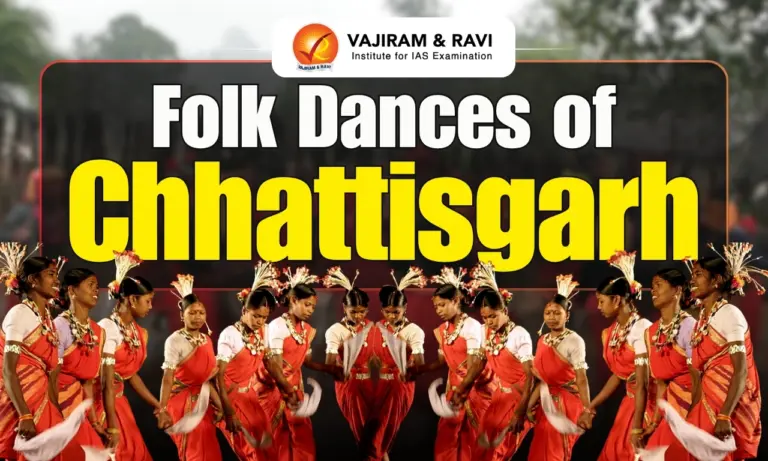
Folk dances of Chhattisgarh are a lively reflection of the state’s simple lifestyle, deep-rooted traditions, and close connection with nature. These dances are an important part of village life, performed during festivals, harvest seasons, and social gatherings with great energy and joy. They are not just a form of entertainment but also a way for people to express their emotions, beliefs, and cultural identity. Through rhythmic movements, traditional music, and colorful costumes, the folk dances of Chhattisgarh beautifully showcase the spirit of community bonding and celebration.
Famous Folk Dances of Chhattisgarh
Famous Folk Dances of Chhattisgarh reflect the rich cultural heritage, traditions, and community life of the state. These dances are closely connected with festivals, agriculture, tribal beliefs, and devotional practices. Each dance form has its own unique style, purpose, and significance, which are discussed in detail below.
1. Pandavani Dance
- Pandavani is a traditional storytelling folk dance of Chhattisgarh that brings the stories of the Mahabharata to life in a very engaging way.
- The performer usually plays multiple characters like Yudhishthira, Arjuna, and Bhima using voice, expressions, and body movements, which makes it very dramatic and interesting.
- It started as an oral storytelling tradition in villages and later developed into a structured performance with music and narration.
- Famous artist Teejan Bai played an important role in making this art form popular at the national and international level.
- The performance begins with a narrator who sings and explains the story, followed by expressive movements and symbolic gestures.
- Instruments like dholak, tambura, mandar, and flute create rhythm and emotional depth in the performance.
2. Panthi Dance
- Panthi Dance is a vibrant and devotional folk dance of Chhattisgarh, mainly performed by the Satnami community to honor their spiritual leader Guru Ghasidas.
- It is especially performed during Maghi Purnima (birth anniversary of Guru Ghasidas) and other religious and community festivals, bringing people together in a spirit of devotion and unity.
- The dance is known for its high energy, fast-paced movements, and strong rhythmic coordination, making it both powerful and visually engaging.
- A key highlight is its acrobatic style, where dancers perform human pyramids, jumps, and complex formations, symbolizing teamwork, discipline, and collective strength.
- The costume is simple yet symbolic – dancers wear a white dhoti, waist belt, and ghungroo (anklets), often performing bare-chested with a sacred thread, representing purity and spiritual dedication.
- Music plays an important role, with instruments like mridangam and cymbals creating strong beats that guide the dancers and enhance the devotional atmosphere.
- The themes focus on devotion, social equality, truth, and moral values, reflecting the teachings of Guru Ghasidas and spreading his message through performance.
- Panthi Dance represents the cultural identity and heritage of the Satnami community and helps preserve their traditions across generations.
- It is not just entertainment but a form of spiritual expression, where dancers connect deeply with their faith and community values.
3. Raut Nacha Dance
- Raut Nacha is a lively folk dance performed mainly by the Yadav community, especially during festivals related to Lord Krishna.
- It represents the life of cowherds and celebrates Krishna’s love for cows, nature, and playful activities.
- The dance is performed in groups where dancers use sticks and move in rhythmic patterns, often acting out stories from Krishna’s life.
- It has deep roots in rural traditions and was originally performed as a devotional activity during harvest and religious festivals.
- The energetic footwork, jumping movements, and coordinated stick play make the dance very vibrant.
- Musical instruments like dhol, mandar, tasha, and flute create a fast and exciting rhythm.
4. Karma Dance
- Karma Dance is an important tribal dance performed during the Karma festival, which is dedicated to the sacred Karma tree.
- It reflects the close relationship between tribal communities and nature, especially during the harvest season.
- Dancers form a circle around the tree, symbolizing the cycle of life, prosperity, and harmony with nature.
- The movements include swaying, stamping, and rotating steps that represent farming activities and seasonal changes.
- It originated among tribes like Gonds, Baigas, and Oraons, and has been passed down for generations.
- Instruments such as dholak, tambura, and chimta provide rhythm and enhance the traditional feel.
5. Saila Dance
- Saila Dance is a joyful harvest dance performed by tribal communities to express happiness after a successful crop season.
- It shows gratitude towards nature and celebrates unity and togetherness in the community.
- Dancers usually perform in semi-circular formations and move in a synchronized manner.
- The dance includes gentle swaying movements that resemble crops moving in the wind, along with quick turns and jumps.
- It originated from agricultural traditions and was mainly performed by tribal groups like the Gonds.
- Instruments like dholak and chimta help maintain rhythm and highlight movements.
6. Suwa Dance
- Suwa Dance is mainly performed by women during the harvest season to celebrate nature and prosperity.
- The dance expresses joy, gratitude, and the close connection between people and agriculture.
- Dancers form circles, clap rhythmically, and perform gentle steps that resemble farming activities like sowing and harvesting.
- It originated in rural areas where farming plays a major role in daily life.
- Instruments like dholak, tumbi, and flute create a soft and pleasant musical environment.
- The synchronized movements reflect unity and collective happiness.
7. Kaksar Dance
- Kaksar Dance is a traditional tribal dance performed during religious occasions to seek blessings for health, wealth, and good harvest.
- It has strong spiritual significance and is deeply connected to tribal beliefs and rituals.
- The dance begins with prayers and includes slow, graceful movements with symbolic hand gestures.
- It represents unity with nature and the divine, often performed in circular formations.
- Instruments like dholak, bansuri (flute), and tumbi create a calm and spiritual atmosphere.
- It has been practiced since ancient times during sowing and harvesting seasons.
8. Cherchera Dance
- Cherchera Dance is performed during harvest festivals to celebrate success, joy, and community unity.
- It is an energetic dance where both men and women participate together.
- The dance includes fast footwork, spinning, and formation of patterns in groups.
- It originated from farming communities as a way to thank nature for a good harvest.
- Instruments like dholak, tumbi, and flute create a lively and festive mood.
- The synchronized group performance highlights cooperation and coordination.
9. Khada Nacha Dance
- Khada Nacha is a powerful dance performed mainly by men to show strength, bravery, and courage.
- It has roots in warrior traditions where it was used to display physical power and confidence.
- The dance includes strong foot stamping, bold gestures, and energetic movements.
- Dancers perform in lines or circles, maintaining perfect synchronization.
- Instruments like dhol and tasha create loud and intense beats that match the dance style.
- It is often performed during fairs and celebrations to express pride.
10. Gendi Dance
- Gendi Dance is performed during Diwali to celebrate joy, light, and togetherness.
- Dancers use long wooden sticks (gendi) and perform spinning movements in circles.
- The circular motion symbolizes the cycle of life and unity among people.
- It originated in rural areas and became an important part of Diwali celebrations.
- The dance is often performed at night with lamps, creating a beautiful visual effect.
- Instruments like dholak and flute provide rhythm and balance to the movements.
Also read : Festivals of Chhattisgarh
Folk Dances of Chhattisgarh Cultural Significance
- Folk dances like Panthi Dance and Raut Nacha show strong religious devotion and spiritual beliefs. Panthi is linked with Guru Ghasidas and the Satnami community, while Raut Nacha is associated with Lord Krishna, reflecting faith through music and movement.
- Dances such as Karma Dance and Suwa Dance are performed during harvest seasons and festivals, expressing happiness, prosperity, and gratitude towards nature. They highlight the close relationship between people and agricultural life.
- Tribal dances like Gaur Dance represent the identity, customs, and traditions of tribal communities. These dances depict hunting practices, bravery, and traditional lifestyles, helping preserve indigenous culture.
- Group performances like Raut Nacha and Karma Dance promote social unity and community bonding. People participate together, strengthening cooperation, harmony, and collective cultural expression.
- Dances such as Gendi Dance reflect daily life activities and skills like balance, farming, and rural practices. They act as a medium to portray the lifestyle and occupations of the people.
- Folk dances like Suwa Dance and Panthi Dance help in the preservation of cultural heritage, folklore, and oral traditions through songs, music, and storytelling passed from one generation to another.


 Last updated on Oct, 2026
→ UPSC 2027 Notification will be released on 13 January 2027 at upsconline.nic.in.
→ Check Nobel Prize 2026 Winners List here.
→ Download PIB PRiSM Monthly Magazine 2026 here.
→ Check UPSC Monthly Current Affairs Magazine The Recitals here.
→ Check out the latest UPSC Syllabus here.
→ Download UPSC Model Answers for Mains 2026
→ UPSC Mains Question Paper 2026 is out now for Essay & GS Paper 1, 2, 3 & 4.
→ UPSC Calendar 2027 has been released.
→ Enroll in Vajiram & Ravi’s UPSC Mains Test Series 2027 for structured answer writing practice, expert evaluation, and exam-oriented feedback.
→ Join Vajiram & Ravi’s UPSC Mentorship Program 2027 for personalized guidance, strategy planning, and one-to-one support from experienced mentors.
→ Go through the UPSC Mains Previous Year Papers to enhance your preparation.
→ UPSC has released UPSC Toppers List 2025 with the Civil Services final result on its official website.
→ Also check Best UPSC Coaching in India
Folk Dances of Chhattisgarh FAQs
Q1. What are the folk dances of Chhattisgarh?+
Q2. Which are the most famous folk dances of Chhattisgarh?+
Q3. What is Pandavani dance known for?+
Q4. Why is Raut Nacha dance performed?+
Q5. What is the significance of Karma Dance?+
Q6. Which folk dance is performed mainly by women in Chhattisgarh?+
Tags: art and culture art and culture notes folk dances folk dances of chhattisgarh