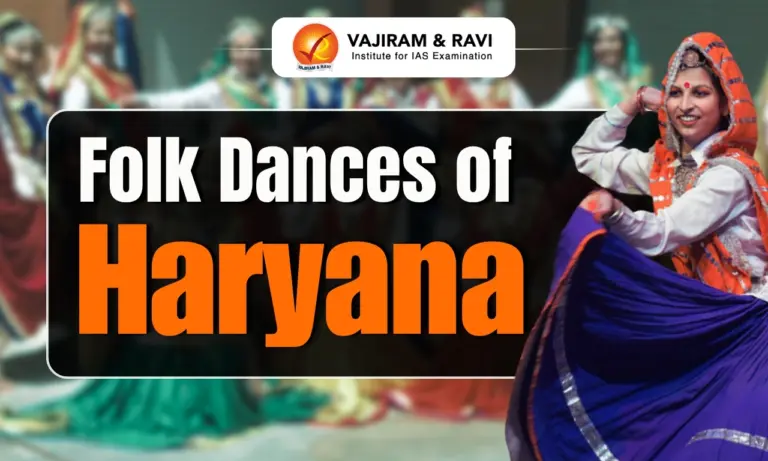
Folk dances of Haryana are a lively reflection of the state’s simple, joyful, and community-centered lifestyle. These dances are deeply connected to everyday life, farming traditions, and seasonal celebrations. Performed during festivals, weddings, and social gatherings, they bring people together and create a strong sense of unity and belonging. With energetic movements, rhythmic music, and colorful traditional attire, the folk dances of Haryana beautifully express the emotions, traditions, and cultural spirit of its people.
Famous Folk Dances of Haryana
Famous folk dances of Haryana reflect the state’s rich cultural traditions and vibrant lifestyle. These dances are closely linked with festivals, celebrations, and daily life, expressing the joy and energy of the people. Performed with rhythmic movements, lively music, and traditional attire, they form an important part of Haryana’s identity. The major folk dances are discussed below with their key features and significance.
1. Phag Dance
- Phag Dance is a joyful spring and harvest dance performed during the month of Phalgun, when the winter season ends and crops are ready.
- Both men and women participate, expressing happiness and relief after months of hard farming work.
- Women wear bright and colorful traditional dresses, while men tie vibrant turbans, adding to the festive look.
- The dance includes simple yet energetic movements, often accompanied by singing and clapping.
- It reflects the celebration of nature, prosperity, and new beginnings in rural Haryana.
2. Saang Dance (Swang)
- Saang Dance is a unique folk theatre and dance form that combines storytelling, acting, and music.
- It is performed by a group of 10-12 people, usually in open public spaces, making it accessible to everyone.
- The dance presents religious stories, folk tales, and moral lessons, often lasting for several hours.
- A special feature is cross-dressing, where male performers dress as female characters to enact roles.
- The word Saang means “disguise or imitation”, highlighting its dramatic nature.
- It is believed to have been shaped into its present form by Kishan Lal Bhaat in the 18th century.
3. Chhathi Dance
- Chhathi Dance is a ritual dance performed by women to celebrate the birth of a male child.
- It takes place on the sixth day after the child’s birth, usually during the night.
- The dance is filled with joy, blessings, and emotional expressions, reflecting family happiness.
- Women sing and dance together, creating a warm and festive atmosphere.
- At the end, boiled wheat and chana are distributed, symbolizing sharing of happiness.
- It highlights traditional beliefs and social customs related to childbirth in Haryana.
4. Khoria Dance
- Khoria Dance is a women-only dance mainly performed during weddings, especially when men are away in the baraat (wedding procession).
- It is inspired by the Jhumar dance style, with graceful steps and rhythmic movements.
- Women wear colorful skirts, dupattas, and traditional jewelry, enhancing the beauty of the performance.
- The dance includes playful songs and expressions, often reflecting daily life and relationships.
- Movements start slowly and gradually become faster and more energetic.
- It represents women’s bonding, creativity, and joy during special occasions.
5. Dhamal Dance
- Dhamal Dance is a powerful male-only dance popular in the Gurgaon region, especially among the Ahir community.
- It is believed to have roots in the time of the Mahabharata, giving it historical importance.
- The dance is performed after a good harvest, expressing gratitude and happiness.
- Men form a semi-circle, sing loudly, and move energetically to the beats of drums.
- Before starting, they often offer prayers to Lord Ganesha, Goddess Bhavani, and the Trinity.
- It reflects strength, unity, and devotion, along with celebration of success.
6. Daph Dance
- Daph Dance is a seasonal folk dance performed during the spring season by farmers.
- It celebrates a good harvest and prosperity, marking a joyful time for rural communities.
- The main musical instrument used is the ‘Daph’ (a one-sided drum), which gives the dance its name.
- Women’s ornaments also create rhythmic sounds, adding to the musical effect.
- The dance involves simple, rhythmic steps, making it easy and enjoyable for group participation.
- It represents harmony between people, music, and nature.
7. Ghoomar Dance
- Ghoomar Dance is a graceful and circular dance form popular in the western parts of Haryana.
- It is mostly performed by young girls, especially during festivals like Holi, Teej, and Gangaur.
- The dancers move in circles, clapping and twirling, creating a visually beautiful pattern.
- As the music speeds up, dancers form pairs and spin faster with great coordination.
- Songs sung during the dance are often filled with humor, satire, and social themes.
- It reflects joy, celebration, and feminine grace.
8. Jhumar Dance
- Jhumar Dance is named after a traditional ornament called “Jhumar”.
- It is mainly performed by young married women, especially during festive occasions.
- The dance includes graceful swaying movements and gentle spins, giving it a soft and elegant feel.
- Performers wear colorful attire and traditional jewelry, enhancing the visual appeal.
- It is accompanied by instruments like dholak and thali, creating a rhythmic background.
- In some regions, it is also known as “Haryanvi Gidda”.
9. Gugga Dance
- Gugga Dance is a devotional dance performed in honor of Gugga Pir, a respected local saint.
- It is performed mainly by men during religious processions.
- Dancers sing songs of praise and devotion while moving around the saint’s shrine.
- The performance creates a spiritual and emotional atmosphere among devotees.
- It reflects faith, belief, and community participation in religious traditions.
10. Loor Dance
- Loor Dance is performed by young girls during the spring season (Phalguna), especially around Holi.
- It celebrates the arrival of spring and the sowing of Rabi crops.
- The dance is known for its question-answer style songs, making it interactive and fun.
- Girls wear traditional attire like ghagra, kurti, and chundri, adding vibrant colors.
- It expresses youthfulness, joy, and seasonal celebration.
11. Ras Leela Dance
- Ras Leela Dance is a devotional dance drama based on the life of Lord Krishna.
- It was traditionally popular in the Braja region of Faridabad.
- The dance includes songs, storytelling, and expressive movements depicting Krishna’s divine acts.
- Performers wear colorful costumes with embroidery and mirror work, enhancing the visual appeal.
- It creates a sense of spiritual joy and devotion, connecting people with mythology.
- This dance highlights the religious and cultural depth of Haryana’s traditions.
Folk Dances of Haryana Cultural Significance
- Folk dances like Phag Dance, Loor Dance, and Daph Dance reflect the strong connection of people with agriculture and seasonal cycles, especially celebrating harvests and spring festivals.
- Dances such as Saang Dance and Ras Leela Dance highlight religious devotion and storytelling traditions, presenting tales from mythology and local folklore.
- Dhamal Dance and Paika-like martial elements (in spirit) showcase the strength, bravery, and warrior traditions, especially among communities like the Ahirs.
- Folk forms like Khoria Dance and Jhumar Dance emphasize women’s participation, social bonding, and family traditions, especially during weddings and festive occasions.
- Gugga Dance represents faith and devotion, as it is performed in honor of Gugga Pir, showing the importance of local beliefs and spiritual practices.
- Folk dances of Haryana act as a medium of cultural preservation and unity, passing down traditions, values, music, and customs from one generation to another.


 Last updated on Oct, 2026
→ UPSC 2027 Notification will be released on 13 January 2027 at upsconline.nic.in.
→ Check Nobel Prize 2026 Winners List here.
→ Download PIB PRiSM Monthly Magazine 2026 here.
→ Check UPSC Monthly Current Affairs Magazine The Recitals here.
→ Check out the latest UPSC Syllabus here.
→ Download UPSC Model Answers for Mains 2026
→ UPSC Mains Question Paper 2026 is out now for Essay & GS Paper 1, 2, 3 & 4.
→ UPSC Calendar 2027 has been released.
→ Enroll in Vajiram & Ravi’s UPSC Mains Test Series 2027 for structured answer writing practice, expert evaluation, and exam-oriented feedback.
→ Join Vajiram & Ravi’s UPSC Mentorship Program 2027 for personalized guidance, strategy planning, and one-to-one support from experienced mentors.
→ Go through the UPSC Mains Previous Year Papers to enhance your preparation.
→ UPSC has released UPSC Toppers List 2025 with the Civil Services final result on its official website.
→ Also check Best UPSC Coaching in India
Folk Dances of Haryana FAQs
Q1. What are the famous folk dances of Haryana?+
Q2. What is the cultural significance of folk dances in Haryana?+
Q3. When is Phag Dance performed?+
Q4. What makes Saang Dance unique?+
Q5. Which Haryana folk dances are related to festivals?+
Q6. What is the importance of Dhamal Dance?+
Q7. Which dances highlight women’s participation in Haryana?+
Q8. What is Gugga Dance associated with?+
Tags: art and culture art and culture notes folk dances folk dances of haryana