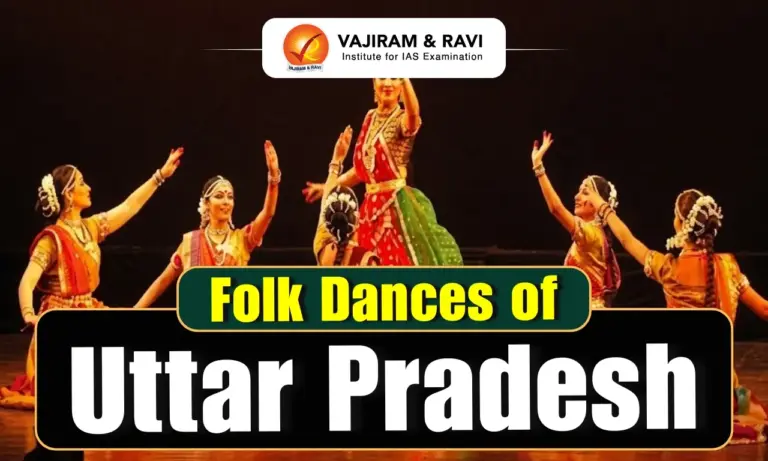
Uttar Pradesh is known for its rich cultural heritage, traditional arts, music, and folk performances. The folk dances of Uttar Pradesh reflect the social life, religious traditions, festivals, and customs of different communities across the state. These dances are usually performed during festivals, weddings, religious celebrations, seasonal events, and social gatherings.
Folk Dances of Uttar Pradesh are important because they preserve the state’s regional traditions and cultural identity. Different regions have developed their own styles, costumes, music, and performance traditions.
Major Folk Dances of Uttar Pradesh
Major Folk Dances of Uttar Pradesh reflect the state’s religious traditions, regional diversity, festivals, community life, and local customs.
1. Raslila
- Region: Raslila is mainly associated with the Braj region, especially Mathura, Vrindavan, and surrounding areas.
- Theme: It presents stories related to the life of Lord Krishna, particularly his childhood, youth, and relationship with Radha and the Gopis.
- Nature: It is a devotional dance-drama that combines dance, music, singing, dialogue, and acting.
- Religious Connection: The performance is deeply connected with the Bhakti tradition, particularly Krishna devotion.
- Performance: Traditionally, young performers may enact different characters from Krishna’s life, while singers and musicians provide the musical accompaniment.
- Occasions: Raslila is commonly performed during religious festivals, fairs, and Krishna-related celebrations.
- Cultural Importance: It has played an important role in preserving the religious stories and cultural traditions of the Braj region.
- Key Feature: The dance uses performance and storytelling to communicate devotional and mythological narratives.
2. Charkula
- Region: Charkula is primarily associated with the Braj region of Uttar Pradesh.
- Name: The dance gets its name from the distinctive charkula, a large multi-tiered structure traditionally carried on the dancer’s head.
- Performance: Women traditionally perform the dance while balancing the decorated structure on their heads.
- Special Feature: The structure may contain several tiers and is traditionally decorated with lamps, flowers, and colourful materials.
- Religious Association: The dance is closely connected with the Radha-Krishna traditions of Braj.
- Occasions: It is performed during festivals, religious celebrations, and important local occasions.
- Music: Traditional folk songs and rhythmic musical accompaniment support the dancers during the performance.
- Skill Required: Maintaining balance while performing coordinated movements makes it a visually demanding folk performance.
- Cultural Importance: Charkula represents the distinctive folk identity and devotional culture of Braj.
3. Nautanki
- Region: Nautanki has traditionally been popular in Uttar Pradesh and other parts of North India.
- Nature: Unlike a purely dance-based form, Nautanki is a folk theatre tradition that combines acting, singing, music, dialogue, and dance.
- Storytelling: Performances traditionally narrate stories through a combination of spoken dialogue and musical sequences.
- Themes: Stories can be based on mythology, legends, historical personalities, romance, bravery, and social issues.
- Performance Style: Songs and rhythmic dialogues are important parts of the presentation and help move the story forward.
- Audience: Historically, Nautanki has been particularly popular among rural and semi-urban communities.
- Social Role: Apart from entertainment, it has been used to communicate social messages and ideas to the public.
- Cultural Importance: It has helped preserve oral storytelling, traditional music, and folk theatre traditions.
- Key Feature: Its combination of drama, music, dance, and storytelling makes it one of the most distinctive folk performance traditions of North India.
4. Kajri
- Region: Kajri is particularly popular in eastern Uttar Pradesh, especially around Mirzapur and nearby areas.
- Season: It is strongly associated with the monsoon or rainy season.
- Theme: Kajri traditionally expresses emotions related to love, separation, longing, nature, and the arrival of rain.
- Nature: Kajri is primarily known as a folk singing tradition, but it is also performed with folk movements and cultural performances.
- Women’s Tradition: Women have historically played an important role in singing and preserving Kajri traditions.
- Monsoon Connection: The arrival of rain provides an important cultural and emotional setting for Kajri performances.
- Occasions: It may be performed during monsoon gatherings, festivals, fairs, and social occasions.
- Musical Element: Traditional musical instruments and rhythmic accompaniment support the singing and performance.
- Cultural Importance: Kajri reflects the connection between seasonal changes, human emotions, rural life, and folk culture.
5. Rai
- Region: Rai is strongly associated with the Bundelkhand region, which covers parts of Uttar Pradesh and Madhya Pradesh.
- Style: It is known for its lively, energetic, and rapid movements.
- Performance: The dance involves rhythmic body movements performed in coordination with traditional folk music.
- Music: Performances are accompanied by folk singers and traditional musical instruments.
- Occasions: Rai may be performed during festivals, fairs, weddings, and other community celebrations.
- Cultural Background: It represents the rich folk traditions of the Bundelkhand region.
- Entertainment: The energetic nature of the performance makes it an important form of community entertainment.
- Regional Identity: Rai demonstrates how regional traditions have developed distinct forms of music, movement, and performance.
- Cultural Importance: It contributes to the preservation of the folk heritage of Bundelkhand.
6. Kathghodi
- Nature: Kathghodi is a traditional folk performance in which a dancer uses a dummy or artificial horse structure.
- Performance: The structure is worn around the performer’s body, creating the appearance of a person riding a horse.
- Costume: The artificial horse is generally decorated with colourful fabrics and ornamental elements.
- Movement: The performer uses rhythmic movements to imitate the actions of horse riding.
- Music: Folk songs, drums, and other traditional musical instruments accompany the performance.
- Occasions: It may be performed during festivals, fairs, weddings, and social celebrations.
- Entertainment Value: The visual appearance of the horse and the energetic movements make it a popular form of folk entertainment.
- Storytelling: In some traditional performances, the dance can be combined with local stories and narratives.
- Cultural Importance: It demonstrates the use of costume, movement, music, and storytelling in traditional folk performances.
7. Dhobiya
- Community Association: Dhobiya is traditionally associated with the Dhobi community.
- Nature: It is a community-based folk performance reflecting local customs and social life.
- Occasions: The dance may be performed during festivals, weddings, social gatherings, and community celebrations.
- Music: Traditional songs and musical instruments accompany the performance.
- Theme: Its performances can reflect aspects of community life, customs, celebrations, and everyday experiences.
- Group Participation: Like many folk traditions, it encourages collective participation and community interaction.
- Cultural Role: It helps preserve traditions that are closely connected with the social identity of particular communities.
- Regional Importance: Dhobiya contributes to the wider diversity of community-based folk traditions in Uttar Pradesh.
- Significance: Such traditions demonstrate that folk culture is not limited to major festivals but is also rooted in everyday community life.
8. Karma
- Region: Karma traditions are associated with several tribal and rural communities of central and eastern India, including parts of Uttar Pradesh.
- Community-Based Form: It is generally performed as a group dance, encouraging participation by members of the community.
- Occasions: Performances are connected with seasonal events, festivals, social gatherings, and community celebrations.
- Movement: The dance generally involves rhythmic group movements performed along with traditional songs and music.
- Music: Traditional instruments and community singing form an important part of the performance.
- Social Role: Karma dance encourages community participation, social bonding, and collective celebration.
- Connection with Nature: Its performance traditions are often linked with seasonal and agricultural cycles.
- Cultural Importance: It reflects the relationship between community life, nature, traditional music, and folk culture.
- Regional Diversity: Its presence in parts of Uttar Pradesh highlights the state’s interaction with the broader folk and tribal cultural traditions of central India.
Cultural Significance of Folk Dances of Uttar Pradesh
Folk dances of Uttar Pradesh are an important part of the state’s intangible cultural heritage, reflecting its religious traditions, regional diversity, community life, festivals, and connection with local history.
- Preservation of Heritage: Folk dances help preserve traditional music, costumes, stories, customs, and performance practices.
- Religious Expression: Forms such as Raslila and Charkula reflect the strong influence of Krishna Bhakti and devotional traditions.
- Regional Identity: Different dances represent the cultural identity of regions such as Braj, Bundelkhand, Awadh, and Purvanchal.
- Community Bonding: Folk performances bring communities together during festivals, weddings, fairs, and social gatherings.
- Oral Tradition: Dance and folk theatre help pass stories, legends, songs, and cultural knowledge from one generation to another.
- Seasonal Connection: Traditions such as Kajri reflect the relationship between folk culture and seasons, especially the monsoon.
- Social Communication: Folk theatre forms such as Nautanki have traditionally been used to communicate social messages and popular stories.
- Livelihood: Folk performances provide economic opportunities for dancers, singers, musicians, costume makers, and other traditional artists.


 Last updated on Oct, 2026
→ UPSC 2027 Notification will be released on 13 January 2027 at upsconline.nic.in.
→ Check Nobel Prize 2026 Winners List here.
→ Download PIB PRiSM Monthly Magazine 2026 here.
→ Check UPSC Monthly Current Affairs Magazine The Recitals here.
→ Check out the latest UPSC Syllabus here.
→ Download UPSC Model Answers for Mains 2026
→ UPSC Mains Question Paper 2026 is out now for Essay & GS Paper 1, 2, 3 & 4.
→ UPSC Calendar 2027 has been released.
→ Enroll in Vajiram & Ravi’s UPSC Mains Test Series 2027 for structured answer writing practice, expert evaluation, and exam-oriented feedback.
→ Join Vajiram & Ravi’s UPSC Mentorship Program 2027 for personalized guidance, strategy planning, and one-to-one support from experienced mentors.
→ Go through the UPSC Mains Previous Year Papers to enhance your preparation.
→ UPSC has released UPSC Toppers List 2025 with the Civil Services final result on its official website.
→ Also check Best UPSC Coaching in India
Folk Dances of Uttar Pradesh FAQs
Q1. What are the major folk dances of Uttar Pradesh?+
Q2. Which folk dance is associated with the Braj region?+
Q3. What is Raslila famous for?+
Q4. What is Charkula dance?+
Q5. Which folk tradition of Uttar Pradesh is associated with the monsoon?+
Tags: folk dances of uttar pradesh uttar pradesh