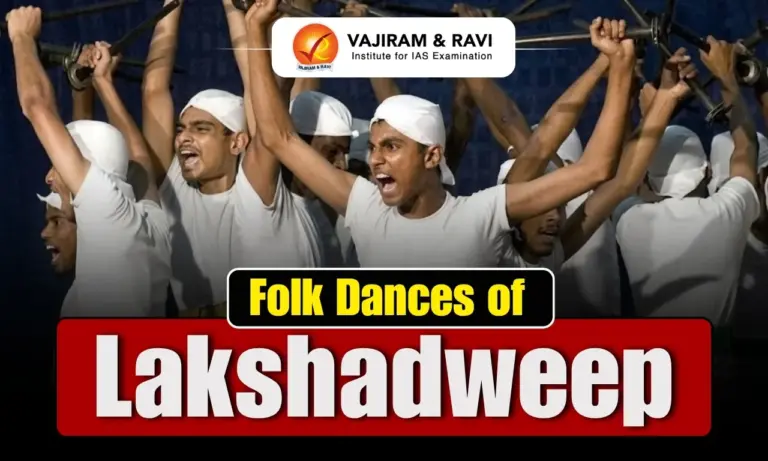
Folk Dances of Lakshadweep offer a glimpse into the islands’ traditional way of life and cultural practices. These dances are performed with different styles of music, movements and costumes, making them a distinctive part of the region’s cultural expression. They continue to connect local communities with their traditional art and heritage.
Major Folk Dances of Lakshadweep
The major Folk Dances of Lakshadweep reflect the islands’ rich cultural traditions and community life. Kolkali, Parichakali and Lava are among the prominent folk dance forms, each having its own style, music, costumes and performance traditions. These dances are discussed below to understand their distinctive features and cultural significance.
Kolkali Dance of Lakshadweep
- Kolkali is one of the most popular Folk Dances of Lakshadweep and is also known as a stick dance, as performers use sticks during the performance.
- The word ‘Kol’ means stick, referring to the main prop used in this traditional dance form.
- The dance is traditionally performed by men, who dance in pairs while moving in circles and striking their sticks in rhythm.
- The performance usually begins at a slow pace and gradually becomes faster and more energetic as the rhythm builds.
- Traditional folk songs and rhythmic stick movements accompany the dancers, who change their formations during the performance.
- The energetic movements and increasing tempo make Kolkali an important part of Lakshadweep’s folk culture.
Parichakali Dance of Lakshadweep
- Parichakali is another popular folk dance of Lakshadweep and is traditionally performed using swords and shields as props.
- The word ‘Paricha’ refers to a shield and the dance has the appearance of a traditional martial performance.
- The swords and shields used during the performance are made of soft wood, allowing the dancers to enact combat without causing injury.
- The dance commonly depicts themes related to bravery, warriors and struggles for freedom, with performers enacting mock battles and dual combats.
- The performance is accompanied by traditional songs and generally starts slowly before building into a highly energetic sequence.
- Through its dramatic movements and themes of courage, Parichakali reflects the martial and cultural traditions of Lakshadweep.
Lava Dance of Minicoy
- Lava is a prominent folk dance of Minicoy Island and is known for its vibrant presentation and energetic movements.
- The dance is performed in multi-coloured traditional costumes, often complemented by distinctive headgear worn by the dancers.
- Performers use drums and rhythmic beats along with traditional songs, creating an energetic atmosphere during the performance.
- The colourful costumes, music and coordinated movements make Lava dance a visually striking folk tradition of Minicoy.
- Other colourful dance forms associated with Minicoy mentioned in the source include Dandi, Bandiya and Fuli, adding to the island’s diverse folk-art traditions.
Also Read : Folk Dances of India
Folk Dances of Lakshadweep Cultural Significance
- Folk dances of Lakshadweep are an important part of the islands’ cultural heritage and reflect the traditions, lifestyle and community spirit of the local people.
- Dances such as Kolkali, Parichakali and Lava showcase the region’s diverse performance traditions through rhythmic movements, music, costumes and traditional props.
- The folk traditions also reflect the historical and cultural links between Lakshadweep and Kerala, adding to the distinctive identity of the islands.
- Performances during social and community occasions help preserve traditional songs, dance practices and cultural values across generations.
- The folk dances of Lakshadweep promote community participation and cultural continuity, helping preserve the islands’ rich and unique cultural identity.


 Last updated on Oct, 2026
→ UPSC 2027 Notification will be released on 13 January 2027 at upsconline.nic.in.
→ Check Nobel Prize 2026 Winners List here.
→ Download PIB PRiSM Monthly Magazine 2026 here.
→ Check UPSC Monthly Current Affairs Magazine The Recitals here.
→ Check out the latest UPSC Syllabus here.
→ Download UPSC Model Answers for Mains 2026
→ UPSC Mains Question Paper 2026 is out now for Essay & GS Paper 1, 2, 3 & 4.
→ UPSC Calendar 2027 has been released.
→ Enroll in Vajiram & Ravi’s UPSC Mains Test Series 2027 for structured answer writing practice, expert evaluation, and exam-oriented feedback.
→ Join Vajiram & Ravi’s UPSC Mentorship Program 2027 for personalized guidance, strategy planning, and one-to-one support from experienced mentors.
→ Go through the UPSC Mains Previous Year Papers to enhance your preparation.
→ UPSC has released UPSC Toppers List 2025 with the Civil Services final result on its official website.
→ Also check Best UPSC Coaching in India
Folk Dances of Lakshadweep FAQs
Q1. What are the major Folk Dances of Lakshadweep?+
Q2. Which is the most popular folk dance of Lakshadweep?+
Q3. What is Kolkali dance of Lakshadweep?+
Q4. Who traditionally performs Kolkali dance?+
Q5. What is Parichakali dance of Lakshadweep?+
Q6. What does the name Parichakali mean?+
Q7. Which folk dance is popular in Minicoy?+
Q8. What are the main features of Lava dance?+
Q9. How are the Folk Dances of Lakshadweep related to Kerala?+
Q10. What is the cultural significance of Folk Dances of Lakshadweep?+
Tags: art and culture art and culture notes folk dances folk dances of lakshadweep lakshadweep