Vitamin D Latest News
Low vitamin D levels may make recovery from breast cancer surgery more painful, according to a study of 184 women undergoing mastectomy.
About Vitamin D
- Vitamin D (also referred to as calciferol) is a fat-soluble vitamin that is naturally present in a few foods, added to others, and available as a dietary supplement.
- Also known as the sunshine vitamin, it is produced endogenously when ultraviolet (UV) rays from sunlight strike the skin and trigger vitamin D synthesis.
- During periods of sunlight, vitamin D is stored in fat and then released when sunlight is not available.
- Very few foods naturally contain vitamin D. Most people get vitamin D in their diet from foods that are fortified. This means that vitamin D is added to the food. These foods may include milk, cereal, and yogurt.
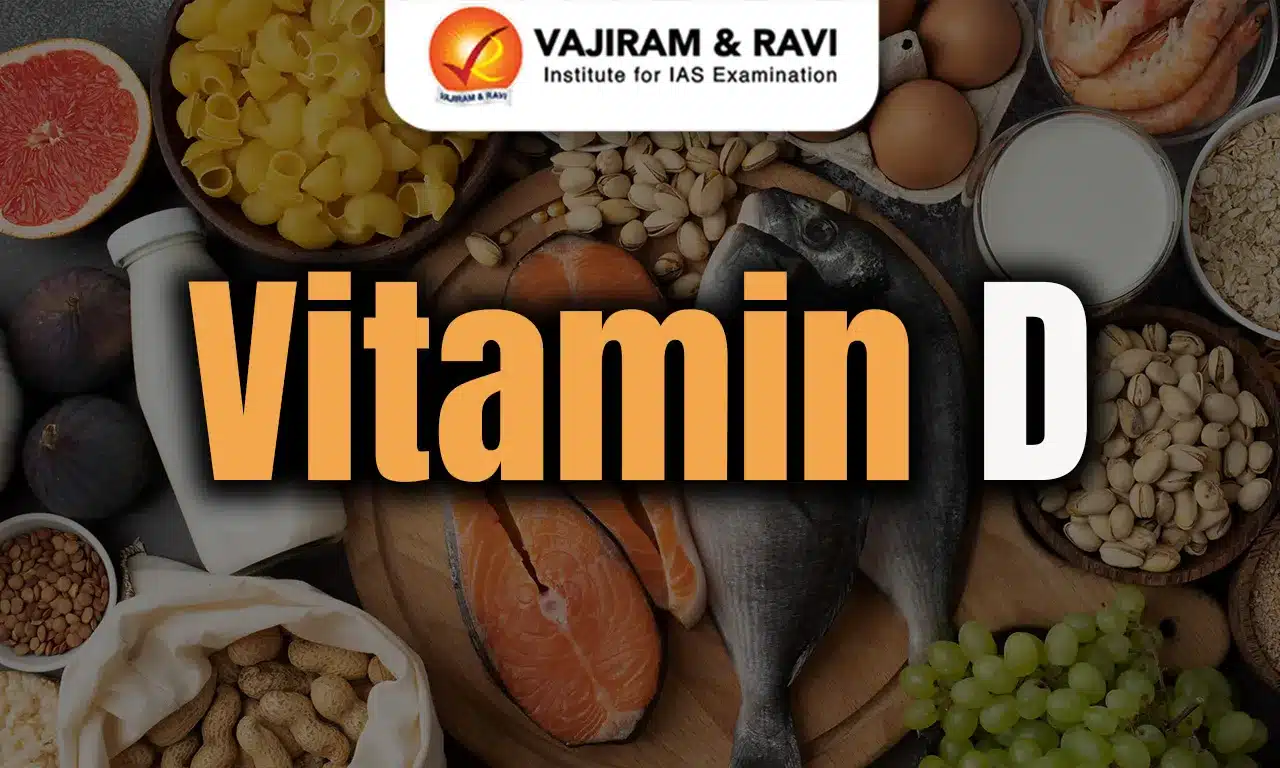
- Foods that naturally have vitamin D include egg yolks, saltwater fish, and liver.
- The amount of vitamin D you need each day depends on your age.
- Why is Vitamin D So Important?
- Vitamin D promotes calcium absorption and helps maintain adequate levels of calcium and phosphorus in the blood, which is necessary for healthy bones and teeth.
- Without sufficient vitamin D, bones can become thin, brittle, or misshapen.
- Vitamin D has other roles in the body, including reduction of inflammation as well as modulation of such processes as cell growth, neuromuscular and immune function, and glucose metabolism.
- Vitamin D Deficiency:
- In children, vitamin D deficiency causes rickets, a disease in which the bones become soft, weak, deformed, and painful.
- In teens and adults, vitamin D deficiency causes osteomalacia, a disorder that causes bone pain and muscle weakness.
- Vitamin D deficiency may be more common in people with higher skin melanin content (darker skin) and who wear clothing with extensive skin coverage.
- Can Vitamin D be Harmful?
- Very high levels of vitamin D in your blood can cause nausea, vomiting, muscle weakness, confusion, pain, loss of appetite, dehydration, excessive urination and thirst, and kidney stones.
- Extremely high levels of vitamin D can cause kidney failure, irregular heartbeat, and even death.
News: SD


 Last updated on Sep, 2026
→ UPSC 2027 Notification will be released on 13 January 2027 at upsconline.nic.in.
→ Asian Games 2026 are being held in Aichi-Nagoya, Japan, from 19 September to 4 October.
→ Check out the latest UPSC Syllabus here.
→ Download UPSC Model Answers for Mains 2026
→ UPSC Mains Question Paper 2026 is out now for Essay & GS Paper 1, 2, 3 & 4.
→ UPSC Calendar 2027 has been released.
→ Enroll in Vajiram & Ravi’s UPSC Mains Test Series 2027 for structured answer writing practice, expert evaluation, and exam-oriented feedback.
→ Join Vajiram & Ravi’s UPSC Mentorship Program 2027 for personalized guidance, strategy planning, and one-to-one support from experienced mentors.
→ Go through the UPSC Mains Previous Year Papers to enhance your preparation.
→ UPSC has released UPSC Toppers List 2025 with the Civil Services final result on its official website.
→ Also check Best UPSC Coaching in India
Vitamin D FAQs
Q1. What is Vitamin D also known as?+
Q2. What type of vitamin is Vitamin D?+
Q3. Why is Vitamin D known as the “sunshine vitamin”?+
Q4. Which minerals does Vitamin D help maintain at adequate levels in the blood?+
Q5. What disease can Vitamin D deficiency cause in children?+
Tags: vitamin d