Bhabha Atomic Research Centre Latest News
The BMC’s Tree Authority recently approved the cutting of 251 trees and transplantation of 48 trees for Bhabha Atomic Research Centre (BARC) Old Mandala to New Mandala Road connectivity project by the Department of Atomic Energy.
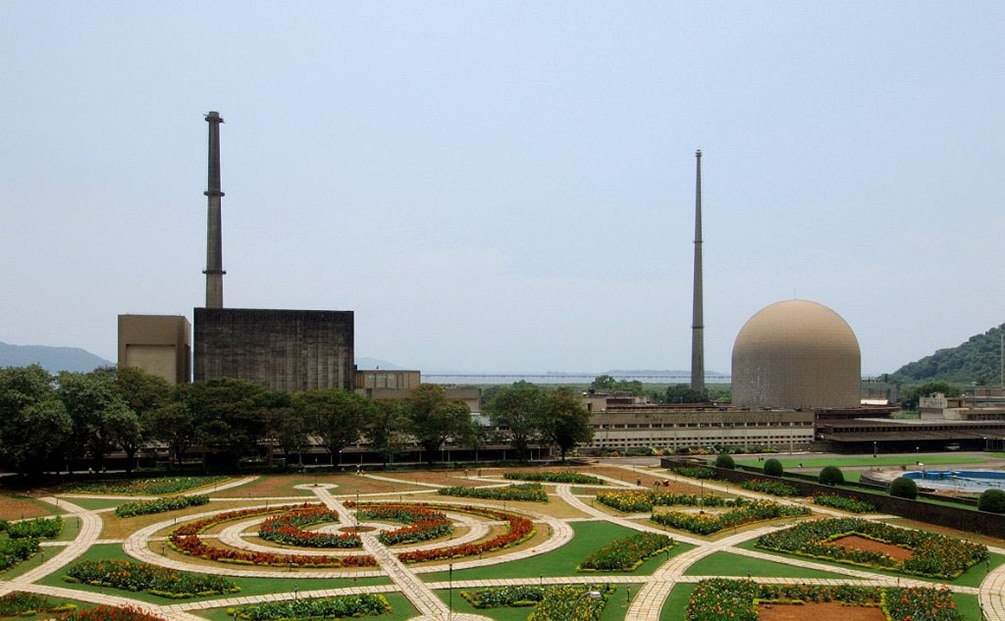
About Bhabha Atomic Research Centre
- It is India’s premier nuclear research facility.
- It is headquartered in Trombay, Mumbai, Maharashtra.
- It operates under the Department of Atomic Energy, which is directly overseen by the Prime Minister of India.
- The statutory framework governing its activities is the Atomic Energy Act, 1962, which vests in the central government exclusive control over atomic minerals, fissile material, and nuclear research, superseding the earlier Atomic Energy Act of 1948.
- It is a multi-disciplinary research centre with extensive infrastructure for advanced research and development covering the entire spectrum of nuclear science and engineering and related areas.
- BARC is the research backbone of the Nuclear Power Corporation of India (NPCIL), which currently operates all nuclear power reactors in India.
- History:
- Dr. Homi Jehangir Bhabha conceived the nuclear program in India.
- Dr. Bhabha established the Tata Institute of Fundamental Research (TIFR) to carry out nuclear science research in 1945.
- Dr. Bhabha established the Atomic Energy Establishment, Trombay (AEET), in January 1954 for a multidisciplinary research program essential for the ambitious nuclear program of India.
- After the death of Bhabha in 1966, AEET was renamed Bhabha Atomic Research Centre (BARC).
- Functions:
- It is engaged in research with the objective of generating knowledge and techniques for nuclear power production, the advancement of nuclear science, the use of radioisotopes in industry, health, and agriculture, and research in frontier areas of science and technology.
- It is responsible for the design and development of nuclear reactors, fuel cycle technologies, radiation protection, and safety systems.
- BARC also plays an important role in nuclear education and training. It offers various training programs for scientists, engineers, and technicians in the areas of nuclear science and technology.
News: TOI


 Last updated on Sep, 2026
→ UPSC 2027 Notification will be released on 13 January 2027 at upsconline.nic.in.
→ Check out the latest UPSC Syllabus here.
→ Download UPSC Model Answers for Mains 2026
→ UPSC Mains Question Paper 2026 is out now for Essay & GS Paper 1, 2, 3 & 4.
→ UPSC Calendar 2027 has been released.
→ Enroll in Vajiram & Ravi’s UPSC Mains Test Series 2027 for structured answer writing practice, expert evaluation, and exam-oriented feedback.
→ Join Vajiram & Ravi’s UPSC Mentorship Program 2027 for personalized guidance, strategy planning, and one-to-one support from experienced mentors.
→ Go through the UPSC Mains Previous Year Papers to enhance your preparation.
→ UPSC has released UPSC Toppers List 2025 with the Civil Services final result on its official website.
→ Also check Best UPSC Coaching in India
Bhabha Atomic Research Centre FAQs
Q1. What is the Bhabha Atomic Research Centre (BARC)?+
Q2. Where is the Bhabha Atomic Research Centre headquartered?+
Q3. Under which department does Bhabha Atomic Research Centre operate?+
Q4. What broad areas of research and development does BARC cover?+
Tags: bhabha atomic research centre prelims pointers upsc current affairs upsc prelims current affairs