What’s in today’s article?
- Why in News?
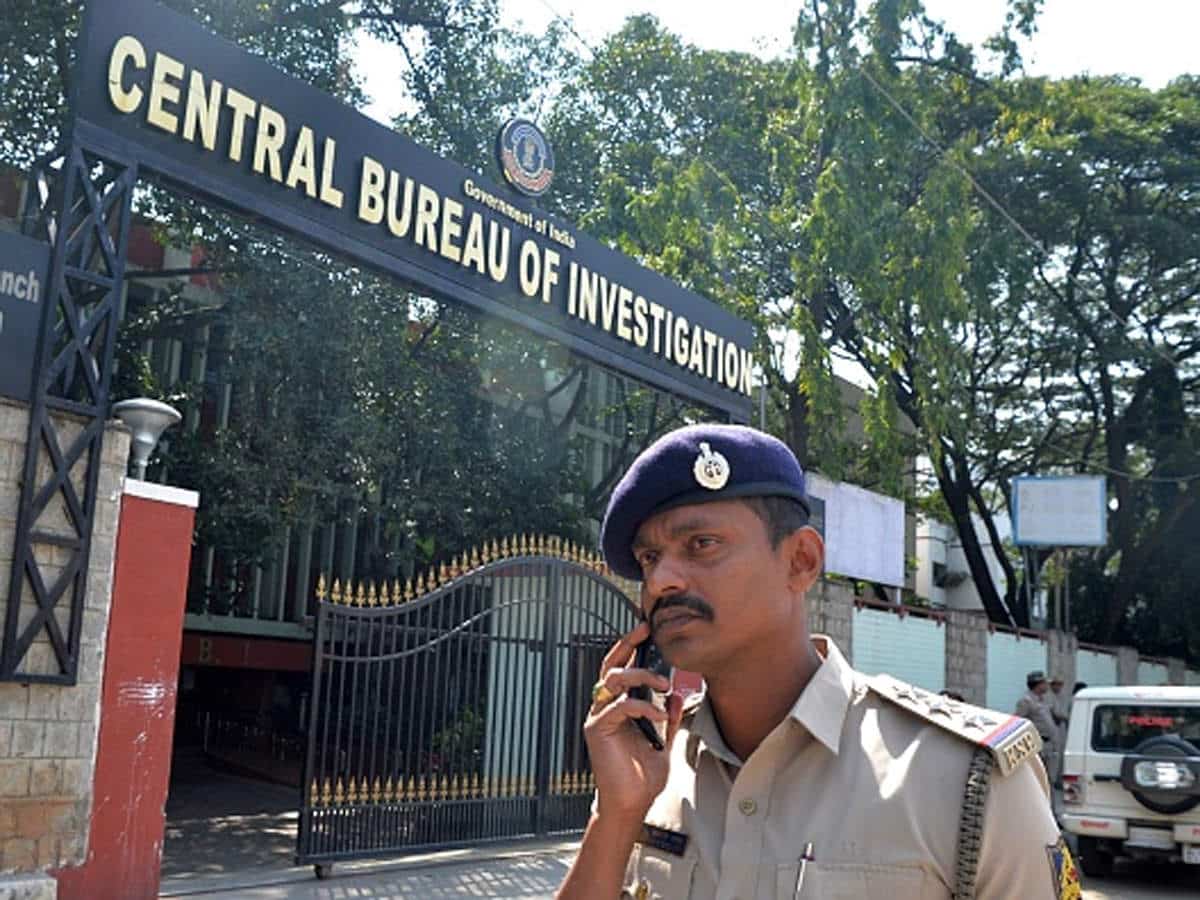
- About CBI
- “Consent” Required by the CBI for Conducting Investigation in a State
- Withdrawal of General Consent and its Impact
Why in News?
- The Tamil Nadu government has withdrawn general consent accorded to the Central Bureau of Investigation (CBI) to investigate cases in the state.
- This comes at a time when a state cabinet minister is facing heat from the Enforcement Directorate over his alleged role in a job racket scandal.
About the Central Bureau of Investigation (CBI):
- The CBI is the premier investigating agency of India operating under the jurisdiction of the Ministry of Personnel, Public Grievances and Pensions, Government of India.
- It traces its origin from the Delhi Special Police Establishment (DPSE) Act, 1946, which regulates the CBI.
- As the DPSE Act is not passed by Parliament of India, CBI is created by an executive order of the government, hence not a statutory body yet and is exempted from the purview of the Right to Information (RTI) Act.
- Originally set up to probe cases of corruption in the government departments, CBI’s jurisdiction expanded to include several economic crimes, special crimes, cases of corruption and other cases.
- Investigating powers of CBI are divided into:
- Anti-Corruption Division: It investigates cases against central government employees, public servants working under state governments (entrusted to the CBI by the state).
- The Economic Offences Division: It investigates financial crimes, bank frauds, money laundering, illegal money market operations, graft in PSUs and banks.
- The Special Crimes Division: It handles cases of conventional nature such as offences relating to internal security, espionage, narcotics and psychotropic substances, etc.


“Consent” Required by the CBI for Conducting Investigation in a State:
- Legal basis: Section 6 of the DPSE Act authorises the central government to direct CBI to probe a case within the jurisdiction of any state but only with the consent of the concerned state government.
- However, the SC and HCs can order CBI to investigate such a crime anywhere in the country without the consent of the state.
- Types of consent:
- General consent: When a state gives a general consent to the CBI for probing a case, the agency is not required to seek fresh permission every time it enters that state in connection with investigation or for every case.
- It is normally given by states to help the CBI in the seamless investigation of corruption cases against central government employees in their states.
- Specific consent: When a general consent is withdrawn, CBI needs to seek case-wise (specific) consent for investigation from the concerned state government.
- If specific consent is not granted, the CBI officials will not have the power of police personnel when they enter that state, preventing the CBI from conducting a thorough inquiry.
- General consent: When a state gives a general consent to the CBI for probing a case, the agency is not required to seek fresh permission every time it enters that state in connection with investigation or for every case.

Withdrawal of General Consent and its Impact:
- The withdrawal of general consent does not stop CBI probes in all cases.
- The CBI continues to probe in old cases until specifically taken back by the state government.
- Further, it continues to investigate cases that were given to it by a court order.
- The CBI can also challenge the decision (of withdrawal of general consent) in a court showcasing its progress of investigation in the case.
- When the CBI does not have a general consent, it can approach a local court (as per a provision in the CrPC) for a search warrant and conduct investigation.
Q1) What is the Right to Information (RTI) Act?
The RTI is an act of the Parliament of India (enacted in 2005) which sets out the rules and procedures regarding citizens’ right to information. It replaced the former Freedom of Information Act, 2002.
Q2) Which committee recommended the establishment of the Central Bureau of Investigation (CBI)?
The establishment of the CBI was recommended by the Santhanam Committee on Prevention of Corruption (1962–1964).
Source: Tamil Nadu withdraws general consent to CBI to probe cases in state

 Last updated on Sep, 2026
→ UPSC 2027 Notification will be released on 13 January 2027 at upsconline.nic.in.
→ Check out the latest UPSC Syllabus here.
→ Download UPSC Model Answers for Mains 2026
→ UPSC Mains Question Paper 2026 is out now for Essay & GS Paper 1, 2, 3 & 4.
→ UPSC Calendar 2027 has been released.
→ Enroll in Vajiram & Ravi’s UPSC Mains Test Series 2027 for structured answer writing practice, expert evaluation, and exam-oriented feedback.
→ Join Vajiram & Ravi’s UPSC Mentorship Program 2027 for personalized guidance, strategy planning, and one-to-one support from experienced mentors.
→ Go through the UPSC Mains Previous Year Papers to enhance your preparation.
→ UPSC has released UPSC Toppers List 2025 with the Civil Services final result on its official website.
→ Also check Best UPSC Coaching in India