What’s in Today’s Article?
- Why in the News?
- About Malaria
- How Does Malaria Spread?
- Symptoms of Malaria
- Barriers to Developing a Malaria Vaccine
- India’s Scenario
- Steps Taken by India to Eradicate Malaria
- News Summary
Why in the News?
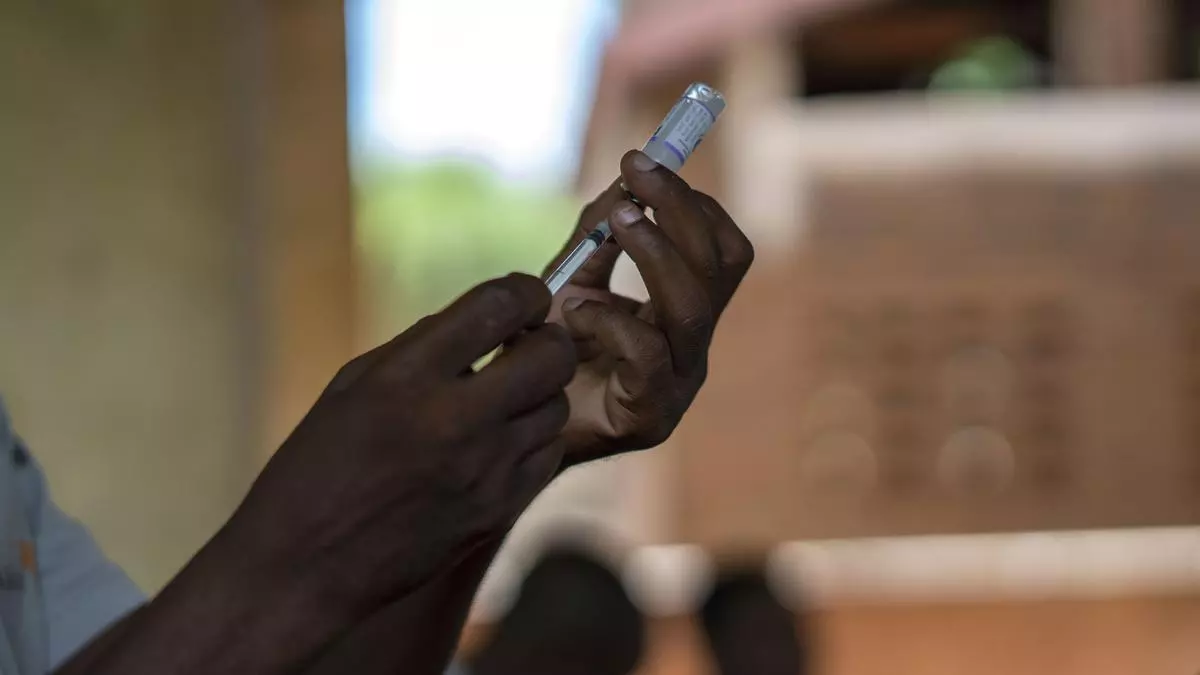
- The World Health Organization (WHO) added the R21/Matrix-M malaria vaccine, developed by Oxford University and manufactured by Serum Institute of India, to its list of prequalified vaccines.


About Malaria
- Malaria is a disease caused by the Plasmodium parasite.
- The parasite can be spread to humans through the bites of infected mosquitoes.
- There are many different types of plasmodium parasite, but only 5 types cause malaria in humans.
- Plasmodium falciparum – mainly found in Africa, it’s the most common type of malaria parasite and is responsible for most malaria deaths worldwide.
- Plasmodium vivax – mainly found in Asia and South America, this parasite causes milder symptoms than Plasmodium falciparum, but it can stay in the liver for up to 3 years, which can result in relapses.
- Plasmodium ovale – fairly uncommon and usually found in West Africa, it can remain in your liver for several years without producing symptoms.
- Plasmodium malariae – this is quite rare and usually only found in Africa.
- Plasmodium knowlesi – this is very rare and found in parts of southeast Asia.
How Does Malaria Spread?

- The plasmodium parasite is spread by female Anopheles mosquitoes, which are known as “night-biting” mosquitoes because they most commonly bite between dusk and dawn.
- Once a person is bitten, the parasite enters the bloodstream and travels to the liver.
- The infection develops in the liver before re-entering the bloodstream and invading the red blood cells (RBCs).
- The parasites grow and multiply in the RBCs. At regular intervals, the infected blood cells burst, releasing more parasites into the blood.
- If a mosquito bites a person already infected with malaria, it can also become infected and spread the parasite on to other people.
- However, malaria does not spread directly from person to person.
Symptoms of Malaria
- Signs and symptoms of malaria may include:
- Fever, Chills, General feeling of discomfort, Headache, Nausea and vomiting, Diarrhea, Abdominal pain, Muscle or joint pain, Fatigue, Rapid breathing, Rapid heart rate, Cough.
Barriers to Developing a Malaria Vaccine
- The development of a malaria vaccine has faced several obstacles:
- Lack of a traditional market,
- Few developers, and
- Technical complexity of developing any vaccine against a parasite.
- Malaria parasites have a complex life cycle, and there is poor understanding of the complex immune response to malaria infection.
- Malaria parasites are also genetically complex, producing thousands of potential antigens.
India’s Scenario
- Large part of India being in the tropical region, it is historically a malaria endemic country.
- It holds the distinction of being the site of the discovery by Noble Prize winner Sir Ronal Ross that established the malaria parasite cycle through Anopheles mosquitoes as the definitive host.
- India has made huge strides towards malaria elimination but there is a long way to go.
- According to the World Malaria Report 2023, India accounted for 66% of malaria cases in the World Health Organization’s South-East Asia region in 2022.
- India and Indonesia accounted for about 94% of all malaria deaths in the region last year, the World Health Organization said.
- The report said that nearly 46% of all cases in the region were caused by Plasmodium vivax, a protozoal parasite and a human pathogen.
Steps Taken by India to Eradicate Malaria
- Since 2000, India cut malaria cases by more than half and the number of malaria deaths by more than 66%.
- In 2016, India introduced its first National Framework for Malaria Elimination (2016-2030).
- It has a vision of a malaria-free country by 2027 and elimination by 2030.
- In 2019, the Government of India increased funding by more than 25% for the National Vector Borne Disease Control Programme and increased support as a donor to the Global Fund to Fight AIDS, Tuberculosis and Malaria.
News Summary
- The World Health Organization (WHO) added the R21/Matrix-M malaria vaccine, developed by Oxford University and manufactured by Serum Institute of India, to its list of prequalified vaccines.
- The R21 vaccine is the second malaria vaccine prequalified by WHO, following the RTS,S/AS01 vaccine which had obtained prequalification status in July 2022.
- Prequalification means larger access to vaccines as a key tool to prevent malaria in children.
- As part of the prequalification process, WHO applies international standards to comprehensively evaluate and determine whether vaccines are safe, effective, and manufactured to international standards.
- WHO also ensures the continued safety and efficacy of prequalified vaccines through, for example, regular re-evaluation, site inspection, and targeted testing.
Q1) What is the definition of Tropical Disease?
Tropical disease is any disease that is indigenous to tropical or subtropical areas of the world or that occurs principally in those areas. Examples of tropical diseases include malaria, cholera, Chagas disease, yellow fever, and dengue.
Q2) What is the definition of Non-communicable Diseases?
Non-communicable diseases are diseases that are not spread through infection or through other people, but are typically caused by unhealthy behaviours. They are the leading cause of death worldwide and present a huge threat to health and development, particularly in low- and middle-income countries.
Source: WHO prequalifies a second malaria vaccine manufactured by Serum Institute of India

 Last updated on Sep, 2026
→ UPSC 2027 Notification will be released on 13 January 2027 at upsconline.nic.in.
→ Check out the latest UPSC Syllabus here.
→ Download UPSC Model Answers for Mains 2026
→ UPSC Mains Question Paper 2026 is out now for Essay & GS Paper 1, 2, 3 & 4.
→ UPSC Calendar 2027 has been released.
→ Enroll in Vajiram & Ravi’s UPSC Mains Test Series 2027 for structured answer writing practice, expert evaluation, and exam-oriented feedback.
→ Join Vajiram & Ravi’s UPSC Mentorship Program 2027 for personalized guidance, strategy planning, and one-to-one support from experienced mentors.
→ Go through the UPSC Mains Previous Year Papers to enhance your preparation.
→ UPSC has released UPSC Toppers List 2025 with the Civil Services final result on its official website.
→ Also check Best UPSC Coaching in India