What’s in today’s article?
- Why in the News?
- What is G20 Pandemic Fund?
- What are Zoonotic Diseases?
- Common Zoonotic Diseases
- Transmission Methods
- News Summary
- About Global Health Security Index
Why in the News?
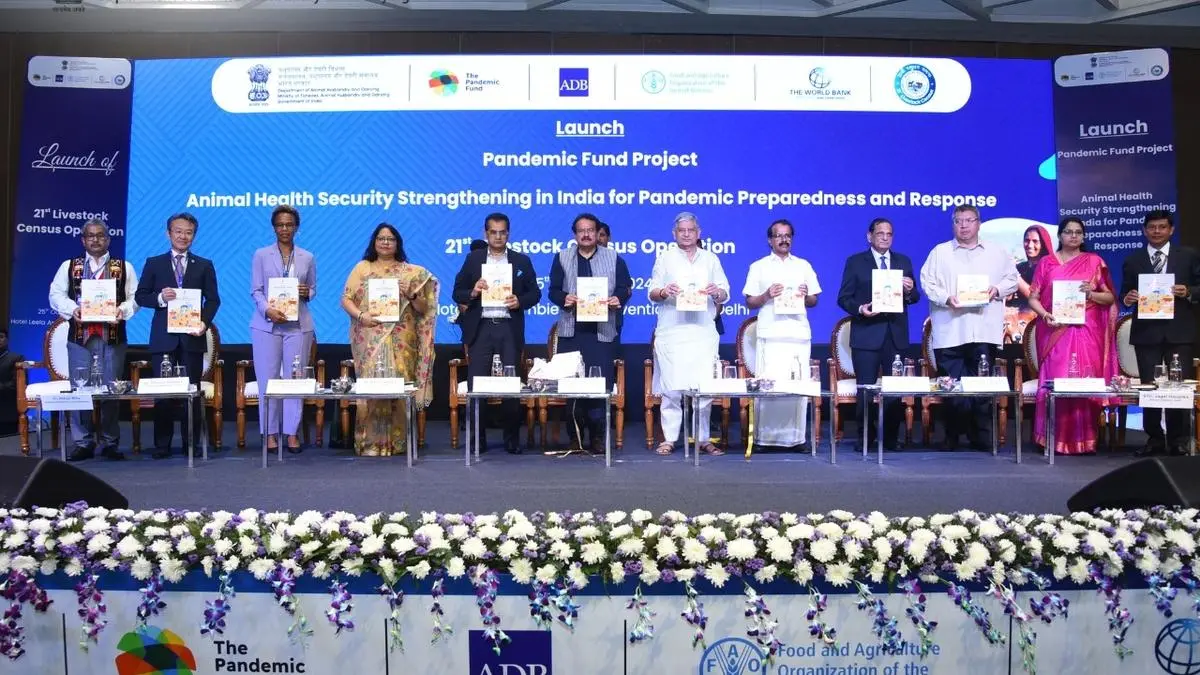
- The Central Government will implement the G20 Pandemic Fund, which is aimed at enhancing the country’s “animal health security”.


What is G20 Pandemic Fund?
- The G20 Pandemic Fund is a financial initiative established by G20 countries to enhance global preparedness and response to health emergencies, particularly pandemics and zoonotic diseases (diseases transmitted from animals to humans).
- Key Objectives:
- Strengthen Global Health Security: The fund aims to bolster healthcare systems worldwide to prevent, detect, and respond swiftly to pandemics.
- Address Zoonotic Risks: Focuses on zoonotic diseases, which pose significant threats to human health, by investing in animal health and surveillance.
- Support Low and Middle-Income Countries: Provides essential resources and support to vulnerable regions with weaker health infrastructure.
- Structure & Funding:
- Managed by Multiple Agencies: The World Bank oversees the fund, while it collaborates with organizations like the WHO, FAO, and regional development banks.
- Targeted Financial Assistance: Initially launched with over $1.4 billion, the fund mobilizes grants and low-interest loans for eligible countries.
What are Zoonotic Diseases?
- Zoonotic diseases are infections that are transmitted between animals and humans.
- These diseases can result from various pathogens, including viruses, bacteria, parasites, and fungi.
Common Zoonotic Diseases
- COVID-19: Caused by the SARS-CoV-2 virus, believed to have originated from animals, likely bats, before spreading to humans.
- Rabies: A viral infection primarily spread through bites or scratches from infected animals, especially dogs and bats.
- Avian Influenza (Bird Flu): Transmitted from infected birds to humans through direct contact or contaminated environments.
- Ebola: Originates from fruit bats and is spread through direct contact with bodily fluids of infected animals or humans.
- Salmonellosis: Caused by Salmonella bacteria, commonly transmitted through contaminated food, particularly poultry and eggs.
Transmission Methods
- Direct Contact: Handling or being bitten by infected animals.
- Indirect Contact: Contact with contaminated surfaces or environments.
- Vector-Borne: Through vectors like ticks or mosquitoes.
- Foodborne: Consuming contaminated meat, eggs, or dairy.
- Airborne: Inhaling pathogens from animal excreta or dander.
News Summary
- The Union government has launched a $25-million G20 Pandemic Fund to strengthen animal health security, aiming to curb zoonotic diseases—diseases transmitted from animals to humans, like COVID-19.
- This initiative is a collaborative effort with organizations including the Asian Development Bank (ADB), World Bank, and Food and Agriculture Organization (FAO), and is expected to be fully utilized by August 2026.
- The fund will enhance disease surveillance, build laboratory infrastructure, and promote cross-border cooperation.
- India, with high environmental risks and a low score (42.8) on the Global Health Security Index, is particularly vulnerable to zoonotic diseases, which are further intensified by climate change.
- Additionally, the project will focus on human capacity building, improving data management systems, and enhancing disaster management frameworks for the livestock sector.
- This comprehensive approach aims to create an integrated system to manage zoonotic disease risks effectively.
About Global Health Security Index
- The Global Health Security Index (GHSI) is a comprehensive assessment and benchmarking tool.
- It evaluates the preparedness and capabilities of countries to prevent, detect, and respond to global health threats, such as pandemics and infectious disease outbreaks.
- It was launched in 2019 by the Nuclear Threat Initiative (NTI), the Johns Hopkins Centre for Health Security, and The Economist Intelligence Unit.
- The GHSI provides a score ranging from 0 to 100 for each country, with higher scores indicating better preparedness.
- The index assesses countries based on six key categories:
- Prevention: Measures to prevent the emergence of pathogens.
- Detection and Reporting: Surveillance and rapid reporting capabilities.
- Rapid Response: The ability to respond quickly to an epidemic.
- Health System: The capacity of healthcare systems to treat and protect populations.
- Compliance with International Norms: Adherence to global health regulations.
- Risk Environment: Broader socio-political and environmental factors affecting health security.
Q1.What is an Endemic Disease?
A disease is said to have entered the endemic stage when a substantial part of the population becomes immune to it, by either having contracted it and recovered from or through vaccination.
Q2. What is an Antibody?
An antibody or immunoglobulin is a large, Y-shaped protein belonging to the immunoglobulin superfamily which is used by the immune system to identify and neutralize antigens such as bacteria and viruses, including those that cause disease.
Source: $25-million Pandemic Fund aims to curb ‘zoonotic’ diseases

 Last updated on Sep, 2026
→ UPSC 2027 Notification will be released on 13 January 2027 at upsconline.nic.in.
→ Check out the latest UPSC Syllabus here.
→ Download UPSC Model Answers for Mains 2026
→ UPSC Mains Question Paper 2026 is out now for Essay & GS Paper 1, 2, 3 & 4.
→ UPSC Calendar 2027 has been released.
→ Enroll in Vajiram & Ravi’s UPSC Mains Test Series 2027 for structured answer writing practice, expert evaluation, and exam-oriented feedback.
→ Join Vajiram & Ravi’s UPSC Mentorship Program 2027 for personalized guidance, strategy planning, and one-to-one support from experienced mentors.
→ Go through the UPSC Mains Previous Year Papers to enhance your preparation.
→ UPSC has released UPSC Toppers List 2025 with the Civil Services final result on its official website.
→ Also check Best UPSC Coaching in India