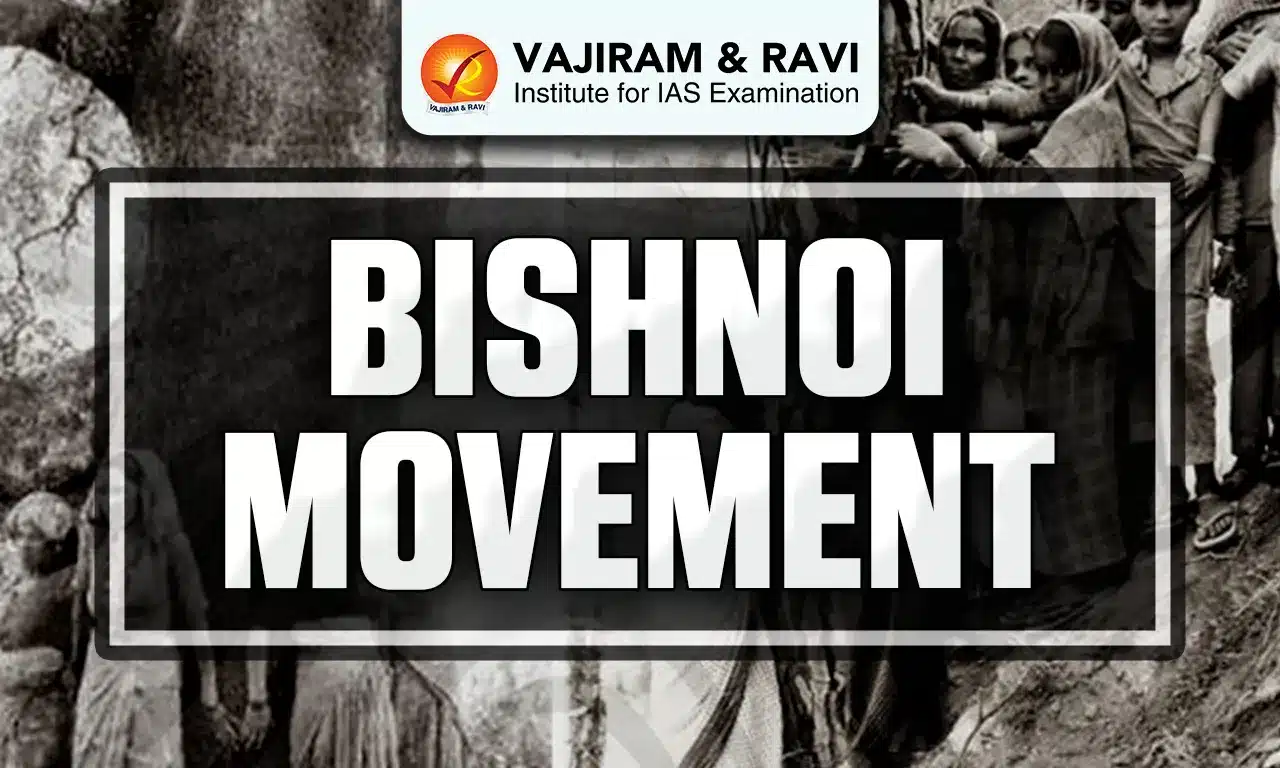
Around 290 years ago, in the early 1700s, the Bishnoi community in Rajasthan sparked one of the earliest recorded environmental movements. When the King of Jodhpur ordered trees to be cut down for wood, the Bishnois resisted and started the Bishnoi Movement which was led by a woman named Amrita Devi; people from 84 nearby villages stood in defense of the forest. In a remarkable act of courage, many of them sacrificed their lives to protect the trees.
Bishnoi Movement
Bishnoi Movement took place in the 1730s in Khejarli village, Rajasthan was initiated for wildlife protection and eco-conversation, Bishnois are the First Environmentalists of India. King Abhay Singh of Jodhpur ordered trees to be cut for palace construction. Amrita Devi Bishnoi opposed the tree felling by hugging the trees. Her daughters, Asu, Ratni, and Bhagu joined her in protest. Hundreds of Bishnoi villagers joined the Bishnoi Movement. The Bishnoi sect promotes conservation of trees and wildlife. Forests provided fuelwood and fodder for the community. 363 Bishnois were killed while trying to protect the Khejri trees.
Also Check:
Bishnoi Movement History
- The Bishnoi Movement originated in the 15th century in Marwar, Rajasthan.
- Founded by Guru Jambheshwar (Jambhoji), a spiritual leader and environmentalist.
- The name “Bishnoi” means twenty-nine in Marwari, referring to the 29 principles laid down by Guru Jambheshwar.
- These principles promote environmental conservation, non-violence, and sustainable living.
- Bishnois prohibit cutting green trees, killing animals, and polluting water sources.
- Known for sacrificing lives to protect trees and wildlife (e.g., the 1730 Khejarli Massacre).
- The community continues to play a key role in wildlife protection and eco-activism today.
- Their practices have influenced modern environmental movements in India.
Amrita Devi Bishnoi Wildlife Protection Award
To honour the legacy of Amrita Devi Bishnoi and sacrifice for wildlife conservation, the Government of India instituted the Amrita Devi Bishnoi Wildlife Protection Award, a prestigious national recognition for individuals or institutions working to protect wildlife.
The first award was conferred in 2001, posthumously awarded to Ganga Ram Bishnoi of Chirai village, Jodhpur. He was recognized for his commitment to protecting wildlife, and the award was presented by the Union Minister of Environment and Forests.


Bishnoi Movement Objectives
- Protection of Biodiversity: The Bishnoi Movement strongly advocates for the conservation of flora and fauna. The community is deeply committed to preserving native species and maintaining ecological balance in their region.
- Promotion of Health and Hygiene: Guru Jambheshwar emphasized cleanliness, personal hygiene, and community health. The Bishnoi Movement encourages habits that lead to physical well-being and social responsibility.
- Prevention of Deforestation: A cornerstone of the Bishnoi philosophy is the absolute prohibition against cutting green trees. The movement actively resists deforestation and promotes sustainable use of natural resources.
- Compassionate Animal Care: The Bishnois are known for their care toward animals. They oppose hunting and poaching and have long practiced co-existing peacefully with wildlife, often nursing injured animals back to health.
Bishnoi in Rajasthan
- Location & Population: The Bishnoi community is mainly found in the western Thar Desert and parts of northern India, with around 600,000 followers across the country.
- Founder: Established by Jambhoji, a 15th-century villager near Jodhpur, who became Swami Jambeshwar Maharaj after experiencing a spiritual awakening during a severe drought.
- Origin Belief: Jambhoji believed that the drought and hardships were caused by human disruption of nature’s balance.
- Formation of the Sect: The Bishnoi sect was founded in 1485 AD to promote environmental and ethical living.
- 29 Principles: Swami Jambeshwar laid down 29 commandments to guide the community’s lifestyle, focusing on environmental conservation, compassion, and non-violence.
- Key Teachings:
- “Jeev Daya Palani” – Show compassion to all living beings.
- “Runkh Lila Nahi Ghave” – Do not cut green trees.
- Ecological Awareness: Jambaji observed that cutting trees during droughts to feed animals led to further ecological damage. His teachings emphasized the need to protect both trees and wildlife.
- Legacy: These principles laid the foundation for one of the earliest and most consistent grassroots environmental movements in India.
Bishnoi Community
- Geographical Presence: The Bishnoi community has lived for generations in western Rajasthan, especially around the Thar Desert region.
- Environmental Ethos: They hold a deep respect for all life forms and strictly avoid harming animals or cutting green trees.
- Pioneers of Conservation: Known for their eco-conscious lifestyle, they practice sustainable living and actively protect local biodiversity.
- Economic Activity: The community is skilled in dairy farming and is also known for producing high-quality dairy products and handmade soap.
- Natural Habitat: Their homeland near Jodhpur is lush with trees and supports a diverse range of wildlife, thanks to their conservation efforts.
- Funeral Practices: Though they follow Hinduism, Bishnois bury their dead instead of cremating them conserving wood and aligning with their environmental values.
Bishnoi Movement Success
-
- Royal Intervention: After the turning point of the Bishnoi movement, the Maharaja of Marwar issued a royal decree banning the cutting of trees in all Bishnoi-inhabited villages.
- Historical Significance: The origins of Bishnoism around 1730 AD laid the foundation for the concepts of tree-embracing and environmental activism in India.
- Influence on Chipko Movement: The Bishnoi movement directly inspired the later Chipko Movement, led by Sunder Lal Bahuguna in the 20th century, which popularized tree-hugging as a form of protest.
- Awards in Honor:
- The Amrita Devi Bishnoi Smrithi Paryavaran Award was established by the Rajasthan Government.
- The Amrita Devi Bishnoi Wildlife Protection Award was instituted by the Government of India, both to recognize individuals or groups committed to protecting wildlife and forests.

 Last updated on Oct, 2026
→ UPSC 2027 Notification will be released on 13 January 2027 at upsconline.nic.in.
→ Asian Games 2026 are being held in Aichi-Nagoya, Japan, from 19 September to 4 October.
→ Check Nobel Prize 2026 Winners List here.
→ Download PIB PRiSM Monthly Magazine 2026 here.
→ Check UPSC Monthly Current Affairs Magazine The Recitals here.
→ Check out the latest UPSC Syllabus here.
→ Download UPSC Model Answers for Mains 2026
→ UPSC Mains Question Paper 2026 is out now for Essay & GS Paper 1, 2, 3 & 4.
→ UPSC Calendar 2027 has been released.
→ Enroll in Vajiram & Ravi’s UPSC Mains Test Series 2027 for structured answer writing practice, expert evaluation, and exam-oriented feedback.
→ Join Vajiram & Ravi’s UPSC Mentorship Program 2027 for personalized guidance, strategy planning, and one-to-one support from experienced mentors.
→ Go through the UPSC Mains Previous Year Papers to enhance your preparation.
→ UPSC has released UPSC Toppers List 2025 with the Civil Services final result on its official website.
→ Also check Best UPSC Coaching in India
Bishnoi Movement FAQs
Q1. What is the Bishnoi Movement?+
Q2. Who started the Bishnoi Movement?+
Q3. Where did the Bishnoi Movement take place?+
Q4. Why is the Bishnoi Movement important?+
Q5. What are the beliefs of the Bishnoi community?+
Tags: bishnoi movement